France

President Tinubu meets with Nigerians based in France

By Muhammadu Buhari
 
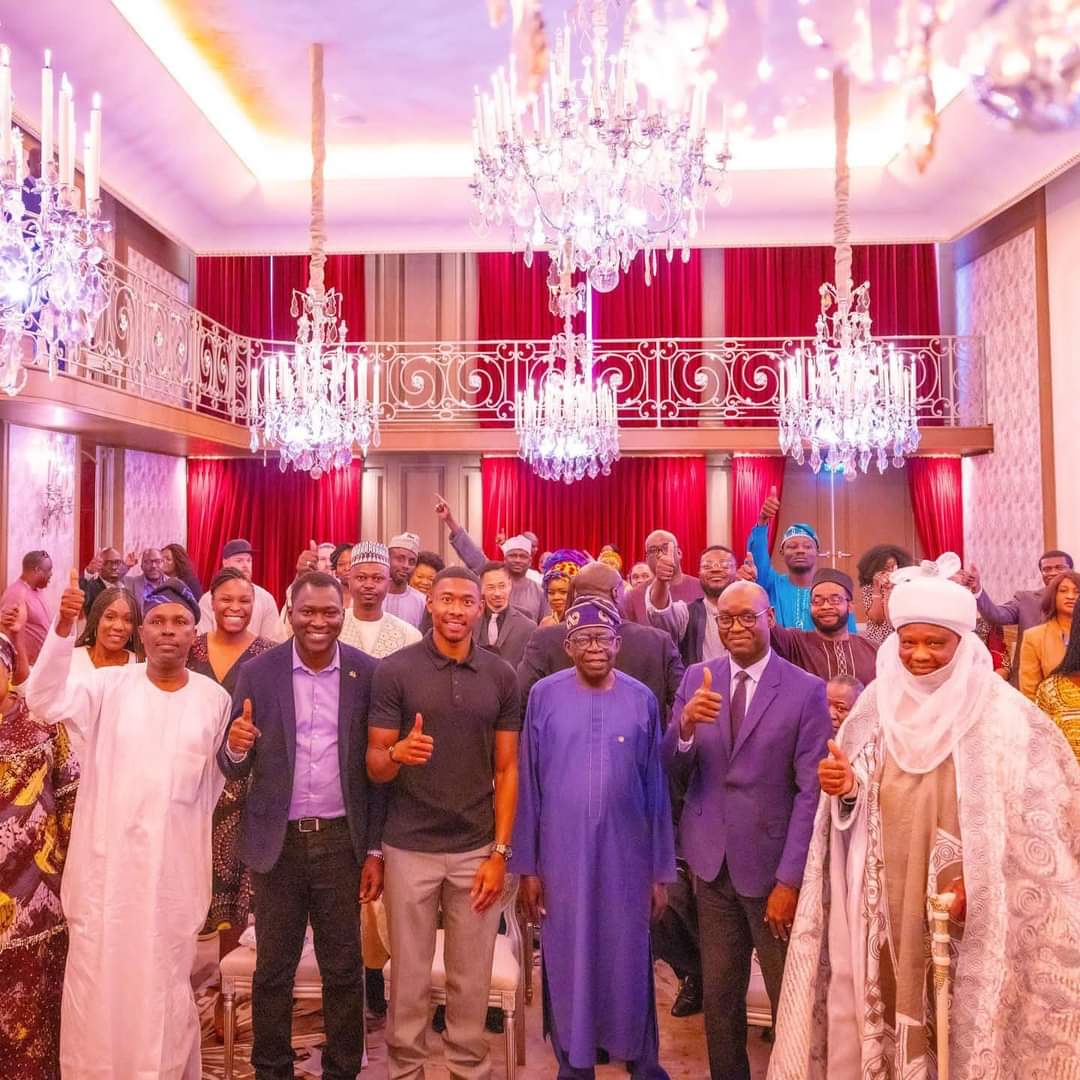
President Bola Ahmed Tinubu held his presidential diaspora engagement in Paris, France, today, meeting with Nigerians residing in the country. 
 
This is contained in a short statement released by the President’s aide, Dada Olusegun, via his Facebook handle.
 
He said, “President Bola Ahmed Tinubu hold[s] his first presidential diaspora engagement in Paris, France with Nigerians Living in France today.”
 
The event, marked by a spirit of unity and dialogue, provided an opportunity for President Tinubu to engage with the Nigerian community abroad and discuss their concerns, aspirations, and ideas.

Tinubu makes maiden official visit to France

By Ahmad Deedat Zakari

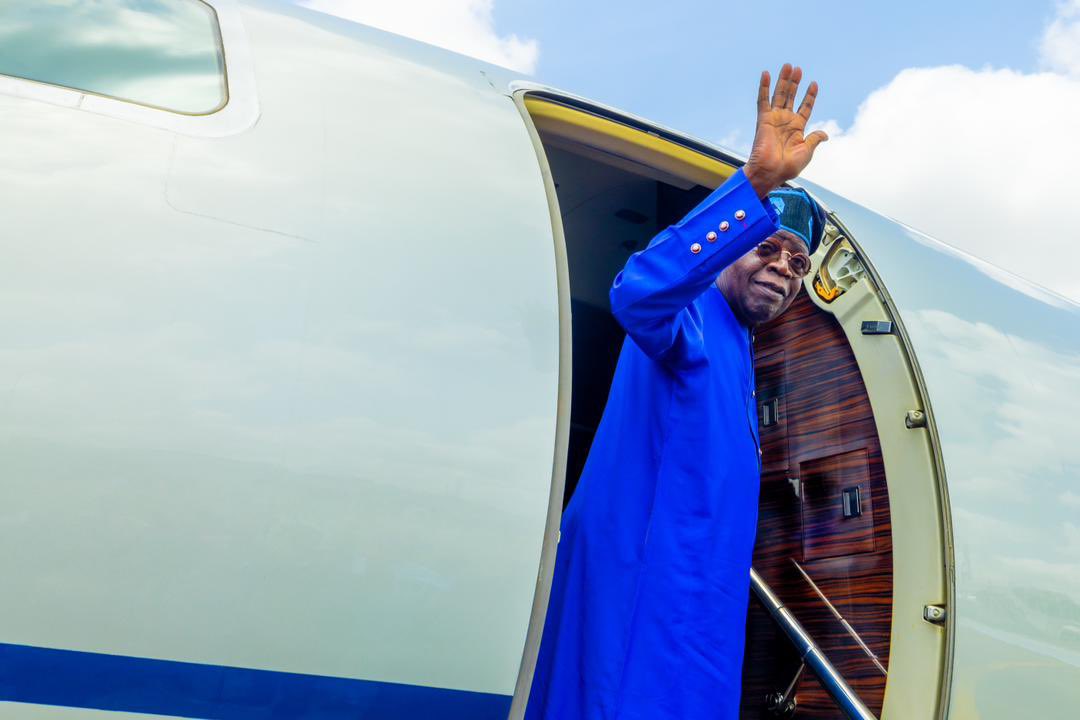
Nigerian President Bola Ahmad Tinubu is set to make his first international trip to France. 

The Special Adviser to the President on Special Duties, Communication and Strategy, Dele Alake, disclosed the maiden trip of the President in a statement on Monday. 

According to Mr Alake, the President will join other world leaders to review and sign a New Global Financial Pact that places vulnerable countries on the priority list for support and investment, sequel to the devastating aftermath of the COVID-19 pandemic. 

The two-day summit also aims at mobilizing innovative financing for countries prone to climate disruptions, fostering development in developing nations and addressing other diplomatic concerns.

The Summit will be hosted by President Emmanuel Macron of France and will be held at Palais Brongniat.

The Special Adviser also disclosed that the President will return on Saturday.

I’ll not sign new deal at PSG—Mbappé

By Muhammadu Sabiu
 
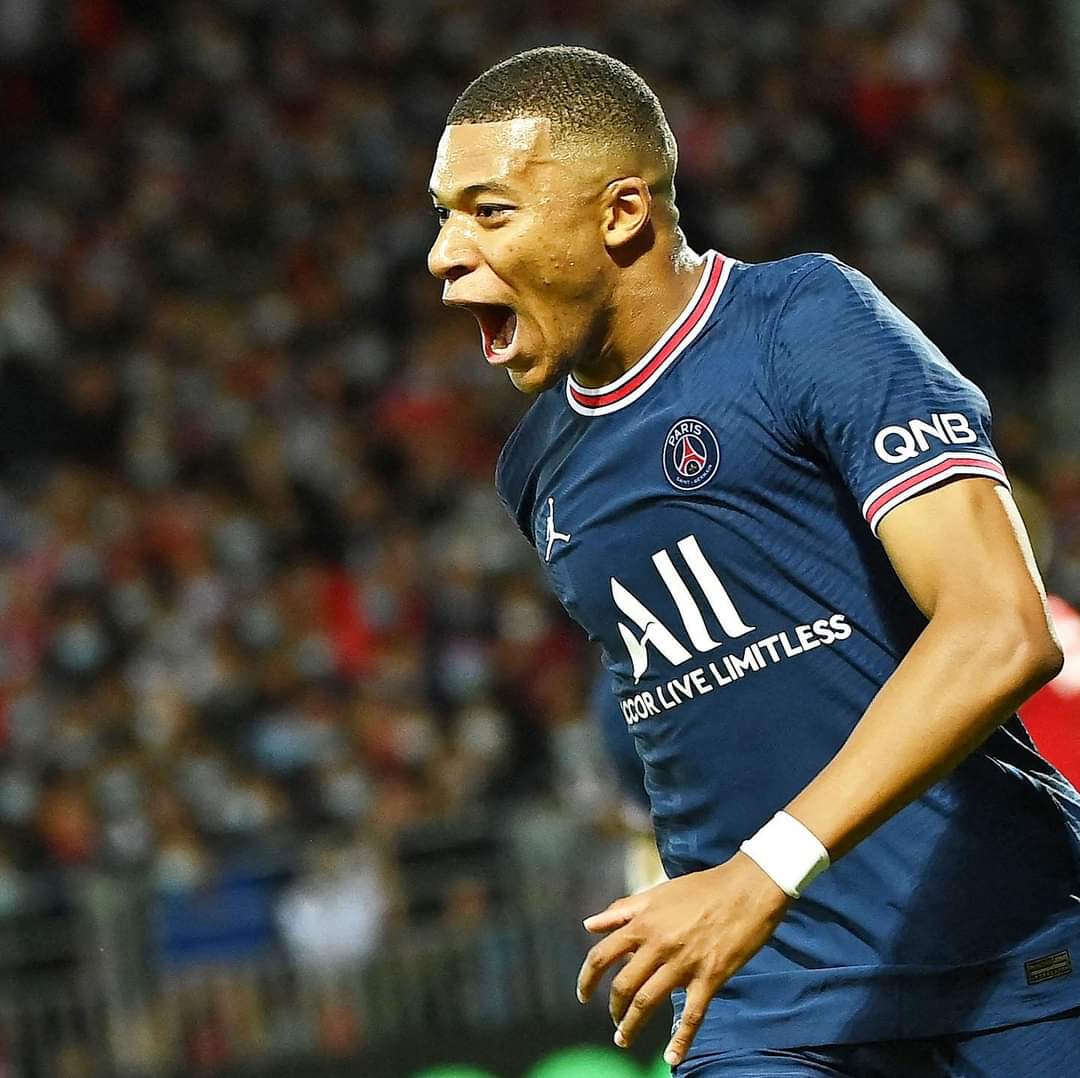
In a stunning turn of events, Kylian Mbappé, the star forward for Paris Saint-Germain (PSG), has issued an official statement through the AFP agency confirming that he will not be signing a new contract with the club.
 
The announcement comes as a shock to fans and the football world alike, as negotiations had been ongoing for some time.
 
Mbappé’s statement unequivocally states, “I have NEVER discussed any contract renewal with PSG.” 
 
This statement contradicts the narrative that had been portrayed in recent months, suggesting that talks were underway regarding a potential extension of his contract.

Of football, racism and hypocrisy

By Aliyu Yakubu Yusuf 

Racism in football has been a problem that refuses to go away. Football is often rightly described as the beautiful game. However, the persistent problem of racism has been a blight on this enduring beauty. Despite the fact that numerous campaigns (such as “Say No To Racism” and “Black Lives Matter” etc.) sponsored by FIFA and other regional football associations, racism has seemingly been kryptonite for the footballing establishments. 

I firmly believe that FIFA, UEFA, the media and most fans in Europe and America are not sincere about fighting racism. All these campaigns against racism are merely lip service that will never bring an end to this menace. Vinicius Junior is just the latest case that opens a fresh can of worms in a long list of racism storms that rocked the football world. 

When the trio of Saka, Sancho and Rashford missed crucial penalties in England’s Euro 2020 final defeat to Italy, they were racially abused online by their own fans. Even Real Madrid fans are also guilty of racism towards black players from other clubs and their players. When FIFA released the votes for the last Ballon d’Or, and it appeared that Real Madrid’s Austria captain, David Alaba, had voted for Lionel Messi as his first pick ahead of his teammate Karim Benzema, Real Madrid fans racially abused him online. And he was forced to apologise. And these are the same people that are up in arms “protecting” Vinicius. If this is not hypocrisy, I don’t know what is. 

Heck! Even fans at various French clubs were reported to have racially abused black players. And this is a country whose national team is simply an amalgam of players from their former African colonies. Imagine! 

Racism is here to stay as long as the powers that be are not serious about tackling it. FIFA has a three-step process for dealing with racism during matches. First, the referee should stop the game and announces that racist chants are going on and should stop. Then, if the chants continue, the referee should apply the second stage, which is to instruct the players to go back to the dressing room and wait. After a while, the referee should ask the players to resume on the pitch and restart the game. Finally, if the chants continue, the referee should apply the third process, which is to stop the game entirely and award the three points to the opponents. 

However, instead of making it mandatory for all regional football unions to adopt this process, FIFA only “recommend” it. Everyone knows that the only way to stop racism once and for all is to enforce this law. When clubs realise that some unscrupulous elements within their fanbase are making them lose points unnecessarily, they will fish out these “fans” and give them lifetime bans from stadiums. 

The question is, ‘Do black lives really matter’?

Aliyu Yakubu Yusuf wrote from Bayero University, Kano. He can be reached via aliyuyy@gmail.com.

On the conditional lionisation of Black players and racism in football

By Musa Touray

When I saw France’s penalty squad entirely constituting black players at the final of the recently concluded World Cup, I was not happy with the composition even though I was rooting for Argentina, itself a country infamous for Black antipathy. I not only expressed my discontent at this decision but also prophesied the barbaric racism it could instigate among disgruntled fans if France lost to Argentina, as it eventually turned out.

The sole reason a legion of black football enthusiasts supported Argentina against France is their desire to see their football idol Lionel Messi win the World Cup and nothing else. The country has not done anything to deserve the symbolic outpouring of support from its African (black) fan base.

If anything, it’s the memories of affliction that Argentina meted out on their progenitors which continue to linger in their minds. History has it that the country is an inveterate anti-Black establishment that was said to have at least once led a crusade to exterminate its black residents. 

In a December 19, 2022 article titled “Messi’s emilokan – In Touch,” Sam Omatseye, a renowned Nigerian columnist for The Nation newspaper, wrote, following Argentina’s World Cup victory against France, that he “wanted France to beat Messi’s country, if I had a heartbeat for Messi’s game. It is a nation that never liked blacks. While Brazil is content to place its dark people in its ghettoes and salve its conscience by cultivating its Peles, their southern cousins decided to wipe them out. In a whitewashing sweep, they removed every trace of black people from their soils.” 

“They did not only cleanse the blacks out of their lands, they whitewashed its telling. They do not want even their forbears to know what happened. Today’s Argentines do not learn that aspect of their butchery. They were the ancestors of Hitler. But no one can deny the story. Some of their leaders are even proud of it. One of their former presidents, Carlos Menem, once quipped: ‘In Argentina, blacks do not exist; that is a Brazilian problem.’” He added.

Now that black fans—and of course, other fans—have their aim fulfilled in wanting to see Messi win the World Cup over his stiff competitor Ronaldo, most of them will not be rooting for Argentina ever again in light of the foregoing narrative.

Following England’s Euro defeat in 2020, its trio of black players, in the persons of Marcus Rashford, Jardon Sancho and Bukayo Saka, were cursed with excruciatingly racist invectives laden with all sorts of disgusting stereotypes. They were called monkeys, as if not humans. They were asked to return to their ancestral countries as if England was not where they proverbially had their umbilical cords interred. 

When Saka, Rashford and Bellingham made a name for themselves by performing excitingly and scoring goals at the recently concluded World Cup, they were lionised and extolled to the skies. Their identity and colour did not matter. They were more English than their colour could conspire to deny. Hence the caption of this article cannot be more befitting.

England progressed into the tournament—thanks to the awe-inspiring performance of their goalscoring black players—until everyone thought they would have the trophy. At last, Harry Kane’s missed penalty shoot defied people’s expectations. France knocked England out. Unlike Rashford, Sancho and Saka, Harry Kane was not subjected to any racial abuse. He survived the not-so-extreme heat of the moment.

The story would be different if a Rashford kind of player missed that penalty if the wont of English fans is anything to go by. His colour, although innocent, would have risen the anger and agitation to an unimaginable frenzy. It would invite the verbal causticity of the ungrateful trolls of a fan and pique the online devil in them. But since Harry Kane is one of their kind, his penalty miss was understood to mean nothing but destiny.

French fans have also unfailingly shown the world their racial bigotry, prompting a black French player to disable his Instagram account after having had enough of their online enormity. They blatantly disregarded black players’ overwhelming contributions and numerical significance throughout the tournament. 

Had they a pretence of gratitude, they wouldn’t resort to demonising their black players; yet, they would be busy trying to figure a way to canonise black players like Kylian Mbappé, who was literally the lifeblood of France in this World Cup.

Black players are, in other words, recognised and embraced when they pull stunning performances, ostracised and vilified when they do the contrary. It is nothing, as absurd as it sounds, other than the melanin that puts them at the receiving end of this insulting inconsistency of fans welled up in racism.

Musa Touray wrote from Sandu Kuwonku, The Gambia, via musatouray970@gmail.com.
Qatar 2022: France cripples Morocco’s hope of winning World Cup

By Muhammadu Sabiu

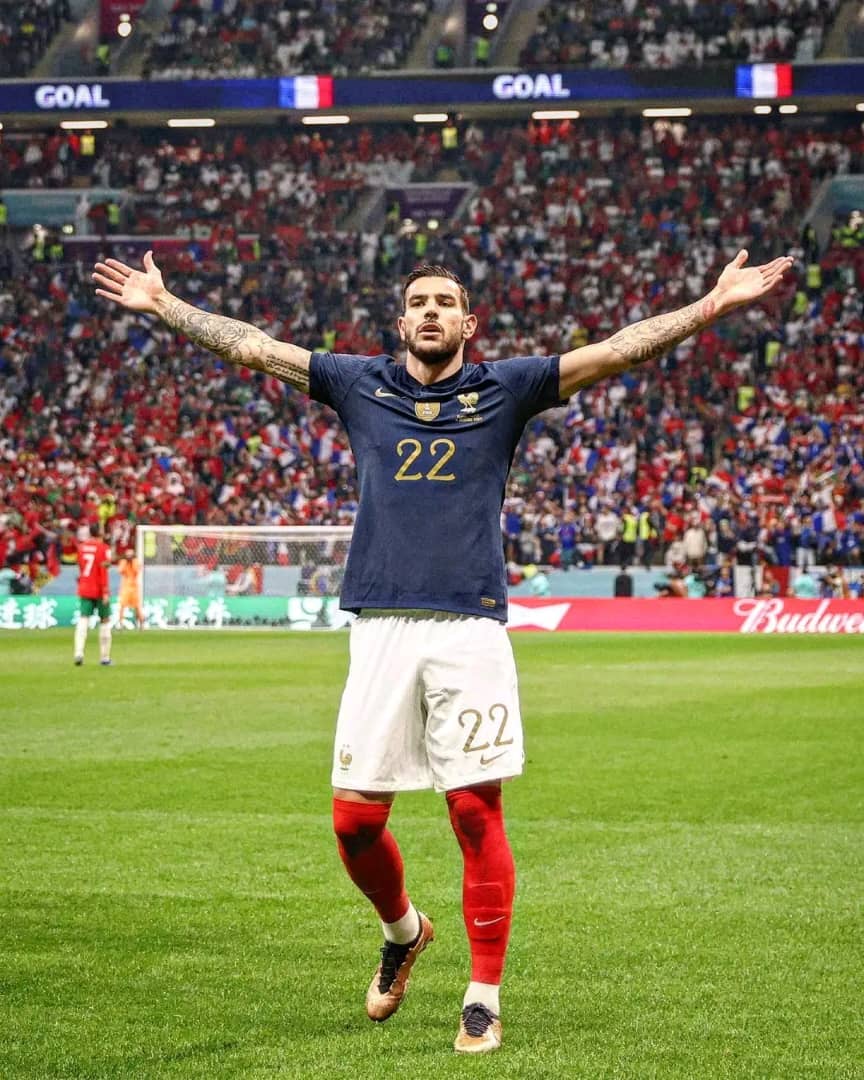
By defeating Morocco 2-0 in the Al Bayt Stadium on Wednesday, defending champion France put an end to Morocco’s hopes of winning the 2022 World Cup.

In barely four years since winning the World Cup in Russia, France has advanced to its fourth final game thanks to goals from Theo Hernández and Randal Kolo Muani.

However, Morocco, the first African team to advance past the quarterfinals of the World Cup, should be proud of itself for keeping France at bay before Kolo Muani’s game-winning goal.

The last time a defending World Cup champion made it to the championship game was France in 1998.

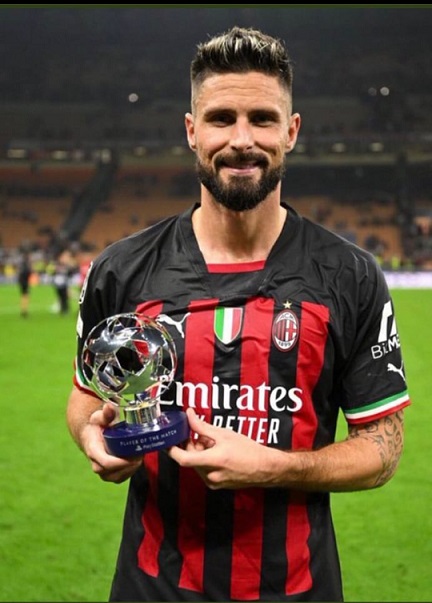
King of Match – Olivier Giroud

By Musa Abdullahi Kaga

“I try to do my job. When I’m in the area, I always try to be in the right place at the right time,” – Giroud

When Olivier Giroud’s rumoured move to Milan – from Chelsea – surfaced on the Internet, many Milan faithful were unhappy. Already battling with 39-year-old Zlatan’s fitness, most fans thought a 35-year-old wasn’t an ideal transfer target.

A token was paid to Chelsea for the transfer of the world cup winner, which has been paying off since then. His elegance and goal-scoring finesse were never in doubt. Olivier seamlessly settled into the team, as you’d expect of any experienced player of such calibre.

Everyone expected a rivalry between the former Arsenal star and Zlatan for the starting spot. However, it eventually proved to be a complementary role. He stood ably while the Lion (Zlatan) was nursing his injuries. When asked about the possibility of playing as a deputy to Ibrahimovic, he responded, “I don’t want to think about who will play; my job is also to be a big brother for the young players”.

After a seven-year absence from the Champions League, Milan desperately looked towards Zlatan Ibrahimovic for a solution. He eventually helped them to a second-place finish in the Italian Serie A. However, with the acquisition of Giroud the following year, the target was to build upon the success. He did that by contributing 11 goals and winning his second career league title, the first with Montpellier in 2012.

Naturally, big game players tend to be fan favourites, and Giroud was able to cement that status immediately with his super performances against the big guns. Most notably against Inter earlier in February, his brace assured the 3 points despite the defending champions taking the lead first. He followed that up with a star performance against Napoli, scoring the game’s only goal. Then, in the recent Derby win against Inter, he scored one of the three goals to claim the maximum points.

On the final day of last year’s league campaign, Milan only needed a draw to be crowned champions of Italy. Giroud showed up with pride and contributed two goals in the 0-3 triumph in the Magpie stadium. Last night, in the last game of the UCL group stage, Milan needed a draw to grace the knockout stage after a nine-year break. Their hero, Olivier Giroud, is at it again, with four goals contribution (two assists and two goals) in a commanding 4-0 win in front of a packed San Siro. He never gets old. At 36, he graced the game with a spectacular performance.

Grande Olivier!

Musa Abdullahi Kaga wrote via musaakaga@gmail.com.

Nigeria Civil War: Conspiracies and interest of the World Powers

By Tijjani Hassan

War is a business of interest. Like the Russian invasion of Ukraine over the fear of western domination of the geopolitics of the defunct Soviet Union, Nigeria had her fair share of international politicking of how the superpowers wrestle for relevance in the post-World War II era, climaxing into the Nigerian-Biafran Civil war of secession.

As Chinua Achebe summarily spelt out in his book There was a Country, Harold Wilson, the PM of Britain, maintained a firm stance about one of the Queen’s priced colonies. The UK would not support the breaking away of Nigeria in the guise of secession. That would mean challenging their preplanned neocolonialism programme.

The BBC’s Rick fountain, in a story on Monday, January 3, 2000, titled “Secret papers reveals Biafra intrigue,” shows how Britain would and currently was more interested in her oil holding than a “united Nigeria”. The Cold War would see Britain and the Soviet Union wrestling for supplying the largest cache of ammunition to General Yakubu Gowon-led Federal government.

Russia, part of the former USSR, took a step further by sending MiG fighters and technical assistance to Nigeria. Moscow later expanded her bilateral relation with Nigeria with an eye on the Ajaokuta Steel Company. As a result, a $120 million contract was signed in 1969. However, the Steel Company, situated in present-day Kogi State, North Central Nigeria, remained a testament to the elephant project without producing steel for the manufacturing needs of Nigeria to date. 

The UK was, however, much concerned about France’s secret antics.

France, the other big player in the dark colonial days in Africa, was secretly shipping weapons and ammunition to the Biafran enclave through their former colony of Ivory Coast and Gabon. Moreover, France has always been sceptical of Nigeria’s growing domination and influence over the Paris Francophone clients in the West Africa Subregion. The Size of Nigeria is intimidating to her French neighbours of Cameroon, Niger, Chad, Benin Republic, and others in the geography of the West Africa sub-region.

The Caribbean Island of Haiti was the first to make a rush in granting full diplomatic relations with the breakaway Biafra Republic in 1969. That means a little to Nigeria anyways. It was, however, a moment of celebration in Biafra as it rekindled the hope for the sovereign Biafra Republic. 

France, who openly claimed to be neutral in her initial response to the crisis, issued a statement from the Council of Ministers in July 1968 sympathizing over the heart-trembling development in the heartland of Biafra. It was orchestrated by Charles de Gaulle, the French President who led Paris’s resistance against the Nazis in World War II.

Like the UK, it was about resource control. Paris has already hatched a plan for her multinational corporation, Elf Aquitaine, to become later the primary explorer of the crude oil deposit in West Africa. Nigeria’s oil in the old Eastern region would be the spoil of war.

While the war ragged, the United States of America openly looked elsewhere, neither supporting Nigeria nor Biafra. Instead, they advocated for a united “One Nigeria”. President Lyndon Johnson toed the line of Britain until Richard Nixon. Upon his assumption of office, President Nixon called on the Nigerian Military Forces to cease hostility to ease the suffering in Biafra.

The Portuguese were much more clever as they paved the way for Lt. Col. Emeka Odumegwu Ojukwu to land Biafran planes in Sao Tome, a Portuguese colony. The agreement was, however, shrouded in secrecy.

The Chinese were not left out of the Civil war politics in Nigeria. Although Biafra got most of her weapons from the black market and produced a few locally, China later provided military equipment to the breaking away part of Nigeria.

African leaders were not left out too. Despite the organization of Africa Unity (OAU)’s efforts to reconcile Gowon and Ojukwu, Julius Nyerere of Tanzania, on April 13, 1968, openly declared Dar-es-Salaam’s recognition of the Republic of Biafra. Tanzania was the first African country to take this overt stance. Gabon, Ivory Coast and Zambia would later follow the footsteps of Tanzania.

In sum, it was more about international politics and the desire to have a share of Nigeria’s resources in colossal oil deposits. As a result, western powers contributed less towards ending the Civil War, which ended in 1970.

Tijani Hassan A. wrote from Kano, Nigeria. He can be reached via tijanihassan2020@gmail.com.

Ganduje settles N400m foreign scholarship, awards N3m to another student

By Muhammad Aminu

Kano State Governor, Abdullahi Umar Ganduje, has settled outstanding fees for Kano State students undergoing postgraduate studies in universities in Cyprus and France.

The Governor has also awarded another N3m reward to a student, Suyidi Sani, for his sterling performance in the just concluded Young Nigerian Scientists Presidential Award.

Suyidi, an indigene of Nasarawa local government area of the state, emerged 7th and was the only northerner among the first 10 participants in the competition.

While presenting the money, Kano State Commissioner for Higher Education, Dr Mariya Mahmud Bunkure, said the student had gained admission to study at Bayero University Kano after scoring 303 in the Joint Matriculation Examination.

She said Kano State Government has assured that it will sponsor his postgraduate studies after completing his first degree programme.

She maintained that the state government is committed to uplifting the standard of education to global standards.

The commissioner for youths and sports, Alhaji Kabiru Ado Lakwaya, said the state government was committed to the development of education.

He added that the government had set up a committee to compile a comprehensive report on bursaries where millions of naira had been set aside to clear outstanding internal payments.

While receiving the cash, Suyidi Sani said he would continue to put more effort and do everything possible to be among the best students at Bayero University Kano.

He applauded Kano State Government, the entire state executive council, his parents and teachers for encouraging and supporting him.

Leave our Prophet alone!

By Dr Bala Muhammad

His name is Muhammad. And all of us, now One and a Half Billion Souls and counting, love him beyond compare. In fact, we so love him that others just can’t understand or comprehend. They don’t get it, and they can’t get it, for they know not this kind of love. We love him more than we love our parents; indeed we love him more than we love ourselves! The moment we hear his name invoked, we immediately add: “May the peace and blessings of Allah be upon him.” O we so love him, Muhammad!

He left us more than 14 centuries ago, yet it is as if he daily lives amongst us. There is no day that passes without his name being called, and praised, by each one of us. To us, he is inviolable, unjokable. He is leave-alonable. We don’t joke about him. To us, Muhammad the Prophet is a serious matter. In anything concerning him, we are, we swear by Allah, fanatical, fundamental, impatient. We love him; you don’t, and you can’t understand. So we say to them, just leave him alone.

We are so many, and O how we so love him! A billion-plus loves! Yet some people who don’t understand us, or our Prophet, think they can just play with his name, and his person, and his dignity, and hide under ‘freedom of expression’ or similar Western jargon. We say to unto them: just leave him alone! May our fathers and our mothers be a ransom for you, O Muhammad! O Rasulullah!

They have done it again! Filmmakers and cartoonists and writers who think they can make fun of our Prophet and go scot-free should know this fact: you may abuse a Muslim’s father, you may abuse a Muslim’s mother, you may abuse everyone abusable, but never poke fun or abuse our noble Prophet Muhammad. On that, we are fanatical, we are fundamental; end of discussion. May the peace and blessings of Allah be upon you O Rasulullah!

But we should all remember that the forefathers of these insensitive filmmakers and cartoonists and writers were not like them. They acknowledged and praised our Prophet as the greatest person to have ever lived. His name Muhammad, indeed, means praiseworthy. SallalLahuala Muhammad.
Michael H. Hart in his book on ratings of people who contributed towards the benefit and upliftment of Mankind chose Muhammad at the top of his list of the Greatest Hundred. He writes: “My choice of Muhammad to lead the list of the world’s most influential persons may surprise some readers and may be questioned by others, but he was the only man in history who was supremely successful on both the religious and secular levels.” (The 100: A Ranking of the Most Influential Persons in History: New York, 1978).

George Bernard Shaw, the great philosopher, said about the Prophet: “He must be called the Saviour of Humanity. I believe that if a man like him were to assume the dictatorship of the modern world, he would succeed in solving its problems in a way that would bring it much needed peace and happiness.” (The Genuine Islam, Singapore, Vol. 1, No. 8, 1936).

Historian John William Draper in his well-known work, ‘A History of the Intellectual Development of Europe’, observes: “Four years after the death of Emperor Justinian, was born at Makkah, in Arabia, the man who, of all men, has exercised the greatest influence upon the human race.”

Dr Annie Besant in her book, ‘The Life and Teachings of Muhammad’ (Madras, 1932) says: “It is impossible for anyone who studies the life and character of the great Prophet of Arabia, who knows how he taught and how he lived, to feel anything but reverence for that mighty Prophet, one of the great messengers of the Supreme. And although in what I put to you I shall say many things which may be familiar to many, yet I myself feel whenever I re-read them, a new wave of admiration, a new sense of reverence for that mighty Arabian teacher.”

David George Hogarth (1862-1927) English archaeologist, author, and keeper of the Ashmolean Museum in Oxford says of Prophet Muhammad:

“Serious or trivial, his daily behaviour has instituted a canon which millions observe this day with conscious mimicry. No one regarded by any section of the human race as a Perfect Man has been imitated so minutely. The conduct of the Founder of Christianity has not so governed the ordinary life of His followers. Moreover, no Founder of a religion has been left on so solitary an eminence as the Muslim Apostle.” (Arabia, Oxford, 1922).

Edward Gibbon (1737-1794), considered the greatest British historian of his time, says of our Prophet: “The greatest success of Muhammad’s life was affected by sheer moral force without the stroke of a sword.” (History of the Saracen Empire, London, 1870). Gibbon adds elsewhere: “His (i.e. Muhammad’s) memory was capacious and retentive, his wit easy and social, his imagination sublime, his judgment clear, rapid and decisive. He possessed the courage of both thought and action.” (History of the Decline and Fall of the Roman Empire, London, 1838, vol.5, p. 335).

Professor Keith L. Moore, one of the world’s most prominent scientists in the fields of anatomy and embryology, and author of the book ‘The Developing Human,’ which has been translated into eight languages, was in Saudi Arabia in 1981 during the Seventh Medical Conference in Dammam. Professor Moore said: “It has been a great pleasure for me to help clarify statements in the Qur’an about human development. It is clear to me that these statements must have come to Muhammad from God because almost all of this knowledge was not discovered until many centuries later. This proves to me that Muhammad must have been a messenger of God.” SallalLahuala Muhammad.

Thomas Carlyle, in ‘Heroes and Hero Worship and the Heroic in History,’ (1840) says: “The lies (i.e. Western slander) which well-meaning zeal has heaped round this man (Muhammad) are disgraceful to ourselves only.”

Mahatma Gandhi, speaking on the character of Muhammad said: “I wanted to know the best of one who holds today’s undisputed sway over the hearts of millions of mankind…I became more than convinced that it was not the sword that won a place for Islam in those days in the scheme of life. It was the rigid simplicity, the utter self-effacement of the Prophet, the scrupulous regard for his pledges, his intense devotion to his friends and followers, his intrepidity, his fearlessness, his absolute trust in God and in his own mission. These, and not the sword, carried everything before them and surmounted every obstacle. When I closed the 2nd volume of the Prophet’s biography, I was sorry there was not more for me to read of the great life.” (Young India).

Alphonse de Lamartine (1790-1869), the French poet and statesman, says of our Master: “Philosopher, orator, apostle, legislator, warrior, conqueror of ideas, restorer of rational dogmas, of a cult without images; the founder of twenty terrestrial empires and of one spiritual empire; that is Muhammad. As regards all standards by which human greatness may be measured, we may well ask, is there any man greater than he?” (Translated from Histoire de la Turquie, Paris, 1854, vol. II).

They will continue to provoke us by mocking our Rasul. But we should be ahead of them by being circumspect in our protestations. We must remember that Allah says “Wa la taziruwaziratuwizraukhra”. The consequence of this blasphemy is a burden on those filmmakers, cartoonists and writers. And they will bear it, in sha Allah.

Please tell all of them: just leave our Prophet alone!

This article was written by BALA MUHAMMAD and first published by Weekly Trust (Nigeria) on Saturday, 22 September 2012. It’s reproduced here with the author’s permission.