Flooding

NEMA and the fight to curb Nigeria’s recurring flood disasters

By Abdulhamid Abdullahi Aliyu

Every rainy season in Nigeria, when the skies darken and rivers swell, millions brace for the inevitable. In states like Kogi, Benue, and Bayelsa, families keep bags packed, ready to flee at the first sign of danger. Flood season has become a season of exile, not a question of if disaster will strike, but when.

The devastation of 2022 serves as a poignant reminder of what is at stake. That year, floods claimed more than 600 lives, displaced over 1.4 million people, and destroyed livelihoods on a massive scale. Croplands vanished under water, homes crumbled, and dreams were swept away. Three years later, communities still carry those scars, and the new flood alerts for 2025 have revived fears of a repeat.

It is against this grim backdrop that the National Emergency Management Agency (NEMA) is repositioning itself. For years, the agency was primarily seen as the responder of last resort, arriving with relief materials after lives and property had already been lost. Today, under the leadership of its Director General, Mrs Zubaida Umar, NEMA is making a deliberate shift: from being merely reactive to becoming a driver of foresight and prevention.

“Emergency management must no longer be about sympathy after the tragedy,” Mrs Umar insists. “It should be about preparedness that saves lives before the waters rise.”

That vision is beginning to take root. NEMA now works more closely with the Nigerian Meteorological Agency (NiMet) and the Nigerian Hydrological Services Agency (NIHSA), ensuring that seasonal forecasts and dam release alerts are translated into action at the grassroots level. Through community training, simulations, and sensitisation, the agency is attempting to close the gap between warnings and response, a gap that has cost too many lives in the past.

Yet the challenge remains daunting. Nigeria’s geography makes it naturally vulnerable, with the Niger and Benue rivers cutting across states where millions depend on farming. Poor urban planning compounds the danger, as blocked drainage and informal settlements in flood-prone areas turn cities into ticking time bombs. Climate change, with its unpredictable rainfall patterns, only worsens the threat.

In Lokoja, often referred to as the “confluence of suffering” during flood season, traders recall markets transformed into lakes, while fishermen lament the cruel irony of drowning in abundance. In Borno, families already displaced by insurgency were uprooted again when torrential rains washed away their shelters. These stories underscore a sobering truth: floods in Nigeria are not just natural disasters, but also humanitarian emergencies that exacerbate existing vulnerabilities.

Still, there are signs of progress. NEMA has strengthened partnerships with state governments and agencies, such as the Hydroelectric Power Producing Areas Development Commission (N-HYPPADEC), to broaden the response framework. The agency has also invested in early warning systems, ensuring that flood alerts do not remain stuck in Abuja press briefings but reach local leaders, town criers, and community radio stations.

For NEMA, the real battle is not only about deploying relief materials but about changing mindsets. Preparedness must become a culture. Farmers adjusting their planting calendars to forecasts, families relocating from high-risk flood plains, and local leaders treating disaster drills as seriously as security meetings. These are the shifts that make prevention real.

But as Mrs Umar acknowledges, transformation takes time. Resources remain limited, and relief supplies can only go so far in a country where millions are at risk. Disaster management will therefore continue to be a delicate balance between urgent response and long-term prevention.

What is clear, however, is that the old model of waiting until floods wreak havoc before acting is no longer sustainable. With new alerts already issued for 2025, the real task is ensuring that early warnings translate into early action. The coming seasons must not repeat the mistakes of the past.

Floods will always come. The question is whether they remain an annual tragedy or become a manageable threat. For NEMA, the answer lies in standing not just as a responder to disaster, but as a shield against it. For the millions who live in the shadow of swollen rivers, that shift could mean the difference between despair and survival.

Abdulhamid Abdullahi Aliyu writes on disaster management, humanitarian response, and national development.

Before it drowns us again: The looming flood in Maiduguri

By Lawan Bukar Maigana

I am writing this article not as a distant observer but as someone who walked through flooded streets, stood side by side with victims, and spent sleepless nights wondering how many more people would survive the next downpour. I have seen firsthand the destruction that floods bring to Borno State, and I feel morally obligated to appeal to both the federal and Borno State governments.

This isn’t just another seasonal disaster—it is a pattern that is worsening every year, and if nothing is done urgently, the consequences will be even more devastating. With recent flood warnings placing Maiduguri and Ngala on high alert, it is time to confront this problem with the seriousness it demands.

On the night of September 10th, 2024, the people of Maiduguri experienced a calamity that was both preventable and predictable. The Alau Dam collapsed, releasing a force of water that surged through communities, homes, and markets. Over 400,000 residents were displaced, and more than 150 lives were lost in a matter of hours.

The city turned into a watery grave, with roads cut off, houses submerged, and businesses completely destroyed. The damage wasn’t limited to infrastructure—it shattered lives, disrupted families, and exposed the deep infrastructural weaknesses we have long chosen to ignore.

Almost a year later, thousands of those affected are still struggling to rebuild their lives. Many families remain without shelter, forced to live in makeshift tents or overcrowded compounds. Traders who once ran thriving businesses in Monday Market, Gwange, Moduganari, and Customs areas are still unable to return to their stalls. 

Some have relocated entirely, while others now rely on daily handouts to survive. The truth is, for many of them, recovery has barely begun. What is even more painful is knowing that much of this suffering could have been avoided if the right steps had been taken early enough.

I was part of a team that responded immediately after the flood hit. Alongside Kyari Alto Mohammed and Mohammed Umar, we coordinated a massive grassroots relief effort that reached some of the hardest-hit areas in Maiduguri. With no institutional backing, we mobilized resources through social media, friends, and personal savings.

We cooked thousands of meals each day, provided water, distributed sanitary items, and gave cash support to vulnerable families, including women who had just given birth in the middle of flooded neighborhoods. We were physically present in communities like Gwange, Bulabulin, Abbagaram, Customs, Bayan Quarters, and 505 when few others dared to step out.

Our effort was not driven by any political ambition or media recognition, but by the sheer urgency of the situation. Still, we were humbled when our work received national attention. The Nigerian Defence Headquarters acknowledged our commitment. Daily Trust and Arewa Agenda ran stories documenting our activities. We were not the only ones helping, but we were among the few who stayed consistent long after the cameras left. That recognition only strengthened our resolve to keep going until real solutions are implemented.

The crisis wasn’t just about hunger or shelter. In one instance, we received a call that a woman in labor was stranded near the Customs area. With the help of team members, we transported her to a nearby clinic, and she delivered safely. This is just one of many stories that reveal how fragile life becomes during disasters, especially when there is no functional system to protect the most vulnerable. You cannot hear such stories and return to business as usual.

And yet, after all this pain, the structural root of the problem—Alau Dam—remains unrepaired, unexpanded, and not reconstructed. The dam was not just overwhelmed by water, it had been weakened over the years due to a lack of maintenance, and nothing meaningful has been done to strengthen or expand it since. If we are serious about preventing future disasters, Alau Dam must be reconstructed with modern engineering standards that can withstand extreme events. A city like Maiduguri cannot be left at the mercy of a dam that is both outdated and unreliable.

The rivers and drainage systems that cut through Maiduguri—especially those in Monday Market, Gwange, Moduganari, and the Custom area—have become bottlenecks. They are either blocked by debris or too narrow to carry runoff during the rainy season. When the water rises, these waterways overflow into neighborhoods, turning entire communities into flood zones. Dredging and expanding these channels is not a luxury—it is a necessity. Every rainy season without action only increases the cost of the next disaster.

Recent warnings by the National Flood Early Warning Centre of the Federal Ministry of Environment indicate that Maiduguri and Ngala are likely to face flooding again this year. With Cameroon releasing water from the Lagdo Dam and rainfall levels projected to be high, the signs are clear. If we do nothing, we are walking into another tragedy with our eyes wide open. We must stop acting like this is a surprise. It is not. We know what will happen. The question is whether we care enough to act.

I believe this is the moment for not just boldness, but proactive leadership. The federal and state governments must go beyond relief donations. They must invest heavily in preventive infrastructure. Rebuilding Alau Dam is step one. Dredging and expanding the river systems within Maiduguri is step two. And step three should be the construction of new multipurpose dams on the outskirts of the city. These new dams will not only help with water management, but they can also be used for irrigation farming, thereby creating jobs for our teeming youth population.

Imagine a system where the floodwaters are not a threat but an opportunity—collected, stored, and channeled into large-scale farming projects. It is possible. With the right planning, we can turn our flood problem into a source of prosperity. But this requires vision and political will. It means prioritizing infrastructure over rhetoric, and people over politics. It means spending money on what matters, and doing it now—not after lives are lost.

As we advocate for these changes, we must also fix our early warning systems. The people of Borno deserve timely, reliable alerts that can help them prepare for emergencies. This includes real-time monitoring of rainfall levels, dam pressure, and river volumes. Alerts should be disseminated through radio, TV, community leaders, and even SMS. Preparedness should not be a privilege; it should be a right for every citizen.

We also need a comprehensive flood response plan that includes evacuation routes, designated shelters, emergency food reserves, and mobile clinics. What we had last year was an improvised reaction. We must transform that into a formal system that is tested and improved regularly. Communities must be trained on how to respond to flooding so that panic does not claim more lives than the water itself.

For those still displaced by last year’s flood, the government must provide real support. This means not just money, but long-term assistance to help them rebuild homes, restart businesses, and recover their dignity. A casual donation of rice and wrappers is not enough. These people need real pathways to recovery, or else they will remain in a cycle of suffering.

This appeal is not just coming from me alone, but from the thousands who survived, the families still grieving, the mothers still nursing babies under destroyed roofs, and the fathers who cannot provide because their means of livelihood was washed away. They may not have access to media or public platforms, but their voices matter. I am simply amplifying what they live every day.

I also call on humanitarian organizations, development partners, and civil society groups to push for structural interventions. The burden cannot rest on volunteers alone. We need coordinated support, technical expertise, and funding directed toward long-term flood prevention—not just short-term relief distribution.

Let us not pretend that this problem is unique to Borno. Other states across Nigeria are also at risk. But Borno remains among the most vulnerable due to its topography and its already fragile infrastructure. If we get it right here, we can create a model for flood resilience across the country.

To my fellow citizens, especially those in leadership, I ask: how many more people must die before we act? How many more homes must be destroyed before we acknowledge that climate change, poor planning, and neglect are a deadly combination? This is a moral question, not just a technical one.

As someone who has worked in the mud, cried with victims, and seen hope disappear under dirty water, I say this with a full heart: enough is enough. Let this year be different. Let this be the year we prepared, not the year we mourned again. Let us not wait until the next rainy season swallows another community before calling a press conference.

The cost of inaction is too high. The reward for preparation is immeasurable. Borno deserves more than sympathy—it deserves protection, planning, and progress. The time to act is not tomorrow. It is today. It is now.

I write this with the urgency of someone who has seen too much loss. I write it because I believe we can prevent the next disaster if we decide to. I write it because Borno’s future should not be shaped by floods, but by the collective courage to build something better. May our leaders rise to the occasion, and may we never have to write this story again.

Lawan Bukar Maigana is Daily Trust’s 2024 Hero and can be reached via email: Lawanbukarmaigana@gmail.com.
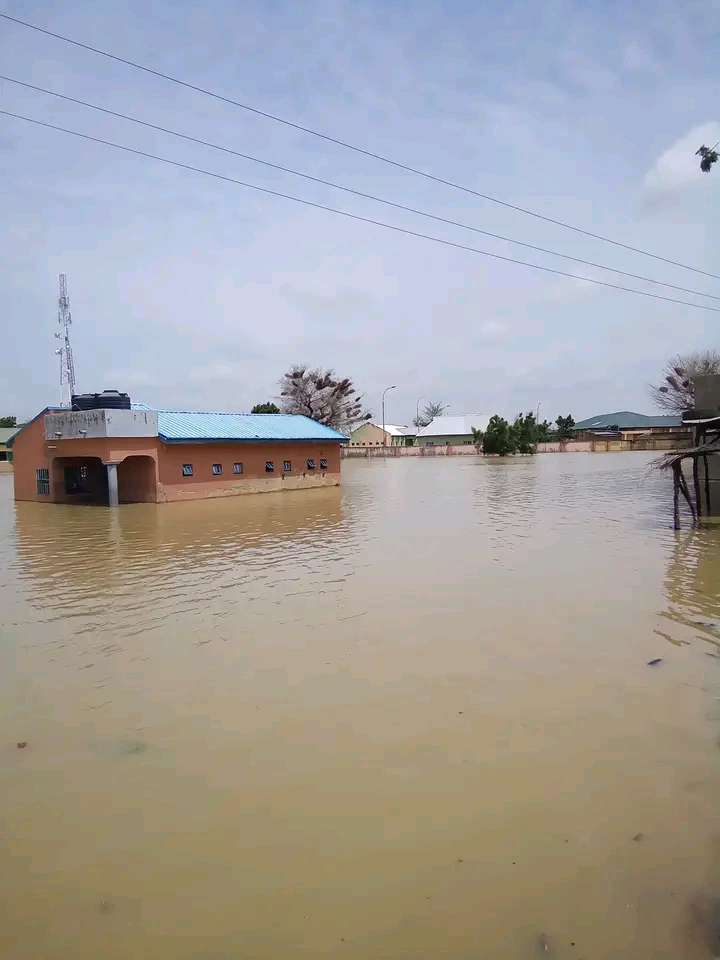
National Emergency: Is the solution to the flood crisis 

By Sale Rusulana Yanguruza 

Thousands of lives, homes, government properties, and businesses in Nigeria and Africa are lost or submerged due to ongoing floods. The crucial questions are: what measures can end this crisis? Will we continue to watch houses and people suffer? What has the government done so far, and has it been effective? If not, citizens, residents, and the government must re-strategise their flood response plans to address the issue permanently.

The government needs to give special attention to addressing these flood-related matters, especially since the country has been facing this disaster since the beginning of the rainy season. The 2025 Annual Flood Outlook (AFO) indicates that 1,249 communities in 176 local government areas across 30 states and the Federal Capital Territory (FCT) fall within high flood risk areas.

The statement added that High-flood-risk states are Abia, Adamawa, Akwa Ibom, Anambra, Bauchi, Bayelsa, Benue, Borno, Cross-River, Delta, Ebonyi, Edo, Gombe, Imo, Jigawa, Kebbi, Kogi, Kwara, Lagos, Nasarawa, Niger, Ogun, Ondo, Osun, Oyo, Rivers, Sokoto, Taraba, Yobe, Zamfara and the FCT.

Unfortunately, some of the aforementioned areas have started experiencing floods this year; for instance, Oyo State, Kano State, Edo State, and Borno State. According to the State Emergency Management Agency’s assessment, after the flood hit some communities in two local governments in Borno State, comprising Chibok and Damboa, the Acting Manager, Ali Abdullahi Isa, of the Borno State Emergency Management Agency (BOSEMA), stated, as I quoted him.

 “As directed by His Excellency, the Executive Governor of Borno State, Prof. Babagana Umara Zulum, we have carried out an on-the-spot assessment of all the areas affected by the flash flood in the two local governments. A total of 1,103 houses in Gumsuri, Wovi, and Garjang in Damboa LGA have been severely affected, while 106 houses in Mboa, Whuntaku, and Yarchida villages of Chibok Local Government were also affected”.

Even though floods this year have become a global concern, with incidents reported in the USA, including Texas, where about 51 lives were lost, and some are still missing. The government in Nigeria must take precautions and measures to tackle them.

However, we all had the most painful and unforgettable experiences of the disaster in Nigeria, specifically the Maiduguri flood and Makwa flood, which have taught us lessons that the government, citizens, and stakeholders must learn from to avoid and prevent further occurrences. We must use these bad memories to avert the recurrence of such disasters, which claimed over 300 and 200 lives and affected many souls.

It’s for these reasons that I’m calling on the federal government to declare a total national emergency on floods. This will enable the government to respond effectively to the crisis. Resources should be allocated for this disaster, allowing the government to support those displaced as a result of the flood. 

Undoubtedly, declaring a national emergency on flood would allow the government to focus on fixing the bridges and dams that have broken or collapsed in the past, which are capable of causing water to wash over communities and lead to flash floods across the country.

Furthermore, the number of victims affected by the flood is increasing, with no specific measures in place to mitigate the situation permanently; hence, declaring a state of emergency is necessary to address these flood-related issues. 

According to the United Nations Office for the Coordination of Humanitarian Affairs (OCHA), over 1,000 people were killed and 740,000 displaced by floods affecting 5 million in Africa, as reported last year. 

While declaring a national emergency, a high-powered committee needs to be inaugurated by the federal government in collaboration with the National Emergency Management Agency (NEMA) and State Emergency Management Agencies in all 36 states to discuss ways to address the issue extensively. The committee should comprise the Nigerian Meteorological Agency (NiMet), NiMet traditional rulers, community leaders, and government officials to deliberate on the problem permanently.

Additionally, the committee’s responsibilities should include providing a comprehensive list of all dams and bridges in the country that may cause flooding and reporting it to the federal government. After submitting the report, the government should expedite repairs to these structures within a short period to prevent further escalation of floods in the country.

If   global concerns like the coronavirus and the Ebola virus can be addressed within a short period, then flood concerns can also be tackled to protect citizens. While I’m fully aware that it’s not easy to address due to a lack of preparedness and in some states, houses have been built in waterways, the government shouldn’t fold its hands. Actions are necessary, and the government should ensure that no houses or markets are built in waterways going forward.

Sale Rusulana Yanguruza 

As floodwaters rise, NEMA’s warnings face test across Nigeria

By Abdulhamid Abdullahi Aliyu


In yet another reminder of Nigeria’s vulnerability to climate shocks, the Nigerian Meteorological Agency (NiMet) has issued a fresh flood alert affecting 20 states across the country. From Sokoto to Bayelsa, Delta to Kaduna, and Lagos to Yobe, millions of residents in high-risk areas have begun fleeing or taking preventive steps. At the same time, emergency management agencies race against time to prevent a repeat of past tragedies.

The warning, coming in July at the peak of Nigeria’s rainy season, forecasts intense rainfall in the weeks ahead—an event that could trigger flash floods, landslides, and mass displacement. Already, parts of Lagos, Yobe, Ondo, Benue, and Imo states have begun witnessing early signs of flooding, raising anxiety and putting public preparedness efforts to the test.

In the eye of this looming storm is the National Emergency Management Agency (NEMA), which has intensified its pre-disaster strategy in partnership with state emergency agencies. Over the past few weeks, the agency has supported community sensitisation campaigns, mapped out temporary shelters, coordinated inter-agency response frameworks, and closely monitored vulnerable zones through real-time disaster surveillance.

Speaking during a recent stakeholder briefing, NEMA’s Director-General, Mrs Zubaida Umar, reiterated the need for state and local governments to go beyond issuing alerts and activate their flood mitigation plans. “Preparedness is not a choice. It is the only guarantee against irreversible loss,” she noted. Her message captures a reality that has plagued Nigeria for over a decade: early warnings often fail to inspire early action.

From the 2012 flood disaster that displaced over two million people, to the more recent 2022 crisis that killed over 600 and affected 4.4 million Nigerians, the patterns are familiar—and sobering. The annual flood season has become a cycle of warnings, delayed responses, avoidable deaths, and post-disaster relief efforts.

This year, however, there is cautious hope that lessons from the past are prompting swifter action. In Kaduna, for instance, the state emergency agency (KADSEMA) has launched haven centres across flood-prone LGAs, in partnership with NEMA, the Federal Fire Service, and others. Dredging of the River Kaduna has begun, and awareness campaigns are ongoing across radio and community platforms.

In Adamawa State, the government has released ₦700 million to support preemptive evacuation, warehousing of relief materials, and sensitisation in at least 15 vulnerable local government areas. “We don’t want to be caught unprepared again,” said Dr Celina Laori, Executive Secretary of the state’s emergency agency.

Elsewhere, NEMA’s field offices are working closely with state authorities to mobilise communities. In Imo, the agency has carried out public sensitisation and positioned ambulances and emergency supplies ahead of potential displacement. In Edo and Jigawa, residents in floodplains have begun self-evacuating following community engagements supported by emergency officials.

But beyond government actions, ordinary Nigerians are taking charge of their safety. In Lekki, Lagos, residents like Olumide Samuel have moved their families out ahead of expected flooding. “We do this every year—it’s not ideal, but it’s better than waiting to be rescued,” he said. In Benue, parents have relocated their children from vulnerable areas even as water levels on the River Benue slowly rise.

Despite this, concerns persist about the capacity of some states to manage what lies ahead. A 2022 report showed that over ₦620 billion in ecological funds have been allocated to state governments over the past decade, yet many states lack sustainable flood defence infrastructure. Environmentalist Mayokun Iyaomolere argues that while awareness has improved, it is not backed by adequate investment or enforcement. “Drainages are still blocked. Buildings still rise on waterways. We’re preparing with buckets when we need bulldozers,” he said.

Part of the challenge lies in the intersection between environmental degradation and urban planning failures. Deforestation, sand dredging, and the uncontrolled construction of buildings on floodplains have eroded the natural barriers that once absorbed rainfall. In many cities, rapid urbanisation has outpaced infrastructure, leaving gutters choked with refuse and floodwaters with nowhere to go.

To bridge this gap, NEMA has not only issued advisories but also strengthened its simulation exercises and inter-agency coordination. Earlier this year, mock flood drills were held in Anambra and Kano states, simulating real-time evacuations and testing communication chains. The goal is to make preparedness a routine rather than a reaction.

Nonetheless, simulation alone is not a substitute for policy reform. Experts insist that Nigeria must move beyond warnings and develop a national flood resilience plan—one that prioritises sustainable drainage, the relocation of communities in high-risk zones, and long-term investment in ecological restoration.

For now, the battle is one of time and commitment. Floods are not a surprise event in Nigeria—they are a certainty. What remains uncertain is how well-prepared the nation is to confront them.

As rivers swell and the skies darken, millions of Nigerians await what may come. But unlike in years past, there is a growing realisation—within government agencies like NEMA, state actors, and among citizens themselves—that early warnings must finally lead to early action.

Abdulhamid Abdullahi Aliyu writes on disaster management, humanitarian affairs, and national development.

NiMet issues fresh flood alert as 20 states remain at risk despite N620bn intervention

By Sabiu Abdullahi

The Nigerian Meteorological Agency (NiMet) has warned that 20 states, including Lagos, Benue, Edo, and Sokoto, are likely to face flash floods in July despite the disbursement of over N620 billion in ecological funds across the country since 2012.

In its latest alert issued on Monday, NiMet listed the states facing high to moderate flood risks.

These include Sokoto, Kaduna, Zamfara, Yobe, Bauchi, Bayelsa, Jigawa, Adamawa, Taraba, Niger, Nasarawa, Benue, Ogun, Ondo, Lagos, Delta, Edo, Cross River, Rivers, and Akwa Ibom.

NiMet urged residents in these states to take precautions such as relocating from flood-prone areas, clearing drainages, and preparing emergency kits.

The agency also advised communities to switch off gas and electricity during floods and to intensify public awareness campaigns.

This comes as residents of several Ondo communities affected by last week’s heavy rains appealed to the state government for help.

The floods, which followed days of downpour, destroyed property worth millions of naira in areas like Owo, Okitipupa, Ilaje, and Ese-Odo.In Okitipupa, a resident, Mr. Joshua Jemiloni, explained that “the flooding was caused by erosion flowing down from Igodan,” noting that over 10 buildings were affected.

A community leader, Lawrence Awanebi, called for urgent government assistance for displaced persons. The chairman of Owo Local Government, Tope Omolayo, also appealed to both the federal and state governments to intervene.

Governor Lucky Aiyedatiwa assured that the state has begun efforts to reduce flooding by dredging waterways and enforcing environmental laws.

“As a government, we shall continue with initiatives that will reduce the effects of floods and other natural disasters,” he said.Despite these efforts, critics have questioned how ecological funds have been used over the years.

Findings show that between 2012 and February 2025, Nigeria’s 36 states shared over N622 billion from the ecological fund.

However, many communities remain vulnerable.

Environmental experts have voiced concerns about the lack of transparency and accountability in managing the funds.

Afolabi Abiodun, President of the Africa Environmental Health Organisation, said: “The government claims to be trying, but frankly, we don’t see the impact on society. These funds are supposed to build resilience… But what we see is merely a response to an ongoing crisis.”

Former President of the Nigerian Institute of Town Planners, Nathaniel Atebije, blamed repeated flooding on the government’s failure to honour an agreement with Cameroon to construct a buffer dam on the River Benue. “These medium-level dams are not done. And so, whenever water is released, the downstream people suffer greatly,” he said.

Hakeem Mukhtar, an environmental sustainability expert, pointed to poor urban planning, weak enforcement, and inadequate drainage as major factors.

He stressed that “the issue is not necessarily the lack of funds, but the lack of a structured, data-driven, and community-involved approach to flood mitigation.”

A climate researcher, Abeeb Ajagbe, also lamented the lack of monitoring and tracking mechanisms. “There have been several media reports highlighting corruption and mismanagement in how the ecological funds are being handled,” he said.

According to a June 2025 report by SBM Intelligence, floods have affected 31 of Nigeria’s 36 states since July 2024, impacting 1.2 million people and destroying 180,000 hectares of farmland.

Food insecurity has worsened, with inflation hitting over 35% in January 2024.

In May 2025 alone, flooding displaced 116,711 people across 12 states. Zamfara recorded the highest number, with over 58,000 affected.

Lagos, Kwara, Enugu, Bayelsa, and Sokoto also recorded significant figures.

As flood threats continue to rise, calls for urgent reform in the use of ecological funds grow louder.

Experts are demanding stricter oversight, independent audits, and more proactive, long-term strategies to tackle the worsening flood crisis across the country.

The impact of climate change in Nigeria

By Talent Bassey Akpan

Climate change is one of the most pressing issues facing the world today. Nigeria is particularly vulnerable to its effects due to its diverse ecosystems, economic reliance on agriculture, and significant population density. The changes in climate patterns have profound implications for Nigeria’s environment, economy, and public health, making it crucial for the country to understand and address these challenges effectively.

In Nigeria, climate change has led to erratic weather patterns, manifesting in extreme floods and prolonged droughts. Since the late 20th century, rainfall patterns across the country have become increasingly unpredictable. For instance, while some regions experience heavy rains resulting in severe flooding, others suffer from acute water shortages and drought, particularly in the north.

The fluctuations impact agricultural output, as farmers rely on predictable rainy seasons for planting and harvesting. Consequently, food security becomes compromised, increasing food prices and poverty levels.

Agriculture is the backbone of Nigeria’s economy, employing a significant portion of the population and contributing substantially to the GDP. However, climate change severely threatens agriculture, disrupting the growing conditions essential for crops and livestock. Changes in rainfall patterns can lead to crop failures while rising temperatures can reduce yields for staple crops like maize, cassava, and rice.

The situation is exacerbated by the fact that many Nigerian farmers employ traditional farming methods, leaving them ill-equipped to adapt to these rapid changes. As agricultural productivity declines, rural communities are further marginalized, leading to increased migration towards urban centres and creating additional strain on city resources.

The health implications of climate change in Nigeria are also far-reaching. Heatwaves, rising temperatures, and poor air quality can contribute to an increase in respiratory and cardiovascular diseases. In addition, changing weather patterns can spread vector-borne diseases, such as malaria and dengue fever, as the habitats for mosquitoes and other carriers expand.

Food insecurity and malnutrition resulting from agricultural decline may also lead to increased susceptibility to diseases and weakened immune systems, particularly among children and vulnerable populations.

In conclusion, the effects of climate change in Nigeria require a multifaceted approach, combining immediate action with long-term strategies. Efforts must include investment in climate-resilient agriculture, enhancement of water management practices, and promotion of sustainable land use. Furthermore, community awareness and education should be prioritized to prepare residents for potential climate impacts.

As Nigeria continues to grapple with the challenges posed by climate change, concerted efforts from the government, civil society, and international partners are essential to safeguard the future and ensure a sustainable environment for future generations. It is imperative for all stakeholders, including the citizens, to engage actively in combating this pressing global issue.

Talent Bassey Akpan wrote from Mass Communication, Bayero University, Kano.

On the catastrophic flooding in Maiduguri

By Abdurrahman uba wada

Maiduguri, the capital of Nigeria’s Borno State, experienced severe flooding following the collapse of the Alau Dam. The disaster submerged homes, displaced families, and crippled vital infrastructure, creating a crisis of historic proportions.

Aisha Mohammed, a resident of the hard-hit Gwange area, described the rapid onset of the floodwaters, which left little time for her family to escape. Neighbourhoods like Fori, Galtimari, and Bulabulin were severely affected.

State Commissioner for Information and Internal Security, Usman Tar, issued an urgent evacuation order, stressing the importance of moving to higher ground immediately. This event echoed the 1994 Alau Dam failure that submerged half the city. Prof. Ibra Baba Goni, a hydrologist at the University of Maiduguri, emphasised the dam’s critical role in flood control, water supply, and irrigation.

Local authorities and the National Emergency Management Agency (NEMA) worked tirelessly to respond, but the scale of the disaster was overwhelming. Flooding disrupted water supply, paralysed transportation, and forced school and business closures. Climate change played a significant role.

Prof. Peter Akpodiogaga-a Ovuyovwiroye Odjugo from the Nigerian Meteorological Agency (NiMet) noted a 20% increase in extreme rainfall events over the past decade. Maiduguri’s situation was particularly dire due to strained infrastructure from years of conflict.

Relief efforts continued, with experts considering long-term solutions like upgrading the dam, improving drainage, and relocating vulnerable communities. Community spirit remained strong, with local youth groups assisting evacuations and neighbouring states pledging support. The Borno State Emergency Management Agency established relief centres, accepting food, water, and medical supply donations.

The Alau Dam collapse highlighted Maiduguri’s vulnerability to natural disasters. As waters receded, the city faced rebuilding and reimagining a resilient future.

Paradox of Maiduguri flood and threat of the Thwaites to Nigeria’s drylands

By Nura Jibo

In March 2020, Thwaites, the world’s biggest and riskiest glacier (moving ice) in Antarctica—bigger than Borno, Jigawa, Bauchi, and Gombe combined—broke away due to climate change warming the water beneath it.

The impact of the meltdown of this moving ice, which raised the sea level by 0.05% in March 2020, caused a catastrophic flood disaster globally that brutally affected towns and villages such as Magarya, Hadejia, Ringim, Dabi, Auyo, Kafin Hausa, Miga, etc.

The Thwaites (moving ice) is already on the verge of total collapse because its outflow speed has doubled in the past 30 years. Every year, it loses 50 billion tons of its body mass into the oceans and eventually inside the rivers and dams (NERC, 2021).

Within ten years (2009 to 2019), the Thwaites’ melting accelerated, making it change direction at a speed greater than 10 kilometres per annum. Its tongue, or rather ice tip, had already lost its integrity via melting, which made it weaker due to the effect of climate change.

In 5-10 years, the rapid melting of the Thwaites would swamp vast areas of troughs and low-lying coastal and drylands around the world, including Borno, Jigawa, Gombe, Yobe, Adamawa, Bauchi, and Benue, within a few decades (Jibo et al., 2020; Fred, 2024).

On December 13, 2021, and February 15, 2023, a group of American Geophysical Union and British scientists met at a global conference to discuss this catastrophic climate change disaster in Antarctica that affected the world’s oceans, rivers, and seas very terribly. They concluded that the Thwaites would most likely collapse within the next five years. Their reason is that this glacier “sheds billions of tons of ice into the ocean, contributing about 4% to the annual sea level rise.”.

Indeed, the total collapse of the Thwaites in the next five to ten years is a recipe for a global, unprecedented disaster that could wipe away several cities, towns, and villages, including the Vanuatu Islands and Pacific and African dryland states such as Borno, Jigawa, Yobe, Bauchi, Gombe, Adamawa, and Benue, to mention a few.

If the Thwaites collapse and melt completely, the sea level will rise by two feet. This would wipe out several regions and damage several countries worldwide.

Certain islands across the globe, such as the Marshall Islands, Kiribati, and the Maldives, would be completely wiped off of the map (Henry, 2023). 

Nonetheless, this isn’t the only thing that would happen if Thwaites collapsed. Changes in ice-shelf flooding would increase an unprecedented flow rate of 120 kilometres of underwater mountains.

As of today, climatologists and meteorologists have envisaged that the melting of this glacier would also likely destabilise the structure of the entire earth’s crust, not only its surrounding glaciers and ice shelves but also causing the global sea level to rise by an additional ten feet. 

Indeed, scientists at the AGU, Yale School of the Environment, and NERC that are conducting a study on Thwaites said that the glacier “is hanging on by its fingernails” and humanity needs to prepare themselves for the coming years (Henry et al., 2023). 

Therefore, as humanity commiserates with the entire people of Maiduguri over the early warning signs of the Thwaites along Nigeria’s drylands, it is very likely that it has already passed a point of no return unless there is drastic intervention. As Fred (2024) asserted elsewhere, “It is too late to prevent its collapse, but others say we could have 200 years. But it certainly could be beyond its tipping point, and we have to be prepared.”

The Thwaites climate change paradox:

It is a scientific fact that a polluted cloud doesn’t rain itself. It tends to grow bigger, and in the end, it bounces sunlight out to space. The effects of fossil fuels and terrible human activities in industries have caused global air pollution and depleted the ozone layer very badly. This singular man-made negative contribution to the planet has caused mankind to make a huge mistake in driving home environmental pax Africana and global environmental regeneration (Jibo, 2024).

Indeed, Borno, Jigawa, Yobe, Gombe, Bauchi, Adamawa, and Benue will struggle to cope with the torrential rainfall runoff that will engulf the entire River Gongola through the River Benue via Opalo and Imburu, passing through Kiri, Mada, and up to Jigawa along the Bare and Sabara tributaries.

A map obtained from the Google Earth platform has shown some “promise” over this interesting water body mass run-off.

The other three paradoxical impressions given by the Thwaites are as follows:

The shattering of the ice.

Ocean melting.

Losing grip on seamount.

According to Pettit et al. (2021), there are already signs of fractures propagating along weak zones of the Thwaites. This is aggravated by the melting down of the seabed due to warming, and the entire ice could be gone by 2030 or even before that time.

Nura Jibo MRICS has been a United Nations Framework Convention on Climate Change (UNFCCC) Designated Contact Point (UN-DCP) on Climate Change for 14 years.

President Tinubu sympathizes with flood victims across Nigeria

By Abdullahi Mukhtar Algasgaini

President Bola Tinubu received the news of the devastation wreaked by floods on communities and farmlands nationwide with profound grief.

Recent data by the National Emergency Management Agency (NEMA) indicate that lives have been lost — with thousands of hectares of farmlands damaged and thousands of people displaced by floods across the country.

The President sympathizes with all victims of these ravages of nature, especially bereaved families, farmers, displaced communities, and those who have lost property.

President Tinubu re-emphasizes the need for a concerted effort to address existential environmental concerns and build a more climate-resilient and adaptive society.

The President prays for the repose of the deceased’s souls while assuring Nigerians that his administration, through the relevant agencies, will continue to provide the needed support for victims and timely warnings to mitigate the impact of environmental mishaps.

Zaria: Severe flooding displaces hundreds, cemetery damages as residents plead for aid

By Uzair Adam

Residents of Chikaji, located in the Sabon-Gari Local Government Area of Kaduna State, are urgently seeking assistance from the government and charitable individuals following a devastating flood that swept through the area.

Several media reports indicated that the flood caused extensive damage, washing away cemeteries, homes, and properties.

Triggered by a seven-hour downpour from 5:00 a.m. to 1:00 p.m. on Monday, the flood has severely impacted the community.

The Village Head of Chikaji, Alhaji Auwal Sani-Dambaba, reported on Tuesday that over 200 houses were affected.

He also mentioned that the flood caused significant destruction to the LEA Primary School and desecrated a large section of the Ojo Cemetery.

Although no lives were lost, many graves were disturbed, and residents are now taking refuge in nearby neighborhoods.

To address the immediate needs of the cemetery, Malam Suleiman Liman, the Chief Imam of Chikaji Central Mosque, has called an emergency meeting with local philanthropists to discuss relief efforts.

Among the victims is Malam Ibrahim Ahmed, whose two-bedroom home was reduced to rubble.

He expressed gratitude that the flooding occurred during daylight, which allowed residents to take swift action, although he lost all his belongings while trying to protect his children.

Community leader Alhaji Gafai Katsina highlighted the difficult situation for many flood victims, noting that some families are now staying with less affected neighbors or have returned to their parents’ homes temporarily.

Reacting to the disaster, a statement from the Office of the Speaker of the House of Representatives, Tajuddeen, emphasized the need for swift government intervention and called on the National Emergency Management Agency (NEMA) and the State Emergency Management Agency (SEMA) to provide immediate support to the affected residents.

The Speaker also urged residents to take precautionary measures and adhere to safety advice from authorities to minimize further risks associated with flooding.