FCT Abuja

Light Rail: A panacea for Abuja traffic jam

By Tajuddeen Ahmad Tijjani

The increasing traffic gridlock in Abuja is simply nerve-wracking. A journey that, in normal circumstances, would have taken 30 minutes takes more than an hour now. This has not only caused daily waste of precious man-hours but has also inflicted enormous pain on commuters who have to contend with extra costs at this challenging time of a shrinking economy. It’s not a changing time for Nigeria to borrow a leaf from the developed world. We should not continue suffering since there are long-term and short-term solutions.

To be specific, here are some notable spots where heavy traffic snarls are a constant feature, which unfortunately affects the well-being of the people. They include Mararaba-Nyanya Bus Stop; AYA Roundabout along the Abuja-Keffi corridor; Madala-Zuba-Kubwa-Gwarinpa-Aso Radio Junction, along the Abuja-Kaduna corridor; and Girri Junction-Alaita-City Gate, along the Abuja-Gwagwalada corridor. Indeed, a lot of concern was raised about these notorious traffic hubs. And I can’t believe it if someone tells me the FCT administration is not aware of this development.

To be fair to the FCT minister, he’s trying, though his best is not enough. It’s gruesomely inadequate. We must come to terms with the fact that we’re in the 21st century and that new technology should be put in place to reduce the long-suffering of commuters. The axes mentioned above need to be expanded to accommodate the daily traffic volume.

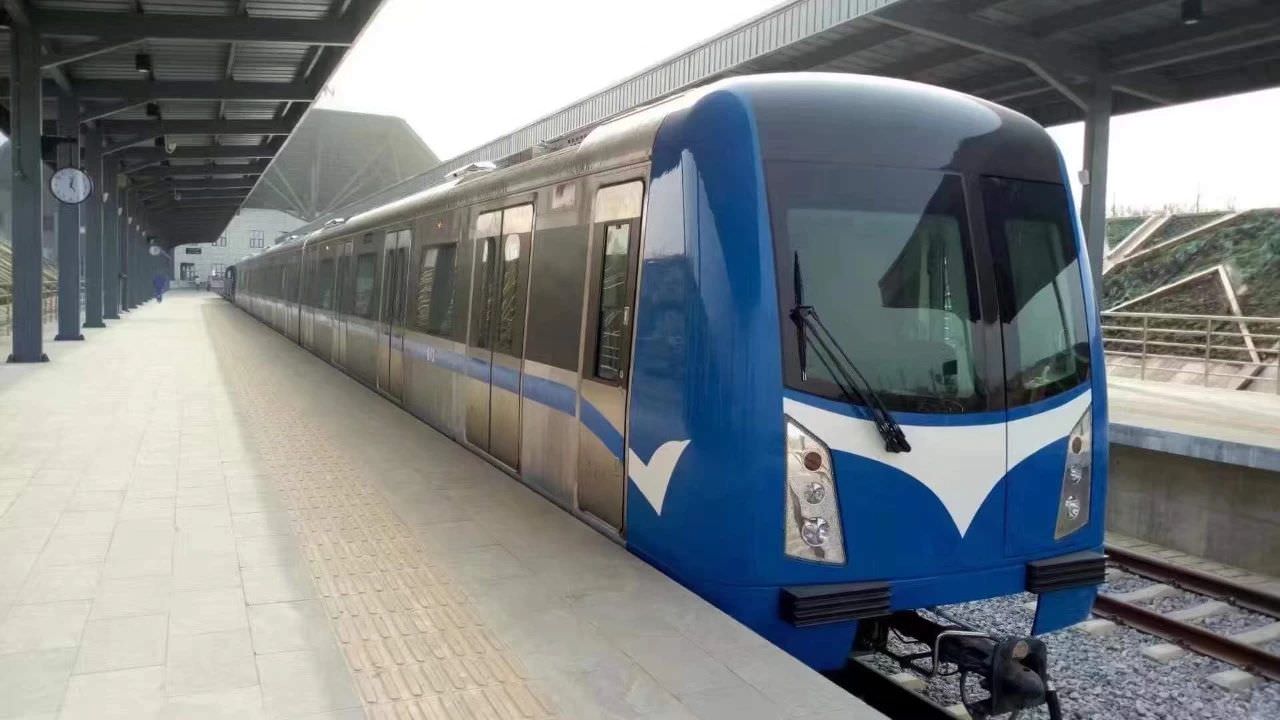
I’d be willing to bet my bottom dollar that if the FCT administration built “railroad tracks” from end to end of the city, beyond a shadow of a doubt, this unbearable traffic jam would disappear in no time. Both the income and the revenue generation will increase. An uncountable number of commuters will drop their vehicles.

The transportation system will give cheerful colour, beautify the city, and compete with global best practices. Can’t we do these for the benefit of all? But, someone might decide to ask, where should we get the funds? Yes, there it is. Invite investors and strike a Public-Private Partnership. I believe we can do it. Building, operating, and transferring is one of the surest ways of getting it done. 

I urge the FCT administration to look inward and try railway tracks in the city. For instance, the same should be in place in other axes from Zuba to Dey Dey, Kubwa, Dutsen Alhaji Junction, Gwarimpa, Maitama to Mararraba, etc. It would be a life-changing event for both the government and the people. Indeed, this will enhance internally generated revenue and increase work productivity. It will be a win-win for the country.

Tajuddeen Ahmad Tijjani writes from Abuja. And can also be reached via sen.taju@gmail.com.

Suspension of Vision FM’s “Idon Mikiya” programme: A threat to democratic governance

By Aminu Rabiu Kano

Historically, the mass media, both print and electronic, has presented threats and opportunities to different socio-economic and political classes. Thus, it has always been a target for control, influence and manipulation by aristocrats, religious authorities and politicians. This pinpoints the preponderance of the mass media in human societies worldwide. Nevertheless, the role the mass media plays, the importance it assumes, and the influence it exercises are determined mainly by the prevailing political arrangement in a particular country.

Characteristically, democratic governments globally have a good relationship with the media houses in their home countries. In these countries, mass media plays a vital role in informing citizens on issues of national interest. Most importantly, the mass media serves as a watchdog of society by holding the government accountable in all aspects of governance. In Nigeria, the mass media has enjoyed some constitutional protections since the return to civil democratic rule in 1999. To buttress this point, section 22 of the 1999 Constitution (as amended) states that “the press, radio, television and other agencies of the mass media shall at all times be free to uphold the fundamental objectives contained…..and uphold the responsibility and accountability of the Government to the people.”

Despite the constitutional provisions enjoining the mass media to, at all times, be free to hold the government accountable for its actions and inactions as the case may be, the mass media has never been free in Nigeria. Several instances of crackdowns on media outlets have been reported in the past. Recently, the Federal government of Nigeria, through its regulatory agency, the National Broadcasting Commission (NBC), shut down a discussion program segment of the Vision Radio FM in Abuja. The government regulatory body cited national security as the reason behind the shutdown. Additionally, the government fined the radio station a sum of five million naira.

But in reality, the discussion program titled “Idon Mikiya” convenes reputable journalists and experts who, thrice a week, meet to discuss and critically evaluate the government’s policies and programs. The program is prominent for its constant and sharp critique of government actions perceived to be against the public interest. Remarkably, its presenters were recently heard exposing the incompetency and corruption of the National Intelligence Agency (NIA) director-general, Rufa’I Ahmad.

Naturally, the government may not be happy, especially since elections are fast approaching. Thus, with its anti-democratic posture, the tendency to severely deal with any person or group of persons exposing its inadequacies or loopholes is high. But this poses a severe threat to the nation’s efforts at consolidating democratic governance.

First, as explained above, the mass media is a building block of any democratic society. Thus, any attempt to weaken them is tantamount to jeopardizing democratic governance. Second, as nefarious as it appears, this action of government will make the international community lose confidence in the Nigerian state and its political institutions, especially if this continues. Third, the government’s decision will inevitably send some bad signal to other media outlets, especially those brutal in telling the truth to powers that be.

Finally, in a situation whereby a media outlet is censured for exposing the incompetence and corruption of those in power, one may ask what is happening to the same government’s commitment to fighting corruption and getting rid of all parasites in the government.

Aminu Rabiu Kano is a political analyst and public affairs commentator. He can be reached at arabiukano@gmail.com.

Kidnappers cart away many traders on Kaduna highway

By MMuhammad Sabiu

Suspected bandits kidnapped an unknown number of traders from Birnin Gwari Local Government in Kaduna State on Wednesday.

According to a witness, the gunmen blocked the roadway between Birnin Gwari and Kaduna at Unguwar Yako bush, where the traders were taken.

According to the source, the abducted people were among dozens of people travelling on business from Birnin Gwari and nearby areas in Niger State to Kano.

The source was quoted as saying, “We were travelling in a convoy with security escorts but they (bandits) abducted those who moved ahead of the convoy, which made them easy preys for the bandits.“We came and met about four empty vehicles, while seeing the bandits moving into the forest with the captives.

The soldiers are tracing them, we are stranded at a dangerous spot in the forest (Unguwar Yako) while the security escorts are chasing to rescue the abducted traders.”

As of the time of filing this report, police in Kaduna have not released an official statement on the incident.