FCT Abuja

Nigeria’s health sector and the need to review

By Abdullahi Adamu

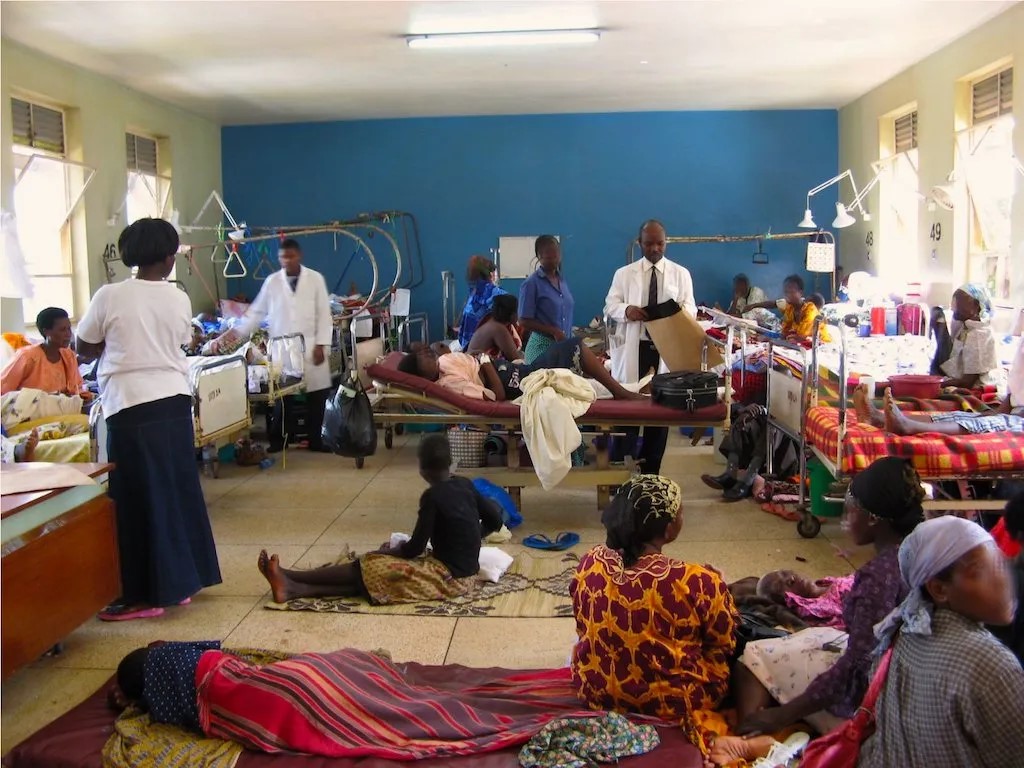
Poor health facilities in Nigeria stem from severe underfunding, causing inadequate infrastructure, outdated equipment, drug shortages, and breakdowns in essential services like electricity and clean water. This affects rural and primary healthcare centres most, where facilities are dilapidated and staff insufficient. A shortage of medical professionals and brain drain overloads the system, leading to increased medical tourism and poor outcomes. Healthcare access is severely limited due to various systemic factors. 

Misconceptions about primary health care and poor leadership have hindered the health system, which hasn’t aligned its structures to achieve universal health access. Improving financial access alone won’t suffice without comprehensive primary health care reform to fix system flaws, deliver quality, efficient, acceptable care, and ensure sustainability and growth for the health system and country. A primary health care movement of government health professionals, the diaspora, and stakeholders is needed to drive this change and overcome political inertia.

In 2014, the National Health Act established the Basic Health Care Provision Fund (BHCPF) to address funding gaps hampering effective primary healthcare delivery across the country. The BHCPF comprises 1% of the federal government Consolidated Revenue Fund (CRF) and additional contributions from other funding sources. It is designed to support the effective delivery of Primary Healthcare services, provision of a Basic Minimum Package of Health Services (BMPHS), and Emergency Medical Treatment (EMT) to all Nigerians.

Despite the provisions of the BHCPF, the report’s findings expose the precarious state of healthcare in Nigeria, where access to and utilisation of health services remain marred by systemic challenges across states.

Public health facilities in all 36 states and the FCT are deficient, and the experiences of community members seeking care at these facilities are consistently awful.

Primary Health Care (PHC) is the foundation of the healthcare system in Nigeria and serves as the level at which non-emergency, preventive health issues are addressed. But sadly, many PHC centres in the FCT are poorly equipped and lack well-trained personnel.

 Kulo PHC was built with solid infrastructure and equipped with solar panels as part of a 2019 federal initiative aimed at strengthening primary care in hard-to-reach areas. Today, that promise lies in ruins. The solar panels are now dysfunctional—some stolen, others damaged by harsh weather and lack of maintenance. At night, the clinic plunges into darkness, leaving staff to work by torchlight or with dying cell phone batteries.

Three patients on life support at Aminu Kano Teaching Hospital were reported dead following an interruption to the hospital’s electricity supply by Kano Electricity Distribution Company.

The basic causes of Nigeria’s deteriorating health care system are the country’s weak governance structures and operational inefficiencies.

In 2014, the National Health Act established the Basic Health Care Provision Fund (BHCPF) to address funding gaps hampering effective primary healthcare delivery across the country. The BHCPF comprises 1% of the federal government Consolidated Revenue Fund (CRF) and additional contributions from other funding sources. It is designed to support the effective delivery of Primary Healthcare services, provision of a Basic Minimum Package of Health Services (BMPHS), and Emergency Medical Treatment (EMT) to all Nigerians.

Despite the provisions of the BHCPF, the report’s findings expose the precarious state of healthcare in Nigeria, where access to and utilisation of health services remain marred by systemic challenges across states.

Public health facilities in all 36 states and the FCT are deficient, and the experiences of community members seeking care at these facilities are consistently awful.

The Basic Health Care Provision Fund (BHCPF) was poorly implemented in 13 states.

The basic causes of Nigeria’s deteriorating health care system are the country’s weak governance structures and operational inefficiencies

Abdullahi Adamu wrote via nasabooyoyo@gmail.com. 

Abuja faces sanitation crisis as contractors threaten strike over unpaid wages

By Anas Abbas 

Abuja may soon face a sanitation crisis as contractors responsible for cleaning the city have threatened to suspend operations from September 25 over the non-payment of nine months’ wages.

The Association of FCT Solid Waste and Cleaning Contractors (AFSOWAC), which oversees sanitation services across 44 lots in the capital, raised the alarm in a letter to the Coordinator of the Abuja Metropolitan Management Council.

“Despite our loyalty and sustained service delivery, we have not received payments since January 2025,” the group said. “We have reached a point where passion and commitment alone cannot sustain this essential service. Without payment, we cannot continue.”

According to the association, its members clear more than 1,000 tonnes of refuse daily using over 100 refuse trucks and 60 tippers, while engaging more than 3,000 workers. Many of these workers, it said, depend solely on the job for their livelihoods.

AFSOWAC disclosed that contractors had kept operations afloat by borrowing heavily from banks and informal lenders, but warned that such means had been exhausted. It added that the Abuja Environmental Protection Board (AEPB), which supervises their contracts, had continued issuing daily directives without addressing the financial challenges.

The contractors further lamented the deteriorating state of the Gosa dumpsite, describing it as “deplorable” and urging urgent intervention to improve access roads and equipment.

They also called on the FCT Administration to expedite the procurement process initiated in October 2024 and review payment rates to reflect current economic realities, such as the removal of subsidies and the devaluation of the naira.

The association warned that a strike would trigger a rapid build-up of waste in Abuja, a city renowned for its relative cleanliness, and could expose residents to serious public health risks.

“We can no longer guarantee uninterrupted services in the Federal Capital City without urgent payment,” AFSOWAC cautioned.

Wike vows to lead PDP campaign in 2027, denies sabotaging party

By Abdullahi Mukhtar Algasgaini

The Minister of the Federal Capital Territory (FCT), Nyesom Wike, has declared his intention to lead the Peoples Democratic Party (PDP) campaign in the 2027 general elections. He made the statement on Monday during a media interaction in Abuja, dismissing claims that he was undermining the PDP while serving in President Bola Tinubu’s cabinet.  

“I am still in PDP. I worked hard for the party,” Wike said. “No one can question my membership because nobody has contributed more than I. I will lead the PDP campaign in Rivers in 2027.”  

Wike, a former Rivers State governor, has faced criticism from PDP members for his role in the All Progressives Congress (APC)-led government. However, he defended his actions, stating that he takes pride in making tough decisions, even if they upset powerful figures.  

“I step on the toes of big men, and it makes me happy,” he said. “If you don’t do the right thing, too bad. I don’t care.”  

On the political crisis in Rivers State, Wike denied any personal rift with Governor Siminalayi Fubara and stated that he would have opposed a state of emergency if consulted by the president.  

“I don’t have any crisis with Fubara,” he said. “If Mr. President had asked me, I wouldn’t have agreed to a state of emergency.”  

Wike’s remarks come amid growing tensions within the PDP, with his loyalty remaining a contentious issue among party members.

Does “live” matter more than lives?

By Firdausi Abubakar

On Friday, May 10th, 2025, Abuja witnessed a tragic accident involving a fire truck and a car carrying four young boys. The scene was devastating, bodies sprawled, metal crushed, and flames smouldering. But even more disturbing was the crowd that quickly gathered, not with medical kits or a sense of urgency to save the lives of the victims, but with phones raised, recording, streaming, and snapping pictures. “Live on the scene”, some captioned, while actual lives slipped away.

This isn’t just an Abuja problem. It’s a moral crisis growing across Nigeria. From Lagos to Kano, Enugu to Port Harcourt, and others, a familiar sight follows whenever an accident or violent incident occurs: dozens, sometimes hundreds of people filming rather than helping.

In March 2025, during a brutal fight between cult groups at a university in the South-West, students stood around with their phones in hand. No one intervened. No one called for help. But the footage of the fight went to TikTok, Instagram, and X within minutes.

The question is haunting: has going live become more important than saving lives?

Moreover, it’s easy to point fingers at bystanders. But Nigeria’s systemic failures have created a dangerous environment where compassion is punished and apathy is rewarded.

In most parts of the country, there’s no reliable emergency line. Calling for help is often futile, lines don’t go through, operators are untrained, or help arrives late. Even the trauma centres, where they exist, are few, underfunded, and poorly equipped. Worst of all, those who try to assist victims often find themselves entangled with law enforcement.

In Nigeria, it’s a common habit for a Good Samaritan to be detained as a suspect, harassed, or extorted by the police. This fear is compounded by a lack of trust in the justice system and has led many to do nothing. Or worse, to choose content creation over human compassion.

We now live in a time where everything is content. People rush to be the first to post, the first to trend, the first to go viral. But this obsession with clout has come at the cost of our humanity.

The Abuja fire truck accident is a painful example. Witnesses say the four young men may have survived had they been pulled from the wreckage sooner. But instead of taking action, people stood by, filming, posting and watching. Their final moments were broadcast to the world while help was delayed.

Nigeria urgently needs to fix its broken emergency response system. We need working, responsive hotlines, trained emergency responders, and functioning trauma centres. The government must also create and enforce laws that protect those who help, so citizens won’t be afraid to do the right thing.

But beyond policy, we must confront a cultural shift. We must remind ourselves and our communities that no number of likes, shares, or views is worth more than a human life. Helping someone in need shouldn’t be optional; rather, it should be instinct.

Before you press record, ask yourself: Would I rather save a life or capture a moment?

Firdausi Abubakar, is a student of Information and Media Studies, Bayero University Kano. She can be reached via fizzyabubakar@gmail.com.

Wike orders clampdown on illegal hospitals after pregnant woman’s death in Abuja

By Uzair Adam 

The Minister of the Federal Capital Territory (FCT), Nyesom Wike, has ordered a full crackdown on unregistered hospitals and quack medical personnel operating within the territory.

The minister’s media aide, Lere Olayinka, disclosed this in a statement on Saturday, following the death of a pregnant woman at a private facility in Durumi, Abuja, after undergoing a caesarean section.

According to the statement, Wike warned that anyone found operating an illegal health facility or working in an unregistered hospital would be arrested and prosecuted.

He described the incident as regrettable, especially given that vulnerable groups, including pregnant women, are eligible for free registration under the Federal Capital Territory Health Insurance Scheme (FHIS). 

He noted that despite this opportunity, many pregnant women were still patronising unlicensed and unsafe facilities.

“In the FCT, vulnerable persons, including pregnant women, enjoy free enrollment into the FHIS, granting them free access to services covered under the basic minimum health package through primary healthcare centres,” he said.

Olayinka added that, in support of the federal government’s ‘Renewed Hope Agenda’ and the FCT Administration’s zero tolerance for maternal mortality, several hospitals—including Gwarinpa, Nyanya, Abaji, and Kuje General Hospitals—have been designated as comprehensive emergency obstetric and neonatal care centres, offering free cesarean sections.

He urged pregnant women to utilise these government services instead of risking their lives by seeking care from quacks and unregistered facilities.

The statement also recalled that on Friday, 35-year-old Chekwube Chinagorom was brought dead to the Asokoro District Hospital after a caesarean section at the unregistered facility in Durumi. 

Although the baby survived and was referred for further care at the Asokoro hospital, the incident raised alarm over the activities of illegal operators.

The Private Health Establishments Registration and Monitoring Committee (PHERMC) investigated and confirmed that the hospital was unregistered. 

Only one staff member, Mr. Simon Godiya, a junior community health extension worker, was found on duty during an inspection.

Godiya informed officials that Murtala Jumma performed the surgery alongside another unidentified person. Efforts to reach Jumma have so far been unsuccessful.

The PHERMC team, accompanied by police officers from the Durumi Divisional Headquarters, subsequently handed over the case to the police for further investigation.

Wike hosts suspended Rivers lawmakers in UK

By Anwar Usman 

The Minister of the Federal Capital Territory, Nyesom Wike, hosted suspended Rivers state house of assembly lawmakers in the United Kingdom on Monday.

The Senior Special Assistant to the Minister on Public Communications and Social Media, Lere Olayinka, posted on X.com on Tuesday that the lawmakers, who are in the UK for “legislative capacity building,” were hosted to a dinner by the minister.

He stated that “Yesterday, the FCT Minister, Nyesom Wike, hosted Rivers State House of Assembly members who are in the United Kingdom for Legislative Capacity Building, to a dinner.

Reports have it that on Sunday, the suspended Rivers lawmakers, led by the Speaker, Martins Amaewhule, departed Nigeria for a tour in the United Kingdom.

Amaewhule was said to have declared open the 10th Rivers Assembly Legislative Tour of the United Kingdom on Friday.

He emphasized that the legislative tour would allow the House to learn new things outside Nigeria, which would improve members’ capacity for the tasks ahead.

On March 18th, President Bola Tinubu declared a state of emergency in Rivers State and suspended Governor Siminalayi Fubara, Deputy Governor Prof Ngozi Odu, and members of the state House of Assembly.

Wike revokes PDP’s new secretariat land over unpaid dues

By Uzair Adam 

The Minister of the Federal Capital Territory (FCT), Nyesom Wike, has revoked the land allocated for the new National Secretariat of the Peoples Democratic Party (PDP) in Abuja’s Central Business District.  

The Daily Reality reports that the 12-story building, which has remained uncompleted for two decades, was initially estimated to cost N16 billion when construction began in 2008. 

Despite raising over N62 billion through fundraisers and electoral activities, the project remains unfinished.  

A letter confirming the revocation, signed by the Director of Land Administration, Chijoke Nwankwoeze, on behalf of the minister, was addressed to the PDP National Chairman. 

Dated March 13, 2025, the letter cited the party’s failure to pay annual ground rents for 20 years—spanning from January 1, 2006, to January 1, 2025—as the reason for the decision.  

The letter referenced several public notices issued by the FCT Administration since 2023, urging allottees to clear outstanding dues on their properties. 

It also cited Section 28, Subsection 5 (a) and (b) of the Land Use Act, which grants the government the authority to revoke land over breaches of the terms of occupancy.  

With the revocation now in effect, the land has reverted to the FCT Administration, which plans to take immediate possession. As of the time of filing this report, PDP had yet to issue an official response.

Senator Natasha sues Senate President Akpabio for N1.3bn defamation

By Abdullahi Mukhtar Algasgaini

Senator Natasha Akpoti-Uduaghan has filed a defamation lawsuit against the President of the Nigerian Senate, Godswill Akpabio, demanding N1.3 billion in damages.

The lawsuit, lodged at the Federal Capital Territory High Court on February 25, 2025, also includes Akpabio’s Senior Legislative Aide, Mfon Patrick, as a defendant. 

Akpoti-Uduaghan, represented by her lawyer, Victor Giwa, claims that defamatory remarks made by Akpabio and posted by his aide on Facebook damaged her reputation.

The post, titled “Is the Local Content Committee of the Senate Natasha’s Birthright?” included a statement suggesting Akpoti-Uduaghan believed being a lawmaker was only about “pancaking her face and wearing transparent outfits to the chambers.”

Akpoti-Uduaghan describes the words as degrading, inflammatory, and harmful to her dignity, both in the eyes of her colleagues and the public.

The lawsuit seeks a declaration that the statement is defamatory, a permanent injunction barring further publication of such comments, N100 billion in general damages, and N300 million for legal costs.

FCT doctors declare three-day warning strike over unpaid salaries, welfare issues

By Uzair Adam 

The Association of Resident Doctors (ARD), Federal Capital Territory Administration (FCTA), has initiated a three-day warning strike in protest of unpaid salaries, allowances, and other unresolved issues. 

The Daily Reality leaned that the strike has disrupted services at government hospitals across Abuja.

In a press briefing held on Wednesday in Abuja, Dr. George Ebong, President of ARD FCTA, explained that the strike followed the expiration of a three-week ultimatum issued last year. 

He lamented the neglect of healthcare workers’ welfare and hospitals in the nation’s capital.

Ebong called for urgent intervention from the Minister of the Federal Capital Territory, Nyesom Wike, to prevent an indefinite closure of hospitals in the region. 

He emphasized that the decision to go on strike was reached after a Congress held by ARD FCTA members on Tuesday.

The strike, which covers all government hospitals in Abuja, from Wuse to Asokoro, Maitama, Kubwa, Zuba, Kwali, Abaji, Nyanya, and others, follows months of unresolved demands. 

The doctors had earlier engaged in multiple dialogues with the authorities but saw no meaningful action, even after the government requested two additional weeks to address their grievances.

“We gave the government a three-week ultimatum to meet our demands, and after meeting them and discussing several times, nothing was done. Not even the minimum things. We expected the government to pay for the six months of unpaid arrears,” Ebong stated.

He criticized the neglect faced by doctors in Abuja, referring to them as “abandoned projects” and highlighting the urgent need for action to prevent the collapse of the healthcare system.

In December, ARD FCTA had warned of a possible shutdown if their demands were not met, with the current strike representing a call for immediate resolution. 

The association has warned that if their issues remain unaddressed after the three-day strike, they will consider an indefinite strike.

The full communique, also released at the press briefing, detailed the various concerns of the association, including unpaid salaries, delays in the Medical Residency Training Fund (MRTF), unfulfilled accoutrement allowances, unpaid hazard allowances, and the lack of necessary hospital equipment. 

The communiqué also stressed the shortage of manpower in the healthcare sector, with many doctors leaving the country due to poor working conditions and lack of support. 

It concluded with a plea for the government to act swiftly to avoid further deterioration of the healthcare system in Abuja.

EFCC dismissed 27 officers from its workforce in 2024

By Ishaka Mohamed

As revealed in a statement released on Monday, January 6, 2025, the officers were dismissed for various offences bordering on fraudulent activities and misconduct.

According to the Executive Chairman of the EFCC, Mr Ola Olukoyede, the dismissals were necessary for the Commission to enforce integrity. “Every modicum of allegation against any staff of the Commission would always be investigated.

The core values of the Commission would always be held in optimal regard at all times,” part of the statement reads.

The Commission further warned the public of the activities of impersonators and blackmailers using the name of its Executive Chairman to extort money from high-profile suspects being investigated by the EFCC. 

Two members of an alleged syndicate, Ojobo Joshua and Aliyu Hashim, were recently arraigned before Justice Jude Onwuebuzie of the Federal Capital Territory (FCT) High Court, Abuja, for allegedly contacting a former Managing Director of the Nigerian Ports Authority, Mr Mohammed Bello-Kaka, and demanding $1 million from him for “Olukoyede to give him soft landing” on a non-existing investigation. 

The Commission reiterated that such characters are still on the loose, seeking victims.