Fake

Uche Nnaji and the burden of forgery

By Zayyad I. Muhammad

It was only a matter of time. Everyone paying close attention knew that Uche Nnaji, the former Minister of Innovation, Science, and Technology, could not survive the certificate forgery storm. The handwriting was on the wall, and it finally happened. Nnaji bowed out.

The truth is simple and damning: Nnaji himself admitted that the University of Nigeria, Nsukka (UNN), never issued him a degree certificate. So the million-naira question is, where did the one he brandished come from?

UNN has washed its hands off the matter. The institution categorically stated that Nnaji never completed his studies and was never awarded a degree. In short, the certificate he paraded is fake.

And that’s not all. The National Youth Service Corps (NYSC) has also distanced itself from Nnaji’s so-called NYSC certificate, describing it as “strange.” A Premium Times investigation revealed yet another oddity: Nnaji’s NYSC record shows that he supposedly served for 13 months. Thirteen months! Even the NYSC found that hard to explain.

Of course, Nnaji claims that political enemies are behind his ordeal. But even if he knows the truth, no opponent can forge a certificate on your behalf. He laid the trap himself and walked right into it.

Let’s remember the facts. Nnaji was admitted into UNN in 1981 to study Microbiology/Biochemistry and was expected to graduate in 1985. But he reportedly failed some courses and never graduated. That means for over 40 years, Uche Nnaji neither regularised his academic records nor obtained a valid certificate, yet he rose through political ranks, occupying sensitive positions and waving fake credentials. Nnaji was careless, so to speak

Forty years of deception finally caught up with him. And this time, not even political connections could save him.

But beyond Nnaji’s personal fall lies a bigger question: how many more “Nnajis” are out there, quietly occupying sensitive positions in government, hiding behind forged papers and political influence? Some commentators are beginning to say that Nnaji’s case might just be the tip of a very large iceberg.

  Zayyad  I. Muhammad writes from Abuja via zaymohd@yahoo.com.

Atiku accuses Tinubu government of institutionalising forgery, calls for investigation

By Muhammad Abubakar

Former Vice President Atiku Abubakar has accused President Bola Ahmed Tinubu’s administration of promoting forgery and deceit as instruments of governance, following the resignation of Uche Nnaji, Minister of Innovation, Science and Technology.

In a strongly worded statement on Wednesday, Atiku described Nnaji’s “voluntary resignation” as an attempt to cover up a scandal that exposes the “deep moral crisis” within the Tinubu government. He said Nnaji should have been dismissed and prosecuted for falsifying documents rather than allowed to quietly exit.

Atiku also faulted the Department of State Services (DSS) for clearing Nnaji despite alleged discrepancies in his records, accusing the agency of “failing in due diligence” and embarrassing the nation.

He linked the scandal to what he called a wider pattern of deceit that “begins from the very top,” pointing to longstanding controversies over President Tinubu’s own identity and academic credentials.

“When a man of questionable identity leads a country, deception becomes the standard of governance,” Atiku said, alleging that Tinubu’s personal history has “institutionalized falsehood in public service.”

The former vice president called for an independent and transparent investigation into the academic and professional records of all members of the Federal Executive Council, starting with the president.

Atiku concluded that Nigeria would continue to suffer “moral decay, economic ruin, and global embarrassment” unless integrity was restored to public life.

European-American University offers “genuine” degrees to victims of fake ceremony

By Abdullahi Mukhtar Algasgaini

In a significant gesture of goodwill, the European-American University (EAU) has formally extended an offer to award genuine honorary degrees to Nigerian celebrities, including popular Hausa singer Dauda Kahutu Rarara, who were recently victimised by fraudsters.

This development follows a widely publicised incident in Abuja, where impostors falsely claiming to represent the university organised a sham ceremony and presented fake honorary degrees.

In an official statement, the university confirmed it has reported the fraudulent event to the Nigerian Police for investigation. The EAU stated it believes the recipients, who also include Alhaji Ahmed Saleh jnr, Mustapha Abdullahi Bujawa, and Tarela Boroh, were “innocent victims” who acted in good faith.

The university has now invited the individuals to contact its Nigerian representative, Professor Luke Okojie, to begin a proper validation process. Subject to their consent and a review of their credentials by the university’s Honorary Degrees Committee, they will be awarded legitimate degrees at the EAU’s official Nigerian convocation this November.

The university explicitly stated that no fees will be required throughout the process, a point emphasised to distance its legitimate operations from the actions of the scammers.

European-American University disowns Rarara, calling his degree fake

By Uzair Adam

The European-American University (EAU) has distanced itself from reports claiming it awarded an honorary doctorate to popular Hausa political singer Dauda Kahutu Rarara during a ceremony in Abuja.

In a disclaimer published on its official website, the University described the alleged event at NICON Luxury Hotel, Abuja, as fraudulent, stressing that it was organized without its knowledge or approval.

The institution clarified that neither Rarara nor the other individuals mentioned — Alhaji Ahmed Saleh Jnr., Prof. Mustapha Abdullahi Bujawa, and Prof. Tarela Boroh — had received any honorary recognition from EAU. 

“These individuals are not honorands of the University and have no legitimate connection with us,” the statement read.

EAU further disowned Musari Audu Isyaku, who was presented as its representative in Northern Nigeria, stating that he has no authority to act on behalf of the institution. 

It also denied that Idris Aliyu was part of its governing body, noting that the university has no such council. 

Aliyu’s fellowship with EAU was revoked immediately over his alleged role in the fraudulent ceremony.

The University reminded the public that its former Vice Chancellor, Dr Mrs. Josephine Egbuta, had been dismissed earlier this year and no longer represents the institution. 

It affirmed that Professor Luca Scotto di Tella de’ Douglas di Castel di Ripa is the current Vice Chancellor.

On its legal standing, EAU explained that it is a nonprofit private university established in France, with a Royal Charter of Incorporation from the Kingdom of Bunyoro-Kitara in Uganda. 

It dismissed references to Dominica and Panama as “outdated and false.”

The statement added that the University would work with Nigerian authorities to curb the circulation of fake certificates issued in its name and prosecute those behind the act.

EAU also disclosed that its next legitimate convocation in Nigeria is slated for November 15, 2025, while another awards ceremony will take place in Malaysia in December.

NDLEA warns of fake officers targeting families with travel scams

By Uzair Adam Imam

The National Drug Law Enforcement Agency (NDLEA) is alerting the public, particularly those with loved ones abroad, to a new scam that targets innocent families.

Fraudsters are impersonating NDLEA officers and contacting unsuspecting citizens with a fabricated story.

As described by NDLEA spokesperson Femi Babafemi, “Under this new scam scheme, the fraudsters will call unsuspecting citizens to inform them of the arrest of their relatives at the Murtala Muhammed International Airport Ikeja Lagos or any other international airport in Nigeria with illicit drugs upon arrival in the country.”

Babafemi continued, explaining the scammers’ tactics, “After throwing the family members into panic, the scammers then make a demand of millions of naira to facilitate the release of such persons from NDLEA custody.”

The NDLEA has successfully thwarted similar attempts in the past. Babafemi highlighted, “At the moment, there is one of such scenario the Agency has just investigated.

“In this case, the picture of a Nigerian man based in the US is being circulated with an audio of a purported NDLEA officer negotiating the payment of N5 million with a female relative for the release of the US-based Nigerian man purportedly arrested at the Lagos airport on Friday 22nd March upon his arrival with a ‘contraband.”

The NDLEA emphasizes that these claims are entirely fabricated. “Just like in previous instances, our investigation has also shown that the current incident is the work of scammers,” affirmed Babafemi.

He reiterated, “No NDLEA officer is involved in the audio conversation and the person whose photo is attached to the audio recording being circulated is not in our custody at MMIA or any of our Commands either as at yesterday or any other day.”

The NDLEA urges the public to exercise caution and avoid falling victim to these scams. “The family members involved in this case are advised not to part with their hard-earned money to scammers,” advised Babafemi.

“Nigerians with loved ones abroad are also urged to keep discussions on travel plans of their relatives to themselves to avoid the hijack of such by criminal elements for devious schemes.”

If you encounter a similar situation, the NDLEA provides contact lines for assistance: “+2347064670026 and +2348033326327.”

Celebrities’ body trends and toxic influence on youths 

By Al-Janat Firdous Mohammed

In the dynamic world of media and entertainment, the definition of an ideal physique has continuously developed, creating and redefining societal beauty standards. 

Like many other countries, Nigeria has seen an increase in body trends among celebrities, which significantly impact their audience, particularly impressionable youth. 

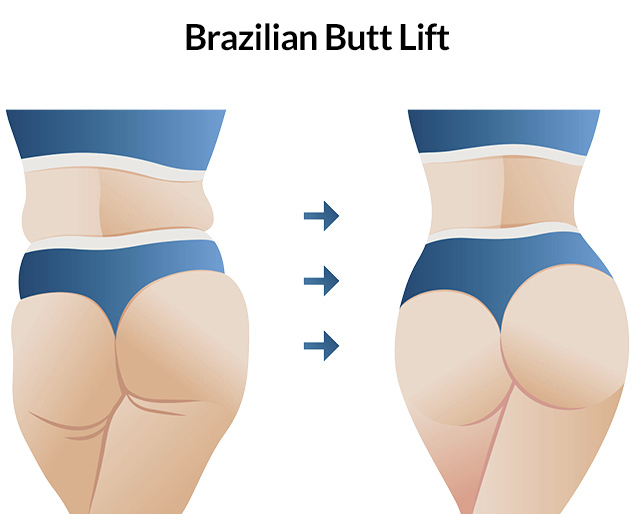
From Brazilian Butt Lifts (BBL) to facelifts and Botox treatments, the pursuit of a specific look has become a dominant influence. The early 2000s saw a boom in the global fad of becoming ultra-skinny, with many celebrities striving for a waif-like appearance. 

However, in recent years, a paradigm shift has happened, with curvier silhouettes becoming the new ideal of beauty. BBLs have become highly fashionable, with celebrities publicly discussing and even getting these procedures to improve their curves.

Facelifts and Botox treatments have also become popular as people seek to combat the natural ageing process. The media’s portrayal of faultless celebrities frequently adds to false beauty goals, which may lead fans and adolescents to explore comparable operations.

Celebrities play an important role in moulding society’s norms, and their physical modifications can significantly impact their fan base, particularly the youth. The pressure to conform to these ideals can have a harmful influence on self-esteem and physical appearance. 

Many young people may feel compelled to change their bodies to fit in or meet the perceived standards of their idols. For example, the rise of social media has led to celebrities displaying their nearly ideal bodies, creating the illusion that these standards are attainable and desired. 

This can exacerbate fans’ vulnerabilities, creating a culture in which bodily changes are viewed as a way to earn acceptance and validation. How can we prevent our youths from succumbing to ‘fake’ beauty standards?

One, promoting body positivity and acceptance is critical for demolishing false beauty standards. Celebrities who advocate for accepting one’s natural body, warts and all, can be strong role models.

Second, educating young people about the manipulative nature of media images and the frequency of picture editing can help them develop a critical mindset. Understanding that the images portrayed may not reflect reality can help mitigate the media effect.

Equally, creating an environment where mental health discussions are normalised is critical. Young people who are dealing with their body image should have access to support networks, such as counselling services or community groups.

Several Nigerian celebrities have spoken out against unrealistic body ideals, serving as constructive role models for the kids. Actress Adesua Etomi-Wellington, for example, promotes self-love and frequently uploads unfiltered photographs to demonstrate sincerity. 

Similarly, media star Tolu Oniru-Demuren, commonly known as Toolz, has been outspoken about embracing her curves, challenging the concept that only certain body types are attractive. As body trends in Nigerian media emerge, it is critical to recognise the potential harm they might cause to the impressionable minds of young people. 

By developing a culture of body positivity, increasing media literacy, and offering mental health care, we can help young people resist the temptations of conforming to unattainable beauty standards. Positive role models in the celebrity world can significantly influence cultural attitudes regarding body image, fostering a healthier and more accepting mindset for future generations.

Al-Janat Firdous Mohammed is an NYSC member serving with PRNigeria.

Medical doctors must sanitise their profession against quackery

By Bello Hussein Adoto

Medicine is a sacred profession where trust is vital. Yet, fakes and their accomplices undermine this trust and put everyone at risk. Medical doctors must stand up and sanitise the system first by not promoting quackery.

Meet Abawulor Omenka, a 35-year-old Nigerian who made headlines after presenting a second-class upper degree in Medicine and Surgery to Covenant University Medical Centre, Ota, Ogun state, for employment.

For those who don’t know, medical degrees are not classified. It is either you pass or you don’t. There is no first-, second-, or third-class, as you have in education, law, engineering, and pharmacy programmes.

So, for Mr. Omenka to present a second-class upper degree shows something was wrong. True to suspicion, he was found to be a fake doctor and handed over to the police. Omenka’s case is symptomatic of how doctors contribute to quackery, deliberate or not.

The role of doctors in quackery is subtle yet significant. For instance, Omenka, in his interview, talked about the different hospitals he has worked for. One of his interviewers told The Punch, “…he (Omenka) had worked at the hospital owned by some of our colleagues that we know. We put a call across to them, and two of them actually confirmed that they knew him very well. I told them he was trying to apply as a medical officer, and they told me he worked with them as an auxiliary nurse or, better put, as a hospital assistant.”

Imagine if he had earlier been reported to the police or the Nigerian Medical Association and removed from circulation. He wouldn’t have had the guts to apply to be a medical officer at a hospital.

Beyond that, doctors should not allow their hard-earned certificates and licenses to be used to register clinics run by unqualified individuals. Many quacks wouldn’t have had clinics to experiment on patients without doctors registering the clinics for them.

The practice of quacks using a doctor’s license to operate their clinics is well established. As Professor Shima Gyoh, a former provost of Benue State University College of Health Sciences, told the International Centre for Investigative Reporting, “A lot of these illegal clinics are run by cleaners in the hospitals; I knew some who started clinics without approval. What they do is you start a clinic, you ask a doctor to stand behind you and register the clinic in his name, then you pay the doctor something. Instead of the doctor inspecting what you are doing, he does not do that, and then you continue to run your clinic independently. Yet, you are not a doctor.”

Moreover, doctors are honourable people who should not be found near quacks and quackery. Yet, some doctors help quacks run their clinics. The quack will open a clinic and handle common illnesses while the trained doctor comes in for the severe ones. This partnership gives the quack a veneer of legitimacy, which allows him to attract more patients and handle even bigger cases.

Another factor is economical. I know things can be challenging for doctors, especially those in private practice. They must establish standard hospitals, hire competent staff, meet regulatory standards, and offer quality services. All these cost money.

Nevertheless, the need to balance the chequebook does not excuse hiring untrained hands as cheap labour or training them to become health workers themselves. The male trainees graduate to become ‘doctors,’ while the female ones are called ‘auxiliary nurses.’ Whatever that means.

Let’s be clear. I don’t have a beef with medical doctors. If anything, I am grateful for their remarkable job in the face of limited resources and an overwhelming workload. My aim is to call on them to sit up and excise this cancer eating into their noble profession.

Of course, fakes are not exclusive to the medical profession. Bogus certificates and fake professionals are around us in the form of fake doctors, fake lawyers, fake soldiers, fake engineers.

Nevertheless, patients place enormous trust on their caregivers and doctors should know better than to endorse quackery. They are trained, more than most, to know the value of health and wellness and respect the sanctity of their patients.

They have read tonnes of materials, done lots of practicals, and spent years doing exams upon exams to show they have studied human functionality and diseases and can apply the training to treat people. They shouldn’t be found contributing to quackery in any form.

Medicine should have no room for quackery. Human life is too sacred, and the burden of care is too great for those not qualified by training, experience, and certification to play poker.

One could say that doctors and non-clinical health workers can work together in a task-shifting, task-sharing arrangement. This way, routine, low-skill tasks can be shifted to health workers like community health extension workers (CHEWs) and health technicians so that we can have better use of our depleted workforce and ensure that everyone gets quality healthcare. I agree with this arrangement.

In a task-shifting, task-sharing arrangement, everyone knows their job. However, what some doctors do currently is not task-shifting or task-sharing. What they do instead is aiding and abetting an aberration fast becoming a norm. This needs to stop.

Bello Hussein writes from Ilorin via bellohussein210@gmail.com

Suic*de: Measuring our well-being with pseudo scales 

By Lawal Dahiru Mamman

An attempt to kill oneself in response to a tragic or stressful situation is termed ‘attempted suicide’, while success in such an attempt is referred to as ‘suicide.’ This profoundly affects families, especially when such an attempt is successful, and when one survives, they battle other mental disorders.

For suicide not to be seen only as a storm in a teacup, the International Association for Suicide Prevention, in conjunction with the World Health Organisation in 2003, slated the 10th of September to annually commemorate what it termed ‘World Suicide Day’. Issues surrounding suicide are discussed with the hope of ending the horrendous act on the day.

This year’s event got me reminiscing on an incident in my neighbourhood three years ago where a nine-year-old girl in Primary 4 sent herself to the grave by hanging. What would have prompted her? This question continues to resonate in the minds of those unfortunate to see her hanging lifeless. 

Seven hundred thousand people commit suicide yearly, according to the world health organisation (WHO), with 70% occurring in low and middle-income countries. WHO’s country representative to Nigeria, Dr Walter Mulombo, said: “for every suicide, twenty (20) other people are making an attempt and many more have the thought to commit same.”

Ingestion of pesticides, hanging and firearms are said to be the most common method of committing suicide globally. In high-income countries, suicide has been associated with mental disorders like depression and alcohol use disorder. In contrast, in low-income countries, life problems like financial crises, relationship break-ups, chronic pain and illness take credit – these are primarily associated with adults.

On the other hand, children may become suicidal due to poor performance in school, coupled with pressure at home to do better, bullying, losing friends, etc.

Thanks to civilisation and technological advancement, people have become more and more isolated. At the same time, others try to emulate the more often pseudo lives of others they see on TV or social media. Mr A wants his child to be as bright as the child of Mr B; Mrs X wants her husband to provide the luxury Mr Y is providing for his family; Mr M wants his wife to be as dazzling as the wife Mr N, the list goes on. All these think this way while still battling financial crises and others. 

While the authority is setting up mental healthcare centres, and organisations are trying to do the same at workplaces, families need to start being the haven they should be for their members. Parents should understand that failure for children is just okay when they have given their best while helping them be the best version of themselves.

Generally speaking, marriages, relationships, education, intelligence, social status, and all that encompasses life should not be measured using the yardstick we see in the media. As the saying goes, not all that glitters is gold.

Nigeria is a place where religion is held in high esteem. Therefore, religious leaders could take it upon themselves during sermons to discourage suicide. The haves should remain humble and thankful for their possessions, while the have-nots should not despair for whatever position they find themselves in; others aspire to get there.

Dale Carnegie, an American writer, stated, “It is not what you have, who you are, where you are or what you are doing that makes you happy or unhappy. It is what you think about it.” Understanding this will go a long way in curtailing suicide.

When all hands come on deck, we would be “Creating Hope Through Action.”

Lawal Dahiru Mamman, a corp member, writes from Abuja and can be reached via dahirulawal90@gmail.com.

Impostors, Rarara and the fake Youth Forum’s award 

By Ibrahim Sulaiman Jama’are

On Wednesday, 15th June 2022, two of my Facebook friends, Ahmad Muhammad Danyaro and Abdullahi Barau Azare, tagged me in a trending post that that one association called Jama’are Emirate Youth Forum (JEYF), awarded a popular Hausa political musician, Alh. Dauda Kahutu Rarara a “Certificate of Excellent” (don’t mind the grammar). The group added that “In recognize in your (that’s the awardee) tremendous effort and exceptional commitment towards development of humanity” (I beg for your pardon on the poor grammar).

Based on my search on Facebook, the story on this issue was first broken by Ibrahim  Sanyi-Sanyi (who I follow), whose post seemed to be earlier than that of the purported chairman of the forum, Rabiu A Umar (who happens to be my Facebook friend too).

My dismay was minified by the comments on the Facebook wall of Ibrahim Sanyi-Sanyi by his followers, many of whom (thank God) suspected the forum to be fake and, of course, created and formed for the purpose. 

Though there is naturally nothing wrong with conferring an award on any person who contributed toward the development of any community, the question remains: in what way did Rarara contribute to the development of Jama’are Emirate?. Many groups in Jama’are have a history of giving awards to personalities that excelled in different areas of endeavour and contributed to the Emirate’s development (which is normal and obtainable in many places). 

It is a source of concern that churning out such awards to personalities not known for delivering any community services is a spoof that will do a great disservice in future. 

The public should note that JEYF is not a registered association by any institution at the local government or state levels. Traditionally, such associations are registered with the desk officer of clubs and associations at the local government Social Welfare Office. Also, local clubs usually have patrons, typically elderly, who advise and guide members on what to do.  JEYF neither to has no one and no in the registry of the LG.   

I would naturally not write this if the awardee was, say, Aminu Bagwai, another famous Hausa singer. For quite a long time, he has been a friend and, of course, a frequent visitor to Jama’are and who had a dedicated song for Jama’are town, a headquarters of Jama’are Emirate.

On a serious note, from all indications, Rarara might have been a victim of ‘Yan-wanki’ impostors parading themselves as representatives of Jama’are Emirate Youths. The carelessness with which the certificate is written in quite mangled English indicates that this group does not represent us. It is an obvious fact that every casual observer can glean. 

Ibrahim Sulaiman Jama’are is a concerned citizen of Jama’are. He wrote from Abuja via ibrahimsulaiman193@gmail.com.

Cops apprehend fake police inspector in Ogun

By Muhammad Sabiu

Police in Ogun State have detained a man named Akinyemi Thomas for impersonating a Nigerian Police Force Inspector.

The 38-year-old Thomas was apprehended on Wednesday while police officers from Sagamu divisional headquarters and the Divisional Police Officer, CSP Godwin Idehai, were on routine patrol in their area.

Under the bridge on the Lagos-Ibadan highway, cops spotted the guy in full police camouflage clothing.

On Saturday, Abimbola Oyeyemi, the spokesperson for the Ogun State Police, claimed that the suspect’s actions piqued the patrol team’s interest, and they stopped to question him.

Oyeyemi was quoted as saying, “Immediately the patrol vehicle stopped, the suspect took to his heels. He was then chased and apprehended.

“On interrogation, he confessed being a dismissed policeman, but using the uniform to extort unsuspecting members of the public.”