Europe

Five reasons why northerners are not ‘well represented’ in Super Eagles

By Aliyu Yakubu Yusuf

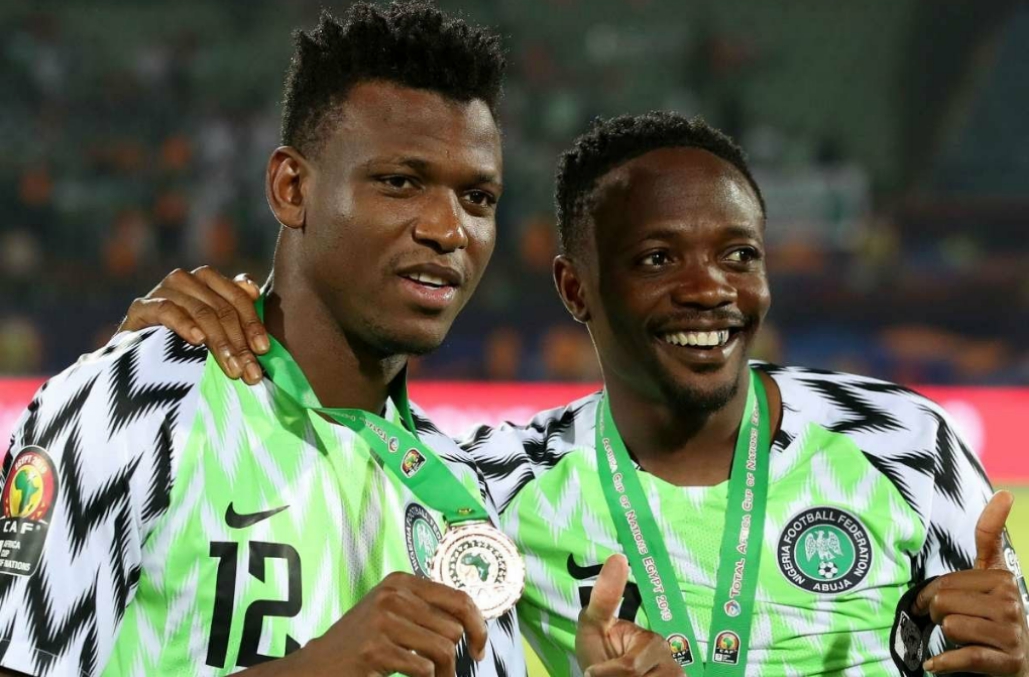
In the not too distant past, there was a widespread belief that footballers of northern Nigerian (read: Hausa-Muslims) extraction are serially marginalised when it comes to a call-up to the Super Eagles. Due to the proliferation of viewing centres in the North that has brought a relative exposure to European football and the easy access to internet-powered mobile phones, most northerners have realised that there was a plot against players from the region. The ongoing African Cup of Nations in Cameroon has somehow brought the debate about whether the North, with its vast landmass and way larger population, is criminally under-represented in the Super Eagles. I don’t believe in any conspiracy theory as far as this argument is concerned. Here is why.

1. Unlike in the South, football is regarded as, first and foremost, a hobby in the North and not a trade or a career. As a result, many talented northern players lack the ambition to push themselves to the limit, to build football as their way of living. For example, some of his close friends testified that former Kano Pillars player, Ahmed Garba Yaro-Yaro, failed to settle at the German Club, Borussia Dortmund, because he couldn’t withstand the cold weather in the European city, among other reasons. That was a player who had the chance not only to make millions but also make a name for himself at the Super Eagles set up. Instead, he blew the opportunity and shortly returned to Kano Pillars via a Tunisian Club, Esperance. Imagine an Igbo or a Yoruba getting this once-in-a-lifetime opportunity.

2. Culture and religion also discourage our football players. In most quarters in the North, top-level European football, the utmost dream of all footballers worldwide, is seen as a strictly Euro-Christian tradition. Most parents would rather have their children become petty traders in Kano, Kaduna or Abuja than millionaire footballers in London so as not to have their culture and religion contaminated by the infidel westerners. In fact, the few football players that take the game seriously and attempt to reach the highest level of local football (the Nigerian Premier League) are often seen as wayward, low-IQ fellows who couldn’t make it in school and therefore resort to football.

3. Historical factors also play against the North. Just like western education, football was brought here by the Europeans and has taken a firm root in the South before the North. Because of their connection to their former European clubs, some Nigerian ex-footballers convince the clubs to establish football academies. The location of these academies is, more often than not, the South. Chelsea, Arsenal, Bayern Munich, Barcelona and Real Madrid all have football academies in Abuja, Lagos and a few southern cities but none in the North. The ex-Super Eagles’ golden boy, Nwankwo Kanu, has an academy in his native Owerri. I wonder whether we can say the same about the likes of Garba Lawal and Tijjani Babangida. Lagos alone has more than ten football academies, while the whole 13 states of the ‘core’ north have zero, with Kwara state as the only northern state with a football academy. If we genuinely want to compete with the South, we need football academies in the North. These academies employ agents that look for young players, recruit them, train them and open doors for them to pursue a career in top-level football. And because of historical factors, most football agents and scouts of European clubs seem to look for talents in the South rather than the North.

4. All around the South are former footballers who succeeded in the game and, therefore, serve as mentors and role models for aspiring young players. You quickly draw inspiration when you have a practical example right in front of you. A player from Delta state, for example, would look no further than Okocha, Keshi and Oruma, to know that he, too, can follow their enviable footsteps. Some of these ex-players use their networks of relationships to send young players for trial in some European clubs. However, the story is entirely different here.

5. All countries, including Argentina, Brazil and Uruguay, essentially select players who ply their trade in European football. Apart from the economic aspects, Europe is where football is played at its most competitive level. If you select Nigerian-based players primarily, they would be schooled by the likes of Salah, Aubameyang and Mane, who are more experienced in the game. Now, compared to the South, how many northern players can we mention who play football in Europe? I challenge everyone here to mention just ten prominent northerners in European football.

For these reasons, I don’t believe the Nigerian national team is rigged against us. As it stands, we are not doing enough to be selected for the national team. If our young players give it a better go, we have the potential to equal the South in that regard. I find it amusing that while most things are done on a quota system basis, football players are chosen purely on merit. Perhaps that is why it is the single most crucial thing that unifies Nigerians across diverse ethnic, religious and regional leanings. If we can begin to choose our leaders on merit (not quota system), I believe the country stands a better chance to progress.

Aliyu is a lecturer at the Department of English and Literary Studies, Bayero University, Kano. He can be reached via aliyuyy@gmail.com.
After 16 years, Germans vote for Merkel’s successor

By Muhsin Ibrahim

German Chancellor Angela Merkel doesn’t need any introduction. Divorced and with a doctorate in Physics, Merkel, 67, has been a leader of Germany for sixteen years. She is the first woman to lead Europe’s economic powerhouse and the beacon of democracy.


Chancellor Merkel wanted to leave in 2016. However, many people, including world leaders, encouraged her to stay. With Donald Trump coming to power in the US, Brexit knocking on the door of the European Union and the smoke of refugee crises still smouldering, almost everyone knew that Merkel was the best in that crucial position. Thus, she re-contested in 2017 and, expectedly, won.


But, whatever has a beginning has an end. Germans go to poll tomorrow, Sunday 26, 2021, to elect Merkel’s successor. The electorates are practically voting for parties, not a particular candidate for the chancellery. The parties would, of course, want to have the majority to form a government, but it does not happen. Often if not always, a party will have to negotiate with another party – or even other parties – to have enough votes to appoint a chancellor in the Bundestag. The negotiations can take months.


There are three chief contestants from three major political parties. They are 60-year-old Armin Laschet (CDU/CSU), 40-year-old Annalena Baerbock (Greens) and 62-year-old Olaf Scholz (SPD). The first, Mr Laschet, is the current Minister-President of North Rhine-Westphalia (where Cologne is) and leader of Merkel’s party, CDU.


Despite Merkel’s endorsement of Mr Laschet, he is unlikely to win. It may surprise you to know that what may cause him this defeat is mere laughter. Deadly flooding killed people in Germany and some neighbouring countries in July. The President of Germany visited a town destroyed by the catastrophic flood. While the President was delivering a sombre speech, a camera caught Mr Laschet laughing behind him. Since that faux pas, many people have lost confidence in him.


Ms Baerbock is young, energetic and confident and started her campaign with a lot of optimism. Nonetheless, her party does not have enough clout to win nationally. But, that is not the real issue for their candidate. You may also find it astonishing to hear what has befallen Baerbock’s candidacy and tarnished her reputation. It was possible plagiarism and padding of her CV.


Olaf Scholz is Vice-Chancellor and Minister of Finance. So far, opinion polls favour his chances of succeeding Merkel. Unlike the two other leading contestants, he has almost no major ‘sin’ affecting his campaign. Moreover, his party, SPD, was in power until Merkel’s outstanding victory in 2005. Thus, they are thirsty for a win and are therefore doing everything possible to come back.


Frau Merkel will be greatly missed. People around the world will never forget her extraordinary benevolence during the 2015 refugee crisis. As a German resident with no right to vote yet, I wish for the best outcome in the elections. May we continue to live in peace and prosperity, amin.

Muhsin Ibrahim is a Nigerian. He studies and works at the Institute of African Studies and Egyptology of the University of Cologne. He can be reached via muhsin2008@gmail.com.

Taliban’s follies, Western gains

By Salisu Yusuf

Almost 20 years since the September 11 attacks in the U.S. and the subsequent occupation of Afghanistan, the last Friday’s swift vacation of Bagram Airbase by the U.S forces, the situation in Afghanistan gets worst. The country is becoming more divided; social strife grows, and citizens become more disenchanted. Hostilities between the Hazara Shia minority and mainly Pashtun Sunni majority increases. All over the country, people feel less secure in groups and individually as each one is afraid that the rival militia may attack them. The hitherto communal Afghanistan is fast turning individualistic, especially as a result of Talibans’ follies, misrule, the failure of the sectarian/tribal leadership, the role of Ulama and by the Russian occupation in the 70’s and ’80s, as well as the U.S’s so-called war on terror.

I have never seen a religious sect that clings to power and unorthodoxly turns to folly like the Taliban. They have crossed religious, ethical lines. They ask their members to attack hospitals, with women under labour, children receiving natal care, and other defenceless people receiving treatment. In one instance in 2020, they struck a maternity hospital belonging to the international organisation Medicines Sans Frontiers in Kabul. They gruesomely murdered 24 victims, including impoverished women, children, and babies. A week-old baby was among the dead; another two-week-old baby survived though his mother could not. There has not been a worse unnatural disaster!

Moreover, coordinated, reciprocal attacks by both Sunni and Shia militants are on the rise. I have not seen thoughtless sects like the two groups in Afghanistan/Pakistan axis, where each group asks its members to attack the other while performing obligatory prayers in mosques! And when such attacks are carried out, while the victims’ relatives nurse them and mourn other fatalities, the attackers get euphoric as they believe that they have fulfilled a religious duty. Outrageously they think that should if they die in the process, they would directly go to paradise – as if it belongs to their fathers!

 In addition to such senseless attacks, the Taliban has stepped up on a campaign against girl-child education. As a result, hundreds of innocent girls have been killed on their way to schools because, to them, girls’ education is a deviation from the norm. 

In one such horrendous attack, the vocal Malala Yusafzai is lost to the West. The girl was 11 when she’s shot in the head on her way to school. The girl’s crime was pleading to the Taliban to let girls pursue their educational careers. As the saying goes, the rest is history. Malala is now an Oxford University graduate in philosophy, politics and economics. 

Malala is lost to the West with her two young brothers. Pakistanis could only watch her on T.V. addressing the U.N. Assembly, celebrating her birthday, or receiving Nobel Prizes. If she had not been shot, she would have been in Pakistan, and a practising Muslim, whose talent might have been used in teaching and aspiring young girls. Girls like Malala could have been used to heal the growing social division between Sunni and Shia; alas, she’s lost to Europe.

More painful is the list of Nadia Nadim. A more intelligent and talented girl who’s also lost to the West. Nadia’s father was also killed by the Taliban when she’s a child. Under a false identity, the girl fled Afghanistan on a truck at just 11 years. She’s currently living in Denmark, studying reconstructive surgery. Nadia, like Malala, is lost to the West. Her colossal talent would have been more beneficial to Afghanistan because she’s a prospective scientist. Nadia speaks 11 languages. She also plays football for the Danish National Team, scores 200 goals, making her a celebrity.

If Nadia’s father lived, she would have been left to pursue her career, would have been in Afghanistan practising Islam. She could have been a medical doctor, possibly assisting thousands of Afghan women in need of medical care. But, alas, she’s lost to football, playing a celebrity role, her beauty being explored, etc. 

The above are a few lessons to Nigerian youth who sympathise with terrorist groups like Boko Haram. Such groups are in for regression rather than progression.

While the so-called Doha Peace Conference between the Afghan government and Taliban is in progress, the country is hotly on the brink of another civil war. The Taliban is advancing towards Kabul, inciting more antagonism while the country suffers from brain drain; indeed, it’s Talibans’ folly, but Western gains.

Salisu Yusuf teaches at the Department of English, Federal College of Education, Katsina. He can be reached via salisuyusuf111@gmail.com.