English language

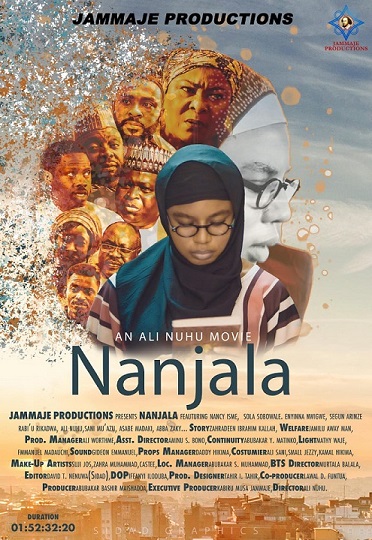
Kannywood/Nollywood film preview: Nanjala

The ā€œHausa films in Englishā€ have, since their debut, been as much praised as they have been criticised. However, while a large section of spectators welcomes the films, many others regard them as a threat to the development of the indigenous language. Others go further to describe them as ā€œnon-Kannywoodā€ productions.

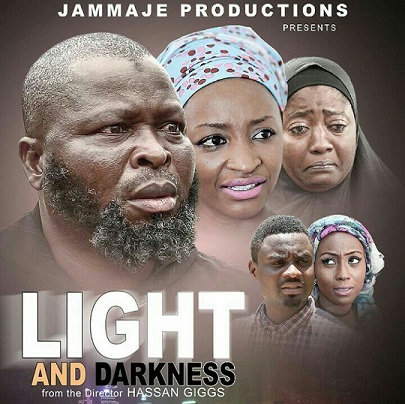
However, their initiator and promoter, Malam Kabiru Musa Jammaje, remains undaunted. He is all set to enthral the audience with another Kannywood film in English after the remarkable success of There is a way (2016), This is the way (2017), Light and darkness (2018) and In search of the king (2019).

The soon-to-be-released movie, entitled Nanjala, is the first of its kind in Kannywood. It features the industry’s heavyweights alongside top Nollywood actors like Enyinna Nwigwe, Nancy Isime, Segun Arinze, Sola Sabowale, among others. Moreover, it’s reportedly the most expensive Kannywood movie with a budget worth over N35 million.

The movie was directed by ā€œwhizkidā€ Ali Nuhu, co-produced by Abubakar Bashir Mai-Shadda and titled after its main character, Nanjala. I have only watched its two-minute-long teaser, but I could grasp that the eponymous heroine, Nanjala, is a journalist whose investigative reports would lead to the main conflicts. The film’s themes may include corruption, honesty, women empowerment, the menace of drug abuse, moral decadence, etc. The cinematography is terrific, and the cast seems to give an outstanding performance.

To be right is to describe the film as ā€˜pan-Nigerian’ due to its production quality, cast, English medium, and the resonance of its message in the country. It’s, of course, promising and will surely appeal to moviegoers from a wide range of backgrounds.

I, therefore, commend the trio of Jammaje, Ali Nuhu and Mai-Shadda for making a Kannywood film with the potential to catapult the overlooked film industry to the international stage. I do hope that it will not disappoint.

Habibu Maaruf Abdu

Kano, Nigeria

habibumaaruf11@gmail.com

27.5.2022

English TensesĀ (concluded)

PAST PERFECT CONTINUOUS TENSE

 Subject+ had been + verb in progressive

Past perfect continuous tense represents an ongoing action that started and continued for some time in the past.

Example:

1. Yar’adua had been seeing his doctor for two years before he died in 2009.

2. The students had been waiting for two hours when their lecturer arrived.

3. Muhammad had been teaching for four years when he resigned and joined politics

SIMPLE FUTURE TENSE

subject+ will/shall + verb (base form)

Functions of the simple future tense

The simple future refers to a time later than now and expresses facts or certainty. In this case, there is no ‘attitude’.

The simple future is used:

  • To predict a future event:
    It will rain tomorrow.
  • With I or We, to express a spontaneous decision:
    I will pay for the tickets by credit card.
  • To express willingness:
    I will do the washing-up.
    He will carry your bag for you.
  • In the negative form, to express unwillingness:
    The baby won’t eat his soup.
    won’t leave until I’ve seen the manager!
  • With I in the interrogative form using “shall” to make an offer:
    Shall I open the window?
  • With We in the interrogative form using “shall”, to make a suggestion:
    Shall we go to the cinema tonight?
  • With I in the interrogative form using “shall” to ask for advice or instructions:
    What shall I tell the boss about this money?
  •  
  • FUTURE CONTINUOUS TENSE

subject+ will be + verb in -ing

The Future Continuous tense is a verb tense that indicates that something will occur in the future and continue for an expected length of time.

Example

1. I will be travelling to Kano tomorrow this time 

2. We will be watching the football match 

3. The students will be sitting for their final exams in June.

FUTURE PERFECT

subject+ will have + verb in past participle

Example

1. I will have returned from Kano tomorrow by this time

2. I will have finished my project by next week.

3. I will have written the letter by breakfast time.

FUTURE PERFECT CONTINUOUS

subject+ will have been + verb in – ing 

– To show that something will continue up until a particular event or time in the future

Example:

1. I will have been teaching for six years by September 2022

2. The students will have been waiting for two hours by 10.00 am

3. We will have been playing for one hour by 10:30

In summary

1. simple present: I drive.

2. present cont: I’m driving.

3. present perfect: I have driven.

4. Present perfect continuous I have been driving.

5. simple past: I drove.

6. past cont: I was driving.

7. past perfect: I had driven.

8. past perfect cont: I had been driving.

9. simple future: I will drive.

10. future cont: I will be driving.

11. future perfect: I will have driven.

12. future perfect continuous: I will have been driving.

Concluded

Nuru Aliyu Bauchi wrote from Bauchi via nurubh2015@gmail.com.

English Tenses II (Continued)

PRESENT PERFECT TENSE

Subject + has/have + verb (past participle)

The present perfect tense refers to an action or state that either occurred at an indefinite time in the past (e.g., we have talked before) or began in the past and continued to the present time (e.g., he has grown impatient over the last hour). This tense is formed by have/has + the past participle.

Examples

1. Nuruddeen has eaten the food.

2. The students have gone home.

3. The timekeeper has rung the bell.

We can turn the above sentences into either interrogative or negative. 

Examples

1. Has Nuruddeen eaten the food?   Nuruddeen has not eaten the food.

2. Have the students gone home?   The students have not gone home.

3. Has the timekeeper rung the bell?  The timekeeper has not rung the bell.

NOTE: Present perfect tense is not used with a specific time

Examples

1. I have finished my PhD today. (wrong)

2. Nuru has seen a snake this morning. (wrong)

3. I have put away all the laundry at 10:00 this morning. (wrong)

4. They have delivered the letter yesterday. (wrong)

PRESENT PERFECT CONTINUOUS

Subject  + has/have been. + verb (ing)

The present perfect continuous tense (also known as the present perfect progressive tense) shows that something started in the past and continues at present. The present perfect continuous is formed using the construction has/have been + the present participle (root + -ing).   

Examples

1. The dog has been barking since morning.

2. The students have been playing for 30 minutes.

3. I have been teaching for ten years.

SIMPLE PAST  TENSE

Subject + verb  in past form (-ed in regular verbs)

The simple past tense describes a completed activity that happened in the past. In other words, it started in the past and ended in the past. For example:

1. I watched the movie last night.

2. We saw a snake in the morning.

3. The man painted the house green.

PAST CONTINUOUS TENSE

The Past Continuous tense is essential in English. We use it to say what we were in the middle of doing at a particular moment in the past. 

       1. I was working at 10 pm last night.

       2. They were not playing football at 9 am this morning.

       3.  What were you doing at 10 pm last night?

       4. What were you doing when he arrived?

       5. She was cooking when I telephoned her.

       6. We were having dinner when it started to rain.

      7.  Rabiu went home early because it was snowing.

PAST PERFECT

Subject. + had  + verb in past participle (eaten,taken, drunk, seen,flown,grown etc)

The past perfect tense describes a completed activity in the past. It is used to emphasize that an action was completed before another action took place. For example:

1. Musa had baked a cake before you arrived.

2. They had painted the fence before I had a chance to speak to them.

3. The boy had died before the doctor arrived.

4. I had worked with the company for five years before I resigned in 2019.

5. The students had played football before the rain started. 

To be concluded

Nuru Aliyu

ATAP CONSULTS BAUCHI

nurubh2015@gmail.com

JOKE: When mother tongue betrays…

By Aisha Abdullahi Bello

As the principal of a renowned private school here in Kano, I am saddled with many responsibilities, from managing the school’s activities to attending to visitors, sometimes from the ministry, other times parents of our students. This goes on and on and on throughout the term till the end.

On one of such tiring occasions, after the day’s work, I was trekking home as usual (I don’t have a car) when I saw some middle-aged men, most probably in their late 30’s conversing. At first, what they were discussing was incoherent. But as I walked closer to where they were seated, I began to get a grasp of what they were arguing about.

The conversation goes thus: you ‘Ausa’ (Hausa) men don’t know ‘au’ to pronounce English words, says one of the two men who looks just like a Yoruba man. This word ear (here) is ‘ferry’ and not ‘berry’, he adds with all seriousness.

The other guy, who is undoubtedly a Hausa man, then replies by saying,’ you are the ones who do not know how to fronounce (pronounce) English words correctly. Look, says the Hausa man, the word is pronounced ‘berry’ and not ‘ferry’.

As curious as I am, maybe due to my position as a teacher, I went close to them demanding to see the word which is the bone of contention that resulted in the heated debate. Lo! And Behold! The actual word they were all referring to is ‘Very’🤣🤣🤣

Aisha Abdullahi Bello teaches English at Kuntau Science Academy, Kano. She could be reached via: aishaabdullahibello@gmail.com.

Kannywood movie review: ā€˜Light and Darkness’

By Saddam Ungogo

Light and Darkness (2018) is one of Kabiru Musa Jammaje’s Kannywood films in English. He is a fantastic filmmaker with ideas, but I always feel it isn’t a good idea to make such films. If it is something worth doing, Ali Nuhu would have made a few, Karan Johar would have made a Bollywood film in English. Instead, however, we saw indigenous films winning prestigious global awards.

At the Oscars, we even have an award category called ā€˜The Academy Award for Best International Feature Film’ (known as Best Foreign Language Film before 2020). It is given to feature films produced outside the United States with a predominantly non-English dialogue.

Directed by Hassan Giggs, written by Ilyasu Umar Maikudi and co-produced by Kabiru Musa Jammaje and Abubakar Bashir Maishadda, Light and Darkness is a story that revolves around Alhaji Balarabe Maikadara (Rabi’u Rikadawa), who is allergic to western education. The movie was set in an urban Hausa society of the 2000s, and it turned out to be a domestic drama with ā€˜education’ as its central theme.

Alhaji Maikadara was a well-endowed businessman. He married his second wife, Raliya (Rahma Sadau), with a promise to let her further her education, but after having her under his watch, he transgressed his end of the bargain. He had two grown-up children, Abba (Nuhu Abdullahi) and Basma (Maryam Booth), with his late wife. He chased Basma out of the house when she protested his intention to give her hand out in an arranged marriage. Instead, Basma preferred to go to school.

The film tries to identify the significance of education, paint it as light, parade the remonstrance of ignorance, and sketch it as darkness.

The film has good intentions, but it lacks preparation. Something tells me that the film cast was selected based on who they are or because they could speak English. Stories are supposed to call for actors.

Viewers were rushed through the storytelling, the story was stitched with anxiety, and the dialogues were incompatible with the character profiling.

Jammaje decided to be the line’s director, which I think was a blunder. He assigned uneducated characters to speak big grammar and talk with idiomatic expressions. Perhaps he was trying ā€œto use the opportunity to teach English to viewersā€, as he bragged in a Daily Trust interview on January 7, 2017.

Throughout the movie, I asked myself what audience the filmmakers had in mind while putting it together. Staged in an urban setting, written in English and with education (girl-child education included) as its cardinal message, this story was huge. Its target audience should be rural Hausa communities where there is a high level of out-of-school young people and children, where western education is still not condescended. If that is the case, the language used in transmitting this message must have spooked away from the suitable audience of the movie.

This is 2022. The movie was made in 2018. Maybe nobody would even care about this review, even the filmmakers themselves. Jammaje made many movies after this one, including The Right Choice, which his co-producer Maishadda called the ā€œbiggest Kannywood project ever in terms of financeā€,…costing N35m.

The Right Choice (2020) was worth N35m. It featured top Nigerian stars from both Kannywood and Nollywood industries, such as Sani Mu’azu, Segun Arinze, Sola Sobowale, Nancy E.Isime, Enyinna Nwigwe and Ali Nuhu.

With The Right Choice, Jammaje Production must have learnt that they needed to be more pragmatic and made a complete Nollywood movie. Or, maybe, a Nigerianized film so that Jammaje could teach his beloved English language through his role as he would get educated cinema-goers lining up for his work anywhere around the world.

As for Hausa consumers like me, do not dare bring something like Light and Darkness ever again.

You might be promoting my culture with Light and Darkness, but honestly, you were killing my language!

Saddam Ungogo is a Kanp-based broadcaster and singer. He can be reached via candidsaddam@gmail.com.

English Tenses I

By Nuru Aliyu Bauchi

Permit me a little space in your new but rapidly growing and widely read newspaper to contribute from my little knowledge of English on English Tenses. Tenses are among the most important but often neglected and poorly mastered topics, even among graduates of the English language. Two incidents involving two graduates of the English language from different universities recently made me dumbfounded.

The first incident was a Corp member posted to serve at one of the secondary schools in my home state. I asked her to list the twelve English tenses but could only provide five (not accordingly). She confessed that the last time she had a lesson on tenses was in secondary school. The second was another graduate of English seeking a teaching job. I was one of the interviewers. Again, I asked her to list and exemplify the twelve English tenses. Likewise, she could only supply four randomly. I always wonder what is so tricky in mastering English tenses, considering that one must use them whenever one writes or speaks. 

We have three (3) main tenses. These are 1. Present tense 2. Past tense 3. Future tense. Each of the three tenses has four (4) aspects, as can be seen below:

PRESENT TENSE

1. simple present tense

2. Present continuous tense

3. Present perfect tense

4. Present perfect continuous tense

SIMPLE PRESENT TENSE

This tense expresses habitual/repeated actions, general truth, sports commentary, or news heading. Infinite or ‘s form of a  verb is used alongside the subject (noun or pronoun). If the subject is either first person (I, we) or second person (you) or third person plural (they), use an infinitive form (go, wash, brush, fly, teach). But, if the subject is third person singular (he, she, it, Nuru, the boy, the teacher) or any singular indefinite pronoun (each, one of the…, everybody, someone etc.), use and ‘s form ( goes, washes, brushes, flies, teaches).

In other words, if the subject is singular, use a singular verb, while if the subject is plural, use a plural verb. REMEMBER that singular nouns do not have an ‘s (bag, boy, car, house), but singular verbs have an ‘s or ‘es( teaches, goes, cooks, sweeps, etc.). E.g., Subject + verb(s).

Example

1. Nuru goes to school every day.

2. The children play football every day.

3. Dogs bark.

4. I like ice cream.

5. Mr president presents the 2022 budget.

6. Everybody knows the answer.

COMMON MISTAKES

1. I goes to school (wrong)

2. He brush his teeth every day (wrong)

3. Musa teach English language (wrong)

PRESENT CONTINUOUS TENSE

This tense is a bit simple because it has only subject+auxiliary verb (is or are ) + verb in -ing form. This tense is used for ongoing activities.

Example

1. The boy is reading.

2. The girl is cooking.

3. The students are writing.

4. We are jumping

5. He is sleeping

COMMON MISTAKES

One should be careful to avoid using nouns and pronouns together as follows

1. Adamu he is reading. (wrong)

2. Zainab she is cooking. (wrong)

To be continued

Nuru Aliyu Bauchi teaches at Abubakar Tatari Ali Polu (ATAP), Bauchi State. He can be reached via nurubh2015@gmail.com.

Dear NECO registrar, removing English as admission criterion can be costly

By Ishaka Mohammed

Dear Professor Ibrahim Dantani Wushishi, we are aware that you have reached the pinnacle of your career as a Nigerian academic. That means you must have directly interacted with an overwhelming number of Nigerian students. We also know that you specialise in education. Therefore, you should know better than many of us the pros and cons of educational policies.

As the current registrar of the National Examinations Council (NECO), you think that the Federal Government of Nigeria should consider removing credit passes in English language and mathematics as criteria for admission to Nigeria’s higher institutions. This is further proof that you know Nigerian students and how difficult it is to pass these subjects in their Senior School Certificate Examinations (SSCE).

Similar to your suggestion, the current registrar of the Joint Admission and Matriculation Board (JAMB), Professor Is-haq Oloyede, once advocated that a credit grade be removed as an admission criterion for the arts and humanities in polytechnics and colleges of education. I subscribe to his submission.

However, considering the status of the English language in the 21st century and the fact that it’s our official language, I think it’s costly to abolish a credit grade in the subject (English language) as a criterion for admission into our tertiary institutions.

It’s glaring that despite the presence of this criterion which forces many of us to learn the language, we’re far from attaining true proficiency.

Prof., if you seek a paragon of “nobody is perfect”, just pay attention to how we (Nigerians) use the English language, starting from this write-up. Even the highly educated are prone to uttering or writing wrong English expressions. Concerning this claim, many people argue that no one is above mistakes, but I say that mistakes aren’t the same as errors. When one’s use of a wrong expression results from one’s unawareness of the correct pattern, that’s an error.

Sir, I think a few examples will suffice. Many Nigerian graduates wish to further their studies abroad, specifically in the United States and the United Kingdom, but their proficiency level hinders them in the English language. Each of the two main internationally recognised English language proficiency tests is difficult for most Nigerians to pass. Those who have sat for the tests or accessed their past questions can attest to my claim. Even an excellent Nigerian graduate needs intensive coaching to pass the Test Of English as a Foreign Language (TOEFL) or the International English Language Testing Systems (IELTS).

Prof., if making English errors were a criminal offence, we would be in jail. But, of course, that’s if judges aren’t guilty as well.

Sir, it’s a known fact that exposure to news media content boosts one’s language proficiency. Although the reverse isn’t totally the case in our country, consumers of Nigerian media content had better be wary of heavily relying on their (the media’s) expressions. Other authorities, including dictionaries, should be consulted as frequently as possible.

Let me buttress the above point. Since 1961, the Nigerian Guild of Editors has been a network of experienced journalists who have attained editors’ positions in their respective organisations. Ordinarily, one would assume that every member of the network possesses an unquestionable mastery of the English language. But, no, this isn’t the case. Some of the past presidents of the guild have repeatedly published wrong English expressions not as mistakes but as errors. One of such expressions is “Buhari felicitates with”. I’m sure the president has media aides, two of whom have presided over the affairs of the Nigerian Guild of Editors in the past.

In a similar vein, many of the federal ministry of education documents aren’t free of English errors, neither are those from our schools.

The above instances speak volumes about our deficiency in our lingua franca. Being aware of this situation, isn’t it advisable that we adopt measures to encourage us to learn the English language? Will it then be wise to abolish existing measures?Ā 

I believe in the saying that where there’s a will, there’s a way. Our determination to secure admission to tertiary institutions makes us learn English more than we would ordinarily do. The more we practise, the better we’re highly likely to become. Frequency and expertise have a significant relationship.

Therefore, Prof., let’s maintain a credit grade in English as a criterion for admission to our higher institutions.

Ishaka Mohammed writes from Kaduna. He can be reached via ishakamohammed39@gmail.com.

KTSG’s Public Opprobrium: English is not the problem

By Ahmad Ganga

The recent executive order signed by Katsina State Government (KTSG) is filled with grammatical and typographical errors that critics can never overlook, even though English is not the problem. Instead, the problem lies in constituting members of the executive council tasked with governance delivery. Virtually, almost every politician in the North despises having competent people within their domain who can question their decision and ask for clarification for every policy made. That’s why lowbrows make a list of cabinet members: SAs, EAs, PAs, Secs, etc.

Being His Excellency, Governor of Katsina State, a former Speaker House of Representatives and an experienced administrator, the errors wouldn’t have happened —if the politicians in this State didn’t present their puppeteers while constituting cabinet. Competency and skills should be a yardstick in the process, instead of connection. The Executive Governor is not alone in this. Secretary to State Government, Dr Mustapha Inuwa, was in academia for long before he set his feet into politics. Tell me why critics would not descend on KTSG for committing such public opprobrium?!

Let me tell you a story. When the news of my Principal’s house stormed media, I came across a post he made himself wherein he showcased the house on the internet. I asked him why he did it, and he told me that his guard said to him that some people, assumed to be journalists, came snapping the house and asking people about the person of Honourable Member who’s President Buhari’s nephew. So, instead of letting the journalists break the news and twist it the way it suits them, he broke the news himself. 

Let me go back to the initial topic. Suppose the elected and appointed officials gave room for competency, like asking for inputs from their aides and secretaries on every policy before releasing them to the public. In that case, they could avoid such errors. As I say in the headline, English is not the problem. Every one of the elected and appointed politicians is looking for someone who always says YES to whatever.

Considering the consequences that followed this executive order, I suggest that His Excellency give room for competency to reign in his cabinet to control the damage done so far since he was sworn in as the Executive Governor of Katsina State.

Ahmad Ganga can be contacted via ahmadganga66@gmail.com.