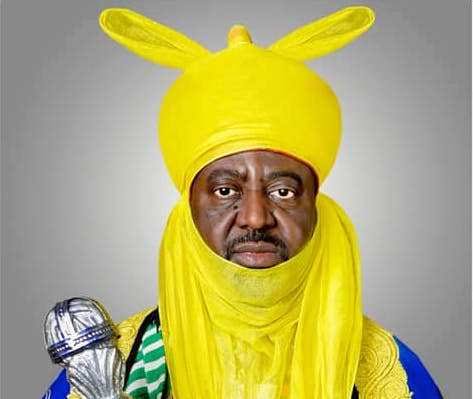
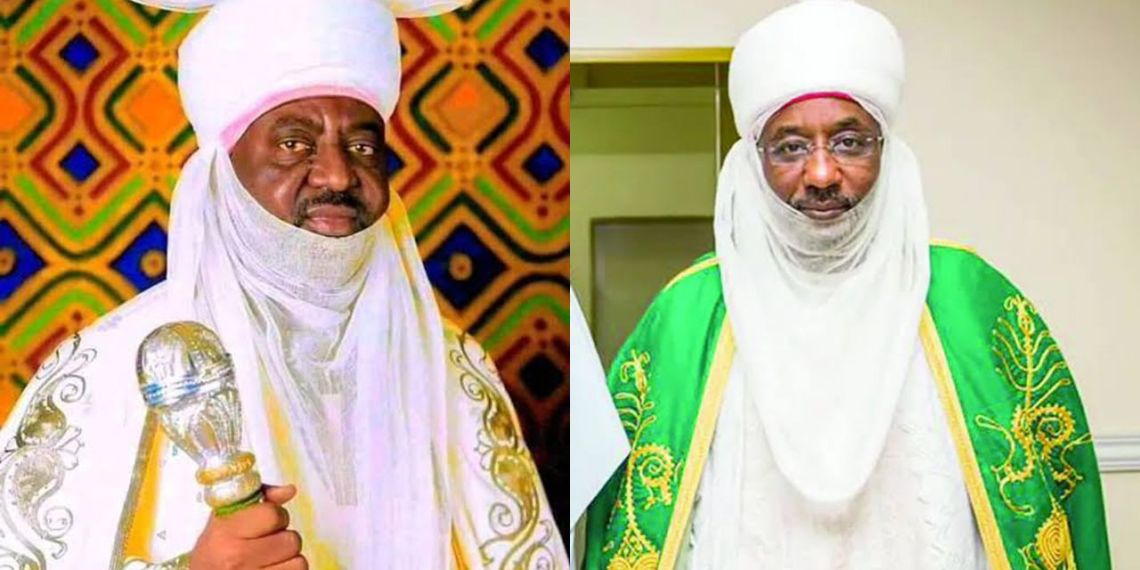
Emir Muhammadu Sanusi II

HRH Muhammadu Sunusi II’s PhD thesis: A brief review

By Muḥammad San

I have read the PhD thesis of the Emir of Kano, and just like in his Gamji days, Sanusi Lamido Sanusi (now Muhammadu Sanusi II) remains forthright in expression and uncompromising in his quest to balance Shari’a.

Some may dismiss contributions like mine as disturbing or argue that we are too little academically to weigh in on the Shari’a debate. But this is a debate that dominated Nigeria at the turn of the millennium, and Sanusi himself was at its centre. Having read his papers, watched his TED talk, and reviewed the recent compendium of his essays, I can say I have at least a fair understanding of his intellectual outlook.

Sanusi has always been controversial. His now-famous remark that a wife should slap back or retaliate against an abusive husband is a good example. That boldness, perhaps, was the same energy that pushed him to the University of London to produce a doctoral thesis on Islamic family law, using Morocco and Kano as his comparative space.

The Emir is an ardent advocate of girl-child education, but this passion seems to have narrowed his focus, leaving him blind to the ordeals of men under the same system. While women’s marginalisation has been widely documented, men, too, are now facing a new wave of vulnerabilities. The cases are there for anyone who cares to look.

The infamous Maryam Sanda case, in which a woman brutally murdered her husband, remains etched in public memory, yet the debate around it was clouded by sympathy. In 2021, a young wife in Kano was convicted of poisoning her husband after repeated disputes. In 2022, another woman fatally stabbed her husband during a quarrel over financial neglect. These are not isolated events. They highlight the rise of what can be called “feminine defence,” but they also expose the growing fragility of men trapped in broken family systems.

Sanusi himself points to Morocco as a model. “What did they do in Morocco? They built schools and invested in transportation so that girls could be moved from villages to the nearest schools. They also invested in school feeding and provided financial support to the poorest families ready to send their sons and daughters to schools,” he said in an interview with Time Africa Magazine. Yet the contrast is sharp. In Kano, the state government spends millions on lavish emirate ceremonies, while journalists like Dan Bello continue to expose the dire state of public schools in the very heart of the metropolis.

To be fair, Sanusi’s thesis tackled the historical marginalisation of women in Islamic family law with rigour and depth. But in amplifying women’s rights, it failed to defend men or acknowledge their growing vulnerabilities in a rapidly changing society. By leaning heavily on the Moroccan Moudawana, itself a product of feminist activism, the work framed men only as a dominant class to be restrained. Missing were the struggles many men face: unemployment, the crushing demands of polygamy, and the relentless pressure to perform as patriarchs without resources.

This omission is striking. In Kano today, the rise of wives killing their husbands is not just a crime. It is a signal of imbalance in the family system, a warning that reform is incomplete. Without addressing male fragility alongside female empowerment, Shari’a reform risks becoming a zero-sum game. Sanusi’s thesis suggests that empowering women alone can resolve family crises. But true reform, as Shari’a itself demands, must be a balanced restructuring that preserves the dignity and well-being of both men and women.

Muḥammad Sani is a freelance and public policy writer from Zaria. Can be reached via muhdusman1999@gmail.com.

Books before bridges: Emir Sanusi faults Northern leaders’ misplaced priorities

By Uzair Adam

The Emir of Kano, Muhammadu Sanusi II, has criticised successive governments in Northern Nigeria for neglecting education while focusing on roads and flyovers, warning that the region is sliding behind the rest of the country.

Sanusi spoke on Saturday as a panellist at the Kano International Poetry and Art Festival (KAPFES), organised by the Poetic Wednesdays Initiative, during a session themed “Beyond Words: Unlocking Northern Nigeria’s Literacy Potential.”

The former Central Bank governor recalled how Kano State sponsored his secondary and university education in the 1970s and 1980s, covering tuition, living expenses, and allowances. 

He said, “My parents did not pay a dime. Why is it that the younger generation has not been able to get those benefits? Something went wrong in terms of the political class and its priorities.”

He argued that leaders must channel “huge resources” into schools, scholarships, and teacher training rather than spending billions on physical projects. 

“It’s nice to have beautiful flyovers and underpasses, but you are building these roads for uneducated children to walk on. Who will maintain them in the future?” the Emir queried.

Describing education as the most valuable investment, Sanusi stressed that it is the only asset that cannot be inherited or taken away. 

“You can be given money, a house, or even a political position, and all of these can disappear. But once you are educated, no one, no ruler, no oppressor can take it away from you,” he said.

He linked Northern Nigeria’s current setbacks to colonial policies that discourage the growth of an intellectual Muslim class. 

According to him, Arabic literacy, despite its intellectual depth, was devalued under British rule and is still treated as illiteracy today.

Sanusi also highlighted the role of language as a barrier, calling for the adoption of mother tongues in teaching. 

“In Germany, you study in German; in France, you study in French; in China, you study in Mandarin. Why can’t a doctor be trained in Hausa, Yoruba, or Igbo?” he asked, noting that mother-tongue instruction reduces dropout rates and improves learning outcomes.

Challenging conventional views of schooling, he argued that communities should utilise available spaces, such as mosques, as temporary classrooms instead of waiting years for new buildings. 

“If a mosque is vacant between morning prayers and the afternoon, why can’t children be taught there?” he asked.

The Emir concluded with a call for leaders, policymakers, and citizens to humanise statistics. “When we say three million children are out of school, these are not just numbers. 

“This is somebody’s son, somebody’s daughter, a future mother on the street without hope. In everything we do, we must ask ourselves: who is the human being at the end of it?”

Open letter to Emir Aminu Ado Bayero: A reflection on leadership and legacy

By Kamal Alkasim

As a passionate observer of our culture and heritage, I am writing this letter from the heart of Kano metropolis. It was driven not by personal interest, but by love for our land, its history, and the legacy entrusted to its leaders.

Your Highness, it is said that to whom much is given, much is expected. As the custodian of a rich cultural heritage, the expectations placed on your shoulders are immense. You come from a distinguished royal lineage: your late uncle, Emir Muhammadu Sanusi I, was a towering figure whose leadership left a deep mark across Northern Nigeria. More recently, your nephew, Muhammadu Sanusi II, carried the same torch, boldly defending the dignity and legacy of the Kano Emirate, even after facing unjust dethronement in 2020.

The legacy of your father, the late Emir Ado Bayero, speaks for itself. He reigned with wisdom and dignity for over five decades. History recalls how former Governor Abubakar Rimi once attempted to depose him, but fate and divine will had other plans. That chapter ended in tragedy, and Rimi never held office again. Your father, on the other hand, continued to serve and left behind an enduring legacy.

Your Highness, the Kano Emirate has stood for over a thousand years as a beacon of leadership, culture, and Islamic scholarship. It deserves a leader who will defend its dignity with integrity, wisdom, and a sense of responsibility that transcends personal or political interests.

Sadly, many believe that under your leadership, the kingdom has faltered. There are concerns that you have allowed yourself to be used as a tool by those with no regard for the unity and peace of Kano. These are strong words, but they come from a place of deep concern and affection for our home.

Leadership is not about holding a title; it is about rising to the moment and making tough but principled decisions in the interest of the people. Leadership is not about clinging to a throne while the city suffers unrest and division. Peace, justice, and unity must always come first.

Your name will forever be in the history books as one of the Emirs of Kano. That, in itself, is no small achievement—one that countless princes before you have dreamed of. But how your name is remembered depends on what you do with the responsibility now entrusted to you.

Let Kano rise again—not as a battlefield for political power plays, but as the most peaceful, united, and respected state in Nigeria and beyond. Let the Emirate return to being a symbol of honour, not controversy.

May God guide you to lead with justice, dignity, and wisdom—for the sake of our people and the generations to come.

Kamal Alkasim is a Concerned Son of Kano.

Emirate dispute cast a shadow over Eid-el-Kabir prayers in Kano

By Fatima Ishaq Muhammad

Kano, known for its deep Islamic practices and royal traditions, witnessed a historic and uneasy moment during the 2025 Eid-el-Kabir celebrations as two rival Emirs led separate congregational prayers in different parts of the city.

This development demonstrated the woeful crisis over the leadership of the Kano traditional Emirate, which, indeed, remained one of the most powerful traditional institutes in northern Nigeria.

Moreover, on one side was Emir Muhammadu Sanusi II, reinstated in May 2024 by the Kano State Government after being dethroned in 2020. Aminu Ado Bayero was installed as Emir on the other side after Sanusi’s removal. He still maintains that he remains the rightful occupant of the royal seat.

During the Eid celebrations, Emir Sanusi II led prayers at the Kofar Mata Eid Ground, traditionally recognized as the seat of the Emir’s religious leadership.

Meanwhile, Emir Aminu Bayero held his prayers at a different location, with loyalists gathered around him. For the first time in recent memory, Kano experienced two major Eid congregations, each holding up to a divided royal allegiance within the ancient city.

This unprecedented situation did not happen in isolation, but it resulted from the recurring tussle over the Kano Emirate, rooted in politics and personal rivalries.

Sanusi II’s removal in 2020 by the administration of former Governor Abdullahi Ganduje was widely termed as punishment for his massive outspoken criticism of the government.

His reinstatement by the current government of Governor Abba Kabir Yusuf has been challenged in court by Bayero’s supporters, creating legal and political uncertainty over who the legitimate Emir of Kano is.

The split Eid prayers skyrocketed across Kano and beyond, symbolizing the Emirate’s division and disunity of authority.

What should have been a day of religious unity became a visible sign of division in the state’s leadership. Thankfully, no major disturbances were reported, though tensions remain high.

Adding to the complexity of the situation, the traditional Durbar festival, which usually follows the Eid prayers, was banned by the police for security reasons.

The ban disappointed many residents, as the Durbar is integral to Kano’s cultural identity and economic life.

As the legal battles escalate, many residents and observers fear that the division within Kano’s traditional leadership could escalate unless a clear resolution is provided by the courts or through dialogue among key stakeholders.

For now, Kano remains a city with two Emirs, two congregations, and a divided loyalty, awaiting clarity on the future of one of northern Nigeria’s most important royal institutions.

Fatima Ishaq Muhammad via fatimaishaq021@gmail.com.

Wearing the turban, bearing the burden: The enormous task before the new Galadiman Kano

By Huzaifa Dokaji

The promotion of Wamban Kano Munir Sanusi as Galadiman Kano today, May 2, 2025, marks an important moment in the history of Kano’s sarauta institution. More than a ceremonial instalment, it is the continuation of a title whose symbolic and administrative significance has long anchored the cohesion of Kano; first as a kingdom, and since the nineteenth century, as an emirate. This moment is charged with expectation, arriving at a time Kano Emirate is caught in a vortex of political contestation, juridical uncertainty, and generational transition. It will be the day a man who is both brother and foster son to a former Galadima, and son-in-law to another, assumes such an important office.

The title of Galadima, derived from the Kanuri galdi-ma, meaning “chief of the western front,” emerged during the administrative reforms of Kano’s second Hausa ruler, Sarki Warisi dan Bagauda, in the 11th century. Over time, it evolved into one of the most powerful and senior princely offices across Hausa land. Until Emir Abdullahi Maje Karofi (1855-1882) appointed his son Yusufu as Galadima, the title had traditionally been reserved for the king’s/emir’s uncle, eldest brother or closest male kin: typically someone older and therefore unlikely to succeed to the throne. 

Elsewhere, I have argued that Maje Karofi’s deviation from this established custom was one of the remote causes of the Kano Civil War of 1893. In essence, the appointment of a son to such a crucial position, naturally altered the institutional role of the Galadima, who historically functioned as a check on the emir’s authority. This explains Maje Karofi’s decision to depose his brother Abdulkadir, for expressing growing concern over certain decisions and practices at court the latter deemed inappropriate.

As demonstrated by the reigns of Galadiman Kano Daudu, Atuma, and the Fulani-era Galadimas Maje Karofi and Tijjani Hashim, the office has often wielded influence that paralleled or even eclipsed that of the king/emir. Until the 19th century, titles like Dan Ruwatan Kano were accorded to the kinsman or son of the galadima, while Dan Darman Kano was reserved for his cognatic kinsman.

Traditionally, the Galadima served as vizier, head of civil administration, and head of his own mini-palace, independent of the Emir’s court. Court praise-singers aptly describe bearers of the title as Daudu rakumin Kano, the camel that bears the city’s burden; Daudu gatan birni, the protector of the city; and Rumfa sha shirgi, the palace’s dust heap where disputes are deposited and resolved. In recent times, no one embodied such praise and function as the late Galadiman Kano Tijjani Hashim.

Widely regarded as the archetype of the modern Galadima, Tijjani Hashim redefined the office in an era when the sarauta was stripped of formal political power. He transformed it into a bastion of accessible influence, strategic mediation, and public service. His residence functioned as a daily court of appeals, open to aristocrats, commoners, and royal slaves alike. He was the man to whom a poor student could turn for a scholarship, a merchant for capital, a civil servant for promotion, a politician for sponsorship, and a broken family for reconciliation.

Tijjani Hashim died in 2014 and was succeeded by the charismatic Abbas Sanusi, whose reign as Galadima was cut short by a protracted illness. Abbas Sanusi was a disciplined and astute administrator, widely respected for his command of the emirate’s bureaucratic machinery. Yet his tenure was constrained by declining health, which limited his capacity to perform some of Galadima’s traditional roles, particularly inter-familial diplomacy. It is from Abbas Sanusi that the title now transitions to his younger brother, Alhaji Munir Sanusi, marking a rare case of intergenerational and intra-familial continuity, even by the standards of Kano’s dynastic politics. Their relationship was not merely fraternal; it was paternal.

Abbas raised Munir from infancy, shaping his worldview and instilling in him the refined fadanci he has mastered and discreetly used to his advantage. Adding further symbolic weight is the fact that Munir is married to Hajiya Mariya Tijjani Hashim, daughter of the very man whose name has become synonymous with the Galadima title in recent memory. Thus, the new Galadima stands at the confluence of two great legacies—bound by blood to Abbas, and by marriage to Tijjani.

Born on January 12, 1962, Munir Sanusi Bayero was the last son of Emir Sir Muhammad Sanusi I to be born in the Kano palace. Raised by his late brother, Galadima Abbas Sanusi, he later married his second cousin, Hajiya Mariya, a union that has continued to epitomise royal love and companionship. Alhaji Munir Sanusi received his primary education at Gidan Makama Primary School and his secondary education at Government Secondary School Dambatta from 1976 to 1981. He later obtained a degree in Mechanical Engineering from the Indian Institute of Technology in New Delhi.

Galadima Munir Sanusi’s career commenced in the Kano State Ministry of Social Welfare, Youth, and Sports, where he served as a Transport Officer from 1989 to 1991. He later joined Daula Enterprises Co. Ltd, Kano, from 1991 to 1993. He currently sits on the board of several companies, including Tri-C3 and Unique Leather Finishing Co. Ltd, the second-largest exporter of leather in West Africa. 

In 2014, the Emir of Kano, Khalifa Muhammad Sanusi II, appointed him as Dan Majen Kano and pioneer Chief of Staff to the Emir in the Kano Emirate. He was elevated to the position of Danburam Kano in 2016 and Wamban Kano and district head of Bichi in 2024. Today, he assumes the prestigious title of Galadiman Kano.

Galadima Munir’s loyalty to Emir Muhammadu Sanusi II has earned him considerable admiration within and beyond Kano. When the Emir was deposed in March 2020 and exiled to Loko in Nasarawa State, Munir not only followed him into banishment but remained by his side through Lagos and back to Kano. Now that the Emir has rewarded that loyalty with the emirate’s highest princely office, Munir faces a challenge no less noble than the title he inherits.

For one, loyalty is only one pillar of what I call “the burdens of the Galadima”. The office demands generosity, accessibility, discretion, and the ability to shoulder the hopes of a people whose faith in the sarauta system is repeatedly tested. Here lies Galadima’s greatest trial. Like his predecessors, he must cultivate a public image as a patron of the weak, a reconciler of royal, noble, and common feuds, and a figure of last resort to both the high and the low. He must embody rumfa sha shirgi in practice: bearing the burdens of others, not just out of obligation, but with discernment, sincerity, and grace. His word must be his bond, for zancen Galadima kamar zancen Sarki ne: the word of the Galadima is expected to be final, unwavering, and free of bitterness.

The task becomes all the more urgent against the backdrop of Kano’s current emirship crisis. While Emir Muhammadu Sanusi II’s return has been celebrated in many quarters, it remains the subject of intense legal and political contestation. In this precarious climate, the Galadima must go beyond ceremonial visibility. He must be the Emirate’s anchor, bridging palace factions and translating the noble project of restoring the sarauta back to its sense to the wider public. Galadima Munir’s early efforts at reconciling estranged branches of the royal family and diffusing internal tensions suggest a promising political instinct. But history demands more than instinct; it demands an ethic of honour and sustained human investment.

To become a Galadiman Kano today is not merely to wear a turban. It is to accept a lifetime project of prioritising the interest of the Sarauta and the talakawa over one’s. It is knowing that one’s home inevitably becomes a revolving court and one’s influence becomes public trust. Any failure to wield it generously, the memory of that failure will linger far longer than any quiet success.

Alhaji Munir Sanusi ascends the title of Galadima with the wind of history at his back and the shadows of giants before him. He is son and brother to a Galadima, and son-in-law to the most revered of them. If he can merge these legacies with his quiet resolve and proven loyalty, he may yet restore the Galadima as the most vital conduit between the emirate and its people.

The title awaits its meaning, Kano welcomes its new Galadima.

Allah ya kama, Raba musu rana da hazo

Allah ya taya riko, Daudu kwatangwalon giye.

Allah ya taimaki, tomo jiniyar gari

Huzaifa Dokaji writes from New York and can be reached via huzaifadokaji@gmail.com.

Echoes of the past, choices of today: Will Kano’s throne withstand the test of time and wisdom?

By Usman Abdullahi Koli

The grandeur of Kano’s emirate is not merely an inheritance of a throne but the custodianship of a deep-rooted history, culture, and tradition that represents the very soul of African heritage. From the era of Bagauda to the reign of Ado Bayero, the emirate has stood as a symbol of resilience, dignity, and continuity. 

Today, as the emirship tussle continues, it presents a defining moment not just for those directly involved but for the entire Kano people, whose unity and stability rest upon the wisdom of their leaders. It is a moment that demands measured actions, guided by history and the sacrifices of great monarchs who prioritised the collective good over personal ambitions.

The Kano Emirate is no stranger to succession disputes; however, history has shown that wise leaders have navigated such crises with patience, foresight, and a commitment to preserving the integrity of the institution. From the reign of Emir Muhammadu Sanusi I to that of Ado Bayero, the emirate has undergone significant transitions- some peaceful, others contentious- but ultimately resolved with a sense of responsibility toward the larger interest of Kano.

Today, we see echoes of the past in the contest between Emir Muhammadu Sanusi II and Emir Aminu Ado Bayero. While the legal and political dimensions of the crisis continue to unfold, the moral weight on those involved is immense. The key question remains: Will the dignity, harmony, and prestige of Kano take precedence over personal interests, or will history remember this episode as a moment of avoidable discord?

History is replete with examples of monarchs who faced displacement yet responded with wisdom, ensuring that their thrones remained symbols of honour rather than sources of division. In 1936, King Edward VIII of Britain abdicated the throne out of personal conviction, avoiding a constitutional crisis. 

More recently, King Juan Carlos of Spain voluntarily stepped aside to preserve national unity and dignity. Within Africa, deposed monarchs have often demonstrated restraint, placing the peace of their people above personal grievances.

A particularly relevant example is Emir Muhammadu Sanusi II, who, despite the political implications of his removal in 2020, did not rally his supporters to contest the decision. Instead, he accepted his fate with remarkable composure, trusting in destiny and the historical cycle that governs leadership.

Governor Abba Kabir Yusuf is enormously responsible for ensuring that his administration’s actions do not fuel unnecessary tensions in Kano. While he holds constitutional authority over traditional institutions, wisdom dictates that such decisions be made with a far-reaching vision that safeguards Kano’s unity, stability, and the sanctity of its traditions. Political decisions should not be allowed to erode the revered position of the emirate.

To Emir Aminu Ado Bayero, this moment calls for deep introspection on the true essence of leadership. His revered father, Emir Ado Bayero, was an emblem of peace, patience, and sagacity. The respect he commanded was not merely because he sat on the throne but because of his ability to navigate crises with wisdom. Now, his son faces a historic test: will he allow personal ambition to override Kano’s peace, or will he embrace the noble path of sacrifice? The decisions he makes today will shape how history remembers him.

To Emir Muhammadu Sanusi II, his reinstatement is a return to power and an opportunity to lead with renewed wisdom and vision. His expectations are immense—not for vengeance or retribution, but for reconciliation and statesmanship. The people of Kano look up to him to use his vast experience, intellect, and leadership to heal divisions, restore trust, and solidify the emirate as a pillar of stability.

Kano is more than a city; it symbolises Africa’s resilience, culture, and civilization. The emirate embodies centuries of tradition that must not be tarnished by personal conflicts. The world is watching, and history is recording. The real question is not who occupies the throne today, but how that throne is preserved for generations to come.

It is crucial for external influences, particularly those in Abuja, to respect the Kano State Government’s decision. The constitution recognizes states as custodians of their emirates, and any interference from outside forces risks escalating tensions rather than resolving them. Political insinuators should avoid fueling discord and instead honour the autonomy of Kano’s leadership.

Now, the great tradition of the Sallah Durbar, which both factions claim to organise, must not become a battleground for supremacy. The grand procession, deeply embedded in Kano’s cultural and Islamic identity, is meant to unite, not divide. It should not be reduced to a contest of power. Both sides must recognize that personal ambitions should never overshadow the collective peace of Kano. True leadership is tested not in times of comfort, but in moments of crisis, and the world is watching to see whether wisdom or ego will prevail.

Great monarchs are remembered not for how fiercely they fought to retain power, but for how wisely they managed transitions, prioritized peace, and left behind legacies of honor. The lessons of Kano’s past emirs—from Bagauda to Ado Bayero—should serve as a guide for present leaders. These revered figures ruled with dignity, wisdom, and a profound sense of duty to their people.

Those who occupy the throne today must consider: Will they be remembered for upholding this legacy or for diminishing it?

May wisdom prevail over pride, and may Kano remain the fortress of culture, tradition, and unity it has always been.

Usman Abdullahi Koli wrote via mernoukoli@gmail.com.

IGP withdraws police invitation to Emir Sanusi following Sallah Day incident in Kano

By Hadiza Abdulkadir

The Nigeria Police Force has retracted its invitation to Alhaji Sanusi regarding the recent unrest during the Sallah celebration in Kano State on March 30, 2025. The invitation was initially extended to gather Alhaji Sanusi’s account of the events that led to the disruption of peace during the festivities.

Following consultations with key stakeholders, Inspector-General of Police, IGP Kayode Adeolu Egbetokun, emphasized the importance of keeping policing actions free from political bias and misinterpretation. Instead of requiring Alhaji Sanusi’s attendance at the police station, the IGP has directed the operatives of the Force Intelligence Department (FID) to go to Kano and obtain his statement directly.

Prior to the Sallah celebrations, police received credible intelligence suggesting that two rival emirs, Alh Ado Bayero and Alh Lamido Sanusi, intended to hold separate Durbar Festivals, a tradition that involves emirs parading on horseback. To prevent potential violence, IGP Egbetokun deployed Deputy Inspector-General of Police, DIG Abubakar Sadiq, to negotiate with both parties and the Kano State Government, resulting in an agreement to cancel the festivities.

Despite this understanding, Alhaji Sanusi proceeded to ride a horse in a procession post-Eid prayers, which led to escalating tensions with local youths and ultimately resulted in the death of one Usman Sagiru, along with several injuries.

The Nigeria Police Force has assured the public of its commitment to professionalism in investigating the incident, stating that those responsible will face justice. The police further clarified that their actions are driven by principles of neutrality and professionalism.

ACP Olumuyiwa Adejobi, the Force Public Relations Officer, reiterated the police’s dedication to conducting thorough investigations into the matter.

Police to question Emir Sanusi over ‘durbar incident’ 

By Uzair Adam 

The Nigeria Police Force has invited the 16th Emir of Kano, Muhammadu Sanusi II, for an investigative meeting regarding a Sallah Day incident linked to a traditional procession.

The Daily Reality reports that on Sunday, March 30, 2025, the Kano State Police Command arrested 20-year-old Usman Sagiru of Sharifai Quarters in connection with the alleged attack and killing of vigilante members during the Emir’s entourage after Eid prayers.

Following the development, the police also invited Shamakin Kano, Alhaji Wada Isyaku, for questioning as part of an ongoing investigation.

A letter dated April 4, 2025, and signed by the Commissioner of Police (Operations), CP Olajide Rufus Ibitoye, indicated that the invitation was issued on the directive of the Inspector General of Police. 

The Emir is expected to appear at the Force Intelligence Department headquarters in Abuja on Tuesday, April 8, 2025, by 10:00 a.m.

Prior to the Sallah festivities, security agencies had imposed a restriction on durbar activities, citing security concerns. 

However, Emir Sanusi reportedly proceeded with the traditional processions, including the Hawan Nasarawa and a visit to the Government House, drawing large crowds and widespread media attention.

Sanusi cautions Kano youths against retaliatory attacks over Edo killings 

By Uzair Adam 

The 16th Emir of Kano, Muhammadu Sanusi II, has urged youths in the state to refrain from retaliatory attacks following the killing of 16 northern travelers in Edo State.  

Speaking after leading the two-rakat Eid-el-Fitr prayer at the Kofar Mata Eid ground, the former Governor of the Central Bank of Nigeria (CBN) warned against taking the law into their own hands, emphasizing the need for peace and order.  

“We received reports that some youths in certain areas are planning to carry out reprisal attacks after the Eid prayers. We strongly urge them not to do so,” Sanusi stated.  

He called on authorities to act swiftly in ensuring justice for the victims, stressing that an investigation should be conducted to bring the perpetrators to justice.  

Similarly, the 15th Emir of Kano, Aminu Ado Bayero, also appealed for prompt action, urging relevant authorities to ensure that those responsible for the killings are held accountable.  

Meanwhile, Kano State Governor Abba Yusuf, alongside his deputy, Comrade Aminu Abdussalam Gwarzo, and other government officials, joined worshippers in observing the Eid prayers.  

Sanusi further reminded the Muslim faithful to uphold the lessons of Ramadan and avoid returning to acts of wrongdoing.

Governor Yusuf calls for preparations for Sallah Durbar celebration in Kano

By Hadiza Abdulkadir

Kano State Governor Alhaji Abba Kabir Yusuf has instructed all four state Emirates to begin preparations for the upcoming Sallah Durbar Celebration. The announcement was made following a Ramadan breakfast meeting with the Emirs at the Government House in Kano.

In a statement from the Governor’s spokesperson, Sanusi Bature Dawakin Tofa, it was highlighted that Governor Yusuf recognizes the community’s enthusiasm for the traditional celebrations, which include wearing new attire, lining the streets to witness the Emirs on horseback, and exchanging greetings.

Emphasizing his commitment to uphold this cherished tradition, the governor assured citizens that all security agencies will be mobilized to ensure their safety during the festivities. Additionally, he revealed plans to inaugurate the Kano State Emirate Council in April, aiming to enhance its functionality.

The relationship among the Emirs has reportedly improved under Governor Yusuf’s administration, with Malam Muhammadu Sanusi II, Chairman of the Kano Emirate Council, noting the friendly ties between the Emirs. He urged the governor to use traditional institutions to effectively communicate policies to the grassroots level.

Emirs from Karaye, Rano, and Gaya expressed their appreciation for recent government initiatives, especially the provision of fertilizer and enhancements in education, health, and infrastructure in their emirates.