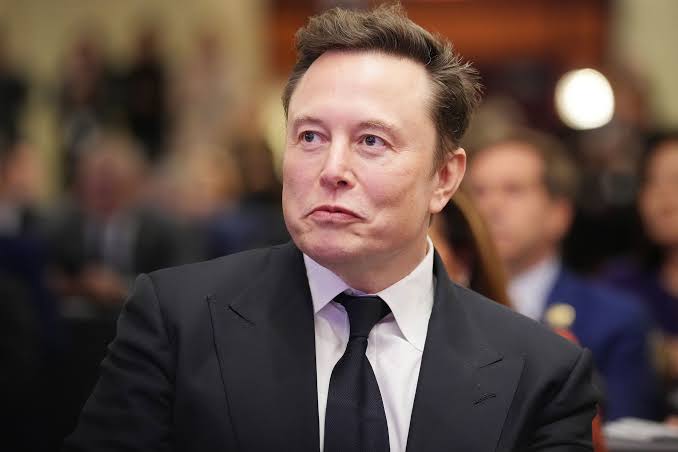
Elon Musk

Zohran Mamdani and the triumph of inclusion: A lesson for Nigeria

By Abdulhamid Abdullahi Aliyu

When Zohran Mamdani, an Ugandan-born politician of Indian descent who migrated to the United States, emerged victorious as the new Mayor of New York, it became more than just another electoral story from America. His triumph resonated across continents, sparking global conversations on representation, inclusion, and the reawakening of civic trust in politics. For many, Mamdani’s victory symbolised a powerful statement that character, vision, and authenticity still matter in the age of polarisation.

Mamdani’s path to City Hall was anything but easy. As an immigrant, a Muslim, and a progressive voice, he faced a storm of hostility from powerful circles. President Donald Trump and billionaire Elon Musk, among others, were said to have thrown their weight behind his opponents, amplifying fears that his immigrant roots and socialist ideals made him unfit for leadership. Yet, against all odds, Mamdani not only survived the onslaught but emerged stronger, armed with nothing but a clear message of hope, justice, and inclusiveness.

What made Mamdani’s campaign remarkable was not just his defiance of elite power, but his connection with ordinary people. His grassroots outreach, his emphasis on social housing, education, climate action, and racial justice found resonance among New York’s diverse electorate. He spoke to their realities, not to their fears. In doing so, he rekindled faith in participatory democracy, the belief that leadership should reflect the people’s shared struggles and aspirations, not the privilege of a few.

It is no coincidence that Mamdani’s rise echoes that of other reform-minded figures who emerged from outside political establishments. His campaign defied the dominance of corporate funding and media bias, relying instead on volunteerism, small donations, and community-based mobilisation. That model reminded the world that authenticity, not affluence, is what truly earns public trust.

Back home in Nigeria, Mamdani’s story holds profound lessons. Our political system remains heavily tilted in favour of the wealthy and the well-connected. Elections are often a contest of money, not merit. The idea of a young, visionary leader without financial backing or godfather support ascending to power still sounds utopian. Yet his victory invites reflection. What if Nigerian politics began to reward credibility over connections? What if the masses recognised their collective power to shape outcomes beyond inducements and ethnic sentiments?

Mamdani’s triumph also reinforces the value of civic enlightenment. His message cut through misinformation because citizens were engaged and aware. In Nigeria, the recurring crisis of leadership is not only about corrupt elites but also about the disempowered electorate that allows manipulation to thrive. Real change begins when citizens see themselves as active participants in governance, not passive observers of elite bargains.

Beyond politics, his story underscores the beauty of diversity as a source of strength. America, despite its contradictions, remains a land where the son of immigrants can become a city’s chief executive. In Nigeria, where diversity often fuels division, Mamdani’s ascent serves as a reminder that inclusion is not a weakness but a path to unity. The more our institutions reflect the country’s social mosaic, the more legitimacy they command.

The lesson from New York’s new Mayor is therefore clear: leadership that listens, represents, and uplifts will always triumph over propaganda, money, and prejudice. For Nigeria, it is not enough to envy its victory; we must internalise the principles that made it possible: sincerity, civic participation, and justice. Mamdani’s win is not just a political event; it is a mirror reflecting what genuine democracy could look like when people, not power, decide.

Abdulhamid Abdullahi Aliyu is a journalist and syndicate writer based in Abuja.

lGBTQ+: Netflix loses billions in market value after Elon Musk’s call for boycott

By Sabiu Abdullahi

Netflix has lost billions of dollars in market value after billionaire Elon Musk urged viewers to cancel their subscriptions, accusing the streaming giant of promoting what he described as excessive LGBTQ+ content — including in children’s shows.

Musk, in a post on X, said Netflix had become “unwatchable,” claiming it was “almost impossible to find a movie without an LGBTQ+ scene.”

The Tesla and SpaceX chief linked his criticism to his long-standing stance on gender and identity issues, particularly after his child, Vivian Wilson — formerly Xavier Musk — transitioned and publicly cut ties with him.

Following Musk’s comments, Netflix’s share price fell between 2% and 4% within a short period, resulting in an estimated loss of about $15 billion in market capitalization, according to reports from Investing.com and Anadolu Agency.

Analysts noted that while the drop coincided with Musk’s remarks, broader market movements may have also contributed.

However, some social media posts and blogs have claimed the loss exceeded $20 billion, a figure not supported by mainstream financial outlets or market data.

Financial experts caution that the online figure appears to be exaggerated or based on speculative estimates.

Musk’s criticism has sparked heated debate online. Supporters praised him for taking a stand against what they call “agenda-driven content,” while others accused him of intolerance and misinformation.

Netflix has not issued an official response to Musk’s remarks, but the company has previously defended its content diversity, saying it aims to reflect a wide range of human experiences.

While the exact financial impact of Musk’s boycott call remains unclear, the controversy once again highlights how powerful public figures can influence corporate reputation and market performance in the digital age.

Musk apologises after online clash with Trump

By Uzair Adam 

Elon Musk, the world’s richest person and a former advisor to Donald Trump, admitted on Wednesday that he went too far in some of his social media criticisms of the US president after their public fallout last week.

“I regret some of my posts about President @realDonaldTrump last week. They went too far,” Musk posted on his social media platform X.

Musk’s apology came just days after Trump warned the billionaire of “serious consequences” if he tried to punish Republican lawmakers who supported a controversial spending bill.

Their dramatic split played out on social media last Thursday, when Musk harshly criticised Trump’s so-called “big, beautiful” spending bill, which Congress is considering.

Some Republican lawmakers opposed the bill and urged Musk, a major Republican financial backer in last year’s presidential election, to fund primary challenges against those who voted for it.

“He’ll have to pay very serious consequences if he does that,” Trump, who called Musk “disrespectful,” told NBC News on Saturday, though he did not specify the consequences.

Tesla sales plunge in Europe and UK amid Musk’s controversial politics

By Maryam Ahmad

Tesla is experiencing a sharp decline in sales across Europe and the UK, with analysts pointing to CEO Elon Musk’s political controversies as a key factor.

In January, Tesla sales plummeted by 59.5% in Germany compared to the previous year despite an overall rise in electric vehicle (EV) registrations. France recorded an even steeper drop of 63%, while UK sales fell by 8%, with no Tesla model ranking among the top 10 best-selling cars.

Industry experts suggest Musk’s public support for far-right figures and controversial statements have alienated European consumers, many of whom favour progressive policies. This backlash, coupled with Tesla’s ageing model lineup and delays in launching the refreshed Model Y, has led potential buyers to turn to competitors.

While Tesla remains a dominant force in the global EV market, the recent downturn underscores the growing impact of Musk’s political stance on the company’s brand and sales performance.

X (Twitter) shuts down office in Brazil amid censorship dispute

By Sabiu Abdullahi

X, the social media platform formerly known as Twitter, has closed its Brazilian office due to a dispute with Supreme Court Judge Alexandre de Moraes over censorship.

According to X, Judge de Moraes threatened to arrest its legal representative in Brazil unless the company complied with his directives to censor certain content. 

Despite the office closure, X confirmed that its platform remains accessible to users in Brazil.

The dispute began when Judge de Moraes ordered X to block accounts accused of spreading misinformation, primarily supporters of former President Jair Bolsonaro. 

X owner Elon Musk criticised the judge, leading to daily fines of $19,774 and potential legal consequences for X’s Brazilian representatives.

Musk is now under investigation for alleged obstruction of justice and other charges. 

X stated, “As a result, to protect the safety of our staff, we have made the decision to close our operation in Brazil, effective immediately.

The responsibility lies solely with Alexandre de Moraes. His actions are incompatible with democratic government.” 

Musk posted on X, “There was no question that Moraes needs to leave. If we had agreed to (Mr. Moraes) @alexandre’s (illegal) secret censorship and private information handover demands, there was no way we could explain our actions without being ashamed.”

Can AI surpass human intelligence?

By Muhammad Ubale Kiru

Whether Artificial Intelligence (AI) can surpass human intelligence is a complex and debated topic. Many scientists, AI users, and observers have argued whether what we see in movies regarding AI surpassing human intelligence will come true. I have asked this question several times, and colleagues at work and friends on social media have asked me whether this myth can be true. Since then, I have been gaining momentum, strength, and proof to be able to answer this question.

However, something triggered my urge to share my thoughts on this question today after I received a notification from OpenAI. This company developed the famous ChatGPT, informing users about their new “Terms of Use and Privacy Policy.” One of their newly updated clauses says, “We have clarified that we may collect information you provide us, such as when you participate in our events or surveys.”

The above statement has directly or indirectly revealed that if you agree to use ChatGPT, you must surrender to the fact that OpenAI will collect personal user information for research and training purposes. A non-specialist will not understand the implications or consequences of that. One may think it is an ongoing activity because social media companies like Facebook, X (formerly Twitter), etc.) collect users’ personal information for business and quality assurance purposes.

So, what is the real implication here?

It is simple. AI and machine learning algorithms are like weeds on a plant. They rely heavily on data to learn. The more data they consume, the more intelligent they become. Most of us are already using AI to solve our day-to-day activities and problems. For instance, tasks that used to take me seven days to complete can now be done in 10 minutes. I am handing over my tasks to AI to handle them for me.

Each time I ask AI to handle my task, AI is learning the task more and more. Humans perfect their skills through constant and regular learning. Now, I’m handing over most of my tasks to AI; AI learns while I lose because previously, I learned from my work experiences, and now AI does the work for me. AI is becoming more intelligent and capable, while I am becoming less intelligent and less capable. By the way, I’m not the only one in this mess. Nowadays, even programmers who rely on constant practice to improve their coding skills are also using AI to generate codes or programs that used to take months to complete.

ChatGPT, for example, is used by millions of users daily. When it was first developed, they used random internet data to train its learning models. Now, they are using real-time human input (data) to train the AI. If you look at the core foundation of any AI in the world, it is designed to capitalise on learning from its environment. Our phones are AI-enabled, laptops are AI-enabled, web apps, games, calendars—everything is now AI-enabled. The more we use AI, the more AI learns about us.

Today, your phone keypad knows more about your words and thoughts than you know yourself. As you begin typing, it completes the rest for you. So, with time, your AI-enabled devices would learn more about you than you could ever learn about yourself. Thus, what is left of us if AI has learned everything about us? In Sun Tzu’s book, The Art of War, he says, “Knowing your enemy is akin to winning half the battle. Understanding their strengths and weaknesses provides a strategic advantage that can pave the way to victory.”

The question of whether AI can start a revolution or take over the world, as we have seen in movies, is another debate for another day. The Tesla CEO Elon Musk and AI guru Lex Fridman are among the few people in the world who are always concerned about the potential danger of AI and have continued to call for regulations before AI gets out of hand. The technology has very speedy and staggering growth potential. It is growing at a breakneck pace right now.

To this end, I urge policymakers and regulatory bodies to take necessary precautions before AI gets out of control. AI is undoubtedly powerful, and if unleashed without caution, it can create devastating chaos.

Let me hear your thoughts in the comment box.

(c) Muhammad Ubale Kiru

New, unverified users on X to pay annual subscription fee

By Ahmad Deedat Zakari 

New users on X, formerly known as Twitter, are now required to pay $1 annually as a subscription fee for signing up. 

This new policy was announced on Wednesday in a statement shared on the support account of X. 

According to X, the programme is now being tested in New Zealand and the Philippines.

The test will allow new accounts to post and interact with other users. 

The statement reads, “Starting today, we’re testing a new program (Not A Bot) in New Zealand and the Philippines. 

“New, unverified accounts will be required to sign up for a $1 annual subscription to be able to post & interact with other posts. Within this test, existing users are not affected. 

“This new test was developed to bolster our already successful efforts to reduce spam, manipulation of our platform and bot activity while balancing platform accessibility with the small fee amount. It is not a profit driver. 

“And so far, subscription options have proven to be the main solution that works at scale.” 

In a tweet, Elon Musk, X’s owner, disclosed the reason for the annual subscription fee. 

According to Musk, the charge will reduce spam and automated bot accounts.  

“Correct, read for free, but $1/year to write. It’s the only way to fight bots without blocking real users. 

“This won’t stop bots completely, but it will be 1000X harder to manipulate the platform.”

Twitter changes own logo

By Muhammadu Sabiu 

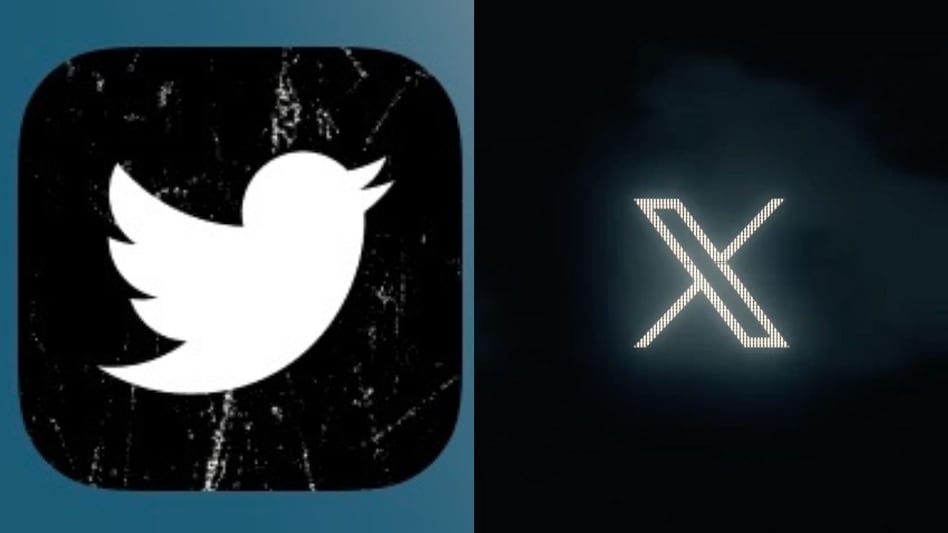
Elon Musk, the owner of Twitter, and its new CEO announced on Sunday that the social media platform would get rid of its bird emblem, change its name to X, and soon enter the payment, banking, and commerce sectors. 

According to the design website Creative Bloq, Twitter, which was founded in 2006, gets its name from the sound of birds chirping. 

The firm has used avian branding ever since purchasing a stock symbol of a light blue bird for $15. 

Late Sunday night, Twitter CEO Linda Yaccarino tweeted a photo of the company’s new logo: a white X on a black background. She wrote, “X is here! Let’s proceed. 

Later on the same Sunday, Musk also updated his profile image to the business’s new logo, which he dubbed “minimalist art deco,” and his Twitter bio to “X.com,” which now reroutes to twitter.com. 

“If a good enough X logo is posted tonight, we’ll make (it) go live worldwide tomorrow,” Musk tweeted.

Twitter lifts ban on Trump’s account

By Muhammadu Sabiu

After conducting a survey in which the decision was barely supported by users, Twitter’s new owner Elon Musk announced that Donald Trump’s account had had the ban placed on it lifted.

Elon Musk set up a poll on the site on Saturday, asking users if they thought the former president should be permitted back onto the app.

A sizable majority of 52% of the more than 15 million users who took part in the poll voted to reinstall the former US president.

“The people have spoken. Trump will be reinstated,” Musk tweeted of the former US president’s account, which was banned last year after a mob of his supporters attacked the US Capitol.

Jack Dorsey, ex-Twitter founder, invents another SM platform

By Muhammadu Sabiu

Jack Dorsey, the creator of Twitter and former CEO, has introduced a brand-new social networking platform called “Bluesky.”

This is only a week or so after business tycoon and investor Elon Musk bought Twitter.

Within two days of the announcement, over 30,000 individuals had already signed up for the new app’s beta testing, which is still in its testing phase.

According to reports, Bluesky allows designers the opportunity to build independently from platforms and developers while also giving users authority over their algorithms, allowing them to choose the experience they want.

On April 14, 2022, Musk started the acquisition of Twitter and completed the deal on October 27, 2022.