Election

How courts are becoming the final arbiters in West Africa’s elections

By Abu Turay

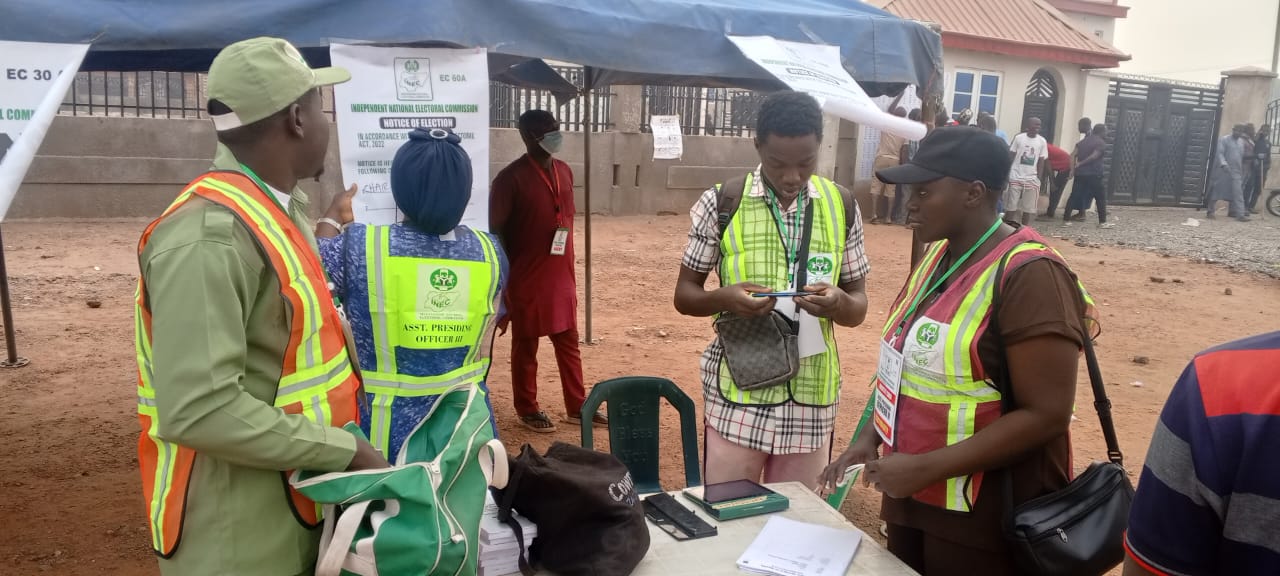
Across West Africa, a silent but powerful transformation is taking root: the judicialization of politics. The courts, once arbiters of constitutional order, are increasingly the final arbiters of electoral contests. Nowhere is this trend more visible than in Nigeria, where nearly every major election ends not at the ballot box, but at the bench.

This expanding role of the judiciary in electoral outcomes raises complex questions: Are the courts rescuing democracy from flawed elections? Or are they replacing the people’s will with judicial verdicts, thereby shifting the center of gravity in democratic governance?

Courts as Electoral Arbiters

In Nigeria, the 2023 general elections showcased the scale of post-election litigation. Dozens of gubernatorial, legislative, and even presidential results were contested, with tribunals and appellate courts deciding outcomes. In some states, candidates initially declared losers were later declared winners by judicial rulings.

This is not unique to Nigeria. Ghana, Senegal, and Sierra Leone have all witnessed major electoral disputes resolved by courts. The judiciary has become both a battleground and a battlement—a place where democracy is either affirmed or redefined.

At face value, this suggests a maturing democracy where the rule of law reigns supreme. But the implications are not always reassuring.

Why Judicialization Is Rising

Several forces are driving this trend.

First, the deterioration of electoral credibility. When institutions like the Independent National Electoral Commission (INEC) are accused of logistical failures, transparency lapses, or bias, the courts become the last hope for justice.

Second, electoral malpractice, including voter suppression, ballot snatching, vote buying, and misinformation, creates fertile ground for legal contestation.

Third, the increasing legal codification of elections means that technicalities—like improper nomination, overvoting, or irregular result collation—can overturn popular mandates.

Finally, the high stakes of public office in West Africa create desperation. Access to state power can mean access to wealth, immunity, and patronage. In such a zero-sum environment, litigation becomes not just a legal process but a political strategy.

The Benefit and Risks of Judicialization

There’s no denying that courts have played a vital role in correcting flawed elections. In theory, their intervention strengthens democracy, punishes rigging, and reinforces accountability. For disenfranchised voters and honest candidates, the courts can offer justice.

However, the risks are real—and growing.

  • Erosion of Voter Confidence: When elections are routinely overturned or validated by judges, citizens may begin to see voting as irrelevant. If judges, not voters, decide winners, what incentive remains for civic participation?
  • Perception of Bias: Even when courts follow the law, public trust can erode if verdicts appear to favor the ruling party or lack consistency. Allegations—often unproven—of judicial compromise further deepen distrust.
  • Political Pressure on Judges: With so much at stake, courts may face overt or subtle pressure from powerful actors. This politicization of the judiciary undermines its independence and the democratic process.
  • Weakened Electoral Bodies: Overreliance on courts can take pressure off electoral commissions to improve. If every error or illegality is expected to be “fixed” in court, institutional reform stalls.

Striking the Right Balance

The solution isn’t to remove the judiciary from politics, but to restore balance in democratic governance. That starts with a few key reforms:

  1. Strengthen INEC: Electoral commissions must be empowered and insulated from political interference. Technology, transparency, and real-time result transmission should be prioritized.
  2. Judicial Reform: Appointments should be merit-based and transparent. Courts must deliver verdicts speedily, especially before swearing-in ceremonies, to avoid situations where incumbents retain power during prolonged litigation.
  3. Public Legal Education: Citizens must understand the legal basis for judgments. Civic education can prevent misinformation and temper partisan outrage.
  4. Political Party Reforms: Many disputes begin with flawed primaries. Strengthening internal party democracy would reduce court cases tied to candidacy irregularities.
  5. Pre-election Dispute Resolution: Early intervention by courts—before elections—on candidate eligibility, party symbols, and procedural concerns can limit post-election chaos.

Democracy in the Dock

The growing judicial role in elections reflects both the fragility and resilience of West African democracies. It shows that, although the ballot may be compromised, the Constitution still carries weight. Yet, democracy must not become a perpetual courtroom drama.

The judiciary is not an electoral umpire. It is a guardian of law, not a generator of legitimacy. When citizens believe their votes don’t count, the social contract frays. When politicians believe they can win in court what they lost at the polls, the democratic ethic decays.

Ultimately, a nation where every election becomes a lawsuit is one where democracy risks death by litigation.

To end this piece, I ask: Do we want a democracy that is judicially rescued or an institutionally reliable democracy? The difference will shape not only our politics but our future.

Abu Turay is an Embedded Technical Expert on Electoral Affairs at the Electoral Assistance Division of ECOWAS Peace, Security and Governance (EPSG) Program. He can be reached via bainam2010@yahoo.com.

Cameroon awaits landmark election verdict

By Abdullahi Mukhtar Algasgaini

The nation holds its breath as the Constitutional Council prepares to announce the results of the presidential election, a decision that will shape Cameroon’s political future for the next seven years.

All eyes are on the outcome to see if 85-year-old incumbent President Paul Biya, one of the world’s longest-serving rulers, will extend his 43-year tenure.

The election has been a focal point for a populace deeply divided between desires for continuity and demands for change.

The announcement comes amid a tense atmosphere, with many citizens and international observers expressing hope for a peaceful and democratic conclusion to the electoral process.

The results are expected to be made public imminently.

DSS nabs PDP agent with N30m for vote-buying in Kaduna

By Abdullahi Mukhtar Algasgaini

The Department of State Services (DSS) has arrested a suspected Peoples Democratic Party (PDP) agent, Shehu Fatange, with N30 million allegedly meant for vote-buying ahead of Saturday’s bye-elections in Kaduna State.

Fatange was apprehended Friday evening at a hotel in Kaduna, where he was reportedly coordinating the distribution of cash to influence voters in the Chikun/Kajuru Federal Constituency election.

Security sources confirmed the suspect was caught with a large sum of money intended to compromise the electoral process.

The Kaduna Police Command also verified the arrest, stating that investigations were ongoing.

The incident comes amid rising tensions, with political parties trading accusations of vote-buying and electoral malpractice ahead of the polls.

Authorities have urged the public to remain calm and turn out peacefully to vote.

Arewa, lamentations and 2027

By Kabiru Danladi Lawanti, PhD 

There is something about us, Arewa people. Whenever power shifts to the South, we start lamentations, accusing the leader, who is from the South, of nepotism or initiating policies that are deliberately aimed at destroying our region. 

We embrace this idea and write about it repeatedly. From 1999 to 2007, from 2010 to 2015, and now from 2023 to the present, we consistently reference our voting power in our writings. 

Recently, I read an article comparing our voting power and support for President Bola Ahmed Tinubu with other regions of the country. How long can we continue these lamentations? When will we stop lamenting and start acting?

We need to shift the conversation from an overemphasis on population-driven electoral power to a more strategic focus on economic productivity and revenue generation. The viability and strength of Arewa are not solely determined by the sheer size of our population, but by how effectively that population is harnessed for economic growth, innovation, and wealth creation.

Arewa’s fixation on securing political dominance through demographic advantage has frequently overshadowed the more critical question we need to be asking ourselves. 

How do we convert our vast human and natural resources into sustainable development outcomes?

While concerns about the inequities of political appointments and perceived nepotism under the current Tinubu administration are valid, ongoing lamentation over political spoils can be counterproductive if not paired with proactive strategies for economic transformation.

What has happened to Arewa after all these years of political power? What becomes of the “K” states after each election season? What has happened to Jigawa or Bauchi? Is it enough to have just a Badaru or Tuggar as compensation for the over 5 million we gave the President?

What is required is a change in strategy: a deliberate and coordinated effort to leverage our expansive landmass and youthful population to drive industrialization, technological innovation, and inclusive economic growth. Our governors need to be wiser. Have you ever checked the total amount of FAAC allocations coming to our states and local governments? What are we doing with this money?

In this regard, lessons abound from the developmental trajectories of nations such as China and India, both of which have shown how demographic advantages can be transformed into competitive edges through disciplined policies, strategic investments in education and infrastructure, and a clear vision for economic self-reliance.

The path to power lies not just in numbers – voting power – but in what those numbers yield after elections.

I have learnt my lessons. What we need is not political power at the centre but what we do with that power and what our Governors are doing with the huge resources coming to them from Abuja. 

The agitation for removing Tinubu in 2027 can be compared to the agitations of removing the military in 1999 or Jonathan in 2015. They are driven by elite interests, not necessarily by situations we find ourselves in, Arewa.

Germany gears up for crucial federal elections


By Hadiza Abdulkadir

The political atmosphere in Germany is intensifying as the country approaches its highly anticipated federal elections on February 23, 2025. With multiple parties in the race, the election results are expected to influence Germany’s domestic policies and international stance significantly.

Key political parties are ramping up their campaigns, focusing on issues such as economic stability, immigration, climate change, and Germany’s role in global affairs. Analysts predict a tight contest, with shifting voter sentiments crucial to determining the next government.

Among the key contenders is the ruling Social Democratic Party (SPD), led by Chancellor Olaf Scholz, facing strong challenges from the conservative Christian Democratic Union (CDU) under Friedrich Merz. 

The Greens, led by Annalena Baerbock, are pushing a climate-focused agenda, while the Free Democratic Party (FDP), under Christian Lindner, is emphasising economic liberalisation.

The far-right Alternative for Germany (AfD) and the leftist Die Linke are also competing for voter support, making this election highly competitive and defining for Germany’s political future.

As Germany finds itself at a crossroads, the results of these elections will not only influence the nation’s governance but also have significant repercussions on European and global politics.

Zaria LGA Election: Engr. Jamil Ahmad Muhammad’s plans for his people

By Ishaq M. Sani

 To surmount all challenges, the good people of Zaria deserve the best leadership at the local government executive council. Therefore, it’s imperative to bring in competent, young, and vibrant representation to the good people of Zaria local government. 

The good people of Zaria equally need a leader who can foster a harmonious synergy between the local, state, and federal governments, paving the way for remarkable achievements, transformative development, and a brighter future—a leader with a proven track record of driving impactful changes and advancing grassroots priorities. With Engr Jamil piloting the affairs of the cosmopolitan Zaria, an era for Pressing forward in the direction of progressive outcomes and solid attainments for the good people of Zaria is possible. 

However, Jaga’s socio-political background and mentorship from both the executive governor, Mal Uba Sani, and the speaker of the House of Representatives, Hon. Abbas, as Deputy chief of staff, have instilled in him the values of honesty, inclusivity, and open-mindedness to diverse views, contributing to effective governance. 

Ahead of the October Kaduna LGA elections 2024, a vote for Engr Jamil is a victory for addressing critical issues relating to Human Capital Development, Infrastructure Development, Security, Agriculture, Environmental management, Climate change, greenfield initiatives, Trade and Investment, and Robust Citizen engagements.

His focus on human capital development emphasised this: Engr Jamil is set to ensure education/scholarship, health, and social investment. He has tagged “Education: Knowledge and Skills Acquisition for the Future.” He is also Ensuring that scholarship opportunities are expanded to less privileged students to support lifelong learning. 

Elucidating impacting measures, combined with a continuous programme to improve teachers’ quality and teaching standards to ensure that basic education investments produce the desired learning outcomes in line with the sustainedmanifesto of his excellency Mal Uba Sani. Moving further, Zaria needs a well-equipped leader to support entrepreneurship in ICT, which is necessary for stimulating innovation and economic growth. 

Focus on Health ensures access to quality care in the health sector to consolidate the remarkable achievements recorded by Sen Mal Uba Sani, the state government leader, and Speaker Abbas’s critical interventions. Zaria looks forward to robust social investment through social welfare and liberating empowerment through dedicated funds for women and youth. 

The Zaria infrastructural development is also expected to focus on investment in sustainable environmental infrastructure such as water supply, sewage and solid waste management, and adequate infrastructure such as culverts, drainage and connecting roads/bridges for job creation, taking centre stage. 

The mission is to collaborate with the neighbouring LGAs and state and federal governments to continually improve the quality of connecting roads and ensure the expansion of the local electricity infrastructure, especially across Dembo, Wucicciri, and Dutsen Abba, among others. 

Furthermore, it promotes environmental conservation and sustainability, protecting Zaria’s natural resources and ensuring the sustenance of the conditions for economic dynamism through investments, vibrant commercial activities, skills development, and job opportunities.

However, like many other local governments, Zaria has been one of the hotbeds of security threats in Zone 1 of Kaduna state in the last eight years, with attacks happening on a regular basis. I commend the Governor and the honourable speaker for their robust efforts in maintaining the peace and stability of the state within their first year in office. 

Moreover, Engr. Jamil is expected to ensure a secure, peaceful, and united Zaria LGA. Effective collaboration between the state and federal government will ensure the deployment of security personnel and equipment for adequate security in the local government. Deep intelligence gathering through collaboration with traditional, religious, and community leaders will support security agencies. 

In light of the preceding, the competitive advantage of Zaria’s growth potential in the agricultural sector is viable through effective utilisation of agro-ecological zones, rising youthful population, irrigated farming opportunities while transitioning from subsistence to commercial agriculture and leveraging linkages with local manufacturing in the promotion of agri-business.   

Finally, Zaria envisions a leader who is committed to providing all-inclusive and diverse representation, Feedback mechanisms, and accountability processes, ensuring effective engagement with all communities for equity, responsiveness, collaboration, and accountability; this is possible when Engr Jamil is given the mandate. 

 Join Engr Jamil Ahmad Muhammad on this great journey…

Ishaq MSani writes from the office of the APC chairmanship Candidate, Zaria local government. Strategic communication directorate