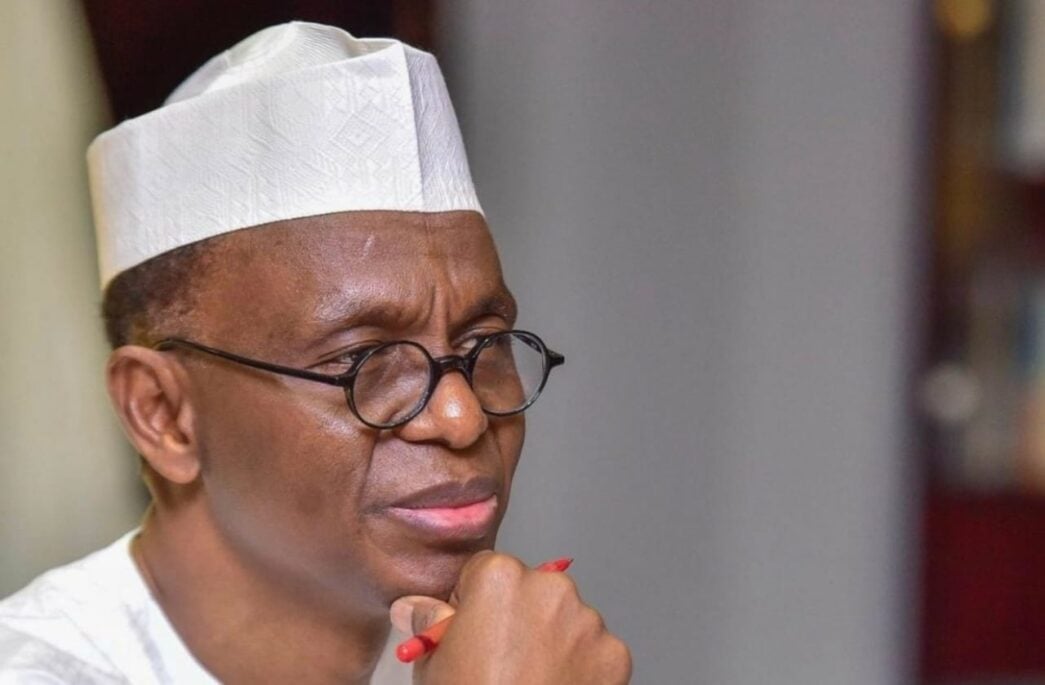
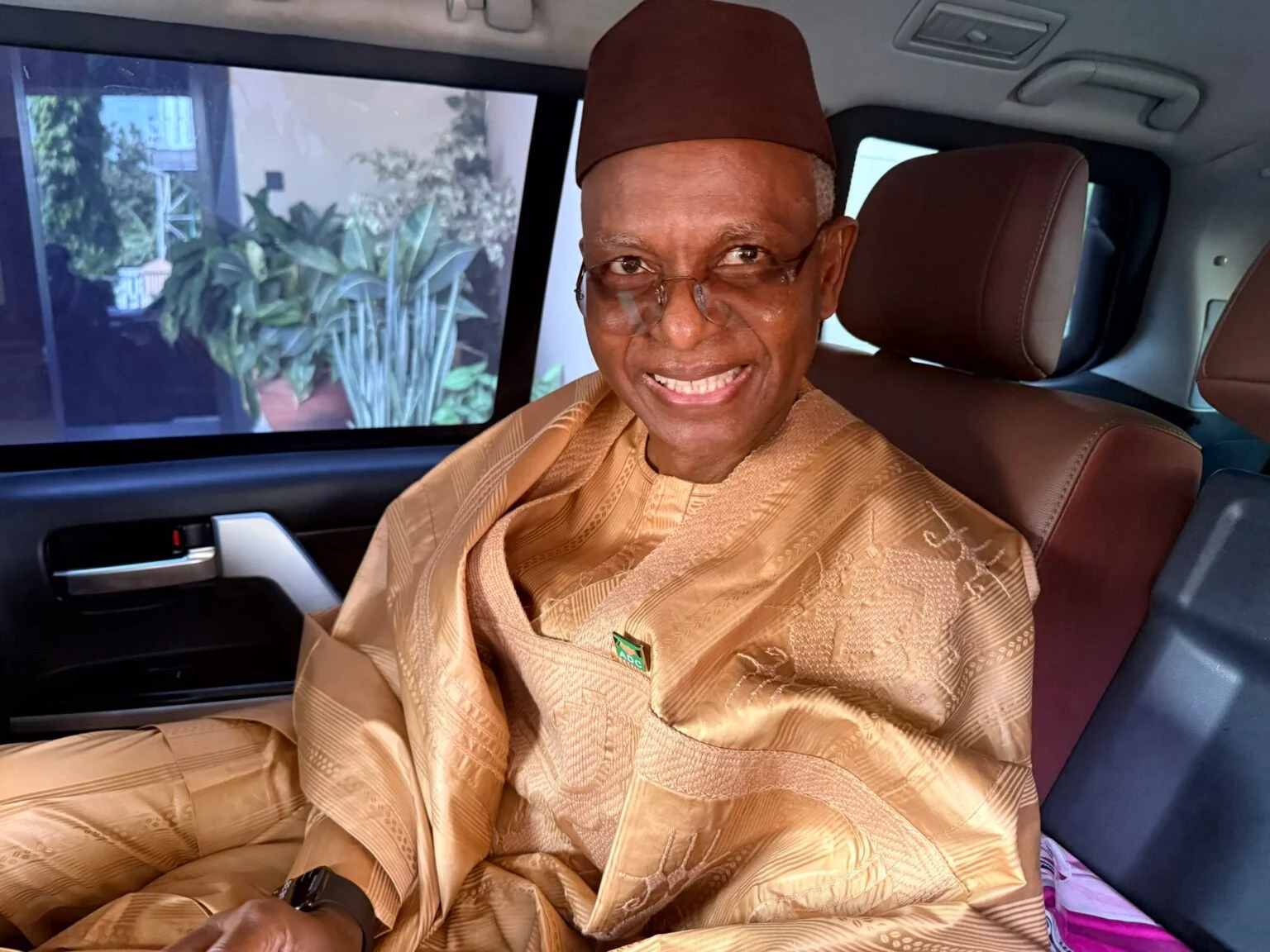
El-Rufai

DSS Arrests El-Rufai As Court Fixes Bail Ruling For April 14

By Sabiu Abdullahi


Operatives of the Department of State Services (DSS) have taken former Kaduna State governor, Nasir el-Rufai, into custody at the federal high court in Kaduna.

El-Rufai appeared in court on Wednesday after operatives of the Independent Corrupt Practices and Other Related Offences Commission (ICPC) brought him forward for a hearing on his bail request.

The DSS later assumed custody of the former governor after the court adjourned its ruling on the bail application until April 14.

The ICPC had earlier arraigned el-Rufai alongside Joel Adoga on March 24 over allegations related to fraud and money laundering. Both defendants denied the charges when they were presented before the court.

After the session, Oluwole Iyamu, counsel to el-Rufai, expressed optimism about the outcome of the pending decision.

“The bail application was argued and responded to, and the ruling has been fixed for April 14. We look forward to that day. We are hopeful,” he said.

“We have put our arguments before the court, and this is a court of justice. We await the decision of the court.”

Iyamu also addressed another case involving the DSS, which is scheduled for April 10 at the federal high court in Abuja. He stated that the legal team is prepared for the proceedings.

“That is a separate matter. As lawyers, we are ready. We have filed all necessary processes and will be in court. That is the DSS matter,” he said.

Earlier in February, the DSS filed a three-count charge against el-Rufai over allegations of unlawful interception of a telephone conversation. The case followed remarks he made during a television interview.

While speaking on ‘Prime Time’, a programme on Arise Television, el-Rufai alleged that “someone wiretapped” Nuhu Ribadu’s phone, which allowed him to hear instructions from the National Security Adviser directing security operatives to arrest him.

When Grief Softens Hearts: A Moment Misunderstood

By Nasir Yakub

In moments like these, society often reveals not just its opinions—but its depth of understanding.

The criticism directed at Prof. Isa Ali Pantami for attempting reconciliation between Nasir El-Rufai and Uba Sani during a moment of grief is not entirely surprising. What is surprising, however, is how quickly we rush to question sincerity where reflection is most needed.

We often speak about peace as if it should arrive only under perfect conditions, carefully scheduled, emotionally neutral, politically convenient. But history, human nature, and even faith teach us otherwise: true reconciliation rarely waits for ideal timing. It finds its way through cracks, through pain, through loss, through moments when the soul is stripped of its usual pride.

A funeral is not just a ceremony of farewell. It is a confrontation with reality. It is a silent sermon louder than any speech. In such moments, hearts soften, egos retreat, and the illusion of permanence fades. If there is ever a time when a word of peace can penetrate deeply, it is then.

So what did Pantami truly do?

He recognized a moment many would ignore.
He spoke where many would remain silent.
He acted where others would hesitate out of fear of perception.

And yet, he is criticized, not for division, but for daring to suggest unity.

Let us ask ourselves honestly:

If he had remained silent, would these same voices not accuse him of cowardice? Of political bias? Of abandoning the moral responsibility to speak truth?

We must be careful not to create a society where every action is condemned and every silence is also condemned. That is not accountability; that is confusion.

To those who argue that reconciliation is misplaced because of past betrayals, one must ask: is politics not a landscape of shifting alliances? Did differences between Atiku Abubakar and El-Rufai prevent gestures of humanity in times of grief? Today, former adversaries stand side by side. Yesterday’s distance becomes today’s alliance.

This is not hypocrisy. This is reality. And perhaps, more importantly, it is a reminder that human relationships are larger than political disagreements.

Peace is not weakness.
Reconciliation is not surrender.
And timing, as we often misunderstand it, is not always about comfort; it is about opportunity.

Prof. Pantami did not force reconciliation. He did not impose unity. He simply opened a door.

Whether those involved walk through it or not is their choice. But opening that door, at a moment when hearts are most receptive, is not insensitivity. It is wisdom.

In the end, the real question is not whether the timing was perfect. The real question is:

When the opportunity for peace presented itself… would you have chosen silence?

El-Rufai Family Announces Janazah for Hajiya Umma El-Rufai

By Abdullahi Mukhtar Algasgaini

The family of former Kaduna State Governor, Mallam Nasir El-Rufai, has announced the passing of their matriarch, Hajiya Umma El-Rufai, who died on Friday, March 27, 2026.

In a statement released on Saturday, Hon. Mohammed Bello El-Rufai, representing Kaduna North Federal Constituency, confirmed that the funeral (Janazah) prayer will be held today at the National Mosque in Central Area, Abuja, commencing at 1:00 pm. The burial is scheduled to follow immediately at Gudu Cemetery in Apo.

The announcement described the deceased as a beloved grandmother, requesting prayers from the public. The family expressed gratitude for the visits, well-wishes, and condolences received during their time of grief.

Hon. Bello El-Rufai, who also serves as the Chairman of the House Committee on Banking Regulations, signed the statement on behalf of the family elders, praying for Allah’s mercy upon the departed.

“May Allah SWT bless her soul and grant her the highest level of Aljannatul Firdausi,” the statement read.

El-Rufai’s Son Announces Father’s Release From Detention

By Sabiu Abdullahi

Bashir El-Rufai has announced that his father, former Kaduna State governor Nasir El-Rufai, has been released from detention, a development that has again drawn attention to the former governor’s strained relationship with the current administration.

In a post shared on his verified X account, Bashir wrote, “Alhamdulillah,” before alleging that his father “is being released from his unlawful & illegal detention at the hands of one of the most corrupt agencies in the Federal Republic of Nigeria that is a lame excuse of a pathetic institution.”

He added, “Thank you all for all the support. Our family shall never forget these times. We have overcome, as the El-Rufai’s always do.”

Background to the Detention

Details surrounding the detention were around alleged tapping of NSA Ribadu’s phone calls, as no official statement has been issued by the agency allegedly involved. However, the incident comes amid a period of political tension involving the former governor.

Nasir El-Rufai, a key former figure in the ruling All Progressives Congress (APC) and an early supporter of President Bola Ahmed Tinubu, saw his relationship with the administration deteriorate after the 2023 general elections.

His ministerial nomination by President Tinubu was withheld by the Senate, which cited security concerns. The decision marked a turning point in his standing within the ruling party and sparked speculation of internal disagreements.

Fallout With the Tinubu Administration

Since then, El-Rufai has made several public comments that analysts interpret as critical of the government. He has spoken about governance challenges and internal party dynamics, fueling perceptions of a rift between him and key figures in the administration.

While he has directly declared opposition to President Tinubu, his absence from the current government and his occasional remarks have kept him at the center of political discussions.

Observers say the reported detention and subsequent release may further deepen debates about political alignments within and outside the APC, especially as the country approaches another electoral cycle.

As of the time of filing this report, neither the Federal Government nor relevant authorities have provided clarification on the circumstances of the detention or confirmed the claims made by Bashir El-Rufai.

NSA Nuhu Ribadu Offers Condolences To El-Rufai Over Mother’s Death

By Sabiu Abdullahi

Nigeria’s National Security Adviser, Nuhu Ribadu, has expressed sadness and extended his condolences to former Kaduna State Governor, Nasir El-Rufai, following the death of his mother, Hajiya Umma El-Rufai.

Ribadu made this known in a message shared on his Facebook page, where he said:

“Inna lilLahi wa inna illahir raji’un

I am deeply saddened to learn of the passing of Hajiya Umma El-Rufai, the matriarch of the El-Rufai family. I have fond memories of shared moments with her and her motherly care. At a time like this, words can offer little comfort for such a profound loss. My heartfelt condolences to Mallam Nasir El-Rufai and the entire family. May Almighty Allah forgive her shortcomings, grant her eternal rest in Aljannah Firdaus, and give the family the strength to bear this loss.”

Reports confirm that Hajiya Umma El-Rufai passed away on Friday, March 27, 2026, a development that has thrown her family and associates into mourning.

Ribadu’s condolence message has drawn attention, especially amid perceived political differences between the two prominent figures.

Meanwhile, many Nigerians have continued to send in messages of sympathy and prayers, asking Allah to forgive her and grant her eternal rest.

El-Rufai declines ICPC questions, says he’ll speak only in court

By Uzair Adam

Former Kaduna State governor, Nasir El-Rufai, has explained his decision to remain silent during interrogation by the Independent Corrupt Practices Commission (ICPC), describing the investigation as politically motivated.

In written statements made under caution on February 19 and 20, 2026, while in ICPC custody and in the presence of his lawyer, Ubong E. Akpan, El-Rufai said his refusal to answer questions was deliberate and based on legal advice.

He maintained that he was exercising his constitutional right to silence and would only address any allegations before a competent court of law.

The former governor stated that after nearly two years of investigation, the anti-graft agency should present its findings before a judicial authority rather than seek further explanations from him.

He argued that only a judge could determine whether the probe amounted to political persecution.

El-Rufai, who served as governor of Kaduna State from 2015 to 2023, also outlined his educational and professional background in his initial statement, noting his studies at Ahmadu Bello University, as well as at Harvard University and the University of London.

He recounted his career in public service, including his roles as Director-General of the Bureau of Public Enterprises and Minister of the Federal Capital Territory.

The ICPC had secured a 14-day remand order from a Chief Magistrate Court in Bwari to detain him, with the order set to expire on March 5, 2026.

Should the agency fail to file charges before then, he may regain his freedom upon the lapse of the court-approved detention.

In a follow-up statement dated February 20, El-Rufai reaffirmed his stance, stressing that he would not respond to additional documents or questions outside the courtroom, again citing his constitutional rights.

The development adds a new dimension to the ongoing standoff between the former governor and the anti-corruption agency, as attention now turns to whether formal charges will be filed before the remand period expires.

Ex-Governor El-Rufai suffers nosebleed in detention, wife denied direct access to deliver food

By Sabiu Abdullahi

Fresh concerns have been raised over the condition of former Kaduna State governor, Nasir El-Rufai, following claims that he developed a nosebleed while in custody and that his family has faced restrictions in reaching him.

In a statement released on Monday, his media aide, Muyiwa Adekeye, said the former governor has spent eight days in detention after he honoured an invitation from the Economic and Financial Crimes Commission on February 16, 2026.

Adekeye explained that El-Rufai was questioned by officials of the commission and later granted administrative bail. He, however, noted that the former governor remains in custody as his lawyers pursue a review of the bail conditions, which he described as unjustifiable.

The aide also narrated that events took a troubling turn on February 17 when one of El-Rufai’s wives attempted to deliver food to him. She was reportedly stopped from handing it over personally and was asked to pass it through an official of the commission.

He further alleged that the former governor experienced a nosebleed overnight while in detention. According to him, the incident has increased concerns among his legal team regarding his health, welfare, and access to both family members and legal representatives.

Adekeye added that on the night of February 18, El-Rufai was transferred from the custody of the EFCC to the Independent Corrupt Practices and Other Related Offences Commission without prior notice. His lawyers, he said, were not informed before the relocation took place.

Since the transfer, his legal team has applied for bail before the ICPC but is yet to receive a response. Adekeye insisted that no valid remand order has been presented to justify the continued detention beyond constitutional limits.

He disclosed that the former governor is expected to appear before the Federal High Court on February 25 in a fundamental rights enforcement suit filed against the Federal Government, the ICPC, the EFCC, and the Department of State Services, seeking to secure his release on bail.

The aide warned that the development raises serious concerns about due process and the protection of detainees’ rights as the legal battle unfolds.

Earlier reports indicated that El-Rufai had filed a ₦1 billion fundamental rights enforcement suit at the Federal High Court in Abuja. He challenged what he described as an unlawful invasion of his residence by operatives of the ICPC alongside police officers.

The suit, marked FHC/ABJ/CS/345/2026 and filed on February 20, alleged that officers stormed his Abuja residence on February 19 using what his legal team described as a defective search warrant.

Through his counsel, Oluwole Iyamu, SAN, the former governor argued that the warrant contained multiple flaws. These include lack of specificity, material errors, and absence of probable cause, which he said rendered the operation unconstitutional.

Court documents also claimed that officials seized documents and electronic devices without providing any inventory. His lawyers argued that this violated provisions of the Administration of Criminal Justice Act, the ICPC Act, and constitutional rights related to dignity, personal liberty, fair hearing, and privacy.

El-Rufai is seeking court orders to nullify the search, compel the return of all seized items, and restrict the use of any materials obtained during the operation. He is also demanding ₦1 billion in damages alongside legal costs.

His legal team stated that the incident caused “significant psychological trauma, humiliation, distress, reputational damage, and emotional harm,” as concerns continue to grow over the handling of the case by authorities.

El-Rufai drags ICPC to court over alleged unlawful search of Abuja residence

By Sabiu Abdullahi

Former Kaduna State governor, Nasir El-Rufai, has taken legal action against the Independent Corrupt Practices and Other Related Offences Commission (ICPC), accusing the agency of illegally raiding his residence in Abuja.

The suit, marked FHC/ABJ/CS/345/2026, was filed at the Federal High Court in Abuja through his legal team led by Oluwole Iyamu. In the case, El-Rufai is asking the court to invalidate a search warrant issued by a magistrate court in the Federal Capital Territory on February 4. The warrant authorised security operatives to conduct a search and seize items from his home.

El-Rufai has remained in ICPC custody since Wednesday, February 18, over what officials described as “connection with investigations”. His media aide, Muyiwa Adekeye, earlier alleged that operatives of the anti-graft agency carried out an “unlawful” search at the residence.

In the fundamental rights enforcement suit, the former governor listed the chief magistrate who approved the warrant, the inspector-general of police, and the attorney-general of the federation as respondents.

He is seeking a court declaration that the actions of the ICPC and the Nigeria Police Force violated his constitutional rights. These include the rights to dignity, personal liberty, fair hearing, and privacy as provided under sections 34, 35, 36, and 37 of the constitution.

El-Rufai also asked the court to rule that any material obtained during the search should not be admitted as evidence in any legal proceedings against him. He argued that such evidence was obtained in violation of constitutional provisions. He further requested an order preventing the respondents from using any items seized during the operation.

In addition, the former governor urged the court to compel the ICPC and the police to return all items taken from his residence, along with a detailed list of those items.

He is demanding N1 billion in damages over what he described as trespass, unlawful seizure, psychological distress, and reputational damage. The claim includes N300 million as compensation for emotional trauma, N400 million as exemplary damages to discourage misconduct by law enforcement agencies, and N300 million as aggravated damages for what he termed “malicious, high-handed and oppressive” conduct.

El-Rufai also requested N100 million to cover the cost of filing the suit and legal representation.

‘Warrant Riddled With Defects’

In his argument, Iyamu maintained that the search warrant was fundamentally flawed. He said it failed to clearly state the items to be seized, contained significant drafting errors, and gave overly broad powers to those executing it.

“The search warrant was null and void for lack of particularity, material drafting errors, ambiguity in execution parameters, over-breadth, and absence of probable cause, thereby constituting an unlawful and unreasonable search,” the lawyer said.

He cited sections 143 to 148 of the Administration of Criminal Justice Act (ACJA) 2015, noting that applications for search warrants must be backed by sworn statements that show reasonable grounds for suspicion.

Iyamu further stated that the warrant “vaguely referred to ‘the thing aforesaid’ without any particular description”, adding that it did not follow the prescribed format and contained mistakes related to address, date, and district.

He also criticised the directive for being addressed broadly to “all officers”, which he described as excessive and lacking accountability.

An affidavit deposed to by Mohammed Shaba, identified as a principal secretary to El-Rufai, claimed that operatives of the ICPC and police arrived at the residence around 2 pm on February 19.

Shaba alleged that the warrant did not specify the items being sought and that officers did not allow themselves to be searched before the operation. He also stated that personal belongings, including documents and electronic devices, were taken.

According to him, none of the seized items has been returned, and the authorities “continue to rely on the unlawful evidence”.

He added that the suit was filed in good faith to protect El-Rufai’s constitutional rights.
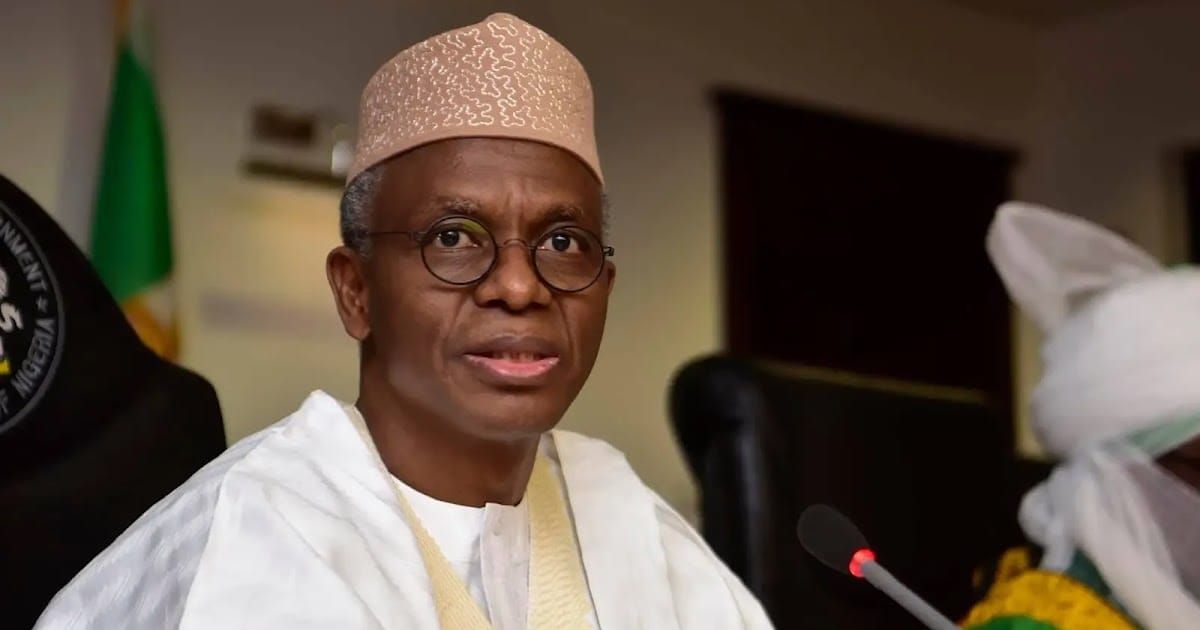
DSS to arraign ex-Kaduna Governor El-Rufai over alleged cybercrime, security breach

By Sabiu Abdullahi

The Department of State Services is set to prosecute former Kaduna State governor, Nasir El-Rufai, over alleged cybercrime and national security violations.

The trial is scheduled to begin next Wednesday at the Federal High Court in Abuja. The case will be heard by Justice Joyce Abdulmalik. The assignment followed a directive by the Chief Judge of the Federal High Court, Justice John Tsoho. The News Agency of Nigeria confirmed the development.

Court filings indicate that the DSS lodged a three-count charge marked FHC/ABJ/CR/99/2026 against the former governor. The agency accused him of unlawful interception of communications and acts said to threaten national security.

According to the charge sheet submitted on Monday, the DSS alleged that El-Rufai intercepted telephone conversations belonging to Nigeria’s National Security Adviser, Nuhu Ribadu.

Prosecutors stated in the first count that the former governor allegedly made an admission during a live appearance on ARISE TV on February 13. They claimed he said that he and unnamed associates intercepted Ribadu’s phone communications. The offence allegedly contravenes Section 12(1) of the Cybercrimes (Prohibition, Prevention, etc.) Amendment Act, 2024.

The second count alleged that El-Rufai associated with a person who carried out the interception and failed to notify security authorities. Prosecutors said this action is punishable under Section 27(b) of the same Act.

In the third count, the DSS accused El-Rufai and other suspects still at large of deploying technical systems that endangered public safety and national security. The agency alleged that the actions created fear among Nigerians through the interception of classified communications.

The charges come amid ongoing probes by federal anti-corruption and security agencies.

Earlier in the week, the Economic and Financial Crimes Commission detained the former governor over separate corruption allegations. He was granted administrative bail around 8:00 p.m. on Wednesday. Shortly after, the Independent Corrupt Practices and Other Related Offences Commission took him into custody.

ICPC spokesperson, John Odey, confirmed at the time that the former governor remained in the commission’s custody as investigations continued.

Operatives of the ICPC also searched El-Rufai’s residence on Aso Drive in Abuja during a late-night operation. Sources described the action as part of an expanding corruption investigation.

The commission did not release details about the search or items recovered. However, El-Rufai’s lawyer, Ubong Akpan, criticised the operation. He alleged that due process was ignored and his client’s fundamental rights were violated.

BREAKING: DSS arrests El-Rufai moments after EFCC grants him bail

By Sabiu Abdullahi

The State Security Service (SSS) on Wednesday night took former Kaduna State Governor, Nasir El-Rufai, into custody shortly after his release from the Economic and Financial Crimes Commission (EFCC).

El-Rufai had been held by the anti-graft agency since Monday over allegations of corruption. He was granted bail around 8 p.m. on Wednesday. Witnesses said armed SSS operatives were already stationed at the EFCC headquarters and moved in immediately after his release.

Security agents then transported him to the SSS headquarters located in the Asokoro District of Abuja. As of the time of filing this report, authorities had not indicated when he might regain freedom.

His latest arrest is tied to allegations that he illegally intercepted the phone communications of the National Security Adviser (NSA), Nuhu Ribadu.

Earlier on Monday, the SSS filed cybercrime charges against him before the Federal High Court in Abuja. The case, marked FHC/ABJ/CR/99/2026, followed comments he made during a live interview on Arise Television last Friday.

During the programme, El-Rufai alleged that the NSA’s telephone line had been tapped. He claimed he overheard instructions directing security operatives to detain him. He linked those alleged directives to an incident at the Nnamdi Azikiwe International Airport, Abuja, where security personnel attempted to arrest him upon his return from Cairo, Egypt, last Thursday.

Eyewitnesses recalled that the encounter at the airport became heated. Officials briefly seized his international passport and later escorted him out while supporters chanted nearby.

Following the television interview, prosecutors from the SSS filed charges, accusing him of admitting to intercepting the NSA’s communications. The prosecution also alleged that he failed to report others involved in unlawful interceptions. Authorities further claimed his actions endangered public safety and national security through the use of technical systems to monitor the NSA’s phone.

Investigators said the alleged offences contravene provisions of the Cybercrimes (Prohibition, Prevention, etc.) (Amendment) Act, 2024, as well as the Nigerian Communications Act, 2003. A date for arraignment has not yet been announced, and El-Rufai has not issued a public response to the charges.

Developments Leading To Arrest

Recent events began unfolding after his return to Nigeria from Cairo. Security operatives first attempted to detain him at the Abuja airport shortly after arrival.

Video clips that circulated online showed a confrontation between security officials and members of his entourage. Reports indicated that his passport was confiscated during that episode.

El-Rufai later accused the NSA of ordering the attempted arrest through the SSS. He repeated the allegation during his Arise Television appearance, insisting he had knowledge of the directive through intercepted communication.

His lawyer, Ubong Akpan, criticised the airport incident. He described the attempted arrest as arbitrary and a breach of constitutional rights. The lawyer explained that an EFCC invitation had been delivered to his client’s residence while he was outside the country. He said immediate compliance was not possible under those circumstances.

Akpan added that his client formally notified the EFCC of his readiness to honour the invitation voluntarily upon return, scheduled for 10 a.m. on Monday. He also demanded the return of El-Rufai’s passport. He argued that its seizure violated his client’s dignity, movement rights, and constitutional protections. He warned that legal steps would follow any unlawful detention.