Eid Celebration

Zulum pledges N100 million support for injured soldiers, families of fallen heroes

By Uzair Adam 

Borno State Governor, Babagana Umara Zulum, has donated N100 million to assist families of soldiers who lost their lives and those wounded in the ongoing fight against insurgency in the northeast.

The donation was announced on Saturday during an Eid El-Kabir Sallah luncheon held at Maimalari Barracks in Maiduguri. 

The event was hosted jointly by the Chief of Army Staff, Lieutenant General Olufemi Oluyede, and the Chief of Air Staff, Air Marshal Hassan Abubakar.

Governor Zulum presented the N100 million cheque to Major General Abdussalam Abubakar, Theatre Commander of Operation Hadin Kai. 

He stated that each wounded soldier would receive N500,000, while the remaining funds would be distributed to the families of soldiers who died in action.

The presentation was witnessed by the Chief of Army Staff, the Chief of Air Staff, and Major General Godwin Mutkut, the Force Commander of the Multinational Joint Task Force (MNJTF). 

Also in attendance were a member of the House of Representatives, Engr. Bukar Talba, Secretary to Borno State Government, Alhaji Bukar Tihani, Head of Service, Dr Muhammad Ghuluze, Acting Chief of Staff, Dr Babagana Mustapha Mallumbe, APC Chairman, Hon. Bello Ayuba, and other senior government officials.

Governor Zulum praised the resilience and patriotism of the Nigerian Armed Forces, stressing that their sacrifices will never be forgotten. 

“Your commitment on the frontlines, often under extreme conditions and far from your families, is not lost on us. We remain eternally grateful for your service and will never take your sacrifices for granted,” he said.

The governor assured the military of his unwavering support, adding, “Borno State will continue to stand shoulder-to-shoulder with the Nigerian Army and all security agencies in the fight against insurgency and in rebuilding our communities for a peaceful and prosperous future.”

FG declares June 6 and 9 public holidays for Eid-el-Kabir

By Maryam Ahmad

The Federal Government of Nigeria has declared Friday, June 6, and Monday, June 9, 2025, as public holidays to commemorate this year’s Eid-el-Kabir celebration.

Announcing the holidays on behalf of the government, Minister of Interior Dr. Olubunmi Tunji-Ojo extended congratulations to the Muslim Ummah both within Nigeria and in the diaspora. 

Dr Tunji-Ojo urged Muslims to embody the spirit of sacrifice and faith exemplified by Prophet Ibrahim (Peace be upon Him) and to use the period to pray for a peaceful and prosperous Nigeria.

In a statement signed by the ministry’s Permanent Secretary, Dr. Magdalene Ajani, the minister assured Nigerians that the people-oriented reforms and initiatives carried out under President Bola Tinubu’s administration’s Renewed Hope Agendaare aimed at restoring Nigeria to progress.

Eid-el-Kabir, also known as Eid al-Adha, is one of the most significant festivals in Islam. It commemorates Prophet Ibrahim’s willingness to sacrifice his son in obedience to Allah’s command. In Nigeria, the festival is marked by prayers, animal sacrifices, and sharing meals with family, friends, and the less privileged.

The declaration of these public holidays allows Muslims across the country to observe the religious rites and festivities associated with Eid al-Kabir.

Governor Yusuf calls for preparations for Sallah Durbar celebration in Kano

By Hadiza Abdulkadir

Kano State Governor Alhaji Abba Kabir Yusuf has instructed all four state Emirates to begin preparations for the upcoming Sallah Durbar Celebration. The announcement was made following a Ramadan breakfast meeting with the Emirs at the Government House in Kano.

In a statement from the Governor’s spokesperson, Sanusi Bature Dawakin Tofa, it was highlighted that Governor Yusuf recognizes the community’s enthusiasm for the traditional celebrations, which include wearing new attire, lining the streets to witness the Emirs on horseback, and exchanging greetings.

Emphasizing his commitment to uphold this cherished tradition, the governor assured citizens that all security agencies will be mobilized to ensure their safety during the festivities. Additionally, he revealed plans to inaugurate the Kano State Emirate Council in April, aiming to enhance its functionality.

The relationship among the Emirs has reportedly improved under Governor Yusuf’s administration, with Malam Muhammadu Sanusi II, Chairman of the Kano Emirate Council, noting the friendly ties between the Emirs. He urged the governor to use traditional institutions to effectively communicate policies to the grassroots level.

Emirs from Karaye, Rano, and Gaya expressed their appreciation for recent government initiatives, especially the provision of fertilizer and enhancements in education, health, and infrastructure in their emirates.

My earliest memory of Eid

By Aisha Mohammed Danpullo

 We were sent to get cooking oil from a house nearby. My cousin and I wore a popular Malaysian Hijab with trimmed lace at the edges and a rope around the back. We were so excited to have a ram that year (I come from a humble background). 

We were eager to watch the ram we had crowded around for days, feeding, watering and cleaning its poo. Finally, we were going to watch as it got slaughtered. I, for one, was most excited for the blood that would come gushing out as it took its last breath.

We went to the oil merchant’s house and met the husband, the head of the house with his kids around him, about to make his sacrifice. He was about to slaughter three fat fish. He had it held down by his eldest son as it squirmed just the way one would slaughter a ram.

The kids were all excited; the wife was humbled and a little bit ashamed, probably because of our presence, spilling the oil she measured with beer bottles serving as a measurement for a litre. It’s quite ironic because beers are banned in our part of the country, but somehow, the bottles are always found in every oil merchant’s shop, and their origin is never questioned.

The family generously offered us some, but we wouldn’t take it because there wasn’t enough for them to share.

Every year during Eid, I think of that family, wondering how they are doing and hoping life has become better for them and that they get to eat ram some year.

Aisha Danpullo wrote from Kano via aishamohammaddanpullo@gmail.com.

APC urges Nigerians to pray for Buhari over rising insecurity

By Uzair Adam Imam 

The All Progressives Congress (APC) has urged Nigerians to pray for President Muhammadu Buhari as insecurity exacerbates in the country. 

Barr Felix Morka, the APC National Publicity Secretary, disclosed in a Sallah message to Muslims on Saturday. 

Morka said Nigerians should put the interest of the nation first, adding that Nigerians should pray for Buhari to end the security challenges bedevilling the country.

The party said, “We urge Nigerians to continue to support and pray for the government of President Muhammadu Buhari as it tackles our national security challenges just as we continue to reject insensitive and unpatriotic attempts by some partisans to politicise security breaches by enemies of our land.

“On this occasion of Eid-El-Kabir, we urge all Muslims to pray for sustained peace, security and prosperity of the country as the APC-led government continues to prioritise the wellbeing and safety of all Nigerians.

“On this occasion of Eid-El-Kabir, we urge all Nigerians to place national interest first in all dealings. We must not yield to retrogressive elements who seek to divide us through terror and hate.”

The sociology of Eid festivals in Nigeria 

By Hassan Idris

It’s quite important to demystify the fact that in the festivity of the Eid festival, which is a religious celebration amongst Muslims all over the world, there is quite a lot of sociologically significant display, which demands sociological explanations and outlooks. Religious festivals such as Eid hold greater importance to sociologists like Emile Durkheim (1858-1917). He developed a widely used theory for explaining what holds society and social groups together through his study of religion. He identified core aspects of religious structure and participation that sociologists today apply to the study of society in its entirety.

This includes the role of religious festivals and rituals in bringing about social cohesion, social solidarity and people together around shared practices and values. It also comprises ways that participation in religious festivals and rituals reaffirms shared values and thus reaffirms and strengthens the social bonds between people and the experience of “collective effervescence,” in which people tend to share in feelings of excitement and are unified in the experience of participating in religious festivals and rituals together. The Eid festival, an Islamic holiday celebrated by many Muslims as a religious holiday with religious rituals, values, and relationships, is one of them.

Thus, Durkheim defined religion as a“unified system of beliefs and practices relative to sacred things. Sacred to him meant extraordinary—something that inspired wonder and that seemed connected to the concept of “the divine.” He argued that“religion happens” in society when there is a separation between the profane (ordinary life) and the sacred. A rock, for example, isn’t sacred or profane as it exists. But if someone makes it into a headstone, or another person uses it for landscaping, it takes on different meanings—one sacred, one profane. Durkheim, who’s generally considered the first sociologist to have analyzed religion regarding its societal impact, believed that religion is about community. It binds people together (social cohesion), promotes behaviour consistency (social control), and offers strength during life’s transitions and tragedies (meaning and purpose).

With the applicability of the methodology of natural science to the study of society, Durkheim held that the source of religion and morality is the collective mindset of society and that the cohesive bonds of social order result from common values in a society. He contended that these values need to be maintained to maintain social stability, to which explanations of Durkheim on the importance and functionality of religion would be used to explain and understand the religious Eid festivals celebrated by all the Muslims in the world.

However, the word “Eid” means festival or feast. Therefore, it depicts the event that is being celebrated. Muslims celebrate two types of Eid yearly following two significant acts of worship. The first is called “Eid Al-Fitr”, which means “the fast-breaking Festival” celebrated after fasting the entire month of Ramadan. The second, known as “Eid-ul-Adha,” meaning “the festival of sacrifice which is celebrated immediately upon the completion of Hajj, the annual pilgrimage to Mecca. The Eid Al-Adha entails going for a pilgrimage to Mecca performed by millions of Muslims simultaneously once a year. Through Eid Al-Adha, the sacrifice Abraham was willing to make to God and the mercy God had upon him becomes celebrated and manifested.

Muslims celebrate the day by sacrificing a sheep or so and sharing it not just with family and friends but also with the less privileged. This celebration lasts four days, beginning the day after the completion of Hajj. The celebration of Eid Al-Fitr lasts one day, starting with the sighting of the new moon, which marks the end of the Islamic month of Ramadan and the beginning of the following month. During Ramadan, Muslims fast to purify themselves and get closer to God. Ramadan is like a retreat, a time to step aside worldly worries, focus on spirituality, and improve connections with the one who gave them life and blessings.

After going through a long spiritual retreat for a maximum of 29 to 30 days, it is only logical that a feast is held to mark the end of the month. This is what Eid Al-Fitr is all about. Like Ramadan, Eid Al-Fitr begins with the first sighting of the new moon, so most of the time, Muslims have to wait until the night before Eid to verify its date. If the new moon is not visible, the month lasts 30 days. The date changes annually on the Gregorian calendar and varies from country to country, depending on geographical location.

Though, in declaring the start of Eid, Muslim-majority countries depend on the testimonies of local moon sighters. The Judicial High Court then decides if Eid has arrived. When the sighting has been verified, Eid is declared on television, radio stations and mosques. The celebration of Eid Al-Fitr lasts one day, starting with the sighting of the new moon, which marks the end of the Islamic month of Ramadan and the beginning of the following month.

The first Eid Al-Fitr was celebrated in 624 CE by the Prophet Muhammad (PBUH) and his companions after their victory in the battle of Badar, a turning point in the prophets’ struggle with his opponents among the Quraish in Mecca during the early days of Islam. Inasmuch as all Muslims celebrate the festival, there are many doctrines and ways of celebrating it which are sociological and are of paramount interest and importance to sociologists and Anthropologists. However, the traditions of Eid Al-Fitr entail ‘Sawm’ ( fast), which is the practice of fasting during the holy month of Ramadan and is one of the five pillars of Islam.

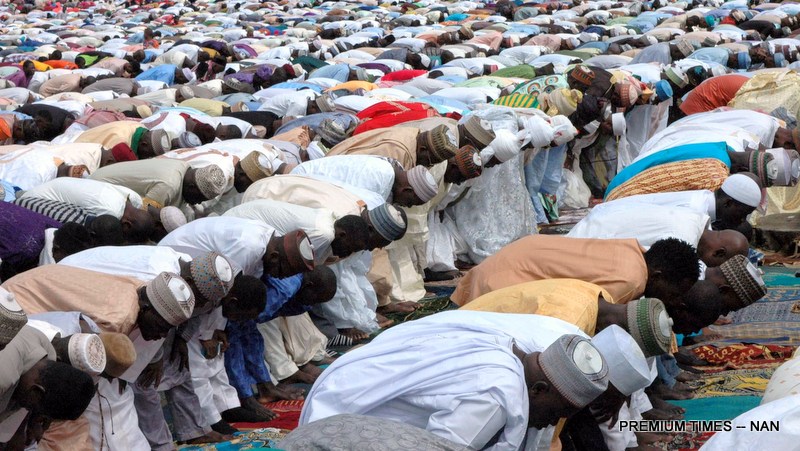
Muslims believe that during Ramadan, the Qur’an text was revealed to the Prophet Muhammad (S.A.W). Muslims celebrate Eid Al-Fitr with “Salat Al Eid” (Eid prayers). There is no audible call to prayer for the Eid prayers. Muslims will gather in mosques or open spaces and offer two units of prayer–called “Rakat”. The prayers are followed by a sermon, in which the Imam asks for forgiveness, mercy, and peace for every being worldwide.

To further bolster the sociological social solidarity and love in Islam, which clarifies Durkheim’s postulation, the other key element of the Eid festival is giving money to the poor alias ‘Zakat al-Fitr’, sending Eid greetings and feasting with families. For many Muslims, Eid al-Fitr is a festival to show gratitude to Allah for the help and strength he gave them throughout the month of Ramadan to help them practice self-control. The phrase commonly used by Muslims as a greeting on this day is “Eid Mubarak”, which is Arabic for ‘blessed festival’.

Muslims begin Eid with the observance of the Eid congregational prayer, sometimes in the mosque but usually in an outdoor location. Before going for the Eid prayer, it’s encouraged to take a bath, wear the most befitting clothes, and look dignified for the celebration. On the way to the Eid Prayer, Muslims recite the words: Allah is great, Allah is great, Allah is great. There is no other God but Allah. Allah is great; Allah is great. To him belongs all praise. And after the Eid prayer, people gather to feast with their families and friends, where they get to savour the taste of various dishes.

Some even travel to their hometowns or home countries to celebrate with their extended families and rekindle the bond of kinship. There is a rich tradition of gift exchange during Eid. For example, it is customary to gift new clothes and shoes to children in Nigeria. Sometimes, the children receive money to buy sweets and snacks to enjoy with their friends and cousins. In western countries, however, children receive gifts instead of cash, and parents decorate their homes to create a mood of excitement for the family.

Finally, Eid is meant to celebrate the completion of spiritual duty and a time to bond and exchange hugs, kisses, and laughter with family, friends and the community. Each country has traditional foods, and sweets prepared ahead of Eid or on the morning of the first day. These foods range from special biscuits and bread to cakes and puddings. On the first day of Eid al-Fitr, voluntary fasting is not allowed as Muslims are encouraged to feast and celebrate the completion of a month of worship and abstinence from food.

Greetings for Eid also vary depending on the country and language. For instance, in Indonesia, Eid is called Lebaran, so Indonesians would say, “Selamat Lebaran”, which means Happy Eid. Other variations of Happy Eid are “Barka da Sallah” in Hausa, a Nigerian language. In addendum, with clothes being an essential marker of Eid, some people wear traditional clothes from their culture, while others pick out something new to wear. Eid is a time for every Muslim to share and express love, peace, and friendship worldwide and extend hands to their non-Muslim neighbours and friends during this festival.

Hassan Idris wrote from Kogi State via idrishassan035@gmail.com.

Kano has the best market for rams

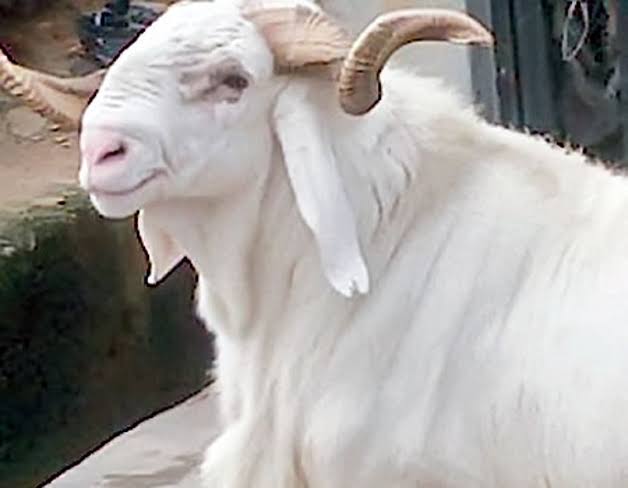
I entered the market today to sample ram prices. The big one we bought for N70,000 last year is now N250,000 to N300,000. A medium ram is now N80,000 to N150,000. And a small one is around N60,000 to N70,000. These prices are all depending on the city and the market.

One interesting point that I want to make here is, I am presently in Kano and everything looks cheaper in Kano than in other states in the North and probably in Nigeria at large.

Therefore, what makes ram so expensive giving the fact that it has near 100% local content? First, it has to do with human greed and wickedness. Prices in Nigeria are influenced by approaching festive seasons not and not only the natural and conventional law of demand and supply. There was never a sallah with shortages of rams.

Second, it very clear that there has been food inflation in Nigeria. Rams feed on the by-products of local food staples like wheat, maize, rice, millet, Guinea corn and rice. If they are expensive, their by-products, the offal and chaps will definitely be expensive.

Third, is the devaluation of Naira. With the nation’s currency losing value and the government also officially devaluing it, the purchasing power of Naira will naturally drop, and it is drastically dropping everyday. Naira doesn’t hold much value today compared to last year. Take N20,000 to the market today and you will get 40% value of what it used to be last year.

Then last but not the least is the corruption components added to transportation of rams. The police, VIOs, state traffic agents and other security agencies are all out to make a kill by collecting bribes from all vehicles conveying livestock. There are also middlemen in all markets that impose tolls and illegal taxes on every head of ram.

So what to do?

The best way to go around it is either to buy an alternative to ram like sheep or goat that are cheaper or wait for the purchase a day after sallah when the market is becoming a buyer’s market. There are three days grace for layya. That way you can get ram 30% cheaper.

It is indeed obvious that life is generally not easy in Nigeria! If you are alive and healthy give glory to Allah and do what you can afford. Layya is only compulsory for those that have the means. If you can’t afford ram use your money and face other issues and pray for Allah’s blessings. Don’t overspend because after sallah you will still pay school fees. Those of us with children in universities should also brace up for increase in tuition fees. There is going to be increase in prices of petrol and electricity. The government is just bidding it’s time but mark my words, with crude oil price going up, the government will surely increase petrol price.

I wish all of us a very warm and wonderdul Barka da sallah.

Aliyu Nuhu

Abuja, Nigeria