Egypt

Salah calls out double standards in media coverage

By Muhammad Abubakar

Liverpool star Mohamed Salah has ignited fresh debate over media bias in football after highlighting what he sees as unequal treatment between himself and fellow striker Harry Kane. 

Speaking in a recent interview, Salah recalled a past spell when Kane went 10 matches without scoring, yet continued to receive strong backing from commentators.

According to Salah, the tone was markedly different when he experienced similar difficulties. “The media were like: ‘Oh, Harry will score for sure.’ When it comes to Mo, everyone is like: ‘He needs to be on the bench,’” he said. The Egyptian forward stressed that his point was not a personal jab at Kane, adding humorously, “I am sorry, Harry!”

Salah’s comments quickly circulated on social media, garnering millions of views and sparking widespread discussion. Analysts and supporters have since weighed in, with many arguing that the incident reflects broader inconsistencies in how players from different backgrounds are portrayed in mainstream football coverage.

The episode has added a new layer to ongoing conversations about fairness, perception, and representation in global sport, especially in Europe.

Egypt arrests teenage TikTokkers over indecency and money laundering

By Hadiza Abdulkadir

Egyptian police have arrested dozens of teenage TikTok creators on charges ranging from indecency to money laundering, in what critics say is a crackdown on free expression.

Authorities have confiscated the influencers’ devices, frozen their assets, and imposed travel bans. Among those detained is 19-year-old Mariam Ayman, known online as “Suzy El Ordonia,” who has more than nine million followers. She is accused of posting indecent content and laundering millions of pounds.

Rights groups warn that vague morality provisions in Egypt’s cybercrime law are being used to silence young voices online, while traditional media remains tightly controlled by the state.

So far, none of the detained creators have been released, and the government has not indicated any change in its approach.

Authorities ordered TikTok to delete content it described as inappropriate or face a ban.

According to reports, TikTok had removed more than 2.9 million videos, some of them even before being reported or flagged by users.

Flying Eagles edge Egypt on penalties to finish third at AFCONU20

By Muhammad Abubakar

Nigeria’s U20 national team, the Flying Eagles, secured third place at the AFCON U20 tournament after a tense victory in a penalty shootout against host nation Egypt.

The third-place playoff ended in a deadlock after regulation time, with both teams creating but failing to convert keychances. 

In the ensuing shootout, Nigeria maintained their composure and emerged victorious, silencing the home crowd and concluding their campaign on a high note.

Head coach Aliyu Zubairu praised his players for their determination and mental toughness throughout the match. “Beating the hosts in front of their fans, and doing so under the pressure of a shootout, speaks volumes about the character of this team,” he said.

South Africa went on to win the tournament, claiming the championship after an impressive performance in the finalagainst Morocco.

The AFCONU20 tournament showcased elite youth teams from across the continent, providing a platform for emerging talent and fierce competition.

Al-Azhar at 1085: Celebrating its global legacy and services to Northern Nigeria

By Umar Sheikh Tahir

Al-Azhar was commissioned on the 9th of Ramadan 361H/ 972AD by the Fatimids in Cairo, Egypt. The name is derived from the holy Prophet’s (PBUH) daughter’s name, Fatimah al-Zahrā alayha al-Salam. The institution is one of the most prominent centers of Sunni Islam in the Muslim world. It serves as both a mosque and a university, and it is recognized as the world’s first university operating initially inside the grand mosque of al-Azhar. 

The institution is a beacon of our enduring legacy and tradition, showcasing our continuous connection and shared heritage. Its services extend not only to educational, spiritual, and theosophical but also humanitarian services to mankind around the globe. It is followed by Zaytuna in Tunisia and Qarawiyin in Morocco. 

As we celebrate the 1085th anniversary of Al-Azhar’s establishment, this article recognizes the significant contributions of Nigerians in the past and Al-Azhar’s contributions to our educational system in contemporary northern Nigeria. Finally, it highlights Al-Azhar alumni who have been instrumental in providing valuable services and whose excellence has made our nation proud. 

1.     Royal Contributions to Al-Azhar in the Past

Classical Azhar constituted several Ruwaq or Arwiqah Corridors/Hostels. These Corridors were named to symbolize the strong ties to some nations worldwide. A few of these names were dedicated to West African communities, such as “Ruwāq al-Barnāwī,” “Ruwaq Dakarinah Darfur,” “Ruwaq al-Barābirah,” and “Ruwaq al-Dakārinah Salih.” These names primarily related to precolonial Saharan and Sub-Saharan empire states, currently representing West African nation states. The closest to Nigeria is Ruwāq al-Barnawi, honoring Black African students from the Kanem Borno subregion in modern-day Northern Nigeria. This medieval hostel now serves as a lecture hall. This recognition stemmed from the strong relationships between Al-Azhar’s leadership and the Kanem Borno royal family. 

Mai Idris b. ‘Alī (1564-1596) spent tons of gold in Cairo, some of which went to endowing the Al-Azhar institution alongside other expenses such as hostels for Borno students and lodges for Kanem-Borno pilgrims to Hajj. This gesture echoes the famous history of Mansa Musa, who made gold depreciate by 25% in Cairo during his famous Hajj travel and stayover. 

Another substantial endowment was the Ibn al-Rashiq School, founded with support from Kanem Borno during the Ayyubi regime in 567-648/around the 12th AD. The institution served as a school and provided services to Hajj travelers from the Kanem-Borno area. In the 18th century, Muhammad bn Muhammad al-Fullānī Al-Kashnāwī’s impactful visit and teaching at Al-Azhar Mosque showcased the enduring influence he had on the institution and its scholars. He was so esteemed that they pursued him to stay until the end of his life, and he was buried in the Graveyard called Bustān al-Ulamā. 

 2. Al-Azhar’s Global Services

Since its inception, Al-Azhar has connected with the world, including our locality, in many ways. Al-Azhar sends teachers to the United States of America, Europe, Asian nations, African countries, and remote rural places. They were sent to the elementary and high schools worldwide, including Nigeria, to teach Islamic studies, the Arabic language, Basic Sciences, and Technology. Nigeria received more than a hundred teachers before, but the number recently decreased to less than 40 teachers due to insurgencies, as I inquired through the Embassy last year. 

However, in May 2016, the Grand Imam of Al-Azhar, Shaykh Ahmad al-Tayyib, visited Nigeria. During his visit, he announced increased scholarships for Nigerian students to Al-Azhar University, covering not only Islamic sciences and humanities but also natural sciences, technology, engineering, and medical schools.

3. Celebrating Excellent Nigerian Alumni in the Past and the Present

I cannot celebrate this milestone without acknowledging some Azhar alumni who have made Nigerians proud. This section highlights the achievements of selected Nigerian students, both past and present, who have excelled there, showcasing their academic prowess and impact on Nigerian society, especially those in prominent national positions.

Among the notable contemporary alums, Ambassador Abdullahi Yalleman and Dr. Hadi Sheikh Tahir graduated at the top of their classes. The former had the honor of receiving his award from former Egyptian President Hosni Mubarak, while the latter was accepted as a Ph.D. student directly from Al-Azhar to the University of Glasgow in Scotland. 

I apologize for not listing more excellent names here, as many deserving individuals come to mind among the outstanding alums I know personally. I will briefly mention a few sectors where Azhar alumni contribute to our society. For instance, most university lecturers, especially in the linguistics and Islamic studies departments, and leaders of colleges of education, are Azhar graduates. The leading Imam of the National Mosque and the founder of the first female-only university in Nigeria is also an Al-Azhar alumnus. Indeed, in the late 1940s, Nigerians celebrated the first female student admitted to the University of Ibadan, and now look at where we are with the contributions of Azharis. 

The leadership of the Sheikh Tahir Bauchi Islamic Center for Quranic Memorization and Islamic Studies consists of Azharis, including the Chairman, Vice Chairman, Secretary, and several directors, all of whom are graduates of al-Azhar. In fact, the Director of Education and School Services for this foundation oversees over 1,500 schools across West African countries and is also an Azhari. The world’s wealthiest Black person is Nigerian and among the alums of al-Azhar. Additionally, the former world champion of Arabic poetry in Abu Dhabi in 2022 is a Nigerian Azhari from Kano. You can also find them in mosques, performing well and serving local communities everywhere. The list can go on and on. 

This brief exploration has inspired me to write in detail in the future to celebrate our local leaders who are Azhar alumni and provide services to our beloved nation through various mediums.  

4. Hausa Language in Al-Azhar Media

Hausa was selected among other languages to serve as a medium of broadcast on Azhar Media TV for educational, intellectual, and spiritual enrichment, as well as to promote peace, featuring standard Islamic texts that cover all sciences in local languages worldwide. Nigerian students were among the qualified scholars leading these teachings for the benefit of Hausa-speaking communities in West Africa. This initiative was part of the office of former Mufti Prof. Emeritus Shaykh Ali Jum`ah, aiming to advocate for Al-Azhar’s methodology of moderate Islam in opposition to extremist views that fuel insurgencies. It was planned that the audio and video content of these teachings would be distributed to local Hausa-speaking communities. 

Today, I extend my congratulations to our Grand Imam, the alumni, and the wider Muslim community on this anniversary. As I reflect on my graduation from Al-Azhar 15 years ago, I appreciate the significance of 1,085 years of intellectual pursuit, the creation of a lasting legacy, engagement with global intellectual institutions, and the dissemination of knowledge throughout the world. 

I join the parents of our children in these urban and rural communities, along with Nigerian students in Azhar receiving full scholarships with free accommodations, in expressing our gratitude to the leadership and administration of Azhar and those Azhar teachers. The Egyptian embassies process the teachers’ paperwork, manage their placements, and report to the leadership above them—our dear Grand Imam. 

Thank you, Azhar, with our spirits before our tongues, and may God preserve you for the Ummah of Islam!

Umar Sheikh Tahir is a PhD Candidate at Columbia University, New York, USA. He can be reached via ust2102@columbia.edu.
Gaza ceasefire negotiations set to resume in Cairo 

By Uzair Adam Imam  

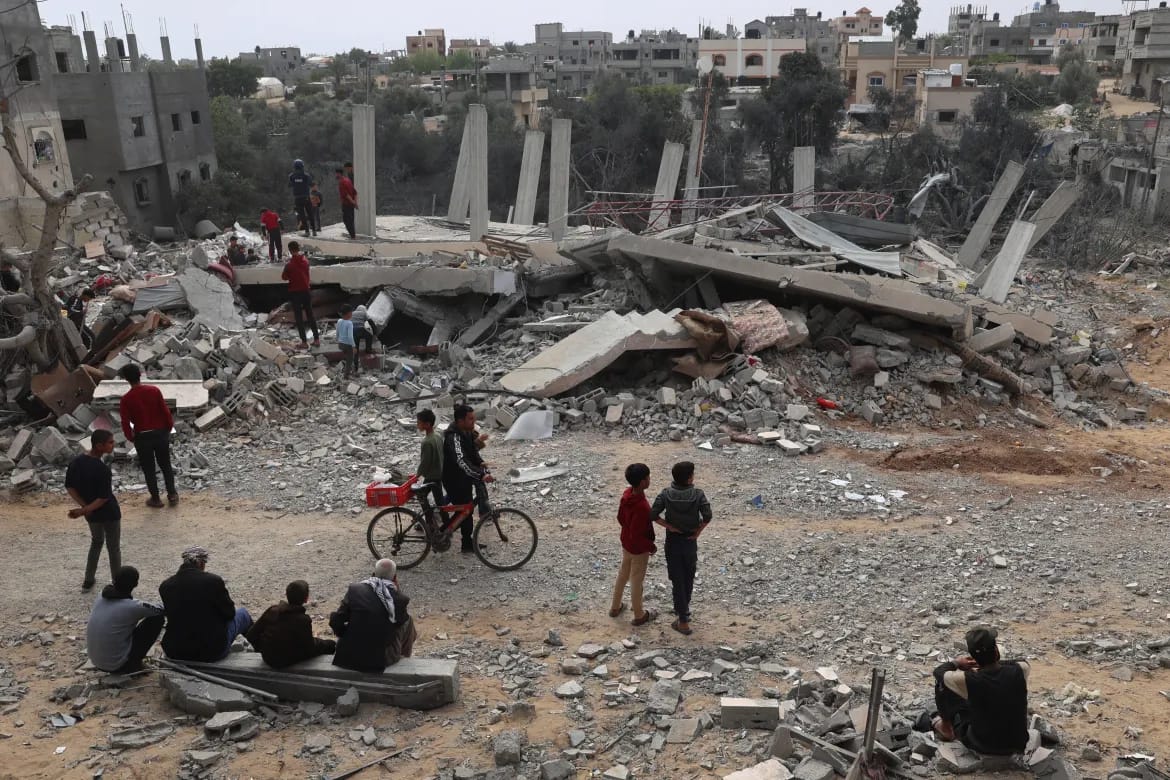
Negotiations aimed at securing a ceasefire between Israel and Hamas in the Gaza Strip are scheduled to recommence in Cairo on Sunday, as reported by Egyptian outlet Al-Qahera. 

This development follows Prime Minister Benjamin Netanyahu’s recent approval for renewed talks. 

An anchor for Al-Qahera News, closely associated with Egypt’s intelligence services, confirmed the resumption of negotiations, citing an Egyptian security source.  

Previous rounds of talks, mediated by Egypt, Qatar, and the United States, have yet to yield a viable agreement. 

Despite hopes to reach a ceasefire before Ramadan, progress has been slow, with the Muslim holy month now more than halfway through. 

Netanyahu’s endorsement of the new negotiations, set to take place in both Doha and Cairo, was announced on Friday.  

While details regarding the involvement of Mossad chief David Barnea remain undisclosed, Netanyahu’s office confirmed discussions with Barnea regarding the talks. 

Simultaneously, protests erupted in Israel’s largest city, with demonstrators blocking a major road in demand for the release of hostages held in Gaza and criticising the government’s handling of the conflict.  

Approximately 130 hostages, out of an initial 250 seized during the October 7 attacks that triggered the conflict, are believed to remain in Gaza.

Central to the ceasefire negotiations is the exchange of hostages for Palestinian prisoners held in Israel.  

French Foreign Minister Stephane Sejourne, along with counterparts from Egypt and Jordan, noted the urgent need for a permanent ceasefire and the release of all hostages during meetings in Cairo. 

Furthermore, France intends to propose a draft resolution at the UN Security Council outlining a “political” settlement for the conflict. 

While recent international efforts, including a Security Council resolution demanding an immediate ceasefire and a UN court order for humanitarian assistance, aim to alleviate the situation, the conflict persists.  

Hamas’s initial attacks on October 7 resulted in significant casualties in Israel, while Israel’s retaliatory campaign in Gaza has claimed thousands of lives, predominantly among civilians, according to official figures.

The cry of distressed Nigerians in a war-torn country

By Lawan Bukar Maigana

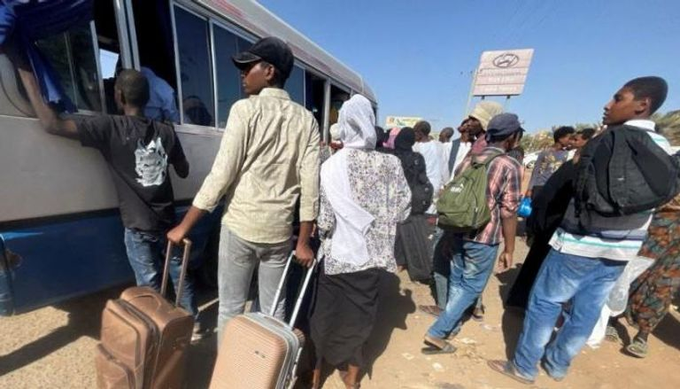
The war is still raging. The fight in Sudan between two factional military groups, which started on April 15 — about two weeks ago, has left hundreds of people dead. Thousands have also fled for their safety.

A large number of foreigners in Sudan, especially diplomats and students, have been evacuated by their governments. But some are still stranded in the Sahara desert and in schools, among which are Nigerians.

Heartbreakingly, videos and audio of young Nigerians have emerged online, showing how helpless they have been since the war in Sudan broke out. Some of them claimed that they didn’t eat for days and that life had been hell for them since the start of the war, and the power struggle is still unfolding, leaving millions of people in fear.

No responsible country will leave its citizens at the mercy of rival factions whose attacks on each other can claim lives and properties. Therefore, it is baseless for anyone to compare the Ukrainian war and Sudan’s because the Ukrainian airport was not targeted by Russian soldiers, which is why countries were able to pick up their people safely and peacefully, but that of Sudan was and still is.

If Nigeria had insisted on evacuating Nigerians on the very day the Turkish plane was attacked, many lives would have been lost because the Nigerian plane, too, would have been attacked, but the almighty saved Nigerians. The government got some privileged information about the massive plan to attack evacuation planes, which was hitherto unavailable.

Hence, the Nigerian embassy wrote to the students urging them to be patient and pack their belongings so they could be transported to Egypt by road, where they could be brought home safely without any fear of attacks or victimization by anyone. This has saved the lives of my fellow citizens.

In appreciation, one of the ladies who was seen crying profusely, calling on the Nigerian government to come to their aid, has again made another video saying over 20 luxurious cars have successfully evacuated Nigerian students who were helpless and stranded in Khartoum, the Capital of Sudan.

She added that the government has again sent its representatives to Egypt to work on releasing students who were unable to cross the border due to some issues related to diplomacy. They, too, have been successfully cleared, and they are in Egypt.

It is important for Nigeria’s incoming government of President Bola Ahmed Tinubu and Senator Kashim Shettima to, as leaders of the giant of Africa, intervene. They should quickly come to the aid of distressed Nigerians still residing in Sudan. Their prevailing agony can only be imagined. Delay is dangerous, as it is often said in our local parlance.

Lawan Bukar Maigana writes from Maiduguri and can be reached via email: lawanbukarmaigana@gmail.com.

COP27: A recap of the first week and what lies ahead for the host nation

By Dr. Yakubu Wudil and Umar F. Ahmad

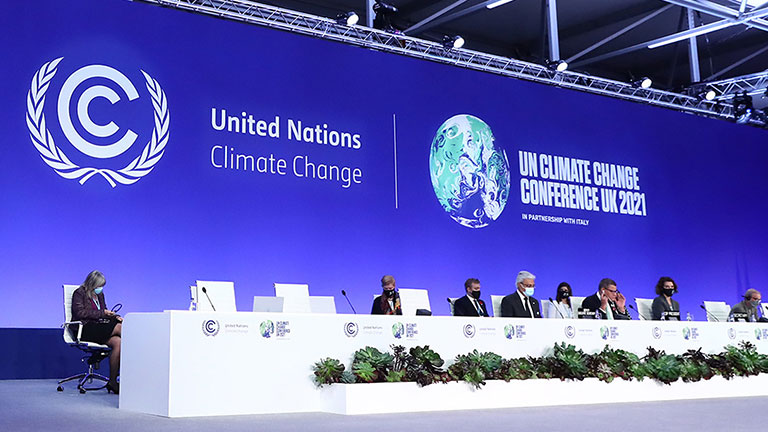
As we head into the second week of the 27th United Nations Climate Change Conference (COP27), which started on November 6, delegates and observers have been involved in discussions on various subjects regarding how to achieve climate action and build sustainable economies around the world. Therefore, taking a step back and reviewing some of the successes and drawbacks recorded based on the first week of the climate negotiation conference is essential.

COP27 is taking place, knowing fully that there is an inadequate will to reduce greenhouse gas emissions. The past year has witnessed unprecedented heatwaves around the world and ravaging floods like the ones experienced in Pakistan and some parts of Nigeria. These saw millions of people confronting the impacts of concurrent crises in food, water, energy, and cost of living, worsened by fierce geopolitical tensions and conflicts. However, with all these adverse effects, some countries have reversed climate policies and returned to business as usual. This, in turn, poses a threat to the host continent, which remains vulnerable to the effects of climate change and has contributed the least to global warming.

The African Union (AU) marked the second day of the conference as ‘Africa Day.’ Africa Day offered the African Development Bank (AFDB) and countries, including development partners, the opportunity to pinpoint measures that can guide them in tapping the continent’s unique economic potential. However, a caution was raised by the AFDB president Akinwumi Adesina, “even with Africa’s unique and vast arable land, we cannot unlock our agricultural potential unless we adapt to climate change.”

A youth leader, Lucky Abeng, made it clear to the AU to ensure that the conference implements decisions reached at the meetings without further delay. The Global Center for Adaptation and the African Union Commission signed a memorandum of understanding that involves the mobilization of at least $25 billion for the African Adaptation Acceleration Program over five years. This will quickly prepare the continent for the consequences of climate change.

The national statement delivered by the President of Senegal made it clear that Africa is reaffirming its commitments under the Paris Agreement and its obligations to the continent’s specific needs being taken into account. “What we need is a just transition,” he further stressed. While these statements were ongoing, there happens to be a big climate financing for the African continent. Starting with the commitment made by a group of about 85 African insurers to come up with a facility that will climate-proof the most vulnerable in the continent known as the African Climate Risk Facility (ACRF). This commitment will provide $1.4 billion in climate risk insurance to protect 1.4 billion people against droughts, floods, and cyclones through African sovereigns, NGOs, and aid agencies. These measures will contribute to bridging the wide climate risk gap on the continent exerted by wealthy nations for compensation due to ‘loss and damage’ caused by global warming.

On decarbonization day, Africa’s renewable energy share is 40%, the highest in the world, says Amani, the Commissioner for Infrastructure and Energy of the African Union. She added that the “African common position on energy access and just transition stipulates that Africa will continue to use its resources, including oil and gas, the cleanest form of fossil fuels.”

However, even with fossil fuels, the recent Russia-Ukraine war has exposed the world’s lack of preparedness to meet its energy challenges. These challenges have sparked present-day political debate due to scientific and public concerns about the environment. Consequently, the recent effort by Germany to restart its previously shut downed three nuclear power plants has made the world reconsider its position regarding nuclear power.

The African continent should be looking towards deploying all low-carbon energy sources, including nuclear, in the energy mix. Complementing renewables such as solar and wind, which are intermittent sources of energy, nuclear energy requires less land to generate the same amount of electricity 24 hours a day.

The President of the United States (U.S), Joe Biden, echoed that “the climate crisis is about human security, economic security, environmental security, national security, and the very life of the planet.” He further announced bolder protections against methane pollution from the oil and gas industry and that the U.S. will meet its emissions target by 2030.

The European Union announced its goal of becoming the first climate-neutral continent by 2050 and is set to host a high-level event in the second week of the conference to launch an initiative called ‘Team Europe Initiative on Climate Change Adaptation and Resilience in Africa.’ Consequently, a recent article by Nigeria’s president, Muhammadu Buhari, reported that “many of my peers are frustrated with Western hypocrisy and its inability to take responsibility.” He argued that governments have repeatedly failed to honour their commitments to the $100 billion fund for climate adaptation and mitigation in the developing world. Some also cite this as his decision to shun this year’s event.

Interestingly, the African continent sends many delegates to these summits. Still, there has been noticeable silence from leading African activists on turning ambition into action. This may be attributed to the no active role participation assigned to these delegates but rather appointed as observers viewing these proceedings on a TV screen.

Meanwhile, other African delegates seem to not care about the continent they are representing, however, and sadly, become ‘attack dogs’ for African governments in lobbying for ‘Climate Financing’ reparations and are being sponsored by their governments to attend these summits. The UN Environment states that Africa needs 3 trillion US Dollars to implement the continent’s National Determined Contributions (NDCs), but the question remains whether the national budget of African governments is considered a climate action instrument or whether they are utilizing their available resources to build climate-smart communities. In the remaining days of the conference, the delegates and observers from African nations need to look within the continent and work together as there are saviours out there.

Mr Umar Ahmad is a nuclear physicist working with the Centre for Renewable Energy Research at Bayero University, Kano, Nigeria (oumarulfarouq@gmail.com). Dr Yakubu Wudil is with the Renewable Energy Research Center, KFUPM, Saudi Arabia. (yswudil@yahoo.com)

A tribute to Sheikh Dr Youssef Al-Qardawiy (Rahimahullah)


By Dr. Isa Muhammad Inuwa

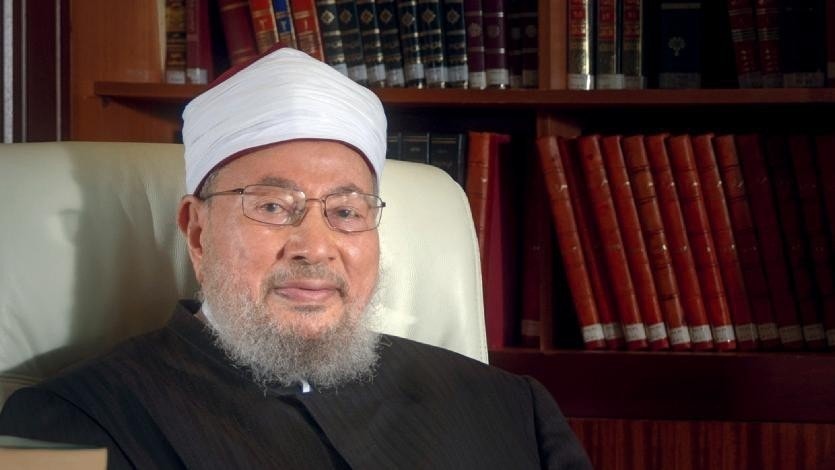
We woke up to the maddening, stunning macabre and grim sorrow of the demise of Sheikh Dr Youssef Al-Qardawi, renowned scholar and jihadist of international repute. As we weep profusely, both internally and outwardly, over this irreparable loss, his death indicates that the sun has set down for yet another era of Islam, as yet another chapter is closed.

Late Al-Qardawi can go down in history as a titanic whale in the fathomless ocean of Islamic knowledge and jurisprudence. He authored many valuable compendia and an estimated 120 to 200 books, famous among which is Al-Halal Wal Haram, that addressed and gave solutions to vital lawful and unlawful issues in Islam.

He was a contemporary of scholars and jihadists of like minds such as Sheikh Hasanul Bannah, Sayyid Qutub, Sa’eed Hawaah, Kishk and the rest. The personalities mentioned above formed the nucleus of the Islamic Brotherhood movement’ ‘Ikhwanul Muslimuuna’ in Egypt around the 1950s to 1960s.

Ikhwan’s formidable movement under the late Hassan Al-Banna’s leadership served as an alternative political group that brokered power in Egypt by participating in the democratic process and contesting political posts. Former president Muhammad Morsi was a testimony to Ikhwan’s influence in the mainstream politics of Egypt.

More so, the hitherto Islamic movement in Egypt, administered by vibrant and agile youths, had impacted and triggered similar gestures in many countries and Muslim communities worldwide.

While some Ikhwan eggheads, such as Hassan Al-Bannah, were martyred amidst the struggle, others, like the late Youssef Al-Qardawi, survived, lived longer and contributed to humanity on many fronts.

May The Almighty Allah accept the late Sheikh Qardawi and uplift his status in the highest and exalted Jannah, amen!

Dr Isa Muhammad Inuwa writes from Bayero University, Kano, Nigeria, via ismi2000ng@yahoo.com.

AFCON: The gigantic tournament

By Abdulrazak Iliyasu Sansani 


I had initially not titled this article “AFCON: The gigantic tournament” not because I had less respect for it hitherto. “I’ve heard that so often, that there’s no international break until March,” Jurgen Klopp said. “In January, there’s a little tournament in Africa, I just want to say, and I think Asia is playing games, too – South America as well. Great, can’t wait!” But I have done so now primarily to respond to the purported disregard, misinformation, or rather outright disrespect directed at the most prestigious football tournament in Africa, which Jurgen Klopp’s comment on the African Cup of Nations seems to convey, as less relevant.  I have tremendous respect for Klopp, one of the finest tacticians in football. I can’t certainly say he meant to disrespect the AFCON, though, this doesn’t stop me from tackling what is gradually gaining credence in Europe whether glaringly or subtly: the scanty regard for AFCON. 

I had once written an article titled the Pinnacle of African football and the quest for glory. It would have been published ahead of the last edition of AFCON in Egypt. However, it was never published. The said title aptly captured how I view African football. I believe this is how the vast majority of African football fanatics regard it. And no amount of disrespect, misunderstanding, red herrings, or disinformation could alter that. 

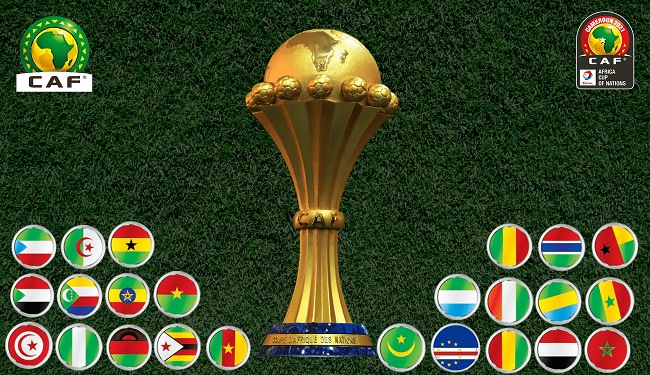
The biggest event in African football commences on 9th January,  with five times Champions Cameroon taking on Burkina Faso in Olembe Stadium in Yaounde. It is the curtain-raiser for the most important tournament in African football. The 2021 Africa Cup of Nations, known as the Total 2021 Africa Cup of Nations, is the 33rd edition of the Africa Cup of Nations, the tournament will be hosted by Cameroon, the Champions of the 31st edition. The competition was held in June/July in the previous edition, which Algeria won. 

But this edition has been moved back to January/February. Cameroon were to host the last edition, only for them to be stripped of the hosting right in  November 2018 mainly for three reasons: Anglophone crisis, delays in the delivery of critical infrastructure, and the Boko Haram crisis. This edition of the AFCON has come with numerous challenges even before it starts. Strong opposition has come from many angles centred on the timing of the AFCON. Confederation of African Football (CAF) has reverted back to AFCON’s traditional calendar, as against the normal Summer calendar used in major international competitions like the World Cup and European Football competition, though the former is set to be played in November this year, unlike the prior editions. 

The bulk of the opposition to the timing of the AFCON has understandably come from European clubs, who have a lot to lose by having some of their key players miss some features for the duration of the AFCON. These have made many clubs to devise means to keep their players against the wishes of the players or in collaboration with the players. This has allegedly seen some of the clubs going out of their ways to engage in unethical practices in order to keep their players from playing for their countries. We heard former Super Eagles player, John Ogu made startling revelations about his manager asking him to fake injuries in order to prevent him from playing for the Nigerian national team, ‘not even surprised at the situation of the foreign managers or clubs not wanting their players to go represent their country in tournaments,’ Ogu tweeted.

‘One certain manager in Portugal asked [that] I tell the coach of Eagles then that I was injured so as not to go for a friendly game.

‘After I left, went back to the club, he stopped playing me, and this was prior to the World Cup coming that year. I made mentioned it here and many out here said I was lying and so on. Una don see how them be now?’

Ogu, who eventually missed out on the 2014 tournament, has been without a club in 2020, as reported by Goal.com Africa.

‘I missed out on that World Cup list,’ he continued. “The evil part of it was when the list came out and he found out I wasn’t invited, man, walk up to me and asked I call the manager to list me and that if he wants, he can start me in the last game in the league.” ‘I was shocked how evil one can be.’  You could see the length some of these clubs could go. It is absurd, gratuitous, unacceptable, and a blatant disregard for African football and Africa in general. 

European Club Association wrote FIFA, stating why they might not release players for AFCON: health, the welfare of players, and the timing of the AFCON. The ECA further accused African football affiliated associations of failing to “properly implement protocols with worrying degrees of negligence.” The ECA said they would release African players for the forthcoming 2021 African Cup of Nations only when national football associations in Africa meet certain stringent conditions. At its meeting of December 2, 2021, the ECA in an official letter to FIFA Deputy Secretary-General Matthias Grafstrom and the Confederation of African Football (CAF), made their position known, especially with the raging Omicron variant of Covid_19. The ECA mandated FIFA and CAF to ensure necessary precautions are in place to protect players and club interests ahead of the tournament.

I have to concede that there are vital issues to iron out in the timing of the AFCON and the ECA are entitled to protect their interests. So also are CAF and its member associations. CAF will be unfair to its affiliated associations if it remains adamant on the current calendar merely to prove a point that it has sufficient grounds. However, all these don’t give the ECA the impetus let alone the justification to insult African football. Going forward there should be a clearly defined means, concessions, and major decisions must be made by all stakeholders for a mutually beneficial solution.

I know certainly that if it were the other way round: The backlash from the European press, clubs, and fans would have been deafening. A Series of sanctions would have been in place on those clubs from FIFA. CAF, FIFA, and all stakeholders should treat this matter thoroughly with a view to finding a lasting solution that has the players, the fans, and everyone in mind. Above all, a workable remedy that upholds the dignity of Africans and aids the development of the beautiful game should be rigorously pursued. 


Abdulrazak Iliyasu Sansani Writes from Turaki B, Jalingo, Taraba State and can be contacted via abdulrazaksansani93@gmail.com.

Finally, the Super Eagles joined the party

By Aliyu Yakubu Yusuf

Compared to its more illustrious continental equivalents, the African Cup of Nations (AFCON) receives far little media fanfare. With its scheduling in the winter when European football is well underway, the AFCON has been a pain in the ass for many a European club. And the actions on the pitch so far have elicited little excitement among watching fans. Goals have been at a premium, with just nine goals scored in the opening eight games in the tournament, making it a ratio of just over a goal a game.

The Super Eagles of Nigeria took on the Pharaohs of Egypt in a much-anticipated clash of African football titans. With Mohamed Salah at his mesmerizing best for his club, Liverpool and Nigeria having to play without two of its most in-form forwards, Victor Osimhen and Emmanuel Dennis, who are unavailable for various reasons, many pundits and bookmakers earmarked Egypt as the favourite. However, the Eagles didn’t read the script. As soon as the match kicked off, the Nigerians asserted themselves and dominated the early exchanges. However, they were made to wait until the 30th minute of the game before they got the deserved breakthrough.

Moses Simon, who was a menace for the Egyptian defence all first-half long, left the Egyptian full-back, Tawfik, for dead before putting in a teasing cross that Hegazy partly cleared. The ball fell nicely to Joe Aribo, who directed the ball to Kelechi Iheanacho, who fired an unstoppable missile into the Egyptian net to send thousand Nigerians who crossed the border to Garoua to watch the game into rapture. That was to prove the game’s only goal that turned into a topsy-turvy affair in the second half.

If the Super Eagles were great in the first half, they were effective in the second. The Pharaohs improved massively in the second half. However, the Nigerians fashioned many gilt-edged chances on the break. With a little more composure in front of the goal, the Super Eagles would have won by at least three clear goals. But, assisted by the evergreen Wilfred Ndidi and the silky Joe Aribo at the middle of the park, the Nigerian defence line comprised Ola Aina, Troos-Ekong, Kenneth Omeruo and Zaidu Sunusi successfully managed the unenviable task of keeping Mohamed Salah at bay.

Credit must go to the coach Agustin Eguavon who made his debut today. The Super Eagles had been a shamble for long stretches at the end of Gernot Rohr’s tenure. If this match is anything to go by, the future looks promising for the Super Eagles. Of course, as a traditional footballing powerhouse in the continent, Nigeria goes to any AFCON tournament as one of the favourites. However, it is still early days, and there are better teams in this tournament than the Pharaohs. So, I think Nigeria has an outside chance to go over the finish line.  

Aliyu is a lecturer at the Department of English and Literary Studies, Bayero University, Kano. He can be reached via aliyuyy@gmail.com.