EFCC

EFCC arrests 13 Chinese citizens over alleged illegal mining activities in Kwara

By Muhammadu Sabiu
 
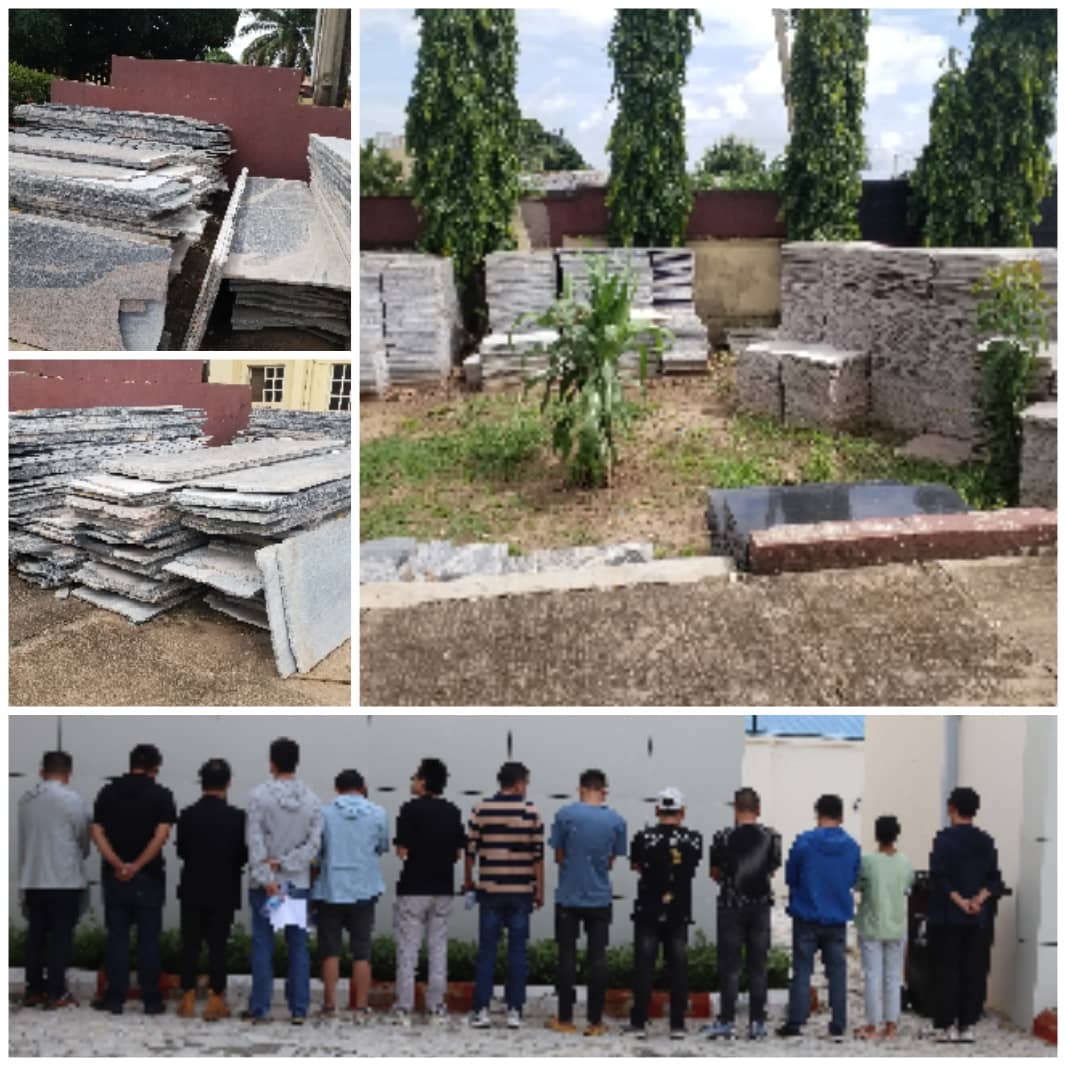
Operatives of the Economic and Financial Crimes Commission (EFCC) in Ilorin have apprehended 13 Chinese nationals for illegal mining activities in Kwara State.
 
The EFCC revealed this via a statement on its social media handles on Friday evening.
 
According to the anti-graft body, “the offence is contrary to and punishable under Section 1(8) (b) of the Miscellaneous Offences Act Cap M17, 1983.”
 
This paper understands that the suspects, who include a female and 12 males, were detained on Wednesday, July 12, 2023, at the Government Reserved Area, G.R.A. Ilorin, after obtaining reliable information about their unlawful activities, which included illegal mining and failure to pay royalties to the Federal Government as required by law.
 
The EFFC’s statement further reads, “Prior to their arrest, discrete investigations on the activities of illegal mining operators in Kwara State revealed that the operators have different illegal mining sites in almost all the 16 Local Government Areas of the state.”

EFCC presents profile of its Acting Chairman Abdulkarim Chukkol

News Desk

Following Tuesday, June 14, 2023, suspension of Mr. Abdulrasheed Bawa, as Executive Chairman of the Economic and Financial Crimes Commission by the Federal Government, Mr. Abdulkarim Chukkol has stepped in as Acting Chairman of the Commission.

Until this new role, he was the Director of Operations of the Commission.

A pioneer staff of the Commission and an illustrious member of the EFCC Cadet Course One, Mr. Chukkol is a consummate and vastly experienced investigator with speciality in cybercrime and money laundering.

His Command appointments in the Commission include spells as Head of the Advance Fee Fraud and Cybercrime Sections of the Lagos and Abuja Zonal Commands between 2011 -2016, pioneer Commander of the Uyo Zonal Command in 2017 and Commander of Port Harcourt Zonal Command in 2020.

Chukkol has participated in several special operations with international law enforcement organizations and maintains close relationships with Law enforcement agencies such as the FBI, UK National Crime Agency, United States Postal Inspection Service (USPIS), United States Secret Service, Australian Federal Police, Dutch Police, German Police, South African Police etc.

The acting EFCC Boss has worked closely with other Governments to develop law and infrastructure for carrying out law enforcement actions. He is Nigeria’s Contact person at the International Mass Marketing Fraud Working Group representing key Government regulatory, law enforcement, prosecution, immigration and customs, financial intelligence, and consumer protection agencies as well as trade and competition bureaus dealing with mass marketing-related issues from Spain, Nigeria, Belgium, Europol, Canada, United Kingdom and the United States.

He has attended several courses, seminars and workshops on Public Corruption, Advance Fee Fraud and other economic and financial crimes both locally and internationally, including the Oxford University, United Kingdom, in 2022.

His work and initiatives over the years have earned him several awards and commendations both locally and internationally, including “the Most Outstanding Award in Operations” by the EFCC and the “Outstanding Performance Award” by the United States Department of Justice, among others.

The acting EFCC Chairman holds a bachelor’s degree in Agricultural Economics from the University of Maiduguri (2000) and Post Graduate Certificate in Criminal Justice Education from the University of Virginia, United States as well as Graduate Diploma in Cybersecurity and Spectrum Management from the United States Telecommunication Training Institute, Washington DC, United States.

He is also an alumnus of the FBI National Academy, Quantico; European Center of Security Studies, Germany and a Fellow of the War College, Nigeria.

EFCC beamons siege of facility by DSS

By Ahmad Deedat Zakari

The Economic Financial Crimes Commission, EFCC, has cried out over a siege on their office by the Department of State Services, DSS

In a press statement released by the Commission on Monday, they alleged that the DSS denied their operatives and members of staff access to their office at No.15 Awolowo Road, Ikoyi.

They said the DSS barricaded the entrance of their facility with armoured personnel carriers.

The Commission described the development as strange, stating that the Commission and DSS had cohabited in that facility for 20 years without issues.

The EFCC also made it known that the development has disrupted their activities and has wider implications on the fight against corruption.

“By denying operatives access to their offices, the Commission’s operations at its largest hub with over 500 personnel, hundreds of exhibits, and many suspects in detention have been disrupted.
Cases scheduled for court hearing today have been aborted, while many suspects who had been invited for questioning are left unattended.
Even more alarming is that suspects in detention are left without care with grave implications for their rights as inmates.
All of these have wilder implications for the nation’s fight against economic and financial crimes,” part of the statement reads

As at the time of writing this report, the DSS is yet to give reasons for the siege.

Corruption allegations: 107 groups protest in Lagos, urges Tinubu to cleanse EFCC

By Aisar Fagge
 
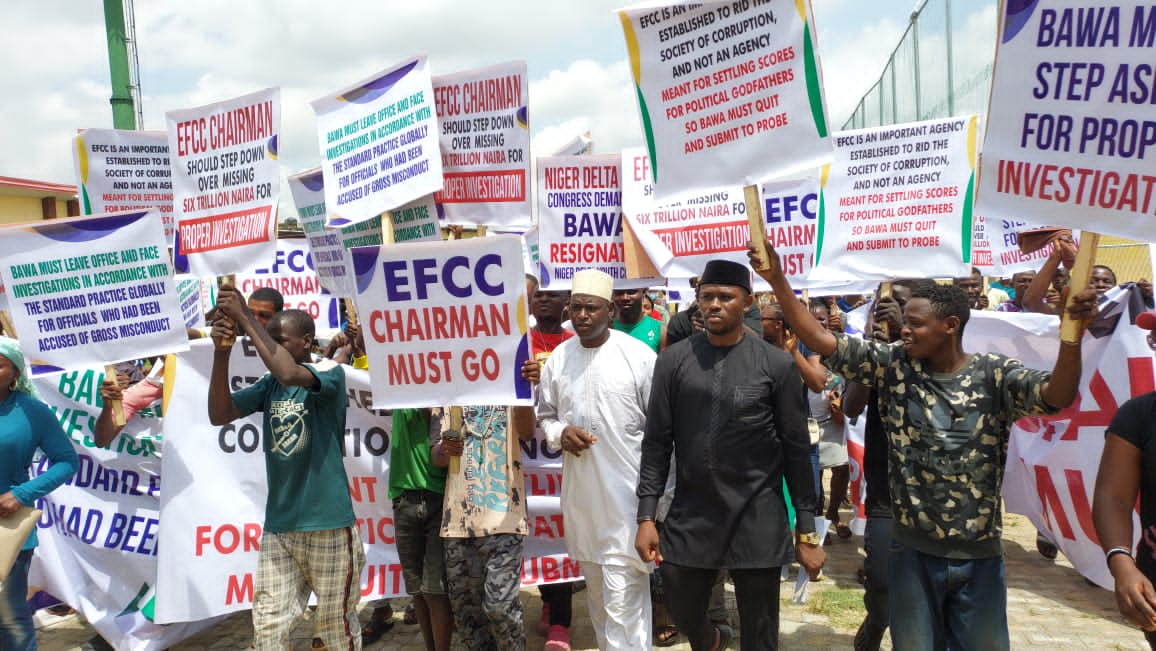
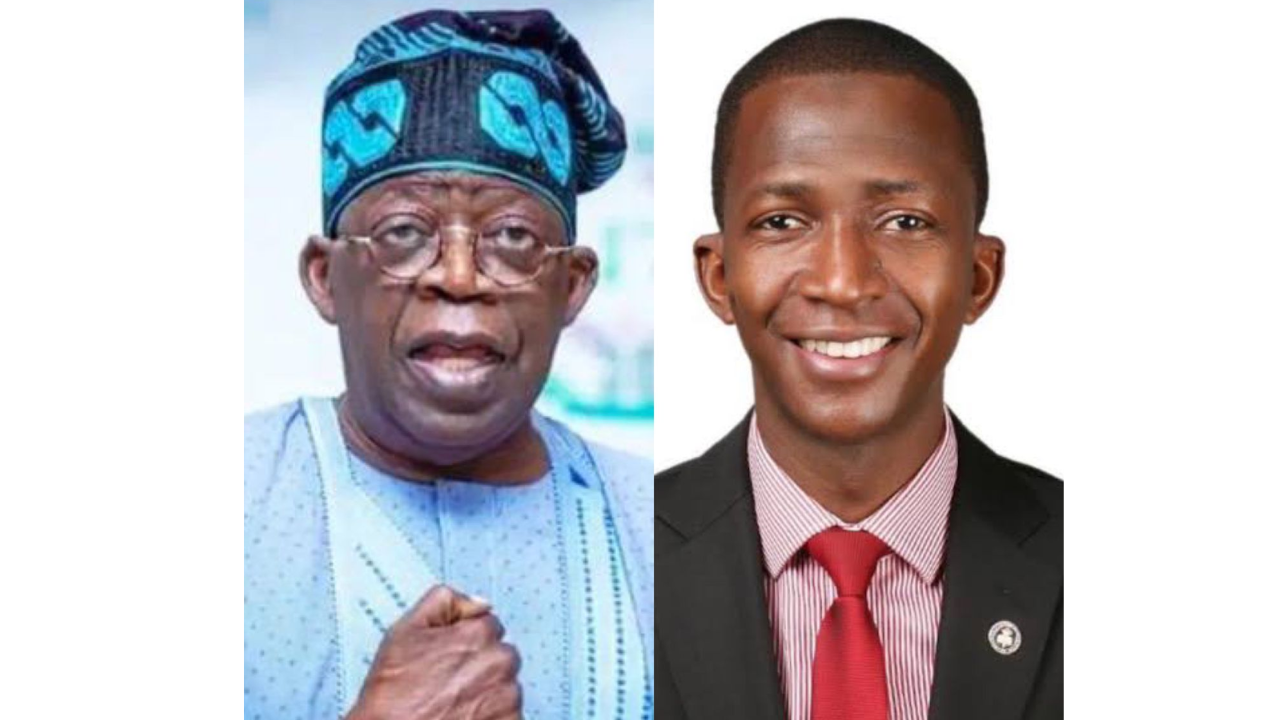
A conglomeration of about 107 Anti-Corruption crusade groups led by Crime and Corruption Monitors, has impressed on the incoming administration of President-elect, Bola Ahmed Tinubu to ensure the Economic and Financial Crimes Commission (EFCC) is cleaned of entrenched corrupt leadership symbolized by its current Chairman Abdulrasheed Bawa.

This follows a protest by the Anti-Corruption crusade Conglomerate, which was terminated at the Youths Sports Complex, Lagos.

The groups pointed out that EFCC is an important government agency in Nigeria, established primarily to rid the society of corruption and not conceived as an agency for settling scores for political godfathers.

The convener of the conglomerate, Idowu Bello who read the statement in Lagos warned that “If a government agency expected to fight crime is found going about its business in a manner that mimics witch-hunt and selective justice while also being unable to deal with the corruption going on within its own workforce, the nation is headed for real time crises, conflict of confidence.”

He noted that despite government’s claim of making the fight against corruption and related practices a top priority, EFCC, the agency charged with the execution of the war, is in questions over mounting allegations of monumental corrupt practices.


“Allegations that about 80 per cent of cases under EFCC investigation are not taken to court. EFCC offices now literally serve as courtrooms.

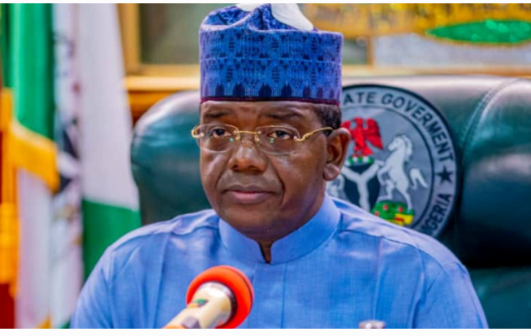
“Last week, Zamfara state governor, Bello Matawalle, alleged that Bawa demanded the sum of $2million from him as bribe to stop a purported probe against him.   

“Even before Abdulrasheed Bawa was presented as substantive EFCC Chairman, he has been arrested and detained by the anti-graft agency in 2019 for selling at least 244 trucks worth between N20-30 million each to his proxies at N100,000 per unit.

“He is also accused of recently expanding a large amount of money to the tune of $300,000 for hotels and other activities, which is far and beyond his income as civil servant, during a visit to Mecca with his family on a lesser Hajj.

“There are also allegations of connivance with the Attorney General of the Federation,  Abubakar Malami in auctioning of sea vessels holding crude oil seized by the Federal Government, violating Section 31(2) and (4) of the EFCC Act 2004.”

According to him, Malami and Bawa also allegedly authorized the sale of vessels by companies under EFCC prosecution for similar offence of illegal bunkering.

“Bawa and Malami were fingered in the discontinuation of a N25billion criminal charge against Senator Danjuma Goje without any justification after over seven years of diligent investigation and prosecution.

“Equally, the incident of Abel Isah, an EFCC cadet in Sokoto who was allegedly beaten to death by superior officers for refusing to sign off on incomplete exhibits is still fresh in the minds of Nigerians,” the statement read.

The Crusaders however, demanded the immediate sack of Bawa as EFCC Chairman and to be subjected to wholistic probe the way his predecessor Ibrahim Magu was treated.

“Like every other agency of government everywhere, there are global standards of practice  for officials who had been accused of gross misconduct to step aside while investigations were conducted to ascertain the veracity of the allegations.

“As pointed out earlier several eminent eminent Nigerians have claimed to possess evidence of corrupt practices, breach of public trust and abuse of office against the EFCC and its Chairman, Abdulrasheed Bawa.

“It is based on the above observations that the Crime and Corruption Monitors and 107 Anti Corruption Crusade Groups deem it necessary to demand that Abdulrasheed Bawa excuses himself from office and surrender for investigation.

“We demand that if Bawa remains adamant,  he be forced out and subjected to comprehensive probe  the way his predecessor Ibrahim Magu was made to do.

“Since it is obvious by now that the Buhari administration which brought Abdulrasheed Bawa is not disposed to initiating action, we call on the incoming President Bola Ahmed Tinubu to make it first priority to cleanse the EFCC of corrupt leaders.

“Corruption is one of the most serious social and security challenges facing Nigeria today which is the more reason why Tinubu should see it as an existential matter that needs to be addressed and tackled robustly and defeated once for all.

“No nation can aspire to greatness or seek to remain secure and safe when corruption and other corrupt practices are allowed to find their way into all its vital institutions including the agency saddled with the responsibility of fighting it.

They added that, for this reason, corruption must be confronted  with the entire will and resolve of the incoming administration beginning with thorough cleansing of the EFCC by first getting Bawa out and subjecting him to probe before extending action to cover other organs and tiers of government in Nigeria without exception.

“Failure to do so will indubitably mean that every effort made the anti-graft agency is headed by suspicious leaders will defeat all development endeavours of the incoming administration and render its task the more difficult and futile.

“We remind the President-elect that National challenges such as the corruption we are faced with should not be treated with levity and condescension. Neither should action be limited to targeted individuals or tiers of government. On the contrary, corruption is a cross-national issue that affect every one of us regardless of where we live or come from,” the statement read.
Matawalle, Bawa trade words over corruption allegations

By Uzair Adam Imam

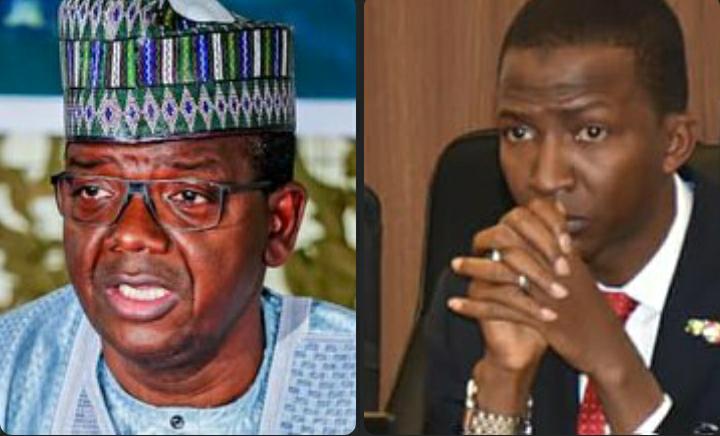
The Chairman of the Economic and Financial Crimes Commission (EFCC), Abdurrashid Bawa, and Governor Bello Matawalle of Zamfara state continue to trade words over corruption allegations.

The anti-graft agency chairman challenged Matawalle to expose him if he has any fraud record against him.

Bawa has thrown this challenge against Matawalle in an interview with the BBC Hausa Service on Thursday.

He added that even though no human being was 100 percent clean, he would love it if Matawalle could expose him.

The Daily Reality reported that Matawalle was currently under investigation over alleged N70 billion fraud.

The EFCC chairman stated that it was intriguing that Matawalle would want to take on the role of a supervisor, who tells the EFCC whom to investigate.

EFCC investigates governor Matawalle over N70b fraud

By Uzair Adam Imam

Governor Bello Matawalle of Zamfara State is currently under investigation over alleged N70 billion fraud, says the Economic and Financial Crimes Commission (EFCC).

Abdurrashid Bawa, the EFCC Chairman, disclosed about the development on Thursaday during a press briefing.

Our reporters gathered Matawalle and Bawa have recently engaged in a battle of words and Matawalle had leveled allegations against Bawa and dared the commission to go after members of President Muhammadu Buhari’s cabinet.

However, the anti-graft agency chairman urged Nigerians not to be swayed by the Matawalle’s recent outburst.

In his response through the Director of Public Affairs of the commission, Osita Nwajah, Bawa added that “It is intriguing that Matawalle would want to take on the role of a supervisor, who tells the EFCC whom to investigate.

“Is this a case of a “’thief’’ saying he must not be touched until other ‘’thieves’’ are caught?

“Unfortunately, it is not within Matawalle’s remit to dictate to the EFCC whom to arrest, when and where. Suspects in the custody of the Commission cut across all sectors and social class.

“The qualification to get a space in the Commission’s detention facility, is to commit a crime. It does not matter whether you are a priest , Imam, Governor or minister.

“Currently, a former minister of power is in the custody of the EFCC over a N22billion corruption allegation. That conveniently did not attract Matawalle’s attention,” Nwajah said.
 

EFCC declares British national wanted

By Ahmad Deedat Zakari

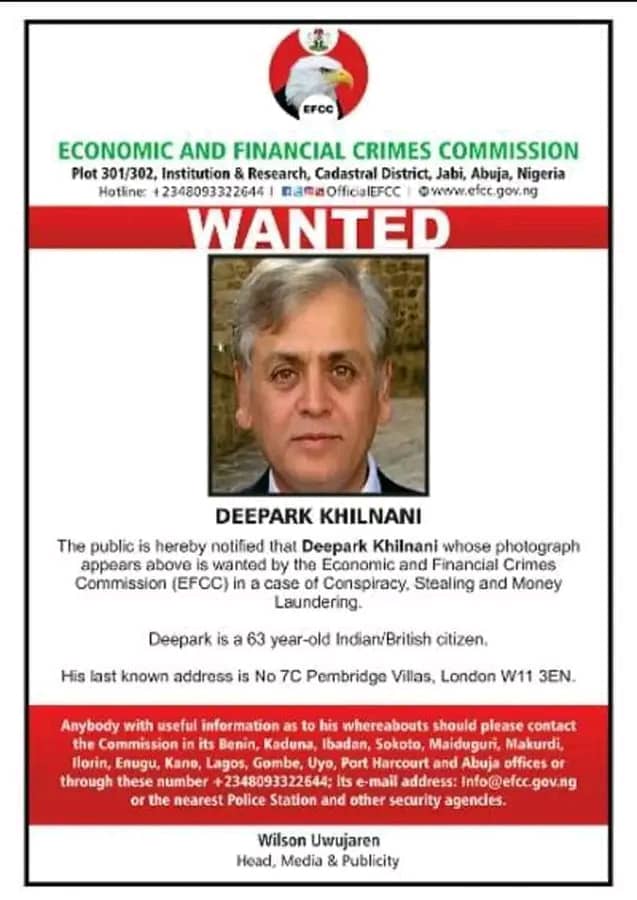
The Economic Financial Crimes Commission, EFCC, has declared a British and Indian citizen, Deepark Khilnani, wanted on the ground of fraudulent activities.

The Commission in a post on their verified social media accounts disclosed on Wednesday that Mr Khilnani is wanted for conspiracy, stealing and money laundry.

The Commission gave his brief details and requested that persons with information that could lead to his arrest should not hesitate to contact the EFCC.

“Deepark Khilnani, 63, Indian/British citizen is wanted by the EFCC for Conspiracy and Money Laundering. If you have any information that could lead to his arrest, please do not hesitate to contact the EFCC immediately”, they posted.

CMPA to partner EFCC, ICPC on quality journalism

By Ahmad Deedat Zakari

The Center for Media, Policy and Accountability, CMPA, has commenced implementation of the Nigeria Anti-Corruption Performance Public Reporting (NAPPR) Project 2023 in partnership with anti-corruption agencies in the country. 

The Center’s Director of Communication, Outreach and Advocacy, Ibrahim Uba Yusuf, made this known in a press release on Sunday. 

The Center disclosed that the project is funded by the MacArthur Foundation and primarily aims at partnership with anti-corruption agencies in Nigeria.

The Center also disclosed that it would be conducting research, advocacy and public engagement to enhance the capacity of the anti-corruption agencies in Nigeria. 

“The aim of the MacArthur Foundation-funded project is to conduct research, advocacy, public engagement and capacity development of Nigeria Anti-Corruption Agencies (EFCC, ICPC and CCB), CSOs, and media organizations on NAPPR project and to publish the first edition of a Harmonized Anti-Corruption Performance Report for 2017-2022.” The statement, signed by Ibrahim Uba Yusuf, partly reads.

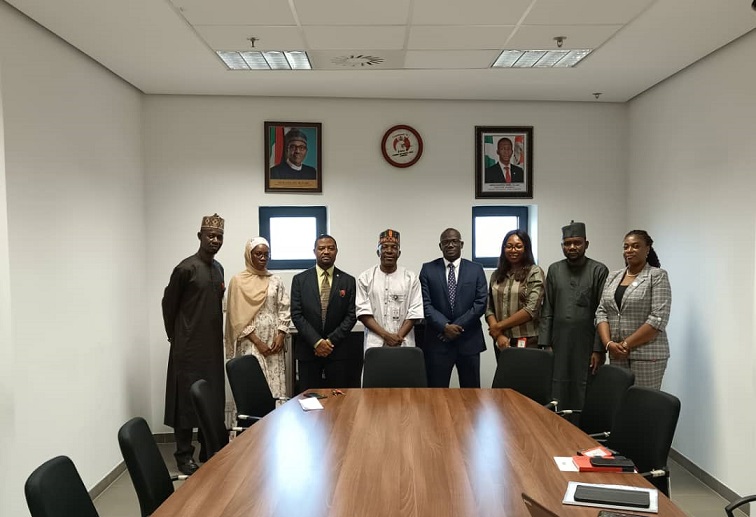
The project manager, Dr Suleiman Amu Suleiman, had paid official visits to the Economic Financial Crimes Commission headquarters, EFCC, and the Independent Corrupt Practices and Other Related Offences Commission, ICPC, in furtherance of the project. 

While speaking at the visit, Dr Suleiman said the project was to support Nigerian anti-corruption agencies to develop a standard reporting template that would correctly highlight and project their work locally and globally.

EFCC to inaugurate Integrity Club in Lagos college

By Ahmad Deedat Zakari

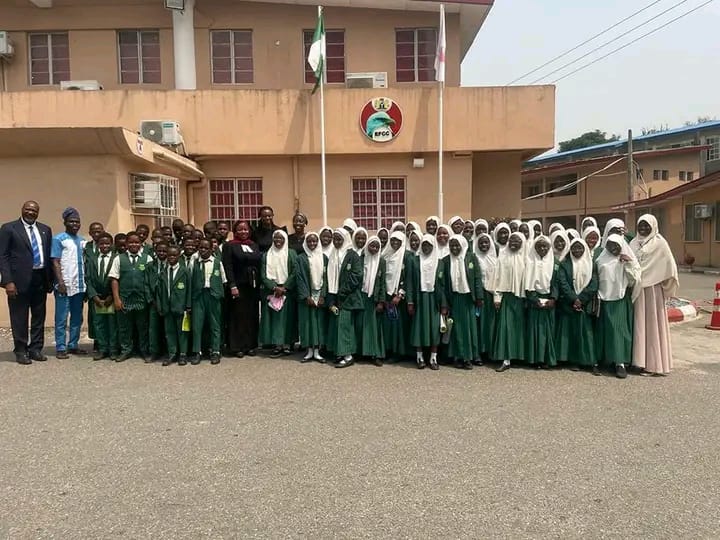
The Economic Financial Crimes Commission (EFCC) is set to inaugurate the Commission’s Integrity Club in a Lagos secondary school.

On Wednesday, the Lagos Command of the EFCC said the inauguration of its Integrity Club in Crescent College, Lagos, is in line with its strategic objectives to continuously enlighten and reorientate the youth about the menace of economic and final crimes commission.

The EFCC made the promise to the students during the former’s visit to the Lagos Command of the EFCC. 

Addressing the students, the Deputy Zonal Commander, Lagos Zonal Command, Emeka Okonjo, urged the students to join the EFCC Integrity Club. He said joining the Club affords them an opportunity to become ambassadors of the Commission in the anti-graft campaign.

He said,  “We want you, the leaders of tomorrow, to join in the campaign against economic and financial crimes and become change agents in your environment, schools, churches and mosques.

“We want you to join hands with us to tell everyone that integrity, honesty and hard work are the sure routes to living a successful life”.

A representative of the school, Shukrah Odunola, expressed profound gratitude to the EFCC for honouring the school invitation, adding that the lunch of the integrity club in the school would go a long way in ensuring that the students “are enlightened on the consequences of corruption in the society and Nigerian as a whole.”

EFCC recovers N13bn illegal fuel subsidy funds

By Muhammadu Sabiu 

The Economic and Financial Crimes Commission, or EFCC, was able to retrieve over N13 billion that was earmarked illegally.

The funds are the profits of unauthorised payments made between 2017 and 2021 under the subsidy regime.

Recall that this was reported in a recent paper on the National Inherent Risk Assessment of Money Laundering in the Nigerian Extractive Sector that was obtained from the website of the Nigeria Financial Intelligence Unit, or NFIU.

The document stated: “The Economic and Financial Crimes Commission, the agency responsible for the investigation and prosecution of corrupt subsidies in the oil and gas in Nigeria, recovered N12,998,963,178.29 as proceeds of illegal payment made within the subsidy regime between 2017 and 2021.”

Corruption involving fuel subsidies has raised concerns in Nigeria. For instance, according to the World Bank, increased gasoline subsidies put the Nigerian economy at high risk.

This is because the payments might have a major impact on public finances and raise questions about the sustainability of the country’s debt.