Education

JUST IN: Kaduna releases fresh resumption dates for schools

By Sumayyah Auwal Ishaq

The Government of Kaduna State has announced a new resumption date for its schools after months of disruption in the school calendar due to insecurity ravaging the state.

The state’s commissioner for education, Shehu Makarfi, disclosed this while participating in a virtual workshop organised by the Education Writers’ Association of Nigeria. According to him, students of the state are expected to resume on Sunday, September 12, 2021.

However, the commissioner said rather than resuming for the third term that was aborted in the state, the schools will resume the first term for the 2021/2022 academic calendar.

Kaduna Poly expels 85 students, suspends 8 others

By Sumayyah Auwal Usman

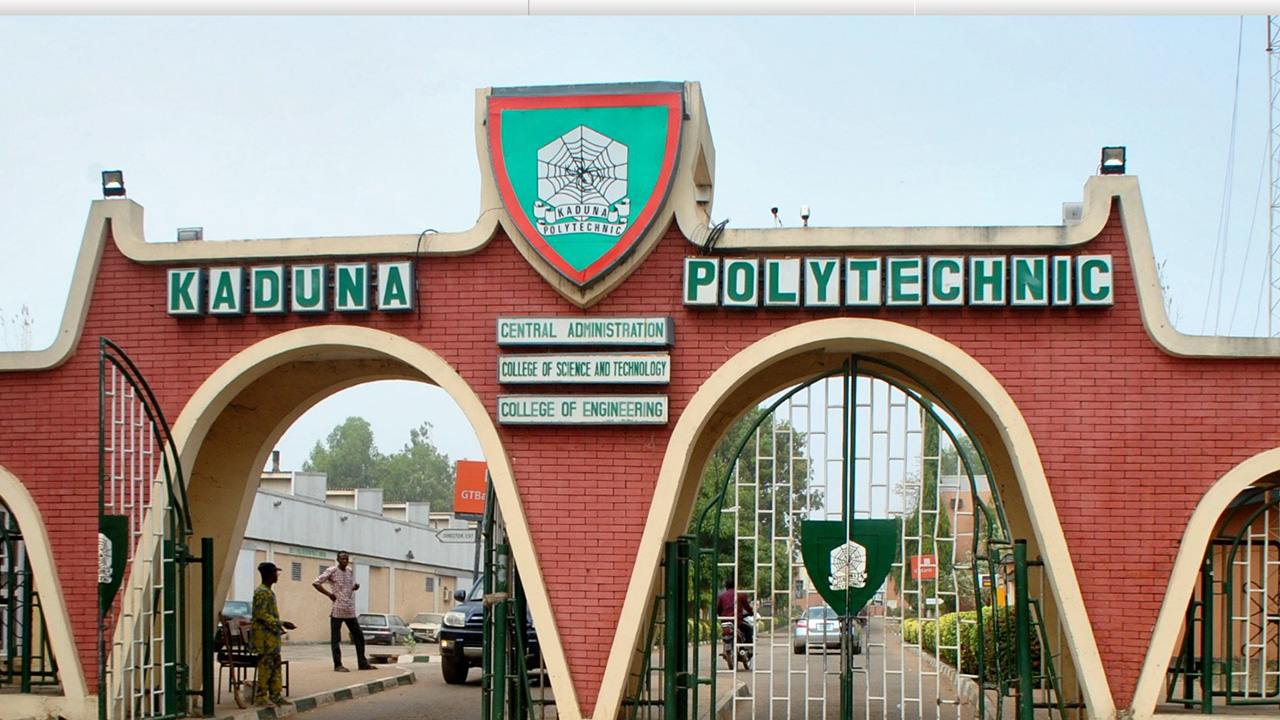
The management of Kaduna Polytechnic has expelled 85 students for their involvement in examination malpractice and suspended eight others. 

A statement issued on behalf of the Registrar, Dr Muhammad Sani Musa, said the decision to expel and suspend the affected students was reached at a meeting by the Academic Board held on 25th August 2021, thereby recommending different levels of punishment for the students, depending on the degree of involvement. 

The list includes forty-four (44) HND students and forty-one (41) ND students. Their expulsion was said to have been prompted by the approval of the report of the Academic Board at its extraordinary meeting held last week.  

The affected students have been asked to vacate the institution’s campuses immediately and hand over all polytechnic property in their custody to their respective heads of department.

See the list below:

Injustice in Jigawa State scholarship scheme

By Garba Sidi

It’s well-known that the Jigawa State government paid half of the registration fee to its indigenes each year. That’s how any governor in this state inherited it and continued it. Still, unfortunately, the present governor, Muhammad Badaru Abubakar, came with some injustice in this matter of scholarship. For three years, the money has not been paid.

The government conducted a screening exercise on 28/01/2021. However, after five months, they selected only three schools within the state and disbursed the money to some students, not all and stop till now. Then, they went on to the media and announced that they gave scholarships to all Jigawa state students. It is an injustice.

Sadly all these injustices that happened, neither the Jigawa state assembly nor the commissioner of education uttered a word about the matter. While students are suffering from poverty, and some even dropped their studies because of registration fees. Those House of Assembly members and commissioner of education are busy taking their children abroad to study in expensive schools.

Unfortunately, it looks like there is no Students Union Government in this state. This is because the Union has failed to discharge its responsibility to fight for students’ welfare. Unfortunately, the acting president of this Union is busy travelling from Kano to Katsina, and others state fulfilling the mission of another group he joined some time ago.

Days ago, leaders of Jigawa state schools’ chapters visited the state capital, Dutse. They met with Special Advisor on students matter on this issue of scholarship. His reaction was, if students protest, the government will not ever give scholarships to any indigenes of Jigawa state. That typically showed students have no freedom to struggle for their rights as the constitution of Nigeria gives to anybody.

May Allah bless us with good leaders.

Garba Sidi wrote from Jagawa State. He can be reached via sidihadejia@gmail.com.

In Search of Solutions for Northern Nigeria

By Ahmadu Shehu, PhD.

The current situation in northern Nigeria is very discouraging, even depressing. But it is not hopeless. Daunting as the current challenges seem, they are far from insurmountable. Before sounding over-optimistic, let me admit that things can head south and that the danger ahead is by no means to be underestimated. The problems bedevilling this country have been dissected, analysed, revised and reviewed regularly. They are well-known to the extent that a curious baby could make a list of them; insecurity, poverty, joblessness, poor education, healthcare, lack of power, water, and all other social amenities. That is how obvious our problems are.

Unfortunately, although various solutions to the above problems have been proposed over time, few improvements are being recorded. On the contrary, things have become worse by the day. What this means is that either the proposed solutions are wrong, inadequate or that these solutions are not well-implemented. Regardless, we shall acknowledge that these problems have been with us throughout our recent history; they have been acerbating all through the decades of our independence, and that they are not going away on their own. Though, it is not as if nothing is being done to ameliorate this sorry situation; it is just not enough.

For instance, as people of faith and conscience, we have been encouraged to pray hard, submit to the true spiritual powers that create and sustain the universe. Luckily, Nigeria is reportedly the most religious country globally, and our attitude to religiosity attests to this claim. As a nation of faith, we have benefitted from our dedication to prayers and spirituality in many ways. However, the deteriorating state of our affairs shows that something is definitely wrong with this approach. We can see that as hard and as much as we pray, these problems are not going away – they have refused to disappear after the night vigils. The home truth is that they will not disappear because they are man-made and, therefore, require human solutions. Consequently, we have to undo them by matching our spirituality with the necessary practical actions.

As concerned and enlightened citizens, we have cried out as loudly as possible, written treatises, provided all the analyses in this world. Still, that is undoubtedly not going to do much in salvaging this precarious situation. This decay is beyond words. As individuals, each of us has a responsibility to this country. Therefore, some pundits claim that we shall quickly solve these problems if we do our parts as individuals. Well, yes and no. Resorting to self-help is itself a measure of failure in a cooperative society. We can only do so much as individuals, but not enough to correct the ills of this society. That is why human society is politically structured since time immemorial. We have never heard of a country, an entity – not even a family system – without a workable structure. As Femi Falana says, “there is indeed no republic of non-governmental organisations”. 

As citizens and subjects of a political structure, we have always pushed all the blame to the region’s political leadership. Indeed, the responsibility of a people is absolutely on the political leaders who have all the instruments of power, administrative and constitutional resources, privileges and responsibilities. But, this too is very much debatable. One undeniable truth is that while political leaders are responsible for the development of a society, the quality of followership has a significant stake in the success of public policy and programs.  Is leadership not the product of followership? Or is it the other way round? This is the case with chicken and egg. Your guess is as good as mine.

As a government, various laws, policies and programs have been formulated, enacted, assented, proposed, implemented, or use any vocabulary that suits your purpose. The bottom line is that we are sinking deeper, moving in reverse order, and things are getting worse. Governments at all levels adopt often conflicting policies and programs on various challenges facing the region. For instance, on insecurity, the Zamfara state government embraces negotiations and amnesty for criminals, while Katsina state adopts the often faulty stick and carrot approach. On the contrary, the Kaduna state government insists on non-negotiation with criminals, without any alternatives for the victims. The governments apply the same conflicting methods to other critical issues such as education, employment, poverty eradication, healthcare, etc. If results are to judge actions, we can loudly, albeit sadly, say that successive governments at all levels have failed in basically everything.

The evidence of the failure of these approaches lies in the fact that there is no sector – one aspect of life – that is better than it was years ago. But at the same time, this evidence is the same reason we should do more because our problems are bigger and more today than yesterday. It means, therefore, that the people of this region must continue brainstorming and inventing new, dynamic solutions in tandem with the current challenges facing it. Northern Nigeria is full of potentials and opportunities to get out of this mess and attain its developmental goals.

The best way to do this, in my opinion, is by focusing on the human capital of the region. The problems mainly result from neglecting the wealth of human resources, both in quality and quantity, by undermining critical social development issues, especially education and skills acquisition. Yes, this region might be rich in natural resources, such as gold, ore, iron, and other geological elements. Still, the truth of the matter is that no society has ever mined itself to greatness. In recent years, the federal government has been fond of oil exploration in the north to counter the southern narrative of “oil-producing states”. But, the essential truth is that the so-called oil-producing states are as underdeveloped as any other state of the federation, except that they alone have the environmental degradation of that magnitude. This tells us that our society cannot drill itself to development.

Likewise, we may argue that agriculture has sustained us for millennia, but the population explosion, waning natural resources, desert encroachment and other global factors mean that the current scale of subsistence farming does not feed us, let alone sustaining our economy. Thus, we cannot farm ourselves out of these troubles.  

I believe we can think and invent ourselves out of these problems. The surest way to development is education – education that develops the minds of the citizens to think, organise and prosper. Fundamentally, this is what only education (in its real sense[1]) can do. Many countries and societies have done this in recent decades. Nations are not born or produced by the roads, farms, bridges, mines, oil fields or industrial estates. They are born by the minds of citizens. The growth of societies is not measured and cannot be attained or sustained by the physical attributes, items and objects on the ground but by the enlightened minds of their citizens. Thus, learning from both our history and the history of nations worldwide, the north can and will be developed, but only through quality education and nothing else. If we can get this right, we will be able to think ourselves out of these problems.

Dr Ahmadu Shehu is an Assistant Professor at the American University of Nigeria, Yola. He writes from Yola, the capital of Adamawa state.


[1] My definition of education and the model that I believe can do this is explained in my article entitled Towards a Community-Based Model of Basic Education in Nigeria published in Chido Onuma’s Remaking Nigeria: Sixty years, sixty voices.


Education: Bauchi, other northern states have highest number of out-of-school kids

By Muhammad Sabiu

In a report released by a Lagos-based research firm, SB Morgen, Bauchi is the state with the highest number of out-of-school children in Nigeria, with figures rising to 1,239,759.

Figures in the report have indicated that Katsina State is second to Bauchi, with about 873,633 out-of-school children, who might have been prevented from going to school due to so many reasons.

Bringing the above figures, SB Morgen discussed recent occurrences in Kaduna State, which came fifth on the list and where schools remain closed until further notice due to the rising rate of kidnappings and other security challenges in the state.

“The Kaduna State Government has said that all primary and secondary schools will remain closed until the security situation improves across the state,” SB Morgen wrote.

It’s now apparent that one of the major factors that hinder the progress of education in northern Nigeria is kidnapping, which is not quotidian in only Kaduna. Most northwestern states have been witnessing kidnap of students in their hundreds, which usually forces authorities to order the suspension of school activities “until further notice.”

Not only northwestern states, recently, Niger State in the north-central part of Nigeria saw students in their hundreds kidnapped from their school, with many still being held by their abductors.

Officials also lament the general backwardness of education in Nigeria as there are approximately over 10 million out-of-school kids.

The Minister of State, Education, Chukwuemeka Nwajiuba, was in June 2021 quoted by the News Agency of Nigeria as saying, “The current challenges affecting the Nigerian education system has left much to be desired, the system is characterised by high illiteracy level, infrastructural decay and deficits.”

“We have inadequate number of qualified teachers, inadequate infrastructural facilities/resources and poor funding,” he added.

The figures, which are said to have been sourced from the Federal Ministry of Education, are presented as follows in order of the size of the number of out-of-school kids:

BAUCHI: 1,239,759

KATSINA: 873,633

KANO: 837,479

KADUNA: 652,990

GOMBE: 567,852

KEBBI: 484,702

ADAMAWA: 483,702

NIGER: 478,412

OYO: 463,280

SOKOTO: 462,164

YOBE: 405,100

ZAMFARA: 383,952

BENUE: 383,022

TARABA: 338,975

BORNO: 266,178

OSUN: 260,222

PLATEAU: 258,256

LAGOS: 229,264

NASARAWA: 204,771

RIVERS: 196,581

A’ IBOM: 194,018

DELTA: 181,995

KOGI: 169,316

OGUN: 158,797

EBONYI: 151,000

KWARA: 141,325

CROSS RIVER: 140,944

IMO: 125,414

FCT: 121,587

ENUGU: 117,091

ONDO: 113,746

EKITI: 99,778

ANAMBRA: 92,332

BAYELSA: 86,778

ABIA: 86,124

EDO: 79,446

Looking at the above statistics, out of the first 15 states on the list, only one is in the southern part of the country: Oyo.

Therefore, this calls for more effort and attention of stakeholders to put their shoulder to the wheel to curb this problem of the rising number of out-of-school children.

Skills Beyond School (II)

By Najib Ahmad, PhD

Some remote jobs require intermediate or advanced skills, such as machine learning, computer vision, and natural language processing. These need you to have a good understanding of some areas in mathematics to solve computational problems. Design and analysis skills in Electrical, Mechanical, Civil, Building and Architectural disciplines also require one to have adequate skill in learning-related software such as Matlab, Simulink, Ansys, Autodesk AutoCAD, StormCAD and ArcGIS, 3D Studio Max, Blender, among others. Besides all these, adequate knowledge of computer programming skills is essential. Always utilise the opportunity for an internship or industrial training or student industrial work experience schemes assigned by the school because they are good places for learning and engagement.

Skills acquisition does not only stop in science and tech-related areas, as I earlier mentioned. Whatever major you study in school, there is a skill to gain in it! So grab the opportunity while you still can. Everyone you admire now started somewhere. For instance, if you major in social sciences or arts and related disciplines, acquiring effective communication skills, excellent writing skills, and outstanding data analysis skills can take you to places you never anticipated.

And most importantly, from any discipline, you need to possess sound knowledge synthesis and critical thinking skills. There are good websites to look for a job that matches your skills, such as www.fiverr.com, www.upwork.com, www.freelancer.com, and www.flexjobs.com. The point is: whatever you study, there is a skill to add to it! Just be damn good! The ways to learn them are lengthy yet straightforward. For some, you may need up to six months of dedication or even a year or more to master a particular skill. What matters is, put your best effort as you usually do to pass your university/school courses exams.

In some cases, some people want to advance their careers, and these are all for you. And always remember that age does not matter in this journey. Even if you find yourself somewhere in mid-life, it’s not too late. So many people have had a rethink about their choices and goals in life much later and still make it.

Earlier I remarked that these skills are for everybody who wants to do good for himself. School education (higher education) and skills acquisition are not mutually exclusive; you can blend and achieve both at once. You may have seen that some people argue about which is better between the two, especially in times of uncertainty like now when jobs are scarce. Their point can only be substantiated when the goal was to compare learning a particular skill for a single purpose through extensive training or vocational training education and the school education system in Nigeria. However, you can begin to craft different skills at any level of your study because the current curriculum limits and is not in tune with the current reality about jobs. Hence, I titled this piece ‘Skills Beyond School’.

Arguably, most people wrongly perceive that skills, perhaps largely if not all, are intended only to be technical (Tech skills), and it is for technical people. That is a wrong, misleading impression. ANYONE can learn and master a skill in (or out of) their field of study. It is not rocket science. The energy you use elsewhere – or on social media – can be channelled to where you would surely benefit, even if not for financial gain, but knowledge gain.

For instance, anyone can learn entrepreneurial skills. But, in this case, do not seek short-term rewards! Even the owners of Microsoft, Google, Tesla, and Apple and most likely other ‘big names’ in this field you hear in your locality started their entrepreneurship journey by learning computer programming and other skills. So, begin something somewhere; no matter how little it might be, the change would surprise you one day.

And as you are reading this, I know you are thinking about the possibility of acquiring the skill desirable to get these kinds of jobs and finally be able to work for someone who didn’t even know you, especially outside Nigeria. The fear is normal – many people have shared this doubt at the beginning. I have friends (yes, my friends) who are currently doing remote jobs and cashing out monetary rewards in different fields of skills! Huh, I sound very promising. Because I believe you can also do it. One of these friends is managing a big project remotely. Isn’t that interesting? Imagine in this economic phase, and you have an extra job that provides you with additional benefits, considering that they are all employees of other sectors. FYI, students or graduates like you in southern Nigeria have been enjoying these remote jobs for ages. So, wake up.

What if you believe that everyone doing an online remote job is a potential criminal? In that case, the thing is, you are deceiving yourself. It is particularly irritating for me to see that we like to excuse our premeditated and comforting laziness (pardon the word). Besides, learning some skills can even give you an upper hand in applying for a master’s or PhD scholarship worldwide.

Finally, to reduce the gap or, in other words, to balance the economic growth between men and women, particularly in the North, we need to encourage girls to join the do-it-yourself kinds of skills acquisitions right from secondary school. If I am to be candid, I would tell you that we are left behind in everything. However, it is not too late for us to change the situation for the better. Don’t forget that life goes on even if you do nothing, and it is up to you to catch up. Just wake up!

Dr Najib Ahmad is a Postdoctoral Researcher at Shandong University, China. He can be contacted via namuhammad03@gmail.com.

Skills Beyond School (I)

By Najib Ahmad, PhD

Thanks to the existing curriculum in Nigerian schools (its directions, objectives, and preferences), students who wholly rely on this system hardly possess any tangible skill, which would prepare them to become self-directed or independent or job providers. They can also barely avoid queueing the assembly of youths whose over-dependence on the government-provided jobs is noticeable countrywide. Any thoughtful country that cannot provide jobs for its youth population knows the gravity of its future, which may be bleak. Fortunately, this is not a lonesome fight for Nigeria. It is a common challenge bedevilling the world today from the Far East, West to the far South Mediterranean countries, including developed and developing parts of the world.

There is a lack of adequate jobs everywhere, possibly for several divergent reasons. It is shared treachery, especially with the continuing world’s economic meltdown due to many seen and unseen factors. So, as a Nigerian, please do not take it hard or shudder; imbibe water and relax a trifle because we are not alone in this mess. There may be an advantage to every saddle moment.

Since the beginning of Covid-19, some countries have imposed total or partial lockdown–longer or shorter. These changes in our lives have handicapped the economy of nations and shattered peoples’ economic stability. On and off, many countries are still struggling with lockdown, which eventually forces people to work from home. From reports, you can say that the pandemic exposes the profound weaknesses and causes alarming panic in many countries previously seen as organised and the superpowers (aka God’s own nations). As a result, many people lost their jobs even in those powerful countries. Schools, universities, laboratories, markets, factories, and businesses were all closed, places of work and worship across the world were abruptly shut.

Consequently, different governments and policymakers have realised how vulnerable conventional job systems are. Thus, they are implementing strategies and gradually understanding the need for robust, better approaches to tackle these unprecedented changes. Policymakers have recommended and implemented novel ideas to impact schools, business owners, and entrepreneurs in countries affected by this negative development to make the economy viable and uphold the economic stability of their citizens.

For instance, several schools and universities have switched to remote instruction, in other words, digital learning. Due to the compelling need for endurance, human beings are social creatures who resiliently adapt and quickly learn to familiarise themselves with any given circumstances. People with different essential skills grabbed advantages from the emergent changes. They include but are not limited to computer skills that allow you to carry out remote jobs–working from non-typical office space. Besides, they are the kinds of do-it-yourself skills; they are not the specific skills you can learn from the traditional vocational training school. Suppose the government has plans to train people in such specialisation through vocational training school. In that case, it is a potential task and could easily invigorate people’s economic stability and prepare youth for the path of independence.

Here are a few examples of remote jobs that you can do from any place: (a) Computer programming/Coding; (b) Web development/design and Android or iOS developer; (c) Data science; (d) Content writing, copywriting, copyediting, transcription, and translation; (e) Graphic design; (f) Digital marketing; (g) Video editing; and Virtual assistant, and so forth. Of course, these jobs existed before COVID-19. However, they took a new turn and became enormously popular since the onset of the outbreak, thanks to their necessity and worth in our everyday lives. Thus, the everlasting need cannot be trammelled.

And every person who has no prior computer science/technology diploma or degree can master these skills. It does not matter whether or not one is from science or non-science-based disciplines. All you need is an android/iOS phone, while some require a desktop or laptop computer. Above all, you also require determination in learning and mastering any of these skills. And the good thing is, they are now taught in many online learning platforms for free or for a cost as either certified short courses or nano-degree programs.

The paid access courses are not very expensive if you compare them with the value of what you will learn and its advantages afterwards. Sponsored by the tech giant companies and other government sectors like Microsoft, Google, European Commission, and Universities, platforms such as Udacity, Udemy, FutureLearn, and Coursera offer massive open online courses (free).

YouTube is similarly often graded as the best platform for learning anything; you can use the platform to learn any skill you wish. So if you are a book person, look for the best ones in your field, learn, and practice. Even some establishments from Nigeria are taking part in this skills acquisition training program for the youths, but you hardly see these opportunities discussed in northern Nigeria’s cyberspace. Recently, I encountered another scholarship announcement for a Nanodegree scholarship in many essential skills in varieties of disciplines, which Access Bank, Nigeria will sponsor.

Dr Najib Ahmad is a Postdoctoral Researcher at Shandong University, China. He can be contacted via namuhammad03@gmail.com.

Kaduna: Government to conduct competency test for primary school teachers

By Sumayyah Auwal Usman

The Kaduna State Government says it will conduct another competency test for all public primary school teachers across the 23 Local Government Areas in the state.

The State Universal Basic Education Board (SUBEB) Permanent Member, Human Resource Management, Christy Alademerin, announced this through a memo to the Local Government Education Authorities (LGEAs) in the state.

It will be recalled that the state government had in September 2017 conducted a similar test for the over 30,000 primary school teachers in the state, following which 21,780 who failed to obtain 70% pass mark were sacked and replaced with newly recruited 25,000 teachers.

The date for the competency test has not been slated, but LGEA’s were urged to sensitise teachers in their local governments about the forthcoming exercise.

Bauchi: Suspension of all private NCE licenses is long overdue

By Tajudden Ahmad Tijjani

The Bauchi State government has indeed taken the bull by the horns by suspending the license of all private NCE awarding colleges. It’s a fact that any society that does not prioritise education will retrogress.


The state government’s decision is a welcome development. All private National Certificate of Education ( NCE) granting institutions have had their license revoked in the pearl of tourism because of their negative contribution to the state’s educational development. The standard of education in the state is persistently getting lower. 


For the operators of such mushroom NCEs, losing their license will be a tough pill to swallow. Notwithstanding, it’s the right call from the government’s side because allowing them to continue operating results in the graduation of incompetent, quack teachers who are the benchmark of our state’s underdevelopment.
Indeed, anywhere In the world, the importance of education can never be overemphasised; quality education is essential for long-term development.


Last September, the United Nations (UN) ratified 17 Sustainable Development Goals (SDGs) to serve as benchmarks for every nation to ensure global prosperity, protection of the planet, and poverty eradication.


All countries and stakeholders acting in collaborative partnerships will implement the plan Goal 4—Quality Education: Ensure inclusive and equitable quality education and promote lifelong learning.


The call for a Quality Education, not merely access to any education, by the UN is a great step in ensuring that all children and adults, not just those born with a silver spoon, have access to quality education.


Education is more than just a content delivery system; it is a system designed to help all children and adults reach their full potential and see themselves as contributing partners of society. The former UN Secretary-General Ban Ki-moon set the SDG process in motion in 2012 by declaring that every child must be in school. The quality of those schools must improve so that students are prepared to be productive citizens ready to lead the future. 


Indeed, supporters of our beloved state should applaud the Bauchi state government’s decision to not only renew the licenses of these schools but also to sanction any defaulting so-called institutions per existing laws.


 However, let the government ensure that standards are strictly followed, that rich content is provided, and graduates are produced who are assets and productive in the twenty-first century, rather than liabilities.


Tajuddeen Ahmad Tijjani writes from Galadima Mahmud street, Kasuwar-kaji Azare, Bauchi State.