Education

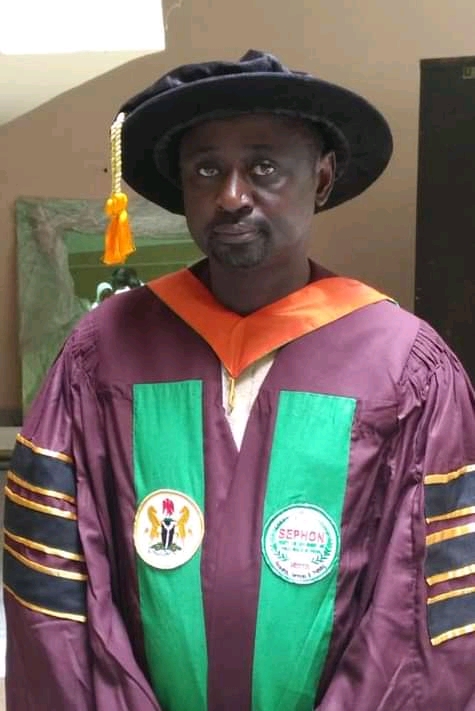
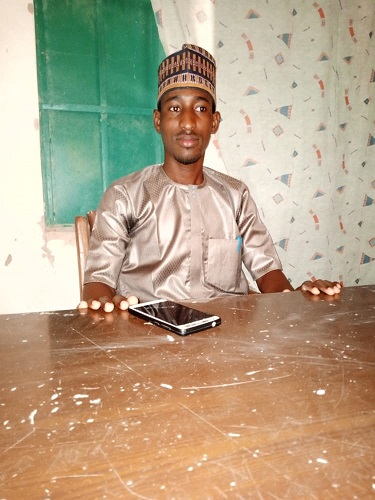
My deafness: A blessing in disguise

By Ibrahim Tukur

Becoming a doctor was my childhood dream. When I was a child, I had an overwhelming desire to save as many lives as possible. The dream was nurtured by my elder sister Maryam Tukur. But back in school, I never performed well in class. More often, I scored low in the exams. That was what principally irritated my father. Although my father couldn’t read nor write, he more often than not flogged me for performing poorly in the examinations.

When I was in primary two, my father employed a tutor to teach us at home but sadly, it never worked on me. Like a dumb, I never grasped anything the tutor taught me. That even made my father angrier.

While we were in the second term, I suddenly fell seriously ill and lost my hearing sense to meningitis. In my parents’ strenuous efforts to restore my hearing, they took me to different doctors and herbalists who prescribed me some medicines that never worked. Finally, after many abortive treatments, my parents gave up the struggles and left everything to Allah, the Exalted of all.

Life became very challenging for me when I became deaf. My friends gradually avoided me. I was often lonely in school and at home. My father became hopeless about my education. Even my dream of becoming a doctor scattered itself like broken glass. 

When my academic performance worsened, which my teachers constantly complained about, my father withdrew me from school and kept me at home doing nothing.

A year later, upon recommendation, my father admitted me into Government School for the Deaf, Malumfashi. That was where I began to thrive. It was there that I learned to write my name, nay, perceived life from extraordinary angles.

I’m currently a 400 level student at Bayero University, Kano (BUK). Unfortunately, due to some problems, I could not realize my dream of becoming a doctor. But Alhamdulillah. Deafness is not a barrier to greatness.

On schooling and becoming rich

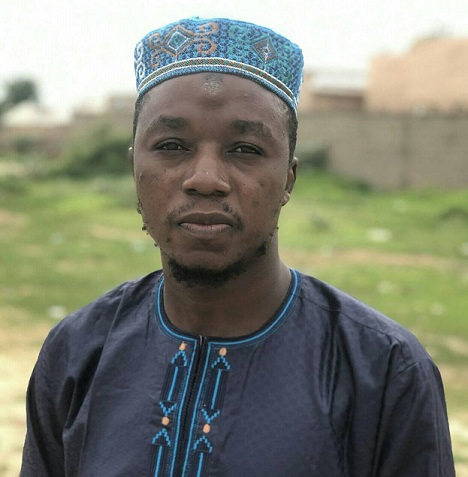
By Alkasim Harisu Alkasim

Often, the people that idolise going to school are arguably the ones who, in the long run, turn out to be stinking poor. This is to paraphrase a friend that ardently considers schooling a total waste of time. This assertion is controversial. But, is my friend spot-on or not? It is, to some extent. Still, I have my buts. 

This argument has often generated a heated debate amongst us. Whenever it comes to my mind, it reminds me of Kiyosaki’s book Rich Dad, Poor Dad. The writer dissects factors that hinder the learned from earning big bucks. Kiyosaki argues that going to school is the biggest hurdle that denies one the chance to make a bank. He opines that a person spends twenty to thirty years worshipping books, yet, over that period, he scarcely becomes a big gun. Unfortunately, in Nigeria, one ends up jobless after this long journey. 

Debunking formal education, Kiyosaki argues that a person is not taught a single subject on how to make money from primary school to university education. The conventional subjects such as chemistry, physics, literature, etc., are what one seriously enrols in. In his opinion, students should be taught topics such as financial education. Education indeed discourages one from accepting jobs that are not money-spinning. For instance, somebody with a Master’s degree or PhD will feel ashamed to sew for a living, not to talk of driving the commercial tricycle (aka A Daidaita Sahu). 

Are the graduates the only ones to blame? This is a question we should all ponder. The government is blameworthy too. Like it or not, the government cannot give everybody a job. True. But it can establish a conducive environment to doing other jobs. I have never hunted for gainful employment, thanks to my passion for academia. I know this job in Nigeria does not make you a money bag. Yet, I have for long picked interest in it.

In the developed and even some developing economies, the private sector employs a great score of people. The government creates an environment that will aid it to carry out its businesses for the sector. Private sectors pay handsomely in such countries, especially in the western world. I wondered if you know that employment is scarce even in the UK. Even the rampant lack of jobs causes deviance and other criminal acts there. (See Haralambos and Holborn’s book on Sociology).

Of course, we walk tall. We don’t want to do what society looks down on. However, some of us make an exception here. I know of a person with a First Class honours degree in engineering who humbled himself and took up a job many of us can’t do. He ekes out his livelihood from selling coals, taking pride in it. He sees the world of the little he earns from what he sells. Life goes on. Nothing reduces his charm.

I was once in India for a higher degree. There, I saw a lot of wonders. We had a cook in our university who is a master in political science. It is said that people with first degrees in India outnumber the whole population of France. Remember, India is the second-most populous country in the world. Imagine somebody in Nigeria cooking for a living. I don’t say we can’t find one. But rarely can you find more than two in your quarters. Of course, people with degrees, or even diplomas in Nigeria, feel too big to do lowly jobs. I, nevertheless, think our arrogance is reducing because you can now see graduates doing menial jobs. Why not? There is a score of jobless First Class students roaming the streets.

I submit that people with higher educational qualifications always end up jobless or not raking it. People with lower qualifications or no qualifications are the ones that are the business moguls. Jeff Bezos, Bill Gates, Elon Musk, Mark Zuckerberg and Aliko Dangote are textbook examples. Zuckerberg dropped out of Harvard, and he is now stinking rich. 

Indeed, formal education discourages and slows down creativity. It also dampens one’s enthusiasm. Honestly, the way an avid reader confines himself in his study speeds his entrepreneurial death. This is nothing but creative imprisonment. Whenever in his study, the reader seems to imprison his creative faculty in books. He brims with wishful thinking,  ideals and all what-have-yous owing to his fervent reading of all sorts of books. 

Having read a lot, he begins to idealise the world. He pictures and pores over how the world should be. But this is just his wildest dream. In his attempt to make the ancient Greece an ideal state, Socrates lost his life. He was sentenced to death for being a corrupt influence. In his book The Republic, Plato also romanticised how Greece should be,  how rulers should lead, the type of people to obtain in a state, and those exiled. After all, he died not having his dreams fulfilled.

Not very long ago, Karl Marx and Friedrich Engels conceptualised and advocated a classless society in their works. For instance, they co-authored a book titled Communist Manifesto. In the book, they discussed how the masses could emancipate themselves from the domination of the bourgeoisie. In his three-volume book Das Kapital, Marx critically studied the architecture of the economies of European societies. Unfortunately, most of the ideations and philosophies of these great thinkers flopped. For instance, Marx’s classless society idealised where all and sundry would live equally has yet to happen. Marx, who died an atheist, lacked the knowledge that such a classless state is a paradise. So said Dr. Saidu Ahmad Dukawa.

May Allah awaken and help us embrace the realities of today’s world. May we not feel too big to do the most menial jobs we can find around. The journey is long. You can start unimportant and end up important, and vice versa. Remember that Margaret Thatcher was from a lower-class family. She went through rigours to make it to the upper class. 

Wonderfully, Thatcher became the first female UK Prime Minister. She was even taught how to speak, walk, and act in an upper-class-like way when voted into office. Like the UK and other democratically capitalistic countries, Nigeria also allows social mobility. Thus, try to move up the economic ladder. Just give it your best shot. You can. I, rest assured, know you can.

Alkasim Harisu Alkasim wrote from Kano via alkasabba10@gmail.com.

Employability and connection, not money, ‘purchase’ you job offers

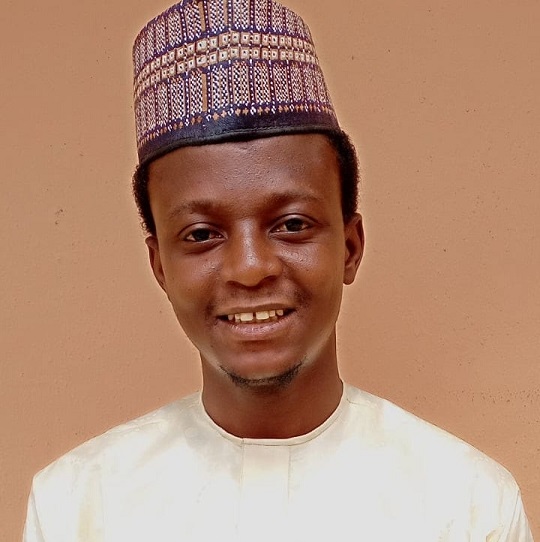
By Musa Idris Panshekara

The commercialisation of job offers is one of Nigeria’s most familiar new faces of corruption. But, on the other hand, there is a constant increase in the numbers of graduates each year produced from different universities and colleges around the country.

Let me begin by citing the Hadith of the Beloved Prophet S.A.W, where he said: “Whoever’s main concern becomes the Hereafter, Allah will make things well for him, and will make richness to dwell in his heart. And the world will come to him despite its unwillingness. And whoever’s main concern becomes this world, Allah will scatter his affairs and will place poverty between his eyes; also, the world will not come to him, except what was written for him.”

You cannot run and surpass your shadow, and you are constantly walking with your preordainment. Let me narrate a brief story of my previous jobs. When I finished my diploma, I worked with two companies. The first one was immediately after the completion of my diploma.

I met with someone and told him that I had finished my diploma. Therefore, if there was any job opportunity, I was available. He answered that he would contact me whenever he got a vacancy. Meanwhile,  I continued with my menial job (tailoring). After some months, I got a call from my friend that, that man asked him to ask me if I have experience of a particular job “he mentioned one working experience, whether I can or not?” I quickly responded, indeed! In sum, I successfully conducted an interview and got the job.

Moreover, a few months later, I got a call from my teacher. He informed me that his friend asked him to find someone who has a certificate in Agricultural science. I replied that I have diplomas in Animal production technology, a certificate in Laboratory science technology, and basic computer skills. He asked me to submit my credentials like that. Some months went by again. Then, I got a call that I should come for an interview. I finally secured the job. I left the present one and switched to the new one. Eventually, I quit the job and went back to school for my HND.

Similarly, after I finished my HND before going for NYSC, a friend of mine (whom we did SIWES together in primary health care) called me that his business partner was looking for an experienced laboratory technician at his newly established laboratory. I got this one, too, after an interview and so on.

Money helps make someone happy but does not mean that money will provide one with all kinds of happiness. Unfortunately, misunderstanding how life is makes many people think that money solves all problems. That is why people desperately toil to earn money to feed themselves and their families legitimately or illegitimately, forgetting the transient of worldly possessions.

Consider my story above; two main things helped me secure the jobs. First is my employability. In other words, my experience before coming across the opportunities. Second, my relationship or connection. Therefore, I am saying that acquiring skills makes a person employable.

Buying or selling job offers will not solve your problem forever. So let us free ourselves from corruption and prepare a better life for our posterity.

Musa Idris Panshekara wrote from Kano via pmusaidris@gmail.com.

Bauchi’s unforgettable Mu’azu

By Tahir Ibrahim Tahir Talban Bauchi. 

I am an active member of The Habu Mamman Foundation group. So when I came across a message shared by Uncle Habu Mamman himself, it got my rapt attention. Uncle Habu is an Engineer turned politician, along with another Uncle, Nuhu Gidado, former Deputy Governor of Bauchi state and commissioner of education. When I got the audio file, I could feel Uncle Habu’s roaring and infectious laughter, but realising that it was a 45-minute long recording, I knew he meant business. I steadied and listened to it.

It was Dr Tilde’s voice, the Commissioner for Education in Bauchi state. I could feel his pain in his voice, and as he spoke, his breath delivered his anger, yet, in a soft-spoken manner. Dr Tilde was the pioneer Chairman of the Bauchi Special School’s Management Board during the Ahmed Adamu Mu’azu administration of 1999-2007. He was sought after by the administration of M. A. Abubakar Esq. (2015-2019), to which he was unavoidably absent. Present-day Bala Mohammed’s government got his services as the Education Commissioner. 

Dr Tilde’s sterling achievements during the Ahmed Mu’azu Administration have brought us to the current efforts to revamp and revitalise the state of education in Bauchi. He spoke at length of the rot in the system, the poor quality of teachers in the sector, and the corruption that is eating away the resources that would have otherwise helped in uplifting the standard of education in Bauchi. He is battling an entrenched system of corruption that doesn’t care about the children’s future—a system where people get paid for doing no work at all.

It’s a system where school children could not write a sentence, neither could they read one, and if they write a word or sentence, you could not read what they’ve written. During his 45 minute delivery, he reflected on the work done during Ahmed Adamu Mua’zu’s administration. He was always pontificating at what they achieved during that time, how they did it, and the quality of the products they hatched at the time. Finally, he declared that today, if you go to the Abubakar Tafawa Balewa Teaching Hospital in Bauchi, you will meet doctors, lab scientists, pharmacists and many other professionals who are products of the special schools of the Ahmed Mu’azu era. 

During Ahmed Mu’azu’s tenure as governor, primary school students’ enrollment rose from 438,350 to 1.3 million within six years. Before he became governor in 1999, only 279 students passed their WAEC exams with five credits or more. That figure rose to 9000 students under his watch in 2005. His achievements in the education sector in the history of Bauchi state are second to none. The quality of education was simply outstanding. 

The Abubakar Tafawa Balewa Teaching Hospital, Bauchi itself, houses a lot of the infrastructural projects of the Ahmed Mua’zu administration when it was the Bauchi Specialist Hospital. The quality of the wards, laboratories and equipment installed are second to none and are still being utilised today. The Amenity ward stands as a perfect example of the standard of works executed at that time. There is no difference between the National Hospital Abuja and the Amenity division of the Specialist Hospital Bauchi.

Ahmed Mu’azu built over 1000km of intra-state roads and over 230km of urban township roads. His rural development strides saw the electrification of 800 towns and villages, where they were connected to the national grid. The Federal Ministry of Information ranked him as the best governor in rural development, and the second overall best in all areas, in the country. 

Ahmed Mu’azu’s first degree is in Quantity Surveying, and his master’s is in Construction Management. I believe this accounts for his quest for excellence when he delivers his projects. He was recently honoured by the Federal University Wukari with an honorary Doctorate, as Doctor of Science, in recognition of his selfless service and visionary leadership. Additionally, he has five other honorary doctorates from notable institutions: the Federal University of Technology Akure, University of Uyo, Abubakar Tafawa Balewa University Bauchi, Igbinedion University Benin, and University of Maiduguri.

Ahmed Mu’azu is widely travelled and well-known across the country, with friends and associates in every nook and cranny. So many groups and movements have sprung up, urging him to run for the Presidency. Even though he hasn’t made any declaration yet. He is undoubtedly an administrator with a most enviable track record of excellence in service delivery, filled with legacies from his tenure as Bauchi governor. Dr Tilde got me nostalgic over our unforgettable Mu’azu of Bauchi state.

Tahir is Talban Bauchi and sent this article via talbanbauchi@yahoo.com.

I make a lot of discoveries in teaching profession

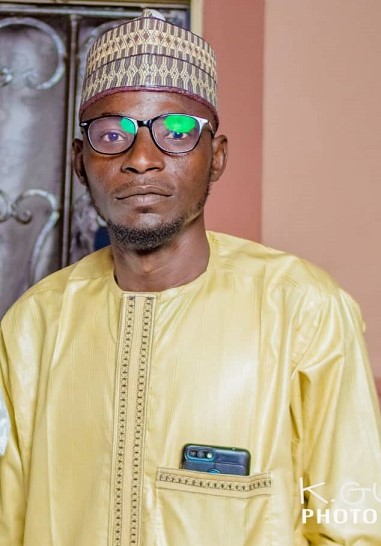
By Ibrahim Musa (BK)

While on teaching service, there are a lot of discoveries I make in the noble profession. In fact, I have seen some reasons why many students cannot do well academically in many schools despite all the efforts and sacrifices teachers make to ensure students’ academic accomplishments that will help them (students) and prepare them for future life.

Teachers are there to make necessary sacrifices in helping students attain quality education that will help them meet their potentials in life and establish a foundation to build their future upon.

However, many teachers have different reasons for being in the classrooms. Some take the teaching job to satisfy their needs with their salary. Some are there just because they cannot get a well-paid job and due to the blow of unemployment. They reluctantly take teaching jobs without the intention of helping students, while some (reasonably few) are there to make sacrifices in assisting students in attaining a good education. Every reason of each teacher will determine whether or not students will get a good education.

I discovered that many teachers are doing one thing very well, which is teaching students in the classrooms but abandoning one other vital thing: research. Thus, All teachers in primary and secondary schools need to teach and engage in research that will help them formulate effective teaching methodologies because students have different needs that require different teaching methodologies that will enable students to meet their educational needs in the classrooms.

Suppose all teachers engage in both teaching and research together. In that case, they will encounter individual differences exhibited by students. With this discovery, they will be able to formulate effective teaching methodologies to help the students to understand the contents of the lessons very well and meet their educational needs.

It is vitally important to note that research is the adequate foundation upon which teaching methodologies are formulated. Therefore, every teacher should not overlook or neglect research because it is beneficial to both students, teachers themselves, and society.

Life is dynamic, and research will help teachers understand the nature, scope, and prospect of every dynamism to determine and design effective teaching methods that match students’ learning paces.

RESEARCH EXPANDS OUR TEACHING PROFESSIONALISM. Therefore, keep on teaching and researching.

Ibrahim Musa BK is an English Language teacher at Government School For the Deaf Malumfashi, Katsina State. He sent this article via musaibrahimbk@gmail.com.

Leading with power and influence: The role of a teacher in a changing world

By Aminu Rabiu Kano

If there is one vexing question that has continuously engaged the attention of stakeholders worldwide, it is certainly about the future of a classroom teacher in the ever-changing global world. No doubt, the role of a teacher is critical in building and sustaining a healthy and responsible society. Indeed, the future of any thriving community rests in the teacher’s pivotal role to progressively impart valuable lessons and skills to children. But then the world is fast evolving, from one era to another, thereby altering the modus operandi of several human activities, teaching and learning inclusive.

In the 21st century, the world has witnessed so much transformation in virtually every aspect of human life, with technology leading the way into a more digital world. The change brought upon by the technological revolution has had a tremendous impact on every facet of human interaction. Recently, the Covid-19 pandemic has shocked the entire world as physical human interactions were curtailed, thereby bringing a paradigm shift in man’s understanding of his environment.

Specifically, the education sector is affected by the changes constantly happening in and around the world. Naturally, this raises serious questions about the role of a teacher. As globally recognized, a teacher everywhere possesses some latitude of power and influence, which earns him respect in society. But since the world is witnessing tremendous changes that have never been seen before, some urgent questions arise that are pertinent to a teacher’s continued relevance.

On the one hand, a teacher is expected to help students learn by imparting knowledge and setting up a situation in which students can and will learn effectively. While on the other hand, he (teacher) is faced with the daunting task of introducing a novel, pragmatic approach to learning to be at par with changes in the world. While the task is enormous, it is still humanly possible for a teacher to deliver his primary functions while at the same time leading with power and influence.

Research by Kappa Delta Pi (2015) discovered that little value occurs in any classroom without excellent teacher preparation to lead students. This implies that the leadership skills possessed by a particular teacher have a tremendous impact on learning outcomes. A teacher, in this context, is equated with a senior policymaker whose ability to lead the way for progressive policies and handle complex issues has a direct impact on the happiness of a vast number of people.

A teacher is thus not seen as a leader with limited influence and power but a leader of all students, of people large and small. Therefore, teacher leadership is an inescapable reality. In essence, I am saying that in a bid to maintain and even augment their relevance in a changing world, teachers must possess some leadership skills to meet students’ demands.

Secondly, for teachers to remain relevant and influential in a fast-changing world, they must be an agent of change. But in order not to misunderstand change with fashion, a teacher must do some research to be able to glean the source, nature, character, prospects, and challenges of any change mantra. This means understanding the politics of change and collaborating with like minds in pushing for a progressive change in all aspects of human life. By so doing, the teacher extends the reach of his leadership empire beyond the four walls of a classroom.

Thirdly, for a teacher to continue wielding enormous power and influence, he must do all he can to produce students who not only keenly observe but clearly understand what is happening around them. Therefore, the onus is on the teacher to train his students and imbue them with the mindset of identifying problems in their immediate society and investing their efforts towards solving them. In this light, skills such as critical thinking and problem-solving are pivotal.

Finally,  a teacher can only lead with power and influence in a changing world if he is adaptable. Adaptability in this context implies the readiness and ability of the teacher to receive, internalize, support, and promote positive changes. Therefore, as the world moves to a digital era, the teacher must embrace technology to deliver lessons. For instance, the Covid-19 pandemic has resulted in the closure of schools and other institutions of learning, thereby disrupting academic activities. This notwithstanding, in some climes, teachers resorted to using technology for lessons delivery. By way of advice, a teacher must leverage technological gadgets to produce students with a digital mindset.

Aminu Rabiu Kano is a political and public affairs commentator. He can be reached via arabiukano@gmail.com.

English Tenses (concluded)

PAST PERFECT CONTINUOUS TENSE

 Subject+ had been + verb in progressive

Past perfect continuous tense represents an ongoing action that started and continued for some time in the past.

Example:

1. Yar’adua had been seeing his doctor for two years before he died in 2009.

2. The students had been waiting for two hours when their lecturer arrived.

3. Muhammad had been teaching for four years when he resigned and joined politics

SIMPLE FUTURE TENSE

subject+ will/shall + verb (base form)

Functions of the simple future tense

The simple future refers to a time later than now and expresses facts or certainty. In this case, there is no ‘attitude’.

The simple future is used:

  • To predict a future event:
    It will rain tomorrow.
  • With I or We, to express a spontaneous decision:
    I will pay for the tickets by credit card.
  • To express willingness:
    I will do the washing-up.
    He will carry your bag for you.
  • In the negative form, to express unwillingness:
    The baby won’t eat his soup.
    won’t leave until I’ve seen the manager!
  • With I in the interrogative form using “shall” to make an offer:
    Shall I open the window?
  • With We in the interrogative form using “shall”, to make a suggestion:
    Shall we go to the cinema tonight?
  • With I in the interrogative form using “shall” to ask for advice or instructions:
    What shall I tell the boss about this money?
  •  
  • FUTURE CONTINUOUS TENSE

subject+ will be + verb in -ing

The Future Continuous tense is a verb tense that indicates that something will occur in the future and continue for an expected length of time.

Example

1. I will be travelling to Kano tomorrow this time 

2. We will be watching the football match 

3. The students will be sitting for their final exams in June.

FUTURE PERFECT

subject+ will have + verb in past participle

Example

1. I will have returned from Kano tomorrow by this time

2. I will have finished my project by next week.

3. I will have written the letter by breakfast time.

FUTURE PERFECT CONTINUOUS

subject+ will have been + verb in – ing 

– To show that something will continue up until a particular event or time in the future

Example:

1. I will have been teaching for six years by September 2022

2. The students will have been waiting for two hours by 10.00 am

3. We will have been playing for one hour by 10:30

In summary

1. simple present: I drive.

2. present cont: I’m driving.

3. present perfect: I have driven.

4. Present perfect continuous I have been driving.

5. simple past: I drove.

6. past cont: I was driving.

7. past perfect: I had driven.

8. past perfect cont: I had been driving.

9. simple future: I will drive.

10. future cont: I will be driving.

11. future perfect: I will have driven.

12. future perfect continuous: I will have been driving.

Concluded

Nuru Aliyu Bauchi wrote from Bauchi via nurubh2015@gmail.com.

Parents, students plead to FG as ASUU mulls over fresh strike

By Uzair Adam Imam

Students and their parents are worried as the Academic Staff Union of Universities (ASUU) threatens to embark on a fresh indefinite strike.

Recall that ASUU suspended its nine-month-long strike in 2020 after reaching an agreement with the Federal Government. Still, after a year, the government is yet to fulfil its promises to the union.

The ASUU’s strike has been described as one of the most lingering issues that has been paralysing Nigerian universities, leading to the delay in students’ graduation and the deterioration of the education system in the country.

Not only that, many people argue that the strike has destroyed the future of many promising youths.

In a statement on Thursday, the Chairperson of ASUU Kano State Branch, Comrade Haruna Musa, and the Union’s Secretary, Comrade Yusuf U. Madugu, declared Monday, February 7, 2022, as a lecture-free day.

Its essence is for ASUU to use the day to sensitise university students, parents and other stakeholders on the brewing crisis arising from the Federal Government’s failure to implement the existing agreements with the union judiciously.

Educational sector at the receiving end

A lecturer at the Department of Nigerian Languages, Bayero University, Kano, Dr Muhammad Sulaiman Abdullahi, said that the strike was killing the country’s educational sector and the economy.

Dr Abdullahi cried: “It is a sad development. It looks childish and an endless menace, especially to the Nigerian educational system. Strike has become a thorn in the flesh of Nigeria’s general development. No nation can prosper morally in such a nasty situation. It is, indeed, unfortunate.”

He added that the situation “generally makes people, teachers, students and their parents to become very dull and uncertain of their future. You can take it to the banks that crime rate will somersault, and new bad things will manifest within the wider community”.

Students at risk

The president of the Mass Communication Students Association (MACOSA), Bayero University, Kano chapter, Comrade Sadisu Sada, decried that industrial action in Nigerian universities had been there for quite a long time.

He said, “It is worrying. The issue affects students directly. And for me, the government is to blame.

“ASUU is doing her best to give the educational system all that it requires. If not, education would have died.”

Umar Isah Dandago, an undergraduate of the Department of Mass Communication in the university, also voiced his grievance, saying this would delay his graduation.

Dandago said: “We would have graduated if not for the 2020 strike. This is a serious problem. A lot of people want to do something, like setting up a new business after university, but because of the strike, it’s becoming almost impossible.”

He, therefore, urged the Federal Government to give ASUU what it demanded, saying, “I believe it’s not even half of what’s being squandered in some things that are not important to us. So let’s get the education we deserve as Nigerians so that we’ll be proud of our leaders and our country.”

Also speaking, Comrade Ibrahim Mukhtar Sulaiman, a level 300 student, said: “Sadly, students taking a four-year course will graduate in five, six or seven years. And this affects not only their academic careers but also their personal life.”

Parents raise alarm

As the strike looks imminent, some parents lamented that the brewing crisis between the government and ASUU jeopardises their children’s future.

A parent, Malam Adamu Kolo, who looked disturbed by the imminent strike, said that his son would have graduated if not for ASUU incessant strike.

Malam Adamu Kolo said, “My son would have graduated this year if not because of ASUU incessant strike. You can see that I am poor. I am hopeless. Our hope is on this boy.”

On transitioning to a four-day working week of teachers in Kaduna

By Safiyanu Ladan

The Kaduna state government has directed teachers in public schools to transit to four days working in a week, which the state adopted last year.

In line with the new arrangement, the teachers will now work from Monday to Thursday instead of Monday to Friday regular routine.

This development has generated a lot of condemnation across the state, as many people fear that it will further cripple the already fragile education system.

According to these critics, Governor El-Rufai had come up with stringent education policies ranging from competency tests for primary school teachers, which saw the sacking of thousands of primary school teachers, to the closure of schools due to the covid-19 pandemic and insecurity.

These aforementioned measures have invariably affected the impartation of knowledge and created a considerable gap that requires concerted effort to fill.

Staying at home during this period created an overwhelming experience for children and parents. It has also affected the way they learn. Having learnt that the future of their children’s education is at stake, parents were left with no other option than to hire private tutors for their wards, as the resumption date was still sketchy.

Noted for being a hub of intellectual activities in Northern Nigeria, the state has recently grappled with reduced access to classroom education due to those challenges.

And now, with this government’s directives of transiting the teacher’s working days to four in a week in place of the regular working days is tantamount to reducing the access to classrooms that has a far reached negative impacts on students.

Given the foregoing, the decision of the government to make teachers in public schools resort to four days working is ill-fated.

Safiyanu Ibrahim wrote from Kaduna via uncledoctor24@gmail.com.

On teenage girls and the house help business

By Maimuna Abubakar

The house girl business is ancient in Nigeria and the most common one in my area. I am from the north-central part of Nigeria, also known as ‘The Middle-Belt’.

It is common among women here in my local government area to keep girls at home as house helps, girls who, in most cases, are between the age of 13-18 while some may even be younger.

The idea of keeping young children as house helps has always eaten me up, and I have probed a lot of people regarding the rationale behind it. And because I am familiar with a number of these girls and even one of the parents, I decided to ask directly from the horse’s mouth.

For the sake of privacy, I will name the girls after colours. The first house girls I know are Violet, Lavender and Purple. They were about the same age, 12 or 13, I guess. They were brought to the city by a man from their village, who works in the city and became the supplier of these girls. These three girls stayed with people I know, and their job description involved doing all house chores and hawking.

In addition, the girls took care of the domestic needs of their madam’s children, such as the washing of clothes, sweeping and tidying of their rooms, making their meals etc., including children that are older than the girls. Their case, except for Lavender, is a bit favourable compared to others because these madams treated them almost the same as their children. They bought whatever they got for their children and enrolled them in Islamic schools (Islamiyya).

When I asked Violet who I was closest to why they don’t attend a school like the children of their employers did, she told me their parents are against it and asked that they should be enrolled in skill acquisition instead. Unfortunately, the reason these parents are against their children going to school was not disclosed to the wards concerned, as Violet told me.

However, she was very curious to learn. She would always ask me to teach her how to spell things or say when speaking to someone who doesn’t understand Hausa. As Violet got older while staying with her madam, she began to lose interest in her job. Every time she came back from their two-week annual break – they got to see their parents for only two weeks in a year – Violent kept telling me that she wished she never returned, that her father is an older man who she believes needed her assistance. Still, her stepmother insisted that she be married off with nothing from her family if she didn’t return to her job. So she was sent out to the city to fetch money to get her married to a man chosen by her family. Violet later told me that she kept coming back even though she hated it because it was the only choice she got if she didn’t want to get married at such an early age.

The story is the same for Purple. Although, unlike Violet, who was very enthusiastic and ready to learn, Purple always stayed home and watched movies while her madam was at work and the children had gone to Islamiyya. 

On the other hand, Lavender was not as lucky as Violet and Purple. Her mistress owns a local restaurant. She woke up as early as 5 am and slept as late as 12 am, and the cycle continued. She often faced sexual harassment from her madam’s customers, but she could not report them because the first and the last time she did, she was beaten black and blue after being accused of lying. So she had to learn to protect herself by cursing them and drawing others’ attention when anyone tries something inappropriate.

Lavender didn’t attend any school, nor did she acquire any vocational skills. She later ran back to her village and never returned. But I heard from Violet that she was taken to another state different from ours. These three girls were later called back home by their parents and were married off.

Blue is another girl I know who was brought to the city by a woman from her village. She worked with this lady who didn’t allow her to eat with the rest of the family, wash her clothes along with the lady’s children’s or even sleep on the same bed even though they were almost Blue’s age or younger. She couldn’t eat if the children didn’t eat because she was supposed to eat only the remnants of the family’s meal. She got beaten for slight mistakes like accidentally destroying anything from the lady’s home, even if it was as small as a plate. The lady always threatened to deduct it from her annual payment.

I asked Blue why she stayed despite this visible maltreatment, and she said it was because she had to earn to support her family. She never returned after she left this lady’s house, but I am almost certain that she was taken to another home.

On the other hand, Ash is a bit older than the rest of them, and she is the one whose mum I know. Financial hardship made Ash’s mother send her to her neighbour’s house as a house help in exchange for Ash’s school fees. When this neighbour decided to relocate to a new environment, Ash’s mother pleaded with her to take her daughter along to get an education. But this neighbour is a difficult one.

If Ash doesn’t finish her chores on time, she won’t be allowed to go to school. If the neighbour’s children don’t go to school, Ash won’t go too. If they are sick, Ash cannot go to school. Ash will also have to miss school if their school is on break. And because Ash does everything in the house, including cooking for about eight to ten kinds of dishes a day since the neighbour loves varieties and always have guest around, Ash is consistently unable to do her homework and often fails her tests and examinations. Not considering all the extreme labour Ash is carrying out, this neighbour told Ash’s parents that she is a dumb girl and only wastes her money on Ash’s education. She refused to allow her to attend extra lessons organized for students like Ash, who are left behind academically, especially since they are about to write their SSCE. Ash was only enrolled in Islamiyya when the neighbour’s kids were old enough to attend. 

Ash felt she couldn’t take it anymore, so she sought respite in marriage. She decided she wanted to get married as soon as she completed her WAEC and NECO, so she brought home a man she chose for herself. He is a young man who owns a kiosk close to Ash school. He asked Ash out when she was in SS2. But Mrs Neighbor said that Ash could not marry an illiterate. That Ash should either bring an M.Sc. or at least a degree holder or no one. She told Ash’s parents that it is in the girl’s best interest that she is trying to make sure Ash has both social and financial security.

Although Ash is not very far from her parents’ house, she seldom visits them because, according to this neighbour, no one will do the house chores while she is gone. Therefore, if Ash’s parents wanted to see her, they would go to the neighbour’s house. Ash’s mother, on several occasions, goes to this neighbour’s house while the neighbour is at work to relieve her daughter of the overbearing labour.

These are a few out of a hundred horrible stories of such girls. I’m not saying there are no house helps who have attained success or are in the process of achieving their life goals with their initial job as a stepping stone. There are!

I know someone who owns a fashion designing shop. I also know someone who has graduated from a higher institution and is already starting a career. Some are still pursuing their education at different levels. But, there are only a handful of such girls, they are rare, and their rarity proves the point that house help business as conducted in my locality especially is just typical child labour and abuse.

How do we curb this dangerous abuse that has been going on in almost all parts of the country?

Since the growing number of working-class women in our society means that mothers can no longer take care of their children 24/7, entrepreneurs can use this opportunity to create niche markets. They can then form a house help agency in or around areas where mothers with such needs are residing.

Again, we have thousands of graduates from the department of ECCE (Early Child Care Education) both from our various colleges of education and our universities. These entrepreneurs can implore their services. These agencies can then employ older women willing to take care of children. Young individuals, both men and women, can also be engaged as either part-time or full-time employees depending on such a person’s financial needs.

The agency can also run a temporary employment program for college students who are on holiday to earn money before resumption. These agencies can have two or more departments; those involved in housekeeping, those responsible for babysitting etc. That way, hopefully, these teenage girls whose parents have been taking advantage of them can also have a life of their own. 

Maimuna Abubakar is a Sociology Student at Ahmadu Bello University, Zaria. She sent this article via maimunaabubakar200@gmail.com.