Economic Reform

On the gazetted tax laws: What if Dasuki was indifferent?

By Isah Kamisu Madachi

For over a week now, flipping through the pages of Nigerian newspapers, social media, and other media platforms, the dominant issue trending nationwide has been the discovery of significant discrepancies between the gazetted version of the Tax Laws made available to the public and what was actually passed by the Nigerian legislature. Since this shocking discovery by a member of the House of Representatives, opinions from tax experts, public affairs analysts, activists, civil society organisations, opposition politicians, and professional bodies have been pouring in.

Many interesting events that could disrupt the pace of the debate have recently surfaced in the media. Yet the Tax Law discussion persists because public interest is deeply entrenched in the contested laws. However, while many view the issue from angles such as a breach of public trust, a violation of legislative privilege by the executive council, the passage of an ill-prepared law and so on, I see it from a different, narrower, and governance-centred perspective.

What brought this issue to public attention was an alarm raised by Hon. Abdulsammad Dasuki, a Member of the House of Representatives from Sokoto State, during a House plenary on 17 December 2025. He called the attention of the House to what he identified as discrepancies between the gazetted version of the Tax Laws he obtained from the Federal Ministry of Information and what was actually debated, agreed upon, and passed on the floor of both the House and the Senate. He requested that the Speaker ensure all relevant documents, including the harmonised versions, the Votes and Proceedings of both chambers, and the gazetted copies, are brought before the Committee of the Whole for scrutiny. The lawmaker expressed concern over what he described as a serious breach of his legislative privilege.

Beyond that, however, my concern is about how safe and protected Nigerians’ interests are in the hands of our lawmakers at the National Assembly. This ongoing discussion raises a critical question about representation in Nigeria. Does this mean that if Dasuki had also been indifferent and had not bothered to utilise the Freedom of Information Act 2011 to obtain the gazetted version of the laws from the Federal Ministry of Information, take time to study it, and make comparisons, there would have been no cause for alarm from any of Nigeria’s 360 House of Representatives members and 109 senators? Do lawmakers discard the confidence we reposed in them immediately after the election results are declared?

This debate serves a latent function of waking us up to the reality of the glaring disconnect between public interest and the interests of our representatives. The legislature in a democratic setting is a critical institution that goes beyond routine plenaries that are often uninteresting and sparsely attended by the lawmakers. It is meant to be a space for scrutiny, deliberation, and the protection of public interest, especially when complex laws with wide social consequences are involved. 

We saw Sen. Ali Ndume in a short video clip that recently swept the media, furiously saying during a verbal altercation with Sen. Adams Oshiomhole over ambassadorial screening that “the Senate is not a joke.” The Senate is, of course, not a joke, and neither should the entire National Assembly be. Ideally, it should not be a joke to the legislators themselves or to us. Therefore, we should not shy away from discussing how disinterested those entrusted with the task of representing us, and primarily protecting our interests, appear to be in our collective affairs.

It is not a coincidence that, even before the current debate over the tax reform law, it has continued to generate controversy since its inception. It also does not take quantum mechanics to understand that something is fundamentally wrong when almost nobody truly understands the law. Thanks to social media, I have come across numerous skits, write-ups, and commentaries attempting to explain it, but often followed by opposing responses saying that the authors either did not understand the law themselves or did not take sufficient time to study it.

The controversy around the gazetted Tax Reform Laws should not end with public outrage or media debates alone. It should prompt deeper reflection on how laws are made, scrutinised, and defended in Nigeria’s democracy. A system that relies on the alertness of a single lawmaker to prevent serious legislative discrepancies is neither resilient nor reliable. Representation cannot be occasional, and vigilance cannot be optional. 

Nigerians deserve a legislature that safeguards their interests, not one that notices breaches only when a few individuals choose to be different and look closely. If this ongoing debate does not lead to formidable internal checks and a renewed sense of responsibility among lawmakers, then the problem is far bigger than a flawed gazette. When legislative processes fail, it is ordinary Nigerians who bear the cost through policies they did not scrutinise and consequences they did not consent to.

Isah Kamisu Madachi is a public policy enthusiast and development practitioner. He writes from Abuja and can be reached via: isahkamisumadachi@gmail.com.

Nigeria’s Economic Resilience: Good policies or good luck?

By Ahmed Usman

As the year 2025 draws to a close, moments of reflection naturally set in, especially for an economy that has endured sharp shocks, painful adjustments, and cautious reforms. In an era of global economic turbulence marked by uneven commodity prices, persistently tight financial conditions, rising geopolitical tensions, regional insecurity, and an international retreat from development aid, many emerging economies have suffered currency instability, capital flight, and fiscal distress. 

For Nigeria, however, the year presents an unusual picture. Amid global uncertainty and domestic strain, key economic indicators are beginning to stabilise, prompting a deeper question about whether the country is merely ending the year on a fortunate note or finally turning a policy-driven corner.

The International Monetary Fund (IMF) projects that Nigeria’s economy will grow by about 3.9 per cent in 2025, with growth expected to strengthen modestly to around 4.1 per cent in 2026, driven by macroeconomic stabilisation and reform efforts across key sectors. While these numbers may not yet place Nigeria among the world’s fastest-growing economies, they mark a notable improvement from the passive growth of recent years and signal a gradual return of confidence.

One of the most significant recent developments is Nigeria’s GDP rebasing, which revealed that the economy is about 30 per cent larger than previously estimated. This adjustment is not merely a statistical exercise. It reflects the growing importance of services, digital trade, creative industries, and telecommunications, sectors that employ millions of Nigerians, particularly young people.

For households, a larger and more diversified economy is essential because it reduces overdependence on oil and expands opportunities for income outside traditional sectors. For policymakers, it improves Nigeria’s standing in global markets and provides a clearer picture of where growth is coming from, enabling more targeted policies.

The rebasing has also reshaped Nigeria’s debt profile. The debt-to-GDP ratio now stands at about 40 per cent, well below the levels seen in many peer emerging economies. More importantly, debt service as a share of government revenue has fallen to below 50 per cent, from much higher levels in previous years. This easing of fiscal pressure means the government now has slightly more flexibility to allocate resources to infrastructure, education, healthcare, and social protection. However, the challenge remains that Nigeria’s revenue base remains among the weakest globally, making sustained revenue mobilisation critical.

Perhaps the most tangible improvement for households and businesses has come from the foreign exchange market. After years of volatility and sharp depreciation, recent months have seen a reduction in exchange rate volatility, a narrowing of the gap between official and parallel market rates, and a gradual buildup of external reserves, now estimated at over $36 billion. This stabilisation has practical consequences. It helps slow imported inflation, reducing pressure on food, fuel, and medicine prices. Foreign portfolio inflows have also picked up, reflecting renewed investor confidence.

Nigeria’s capital markets are also telling a positive story. The stock market is enjoying its strongest rally in nearly two decades, with the All-Share Index posting record gains. This surge reflects expectations of improved corporate earnings and better macroeconomic coordination. Similarly, Nigeria’s bond market has entered a bullish phase, with falling yields and strong demand from both domestic and foreign investors. Lower bond yields reduce government borrowing costs and can eventually translate into lower interest rates for businesses and households seeking credit.

After reaching painful highs, inflation (food inflation) has begun to ease, FX conditions have improved, and supply pressures have eased. Although prices remain elevated, the slowdown in food prices offers some relief to households whose purchasing power has been severely eroded over the past two years.

Perhaps the most encouraging fiscal development is the sharp rise in government revenue. This improvement reflects tax administration reforms, subsidy removal, and better compliance. Higher revenue is central to Nigeria’s long-term stability. It reduces reliance on borrowing, strengthens public services, and allows targeted social spending to cushion vulnerable households from reform-related shocks.

Despite these gains, Nigeria’s resilience should not be mistaken for strength. The economy remains vulnerable to oil price swings, climate shocks, global financial tightening, and domestic security challenges. Monetary pressures, fiscal constraints, and external risks continue to interact in ways that could quickly reverse progress.

However, resilience built on sound fiscal management, credible monetary policy, and structural reform is fundamentally different from resilience driven by temporary luck. Strengthening domestic revenue, managing debt prudently, investing in human capital, and deepening diversification are not optional; they are essential.

Is the question whether Nigeria’s current resilience is the product of good policies or good luck? The evidence increasingly points toward policy-driven stabilisation, though aided by favourable timing and improved coordination.

The fundamentals are improving, confidence is returning, and the economy is stronger than it has been in years. The challenge now is to convert this fragile resilience into inclusive and durable growth, growth that raises living standards, creates jobs, and restores hope for millions of households.

Ahmed Usman wrote via ahmedusmanbox@gmail.com.

When the harvest smiles but Nigerian farmers do not

By Lawal Dahiru Mamman

Nigeria has long been a fascinating case study. Over the past two years, citizens have endured austerity. Government officials, whenever handed the microphone, have often likened the experience to that of a child who must first endure the prick of a needle before receiving the protection of a vaccine.

At the macro level, things are taking shape. The Central Bank of Nigeria (CBN) recently reported the highest Net Foreign Exchange Reserve (NFER) in over three years. According to the April report, the figure marked an increase from $3.99 billion at the end of 2023 to $8.19 billion in 2022 and $14.59 billion in 2021. 

Analysts say this reflects a substantial improvement in the country’s external liquidity, reduced short-term obligations, and renewed investor confidence. The naira, which had been on a steep downward path toward ₦2,000, has rebounded to around ₦1,400—its strongest level in months—as it rallies against the dollar in both official and parallel markets. 

It is on track to end the year on a firm note, buoyed by the growing forex reserves. Additionally, the National Bureau of Statistics (NBS) reported that Nigeria’s headline inflation rate dropped to 18.02% in September 2025, while also announcing an increase in its Consumer Price Index (CPI)—a measure of the change in prices paid by consumers for a basket of goods and services.

The Gross Domestic Product (GDP) has also recorded a growth rate of 3.13 per cent, particularly following the rebasing exercise. Despite these improvements, the common argument remains that such progress has not truly trickled down to the micro level.

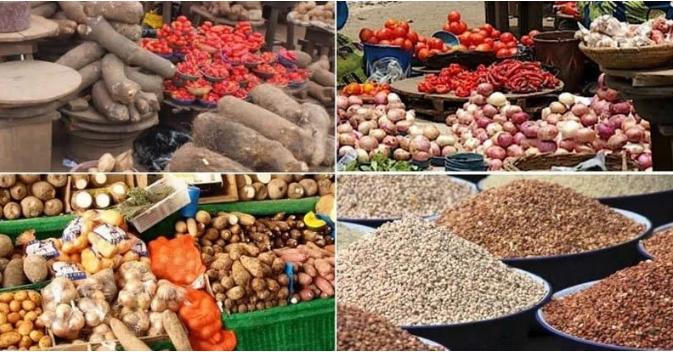
Most recently, however, food prices in markets across the country have begun to decline—particularly for rice, a staple that holds a special place in Nigerian households. While consumers have welcomed the news with relief, there is a flipside: farmers are crying out.

In truth, while lower prices delight the markets, they have left many farmers struggling to recover their investments. The government attributes the decline to increased local production through its interventions. Although the federal government opened a window for zero-duty importation of food items, the Minister of State for Agriculture and Food Security, Aliyu Sabi Abdullahi, insists that the fall in prices is due to large-scale agricultural investments under the National Agricultural Growth Scheme (NAGS) Agro-Pocket programme.

Farmers, however, tell a different story. They argue that the massive importation of food items has driven down local prices and left them incurring heavy losses. This is why, as a nation, we must proceed with caution. In reality, low prices can discourage cultivation—especially during periods of high input costs—threatening future harvests and deepening food insecurity.

There must be a balance between food security, farmers’ prosperity, and government intervention. Farmers should be supported through affordable credit, agricultural extension services, and guaranteed market access. The distribution of fertiliser to smallholders and the deployment of new tractors to Agricultural Mechanisation Service Centres will further help to reduce production costs and increase efficiency.

The current situation presents an apparent dilemma. While lower prices may bring short-term relief to consumers, prolonged losses could cripple agricultural productivity and strengthen dependence on imports—placing Nigeria’s food future at risk.

In all that we do, we must choose our approach carefully. Do we import food items to slash prices and win temporary public approval, if indeed such imports are genuine? Or do we double down on domestic production to achieve true self-sufficiency—especially in crops we can grow ourselves?

We must choose our pills carefully. Agriculture was once abandoned for oil, and we paid dearly for importing refined products while neglecting local refineries. Now that there is renewed interest in cultivation, we must not repeat the same mistake.

Lawal Dahiru Mamman writes from Abuja. He can be reached via dahirulawal90@gmail.com.

Opposition of ignoramus and the clout power pursuit

By Oladoja M.O

In every democracy, opposition is meant to sharpen governance, hold power accountable, and deepen national debate. However, when opposition is driven not by facts, ideas, or vision, but by ignorance and a desire for power, it ceases to be the conscience of democracy and becomes the cancer of progress. Nigeria is today saddled with an opposition that mistakes noise for logic, Twitter trends for policy, and cheap comparisons for economic analysis.

The latest shameless theatrics are the attempts by the obedient leader, our chief serial-contester, and their coalition of recycled political elders to compare Nigeria’s economic trajectory with that of Argentina. They raise Argentina as though it were a heaven of reforms, while ignorantly or deliberately ignoring the bitter cries of Argentines battered by Javier Milei’s austerity chainsaw.

Argentina has cut nearly 48,000 public-sector jobs, vetoed even modest pension increases, and forced retirees onto the streets to be beaten by police water cannons and rubber pellets. Poverty there is climbing toward 60%, subsidies have been axed overnight, and the government survives only by begging the IMF for lifelines.

That is not reform, it is desperation.

This is in contrast to the Nigerian reality. Here, we removed the cancerous fuel subsidy, unified exchange rates, and embarked on painful but necessary monetary tightening to bring inflation under control. Inflation, which soared in 2023, is now sliding downwards in 2025, with headline CPI dropping to 21.8% in August. The fiscal deficit has narrowed from 5.4% of GDP to about 3.0%. Electricity sector debts are being refinanced, and the macroeconomy, though still rough, is anchored on a foundation of stability.

Even Ngozi Okonjo-Iweala, no spokesperson of any party, but the globally respected WTO chief, publicly affirmed: “Nigeria has achieved stability, now the task is to drive inclusive growth.” Yet, the same opposition that celebrates Argentina’s IMF-borrowed pain and police-clubbed pensioners shamelessly called her “economically ignorant” for acknowledging the obvious.

Tell me what else defines nitwittery than this.

Though not so surprised, because ignorance has always been their brand. They cannot differentiate between stability and growth. To them, the economy is nothing more than the price of a bag of rice. Mr Obi throws around phrases like “lifting people out of poverty” as if they were trendy slogans for his following rally chant.

Oga Atiku, the permanent opposition aspirant, is once again cobbling together his “company of ex-this and former-that”, a cargo association of spent forces whose only qualification is that they once had access to government coffers and now desperately want another turn to loot. Their supporters, equally blind, cheer along, not out of reason but out of ignorance or bitterness, unable to see that governance is not Instagram clout, but hard, grinding policy.

This is not to canonise the Tinubu administration, make no mistake. I, too, demand more. There are ministers in this government who are sleeping on the job, and there are loopholes where reforms have yet to trickle down. Nigerians are eager for a positive impact in their daily lives, particularly in areas such as health, nutrition, education, and civil service efficiency. But unlike the ignoramus opposition, I understand sequencing. You first stabilise the macroeconomy, then you build growth on that foundation. What we need now is coordination, urgency, and social interventions that humanise the numbers. And to be fair, signs are there.

The launch of the Renewed Hope Ward Development Programme, designed to empower 1,000 persons in each of Nigeria’s 8,809 wards, is one right instinct: drilling development down to the grassroots, away from abstract figures, into real people’s lives. As Minister Atiku Bagudu explained, this initiative will stimulate ward-level economic activity, generate employment, enhance food security, and turn stability into grassroots growth. It is precisely the kind of bottom-up complement that the current macro reforms require.

So yes, the work is far from done. Nigerians need more, faster, and better delivery. However, comparing Nigeria to Argentina is intellectual dishonesty or outright ignorance. Argentina is bleeding; Nigeria is stabilising. Argentina is laying off workers; Nigeria is restructuring its debt. Argentina is on IMF life support; Nigeria is financing reforms internally. Argentina is repressing protests; Nigeria is still debating freely.

The opposition can continue to chase clout, weaponise ignorance, and gather their fellowship of losers. Unfortunately, we are not getting what we deserve. Nigerians deserve informed opposition, not this company of old cargoes and nitwits parading as saviours.

However, for those of us who see clearly, we will demand more from the government, but we will not be drawn into the cesspool of ignorance disguised as activism.

The path forward is clear: build on the stability achieved, accelerate the trickle-down effect through real social interventions, empower the workforce, integrate the informal sector, and ignite genuine growth. That is how nations rise, not through the shallow chants of ignoramus opposition, nor through the empty hunger of clout chasers, but through truth, stability, and hard work.

Oladoja M.O writes from Abuja and can be reached at: mayokunmark@gmail.com.

Fuel subsidy gone, but the borrowing floodgates are open

By Nasiru Ibrahim 

Nigeria’s debt situation has become more confusing and concerning in recent years. After removing fuel subsidies, which had always been used to justify heavy borrowing, many expected a change in direction. But surprisingly, debt has continued to rise—and sharply. 

In less than two years, Bola Ahmed Tinubu’s administration has added over ₦62 trillion to our total debt. This comes on top of Muhammadu Buhari’s already heavy debt legacy. Yet if you check the 2025 budget, it still carries a huge deficit. This is despite relatively stable oil prices and a slight improvement in crude oil production. So, something is clearly not adding up.

How can a country that has removed one of its biggest expenditures—fuel subsidies—still be borrowing more than ever? Is it that the revenue reforms aren’t working, or is this a deeper issue with how we manage our economy? These are real questions that need honest answers. The reality is that Nigeria’s current borrowing trend is worrying not just because of the amount, but also because of the manner in which it’s happening and what it reflects.

According to the Debt Management Office, as of March 31, 2025, Nigeria’s public debt stood at ₦149.39 trillion. Tinubu alone has added ₦62.01 trillion to that figure in under two years. Now, let’s compare that with previous administrations: Goodluck Jonathan borrowed ₦5.9 trillion in five years. Buhari borrowed ₦74.78 trillion in eight years—including the controversial “Ways and Means” borrowing from the Central Bank of Nigeria (CBN). That’s how bad things have gotten.

“Ways and Means” are short-term loans from the Central Bank to the Federal Government, intended to cover urgent expenses such as paying salaries or addressing unexpected shortfalls. Think of it like an overdraft facility. But the law is clear—the CBN Act, 2007 (Section 38) states that the Federal Government can only borrow up to 5% of the previous year’s revenue from the CBN, and it must be repaid in the same year. Under Buhari, this law was ignored. His government borrowed ₦22.7 trillion through Ways and Means, without obtaining proper approval from the National Assembly.

This ₦22.7 trillion had not been reflected in official debt figures for a long time. It only became part of Nigeria’s domestic debt record in May 2023, when Buhari’s government securitised it—basically converted it into long-term bonds. That move alone caused the total public debt to jump from ₦44.06 trillion at the end of 2022 to ₦87.38 trillion by June 2023. That’s a massive increase in just six months.

Now, some economists argue that Tinubu’s debt figures appear worse primarily due to the exchange rate. That argument is simple: Nigeria borrows in foreign currencies, such as the dollar, euro, or yuan, but records the debt in naira. So when the naira weakens, the same dollar loan becomes much bigger in naira terms.

Let’s look at the exchange rate across administrations. Under Jonathan, the exchange rate was around ₦ 157 to $1 in 2015. Under Buhari, the exchange rate was ₦770/$ in 2023. And under Tinubu, the exchange rate is now approximately ₦1536/$ as of 2025. So when you convert the same external loan, the naira value explodes as the currency weakens. Just this exchange rate movement has added ₦29.75 trillion to Tinubu’s external debt and ₦5.9 trillion to Buhari’s.

To properly check if the debt spike is mainly due to FX changes, let’s fix the exchange rate at ₦157/$ for all the administrations and see how much was actually borrowed. The formula is simple:


Old Dollar Debt × New Exchange Rate – Old Dollar Debt × Old Exchange Rate.

Using the DMO’s external debt figure of $38.81 billion in 2023:
$38.81bn × ₦770 = ₦29.85 trillion
$38.81bn × ₦1536 = ₦59.63 trillion
₦59.63 trillion – ₦29.85 trillion = ₦29.78 trillion

So, if the exchange rate had remained at ₦157/$, Nigeria’s external debt of $42.46 billion in 2025 would have been approximately ₦6.6 trillion. Under that fixed exchange rate, Jonathan’s total external borrowing would have been approximately ₦1.07 trillion over five years. Buhari’s about ₦4.48 trillion in eight years.

Tinubu’s about ₦1.12 trillion in under two years. This means if Tinubu continues at this pace, he’ll hit Buhari’s figure—₦4.48 trillion—in about eight years. Yes, the exchange rate plays a significant role. But that’s not the whole story.

Others argue that Tinubu’s debt problem is not just about FX. It’s also about spending discipline. Unlike Buhari, Tinubu removed fuel subsidies and slightly increased oil production (1.5–1.6 million barrels per day, compared to Buhari’s average of 1.2–1.3 million barrels), and customs and tax revenue also improved. Buhari faced more challenging conditions—global oil crashes, two recessions in 2016 and 2020, the COVID-19 pandemic, and high subsidy payments—during his early years. So, Tinubu had more room to save, but instead, borrowing has increased.

The 2025 budget projects a deficit of ₦13.08 trillion. It assumes oil at $77.96 per barrel and production of 2.06 million barrels per day. However, in reality, March production was only 1.65 million barrels per day, including condensates. And as of July 8, Brent crude was $70.20 and WTI was $68.42—both below the assumed price. That means revenue projections may fall short, and the government will likely borrow even more.

Tinubu has already requested $21.6 billion in new loans. In May 2025, Reuters reported that he also asked the National Assembly to approve loans of €2.2 billion, ¥15 billion (approximately $104 million), and an additional $2 billion in domestic loans. That’s not all.

The Federal Government also secured a $747 million syndicated external loan to fund Phase 1, Section 1 of the Lagos-Calabar Coastal Highway—from Victoria Island to Eleko Village. At ₦1536/$, this loan adds ₦1.147 trillion to the debt. The lenders include Deutsche Bank, First Abu Dhabi Bank, Afreximbank, and Zenith Bank, among others. The Islamic Corporation for the Insurance of Investment and Export Credit (ICIEC) is providing insurance. That brings Tinubu’s total borrowing to about ₦63.157 trillion in under two years.

This highway is being built under a Public-Private Partnership using an EPC+F model. The road is over 70% complete and is designed using CRCP technology—concrete with a 50-year lifespan and low maintenance requirements. While the loan adds to debt, it shows some confidence from global investors and introduces a financing model that shares risk between the government and private firms.

Now to the bigger picture. As of 2024, Nigeria’s debt-to-GDP ratio is around 25.1%, based on ₦144.67 trillion in debt and a nominal GDP of about $375 billion. That means debt accounts for about one-quarter of the economy—not yet alarming, but becoming risky if borrowing continues at this rate. What’s more worrying is the cost of servicing debt.

In 2024, debt service took up 4.1% of GDP—up from 3.7% in 2023 (AfDB report). That’s a lot. Imagine 4.1% of the entire economy going towards just paying off debt, instead of building schools, roads, or hospitals. Even worse, the debt service-to-revenue ratio rose from 76.86% in 2023 to 77.4% in 2024 (APA News). This means more than three-quarters of government revenue is now used to repay debt. That leaves very little for anything else. That’s not sustainable.

As Economics graduates, the way forward is clear. First, we need to depoliticise how we manage public finances. Countries like Chile, Sweden, and the UK have independent Fiscal Councils that enforce rules like debt limits and balanced budgets. Nigeria needs something like that to restore discipline and rebuild investor trust.

Second, loans must be tied to development goals—not used for consumption. Borrowing should be used for essential services like roads, electricity, and digital infrastructure, rather than paying salaries or covering bloated administrative costs. Rwanda and Ethiopia have shown how debt used for infrastructure can boost exports and growth. A cost-benefit analysis should accompany every loan.

Third, we must cut waste and off-budget liabilities. That includes fuel subsidies, failing state-owned enterprises, and unauthorised bailouts. Ghana passed a Fiscal Responsibility Act in 2018, capped its deficit at 5% of GDP, and ran audits that exposed massive leakages. Nigeria can cut borrowing by 30–40% just by following that path.

Fourth, improve tax collection—not by harassing small traders, but through fairness and the use of technology. Indonesia raised its tax-to-GDP ratio by digitising filing, automating risk detection, and linking tax IDs with national identity numbers. Nigeria can do the same—target high earners and multinationals instead of informal workers.

Fifth, public-private partnerships and syndicated loans, such as the Lagos-Calabar road, shouldn’t be used to conceal debt. They should help us attract private capital, share risks, and deliver real development. Countries like Morocco and Kenya make their PPP contracts public. Nigeria should also strive for greater transparency.

Finally, if things get out of hand, we can consider debt restructuring—but only as a last resort and if tied to fundamental reforms. Ghana restructured its debt in 2023 by extending maturities and cutting interest under IMF guidance. But what made it work was reform—cutting subsidies and improving tax systems. Without reform, restructuring solves nothing.

This is the time for Nigeria to act. If we continue on this path, we are only postponing a more profound crisis. But with the right decisions, we can still change direction.

Ibrahim is a graduate of Economics from Bayero University, Kano. He can be reached via nasirfirji4@gmail.com.

Let the oil exports breathe

By Hanniel Sebatie Noboh

On the morning of July 30, Vanguard newspaper published an editorial titled “30% Processing of Export Raw Materials”, offering its perspective on the recently passed Senate bill mandating that all raw materials exported from Nigeria must be processed locally by at least 30 per cent. This long-overdue legislation is a welcome development in Nigeria’s quest for economic diversification.

Nigeria remains one of the most naturally endowed nations in the world. With abundant resources such as limestone, gold, natural gas, and the globally coveted crude oil, our country boasts mineral wealth that many developed nations lack. In agriculture too, from rice and groundnuts in the North to cassava and palm oil in the South, Nigeria’s fertile soil continues to bless us with variety and abundance.

Yet, successive governments have, for decades, focused disproportionately on crude oil, neglecting other sectors, such as agriculture and manufacturing. As the Vanguard editorial rightly observed, even during economic downturns—when necessity should inspire reform—there has been little effort to diversify our export base.

This is why the passage of this bill marks a significant shift. By requiring at least 30 per cent local processing of all export-bound raw materials, Nigeria takes a substantial step towards value addition and economic transformation.

The advantages are manifold. First, processed goods typically command higher prices in global markets. Take cocoa, for instance—a ton of raw beans sells for far less than the same quantity processed into cocoa butter. This principle applies to most commodities: the more value added, the greater the earnings.

Second, enforcing the 30 per cent processing threshold will spur the development of local industries. More processing facilities will mean more jobs, improved infrastructure, and Nigeria’s transition from an exporter of raw materials to a player in the global manufacturing and semi-processed goods market. Even for domestic buyers, the availability of semi-processed inputs will reduce dependency on fully imported goods, lowering costs and supporting local production.

Additionally, the bill aligns with President Bola Tinubu’s vision of making agriculture more attractive to Nigerian youth. Many young people may not be drawn to traditional farming, but with the emergence of new processing plants, opportunities will abound in machine operations, logistics, quality control, and related fields.

However, as Vanguard also warned, the real challenge lies in implementation. Nigeria has no shortage of well-intentioned policies, but history shows that many fail at the execution stage. A lack of infrastructure, regulatory oversight, and transparency could undermine the promise of this bill. The risk of corruption—particularly in granting exemptions or failing to enforce compliance—must be proactively addressed.

The responsibility for enforcement rests with the Raw Materials Research and Development Council (RMRDC), which must ensure compliance with the 30 per cent benchmark and uphold quality standards. Any exporter who fails to meet the requirement will face a 15% surcharge on the export value of their raw materials. This is a strong disincentive, but only if enforced fairly and transparently.

In conclusion, while the bill is commendable, its success depends on rigorous implementation, strong political will, and effective institutional accountability. If executed effectively, it could be a game-changer for Nigeria’s economy. Like many Nigerians, I remain hopeful that this won’t become another forgotten policy but the beginning of a new era of industrial growth and self-reliance.

Hanniel Sebatie Noboh is a Mass Communication student at Nile University and an intern at PRNigeria. She can be reached via nobohhanniel@gmail.com.

Nigeria’s predicament: Why the gods are not to blame 

By Zekeri Idakwo Laruba

Many years ago, though I can’t quite recall what class I was in at the time, I read with deep suspense the secondary school play The Gods Are Not to Blame, a gripping adaptation of Sophocles’ Oedipus Rex by Ola Rotimi. The story left a lasting impression on me.

‎‎The play retells the classical Greek tragedy in a Yoruba setting, replacing Delphi with Ifa, but retains the central tragedy: a prophecy that Odewale would kill his father and marry his mother. The oracle had spoken. His parents, terrified and confused by the fate foretold, did everything to avoid it. They gave the boy away, hoping to cheat destiny. But in doing so, they unknowingly set in motion the very events they hoped to prevent.

‎Like a mirror held up to society, the play reminds us that fate, while powerful, is often enabled by human choices. And as I reflect on Nigeria’s present economic and political situation, I am compelled to draw a parallel. The gods, be they ancestral spirits, destiny, or structural circumstances, are not to blame for our predicament. The fault lies within us, among the citizens, and in our daily conduct. Nigeria’s crisis is not rooted in some divine curse, leadership, or preordained calamity. The tragedy is man-made, self-reinforced, and perpetuated by generations of unchecked habits.

‎The go-to culprit for our country’s dysfunction is always leadership; yes, he must be voted out. And in fact, we have had our share of weak, corrupt, selfish or visionless leaders. But to lay the entire burden of national failure on leaders alone is to ignore the broader ecosystem that produces and enables them. Leadership, in many ways, reflects the society from which it emerges.

As the former national secretary of the Congress for Progressive Change (CPC), Buba Galadima, recently argued on Arise TV, the problem isn’t merely the constitution or even the political structure. The constitution may have its flaws, yes, but no document, no matter how perfectly worded, can save a people who refuse to uphold its spirit. The rot goes deeper, into the very fibre of society.

‎The average Nigerian seeks change, including better roads, reliable electricity, transparent governance, and reduced costs for transportation and foodstuffs, but is reluctant to make the personal sacrifices necessary for this transformation. We want leaders who won’t embezzle funds, but we are ready to bribe our way out of traffic offences, rig student union elections, or inflate business invoices for profit. We demand accountability from the top while practising impunity at the grassroots.

‎‎What we face is not a constitutional crisis, but a moral and cultural one. An attitudinal crisis. A society where dishonesty is normalised and rewarded cannot produce integrity at scale. A nation where people cheat customers, underpay staff, evade taxes, and applaud fraudsters as “smart” will always find itself circling the drain of underdevelopment.

‎‎You see it in business, in education, in religious institutions, even in our homes. The trader who mixes sand/stones in beans to increase weight; the employer who withholds salaries while funding a lavish lifestyle; the pastor or imam, even herbalist, who uses fear to manipulate followers; the teacher who extorts students for grades; the parent who teaches a child to lie to visitors, these are not the acts of the gods. They are human choices.

‎‎Much is said about fighting corruption in public office. But who will fight it in the private lives of citizens? In that small business of yours, are you sincere? Do you treat your staff the way you demand to be treated by your political leaders? Do you keep your promises? Are your scales balanced? Do you honour contracts? These questions are not rhetorical; they are foundational.

‎Corruption does not begin at the national budget office; it begins in the market stall, the classroom, and the family dinner table. Before it becomes institutionalised, it is psychological. We must cleanse the mindset that normalises dishonesty, excuses shortcuts, and praises the rich regardless of how their wealth was acquired.

‎What Nigeria urgently needs is a complete national reorientation campaign, not the kind that involves empty slogans or jingles on the radio, but a sustained, grassroots movement to rebuild ethical standards. We need to teach honesty not just as a virtue, but as a power. We must reintroduce shame where wrong is done and rekindle collective pride in doing things right.

‎This means rethinking our educational curricula to emphasise civic duty and moral reasoning. It means reforming religious institutions to prioritise substance over spectacle. It means applying social pressure on influencers, celebrities, and community leaders to model ethical behaviour. It also means supporting the rare public officials who dare to lead by example.

‎‎If the gods are not to blame teaches us anything, it is that destiny is not an external enemy; it is a consequence of our own decisions. Nigeria is not doomed. It is not a failed state by fate. But we must be honest: we are dangerously close to reaping the full harvest of our collective neglect.

‎To change our national direction, we must start with the mirror, not the ballot box. Reforms must begin in the marketplace and the family unit before they can translate to public office. Only then will the constitution come alive. Only then will good leadership be sustained. Only then will Nigeria’s story turn from tragedy to triumph.

‎The gods are watching, yes. But they are not to BLAME. WE ARE!

Zekeri Idakwo Laruba is the Assistant Editor of PRNigeria and Economic Confidential. He can be reached via idakwozekeri93@gmail.com.

Green numbers, red realities

By Oladoja M.O

The Bola Ahmed Tinubu administration has unarguably embarked on a bold and unapologetic mission to retool Nigeria’s economy. From the abrupt removal of petrol subsidies to the floating of the naira, the unification of multiple FX windows, and most recently, the signing of the landmark Tax Reform and Fiscal Policy Bill, there is no denying that the government has chosen a macro-to-micro economic approach. That is, fix the big picture first, then let the gains gradually filter to the people.

And indeed, the “green lights” are beginning to blink. Global credit rating agencies such as Fitch and Moody’s have upgraded Nigeria’s outlook. Foreign investors are expressing renewed interest. Oil production is improving, FX liquidity is easing, and fiscal buffers are being rebuilt. From a purely macroeconomic standpoint, Nigeria appears to be reclaiming its place as a serious economy with a reform-minded leadership.

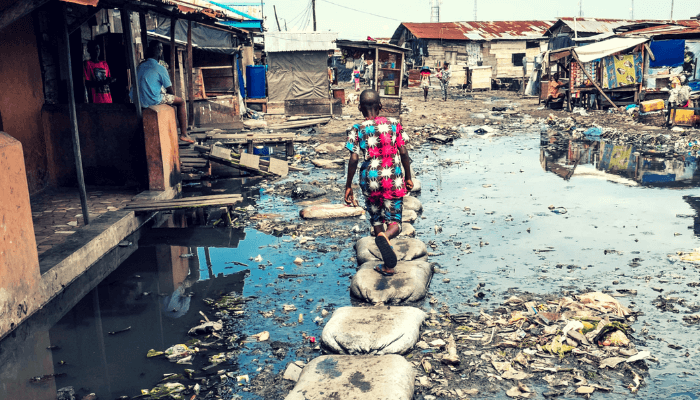
But there’s a contradiction that cannot be ignored: on the streets of Agege, Aba, Makurdi, and beyond, the economy is still red; red markets, red household budgets, red transport fares, and red faces of frustration. Prices have tripled in some cases. Wages have barely moved. Many can no longer afford their children’s school fees. Traders are losing capital to inflation. Food is fast becoming a luxury. Amid this hardship, Nigerians are asking the most honest, piercing question of the moment:

“If the economy is growing, why am I still shrinking?” “If the economy is growing, where is the growth in my pocket?”

This is not a question born out of ignorance. It is a legitimate cry that speaks to the disconnect between macroeconomic progress and microeconomic relief. Yes, the big numbers are looking better, but the lived realities of the majority are deteriorating. To understand this discrepancy, we must first understand the difference between macroeconomics and microeconomics. 

Macroeconomics concerns itself with the national economy, including factors such as GDP growth, inflation rates, budget deficits, and foreign exchange reserves. These are the indicators investors, multilateral organisations, and economic analysts watch. Microeconomics, on the other hand, deals with everyday realities: how much you earn, what you can buy with that income, whether your small business can survive, and whether prices of food, fuel, and medicine are manageable. In theory, macroeconomic stability should, over time, trickle down and improve microeconomic conditions. But in practice, especially in a country like Nigeria, that process is rarely smooth or automatic.

The truth is that reforms, especially big, structural reforms create what economists call a “lag effect.” That is, the pain comes first; the relief comes much later. Floating the naira made the exchange rate more transparent and investor-friendly, but it also instantly raised the price of imported goods. Removing fuel subsidy fixed a long-standing fiscal leak, but it also sent transport and food prices soaring. And because Nigeria imports a significant share of its consumption, inflation spiked, with devastating effects on the poor. Salaries have not caught up. Social safety nets are thin. Informal workers who make up over 60% of Nigeria’s labour force are primarily left to fend for themselves.

Yet, this is the path the government has chosen. And it is important to say this clearly: choosing a macro-first approach is not inherently wrong. In fact, for a country like Nigeria, plagued by decades of financial mismanagement, it is even necessary. Fixing subsidies, unifying the exchange rate, and rebuilding fiscal credibility are long overdue. Every administration must work with the strategy it believes in, and this government has opted to “stabilise the roof before fixing the foundation.” That, in itself, is a policy choice one with clear upsides.

However, macroeconomic success without a visible microeconomic impact is a hard sell to a hungry population. People don’t live in GDP. They live on garri, transport fares, and electricity bills. While international investors applaud the courage of reforms, local citizens are asking: Where is the evidence that my own life is getting better?

The administration is not blind to this concern. The recently signed Tax Reform and Fiscal Policy Bill is part of a broader effort to expand the tax net and capture the informal sector, both to raise revenue and bring more economic players into visibility. But again, for the everyday Nigerian, these reforms are abstract. What matters is how they translate into food on the table, money in the pocket, and hope in the future.

So, how do we build a bridge between this macro-level retooling and the micro-level reality of the people?

First, we must move beyond tokenistic interventions like cash transfers and instead design innovative relief tools that tie micro-support to long-term productivity. For example, introducing community-based digital vouchers that support food or fuel purchases but are redeemable only when tied to school attendance, digital payments, or participation in a training program would ease the current pressure while also boosting the country’s long-term human capital.

Second, the government must decentralise economic adaptation. Nigeria is too diverse for a one-size-fits-all economic playbook. Establishing “Local Reform Chambers” committees made up of state governments, market leaders, and community associations can help interpret macro policies at a local level and propose area-specific interventions. If subsidy removal causes a shock in Zaria or Owerri, let those communities co-design their response, be it cooperative transport schemes or communal food banks, funded partially by the government and partially by local actors.

Thirdly, data must become a feedback tool, not just a planning tool. The government should publish a monthly Macro-to-Micro Progress Report that clearly shows how reforms are improving incomes, lowering costs, or reaching underserved communities. Let people see the path of change, even if it’s still under construction.

Finally, the government must actively invest in skills, tools, and local infrastructure. Don’t just train youths to code; train them to fix machines, install solar panels, manage cooperatives, and build homes. Make markets more productive with solar lighting, shared storage, and access to water. These are the enablers that convert national growth into grassroots empowerment.

Conclusively, it is fair to acknowledge that the current administration is taking steps that previous governments only danced around. The reforms are not without merit and frankly, not without courage. But reforms are not complete until they reach the people.

The Nigerian people are not impatient; they are simply in pain. And when they ask, “If the economy is growing, why is my pocket not?” they are not being unreasonable. They are asking for what every citizen deserves: a place in the progress. Now is the time to move beyond balancing spreadsheets and begin balancing lives because growth is only real when it is felt.

And no reform is complete until the people rise with the numbers.

Oladoja M.O writes from Abuja and can be reached at: mayokunmark@gmail.com

Appraising President Tinubu’s transformational strides in two years

By Jamilu M Magaji

On May 29, 2025, President Bola Ahmed Tinubu, GCFR, marked his second anniversary as the President and Commander-in-Chief of the Armed Forces of the Federal Republic of Nigeria. This milestone represents not just the passage of time, but a turning point in Nigeria’s modern political and economic history—a testament to bold reforms, strategic governance, and a relentless pursuit of national development. 

In just 24 months, President Tinubu’s administration has laid a firm foundation for economic revitalisation, security stabilisation, and human capital investment. The following is my attempt to appraise the two years of transformational strides of the presidency driven by purpose, progress, and the promise of a new Nigeria:

1. Empowering Nigerians through Strategic Financial Interventions

One of the hallmark initiatives of the Tinubu administration is the Presidential Loan and Grant Scheme, which has supported over 900,000 entrepreneurs and small business owners. This lifeline of financial empowerment is revitalising the informal sector and unlocking grassroots innovation. Complementing this effort, the Students’ Loan Scheme has already benefitted over 300,000 young Nigerians, giving them access to quality higher education without the financial burden that has held back generations. These programs signal a long-overdue democratisation of access to capital and education.

2. Restoring Fiscal Stability and Investor Confidence 

In a remarkable feat, Nigeria has cleared over $10 billion in FX debt, a move that has stabilised the naira and restored international confidence. This bold financial reengineering is matched by a surge in Foreign Direct Investment (FDI), with over $50 billion in new commitments, indicating trust in Nigeria’s economic direction. In addition, Nigeria’s net foreign exchange reserves have seen an unprecedented jump — from $3.99 billion in 2023 to $23.11 billion in 2024 — a result of stringent reforms, strategic investment policies, and renewed international engagement.

The oil and gas sector, once plagued by underinvestment, is also experiencing a renaissance. Over $8 billion in new investments have been unlocked, laying the groundwork for energy security and industrial expansion. Meanwhile, the solid minerals sector attracted over $800 million in processing investments in 2024 alone, positioning Nigeria for a post-oil economy.

3. Infrastructure and Economic Growth on the Fast Lane

President Tinubu has significantly accelerated infrastructure development, with over 440 road projects currently underway, including more than 2,700 kilometres of new superhighways. These projects are not just roads — they are economic corridors, connecting communities, facilitating trade, and enhancing logistics nationwide. This infrastructure push has underpinned Nigeria’s 3.84% GDP growth in Q4 2024, the highest in three years, signalling a recovering and resilient economy under proactive leadership.

4. People-Centric Reforms and Regional Inclusion

The federal government approved and commenced payment of a N70,000 minimum wage, reinforcing its commitment to the welfare of Nigerian workers. This is a bold move by the government to address rising living costs and boost workers’morale. Moreover, the administration has introduced four new landmark Tax Bills, ensuring a more equitable, transparent, and growth-oriented tax system. These legislative milestones are simplifying compliance and boosting non-oil revenue streams.

Furthermore, new Regional Development Commissions have been established, decentralising development and giving states a stronger voice in the national growth agenda. This was a nod to Nigeria’s long-standing diverse regional aspirations.

5. Securing the Nation, Securing the Future

Perhaps one of the most critical achievements is in the area of national security. Under President Tinubu’s leadership, over 13,500 terrorists have been eliminated, significantly degrading insurgent capabilities and restoring relative peace to previously volatile regions. These gains are the result of strategic military coordination, improved equipment, and the unwavering resolve to secure every inch of Nigerian territory.

In conclusion, let me say that two years into his presidency, President Bola Ahmed Tinubu has demonstrated that transformative leadership is possible when courage meets vision. As the nation looks ahead, Nigerians are increasingly hopeful that these gains will be deepened, institutionalised, and scaled for future generations.

Magaji, a Public Affairs Analyst based in Birnin Kebbi, Kebbi State, can be reached via: mjmagaji@gmail.com.

Atiku blasts Tinubu over unpaid wages, demands release of labour activist

By Muhammad Abubakar

Former Nigerian Vice President and presidential candidate Atiku Abubakar has criticised the Bola Ahmed Tinubu administration over unpaid wage awards and the detention of labour activist Comrade Andrew Uche Emelieze.

In a statement shared on his social media accounts, Atiku accused President Tinubu of worsening economic hardship through the “hasty and thoughtless” removal of fuel subsidy on his inauguration day, which he said plunged Nigerians into inflation, hunger, and despair.

Atiku said the government promised a ₦35,000 monthly wage award to federal civil servants pending the conclusion of a new minimum wage deal. Ten months later, only six months have been paid, leaving ₦140,000 owed per worker.

He condemned the arrest of Comrade Emelieze, who was detained for attempting to organise a peaceful protest over the unpaid wages, calling it “an affront to democracy.”

“We demand the immediate and unconditional release of Comrade Emelieze,” Atiku said. “Nigerian workers will not be silenced, intimidated, or forgotten.”

The Federal Government has yet to respond to the statement.