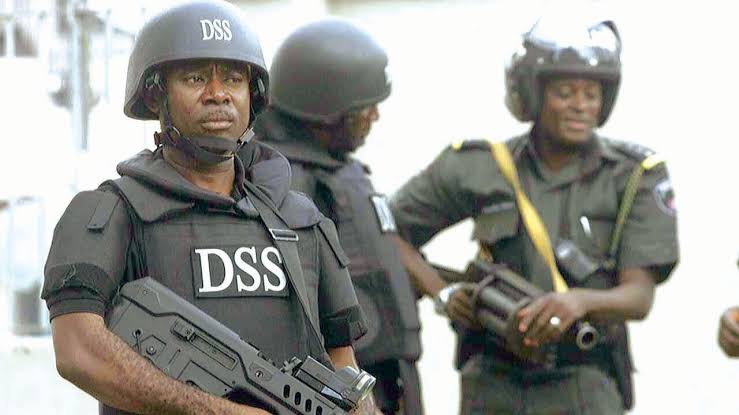
DSS

Court in Jigawa orders arrest of DSS officer for abducting, raping, converting 16-year-old girl to Christianity

By Anwar Usman

A magistrate Court in Jigawa State has ordered the arrest of a serving officer of the Department of State Services (DSS) over allegations of kidnapping 16 year old Muslim girl, sex related charges, unlawful detention, and forcefully converting her to Christianity.

The order was issued by the Magistrate Court of Jigawa State sitting in Hadejia, presided over by His Worship, Sadisu Musa Esq., in Suit No: DCC/01/2026, between Abdulhadi Ibrahim and Ifeanyi Festus.

Contained in the court order, dated January 7, 2026, the magistrate directed the Commissioner of Police, Jigawa State Command, or senior officials of the DSS, to aprehended the respondent, Ifeanyi Festus, and investigate the alleged offences pursuant to Sections 125 and 102(5) of the Jigawa State Administration of Criminal Justice Law (ACJL).

In the same vein, the court further ordered the DSS to immediately release and reunite the alleged victim, Walida Abdulhadi, with her parents.

The court order in part reads “Upon hearing Mr. Kabiru Adamu Esq. appearing with Babangida Garba Esq Counsel to the Applicant moving this Court praying for an order of this Court for the Arrest of the Defendant and Investigation of the alleged offences by the Commissioner of Police Jigawa State Police Command Pursuant to Section 125 of the ACJL and 102(5) of the same Law.”

The court ordered that “the defendant be arrested by the Commissioner of Police Jigawa State Police Command or Deputy Director General of the Department of State Security Services and/or any officer under them.”

“That the Commissioner of Police Nigerian Police Force Jigawa State Command is HEREBY ORDERED to discreetly investigate this case.

“That the Department of State Security Service Shall immediately release/reunite the Victim (WALIDA ABDULHADI) to her parent.”

DSS apprehends suspected arms dealer in Plateau State

By Hadiza Abdulkadir

The Department of State Services (DSS) has announced the arrest of Musa Abubakar, believed to be a major supplier of arms to criminal groups in Plateau State and northern Nigeria. The operation was based on intelligence reports leading to his detention on November 12, 2025.

A DSS source confirmed that Abubakar admitted to producing and distributing high-calibre weapons and ammunition used in violent attacks across Plateau and neighbouring regions.

The arrest followed a targeted raid on his weapons manufacturing facility in Mista Ali, Bassa Local Government Area, Plateau State. Authorities reportedly found Abubakar with IED components, chemicals, and manufacturing equipment, all seized by DSS operatives.

This development comes days after the recapture of Abdulazeez Obadaki, alias Bomboy, a prison escapee linked to the Owo and Deeper Life Church attacks. DSS headlined recent successes in counterterrorism efforts, including the detention of nine high-profile suspects involved in incidents in Plateau and Benue states.

Among those detained is Timna Manjol, 46, who pleaded guilty to firearms charges related to the attacks, according to court documents. Manjol is affiliated with First Baptist Church in Mangu, Plateau.

Security analysts view these arrests as part of the DSS’s ongoing crackdown on violent extremism in the region.

Atiku accuses Tinubu government of institutionalising forgery, calls for investigation

By Muhammad Abubakar

Former Vice President Atiku Abubakar has accused President Bola Ahmed Tinubu’s administration of promoting forgery and deceit as instruments of governance, following the resignation of Uche Nnaji, Minister of Innovation, Science and Technology.

In a strongly worded statement on Wednesday, Atiku described Nnaji’s “voluntary resignation” as an attempt to cover up a scandal that exposes the “deep moral crisis” within the Tinubu government. He said Nnaji should have been dismissed and prosecuted for falsifying documents rather than allowed to quietly exit.

Atiku also faulted the Department of State Services (DSS) for clearing Nnaji despite alleged discrepancies in his records, accusing the agency of “failing in due diligence” and embarrassing the nation.

He linked the scandal to what he called a wider pattern of deceit that “begins from the very top,” pointing to longstanding controversies over President Tinubu’s own identity and academic credentials.

“When a man of questionable identity leads a country, deception becomes the standard of governance,” Atiku said, alleging that Tinubu’s personal history has “institutionalized falsehood in public service.”

The former vice president called for an independent and transparent investigation into the academic and professional records of all members of the Federal Executive Council, starting with the president.

Atiku concluded that Nigeria would continue to suffer “moral decay, economic ruin, and global embarrassment” unless integrity was restored to public life.

20 arrested for hacking JAMB results

By Hadiza Abdulkadir

The Department of State Services (DSS) and the Nigerian Police have arrested 20 suspects in Abuja for allegedly hacking into the servers of the Joint Admissions and Matriculation Board (JAMB) and the National Examination Council (NECO) to manipulate UTME scores.

The suspects, part of a larger syndicate of over 100 members, reportedly charged candidates between ₦700,000 and ₦2 million to obtain inflated results. Many are said to operate private schools and special centres used for the fraud.

Sources indicate that the group aimed to discredit JAMB’s Computer-Based Testing (CBT) system and discourage its future use by other examination bodies, such as WAEC and NECO.

The arrests follow JAMB’s release of the 2025 UTME results, in which over 78% of candidates scored below 200 out of 400. 

Registrar Ishaq Oloyede earlier cited server faults affecting nearly 380,000 candidates, prompting a resit exam from May 16.

NEMA: Rebuilding lives of stranded returnees

By Abdulhamid Abdullahi Aliyu

A wave of emotions swept through the Murtala Muhammed International Airport, Lagos, on Tuesday, March 4, as 144 stranded Nigerians returned home from Libya. Some wept as they stepped onto Nigerian soil, clutching their few belongings, while others sighed in relief after months of hardship in the North African country.

The returnees—mostly women and children—arrived aboard a chartered Boeing aircraft at exactly 4:45 p.m. The National Emergency Management Agency (NEMA) facilitated their homecoming in collaboration with the International Organization for Migration (IOM) and other key stakeholders. Officials swiftly processed them, ensuring they underwent the necessary procedures for reintegration into society.

Among the returnees were 100 women, 8 men, 26 children, and 10 infants—individuals who had left Nigeria seeking a better future, only to find themselves ensnared in a nightmare. Libya, once viewed as a gateway to Europe, has become a dangerous trap for migrants. Many face forced labor, sexual exploitation, kidnappings, and inhumane detentions, with little hope of escape.

NEMA and its partners have worked tirelessly for years to bring stranded Nigerians home. At the airport, officials from the Nigeria Immigration Service, the National Commission for Refugees, Migrants, and Internally Displaced Persons (NCFRMI), the Department of State Services (DSS), Port Health Services, and the Nigeria Police Force were on the ground to facilitate their return. The returnees underwent biometric registration, medical screening, and psychological counseling before being transported to the Igando IDPs Resettlement Center for reintegration programs.

Yet, for many, homecoming is bittersweet. Aisha, 27, left Nigeria two years ago with dreams of a better life. Instead, she found herself trapped in Libya, forced to work under exploitative conditions just to survive. Holding her two-year-old son close, she said, “I don’t know where to start. I sold everything to travel. Now, I’m back with nothing.”

To help returnees like Aisha, the IOM, in partnership with NEMA and other agencies, provides reintegration support, including vocational training, business grants, and psychosocial counseling. These programs are essential in helping them rebuild their lives and find new opportunities at home.

This latest evacuation is part of an ongoing effort to rescue Nigerians from Libya’s brutal realities. Over the years, thousands have been repatriated, yet the cycle of irregular migration persists. Despite continuous awareness campaigns, human traffickers still lure young Nigerians with false promises of a better life abroad.

Experts argue that while evacuation efforts are commendable, the real solution lies in addressing the root causes of migration—unemployment, poverty, and lack of opportunities. Without viable alternatives at home, many will continue to take desperate risks.

Relief and uncertainty filled the air as the returnees settled into the temporary resettlement center. Some saw their return not as a failure but as a second chance. “I just want to find a way to care for my son,” Aisha said. “I don’t regret coming back. At least I am alive.”

The mission of NEMA and its partners is clear: to help returnees rebuild their lives. But for Nigeria, the bigger challenge remains—creating a future where its youth no longer feel compelled to risk everything for an uncertain journey abroad.

Abdulhamid Abdullahi Aliyu—an NYSC serving corps member, writes from the Centre for Crisis Communication (CCC) in Abuja.

Scorecard: What ONSA, DSS, EFCC, others won, lost in 2024

By Haroon Aremu Abiodun

Despite the turbulence of 2024, Nigeria’s intelligence and anti-graft agencies recorded significant achievements. The Department of State Services (DSS), National Intelligence Agency (NIA), Office of the National Security Adviser (ONSA), and anti-corruption bodies like the Economic and Financial Crimes Commission (EFCC) and the Independent Corrupt Practices Commission (ICPC) made notable strides in combating corruption, safeguarding national security, and upholding the rule of law.

However, Emergency Digest reports that pressing challenges persist within these institutions, threatening sustained progress and credibility. This report delves into landmark achievements, systemic lapses, and broader implications for national security, highlighting the contributions of the NSA and other agencies such as the ICPC, DSS, and NIA.

EFCC: Wins Amid Controversies

Under Olukoyede’s leadership, the EFCC made impressive progress in tackling financial crimes. Notable accomplishments include a groundbreaking operation that led to the arrest of 792 individuals involved in cryptocurrency and romance scams in Lagos and the recovery of N230 billion and $105 million within a year. A major victory was the forfeiture of a sprawling Abuja estate valued at billions, reflecting the agency’s commitment to asset recovery.

Nevertheless, high-profile cases, like the delayed arrest of former Kogi State Governor Yahaya Bello and allegations of dropped charges against crossdresser Bobrisky in exchange for bribes, raised concerns about the EFCC’s integrity. Critics have also highlighted the agency’s inaction on prosecuting high-profile figures such as Humanitarian Affairs Minister Betta Edu, despite substantial evidence of corruption.

ICPC: Quiet but Impactful

The ICPC maintained a low profile but achieved commendable results, recovering N52 billion and $966,900 in misappropriated funds in a year. The commission exposed corruption in government contracts, cracked down on job racketeering, and raised concerns about misused funds in constituency projects.

Despite these successes, the ICPC struggles with transparency challenges, understaffing, and limited resources. Addressing these gaps is essential to sustain its fight against systemic corruption.

DSS: Vigilance Amid Criticism

The DSS maintained its critical role, thwarting terrorism plots, dismantling organised crime networks, and protecting vital national assets. However, the agency was criticized for alleged overreach, unlawful detentions, and a lack of transparency.

In a notable clash with the Socio-Economic Rights and Accountability Project (SERAP), the DSS faced backlash for questioning the group’s leaders after they criticized Nigeria’s human rights record. Similarly, unresolved issues surrounding Nnamdi Kanu’s case have cast a shadow over the DSS’s otherwise commendable efforts.

NIA: Expanding Reach, Addressing Gaps

The NIA expanded its global intelligence capabilities, collaborating on transnational crime and cyber threats. However, internal mismanagement and opacity remain significant concerns. With Mohammed Mohammed’s appointment as Director-General, there is hope for renewed efficiency and accountability.

ONSA: Orchestrating National Security

Under Malam Nuhu Ribadu’s leadership, the NSA made strides in combating terrorism and reuniting kidnapping victims with their families. However, controversial policies like the Cyber Security Levy faced opposition from stakeholders, highlighting the need for transparent communication.

To enhance its impact, the NSA must foster better relationships with the media and citizens, ensuring timely and accurate dissemination of information without compromising sensitive intelligence.

Recommendations for Progress

1. Strengthen Institutional Frameworks: Leverage technology and intelligence to prevent crime and enhance efficiency.

2. Enhance Public-Agency Relations: Foster trust through targeted awareness campaigns and transparent communication strategies.

3. Improve Leadership Accountability: Ensure transparent appointments and performance evaluations for agency heads.

4. Foster International Cooperation: Strengthen ties with global intelligence and financial institutions.

5. Address Root Causes: Combat unemployment and poverty to reduce criminal recruitment.

The collective efforts of Nigeria’s intelligence and anti-graft agencies in 2024 have established a solid foundation for a corruption-free society. From the EFCC’s groundbreaking operations to the ICPC’s meticulous investigations, these achievements underscore the potential for lasting change.

Nevertheless, tackling ongoing challenges, including transparency, resource limitations, and inter-agency coordination is essential. A collaborative approach—reinforcing institutions, enhancing public trust, and promoting integrity—will secure a more stable and prosperous Nigeria.

Haroon Aremu Abiodun is a Public Affairs Analyst, Advocate for National Development and Fellow of PRNigeria. He can be reached at exponentumera@gmail.com.

DSS detains Mahdi Shehu for sharing viral video

By Abdullahi Mukhtar Algasgaini

The Department of State Services (DSS) has arrested Mahdi Shehu, a political activist and commentator from Kaduna.

He was arrested following allegations that he spread a video of French soldiers on his X (formerly Twitter) account.

According to reports, the video shows Shehu claiming that the Nigerian government is planning to establish a French military base in the North West, a claim that has been denied.

Mahdi is currently in DSS custody in Kaduna, and there is a possibility he will soon be charged in court.

The DSS stated that they discussed the credibility of the video with Mahdi before his arrest, but the conversation did not lead to a resolution.

However, security agents have been instructed to respect his rights while in custody.

DSS arrests Sowore at Lagos airport

By Abdullahi Mukhtar

Department of State Services (DSS) operatives have arrested Omoyele Sowore, convener of the #RevolutionNow protest.

According to SaharaReporters, Sowore was arrested on Sunday at the Murtala Muhammed International Airport in Lagos upon his arrival in Nigeria.

Sowore’s arrest may be connected to the 10-day #EndBadGovernance protest held across the country in August.

The Take-It-Back Movement and several other civil society organisations spearheaded the protest.

Sowore is also the convener of the movement.

Another protest is being planned by organisers of the #EndBadGovernance protest — scheduled for October 1.

In a post via his X page, Sowore said he was detained by the Nigerian Immigration Service (NIS) and his passport was seized.

“I had just arrived in Nigeria from the USA to the MMIA in Lagos; upon reaching Nigerian Immigration, my passport was seized, and they told me they had orders to detain me,” he wrote.

“This is not unexpected because I have always known that It is part of the broader clampdown by the fascist Bola Ahmed Tinubu regime on dissent and their fear of the upcoming #FearlessINOctober revolt.

“In case this becomes another prolonged and protracted detention, I urge our citizens to ensure they ALL stop tyranny by all means acceptable and necessary by engaging in the planned series of direct actions slated for October 1st and beyond.”

NLC sets midnight deadline for FG to release Ajaero

By Uzair Adam

The Nigeria Labour Congress (NLC) has given the Federal Government a deadline of midnight on Monday to unconditionally release its president, Joe Ajaero.

Failure to do so, the NLC warns, will lead to serious repercussions.In a statement signed by NLC Deputy President Prince Adewale Adeyanju, the union revealed that an emergency National Executive Council (NEC) meeting has been scheduled for Tuesday at 9 AM to determine further actions if Ajaero remains in detention.

The NLC condemned the arrest of Ajaero at Abuja’s Nnamdi Azikiwe International Airport while en route to the United Kingdom to attend a Trade Union Congress meeting.

The union labeled his detention illegal and described it as an attempt to intimidate and silence the labor movement.

The Congress also urged its affiliates and the general populace to be on alert, calling the arrest an attack on the rights of all workers and citizens.

The NLC further demanded the reversal of the petrol price hike and immediate implementation of the new National Minimum Wage.

The NEC meeting is expected to address the situation and announce decisive actions if the government fails to release Ajaero by the stipulated deadline.

Sponsors of rioters waving Russian flag arrested – Egbetokun

By Uzair Adam

The Inspector-General of Police, Kayode Egbetokun, announced that the police have apprehended individuals responsible for sponsoring rioters who displayed foreign flags and called for a change in government.

The Daily Reality learned that an investigation is underway to determine their motivations.

The Comptroller General of the Nigerian Immigration Service, Kemi Nandap, revealed that some sponsors are based in the diaspora and have been identified and watchlisted.

He said that any attempts by them to enter the country will be met with arrest.

IGP Egbetokun also stated that funders of violence and subversion, both within and outside Nigeria, have been tracked, and their accounts have been blocked.

The security agencies assured that they have been managing the crisis carefully, using only tear gas and not live ammunition or rubber bullets.

He added that the reported shooting of a protester in Abuja is being investigated and may have been the work of armed robbers or hoodlums.

The Chief of Defence Staff, General Christopher Musa, emphasized the commitment of security agencies to their task and the respect they have for the country.

The Chief of Army Staff, Lt. General Taoreed Lagbaja, assured that the Nigerian Army will protect Nigeria’s democracy, peace, and harmony.

The DSS spokesman, Dr. Peter Afunanya, confirmed that some sponsors of the foreign flags have been arrested and urged patience as their identities will soon be disclosed.