Dr. Ali Pate

Politics is the plague

By Oladoja M.O

“A dive into the political paralysis killing public health”

In the long and winding corridors of Nigeria’s national challenges, the health sector stands as one of the most visibly bruised, chronically neglected, and systemically under-prioritised. Yet, beyond the crumbling hospitals and overworked health workers lies a more insidious diagnosis: politics. Not politics in its ideal form, the noble art of governance, but the brand that manifests in distraction, dereliction, and dead ends. It is this politicisation, or rather, the wrong kind of political influence, that has become the biggest ailment afflicting Nigeria’s health system today. And until it is addressed, no number of policies, international partnerships, or ministerial press briefings will revive the sector to its full potential.

Let’s begin with a case study, a hopeful one that has slowly started to mirror the very problem it tried to solve.

When Dr. Muhammad Ali Pate was appointed Nigeria’s Coordinating Minister of Health and Social Welfare in August 2023, many saw a breath of fresh air. He came armed with credentials, experience, and, perhaps most importantly, energy. Within months, the sector began to stir with renewed ambition.

Under his leadership, Nigeria launched its first Health Sector Renewal Investment Initiative, signed a landmark Sector-Wide Approach (SWAp) compact with states and partners, and injected ₦50 billion into the Basic Healthcare Provision Fund (BHCPF), which was double the amount released in the previous year. Over 2,400 health workers were recruited and deployed across underserved areas. Primary healthcare facilities that had long been mere consulting rooms began to see improvements in personnel and reach. Vaccination efforts soared. 

A nationwide HPV rollout vaccinated nearly 5 million girls, and the long-awaited Oxford R21 malaria vaccine arrived on Nigerian soil. The government pursued a policy to unlock the healthcare value chain, drafting executive orders to encourage local pharmaceutical manufacturing and reduce import dependency. Even the National Health Insurance Authority (NHIA) was repositioned, expanding coverage through the Vulnerable Group Fund, while a national patient safety strategy was launched to bring quality and accountability into focus. All signs pointed to a government that was, finally, taking health seriously. But then, as quickly as the fire had been lit, it began to dim.

But from early 2025, a silence began to creep over the very desk that once signed reforms with urgency. Policy announcements grew fewer. Major rollouts dried up. The energy that had defined Pate’s first year slowly receded into a void of political undertones. And then came the whispers, and then confirmations of a new ambition: governorship in Bauchi State. Pate, by his own words in March 2025, declared himself “ready to serve” in his home state come 2027. From that moment on, what had been a robust health sector agenda began to take a back seat to the shifting winds of political alignment.

The problem isn’t ambition. It’s a distraction. A Coordinating Minister of Health in a country where maternal mortality is one of the highest in the world, where millions still pay out-of-pocket for even the most basic care, and where health infrastructure is crumbling under the weight of neglect, simply cannot afford to be half-present. This is the heart of the issue: politics has become both the gatekeeper and the grave-digger of Nigeria’s health potential.

For decades, well-meaning reforms have died at the altar of “lack of political will.” Budgets are approved, but rarely fully released. Policies are launched, but implementation fizzles out under new administrations. Health is often treated as a social service, rather than a critical pillar of economic development. Politicians are quicker to commission a white elephant hospital in a state capital than to strengthen the rural primary health centres where lives are quietly and daily lost.

And when leadership does finally begin to show some will, as Pate briefly did, the ever-thirsty machinery of Nigerian politics lures it away. This, perhaps, is the cruellest irony: politics that should drive public health, instead devours it.

The Nigerian public, meanwhile, remains largely unaware of how deeply entangled their health is with political decisions. Health issues are often viewed as isolated, with a bad hospital here and an unavailable drug there, rather than as symptoms of a larger systemic failure driven by poor governance, poor prioritisation, and a lack of sustained leadership.

We cannot continue to treat the health sector as an afterthought or a public relations prop. Health is not a photo opportunity. It is not a campaign gift or a once-in-a-quarter press release. It is a right, and more than that, it is the foundation for national development. No country has risen out of poverty, no economy has truly grown, without first investing heavily in the health of its people.

So, here’s the truth we must face: until Nigerian politics stops viewing health as just another item on a manifesto’s checklist and starts seeing it as a cornerstone of national survival, we will continue to spin our wheels. Ministers will come and go. Budgets will be announced and unspent. And the average Nigerian will continue to suffer preventable deaths, unaffordable care, and unattended illness.

The solution lies not only in leadership, but also in the voice of citizens, civil society, professionals, the media, and everyday people, who demand more than shallow commitments. We must demand that health be taken seriously, institutionally. That it be enshrined not just in words but in political action, protected from the cycles of campaign season, ego projects, and elective distractions. In this moment, we are witnessing a perfect case study of how even a promising leader can be lost to the lure of political pursuits. 

If Dr. Ali Pate, arguably one of Nigeria’s most qualified health minds, could be drawn away from a national assignment to a regional ambition, it speaks volumes about the fragility of reform when politics remains unchecked.

This article, then, is not just a critique. It is a call to consciousness. A call for the government to return to the trenches of national responsibility. A call for health to be declared not just a service, but a strategic national priority. A call for the public to realise that the decaying hospital they see is not just a facility issue, but a political problem. And it demands a political solution.

Let us stop treating the symptoms. Let us diagnose the root. And let us finally begin to treat politics as the virus silently killing Nigeria’s health system.

Oladoja M.O writes from Abuja and can be reached at mayokunmark@gmail.com.

The misdiagnosis of a nation

By Oladoja M.O

 There is a sickness far graver than malaria, deeper than cancer, and deadlier than an undiagnosed pandemic: it is the sickness of perception. A tragic, self-inflicted malaise where men and women, intoxicated by their bitterness, misread the vital signs of a nation and call it death. 

Nigeria, that African giant, that phoenix that has refused to be buried by dust or drowned by storms, stands misdiagnosed not by its enemies, but by its sons and daughters. They call for good governance, a sacred right, yet in the same breath, they auction the dignity of their fatherland for applause from foreign balconies. Climbing the stages of international conferences not as ambassadors of hope, but as broadcasters of decay, believing that to light their ambitions, the whole house must first be burned.

Yes, there are wounds, visible scars of leadership missteps and bureaucratic fatigue. Yes, the body occasionally limps, gasping for cleaner governance, for a fresher breath of accountability. But to declare her terminally ill? To parade her on global platforms like a festering corpse before she has even sneezed her last? This is malpractice of the highest order.

And yet, even as they wail, Nigeria births victories so luminous they should blind the eyes of every doubter.

In 2024, while cynics sharpened their tongues, Nigeria quietly pulled off the Dangote Refinery miracle. The largest single-train refinery in human history roared into operation. Built on African soil, by African hands, it shattered the historic curse of crude export dependency. Now, Nigeria refines for itself, and soon, for much of Africa. That is not a dying breath. That is the heartbeat of an empire in rebirth.

Even as global markets shook and economies shrank, Nigeria executed one of the most daring economic surgeries in modern African history: unifying its foreign exchange market in 2023, consolidating multiple exchange rates into a single one. The International Monetary Fund, the World Bank, and even the Wall Street Journal stood still in reluctant applause. The Nigerian naira, which was once battered by artificial valuations, finally had its freedom to fight fair. It stumbled at first, as all warriors do. However, today, stabilisation is becoming a new reality, not a distant hope.

In health, the same nation that armchair critics mock has scored historic breakthroughs. Under the leadership of Professor Muhammad Ali Pate, Nigeria has launched one of the world’s first national rollouts of the Oxford R21 malaria vaccine, a game-changing move in a country that accounts for the highest malaria deaths globally. 

Again, Nigeria has turned pain into policy. The federal government, under this administration, declared a Health Sector Renewal Compact in late 2023 (PVAC), marshalling partnerships with global giants like the World Bank and Bill and Melinda Gates Foundation, channelling billions into revamping healthcare delivery, local vaccine production, and training health workers at an unprecedented scale. No more is health an afterthought; it is now a frontline battle Nigeria is visibly winning. While others talk, Nigeria saves lives. While others point fingers, Nigeria vaccinates its future. 

Infrastructure? While “first-world” cities debate electric railways, Nigeria’s megacity, Lagos, launched its Blue Line Rail in late 2023, the country’s first electric-powered intra-city rail system. A steel artery now pulsing through a once-choked metropolis, easing congestion, breathing new possibilities. In Kano, Rivers, Abuja, and Ebonyi States, massive roads, bridges, airports, and industrial parks rose from the dust — monuments to silent nation-building.

Policy? Courageous policies thundered through governance corridors: the subsidy removal in 2023, ending decades-old economic black hole that bled over $10 billion annually. In its place: strategic investments in health insurance for the vulnerable, transport subsidies for the poorest, and agricultural revolution initiatives. The world’s harshest critics acknowledged it, but the nation’s sons spat on it, too drunk on their self-righteous venom.

In education? Nigeria has ripped the old rulebook. In 2023, the Student Loan Act was signed into law—an audacious leap toward democratising education. For the first time, children of farmers, traders, and artisans now have a gateway into universities, polytechnics, and colleges of education without fear of crushing tuition fees. 

As of 2024, the first batch of beneficiaries has received their loans under the Nigerian Education Loan Fund (NELFUND), breathing hope into homes where education once felt like a broken dream. Now, a total of 525,936 students have registered on the loan platform, with 445,015 applicants successfully applying for financial assistance, representing an 84% success rate for student loan applications under the scheme.

Meanwhile, the accreditation of degrees has also been digitised, with Nigeria becoming the first in Africa to automate this critical gatekeeping process fully. New private universities have sprouted like fresh shoots, expanding access and excellence, whilst Nigerian universities are climbing global ranks. 

They call for “change” yet campaign on the ruins of hope itself. They drape themselves in victimhood, seeking pity instead of respect. The so-called “obedient” torch-bearers, the tribe of Peter Obi, shout of patriotism while waltzing through global forums, slandering their homeland, reducing Nigeria, a giant stirring from slumber to the caricature of a failed state, just to score a few cheap political points.

Calling out leadership is democracy; Denigrating your nation is betrayal.

One builds; the other burns.

Nigeria does not need saviours who love her only when she shines. She needs sons and daughters who hold the line when the storms rage, who sing her greatness even when she falters, who plant seeds of hope, not thorns of despair, into her soil.

To those who mistake criticism for patriotism, remember:

The world does not respect nations that cannot respect themselves.

Call out your leaders.

Demand reform.

March for justice.

But never sell your mother for the price of your pride.

Because when the dust of time settles, and history opens her immortal ledger, it will not be your complaints she remembers, it will be your loyalty.

Oladoja M.O writes from Abuja and can be reached via mayokunmark@gmail.com.

NHIA guideline and Pate’s move to boost population health

By Lawal Dahiru Mamman

It is not uncommon to see destitute in motor parks, religious centres, T-junctions and other places that pull crowds clutching a doctor’s prescription, soliciting public support to purchase drugs.

Others plead not to be offered money but instead be accompanied by any good samaritan to the nearest pharmaceutical outlet to purchase the medication on their behalf. This is to free them from the accusation of preying on public emotion to beg for money without any justifiable reason.

These are indications that a number of Nigerians cannot afford drugs to treat themselves owing to the fact that healthcare is predominantly financed by households, without government support. According to pundits, this, among other factors, has been instrumental in pushing many citizens into poverty.

In 2021, the World Health Organization (WHO) said, “Up to 90 per cent of all households incurring impoverishing out-of-pocket health spending are already at or below the poverty line – underscoring the need to exempt poor people from out-of-pocket health spending, backing such measures with health financing policies that enable good intentions to be realised in practice.

“Besides the prioritising of services for poor and vulnerable populations, supported through targeted public spending and policies that protect individuals from financial hardship, it will also be crucial to improve the collection, timeliness and disaggregation of data on access, service coverage, out-of-pocket health spending and total expenditure.

“Only when countries have an accurate picture of the way that their health system is performing can they effectively target action to improve the way it meets the needs of all people.”

WHO revealed during the 6th Annual Conference of the Association of Nigeria Health Journalists (ANHEJ) last year in Akwanga, Nasarawa State, that “With healthcare out-of-pocket expenditure at 70.5 per cent of the Current Health Expenditure (CHE) in 2019, general government health expenditure as a percentage of the GDP was 0.6 per cent while government expenditure per capita was $14.6 compared with WHO’s $86 benchmark for universal health coverage (UHC).”

Nigeria currently bears the highest burden of tuberculosis and paediatric HIV while accounting for 50 per cent of neglected tropical diseases (NTD) in Africa, contributing 27 per cent of global malaria cases and 24 per cent of global deaths with Non-communicable Diseases (NCDs) accounting for 29 per cent of all deaths in Nigeria with premature mortality from the four main NCDs (Hypertension, Diabetes, Cancers, Malnutrition) accounting for 22 per cent of all deaths.

On account of the high disease burden, high out-of-pocket health expenditure and low enrollment into the NHIS, now National Health Insurance Authority (NHIA), the Federal Ministry of Health and Social Welfare has unveiled operational guidelines for the NHIA to ensure financial access to quality healthcare in line with Sustainable Development Goals, (SDGs), consequently putting the country on track of attaining Universal Health Coverage (UHC).

The Ministry said, “High out-of-pocket payment for health care services is not good enough, and it is not sustainable. Only 9 per cent of Nigerians have insurance coverage, and 90 per cent don’t.

“Ill health is pushing many Nigerians into poverty. We must, therefore, change the trajectory of healthcare delivery in Nigeria.

“Many people have wondered why the President added social welfare to the Ministry of Health. The answer is health insurance. Health insurance is the key to the Renewed Hope Agenda, and it is the reason the President added social welfare to the Ministry. This is because the President is aware that we need social protection for our people.”

The guideline, which harmonised crucial provisions of the old operational guidelines with the new Act, provided a legal basis for mandatory participation by all Nigerians, the Vulnerable Group Fund (VGF) for citizens who are able to service their insurance after keying-in and empowered the NHIA to promote, regulate and integrate health insurance schemes in the country among other provisions of the Act so as to contribute to poverty reduction as well as socioeconomic development.

The review expanded the operational guidelines from four to five. The first section, Governance and Stewardship, provides, which was not part of the previous guideline, a broad overview of the roles and responsibilities of the NHIA and stakeholders within the insurance ecosystem.

The second section, schemes and programs, identified contributory, non-contributory and supplementary/complementary schemes to ensure the capturing of public and private sector employees, a vulnerable group including those not captured in the National Social Register (NSR) by pooling resources from government, private sector, philanthropist and even international organisations.

Standards and accreditation, which is the third section, will focus on bringing health workers, health facilities and equipment, and patients under one roof for the meticulous running of the NHIA.

The fourth section of the operational guidelines, data management, allows the NHIA to provide and maintain information for the integration of data health schemes in Nigeria. Such data will allow collaboration data sharing between facilities, medical audits, and research and aid seamless decision-making for the authority.

Offences, penalties and legal proceedings, which is the last of the guidelines, ensures stakeholders’ compliance with the provision of the NHIA and provide a legal instrument for the investigation of grievances and disputes between stakeholder in accordance with protocols of the NHIA.

Implementation of this effort by the Health Ministry will make Nigerians worry less about the financial consequences of seeking medical care, providing avenues for early detection and treatment of diseases, which in turn will guarantee a healthy citizenry and increase population health outcomes for national growth and sustainable development.

Lawal Dahiru Mamman writes from Abuja and can be reached via dahirulawal90@gmail.com.

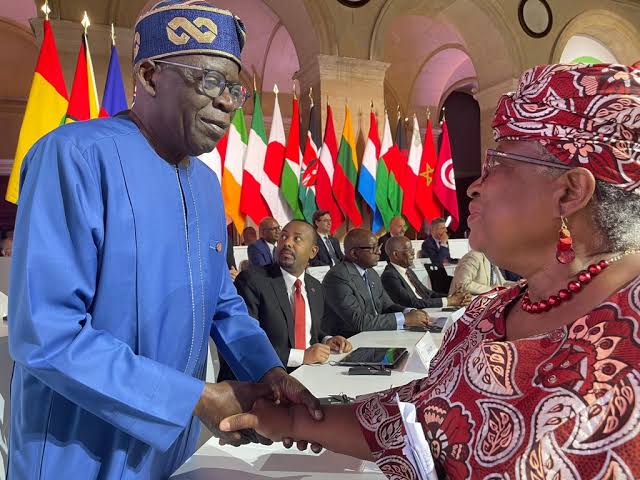
Tinubu, Pate, Okonjo-Iweala meet 

By Muhammadu Sabiu

President Bola Tinubu is currently having a meeting with Ngozi Okonjo-Iweala, the WTO’s director general, at the Presidential Villa in Abuja.

At around 2:50 on Tuesday, Dr Ali Pate, a former minister of state for health, and Okonjo-Iweala arrived at the Presidential Villa.

This medium has not been able to gather the purpose of the meeting as of the time of filing this report.

Recall that Okonjo-Iweala and Tinubu met earlier in June while attending the leadership summit in Paris, France.

Okonjo-Iweala served as finance minister under the administration of former President Goodluck Jonathan.

Reasons why Dr. Ali Pate should be a Minister

By Isma’il Ahmad Misau

The APC-led administration of President Asiwaju Bola Ahmad has a plan of action (prioritized set of goals/agendum) that it determines to accomplish. It was in broad daylight that the President has blended and marketed his manifestos for the election under the banner of ‘Renewed Hope.’ During his campaign, President Tinubu outlined his strategies for building the finer Nigeria of our aspirations in an effort to win over the Nigerian voters. Yes, Nigerians voted for him massively and he won the election because they were supposedly pleased and convinced with his promises to make Nigeria a better place on earth. What follows is history. One month has passed since the reign of the Renewed Hope. What next? I guest, the formation of cabinet.

Nigerians are anxiously awaiting for President Tinubu’s cabinet one month after his inauguration. Nigerians are making predictions about the Ministers from all sides and aspects while taking various factors into account. Top politicians, including past Governors and Senators who are still in office, are vying for ministerial positions. 

Dr. Ali Pate is not on the list of top candidates for the ministerial position in Bauchi State, and no one is counting him. Unexpectedly, Nigerians learned of his resignation from GAVI, where he had been acting as the organization’s Chief Executive Officer until his resignation. He resigned to accept the ministerial office at President Tinubu’s request, which is an interesting aspect of the event. The occurrence that sparked various responses around the world. 

Dr. Ali Pate is a well-known physician, to those who are familiar with him as a stakeholder of global healthcare, his appointment as a Minister is not deserving of media attention. Even if the World Health Assembly, the top body for the world’s healthcare system, were to announce his appointment as it’s Director General or to be the CEO of the World Health Organization, the news would not come as even the slightest surprise because he is already qualified to hold any position that exist in the health sector due to his capacity, ability, capability, and competence.

It is true that whomever understands the way goes first. Dr. Ali Pate has held a variety of government posts throughout his career as a skilled healthcare professional, including Chief Executive Director of the National Primary Healthcare Development Agency and state Minister of Health in Nigeria. Prior to his voyage, the National Population Health Care Development Agency (NPHCDA) was utterly devoid of leadership and the laughing stock of Nigeria’s health industry. The National Programme on Immunization (NPI), which it amalgamated after being founded by Her Excellency, Haj. Maryam Abacha, was in charge of overseeing vaccination campaigns in Nigeria. Nigeria was alone in endangering billions of dollar worth of global polio eradication efforts. He grabbed the opportunity when President Umaru Musa Ƴar’adua (of blessed memory) named him to lead the agency. 

He invited the traditional rulers and integrated them as stakeholders since he is a versed leader. They are closed to the populace and adept at instructing them in a relaxed manner. That was how polio patients were identified and effectively treated. There was not a single index case of polio in Nigeria prior to his resignation.

He completely reinvigorated NPHCDA. It realigned it’s priorities and focus on the tasks it was truly created to complete. In order to combat the threat of unfathomably high maternal mortality rates in Nigeria, the National Population Health Care Development Agency (NPHCDA) introduced the innovative Midwifery Service Scheme by recruiting retired midwives from all over the nation to support underperforming antenatal clinics nationwide.

He expanded the system’s horizon past the bounds of preexisting structures. New approaches were created and the polio eradication mission was revived. “Nurturing Nigeria to be a nation of healthy people with equitable and affordable access to primary health care through a system that delivers quality, integrated services with the participation of all stakeholders,” was Dr. Ali Pate’s stated objective at the time.

Then-President Goodluck E. Jonathan appointed him as Minister of Health due to his outstanding abilities as a healthcare administrator, visionary, goal-setter, servant leader, and revivalist. He used his wealth and extensive knowledge to influence the system. 

In his capacity as the Minister of Health at the time, Dr. Ali Pate set the following core goals for himself to pursue: enhancing the provision of essential services at the front lines; focusing on the prevention agenda through immunization; health education; concentrating on clinical governance and raising the standard of care in the Nigerian health sector; and, finally, maximizing the potential of market forces to encourage innovation and advancements in the health sector. He started a new project after establishing the aforementioned goals, which was to save one million Nigerian lives by 2015.

For the second time in Nigerian history, Dr. Ali Pate resigned from his position as Minister with honor because he is a man of real values. The decision was due to some inconsistencies. He took the job of Professor of Public Health at Duke University.

Dr. Ali Pate worked for many international organizations at numerous capacities, including Senior Health Specialist and Human Development Sector Coordinator for the East Asia/Pacific Region, Senior Health Specialist for the African Region. He simultaneously held two distinct Executive Director positions of;  Director for Health, Nutrition, and Population, and Director of the Global Financing Facility for Women, Children, and Adolescents (GFF) at the World Bank Group. He also oversaw the distribution of USD 18 million in financial assistance across the globe to mitigate the effects of Covid-19. 

There were 304 applicants for the position of CEO of GAVI from multifarious and terrestrial breedings. Only three of them advanced to the last round. Fortunately, Dr. Ali Pate prevailed over the two other candidates. He was the only individual in the world who was black, African and from Nigeria, who remained from the start of the exercise to it’s conclusion. All preparations were done for his formal inauguration on 3rd August 2023.

Now that the Nigerian healthcare system has failed as a result of weak governance, lack of coordination, subpar health facilities, lack of human resources, inadequate finance and corruption, the President must appoint someone with foresight and focus who has knowledge of the Nigerian and international healthcare systems in order to reconstruct the system by addressing all these pressing artificial challenges.

Dr. Ali Pate is the only black person with overall features, virtues and reputations that would match the assignment of the Renewed Hope healthcare agenda, which focused on human resources, brain drain, health tourism, infrastructure, universal health care and health financing. This is true not only in Nigeria or Africa, but also globally.

Dr. Ali Pate, an astute visionary administrator and experienced physician who changed the global narratives of healthcare and made his marks as an administrative paterfamilias with uncommon zeal, will be in charge of managing Nigeria’s healthcare. Additionally, Nigeria is governed by President Bola Ahmad Tinubu, a full-fledged democrat whose actions were strategic and always calculated to produce results. Renewed Hope is doable if Dr. Ali Pate’s preferences are shared. 

President Bola Tinubu’s expression of interest to collaborate with individuals like Dr. Ali Pate demonstrated his willingness to address the problems plaguing Nigeria.

In conclusion, Dr. Ali Pate will do us a huge favor if he gives up his next position, the CEO of GAVI where he will bring home the groceries of $700,000, or 525 million Nigerian naira, to take a political seat with a salary of 2m, including allowances and everything, 60 million annually. This singular act demonstrates his patriotism and willingness to die for his nation. Behold, Dr. Ali Pate is among the greatest assets to Nigeria.

May Bola Ahmad Tinubu be successful. May Allah, the Almighty grant us Dr. Ali Pate as the Nigerian Health Minister, may He lead, strengthen, assist and uphold him to effectively implement the Renewed Hope agenda.

Isma’il Ahmad Misau: writes from Misau College of Health Science and Technology (MICOHEST).