Domestic Violence

Arewa: Why do some women murder their husbands?

By Usman Usman Garba

Incidents of women killing their husbands in Northern Nigeria have become a disturbing phenomenon which puts some kind of anxiety in the hearts of youth and unmarried men. What was once rare is now appearing more frequently in headlines, police reports and public conversations. 

Everyone knows that Northern Nigeria is a region known for strong family values, deep respect for marriage, and a social structure built on religious and cultural norms. Yet, the recent rise in cases where wives take the lives of their husbands has forced many to question what is happening behind the façade of stability.

There are a lot of views and perceptions concerning why women kill their husbands in Northern Nigeria. Many are of the belief that forced marriage is one of the reasons such an inhumane act happens. Thus, others are married willingly without the intervention of anyone in a forced marriage, but still kill their spouses.

In my opinion, other factors should be taken into consideration, contrary to what many regard as the main cause of this dastardly act.

Mental health remains one of the least understood issues in Northern Nigeria. Depression, trauma from abusive relationships, postpartum challenges, and emotional exhaustion can push individuals to extremes. Unfortunately, many women have no access to counselling, families discourage speaking out; society expects women to “endure”; emotional crises are dismissed as weakness or spiritual problems, and this lack of support creates dangerous psychological pressure.

Similarly, domestic violence is one of the dangerous circles that causes women to kill their husbands. Many of the reported cases involve homes where domestic violence had been ongoing. Women in such situations sometimes endure physical and emotional abuse for years. With limited support systems, some feel trapped with no escape route.

This does not justify murder, but it highlights the reality. For instance, some wives act out of fear; some out of desperation; some out of retaliation; while others act because they believe no one will protect them.

Hence, the role of social media and exposure to new narratives has also contributed immensely to this inhumane act in Northern Nigeria.

Cases of women killing their husbands, though still few, spread quickly on social media, and sometimes, this creates copycat behaviour, unrealistic ideas about marriage, normalisation of revenge narratives and fake empowerment messages telling women to “fight back” violently.

Social media has become an amplifier, sometimes distorting reality and increasing tension in fragile homes

Nonetheless, a justice system that often fails women worsens the system. Many women who are abused find no one to intervene. At the station, police dismiss domestic complaints; families send them back home; religious or traditional leaders advise “patience”, and society blames women for failed marriages. Thus, when conflict turns deadly, the same system responds swiftly, after lives have already been destroyed. This is why prevention, not punishment, should be our priority.

The rising cases of wives killing their husbands are not simply crime stories; they are warning signs of deeper fractures inside marriages, families and social systems.

Northern Nigeria must confront these issues honestly and urgently. The goal is not to assign blame but to prevent homes from becoming battlegrounds. When families break down, society breaks down: when violence enters the home, it enters the community; and when silence becomes the norm, tragedy becomes inevitable.

The solution lies in awareness, support, justice and compassion, before the next headline appears. To stop this dangerous pattern in our communities, we must confront the root causes. The society must strengthen domestic violence reporting channels, improve community mediation and counselling structures, promote healthy marital communication, address economic pressures, educate people on mental health and teach conflict management to young couples.

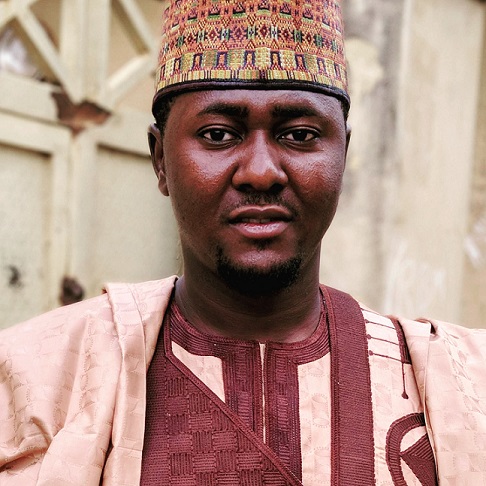
Usman Garba writes from Kano via usmangarba100@gmail.com

Woman pours hot oil on husband after discovering he was involved in fraud

 By Sabiu Abdullahi 

A woman in Rivers State, Nigeria, has been arrested for pouring hot oil on her husband.

The woman, Favour Nweke, said she did this because she found out he had been involved in a fraudulent scheme. 

According to the woman, her husband had not told her about the scheme, and she felt betrayed when she found out.

She said she poured the hot oil on him in a fit of anger and now regrets her actions. 

The woman’s husband is currently in the hospital, receiving treatment for his burns.

The police are investigating the incident, and the woman is expected to be charged with assault.

Domestic Violence: Ex-boxer beats wife into coma

By Uzair Adam Imam

A 56-year-old man recounted how he punched his wife, Atinuke, into a coma over a dispute in Akure, the Ondo State, a development many people have frowned at.

The man, who simply identified himself as Akure, was said to have been a famous Lagos state ex-boxer.

The man said he punched his wife because she was very stubborn and refused to give him a television remote control when he requested it.

The Daily Reality gathered that the ex-boxer has since been arrested and detained by the police detective in the state.

It was learned that the suspect, who is also a driver, returned home on a fateful day and wanted to watch a programme on the television, but the wife insisted on watching another programme.

According to a source, “The husband asked the wife to hand over the TV remote control to him, but she declined. The husband did not waste time as he descended on her with several punches on her face.

“It took the intervention of neighbours to rescue the woman from her husband after the children ran out screaming and crying for help.

“When the neighbours entered the house to rescue the woman, they met her on the floor lying unconscious, and they quickly rushed her to the nearest hospital,” the source added.

According to the victim’s sister, the woman was rushed to the hospital and has been responding to the medical treatment.

Mr Funni Odunlami, the state police spokesperson, couldn’t be reached for comment.

Why do we ignore religious domestic violence?

By Sabo Ibrahim Hassan

Did I just say Religious Domestic Violence? Of course, you heard me very right. It may though initially sound quite odd and obfuscated, but when you allow it to sink and give the brain some time to analyze the phrase critically, it will indeed become your today’s take-home. While countless homes unknowingly suffer from this type of domestic abuse, notably in religious geographies, the need to unveil and tackle this type of intimate partner violence becomes an inevitable obligation.

According to the United Nations (UN), Domestic Violence, also called “domestic abuse” or “intimate partner violence”, can be defined as a pattern of behaviour in any relationship used to gain or maintain power and control over an intimate partner. Abuse is physical, sexual, emotional, economic, or psychological actions or threats that influence another person. This includes behaviour that frightens, intimidates, terrorizes, manipulates, hurts, humiliates, blames, injures, or wounds someone. 

In line with the definition above, we can say that religious-domestic violence refers to the use of half-baked understanding or rather misconception of religious command, painted with sentiment, to inflict a sense of insecurity, and manipulate or frighten the psychology of partner, to ultimately have their total control.

The ill-conceived interpretation and manipulation of some scriptural verses is the primary cause of this religious-domestic violence. However, the issue remains controversial because many deem it the only way to sustain their power and maltreatment against their intimate partners. Besides, our inability to question any irrational interpretation of any scripture, simply because the compass of our thought has been disoriented, hence forced to think in lower rather than higher resolution, has chiefly contributed to the escalation of this menace. Meanwhile, we are not challenging the scripture rather the unfair interpretation of it. Additionally, the fear that you can be easily given your certificate to hell by some so-called custodians of religion has made this type of domestic violence seemingly undefeatable.

The effect of this pseudo-domestic violence is such apparent that it has stolen the joy and peace of many homes, leaving most women helpless with severe psychological trauma. Moreover, the effect is not restricted to the primary victim. It also affects the closest people to the victim, like children, affecting their psychology and perspective. Hence, the fear, insecurity, and misconception of the sacred meaning are passed through different generations, leaving potential victims banged up in fright and uncertainty.

Religious domestic violence often cuts across mental, economic, and psychological boundaries. For example, in a situation where one, due to his badly thought-out interpretation, renders one’s wife inferior, with no regard in decision making, it becomes psychological. Similarly, when one marries or bears children more than one’s capability, that certainly involves both the mental and economic nature of domestic violence. The superiority of men over women lies in their ability to protect them with all their might, provide for them, support them with all they have, and be a shoulder for them to lean on, anywhere, any time.

Rational and fair explanations of some sacred commands, notably those related to marriage, should be the priority of any society that wants to see the end of this menace. That reminds me of a viral video of a woman perceived to be a scholar, preaching to some Muslim women that, should their husbands slap them, they should be patient and respectful enough to, perhaps, kneel and ask for forgiveness while pretending like nothing though happened. I still can’t see any rationale behind her counsel, let alone relevance. Authorities should inexcusably halt such fake scholars. Fair counter-explanation and how to morally react under situations of such nature should be explicitly taught and encouraged.

Until a reasonable explanation of the scripture becomes paramount, and an irrational interpretation painted with sentiment is scrapped, many homes will continue to live in agony. Many men will continue to hide under the masquerade of religious interpretation to maltreat their partners. Therefore, creating a paradigm shift in geographies affected by this unfair perspective becomes necessary. Sensitization is vital, and the responsibility to do that is collective.

Know your religion and what it says, seek rational interpretation of the scriptures, and do not hesitate to question anything irrational.

Sabo Ibrahim Hassan sent this article via ibrahimsabohassan60@gmail.com.

Husband beats wife to death over N1000 in Adamawa

By Muhammad Sabiu

A 41-year-old man, identified as Hammawa Usman, in Ganye Local Government Area of Adamawa State has been apprehended by the police for beating Rabiyatu Usman, his wife, to death in a fight involving N1,000.

The News Agency of Nigeria (NAN) has reported that this was coming almost one week after a similar incident happened in the same state.

“The suspect angrily reacted by hitting her head against the wall… she fell unconscious and was rushed to the hospital where she was later confirmed dead,” Sulaiman Nguroje, Police spokesman, confirmed the incident in a statement made available to newsmen on Thursday in Yola.

Mr Nguroje added, “The suspect was apprehended by the police following report received from a relative of the deceased and a good Samaritan.”

As the investigation into the incident is ongoing, the Adamawa State Commissioner of Police, Aliyu Alhaji, has commended the police and people of the community for facilitating the arrest of the culprit. He added that he would soon be prosecuted.