Silent tragedy in Kumbotso: Diphtheria and the cost of delay
By Ibrahim Aisha
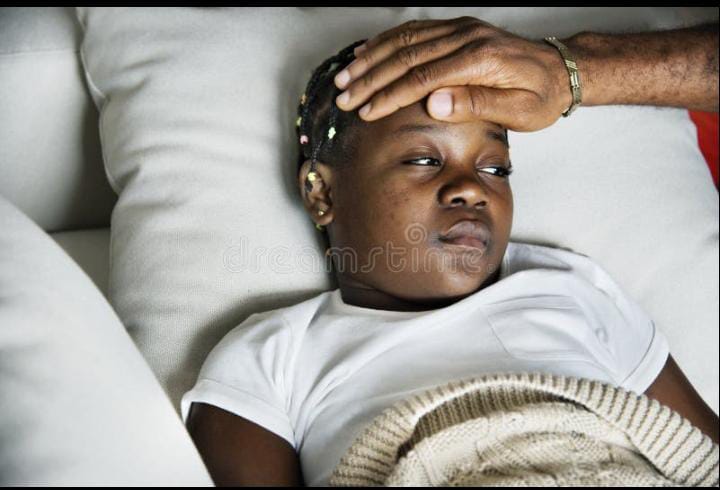
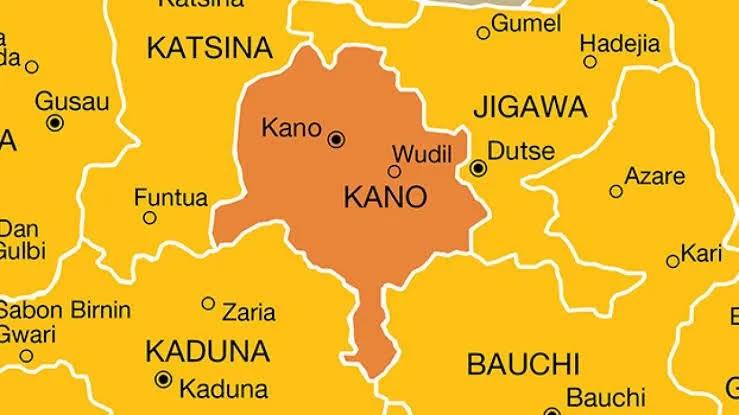
In the Chiranci ward of Kumbotso Local Government Area in Kano, the term “sore throat” has taken on a chilling significance. For Iya Yani, a mother of eight, it was the phrase that cost her daughter her life.
“She only said her throat was hurting,” Iya Yani recalled with tears. “Neighbours told me it was nothing, just harmattan. By the time I took her to the hospital, she could no longer breathe. She died before they could help her, and the doctor blamed my ignorance “.
Iya Yani’s heartbreaking loss is part of a broader tragedy unfolding far and wide in the Kumbotso Local Government Area, a tragedy that statistics and government reports can hardly mitigate.
Diphtheria, a disease preventable by vaccine, continues to claim the lives of children in this community, some due to financial constraints, misleading rumours and even Ignorance.
Diphtheria is a highly contagious, vaccine-preventable disease caused by the exotoxin-producing bacterium Corynebacterium diphtheriae. While the disease can affect individuals of all age groups, Unimmunised children are particularly at risk. There is no World Health Organisation (WHO) region that is completely free of diphtheria globally.
The Facts Behind the Grief
According to the Nigeria Centre for Disease Control’s (CDC) situation report from May 2025, Nigeria recorded 30 confirmed cases and three deaths in the first few months of the year. By July 2025, Premium Times reported that Kano State alone had logged 18,284 confirmed infections and 860 deaths, making it the most affected state in Nigeria.
According to the World Health Organisation, from 9th May 2022 to 25 October 2023, 15,569 suspected diphtheria cases have been reported across Nigeria, 547 of whom have died.
As of October 2023, the World Health Organisation disbursed US$1.3 million for the response to enhance key outbreak control measures, including disease surveillance, laboratory testing, contact tracing, case investigation and treatment, training, as well as collaborating with communities to support the response efforts.
With support from the WHO and the United Nations Children’s Fund, Kano State carried out three phases of reactive routine immunisation campaigns in February, April, and August 2023, using the combination tetanus-diphtheria and pentavalent vaccines.
Almost 75,000 zero-dose children under the age of two received the first dose of the pentavalent vaccine, while around 670,000 eligible children (4‒14 years) were vaccinated with the tetanus-diphtheria vaccine in 18 high-burden local government areas in Kano state.
Health Reporters revealed in July 2025 that Chiranci of Kumbotso local government is one of the wards with the highest number of “zero-dose” children – those who have never received a single vaccine. In such a setting, diphtheria spreads rapidly, and misinformation intensifies the situation. According to the National Bureau of Statistics, Patients who were not vaccinated had more than double the likelihood of death compared to fully vaccinated individuals.
When rumours mislead and ignorance lies
Many parents from different areas of Kumbotso Local Government Area admit they delayed immunisation due to prevalent rumours.
When his seven-year-old brother, Jubrin, was diagnosed with diphtheria in July 2023, Aminu had never heard of the disease, the outbreak of which had claimed more than 500 lives in Nigeria.
Safiya Mohammed, a mother of two, residing in the Kumbotso Local Government Area, a hotspot for diphtheria in Kano State, ensured her children were vaccinated.
“I had never heard of diphtheria,” Safiya said. “I don’t want my children or those in the neighbourhood to fall sick or die from the disease. To protect my children, I also need to make sure the children they play with are protected.”
Fatima Umar, a resident of Dan Maliki and a nursing mother, confessed, “I heard the injection would make my baby sick, so I waited. Then he fell ill. The hospital told us it was diphtheria. He died before I even understood what that word meant.”
Usman Sani, a husband and resident of Taku Mashi, shared a similar regret: “My wife complained of her throat and her not being able to swallow food properly. I thought it was just a sore throat”.He added that by the time his wife was taken to the hospital, it was already too late.
For Zainab Ibrahim, a mother at Chiranci Primary, the battle against diphtheria has been both long and personal. In early 2025, her daughter, Halima, nearly lost her life to the disease. “She could not breathe,” Zainab recalled.
My daughter said she finds it difficult to yawn properly, and her throat hurts a lot when she swallows saliva. My neighbours kept saying I should use garlic to make tea for her. I started, but noticed there was no progress, as my daughter could not breathe one night. My husband was away, so I called him in the morning and told him I was going to the hospital. As soon as I arrived at the hospital, she was diagnosed and a file was opened for her. The doctor administered drugs and told us to return after two weeks for an operation.
Zainab further mentioned that her daughter survived. “But the scar on her neck serves as a constant reminder of how close I came to burying her.”
At a local Islamic school at Dorayi Chiranci primary, the head of the school, Malam Andullahi Abubakar Jabbi,informed that many of his students died during the outbreak of diphtheria. It started small, then it became alarming when 3 siblings died within the interval of not less than a week.
” Many students stopped coming, and parents phoned to know what was happening. We had to close down the school for some period of time to avoid the spread of the disease,” said Malam Abdullahi.
Bala Dahiru, a resident of Dorayi Yan Lalle, narrated that it was due to financial constraints that he almost lost his only daughter’s life to diphtheria.
What Kumbotso teaches Nigeria
Diphtheria is preventable. The World Health Organisation affirms that vaccination offers nearly complete protection against the disease. Yet in many areas of Kumbotso, many mothers continue to rely on neighbours’ advice rather than the guidance of health officials. Health workers, such as Lawan Ibrahim Ahmad, the Primary Health Care Coordinator for Chiranchi Primary Health Care, have repeatedly stated that without a steady supply and consistent funding, “it is impossible to reach every child in every home.”
The tragedy of Kumbotso illustrates that diphtheria is not merely a medical issue; it reflects broken trust, inadequate systems, and misinformation that can kill as swiftly as the bacteria themselves.
A Call to Protect Children
The stories emerging serve as a dire warning. Unless vaccination coverage improves, more families will mourn children lost to a disease that the world already knows how to prevent.
Iya Yani’s daughter should not have died from what she thought was a mere sore throat. Halima should not bear the scar on her neck just to breathe. Fatima should not have lost her son to a disease that belongs in the past.
This grief mirrors our collective failure. Until we take action, every cough in this community will reverberate with fear: Could this be the next case of diphtheria?