Delegates

 At the mercy of delegates: The imperative of breaking free

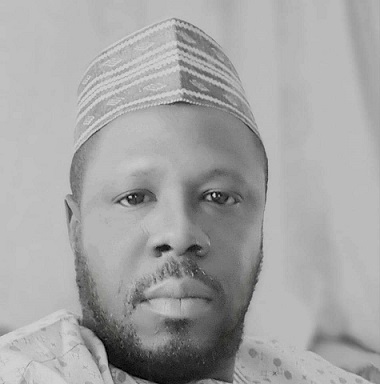
By Mohammad Qaddam Sidq Isa (Daddy)

Regardless of the expectation and anticipation with which the new administration in Nigeria is being greeted, there is no better time than now to embark on efforts to address the underlying challenges that have always undermined the credibility of primaries, hopefully by the 2027 election season, relevant legislation and methods will have been duly reformed.

Towards every election season, people lament the scarcity of suitable candidates for elective positions, which they also rightly attribute to the systematic manipulation of the party nomination process by powerful vested interests within the parties, who impose candidates on the electorate via charades in the name of party consensus or primaries by some hand-picked party delegates.

Public officeholders and other party elites use the instruments of power and public resources at their disposal to ensure the emergence of their political associates, in addition to themselves, of course, as party delegates with a mandate to elect party candidates, on occasion typically characterised by systematic vote buying deals between delegates offering their consciences (if any) for sale. Deep-pocketed politicians jostle to outbid one another.

That has discouraged many conscientious individuals with the potential to turn things around in their respective jurisdictions given the mandate from getting into politics, for they rightly wouldn’t bootlick any so-called political godfather or bribe any greed-motivated delegate. After all, many like-minded individuals have ventured into politics but ended up frustrated at the hands of party manipulators. In contrast, many others of similar calibre have compromised their moral principles to join the corrupt elite they have previously often castigated.

Consequently, the electorate is left with the dilemma of choosing amongst candidates with notorious pasts for gross incompetence, massive corruption cases, and even court convictions against many of them. The average voter, therefore, betrays his underlying frustration by voting for the highest bidder amongst the candidates or voting for whoever his immediate political master endorses, with some hope that the candidate will win. His master will be rewarded with some political appointment or other privileges, for him (voter) to be occasionally rewarded with peanuts by the master throughout his stay in office or continuation of his privileges.

Only a few votes with a conviction may still not be in order anyway, for it might be influenced by one manipulative tactic or another.

Ironically also, there is general indifference in all segments of society. Even democratic activists and advocates for good governance, who are supposed to be particularly committed to demanding, among other things, the reform of the party nomination process, have been largely and inexcusably indifferent. They only rant in futility when it’s too late, i.e. when birds of a feather flock together have emerged as their respective parties’ candidates. Many have become mere attention-seeking opportunists hiding behind activism to extort political appointments and other privileges from the politicians they have criticised in return for their loyalty.

Even the few voices of reason in society only urge the electorate to vote for the so-called best of a bad bunch among the candidates, if any.

Now, until relevant legislation governing the party nomination process and the methods of conducting it are reformed in such a way that it guarantees maximum transparency in the process, the kind of change Nigerians wish for under democracy will never be achieved.

Instead of chasing shadows, therefore, it’s high time that genuine advocates for good governance and other concerned groups and associations embarked on a concerted campaign to demand the reform of relevant legislation to abolish the current corruption-laden delegate primaries and consensus and adopt a direct and transparent primary where all party members are eligible to vote, as the only legal method of nominating party candidates at all levels.

The imperative of demanding such reform represents a challenge that puts Nigerians’ yearning for good governance to the test. If the next general election doesn’t achieve the reform, then the yearning is simply not genuine enough. 

However, even when realised, it’s naive to assume it’s unmanipulable. Vested interests within parties will keep trying to manipulate it. Yet, when sustained, it will undoubtedly make the quest for good governance more achievable, enabling people at various levels to push for and secure the emergence of the best amongst them as parties’ candidates for various elective offices.

That way, Nigerians will be able to break free from the grip of party delegates to freely elect the calibre of people with the capacity, credibility, inventiveness, and passion necessary to turn things around in the country.

Though the beneficiaries of the status quo will vehemently resist and undermine any attempt to reform it, they will eventually succumb to the collective willpower of the people, provided they remain passionate, resilient, and determined enough.

Mohammad Qaddam Sidq Isa can be contacted via mohammadsidq@gmail.com.

ASUU Strike: A note to our students at home and the party delegates

By Prof. Abdelmalik Abdelghaffar Amoka

The strike is 14 weeks (1 semester) today and we don’t know how many more weeks we are going to spend at home before getting back to classes. The closure of the universities has afforded us to spend a lot of time on the net, especially on social media, and following the happenings around Nigeria and the rest of the world. It is no more news that primary elections are ongoing in Nigeria and delegates are trending. The best business at the moment is to be a delegate of any of the two major political parties and you make cool millions at the expense of Nigeria. From the State House of Assembly, House of Rep, Senate, Governor, and Presidential ticket of APC or PDP, it is for the highest bidder.

They said Nigeria is broke and can’t fund education but contestants paid so much for nomination and expression of interest forms and are buying delegates to get their party’s ticket to contest to lead Nigerians. They have also budgeted the money to buy votes for the main election. Is Nigeria really poor? Who pays so much to lead a broke organization? While ASUU is on strike because that is the only thing to get the attention of our leaders, the president is traveling around the world, his associates are moving around the country with billions of naira looking for tickets, and the students are at home on Instagram, Facebooking, tweeting, and tiktoking.

You would have expected the students to take their destiny into their hands, but they can’t. They are celebrating the withholding of the salaries of lecturers, queuing behind the politicians looking for tickets, and celebrating the highest bidders that got the ticket. A few weeks ago, the students said there won’t be a primary election in Abuja if the strike is not called off. But PDP just finished its primary election in Abuja in the game of the highest bidder. I actually did not take the threat from our new generation of student leaders serious looking at the “success” of their recent university of the street protest.

With our version of democracy, there will never be money for education, healthcare delivery, and other critical sectors since they have to recover the invested funds to get “elected” with interest. It’s difficult to fight corruption because the foundation of our democracy is corruption. The person expected to fight corruption is fully immersed in corruption. So, how is he going to get the job done?

Somebody once wrote that the government want to give a loan of 1 million naira to students and ASUU was against it. This is the scam. Do you still remember when DISCOs in collaboration with FG came up with electricity bills by bands in 2020? Less than 2 years later, the band on a minimum of 20 electricity per day now gets less than 4 hours electricity per day and no one to complain to and no compensation. That is what will happen to the student’s loan. They will give you the loan which you can’t pay back because there is no job except you the money to buy a job as is currently obtainable. After about 5 years later, the loan will stop and you are stuck with tuition that an average Nigerian parent cannot afford. But why is ASUU even bothering itself with this scam? Why is ASUU thinking for the parents and the general public? We possibly need to start thinking of letting it be and focus on our welfare. Let’s allow the government to introduce tuition and leave that to the public to deal with.

While the government is complaining of no funds for education and our universities are closed for 1 semester and still counting due to a crisis between ASUU and FG over university funding and welfare, the Petroleum Technology Development Fund (PTDF) has shortlisted 8,800 applicants for its overseas scholarship programme. This scheme is smoothly going on every year for over 20 years without any complaints. It is budgeted for and no need for a strike to get that done. Our universities are underfunded and we are shipping our limited resources abroad in the name of the overseas scholarship to contribute to the development of universities in Malaysia, the UK, Germany, France, and China through PTDF, TETFund, NITDA, etc.

These scholarship schemes have been on for over 20 years and we are gladly sending more for MSc and PhD abroad every year on public funds while public universities are underfunded and ASUU has to fight, the academic calendar distorted to get a little attention for our public universities. While the scholars on FG scholarship are living a comfortable life abroad, the students in Nigeria’s public universities are studying under pathetic conditions and have to suffer from the frequent ASUU strike.

Sadly, the bond signed by these scholars is just a formality as you don’t have to come back. Even the scholars that came back to the country are frustrated and can’t fit into the system that funded their scholarship as there is no preparation for their return. No provision for a conducive environment to enable them to be productive and train others.

You spent so much money to train scholars every year without any plan for them. If care is not taken, the amount of money spent on these scholarship schemes every year may be close to half of the money being requested for the revitalization of public universities. We are rich enough to keep funding overseas scholarship schemes to train individuals but too poor to properly fund public universities to develop better mass human resources for our system.

Meanwhile, what are the objectives of these scholarship schemes? What is the timeline to achieve it? It is definitely not for life. Has PTDF, TETFund, and NITDA sat down to evaluate how far we have gone and the impact of these schemes so far on the system with respect to the objectives? Where is the report? Haven’t we trained enough manpower to be empowered to train others in our universities in Nigeria? Why can’t we redirect these funds to our universities for these trained scholars to use to train others?

Unfortunately, we are developing individuals and not the system. The scholars are trained for themselves, the delegates’ vote is for the highest bidder, the highest bidder will bribe the voters to win the election, and the winner of the election will go there to help himself and leave the system poor. I watched a video recently where the wife of a governor was sharing 1 million naira each to her security staff. Where did she get the money from? State resources? She is not known for any business. Teachers in that same state are paid 17% of their salary. They don’t care what happens to public schools at all levels.

Dear Nigerians, as the delegates that you sent for the primary elections, are happily enjoying the money they were paid for their vote and you are celebrating the highest bidder that got the ticket and mocking those that could not afford to buy the delegates, just know that they have just been paid the money meant for education and other critical sectors. We have lost the moral right to complain about corruption.

Dear students, It is a vicious cycle and it ain’t going to change till we are willing to change it. The lecturers have taken their decisions and they are willing to stay off academic activities for as long as possible with or without salary, till their demands are met. The politicians don’t care that you are at home after all their kids are not in public school. They are bribing their ways to sustain their political and economic dynasty and the delegates are happily collecting it.

Meanwhile, who were the returning officers at the primary elections? Definitely not Professors. Tomorrow you will start blaming ASUU that Professors helped them rig elections. Politicians know how to rig the elections with or without the presence of the Professors that the INEC boss invited. So, use your head when you blame ASUU.

In conclusion, the people that can raise such an amount of money to spend to get political positions can also generate funds to save our universities from collapsing if they so care to lead you. It’s up to you if you want to remain at home, Facebooking, tweeting, tiktoking, and keep watching as the system keeps decaying. The ball is in your court.

Amoka is from Ahmadu Bello University, Zaria, Nigeria.

Democracy or “delegatocracy”?

By Simbo Olorunfemi

It might yet turn out that, by some accident or slip on the part of members of the National Assembly, Nigeria might have stumbled upon a system that might yet become useful in retooling the mechanics of the Presidential system as we currently practise it.

Of course, the idea that the template that had been forced upon the political parties for the election of Candidates in this election will outlive this season is unlikely, as letting the Buhari ‘veto’ stay would amount to class suicide, with power of election/selection slipping out of the hands of those who had assumed the status of ‘statutory’ or ‘super’ delegates. The Legislators are unlikely to ever let that happen.

But I wouldn’t let that stop my interrogation of what is accidental, but I see as potentially beneficial intervention in the electoral system.

Whereas the idea of electing candidates through a collegiate system, made up of delegates is not new, what has played out this time around is one in which all the delegates who participated in the election of candidates were elected. Whereas these ones were supposedly ‘ad-hoc’, who were to be add-ons to the supermen and women who are automatic delegates by virtue of the offices they hold/held.

So, as the malfunction in the legislative process led to the omission of super delegates who had been the dominant players in the space, the task of producing candidates was solely left to the adhoc delegates, who suddenly became beautiful brides desperately sought by aspirants.

Whereas there has been a lot of talk about what has become a highly monetised delegates procurement process, my observation does, in fact, suggest that it is the statutory or super delegates who have constituted themselves into ‘cabals’ and pressure groups, taking advantage of their positions to put pressure on aspirants, leading to the monetisation of the process.

First, we have former members of the National Assembly, having formed themselves into groups, waiting for the period of elections to milk aspirants. Then, we have a situation in which the list of delegates tilts heavily in favour of these groups, making the system more susceptible to manipulation.

So, what is wrong with tweaking with this accidental system that we now have and explore the possibility of institutionalising it as a model for electing Candidates?

As we have it now, members of the party go through a process of election which see them emerging as ward, local government and State delegates, to be able to vote for candidates in the different elections.

Whereas the contest within the parties to qualify as a ‘Delegate’ was not one that had the big players contending, having already qualified to participate in the process as statutory delegates, I will argue for the idea of statutory delegates to be scrapped entirely.

I will argue for a system in which all delegates are elected by members of the party. This primary election had 5 delegates per ward (APC) and 3 delegates per ward (PDP) for the State House of Assembly Elections.

I will make a case for the primary election for the office of the President to be one delegate per ward, which would be the total number of delegates eligible to vote to 8, 813, just about what we had with statutory delegates participating in the process. But under this proposed arrangement, anyone who wants to be a delegate, either already elected into office or a political appointee will return to his ward to stand for election, and if qualified will serve as delegate at the Presidential primaries. Local government and states delegates will also emerge through the same process.

This system strengthens the party and returns power to the base, having within it some elements of the parliamentary system which I prefer and advocate a return to.

Simbo can be reached via; simboor@yahoo.com