Will Dangote Refinery be a monopoly?
By Zayyad I. Muhammad
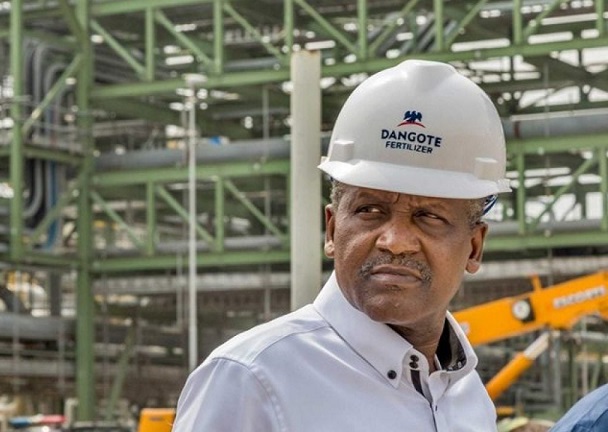
One entity that will benefit most from the Petroleum Industry Act (PIA ) is Aliko Dangote, with his 650,000 barrels per day integrated refinery, which is Africa’s biggest and the world’s biggest single-train facility. The refinery has 1,100 kilometres of pipeline to handle three billion Standard Cubic feet of gas per day. In addition, it has power plants with a combined capacity of about 400MW.
Section 317 (8) of the Senate version of the PIA noted that petrol importation license would be restricted “only to companies with active local refining licenses”. This clause and the unmatched prowess occasioned by the refinery is a formidable edge for Dangote. However, some report state that the federal government has reversed these exclusive petrol importation rights.
Dangote can have absolute control of the petroleum industry’s downstream and midstream sectors. How? Dangote can acquire the numerous idle fuel stations scattered nationwide or take over one of the established major retail marketers, though most idle stations are not strategically located. However, Dangote can revive and utilise them using the price advantage- by setting an unbeatable price, and a litre is a litre strategy, employing the best domestic workforce in the downstream sector and optimising modern technology for service delivery in these stations.
The petroleum retail industry is growing in Nigeria. The growing number of fuel stations across corners of the country is proof of this. But operational and logistical gaps remain in the blooming industry, like bad roads coupled with the use of old trucks, poor remuneration of drivers, and lack of modern technology. Thus the industry is losing billions of Naira due to shortages when truck discharge petroleum products at fuel stations and the rising disputes between drivers and station managers.
Furthermore, some marketers have poor welfare systems for staff and have not put in place some feasible plans for the realities that will accompany the arrival of the Dangote Refinery in the PIA regime. As a result, many of them may end up operating in the dark. For any marketer to survive the new regime, they must set up a strong think-tank or a special unit in their R&D departments to ‘look’ at the future, opportunities and threats and opportunities that Dangote Refinery will come with.
With his current economic capacity, Dangote can exploit oblivious lapses to implement backward integration in the petroleum industry. The $100 million Dangote-Sinotruck plant in Lagos will give Dangote an advantage in the logistics and operations sector. The plant assembles trucks and cars in Nigeria for local use and export; it is 65 per cent owned by Dangote and 35 per cent by Sinotruck. Therefore, having new petroleum distribution trucks and well-trained and well-paid drivers will not be difficult for Dangote.
The Dangote Refinery will give him the required volume of products and enough loading bay for trucks to load. The refinery covers 2,635 hectares of land, six times the size of Victoria Island, Lagos. Scarcity will not be challenging for Dangote if he ventures into retail. Dangote can tap the domestic workforce to employ the best hands in the downstream sector. With access to funding and resources, Dangote can deploy massive Liquefied Petroleum Gas (LPG) and Compressed Natural Gas (CNG) skids at once in as many stations as possible to also prepare for the future.
As mentioned, if Dangote acquires these thousands of idle fuel stations or any of the established major marketers, the brand can offer mouth-watering prices at these stations, making customers travel even 5km just to purchase petroleum products at a Dangote station. Furthermore, these prices can knock many competitors out of the market. However, some of them can still survive as third-party partners to Dangote. However, the NNPC can take advantage of its $2.76 billion stake in the Dangote Refinery and boast its retail business.
With this colossal refinery, Dangote has the advantage in the midstream and downstream of the oil and oil gas industry. Anyone coming in will need the next ten years to catch up. The bigger, the more advantageous, it seems!
Zayyad I. Muhammad writes from Abuja via zaymohd@yahoo.mom.
