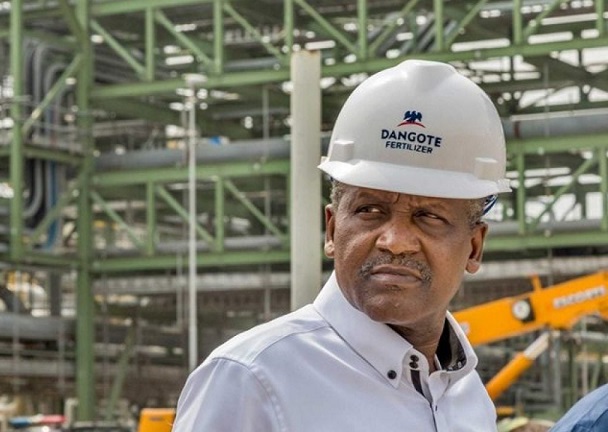
Dangote refinery

Dangote’s next battle!

By Zayyad I. Muhammad

The Petroleum Industry Act (PIA) 2021 does not prohibit the importation of petroleum products into Nigeria. There is no outright ban; instead, the Act supports a deregulated market with regulatory oversight governing imports.

Dangote’s grievance with the Nigerian Midstream and Downstream Petroleum Regulatory Authority (NMDPRA) under Engr. Farouk Ahmed centres on the continued issuance of import licences to petroleum marketers. And the failure to impose heavy levies and taxes on imported petroleum products 

According to the NMDPRA, Nigeria’s petrol imports averaged 52.1 million litres per day in November 2025.

The Nigerian Midstream and Downstream Petroleum Regulatory Authority further disclosed that the NNPC imported the bulk of Nigeria’s petrol requirements in November 2025, with total imports by all marketers amounting to 1.563 billion litres during the month.

In the first round of this battle, Dangote appears to have “won,” as President Bola Ahmed Tinubu has replaced Engr. Farouk Ahmed of the NMDPRA and Gbenga Komolafe of the Nigerian Upstream Petroleum Regulatory Commission (NUPRC). Oritsemeyiwa Amanorisewo Eyesan has succeeded them as Chief Executive Officer of the NUPRC and Engr. Saidu Aliyu Mohammed as Chief Executive Officer of the NMDPRA, subject to the Senate’s approval.

The bottom line is that this battle will continue. The new chief executives cannot outrightly ban the importation of petroleum products by the NNPC or other marketers, as there is no law to support such a ban. However, they are likely to engage Dangote cautiously to avoid the fate that befell Farouk Ahmed and Gbenga Komolafe. Which is not a good thing for any regulator in any industry 

If Dangote truly seeks full market patronage, pricing is key. His products must match or beat the cost of imported petroleum products. Marketers operate on a simple philosophy: buy good, sell good. 

If Dangote Refinery’s prices and processes are competitive or superior to imported products, no marketer would endure the challenges of sourcing foreign exchange, freight costs, and time delays when a cheaper and readily available alternative exists at their doorstep.

 Zayyad I. Muhammad writes from Abuja via zaymohd@yahoo.com.

Between the modern Dangote Refinery and the old-fashioned oil and gas unions

By Khalid Imam

Today, it is undeniable that only a handful of Nigerian workers’ unions genuinely care about or operate in the overall interest of their collective members without brazenly exploiting (or, if you like, say, robbing) their loyal members, who pay through their skin all union dues monthly, year in and year out. The leadership of these seemingly monopolistic and rigid unions often lives flamboyantly, like kings, in the public glare at the expense of their poorly paid or oppressed members. Mostly, we only hear the phrase “injury to one, injury to all” as a slogan, drummed up by greedy leadership when it fits their vested interests, not those of dutiful Nigerian workers. 

For instance, I have been paying NUT/ASSU dues nonstop for over 20 years now without any appreciable benefits – no workshops, nothing. Despite formally withdrawing my membership, along with other colleagues, our deductions continue to this day by the said self-serving unions, which have been overseeing the collapse of the education system for decades. This lack of freedom to associate or not, plus serious issues of accountability, raises many questions about unions’ purpose and continued relevance in the fast-changing world and strategic economic competitions and innovations we are witnessing, as Nigerians, in other sane nations now strategising to lead in industrialisation, investment, technology, and science, especially in artificial intelligence and artificial super intelligence.

One may ask: Are unions advocating for their members’ rights and welfare, or are they simply enriching only the vultures parading as their leaders? The answers to these questions are evident. Now more than ever before, Nigeria requires a radical systemic overhaul of the whole labour union system and operation, to ensure even unions and the country are rescued from the hawks called labour union leaders, if indeed the unions are to serve their foundation purposes – protecting members’ welfare, etc and helping to develop our betrayed and badly raped country, not enriching insatiable individuals living extravagantly unchecked.

Without genuine reform, unions like those fighting the Dangote Refinery now may continue to hold the entire country hostage. Patriotic Nigerian unionists must wake up from their docility to fight to save our unions. Subjecting all labour unions to public scrutiny should be our collective duty as citizens. Now, if any union with strategic responsibility fails to innovate, it should not blame anyone when it risks losing credibility and relevance in the scheme of things.

We must resist any attempt by any union to insist that Nigeria must live in the past, or Nigerians will continue to suffer in long queues buying fuel at a high cost. The world is fast-changing and innovating; the earlier our so-called labour unions wake up to these realities, the better. Change can’t wait for anyone, and Nigeria must reform to develop.

My sincere advice to serious investors like Dangote is that they should refrain from engaging in verbal battles or heated exchanges with PENGASSAN, etc., and instead focus on effectively mitigating their excesses by boldly advocating for a comprehensive overhaul of trade union laws in the country. There is no harm in pushing for new legislative bills or fighting hard in courtrooms to silence corrupt union leaders shouting about workers’ rights to join unions, all in the pretence of saving Nigerian workers from enslavement. Who is enslaving employees in the real sense: the oligarchy that hijacked the unions or employers striving to create more jobs for our teeming jobless youths while contributing billions to our national treasury? Aren’t most domestic union leaders, in some cases, in the forefront of enslaving Nigerian workers by living lavish lives with their union’s funds?

Yes, let there be unions, but not exploitative and monopolistic ones. I repeat, let there be unions, but not ones that block the country from progressive developments and innovative transformations, like the one we have witnessed with the arrival of the Dangote Refinery. Flexible labour union laws are the water and fertilisers Nigeria needs now. The Dangote refinery represents a significant step forward not only for Nigeria’s economic growth and development but also for Africa as a whole. Unions should support such initiatives rather than hindering them with outdated and rigid labour market laws.

At a time in the US President Trump, was and still woos American tech giant investors like the owner of Facebook to the White House to discuss the future of America, as a Nigerian with Nigeria first in my heart, I urge my President, Asiwaju Bola Ahmed Tinubu, to act as a strategic leader he has been since his days as governor of Lagos state. The President, more than any other person, now has an onerous duty not to allow unionists to prostrate national heroes like Dangote.

PBAT must, in the overall interest of present and future generations of Nigerians, wade in to champion flexible labour union market reforms. This is the best time, presenting him with a rare opportunity to put Nigeria first and attract numerous patriotic investments, not just from visionaries like Dangote, but from both domestic and international investors. Clinging to outdated and rigid labour laws is detrimental to our economy both now and in the future.

The flexibility of labour laws in countries like Germany and China has contributed to their economic stability and China’s soaring dominance amidst global competition. Nigeria should draw valuable lessons from these nations rather than adhering to outdated British-style labour laws that have hindered the UK’s economy from soaring like an eagle.

Finally, I invite all patriotic Nigerians to reject exploitative and monopolistic unions. Dangote is a national asset! His refinery is also a national asset. Dangote, too, must put Nigeria first, always. We have a duty to protect both Dangote and his refinery from vultures who have held our country captive for decades. May God bless Nigeria, Dangote, and his Refinery. Amin.

Imam is a Kano-based published writer of over two dozen books, a teacher, and an Art Administrator. He can be reached via email at khalidimam2002@gmail.com.

Dangote Refinery halts petrol sales in naira, sparks price hike fears

By Abdullahi Mukhtar Algasgaini

The Dangote Petroleum Refinery has suspended the sale of petrol in the local currency, effective Sunday, September 28, 2025.

The move has raised immediate concerns about potential fuel price increases and added pressure on the foreign exchange market.

In a Friday evening email to customers, the refinery attributed the decision to having exceeded its “Naira-Crude allocations,” making it unsustainable to continue domestic currency sales.

The notice, signed by the Group Commercial Operations, instructed customers with ongoing naira transactions to formally request refunds.

This is the second such suspension in six months, following a similar move in March 2025 that led to a significant spike in pump prices. Analysts warn of a repeat scenario.

“The latest move could again trigger volatility in the downstream sector, with fears of a potential hike in petrol prices if transactions are shifted predominantly to dollars,” warned Jeremiah Olatide, CEO of Petroleumprice.ng, suggesting prices could soar above N900 per litre.

The announcement coincides with a major labour dispute at the refinery.

The Petroleum and Natural Gas Senior Staff Association of Nigeria (PENGASSAN) has accused the company of anti-labour practices after it terminated the employment of over 800 Nigerian workers.

The dual crises of naira sales suspension and industrial unrest threaten to undermine the stability of Nigeria’s fuel market, casting a shadow over the government’s reform agenda.

NUPENG calls off strike after agreement with Dangote Refinery

By Sabiu Abdullahi

The Nigeria Union of Petroleum and Natural Gas Workers (NUPENG) has suspended its nationwide strike following a deal reached with the management of Dangote Refinery and Petrochemicals.

The industrial action, which lasted two days, had forced several fuel stations across the country to shut down, creating concern over possible shortages.

The dispute centered on allegations that Dangote Group denied its staff the right to join recognised labour unions.A conciliation meeting brokered in Abuja by the Minister of Labour, Muhammad Maigari Dingyadi, led to extensive deliberations between both parties.

The talks resulted in the signing of a Memorandum of Understanding (MoU).The document stated: “That since workers’ unionisation is a right in line with the provisions of the extant laws, the management of Dangote Refinery and Petrochemicals agreed to the unionisation of employees of Dangote Refinery and unionization of employees of Petrochemicals, who are willing to unionize.

“That the process of unionization shall commence immediately and be completed within two weeks (9th–22nd September, 2025), and it was agreed that the employer will not set up any other union.

“Arising from the strike notice, no worker or employee of Dangote Refinery and Petrochemicals will be victimized.”

With the resolution in place, NUPENG officially called off the strike and pledged to ensure that the terms of the agreement are implemented.

How Dangote Refinery reshapes Nigeria’s fuel supply, pricing, and distribution, raising monopoly concerns

 By Nasiru Ibrahim 

The channels of distribution from exploration to consumers in Nigeria’s oil industry—before Dangote’s refinery—began with crude oil extracted by NNPC Ltd. and international companies such as Shell, Mobil, and Chevron. The crude was sold to NNPC or exported. Due to the poor performance of local refineries, such as those in Warri and Port Harcourt, Nigeria relied on importing refined fuel through NNPC and major marketers, including TotalEnergies, Oando, and Conoil.

Once imported, the fuel was stored in depots like Apapa, Atlas Cove, Ibru Jetty, and Calabar. From there, independent transport companies such as Petrolog, TSL Logistics, AA Rano, and MRS transported it by tanker to filling stations. These stations—both major and independent—sold the fuel directly to consumers. 

Alhaji Aliko Dangote is on the verge of taking full control of Nigeria’s downstream oil sector, covering everything from marketing and retail to transportation and distribution of petroleum products. In economic terms, this is known as vertical integration. Many Nigerians are now raising concerns that Dangote could dominate the entire fuel market. This comes after Dangote Petroleum Refinery released a press statement outlining its upcoming plans for fuel supply and distribution.

In the statement dated June 16, 2025, the company announced that it will start selling petrol (PMS) and diesel in the Nigerian market from August 15, 2025. To support this, it plans to roll out 4,000 Compressed Natural Gas (CNG)-powered trucks across the country to deliver fuel directly to buyers at no additional logistics cost.

Dangote also revealed that it will offer credit facilities to credible buyers who purchase at least 500,000 litres of PMS or diesel. 

These buyers include registered oil marketers, manufacturers, telecom companies, airlines, and other large fuel consumers. The company states that this move will enhance fuel availability, reduce reliance on imports, and bolster Nigeria’s energy security by overseeing both refining and distribution.

With Dangote’s new initiative, he buys crude oil from NNPC and refines it here in Nigeria. Then, using his trucks, he moves the fuel to his storage depots and delivers it straight to filling stations. This means no need for middlemen or prominent marketers—everything is handled by Dangote’s team from start to finish.

However, while this could lower fuel prices and ease supply challenges, it has also sparked fears about reduced competition. Some worry that giving too much power to one player could lead to a market monopoly, calling for proper regulation to ensure fairness in the downstream sector.

Economists, policymakers, businessmen, entrepreneurs, and economics students like myself are actively considering the potential impact of this new initiative on oil marketers, the Nigerian economy, employment, exchange rates, consumers, filling stations, climate change, and other critical factors. Many are questioning whether this move will yield positive results. However, we cannot understand the implications unless we first examine the structure and components of Nigeria’s downstream sector, including Dangote himself, his competitors, those affected by his actions, and all other players in the supply chain up to the final consumer.

In economics and policy development, a long-standing debate exists about how policies should be evaluated. Some scholars argue that policies should be judged by their outcomes, while others believe they should be assessed based on their intentions. For example, Milton Friedman emphasised that policies must be judged by their results, not their intentions. 

In contrast, economists like Paul Samuelson acknowledged the importance of considering both intent and context, especially when outcomes are not yet visible. This debate is relevant here. It may be premature to conclude whether Dangote’s new initiative is positive or negative solely based on expected results, as those outcomes have not yet materialised. 

Nevertheless, some would argue that judging the initiative by its intention — such as improving fuel availability, reducing logistics costs, and enhancing energy security — is still meaningful, especially in economic policy, where many decisions are based on projected or long-term effects. Evaluating intentions enables us to gauge the direction of policy, even in the absence of immediate evidence.

Nigeria’s downstream sector is responsible for refining, retailing, distribution, transportation, and marketing of petroleum products. It comprises several companies and regulatory bodies, including NNPCL, Dangote Refinery, Oando, MRS, AA Rano, ExxonMobil, Danmarna, Aliko Oil, and many others. While Dangote operates across both the midstream and downstream sectors, his actions may also indirectly affect the upstream sector, particularly through their influence on demand, supply, and the pricing of petroleum products.

Instead of focusing solely on the structure of the downstream sector, I believe we should carefully consider both the potential benefits and drawbacks of this new initiative by Dangote Refinery, without completely dismissing Friedman’s view on judging policies strictly by results.

Potential Positive Implications of the New Initiative

Firstly, Dangote’s new initiative will reduce Nigeria’s dependence on imported oil from the Gulf and Europe. This is beneficial for Nigeria’s foreign exchange (FX) reserves, as less demand for imported fuel means the country will need fewer U.S. dollars for imports. As a result, this could lead to an appreciation of the Naira due to a fall in demand for foreign currency. Additionally, it will improve the trade balance and increase GDP contribution from the domestic oil refining sector.

Secondly, the initiative will create both direct and indirect jobs in Nigeria. Direct employment opportunities will arise for truck drivers, mechanics, technicians, depot workers, and logistics personnel. If Dangote deploys between 2,000 and 4,000 trucks, and each truck requires one to two drivers, along with at least one support mechanic, one depot staff member, and logistics coordinators, this could result in approximately 20,000 direct jobs. Indirect employment opportunities will arise for consultants, accountants, lawyers, filling station managers, as well as workers in catering, cleaning, petrochemicals, fertiliser, plastics, and related industries.

Thirdly, the initiative will enhance fuel accessibility and improve supply chain efficiency, thereby reducing waste and environmental pollution. By taking direct control over storage and distribution, the initiative can eliminate middlemen inefficiencies, potentially reducing fuel scarcity and hoarding, which often drive up inflation. With direct sales to filling stations, illegal practices like tanker swaps and product diversion by middlemen can be curbed. Furthermore, the use of Compressed Natural Gas (CNG)-powered trucks will lower transportation costs, reduce emissions, and increase domestic gas utilisation, thereby boosting gas revenue.

Fourthly, the initiative is expected to lower fuel prices, which is a major driver of inflation in Nigeria. By eliminating international shipping fees, foreign refinery profit margins, and import levies—all of which form a significant portion of the overall fuel cost—the retail price per unit of fuel could drop. Lower fuel prices can ease the cost of living, reduce inflationary pressures, and improve economic stability.

Fifthly, the initiative will strengthen Nigeria’s energy security in the face of global supply chain disruptions. For instance, ongoing conflicts such as the Israel-Iran and Russia-Ukraine wars, or geopolitical tensions in the Middle East, can threaten the global fuel supply. Additionally, OPEC+ efforts to raise oil prices increase external vulnerabilities. By reducing dependence on imported fuel, Nigeria becomes more resilient to global shocks, ensuring steady availability of fuel at domestic filling stations even during international crises.

Sixthly, from a broader perspective, this initiative positions Nigeria as a regional supplier of refined petroleum products in Africa, reducing the continent’s reliance on Europe and the Gulf. This shift enhances Nigeria’s foreign policy leverage and strategic influence, particularly within regional and international institutions such as ECOWAS, AfCFTA, AfDB, and Afreximbank. A robust domestic refining industry enhances investor confidence and may attract more foreign direct investment (FDI) in the long term. Investors are more likely to commit to economies with stable energy supply, regional trade advantages, and reduced exposure to global price shocks.

Potential Negative Implications

Firstly, there is a serious economic fear that this could lead to a monopoly, and many Nigerians have already raised concerns about that. The Petroleum Tanker Drivers and Owners Association of Nigeria (PATROAN) and the Independent Petroleum Marketers Association of Nigeria (IPMAN) have both expressed worry that Dangote might dominate the entire downstream oil sector. In economics, when a single company controls the whole supply chain, from refining to selling, it stifles competition. And when there’s no competition, prices can be fixed unfairly, small businesses get pushed out, and consumers suffer in the long run.

Secondly, there’s the risk of predatory pricing. This occurs when a powerful company sells at very low prices—sometimes even below cost—to drive smaller competitors out of the market. Dangote might do this since he doesn’t import fuel and can afford to sell at a lower price. However, after chasing them out, he can raise prices at any time, leaving people with no choice and putting consumers at risk of exploitation. This leads to what is called “deadweight loss” in economics, where both individuals and the economy lose out.

Thirdly, many jobs could be lost, especially among small fuel marketers, distributors, and transporters who previously imported and sold fuel themselves. Dangote is now doing everything directly—refining, distributing, and even retailing—which means companies like AA Rano, Danmarna, Aliko Oil, and many others might be pushed out or forced to operate under unfair terms. This is already affecting their businesses, especially in the North, and could lead to job losses in areas that rely heavily on these companies.

Fourthly, government policy interference and the role of the Nigerian National Petroleum Company Limited (NNPCL) could create more problems. NNPCL also operates in the downstream sector and has partnerships and influence that could either support or conflict with Dangote’s activities. Past issues, such as unclear pricing, fuel subsidy mismanagement, and delays in policy implementation, demonstrate that when government agencies operate without transparency, it can create more confusion than solutions. This could make it easier for big companies like Dangote to influence decisions in their favour while others suffer.

Fifthly, new investors might avoid the sector. If one company already controls everything, what’s left for others to invest in? People may view the fuel business in Nigeria as a “one-man game,” making it challenging to attract new ideas, competition, and investment. This can slow down innovation and limit the country’s long-term progress in energy.

Sixthly, there’s a risk of regional imbalance. Dangote might focus more on high-demand urban areas where there’s more profit, and this could lead to fuel shortages in rural or northern regions. Small marketers who once served these communities may not survive, and that means remote areas could suffer more from fuel scarcity. This may exacerbate existing regional inequalities.

Possible solutions 

Firstly, don’t ban fuel imports immediately. Let other marketers continue importing fuel, at least for the time being. If only one company controls the supply, prices may rise or stay unstable. The government can grant import waivers to others, ensuring that competition remains alive and fuel remains affordable.

Secondly, we should repair our old refineries and support the development of new ones. Dangote shouldn’t be the only one refining fuel. If we repair the Warri, Port Harcourt, and Kaduna refineries and encourage small private ones, we’ll have a more local supply. That also helps in the future if we want to export after meeting our own needs. 

Thirdly, ensure that other players can access storage and transportation facilities. If only Dangote had the port, pipelines, and trucks, smaller marketers wouldn’t survive. The government can step in to make sure these facilities are shared fairly, with clear rules and affordable fees.

Fourthly, don’t forget far places like Northern states and rural towns. Most fuel may remain in the South, where Dangote is located. Therefore, the government should support distribution to remote areas by encouraging group buying or establishing shared fuel depots. Everyone deserves access, not just those near the refinery.

Fifthly, expand the availability of fuel alternatives like CNG to more locations. If we’re shifting to compressed natural gas (CNG), it should not be exclusive to the rich or city dwellers. Rural and remote areas require the same support,including CNG buses, filling stations, and awareness initiatives.

Finally, monitor prices and ensure fairness. We need a simple system that tracks and shows fuel prices across regions. That way, if one company tries to raise prices unfairly, the public and the government will be aware.

Ibrahim is an economist and writer based in Jigawa State, Nigeria. He holds a degree in Economics from Bayero University, Kano. With a background in journalism at Forsige, he currently works as a research assistant and contributes expert commentary on economics, finance, and business.
The misdiagnosis of a nation

By Oladoja M.O

 There is a sickness far graver than malaria, deeper than cancer, and deadlier than an undiagnosed pandemic: it is the sickness of perception. A tragic, self-inflicted malaise where men and women, intoxicated by their bitterness, misread the vital signs of a nation and call it death. 

Nigeria, that African giant, that phoenix that has refused to be buried by dust or drowned by storms, stands misdiagnosed not by its enemies, but by its sons and daughters. They call for good governance, a sacred right, yet in the same breath, they auction the dignity of their fatherland for applause from foreign balconies. Climbing the stages of international conferences not as ambassadors of hope, but as broadcasters of decay, believing that to light their ambitions, the whole house must first be burned.

Yes, there are wounds, visible scars of leadership missteps and bureaucratic fatigue. Yes, the body occasionally limps, gasping for cleaner governance, for a fresher breath of accountability. But to declare her terminally ill? To parade her on global platforms like a festering corpse before she has even sneezed her last? This is malpractice of the highest order.

And yet, even as they wail, Nigeria births victories so luminous they should blind the eyes of every doubter.

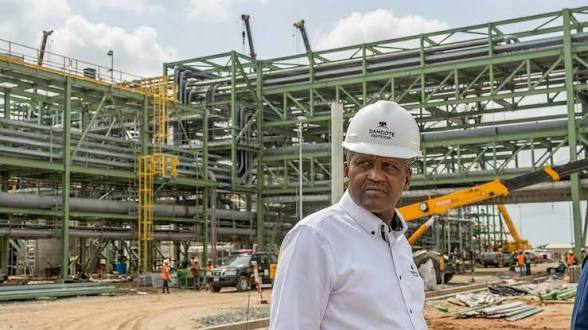
In 2024, while cynics sharpened their tongues, Nigeria quietly pulled off the Dangote Refinery miracle. The largest single-train refinery in human history roared into operation. Built on African soil, by African hands, it shattered the historic curse of crude export dependency. Now, Nigeria refines for itself, and soon, for much of Africa. That is not a dying breath. That is the heartbeat of an empire in rebirth.

Even as global markets shook and economies shrank, Nigeria executed one of the most daring economic surgeries in modern African history: unifying its foreign exchange market in 2023, consolidating multiple exchange rates into a single one. The International Monetary Fund, the World Bank, and even the Wall Street Journal stood still in reluctant applause. The Nigerian naira, which was once battered by artificial valuations, finally had its freedom to fight fair. It stumbled at first, as all warriors do. However, today, stabilisation is becoming a new reality, not a distant hope.

In health, the same nation that armchair critics mock has scored historic breakthroughs. Under the leadership of Professor Muhammad Ali Pate, Nigeria has launched one of the world’s first national rollouts of the Oxford R21 malaria vaccine, a game-changing move in a country that accounts for the highest malaria deaths globally. 

Again, Nigeria has turned pain into policy. The federal government, under this administration, declared a Health Sector Renewal Compact in late 2023 (PVAC), marshalling partnerships with global giants like the World Bank and Bill and Melinda Gates Foundation, channelling billions into revamping healthcare delivery, local vaccine production, and training health workers at an unprecedented scale. No more is health an afterthought; it is now a frontline battle Nigeria is visibly winning. While others talk, Nigeria saves lives. While others point fingers, Nigeria vaccinates its future. 

Infrastructure? While “first-world” cities debate electric railways, Nigeria’s megacity, Lagos, launched its Blue Line Rail in late 2023, the country’s first electric-powered intra-city rail system. A steel artery now pulsing through a once-choked metropolis, easing congestion, breathing new possibilities. In Kano, Rivers, Abuja, and Ebonyi States, massive roads, bridges, airports, and industrial parks rose from the dust — monuments to silent nation-building.

Policy? Courageous policies thundered through governance corridors: the subsidy removal in 2023, ending decades-old economic black hole that bled over $10 billion annually. In its place: strategic investments in health insurance for the vulnerable, transport subsidies for the poorest, and agricultural revolution initiatives. The world’s harshest critics acknowledged it, but the nation’s sons spat on it, too drunk on their self-righteous venom.

In education? Nigeria has ripped the old rulebook. In 2023, the Student Loan Act was signed into law—an audacious leap toward democratising education. For the first time, children of farmers, traders, and artisans now have a gateway into universities, polytechnics, and colleges of education without fear of crushing tuition fees. 

As of 2024, the first batch of beneficiaries has received their loans under the Nigerian Education Loan Fund (NELFUND), breathing hope into homes where education once felt like a broken dream. Now, a total of 525,936 students have registered on the loan platform, with 445,015 applicants successfully applying for financial assistance, representing an 84% success rate for student loan applications under the scheme.

Meanwhile, the accreditation of degrees has also been digitised, with Nigeria becoming the first in Africa to automate this critical gatekeeping process fully. New private universities have sprouted like fresh shoots, expanding access and excellence, whilst Nigerian universities are climbing global ranks. 

They call for “change” yet campaign on the ruins of hope itself. They drape themselves in victimhood, seeking pity instead of respect. The so-called “obedient” torch-bearers, the tribe of Peter Obi, shout of patriotism while waltzing through global forums, slandering their homeland, reducing Nigeria, a giant stirring from slumber to the caricature of a failed state, just to score a few cheap political points.

Calling out leadership is democracy; Denigrating your nation is betrayal.

One builds; the other burns.

Nigeria does not need saviours who love her only when she shines. She needs sons and daughters who hold the line when the storms rage, who sing her greatness even when she falters, who plant seeds of hope, not thorns of despair, into her soil.

To those who mistake criticism for patriotism, remember:

The world does not respect nations that cannot respect themselves.

Call out your leaders.

Demand reform.

March for justice.

But never sell your mother for the price of your pride.

Because when the dust of time settles, and history opens her immortal ledger, it will not be your complaints she remembers, it will be your loyalty.

Oladoja M.O writes from Abuja and can be reached via mayokunmark@gmail.com.

NNPC denies viral video claims

By Muhsin Ibrahim

The Nigerian National Petroleum Company (NNPC) Ltd has rejected allegations from a viral video suggesting that its fuel products are substandard. NNPC called the claims false and based on unverified amateur research.

The company stressed that its fuel is formulated for optimal performance and that a significant portion of Premium Motor Spirit (PMS) sold in Lagos is sourced from the Dangote Refinery, which meets strict quality standards.

NNPC described the video’s spreading as a tactic by “economic saboteurs” to misinform the public and harm its reputation.

The company plans to take legal action against those disseminating false information and urges Nigerians to rely on verified sources for accurate updates.

Petrol prices rise nationwide as marketers shift supply to Dangote Refinery

By Uzair Adam

Major oil marketers across Nigeria have increased the price of Premium Motor Spirit (PMS), commonly known as petrol, from N1,010 to N1,050 per litre.

The Daily Reality gathered that the 4% increase is primarily noted in Lagos and nearby areas.

Meanwhile, independent marketers are adjusting their prices to range between N1,100 and N1,200 per litre, varying by location.

The recent hike reflects Nigeria’s deregulated oil market, where petrol prices are no longer fixed. Due to this flexibility, filling stations across the country show slight price differences, though some stations maintain similar rates.

Industry insiders say the adjustments are linked to the anticipated supply shift to the Dangote Refinery, which oil marketers expect will streamline distribution and potentially impact future prices.

Subsidy Politics: Will Dangote Refinery leave Nigeria running dry?

By Haroon Aremu

Dangote Refinery and the Nigerian National Petroleum Corporation (NNPC), two titans in Nigeria’s oil sector, have become unwitting pawns in a high-stakes game of greed, corruption, and control that threatens forever to alter the landscape of the country’s economy. 

The fallout from this secretive manipulation could send shockwaves across Nigeria and the global oil market. But the question remains: how deep does the corruption run, and who pulls the strings?

As Nigerians struggle with fuel scarcity and skyrocketing prices, a disturbing reality emerges—those tasked with managing the nation’s resources deliberately keep refineries inoperative, creating bottlenecks to enrich themselves. At the heart of this heist lies an even more sinister story: a calculated move by a select few to dominate and monopolise Nigeria’s oil industry by manipulating state-owned enterprises and private ventures like Dangote’s Refinery.

Is the NNPC’s Shady $2.76 Billion Stake in Dangote Refinery a marriage of convenience?

In 2021, when the NNPC acquired a 20% stake in Dangote Refinery for a staggering $2.76 billion, many believed it was a monumental step towards bolstering Nigeria’s refining capacity. But beneath the surface, critics questioned the logic of the government investing public funds into a private venture while neglecting its decrepit refineries, which had been left to rot due to years of corruption and mismanagement. 

Was this a genuine attempt to revive the oil sector or a well-disguised ploy to channel public funds into private pockets? The decision becomes even more dubious when you consider that NNPC’s refineries have been operating at less than 20% capacity for years despite repeated promises of rehabilitation. 

These non-functioning facilities force the nation to import most of its fuel, which conveniently benefits the very cabals that control the import contracts. As these refineries remain dormant, Dangote’s refinery, with its projected 650,000 barrels per day capacity, is positioned to monopolise the market once it becomes fully operational. 

Was the NNPC’s investment a masterstroke of collusion to further empower this monopoly? I wonder if Dangote’s unholy alliance with the government is a favouritism or Strategic Investment.

Aliko Dangote’s influence in Nigeria’s political sphere is well-known. His ability to secure favourable policies has long raised eyebrows. Many believe his success is due as much to his business acumen as his close ties with top government officials. Recent import restrictions, for instance, have practically handed the domestic market to Dangote.

Dangote Refinery’s development, delayed since its original 2016 completion date, has ballooned in cost from $9 billion to over $19 billion. Was this financial mismanagement, or were there deeper, darker forces at play—possibly designed to funnel excess funds into the hands of corrupt officials?

As the cabal’s grip tightens, their influence on oil prices becomes increasingly evident. Dangote’s market dominance will give him unprecedented pricing power. But with such control comes the risk of manipulation. 

The refinery’s vast production capacity could easily be used as leverage to influence oil prices, both domestically and internationally. Many fear prices will be artificially inflated, maximising Dangote’s profits while further squeezing Nigerian consumers.

This scenario becomes even more plausible given the NNPC’s deep involvement in the refinery. With its 20% equity stake, NNPC’s role in pricing decisions cannot be overlooked. Will this be another case of public officials prioritising their private interests at the expense of national development?

As domestic pressures mount and whispers of foreign market dominance grow louder, one question looms: will Dangote begin prioritising foreign buyers over Nigeria’s fuel needs? 

With access to international markets offering better returns and more stable pricing, there is growing concern that the refinery may abandon the local market in favour of more lucrative exports. This could leave the country in an ironic situation, producing refined oil but still unable to meet domestic fuel needs, leading to ongoing scarcity and high prices despite local production.

If the cabals continue manipulating the domestic oil market, forcing prices to unsustainable levels, Dangote might have little choice but to look beyond Nigeria’s borders. 

The timing of the refinery’s commencement raises even more questions. As Nigeria grapples with the controversial removal of its long-standing fuel subsidy, many speculate that this policy shift is designed to align with the Dangote Refinery’s launch. With subsidies removed, domestic fuel prices are expected to skyrocket, conveniently paving the way for Dangote to step in as the dominant player, reaping the rewards of higher prices.

While the government frames subsidy removal as a necessary economic reform, many Nigerians view it as another instance of policies being shaped to benefit the few at the expense of the many. The alignment of these policies with the refinery’s launch timeline is too coincidental to be ignored.

The potential for Dangote’s monopoly to distort the Nigerian oil market. With NNPC’s refineries effectively sidelined and the cabals controlling much of the nation’s oil wealth, Dangote stands poised to dominate every facet of the industry—from refining to distribution. However, monopolies rarely benefit consumers, particularly in essential industries like oil.

As Nigeria’s oil sector hangs in the balance, powerful forces are clearly at play. The cabals’ influence, Dangote’s political connections, and NNPC’s complicity have all converged to create a complex web of corruption, exploitation, and control. 

Will Nigeria’s oil wealth finally be harnessed for the benefit of its people, or will the cabals and monopolies continue to enrich themselves at the expense of the masses? 

One thing remains certain: the truth behind the Dangote Refinery’s rise and NNPC’s role in it could be the bombshell that blows the lid off one of Nigeria’s biggest corruption scandals yet.

Haroon Aremu is a passionate writer and Mass Communication graduate, currently serving as an NYSC member. With a focus on national development, he is keen on leveraging his expertise to drive positive change and welcomes opportunities in public policy, media, and development sectors. He wrote in via exponentumera@gmail.com.

Managing Nigeria’s petrol prices: The way forward

By Usman Muhammad Salihu,

In Nigeria, fluctuating petrol prices have long been a source of frustration for citizens. It’s not just about the financial strain—it impacts daily life, from commuting to work to powering homes. The government faces immense challenges, balancing affordable fuel prices with foreign exchange rate volatility and maintaining a sustainable oil and gas sector. Add the country’s reliance on imported fuel, infrastructure problems, and unpredictable global oil prices, and you have a perfect storm.

The government’s communication around petrol price changes often lacks clarity and consistency, confusing and mistrusting the public. People ask, “What’s going on?” and “Why should we care?”

The Transparency Issue

A significant problem is the lack of transparency in how fuel prices are determined. The government’s lack of clear communication feeds uncertainty and speculation. This situation can be improved by regularly sharing detailed and transparent information regarding the factors influencing petrol prices. 

Nigerians need access to crucial data such as fuel import reports, pricing mechanisms, and subsidy allocations. Making this information publicly available would help build trust and reduce the growing mistrust surrounding petrol price changes.

Collaborative Stakeholder Engagement

The government must also open lines of communication with industry leaders, labour unions, and civil society organisations. These groups have a direct stake in how petrol pricing impacts the broader economy and everyday life.

Engaging these stakeholders in meaningful dialogue can help align expectations, address concerns, and prevent misunderstandings. This collaboration can reduce the public unrest often triggered by abrupt price hikes. Building consensus among all stakeholders can also create a more stable economic environment regarding petrol prices.

Establishing a Predictable Pricing Framework

One of the most critical steps the government can take is establishing a clear, stable, and predictable framework for setting petrol prices. Currently, changes in fuel prices often come as sudden shocks, leaving citizens and businesses unprepared. A transparent pricing model communicated in advance would help mitigate this uncertainty and reduce panic.

When people know what to expect and when they can make better financial plans and avoid the anxiety associated with sudden price hikes. This predictability would benefit individuals and businesses, as they could better manage their operational costs tied to fuel expenses.

Educating the Public on Petrol Pricing

Many Nigerians are unaware of the factors that influence petrol prices, such as fluctuations in the global oil market and government interventions to manage these costs. This knowledge gap contributes to the public’s frustration and misunderstanding.

Launching public education campaigns to explain the variables behind petrol pricing can help citizens make more informed decisions. Using various media platforms to deliver this information in simple, accessible language will foster better understanding and reduce confusion. It’s not just about explaining why prices fluctuate—it’s about empowering Nigerians with knowledge.

Reducing Reliance on Imported Fuel

Nigeria’s reliance on imported fuel is critical to its petrol price volatility. Exploring alternative energy sources and boosting local refining capacity are essential to reducing this dependence. Investment in local refineries, for instance, would not only lessen the country’s reliance on imports but also create jobs and foster economic growth.

Additionally, encouraging fuel efficiency initiatives can help Nigerians reduce fuel consumption. Simple practices like carpooling or using public transportation more frequently could significantly reduce fuel demand, ease supply pressure, and ultimately stabilise prices.

Investing in Alternative Energy Solutions

Another long-term solution is to explore and invest in alternative energy sources. By diversifying the country’s energy portfolio, Nigeria can reduce its dependence on petrol and mitigate the impact of global oil price fluctuations.

Renewable energy sources such as solar, wind, and hydropower could provide sustainable alternatives to petrol. While transitioning to these energy sources will take time and investment, the long-term benefits include energy security, reduced pollution, and job creation in the renewable energy sector.

Building Trust through Human-Centered Communication

Managing petrol pump prices is no easy task, but the government can ease the burden through a more human-centred approach to communication. By addressing citizens’ concerns in a relatable and transparent way, the government can foster trust and reduce the uncertainty often accompanying price changes.

This communication must be consistent and delivered across multiple channels to reach all Nigerians, from urban centres to rural areas. Regular updates, accessible language, and relatable messaging will go a long way in alleviating public frustration.

The Path Forward: A Collaborative Effort

Managing petrol prices in Nigeria is a complex but surmountable challenge. The process can become more manageable with clear, transparent communication and collaboration between the government, industry leaders, and the public. The government can create a more stable economic environment by taking a holistic approach, including educating the public, establishing a predictable pricing framework, and investing in alternative energy solutions.

The complexities of petrol pump price management require collective action. As Nigerians, we must engage with the process, hold the government accountable, and support initiatives that promote transparency and sustainability. Only by working together can we navigate the complexities of petrol pricing and ensure a better future for all.

Conclusion

Petrol pricing is a critical issue in Nigeria, impacting not just individual livelihoods but the broader economy. The government’s current approach, characterised by a lack of transparency and sudden price shifts, contributes to public mistrust and instability. However, by adopting a more transparent, predictable, and inclusive strategy, the government can build trust and create a more stable environment for all Nigerians. Investing in alternative energy sources and educating the public about the factors influencing petrol prices are essential steps in this process.

Managing petrol prices may be a tough job, but it can be made easier with the right approach. Through collaboration, transparency, and innovation, Nigeria can tackle this issue head-on, fostering economic growth and improving the quality of life for its citizens.

Usman Muhammad Salihu is a PRNigeria Young Communication Fellowship 2024 fellow and wrote via muhammadu5363@gmail.com.