Dangote Group

Dangote Refinery and the Malta story

By Zayyad I. Muhammad 

Petrol and electricity are the oxygen of any nation. Once these two crucial resources are restricted, the country struggles to breathe. Many Nigerians were surprised to learn that Nigeria’s petroleum importation from Malta surged significantly to $2.8 billion in 2023, up from zero importation between 2017 and 2022. 

On the other hand, the majority of Nigerians were unhappy with the news that the $19 billion Dangote Refinery is struggling due to a poor supply of crude oil and other hindrances from government agencies that are supposed to support such a national asset.

For most Nigerians, Dangote Refinery represents hope and the expectation of lower petroleum prices. Regardless of people’s opinions about Dangote, he has accomplished what Nigeria has failed to achieve in decades. In fact, in the last ten years, only six countries in the world have managed to build new massive petroleum refineries, including the Dangote Refinery. 

Other countries that have built refineries include China, which has added multiple new refineries like the 400,000 barrels per day (b/d) Yulong Petrochemical Plant and the 300,000 b/d Shenghong Refinery; Kuwait’s Al-Zour refinery with a capacity of 615,000 b/d, which started operations in 2021; Saudi Arabia’s Jazan refinery with a capacity of 400,000 b/d, also operational since 2021; and Oman’s Duqm Refinery, with a capacity of 230,000 b/d, which commenced operations in 2022. Additionally, India has expanded its refining capacity with new units at the Ratnagiri refinery.

Nigeria’s importation of petroleum products was initially intended as a temporary solution to the insufficient supply from its four state-owned refineries. However, due to inefficiency and corruption, this temporary measure has become a permanent solution.

In Nigeria, the prices of refined petroleum products are heavily influenced by import-related factors. There are over ten components contributing to the landing cost of petrol, including freight, port charges, the NMDPRA 1% levy, storage costs, marine insurance, fendering, the NMDPRA COQ and NOA, Q&Q analysis, letter of credit fees, and interest. Additionally, the high exchange rate further inflates the price of imported petrol. To eliminate these extra costs, local refining is the only viable solution. Nigeria’s only option for now is the Dangote refinery.

Many Nigerians, ordinary citizens, and bureaucrats view the $19 billion Dangote refinery as an asset and a blessing. It has the potential to liberate Nigeria from decades of dependence on petrol importation, which is one of the major causes of pressure on the Naira and the scarcity of the dollar. The refinery will position Nigeria on the map of nations exporting crude and refined petroleum products and fertiliser. 

Dangote Fertiliser is one of the largest fertiliser plants in the world, with an annual production capacity of 3 million metric tonnes of urea. Nigeria’s yearly urea fertiliser needs are only 1.5 million metric tonnes. 

Dangote has already demonstrated his capability in the cement industry. With Dangote Cement, Nigeria is a net exporter. Nigeria boasts one of the largest cement industries in Africa, with a combined production capacity of over 58.9 million metric tonnes per year among major producers. It leads the cement industry in West Africa, hosting at least 12 registered companies. Dangote Cement is the largest producer in Nigeria and West Africa, contributing over 35.25 million metric tonnes per year (Mt/yr) to the region’s cement capacity. Due to Dangote’s significant cement production capacity, Nigeria satisfies not only its domestic cement needs but also exports to neighbouring countries, enhancing regional trade and economic integration.

Let the Dangote refinery be! It will transform the Nigerian oil and gas industry into a net exporter of refined petroleum products.

Zayyad I. Muhammad writes from Abuja via zaymohd@yahoo.com.

Of Dangote Refinery and NNPC brawl 

By Usman Abdullahi Koli, ANIPR 

Experts say that the newly established Dangote Refinery might address Nigeria’s energy crisis, but this legacy project is finding its footing in navigating the rigours of International Oil Companies (IOCs). Not only this, but government strategy policy greatly affects operations in the business space. The refinery is facing a fresh challenge from regulatory bodies in Nigeria, which may make or mar its success.

The $19 billion Dangote Refinery project has ignited a fierce debate between the Nigerian National Petroleum Corporation Limited (NNPC) and Aliko Dangote – Africa’s richest man. This flagship project, poised to be the largest single-train refinery in the world, has the potential to transform Nigeria’s economy and reshape the continent’s energy landscape. 

Yet, the dispute between NNPC and Dangote threatens to derail this vision. Can Nigeria find a harmonious balance between private sector efficiency and public sector oversight, unlocking the full potential of this game-changing project?

Aliko Dangote’s vision for the refinery is to reduce Nigeria’s dependency on imported refined petroleum products, saving the country billions in foreign exchange. He emphasises the need for private sector management to ensure efficiency and accountability, citing historical inefficiencies in government-run enterprises. Dangote seeks assurances that his substantial investment will yield returns, expressing concerns about potential government interference that could jeopardise profitability.

On the other hand, the NNPC maintains that it must have a significant role in the refinery to safeguard national interests. The corporation argues that state involvement is crucial to ensure that the refinery’s output aligns with national energy policies and goals. NNPC also emphasises the need for regulatory oversight to prevent monopolistic practices and ensure that prices of refined products remain affordable for Nigerians.

According to Mele Kyari, NNPC’s Group Managing Director, “Our involvement in the Dangote Refinery is to ensure that the project aligns with national interests and that the country benefits maximally from the investment.” Aliko Dangote, however, believes that “private sector efficiency is key to the success of the refinery, and government interference could hinder its progress.”

Dangote might be jittery about the government’s ineffectiveness in running similar assets. His fears would be that he who failed to turn around his refinery successfully wanted a front seat and, perhaps, direction. The business mogul’s aims surpassed the government’s fight against it after the allegations of monopoly attempts by the government. 

Dangote said his friend, who warned him against investing in Nigeria, now mocks him. He was ready to be bought out by the government when the regulatory body said that the refinery’s output was inferior to imported products. This statement ignited reactions from netizens.

The dispute highlights the tension between private enterprise and state control in critical sectors. Both sides present valid arguments that merit consideration. Balancing economic independence with national control, operational efficiency with public accountability, and investment security with public interest is essential to harness the benefits of both approaches.

As the saying goes, “Too many cooks can spoil the broth,” but in this case, finding a harmonious balance is key to ensuring the refinery’s success and, ultimately, Nigeria’s economic stability. Efficiency must be paired with accountability for any project to succeed, and this wisdom applies aptly to the current NNPC-Dangote situation.

Transparency and mutual respect are the pillars upon which this partnership should rest. By acknowledging the strengths and concerns of both parties, Nigeria can move towards a solution that advances the Dangote Refinery project while ensuring sustainable and inclusive growth for the nation.

In the words of Aliko Dangote, “The success of the refinery is paramount for Nigeria’s economic stability.” Mele Kyari also notes, “Our goal is to ensure that the refinery serves the national interest while also providing returns on investment.” Ultimately, the NNPC-Dangote dispute underscores the complexities of managing critical national assets. By finding a middle ground that balances private sector efficiency with public sector oversight, Nigeria can unlock the full potential of the Dangote Refinery and secure a brighter energy future for generations to come.

The path forward lies in a collaborative effort where the private and public sectors work together. If handled with care and foresight, this partnership can transform Nigeria’s energy landscape and set a benchmark for future endeavours. The Dangote Refinery has the potential to be a game-changer, and it is in the best interest of all Nigerians to see it succeed.

Usman Abdullahi Koli wrote via mernoukoli@gmail.com.

Dangote promises higher returns to shareholders

By Ahmad Deedat Zakari

Consumate entrepreneur and African wealthiest man, Aliko Dangote, has made promises of higher returns to shareholders and stakeholders of the Dangote conglomerate

The richest black man, who is the chairman of the Dangote Group, disclosed this in Lagos during the group’s 14th Annual General Meeting held in Lagos on Thursday.

He said, “We will continue to make sure that we keep our shareholders happy, not only the shareholders but all our other stakeholders… Our strategy remains steadfast, focused on organic growth in Nigeria and Pan-Africa while ensuring that Africa’s regional integration becomes a reality. We will continue to contribute to improving regional trade within Africa by building plants across West and Central Africa, guided by our vision of making the region cement and clinker self-sufficient. In addition, we aim to deliver higher returns and value to our shareholders.”

He also noted that despite the challenging economic atmosphere,
the company still made great strides, performed admirably, and remains Africa’s largest and leading cement producer.

He stated, ” In addition, we achieved giant strides in transitioning to cleaner energy, with our cost containment initiative propelling the use of Alternative Fuel (AF) to replace more expensive fossil fuels, such as coal and gas. We also increased the use of Compressed Natural Gas (CNG) for our trucks due to the rising diesel cost environment. These efforts have helped us reduce our cost base and enhanced our flexibility, enabling the Company to respond more effectively to changes in the market. As a result, we recorded revenue and EBITDA growth of 17.0 per cent and 3.5 per cent from the prior year respectively, albeit under unprecedented inflationary pressure. We also achieved a profit after tax of ₦382.3 billion, up 4.9 per cent compared to 2021.”

While speaking further on the success of the group, he stated that the company has generated more revenue in 2022 than any other year.

Dangote Group trains 50 truck drivers to minimize road accidents

By Aisar Fagge

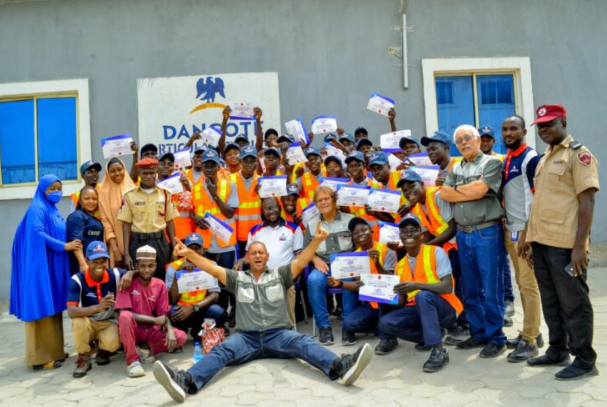
About fifty trainees graduated from the Dangote Articulated Truck Driving School. The effort was to minimize the rate of auto crashes involving its drivers and other road users in the country.

The trainees who celebrated the success amidst joy have passed through a specially designed and rigorous educational curriculum, said the Divisional Director Transport (DDT), Mr Ajay Singh.

Mr Singh, who spoke at the graduation ceremony, said the trainees would now be exposed to practicals through attachments for an additional six months.

The Daily Reality gathered that the school at Obajana is one of its kind, having been the only accredited truck driving academy in Nigeria.

It was learned that the school was commissioned last year by the former Corps Marshal of the Federal Road Safety Corps (FRSC), Dr Boboye Olayemi Oyeyemi.

The effort was to bring solutions to the menacing issue of auto crashes involving articulated trucks in Nigeria.

Mr Singh said that the school would not only bring down the rate of crashes involving articulated vehicles but also positively impact other drivers.

He was quoted as saying, “The ultimate objective was to achieve zero accidents for all subsidiaries in the Dangote Group.

Also speaking, Mr Daniel Marcus Akuso said the intensive training was carried out in collaboration with the FRSC and Fantique Driving Training Centre of South Africa.

According to the Manager of the school, the three months training programme has been a big success and changed the orientation of the trainees.

He said, “This is the only articulated truck driving school in Nigeria where the students are paid stipends, trained, tested, certified, licensed, and employed. Our products are not only for Dangote Cement but for all subsidiaries of the Dangote Group in Africa.”

Women contribute immensely to our success – Fatima Dangote

By Aisar Fagge

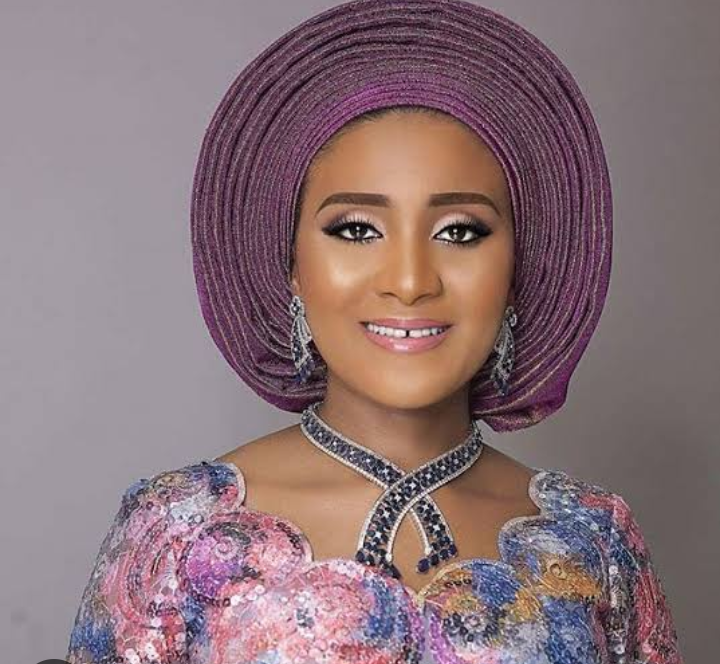
Fatima Aliko Dangote, the Executive Director, Commercial, NASCON Allied Industries, has commended women for playing a crucial role in making the Dangote Group achieve many successes.

The Director made the commendation while opening the International Women’s Day Conference in Lagos and Dangote Cement Plc, Obajana Plant.

She stated that the company had offered its employees many opportunities that helped them improve their personal and professional development.

She added that the group has been working tirelessly to achieve gender equality for all women in the organisation through the investment of numerous innovative technologies and processes.

She stated, “At the plants, we have the Gamma Neutron Activation Analysis (PGNAA) for online analysis, robotic laboratory, and fully automated central control room system equipped with Human Machine Interface technology (HMI) and innovative solutions to drive resource efficiency, process optimisation and mitigate the environmental footprints of our products while delivering quality products that meet the needs of our esteemed customers.

“We are inspired by our superheroes in STEM, and we hope this session increases your awareness of innovation, technology, and digital education, driven by women for women, and learn advancements in digital technology that address how we rethink our daily lives and achieve our personal and professional goals.

“I would like to encourage our women with a few tips on leveraging technology, Equipping yourselves academically and technically, be inspired and inspire others by creating opportunities for regular interactions with female STEM champions and leaders and tapping into opportunities for hands-on experience in the form of volunteering”, she added.

Also speaking at the event, the Chairperson of the Dangote Women Network at the DCP Obajana, Mrs Fatima Kabir Ikunaiye, said the Network has been carrying out several interventional programmes in the cause of women.

Mrs Ikunaiye said some of the programmes include: support for orphanages and vulnerable homes, sensitisation and empowerment of women as well as training them on skill acquisition.

Dangote Group awarded for creating investment opportunities in Africa

By Aisar Fagge

The Dangote Group Tuesday has bagged the First Runner-Up award at the just concluded 44th Kaduna International Trade Fair in Kaduna State.

The group was awarded for its enormous contribution in buoying investment opportunities across Africa through numerous businesses and philanthropic forays.

The Dangote Group made the disclosure in a news release issued to journalists on Monday.

The statement disclosed that Professor Umar Dantsoho, an economist, while speaking to journalists on the event, said the Dangote Industries Limited has been creating investment and job opportunities for Africans through its cement establishments in Nigeria and in Africa.

He said the key to developing the African economy is through the growth of the manufacturing sector, which is a major preoccupation of the company.

The statement added that, “Only recently, Dangote Industries Limited sealed a fresh deal of six million tons per annum with China Sinoma International Engineering which will strengthen local and African production to 57.6 million tons per annum.

“Aside government, Dangote Group is adjudged the biggest employer of labor in Nigeria.

“Speaking also Second Vice President of the Kaduna Chamber of Commerce Industry Mines and Agriculture (KADCCIMA). Alhaji Faruk Suleiman, commended the company for creating opportunities across Africa, adding that the upcoming Dangote petrochemical refinery will change the face of the African economy.

“General Manager, Sales, Dangote Sugar Refinery (DSR) North-West, Alhaji Abdulsalam Waya said the conglomerate would continue to provide opportunities for all willing Nigeria to invest as distributors or as investors in the stock market.

“He added that the theme for this year’s Trade Fare: Value Addition for Sustainable Growth and Development is apt, as Dangote Cement exports its product to several African countries, thereby creating jobs and opportunities across the value chain.

“The company is the major sponsor of the 44th annual event.

“Speaking, President of KADCCIMA Alhaji Suleiman Aliyu described the partnership with Dangote as very important for deepening commercial activities in the country.

“He said the support of the Dangote Group towards the success of the Fair cannot be quantified.

“Speaking to newsmen, the Director General of the Chamber Mr. Usman Saulawa said the Dangote Group is a major sponsor of this year’s Trade Fair and has been sponsoring the annual event.

“He said Dangote Group has been playing the role of supporter and partner for many years. It participation has been adding value to the Chamber.”

“The DG described this year’s fair as unique as there would be a Business Roundtable session that will further help deepens business opportunities for participants.

“The companies that participated under Dangote Industries Limited are Dangote Cement, Dangote Sugar, NASCON, Dangote Fertiliser, and Dangote Sinotruk West Africa Limited.

“A statement from the Corporate Communication Department of the Dangote Group said participants who seek to do business with any of the company’s subsidiaries can avail themselves of such opportunity through a special help desk at the pavilion.

“It described Kaduna State as one of the biggest markets in the country, given its historical position as the political capital of Northern Nigeria,” the statement added.

Alhaji Aliko Dangote loses brother

By Muhammad Sabiu

The richest man in Africa, Alhaji Aliko Dangote, on Sunday lost his younger brother Sani who passed on at a hospital in the United States after a protracted illness.

Sani was the deputy chairman of Dangote Group and had been a major stakeholder in the sectors of mining, manufacturing and the like.

He was also the Chief Executive Officer (CEO) of Dansa Agro-allied Limited.

However, no details have emerged as to the number of wives and kids he had left.