Covid-19

Nigerian banks and the imposition of foreign Corona protocols

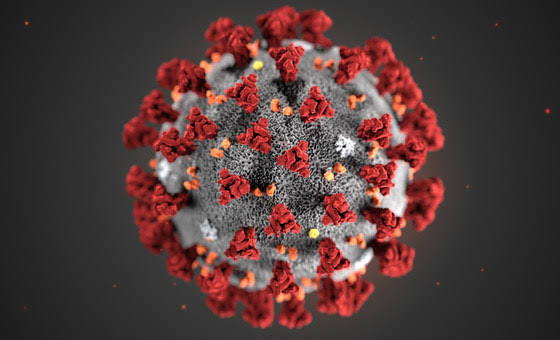
Have you tried entering any Nigerian bank these days? You will have an experience you will never want to go near bank again. The reason is that the banks have taken their Covid-19 protocols to a primitive, cruel and self-destructive level. It is time they throw away their Covid-19 protocols. I have long said if Corona had been what we were made to believe, probably by now we would have all been dead. But fortunately Africa, for unexplained reasons, has been spared the disasters predicted about the pandemic.

Bankers are like all of us when they leave banking halls. They go to markets, schools, airports, motorparks, shopping malls and places of worship where Covid-19 protocols are thrown to the dogs. What they don’t get from the bank they will still get it from outside the banks. If the rest of Nigerians don’t care about Covid-19 protocols, why should bankers be more Catholic than the Pope?

Schools resumed also with their mad frenzy for observing all Covid-19 protocols. But within a week they have gone back to basics. Students don’t have the discipline, patience and above all, the resources to keep faith with Covid-19 protocols. No one can be religious with hand sanitizer, facemask and hand washing. My children tried it and my Chief gets his facemask soaked in soup daily. He loses bottles of sanitizers daily. At his age there is no way he can understand Covid-19 protocols and will not be made to understand the dangers of Covid-19.

But all in all Covid-19 is past behind us. Social distancing and protocols should be part of individual responsibility. Covid-19 or no Covid-19 we are supposed to exercise distancing and hand washing hygiene. But that does not mean we should promote Covid-19 protocols to religious level.

Our African, and to some extent Nigerian Covid-19 is entirely different from the deadly foreign one. This is the best time to acknowledge the local thing over the deadly foreign one. Ours is more friendly and merciful. The banks should know these and stop their stupid and deceptive lies.

Aliyu Nuhu writes from Abuja, Nigeria.

Nigeria at 61: A giant with challenging crises amid opportunities

By Terhemba Wuam, PhD

As Nigeria marks its 61st anniversary of independence, its citizens are stuck in general anomie of despondency. This is due to general insecurity in the country, rising unemployment and high cost of living.

It is also an age of anxiety, with many measures of Nigeria’s socio-economic progress painting a picture of a nation in great distress. Nigeria’s economy has been stagnant, growing at less than 1% cumulatively during the past six years, far below population growth of 2.6%. It also has about 40% of the population of about 200 million living below the poverty line.

The country is equally beset by security and political challenges. Boko Haram insurgents still operate in the North-East. In the North-West, bandits are overwhelming the security forces. In North-Central Nigeria, deadly clashes between farmers and herders continue. And separatist and irredentist agitations resonate in the South-East and the South-West of the country.

Despite these problems, Nigeria has made substantial socio-economic progress, at least since 1999 when it returned to democracy after decades of military rule. It is also a country with huge resources that have yet to be fully tapped. The biggest of these is Nigeria’s educated citizens. The country had a literate population of less than 5% at independence. Now, more than 60% of the population is literate. Also, enrolment into tertiary education keeps increasing.

The past 60 years
A review of the past six decades shows that the Fourth Republic, which took off in 1999, has been Nigeria’s golden era in terms of economic and social indicators. This reality is, however, a difficult one to present to the millions of unemployed who are out of work and struggling to cope with inflationary pressures on food and other basic livelihood requirements.

Since 1999, Nigeria’s economy has grown more than sevenfold. A big chunk of this is explained by the rebasing of the economy in 2014. It was found that the economy was 60% bigger than previous estimates.

Before 2014, Nigeria had been using the 1990 prices and the composition of the economy to determine its size. Yet, a lot had changed since then. For example, telecommunications had grown substantially with the introduction of mobile telephony. Nollywood, Nigeria’s movie industry, has also expanded and morphed into a more professionally organised and run sector.

Nigeria moved from lower-income to lower-middle-income status, based on national income per head of population, during the Fourth Republic. That’s based on World Bank rankings. Other countries in this category include Algeria, Egypt, Kenya, Tunisia, India, Iran and Ukraine.

Economic difficulties
Nigeria’s economic difficulties started in the mid-2010s. Nigeria’s economic fortunes are closely aligned with oil prices which showed a sharp decline between 2014 and 2016.

The World Bank has described the 70% drop during that period as one of the three biggest declines since World War II, and the longest lasting since the supply-driven collapse of 1986.

In response, Nigeria’s economy, which had recorded an average growth rate of 6.68% between 1999 and 2015, has plunged in and out of negative figures since 2016. Within this period, it entered recession twice. Cumulative growth since 2016 has averaged below 1%.

Nigeria has taken steps to reduce its reliance on oil. These measures include the revival of the agricultural sector as well as reducing government reliance on oil revenues by tax revenue from other sources. These have yet to pay off. And the COVID-19 pandemic has aggravated the economic downturn, plunging more people into unemployment and poverty.

Nigeria’s government has invested in agriculture and has articulated economic programmes for other sectors, progress has been hampered by inflationary pressures, low oil prices and a weak currency. The government’s inability to arrest the security crises in several states has also affected agricultural productivity. Other factors include the government’s inability to articulate a clear economic agenda for the country. In addition, its monetary and fiscal policies favouring dual exchange rates, and restrictions on foreign trade through border closures have limited recovery and growth.

A national call to action
Nigeria requires a national leadership with the understanding and capability to set the tone and direction for national growth and development. This must incorporate all citizens, irrespective of ethnic or geopolitical affiliations in a grand vision of collective dynamic growth.

A lack of such political leadership denies the country the possibility of meaningful growth and critical citizenry.

Nigeria remains a country of great potential. Her fountain of possibilities can be found in its growing population of educated citizens. The population of the educated at this very moment in the country’s history is at the threshold or point of national acceleration. An example is the country’s burgeoning tech ecosystem largely driven by young people. It is at a point conterminous with those of the Asian Tigers before their rapid transformation to the developed world and high-income status.

All the fundamentals are indicative of a country at the point of a great leap forward, the role of an enlightened and well-educated population is crucial to that process.

Despite limitations in the education sector, Nigeria has more than 190 universities, the largest university and tertiary education sector in Africa. The country churns out millions of graduates annually, creating the most educated workforce on the continent.

This growth represents both a challenge and an opportunity. It will be a challenge and a huge economic burden if productive opportunities are not found for their engagement. Gainfully employed, these educated millions can be harnessed to drive Nigeria’s economic growth, thus promoting social stability.

Political leadership
Nigeria challenge is not that its political leadership has been corrupt, but that it has had limited ability to govern the country effectively. Nigeria needs a modern political administration where the state is not about maintenance of the status quo and the mere allocation of existing economic values for project and self-aggrandisement.

The state should be reoriented and directed purposely towards a more expansive interpretation with a focus on rapid economic growth and the provision of public goods that empower citizens to become meaningful actors in the overall positive transformation of their society.

Such purposeful action by the national leadership, who must be clearly reformist, is required to alter the trajectory of poor economic growth. It is also required to foster sustained productivity gains in the country’s economy to generate growth to average 6%-10% annually. Such growth is what will enable Nigeria to triple and possibly quadruple its economy within the next 10-15 years in a repeat of the first 20 years of the Fourth Republic.

Inevitably, a growing economy represents the best pathway toward addressing many of the social and economic challenges Nigeria now faces in its seventh decade of independence.

Dr Terhemba Wuam can be reached via terhembawuam@yahoo.com.

Kaduna enumerators, farmers decry deceit and propaganda in FMARD project

By Bature A.

Initially, it appeared that the Federal Ministry of Agriculture and Rural Development and the Project for Agricultural Coordination and Planning (Fmardpace) had come to help farmers and enumerators. However, the ministry has nothing to offer; it has lost focus and all the promises made have turned out to be deceptive.

When India championed and succeeded in the Green Revolution of the 1960s, it was not grounded on propaganda, delay in payment and late distribution of inputs, withholding extension workers allowances, deceit and misleading publications.

According to the Premium Times online report (June 29, 2020), the ministry targeted 2.6 million farmers, while N600 billion was earmarked for the farmers’ fertiliser subsidy, grant and non-interest loan. However, despite its early approval, the program’s impact is yet to be felt by the farmers and enumerators.

The ministry promised to help reduce the negative impact of the COVID-19 pandemic on agricultural production in Nigeria. Recall that AFJP was launched in Funtua Local Government of Katsina state on July 23, 2020, as reported by Daily Trust and Vanguard. The formal commencement of the program took place at the home town of the chairman House Committee on Agriculture.

Agricultural inputs such as fertiliser, pesticide, herbicides, seeds and motorcycles for extension work are displayed to the attendants and reporters. However, after the occasion, the displayed items are nowhere to be seen or heard of again.

A well planned Agricultural support program should be ready to reach beneficiaries by April or mid-May. Although some ABP companies draw their funds from or liaise with the CBN/Nirsal Plc, they distribute inputs early than the government’s ministry itself. It took Fmardpace almost two years to finalise data capturing, reconcile data and initiate distribution of inputs. Many enumerators miraculously escaped snakes’ bites, kidnapping, robbery or being lynched by angry farmers. Enumerators have crossed through the thick and thin weather[s] to carry out their duties. Manual mapping and data capturing, for that matter.

Enumerators suffered rough handling from the Fmardpace. Initially, the ministry promised to pay for the work done weekly after verification of the Surveys done. Subsequently, it takes months to process despite working as an influencer, Orientation and Mobilization agent.

The first and worst of all, maltreatment is the delay or withholding of payment. The second is, invalidating enumerators surveys without sufficient explanation.  Some surveys were rejected without transparency on what makes them invalid. Thirdly, the complete failure to initiate the distribution of inputs to qualified farmers on time.

In addition, enumerators have carried out soil sampling exercises/collections between May 10 to 26, 2020. However, some enumerators managed to collect the samples without being provided with the due equipment. In the plan, the soil sample collecter would get a hoe, shovel, bucket, and a small bag. However, only the bag was provided.

This is a program that had been moving forth and back without progress. On May 26, 2021, the ministry stated that the second level validation for surveys carried out in June and July was completed. On June 30, 2021, the ministry confirmed that the federal government had approved the Fertilizer Subsidy Grant to farmers whose BVN was validated by the NIBSS. On July 2, 2021, the ministry confirmed that payment processing of the first batch of the fertiliser subsidy grant to qualified farmers had begun. 

Enumerators have raised concerns over certain decisions by the ministry. For instance, when Fmardpace said their agents from Abuja would be calling farmers for verification, they were urged to consider some factors, which I’ll list below.

First, the majority of the farmers are rural dwellers. So they may not be able to speak English (which FMARD agents use). Secondly, there was network scarcity in rural areas. If the ministry uses phone calls, then over a half will be disqualified. Thirdly, when the contractors of inputs distribution came, they came with strangers that are afraid to get to the villages or remote towns to verify farmers, which may automatically disqualify farmers.

It’s fascinating to note that enumerators were doing their work patriotically until when mistreatment of the workers worsened. Then, the faces of enumerators and farmers became wallowed in the mud: no payment, no reply, mainly robotics/programmed responses from the situation room computers.  

Enumerators have since submitted to the formalities of the ministry. Seventeen (17) months of the program, the remaining balance of 50% per cent payment, after the second level validation of the surveys, is not being processed. There’s no specified date for it or helpful insight to it.

Enumerators need a clear statement from the new Minister of Agriculture on why their payment was withheld. Fmardpace should take note that there are damages incurred on enumerators for violating the initial arrangements of the payment. The collective wishes of the enumerators, master trainers and farmers is that the new minister should be different from his predecessor.

I recommend that when the next Fmardpace is to undertake farmers surveys, they should build an app that the enumerators can see right away on the screen of their mobile phone when surveys are valid or otherwise. Meanwhile, transparency is enhanced.

When there’s an exercise to be carried out, the ministry should not send people to the field without having their payment voucher on the ground. Adhoc, part-time or extension work should not be like capital projects that would have to be included in the annual budget before payment could be made. Besides, where is the yearly budget of the ministry?

They should also make sure the application they’re building contains all the necessary steps for the required information that NIBSS and CBN need from every beneficiary to be qualified. There’ll be ease of (extension workers) stress of recollection and reconciling of data. 

Furthermore, farmers need agricultural loans the most between April, May and June to prepare in advance. Therefore, if the ministry is genuinely concern and working towards revolutionising Agriculture in Nigeria, they should act on these issues as soon as possible.


Bature A. writes from Kaduna. He can be contacted via glitzinkreviews@gmail.com.

We are all guilty of the state of the nation

By Abdelghaffar Amoka Abdelmalik

The trending news/video of the over 500 doctors that turned up in Abuja at the Saudi health ministry organised recruitment meeting to pick Nigerian doctors for work in Saudi Arabia reminded me of a comment by a Nigerian Professor in a university in the UK sometime in 2008 or so. There was a discussion on the management of PTDF oversee scholarship scheme, the scholars in the UK, their future, Nigeria, and capacity building. He said Nigeria is perhaps the only country in the world that spends a lot of money to train scholars and doesn’t care what becomes of the scholars after the training.

This scenario is common to all the scholars funded with government money. We send scholars to the UK and other countries under PTDF, TETFund,  NEEDS Assessment, NITTDA, etc., and we do not care if they return home or not. As a matter of fact, there is no provision at the home institutions to utilise the knowledge acquired by the scholars during the training on their return. It’s like you were trained for yourself and not for the system. Those who return are not better than they were before they left as no laboratory to train others. They most times become more frustrated.

Then, how do you expect a system that makes no provision for scholars sent abroad for training to make provision for those we managed to train at home? This is the case with our Medical Doctors moving to other countries to practice. Even though we do not have enough medical personnel, medical doctors sometimes find it challenging to get a job as Consultants after their residency. So, why they should not move to the UK, Canada, Dubai, Saudi Arabia, etc., to practice?

We need to deal with the lack of respect and value for our universities, professionals, and intellectuals. It worsened when our leaders abandoned our institutions while taking their families abroad for education and medical care. They are not even ashamed to post their graduation pictures on social media and shamelessly requesting us to celebrate with them. I thought COVID-19 and the lockdown would teach us lessons, especially our leaders, but it seems we have not learned any lesson from experience.

I read a comment sometime back that during the slave trade, our people were forced into slavery, but if it is now, Nigerians will give themselves up to be taken away. They believe that whatever the challenges are in those countries, it will still be better than Nigeria.

The gathering of over 500 professionals (Consultants and Resident Doctors), both Muslims and Christians, for a recruitment exercise to Saudi Arabia called for sober reflection and not throwing insults. These guys do not care about the Shariah law and the stories of racism in Saudi Arabia from those that have worked there. They just want to leave. So we need to sit down and reflect and ask ourselves questions. What future do we want to create for Nigeria and Nigerians?

Our leaders don’t believe in the country. They instead take our money to London, Dubai, and Saudi Arabia, etc., to secure the life of their family members. They patronise medical care in first-class state-of-the-art hospitals established by the leaders of those countries since they can’t make our health sector desirable. And they are not ashamed of that as leaders. On the contrary, they travel for medical tourism with pride and class.

You will not blame our doctors who were trained nearly for free in our “ASUU Strike” public universities by our “ill-equipped” professors to move to London, Canada, Dubai, Saudi Arabia, etc., to help those countries treat our politicians. But, of course, they want a better life too, and they will be paid better there. So, why should they be ashamed of running away when our leaders are not? Why should they endure and MILT (manage it like that) when our leaders aren’t prepared to MANAGE our hospitals and schools LIKE THAT for their kids?

It is unfair to expect the people to be patriotic when the leaders are not — and don’t even seem to believe that Nigeria can work. The president, Vice President, the Governor, the Senators, others that are supposed to make our schools work have their kids in schools in the UK. The president and other political leaders that are supposed to make our hospitals work receive medical care in the UK, Dubai, Saudi Arabia, etc. How will they make a system they don’t patronise to work? They will just think the system is OK for us as they are, and we can MILT.

Come to think of it. How can our doctors be on strike and hospitals shut for patients for over three weeks? It is not surprising. After all, they allowed the ASUU strike to last for nine months and public universities closed for that nine months. They would not have let that happen if they and their immediate families patronised the system that was and is on strike.

The leaders don’t believe that the country can be fixed, and the led also don’t believe the country can work. So let all of us just run away, even to Niger, Cotonou, Rwanda, etc., and let Nigeria fix itself before we return.  

While I am in solidarity with our Medical Doctors on strike, I only wish that the strike is not just about salaries and allowance but also on the proper funding of the healthcare sector so that we can have hospitals similar to the ones they patronise in the UK, Dubai, and Saudi Arabia.

The question now is: Do you want Nigeria to work? Just be the change that you desire—both the leaders and the led.

Meanwhile, the Punch newspaper has reported that the organisers have suspended Saudi Arabia recruitment as DSS disperses doctors, arrests journalists. Is that the way to fix the problem?

It is relieving that despite the ASUU strikes, the breaks, and all the insults on lecturers, our graduate doctors can still pass International examinations and are qualified to work in the UK, Canada, Dubai, and Saudi Arabia. To God be the Glory.

Kudos to our “ill-equipped” professors who have helped train this Nigerian workforce from 100 Level till graduation for the UK, Canada, Saudi Arabia, Dubai, etc.

Maybe I need to run too. Meanwhile, I am still thinking of the country to run to. 

Abdelghaffar Amoka Abdelmalik writes from zaria can be reached via aaabdelmalik@gmail.com.

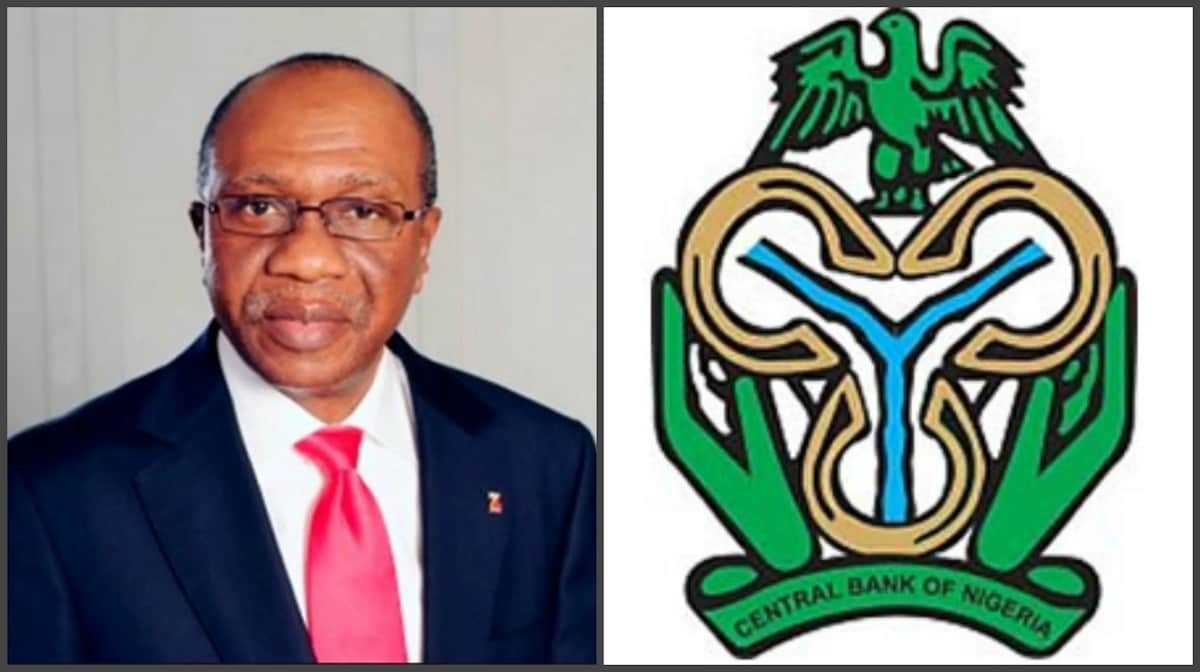
CBN abandons non-interest loan facility for Nigerian Muslims

By Muhammad Abdurrahman

Despite millions of applications by Nigerian Muslims for the Central Bank of Nigeria’s interest-free interventions, the apex bank decides to discard this critical project.

A year ago, on July 24, 2020, the Central Bank of Nigeria (CBN) unveiled series of guidelines for the non-interest financial interventions under its Agri-Business, Small and Medium Enterprise Investment Scheme (AGSMEIS), Micro, Small and Medium Enterprises Development Fund (MSMEDF), the Accelerated Agricultural Development Scheme (AADS) and host of others. Millions of Nigerians, especially Muslims guided by the sermons of prominent clerics and the assistance of many Muslim IT specialists and academics, applied for these CBN’s interventions.

Nevertheless, more than a year later, there has not been any information or explanation from the CBN regarding these crucial programmes. As a result, Nigerians are now left only with speculations, which are gradually gaining ground.

Many people alleged that some interests within the bank and the country’s financial architecture sabotage the interventions, with all the consequences on the Federal Government’s acclaimed concern for integrated development.

In a statement signed by the National Secretary-General of the Da’awah Coordination Council of Nigeria (DCCN), Engr Ahmad M.Y. Jumba said, “It will be a great disservice for the Federal Government, which has been widely applauded for this milestone, to allow this intervention to end up in the dustbin of calculatingly sabotaged policies and programmes. If the CBN is serious, why then the delay in implementation even as it continues to implement other programmes?

“The Da’awah council calls on the authorities concerned to expedite action and make those interventions immediately available, accessible and affordable. At a time when many Nigerians are suffering from extreme poverty and hunger, when small businesses are crumbling due to lack of capital, when millions of youth are roaming the streets with no jobs and no access to start-ups; at this time of hyperinflation amidst dwindling incomes, we find it suicidal for the CBN to remain conspicuously silent about a programme that has all it takes to support Nigerians get out of poverty and put our dear nation on the path of inclusive growth and sustainable development,” Jumba lamented.

Some applicants contacted by The Daily Reality cried out that as is the norm for Muslim faithful, they had resorted to prayers and anticipation for God’s intervention. On this note, Jumba also added that:

“It is our hope that the Federal Government will fulfil its promise by directing the CBN to immediately release the modalities for accessing those interventions in the shortest possible time.

“We will call on all religious leaders, Imams, in particular, to use their pulpits and deliver QUNUT against any person who is deliberately engaged in sabotaging the interventions,” Jumba concluded.

Connecting the unconnected: How CITAD is bridging digital divide in Northern Nigeria

By: Ali Sabo

Internet connectivity is becoming part and parcel of humans’ lives all over the globe. However, the story in the undeveloped countries, especially those living in the African continent, is different and not encouraging. Millions of people in Africa are finding it difficult to access this network, and even in places where these networks exist most of the time, it’s inefficient and costly. Moreover, the emergence of the covid-19 pandemic has exposed how fragile humans are and their dependence on the services internet provides to their daily lives.

Reports have indicated that only less than 50% of the Nigerian population is connected or has access to the internet. Of this 50%, many do not have the resources to own smartphones or computers that will allow accessing these services due to the high level of poverty ravaging the majority of the country’s population. To ensure more people are connected and have access to internet services in Nigeria, the government, through its communications agencies such as Nigerian Communications Commission (NCC) and National Information Technology Development Agencies (NITDA), have brought about many programs such as Universal Service Provision Fund (USPF) and provide free computers and internet services to some communities and academic institutions in the country.

Non-profit organizations such as the Centre for Information Technology and Development (CITAD), whose main focus is using Information and Communication Technology (ICT) to empower citizens, have initiated many programs that will liberate Nigerian people from this digital “darkness” and make the country one of the developed nations in terms of internet connectivity and other areas of human development as the internet gives people ample opportunities in their academic pursuit, businesses and in the health care sector, among others.

To ensure no one is left behind in the process, CITAD in 2016 launched the Digital Livelihood program, which centred on training women on digital technology and digital entrepreneurship in northern Nigeria, focusing on Abuja rural communities, Kano and Bauchi states. It, later on, included Jigawa State. The program has achieved tremendous success as the lives of hundreds of young girls and women have been changed and transformed. Many trained girls have now become digital entrepreneurs; graphic designing, web designers, online marketers etc. In an interview in one of the Nigerian Newspapers, one of the beneficiaries, Sadiya Danyaro, stated that the training “has drastically changed her life and made her become an employer rather than a job seeker. She also described the training as the turning point of discovering her passion and dream”. 

Before the commencement of the community network project by CITAD, supported by the Foreign, Commonwealth and Development Office (FCDO) through the Association for Progressive Communication in Nigeria, CITAD had set up seven (7) computers in the past centres in two states in Nigeria. The aim was to ease internet access to these underserved and neglected communities in terms of internet connectivity. The communities are Tungan Ashere, Dakwa Community, Pasepa, Gaube and Leleyi Gwari in rural Abuja communities, Jama’are and Itas-Gadau in Bauchi State.

At the peak of the Covid-19 pandemic, which highlighted the need and necessity of connecting everyone with an affordable and efficient internet connection, the community network project was launched by APC with support of FCDO in three continents; Africa, Asia and Latin America and championed by CITAD in Nigeria. Community networks are telecommunications infrastructure deployed and operated by local groups to meet their own communication needs and also a communications infrastructure, designed and erected to be managed for use by local communities. This communication needs can be voice, data, etc. and can be a point of convergence for community to come together to address their common community problems.

This initiative is aimed at enhancing the capacity of communities to design, deploy and manage community networks to meet their communication needs while at the same time engaging regulators and other relevant policymakers to enact policies and provide the support that could enhance the flourishing of community networks in the country. Due to resource constraints, CITAD piloted some sites in seven communities across three states: Jama’are and Itas in Bauchi State, Kafanchan in Kaduna State, and four sites in the rural communities of Federal Capital Territory, Abuja (Tungen Ashere, Dakwa Community, Pasepa and Leleyi Gwari).

Some of the activities carried out by CITAD under this project include training of the community champions in these communities on the need for setting up community network centres in these areas and on advocacy to engage their representatives more effectively; forming a community network advisory committee which consists of individuals from Civil society Organizations, ICT sector, Government and members of the communities; high-level engagements with government (NCC and NITDA), engagement with House of Representatives and championing discussions on designing policies on community network in Nigeria.   

So far, with persistent engagements and advocacies visits by CITAD, progress on setting up community networks in Nigeria has been made. Through the House Committee on ICT, the Nigerian government has drafted a bill that contains provisions on community networks; Itas and Jama’are local governments, both in Bauchi State, have donated a piece of land to CITAD to build community network centres in their communities. In addition, following meetings with CITAD, NCC has indicated that it will develop a policy to guide the development of community networks in the country.

Ali Sabo is the Campaigns and Communications Officer of CITAD and can be reached via his email address: aliyuncee@gmail.com or his Twitter handle @a_sabo12.

Skills Beyond School (II)

By Najib Ahmad, PhD

Some remote jobs require intermediate or advanced skills, such as machine learning, computer vision, and natural language processing. These need you to have a good understanding of some areas in mathematics to solve computational problems. Design and analysis skills in Electrical, Mechanical, Civil, Building and Architectural disciplines also require one to have adequate skill in learning-related software such as Matlab, Simulink, Ansys, Autodesk AutoCAD, StormCAD and ArcGIS, 3D Studio Max, Blender, among others. Besides all these, adequate knowledge of computer programming skills is essential. Always utilise the opportunity for an internship or industrial training or student industrial work experience schemes assigned by the school because they are good places for learning and engagement.

Skills acquisition does not only stop in science and tech-related areas, as I earlier mentioned. Whatever major you study in school, there is a skill to gain in it! So grab the opportunity while you still can. Everyone you admire now started somewhere. For instance, if you major in social sciences or arts and related disciplines, acquiring effective communication skills, excellent writing skills, and outstanding data analysis skills can take you to places you never anticipated.

And most importantly, from any discipline, you need to possess sound knowledge synthesis and critical thinking skills. There are good websites to look for a job that matches your skills, such as www.fiverr.com, www.upwork.com, www.freelancer.com, and www.flexjobs.com. The point is: whatever you study, there is a skill to add to it! Just be damn good! The ways to learn them are lengthy yet straightforward. For some, you may need up to six months of dedication or even a year or more to master a particular skill. What matters is, put your best effort as you usually do to pass your university/school courses exams.

In some cases, some people want to advance their careers, and these are all for you. And always remember that age does not matter in this journey. Even if you find yourself somewhere in mid-life, it’s not too late. So many people have had a rethink about their choices and goals in life much later and still make it.

Earlier I remarked that these skills are for everybody who wants to do good for himself. School education (higher education) and skills acquisition are not mutually exclusive; you can blend and achieve both at once. You may have seen that some people argue about which is better between the two, especially in times of uncertainty like now when jobs are scarce. Their point can only be substantiated when the goal was to compare learning a particular skill for a single purpose through extensive training or vocational training education and the school education system in Nigeria. However, you can begin to craft different skills at any level of your study because the current curriculum limits and is not in tune with the current reality about jobs. Hence, I titled this piece ‘Skills Beyond School’.

Arguably, most people wrongly perceive that skills, perhaps largely if not all, are intended only to be technical (Tech skills), and it is for technical people. That is a wrong, misleading impression. ANYONE can learn and master a skill in (or out of) their field of study. It is not rocket science. The energy you use elsewhere – or on social media – can be channelled to where you would surely benefit, even if not for financial gain, but knowledge gain.

For instance, anyone can learn entrepreneurial skills. But, in this case, do not seek short-term rewards! Even the owners of Microsoft, Google, Tesla, and Apple and most likely other ‘big names’ in this field you hear in your locality started their entrepreneurship journey by learning computer programming and other skills. So, begin something somewhere; no matter how little it might be, the change would surprise you one day.

And as you are reading this, I know you are thinking about the possibility of acquiring the skill desirable to get these kinds of jobs and finally be able to work for someone who didn’t even know you, especially outside Nigeria. The fear is normal – many people have shared this doubt at the beginning. I have friends (yes, my friends) who are currently doing remote jobs and cashing out monetary rewards in different fields of skills! Huh, I sound very promising. Because I believe you can also do it. One of these friends is managing a big project remotely. Isn’t that interesting? Imagine in this economic phase, and you have an extra job that provides you with additional benefits, considering that they are all employees of other sectors. FYI, students or graduates like you in southern Nigeria have been enjoying these remote jobs for ages. So, wake up.

What if you believe that everyone doing an online remote job is a potential criminal? In that case, the thing is, you are deceiving yourself. It is particularly irritating for me to see that we like to excuse our premeditated and comforting laziness (pardon the word). Besides, learning some skills can even give you an upper hand in applying for a master’s or PhD scholarship worldwide.

Finally, to reduce the gap or, in other words, to balance the economic growth between men and women, particularly in the North, we need to encourage girls to join the do-it-yourself kinds of skills acquisitions right from secondary school. If I am to be candid, I would tell you that we are left behind in everything. However, it is not too late for us to change the situation for the better. Don’t forget that life goes on even if you do nothing, and it is up to you to catch up. Just wake up!

Dr Najib Ahmad is a Postdoctoral Researcher at Shandong University, China. He can be contacted via namuhammad03@gmail.com.

Nigeria shuts UK High Commission as official test positive for COVID-19

By Muhammadu Sabiu

The office of the Nigerian High Commission in the United Kingdom has been shut following suspected cases of coronavirus infection at the building.

In a statement released on Thursday by the Commission, the office would be closed for ten working days.

“The Head of Immigration Section and two other officials went for a meeting at the Home Office.

“At the entrance, Coronavirus test was administered on them, and one of them tested positive to COVID-19. The affected officer immediately isolated while the other officials, who tested negative, will also isolate for the next 10 days.”

The Commission further indicated that all officials of the Mission would be compulsorily tested for COVID-19.

In the statement, it added, “In line with COVID-19 regulation and the need to adhere to the rules and regulation of the host country, the Mission will close down for the next 10 days, in order to observe the mandatory isolation of those who were in contact with the affected officials.”

Skills Beyond School (I)

By Najib Ahmad, PhD

Thanks to the existing curriculum in Nigerian schools (its directions, objectives, and preferences), students who wholly rely on this system hardly possess any tangible skill, which would prepare them to become self-directed or independent or job providers. They can also barely avoid queueing the assembly of youths whose over-dependence on the government-provided jobs is noticeable countrywide. Any thoughtful country that cannot provide jobs for its youth population knows the gravity of its future, which may be bleak. Fortunately, this is not a lonesome fight for Nigeria. It is a common challenge bedevilling the world today from the Far East, West to the far South Mediterranean countries, including developed and developing parts of the world.

There is a lack of adequate jobs everywhere, possibly for several divergent reasons. It is shared treachery, especially with the continuing world’s economic meltdown due to many seen and unseen factors. So, as a Nigerian, please do not take it hard or shudder; imbibe water and relax a trifle because we are not alone in this mess. There may be an advantage to every saddle moment.

Since the beginning of Covid-19, some countries have imposed total or partial lockdown–longer or shorter. These changes in our lives have handicapped the economy of nations and shattered peoples’ economic stability. On and off, many countries are still struggling with lockdown, which eventually forces people to work from home. From reports, you can say that the pandemic exposes the profound weaknesses and causes alarming panic in many countries previously seen as organised and the superpowers (aka God’s own nations). As a result, many people lost their jobs even in those powerful countries. Schools, universities, laboratories, markets, factories, and businesses were all closed, places of work and worship across the world were abruptly shut.

Consequently, different governments and policymakers have realised how vulnerable conventional job systems are. Thus, they are implementing strategies and gradually understanding the need for robust, better approaches to tackle these unprecedented changes. Policymakers have recommended and implemented novel ideas to impact schools, business owners, and entrepreneurs in countries affected by this negative development to make the economy viable and uphold the economic stability of their citizens.

For instance, several schools and universities have switched to remote instruction, in other words, digital learning. Due to the compelling need for endurance, human beings are social creatures who resiliently adapt and quickly learn to familiarise themselves with any given circumstances. People with different essential skills grabbed advantages from the emergent changes. They include but are not limited to computer skills that allow you to carry out remote jobs–working from non-typical office space. Besides, they are the kinds of do-it-yourself skills; they are not the specific skills you can learn from the traditional vocational training school. Suppose the government has plans to train people in such specialisation through vocational training school. In that case, it is a potential task and could easily invigorate people’s economic stability and prepare youth for the path of independence.

Here are a few examples of remote jobs that you can do from any place: (a) Computer programming/Coding; (b) Web development/design and Android or iOS developer; (c) Data science; (d) Content writing, copywriting, copyediting, transcription, and translation; (e) Graphic design; (f) Digital marketing; (g) Video editing; and Virtual assistant, and so forth. Of course, these jobs existed before COVID-19. However, they took a new turn and became enormously popular since the onset of the outbreak, thanks to their necessity and worth in our everyday lives. Thus, the everlasting need cannot be trammelled.

And every person who has no prior computer science/technology diploma or degree can master these skills. It does not matter whether or not one is from science or non-science-based disciplines. All you need is an android/iOS phone, while some require a desktop or laptop computer. Above all, you also require determination in learning and mastering any of these skills. And the good thing is, they are now taught in many online learning platforms for free or for a cost as either certified short courses or nano-degree programs.

The paid access courses are not very expensive if you compare them with the value of what you will learn and its advantages afterwards. Sponsored by the tech giant companies and other government sectors like Microsoft, Google, European Commission, and Universities, platforms such as Udacity, Udemy, FutureLearn, and Coursera offer massive open online courses (free).

YouTube is similarly often graded as the best platform for learning anything; you can use the platform to learn any skill you wish. So if you are a book person, look for the best ones in your field, learn, and practice. Even some establishments from Nigeria are taking part in this skills acquisition training program for the youths, but you hardly see these opportunities discussed in northern Nigeria’s cyberspace. Recently, I encountered another scholarship announcement for a Nanodegree scholarship in many essential skills in varieties of disciplines, which Access Bank, Nigeria will sponsor.

Dr Najib Ahmad is a Postdoctoral Researcher at Shandong University, China. He can be contacted via namuhammad03@gmail.com.