Corruption in Nigeria

Bawa unveils explosive book on Nigeria’s fuel subsidy scandal

By Muhammad Sulaiman

Abdulrasheed Bawa, former chairman of the Economic and Financial Crimes Commission (EFCC), has released a revealing new book that exposes the depth of corruption in Nigeria’s petroleum subsidy regime.

Titled The Shadow of Loot & Losses: Uncovering Nigeria’s Petroleum Subsidy Fraud, the book offers a detailed, insider account of one of the country’s most expensive financial scandals. Drawing from his experience as a lead investigator in the 2012 probe into fuel subsidy fraud, Bawa unveils how trillions of naira were siphoned through fraudulent schemes.

According to the book, corrupt practices ranged from ghost importing and over-invoicing to manipulating shipping documents and round-tripping—all of which were aimed at exploiting the subsidy payment system. 

Bawa also highlights the roles played by both complicit officials and private sector actors, citing systemic weaknesses and widespread collusion.

“This is not just a chronicle of fraud,” Bawa said. “It is a call to action — a demand for transparency, accountability, and reform in Nigeria’s public finance management, especially in the oil sector.”

Published by CableBooks, an imprint of Cable Media & Publishing Ltd, the book is now available nationwide through RovingHeights Bookstore. It is already being hailed as essential reading for policymakers, journalists, and anyone concerned with governance and accountability in Nigeria.

EFCC hands over seized 750-unit luxury estate to Housing Ministry

By Maryam Ahmad

The Chairman of the Economic and Financial Crimes Commission (EFCC), Ola Olukoyede, has officially handed over a confiscated 750-unit luxury housing estate—previously linked to former Central Bank of Nigeria (CBN) Governor, Godwin Emefiele—to the Minister of Housing and Urban Development, Ahmed Musa Dangiwa.

The handover ceremony took place in Abuja on Monday, marking a significant milestone in the federal government’s efforts to repurpose assets recovered from corruption cases for public benefit.

Speaking at the event, Olukoyede reaffirmed the EFCC’s commitment to transparency and accountability, emphasising that the recovered property will now serve the interests of ordinary Nigerians, particularly in addressing the country’s housing deficit.

In his response, Minister Dangiwa commended the EFCC for its efforts and assured that the housing units would be integrated into the Renewed Hope Cities initiative to provide affordable homes for low and middle-income earners.

The estate was seized as part of ongoing investigations into alleged financial misconduct involving Emefiele, who is currently facing multiple corruption-related charges.

Corruption and market distortions in Nigeria: A historical perspective

By Muhammad Usman

Markets do not exist in isolation; they rely on trust, fair competition, and robust institutions. When corruption remains unchecked, the market becomes skewed in favour of a select few, and ordinary individuals bear the consequences. 

Over the decades, Nigeria has experienced corruption at different levels, from the military era to democratic governments. This article examines corruption under different administrations and how it has affected various sectors of the economy, benefiting elites like MKO Abiola, Aliko Dangote, Mike Adenuga, and other politically connected businessmen.

Under General Ibrahim Badamasi Babangida (IBB), Nigeria’s oil and gas industry, which should have been a national blessing, became a tool for personal enrichment. Instead of promoting a competitive and transparent market, Babangida awarded oil licenses to individuals and companies with close government ties.

A clear example is Mike Adenuga’s rise, who received an oil block from Babangida’s government. This preferential treatment enabled him to build a substantial business empire, including Conoil, while smaller enterprises lacking political connections were excluded. Likewise, Aliko Dangote, who later became Africa’s richest man, gained immensely from government-backed monopolies and exclusive importation rights.

During the first Gulf War (1990–1991), Nigeria earned an estimated $12.4 billion in oil revenue, which was never accounted for. The Pius Okigbo Panel (1994) revealed that these funds were squandered on questionable projects and private accounts instead of being used for national development. Ordinary Nigerians saw no benefit from this windfall, facing rising inflation and economic hardship, while a few became extraordinarily wealthy.

One of Babangida’s most significant economic policies was the 1986 Structural Adjustment Program (SAP). While it was meant to liberalize the economy, it favored those with government connections. Under SAP, state-owned enterprises were privatized, but instead of an open and competitive process, these businesses were sold at giveaway prices to Babangida’s allies.

For example, MKO Abiola, a wealthy businessman and close associate of the regime, gained immensely from these privatisation deals. Meanwhile, ordinary Nigerians suffered as the naira was massively devalued (that’s the beginning of the naira devaluation) that continues to haunt us to this day.

Babangida’s government also enabled massive corruption in public contracts. One infamous case was the $150 million Ajaokuta Steel project, which was riddled with mismanagement and corruption. Similarly, when Babangida moved Nigeria’s capital from Lagos to Abuja in 1991, many development contracts were inflated or abandoned, yet payments were made to political allies.

Furthermore, consider the power sector scandal during Olusegun Obasanjo’s administration, in which over $16 billion was allocated to electricity projects with little to show for it. Examine the Halliburton bribery case from that period, where Nigerian officials allegedly received $180 million in bribes from foreign contractors in exchange for lucrative government contracts. Despite the overwhelming evidence, many individuals implicated were never prosecuted.

During this period (Obasanjo), Aliko Dangote’s business empire expanded rapidly, as he received exclusive waivers and importation rights. While many businesses struggled with high tariffs, Dangote was given government-backed monopolies in cement, sugar, and flour, ensuring that competitors could not challenge his dominance. 

Muhammad Sani Usman writes from Zaria and can be contacted at muhdusman1999@gmail.com.

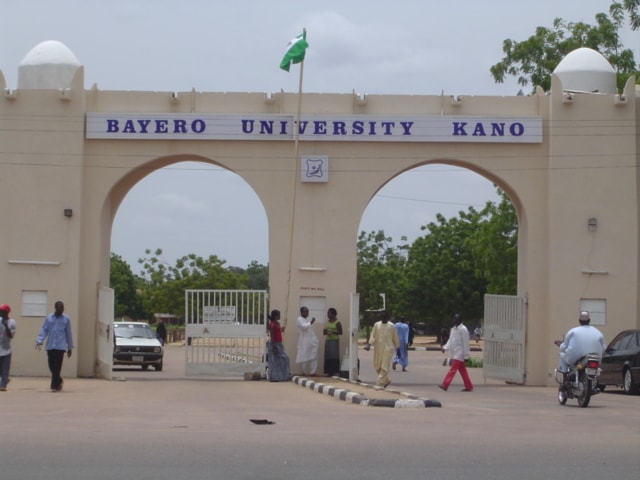
Corruption Allegation: An open letter to BUK VC

Dear Prof. Sagir Adamu Abbas, 

Although I doubt you could access this letter, I consider it necessary after two failed attempts to obtain relevant information from the office of the registrar of Bayero University, Kano (BUK).

After following this issue for over six months, expecting the school to do the needful, I am disappointed that this great institution continues to give the public room to question its integrity, especially when such involves deceiving a newly established institution by inflating figures and withholding surplus money belonging to students.

It has been alleged that the management of BUK inflated the figures of students’ school fees in the data shared with the National Education Loan Fund (NELFund). As a result, students applying for loans to pay their registration fees met higher amounts already pre-entered on their dashboards and submitted their applications since there was no option of altering the figures. Consequently, NELFund sent the pre-entered amounts to BUK to cover the students’ registration fees and expects each applicant to repay the same after graduation.

I know a student who needed N95,500 to pay his registration fees, but when he wanted to borrow from NELFund, he met N110,000 on his application dashboard. He submitted it like that, and his application was approved in June 2024. However, owing to pressure from BUK, he sought money and paid his registration fees, believing in the school to do the needful once it received money from NELFund.

Fast-forward to January 2025. The school refunded him N95,500 (the exact amount he paid as registration fees) without explaining the N14,500 surplus it received from NELFund. 

Another student who needed N101,500 was forced to borrow N105,000 from NELFund, with BUK keeping the extra N3,500. 

In addition to contacting these two students, I have read dozens of posts and comments by BUK students on social media (concerning this issue) between August 2024 and now, with no single student mentioning having information about their missing money. However, some students are afraid of victimisation, hence warning their mates to be careful with their expressions regarding the issue.

Sir, each of these poor students is expected to repay the exact amount BUK received on their behalf. As a consequence, it is absolutely wrong for the school management to keep the money.

I must mention that the BUK’s singular act of providing wrong data to NELFund could jeopardise the chances of a lot of other potential beneficiaries because the Fund could distrust other institutions henceforth.

I considered this letter necessary after taking some steps, notable of which are as follows:

On June 30, 2024, NELFund responded to my questions via X (formerly Twitter) as follows:

“All institutional fees on the portal were provided by the institution who (sic) themselves are autonomous under the law and not by NELFUND. Should you have any questions regarding your institution fees, kindly contact the competent authorities of your institution.

“According to the Establishment Act, NELFUND reserves the right to determine the interest payable on every loan. In this case, NELFUND have (sic) determined that the interest rate is zero.”

Also, on January 16, 2025, I emailed the registrar of BUK to seek clarification regarding the missing funds belonging to students. Fortunately, I received the following response about an hour later.

“Good morning Ishaka, 

Thank you for your email. I will review the issue you’ve raised and respond accordingly. 

Kind regards

Haruna Aliyu 

Registrar”

Nonetheless, after waiting for six days without receiving any feedback, I sent a reminder. However, at the time of writing this letter, I have still not received any relevant information.

An institution like BUK is supposed to be the epitome of accountability and transparency, so I humbly request that you consider doing the following as soon as possible.

Consider sending the surplus money to the rightful owners—the affected students. 

After that, explain the reasons for the wrong figures and the delay in disbursing the surplus to them.

Lastly, explain to NELFund why the school sent the wrong figures to represent the value of students’ school fees.

It is worth stressing that all of the above actions are necessary damage control strategies, so each should be carried out and openly communicated. In addition to helping BUK improve its public image, these strategies could help the authorities of the institution to avoid probable consequences of their unethical and illegal actions.

Yours sincerely,

Ishaka Mohammed

Tinubu ranked third in global corruption and crime list for 2024

By Abdullahi Mukhtar Algasgaini

The Organized Crime and Corruption Reporting Project (OCCRP), an organisation focused on investigating global corruption and crime, has announced the list of the top individuals involved in corruption for the year 2024. Nigerian President Bola Ahmed Tinubu ranks third on this list.

OCCRP conducted this selection by gathering votes from people around the world to identify those who have significantly promoted corruption, dishonesty, and increasing poverty in their countries.

In this year’s list, President Tinubu secured the third position, following the former president of Indonesia, Joko Widodo. The president of Kenya, William Ruto, received the most votes. 

However, the prestigious “Person of the Year” award was given to former Syrian President Bashar al-Assad, who is said to have fled to Russia after years of plundering his country’s wealth.

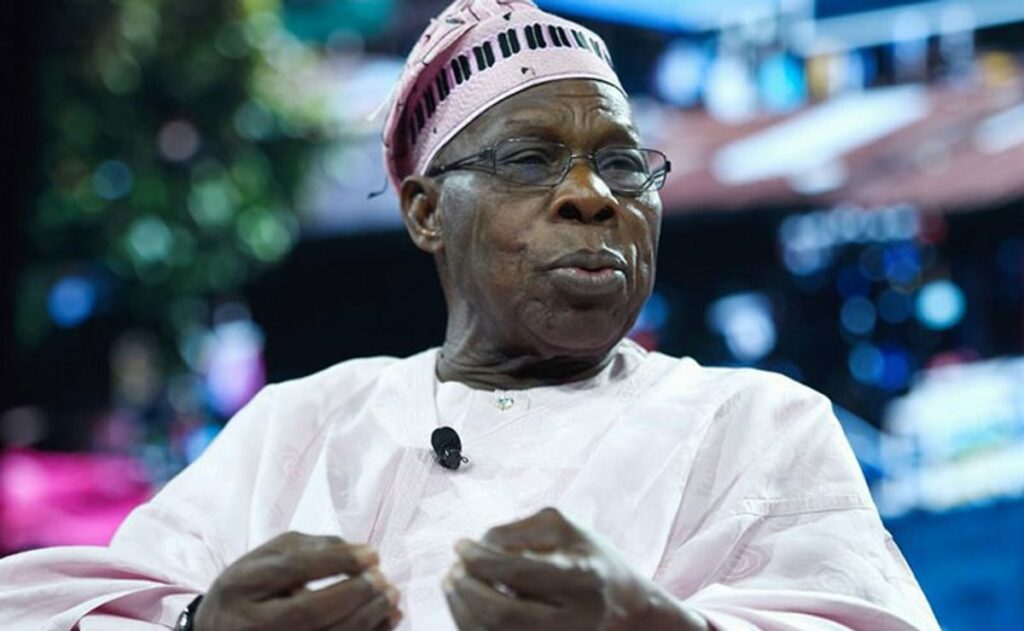
Obasanjo advocates leadership accountability in anti-corruption fight  

By Uzair Adam 

Former President Olusegun Obasanjo has emphasized that the fight against corruption in Nigeria must begin with accountability at the highest levels of leadership to inspire public confidence and ensure effective governance.  

Speaking during a virtual interactive session tagged “Boiling Point Arena” on Sunday, hosted by a private radio station in Abeokuta, Ogun State, Obasanjo asserted that leadership plays a pivotal role in combating corruption, which he described as deeply entrenched in Nigerian society.  

“The best way to fight corruption is by starting from the head. Leadership must set the example for transparency and integrity to achieve meaningful progress in this battle,” he stated.

Several private radio stations in Abeokuta broadcast the session, which focused on Obasanjo’s legacies and views on contemporary Nigeria.  

Highlighting the complex nature of corruption, Obasanjo likened it to a “babbar riga,” saying, “If you fold it on one side, it falls apart on the other side. 

It is not a one-day affair, nor is it limited to one regime. It must be a consistent and daily effort. Once any regime lets its guard down, corruption spreads.”  

The former president called for reforms in the recruitment and appointment of leaders, advocating for merit-based selections over political or tribal considerations.  

On leadership, he argued that only leaders ordained by God are likely to succeed, warning against self-made leaders or those installed through corrupt or malevolent means.  

“We must acknowledge that while some leaders are prepared by God, others may be made by Satan. The power of Satan is real, and it must not be underestimated,” he remarked. 

Obasanjo concluded by urging Nigerians to remain vigilant and committed to holding leaders accountable, stressing that corruption can only be curtailed with sustained effort and collective responsibility.

Who enables hungry leaders to steal from the marginalised poor?

By Haroon Aremu

The world is reeling from a relentless storm of inflation that knows no borders. Post-pandemic recoveries have become nightmares for many, with economies struggling to keep pace with skyrocketing demands. Disrupted supply chains—fueled by the devastation of COVID-19 and further shattered by the Russia-Ukraine war—have left nations gasping for stability. Commodity prices for essentials like oil, gas, and food have surged, igniting a crisis felt most acutely by those already on the edge of survival.

Global inflation hit 8.8% in 2022, shrinking consumer spending and pushing 150 million people into extreme poverty. Economic slowdown and uncertainty have gripped every continent, turning hopeful recoveries into distant dreams. In one sentence, we can say, “The Global Economic Chaos: A World on Fire”. But if the global economy is trembling, Africa—already vulnerable—is teetering on the brink of collapse.

With inflation soaring to 12.3%, Africa is caught in a spiral of despair. Food inflation hit 15.6% in 2022, driven by droughts, conflict, and the uncontrollable price surge. Energy costs have become unmanageable, soaring by 20.5%, and with local currencies crumbling against the U.S. dollar, daily survival has become a question mark for millions.

The hope of a unified, self-reliant Africa through initiatives like the African Continental Free Trade Area (AfCFTA) seems increasingly remote as corrupt leadership and poor economic management derail potential progress. Sigh, Africa’s Plight: A Heavy Toll on the Weakest

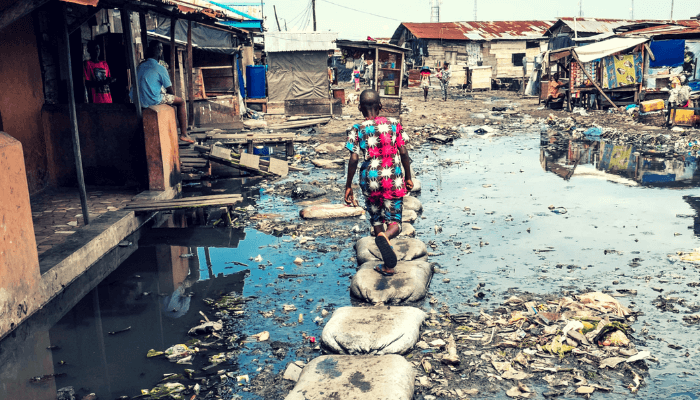
Now to Nigeria’s Economic Downfall: A Land Bleeding Under the Weight of Inflation. Nigeria! Africa’s largest economy is sinking under the weight of its own ills. With inflation at a devastating 31.7% as of February 2024, Nigerians face a nightmare scenario where everyday life becomes a battle for survival. 

Food prices have skyrocketed due to domestic challenges like drought, conflict, and the fallout from removing fuel subsidies. Transportation costs have become unbearable, and with the Naira weakening against foreign currencies, the cost of imported goods has skyrocketed.

Yet, these economic problems are not only the result of natural or external factors. Nigeria’s reliance on oil exports has left its economy vulnerable to the volatility of global oil prices. Corruption and inefficient supply chains worsen the impact, while a broken infrastructure leaves the country incapable of delivering basic services.

As Nigeria’s economy crumbles, its leaders—those entrusted with the nation’s welfare—have instead chosen to enrich themselves. Public funds meant for development are looted, while ordinary citizens—whether struggling innocents or corrupt poor—are left in despair. Yahaya Bello and Rochas Okorocha have been accused of dipping their hands into funds meant to lift Nigeria out of the abyss. The worst part? The justice system, weak and compromised, seems incapable of holding them accountable.

Yahaya Bello, for instance, has mastered the art of playing “hide and seek” with the law, knowing that in a system as broken as Nigeria’s, his chances of facing real consequences are slim to none. Meanwhile, regular citizens, including “yahoo boys” and even innocent individuals, are being hunted and prosecuted with swift brutality. This stark contrast between how the law treats the powerful and the powerless is a cancer eating away at the soul of the nation. Who protects the people if the leaders steal from the innocent and the corrupt?

Should all this be blamed solely on President Bola Ahmed Tinubu? Or is there a broader problem that goes deeper into the fabric of Nigeria’s leadership and society?

The mismanagement of Nigeria’s resources is not only the fault of a select few in power. It is the collective failure of all those in leadership positions who have turned governance into a self-serving endeavour. Governors, senators, and other public officials have consistently failed to deliver on their promises, leaving citizens to bear the brunt of their incompetence.

But are the citizens themselves free of blame? The culture of apathy that pervades Nigerian society has allowed this systemic rot to fester. When people fail to hold their leaders accountable by demanding better governance or active civic participation, they become complicit in destroying their nation.

If Nigeria continues on this path of corruption, injustice, and economic decay, the consequences will be catastrophic. The poverty rate is already climbing at an alarming pace, with an estimated 87 million Nigerians living below the poverty line. This number will only increase as inflation pushes basic commodities out of reach for the average citizen.

Social unrest is bubbling beneath the surface, waiting for a spark. Frustration and desperation are building, and if left unchecked, they could lead to widespread violence and instability. As Nigeria’s institutions crumble, its brightest minds will continue to flee the country in search of greener pastures, further accelerating the brain drain that has left Nigeria without the intellectual capital it needs for progress.

Decisive action is required to prevent Nigeria from falling into the abyss. For the government, transparency and accountability must become non-negotiable. Strengthening institutions, particularly the justice system, is critical if corruption is to be rooted out. Public funds must be directed toward tangible development, focusing on infrastructure, education, and healthcare.

For citizens, the time for apathy is over. A collective awakening is needed, where people demand better governance at all local and federal levels. Nigerians must realise that their silence is contributing to the nation’s downfall. Only through collective effort—by both government and citizens—can the cycle of corruption and economic ruin be broken.

Haroon Aremu Abiodun is a mass communication graduate and an NYSC member of the PRNigeria Center in Abuja. He can be contacted via exponentumera@gmail.com.

Ex-minister allegedly diverts N33.8 billion Mambilla project funds to buy Abuja properties

By Uzair Adam

A Federal High Court sitting in Abuja heard testimony from Abubakar Kweido, the first prosecution witness (PW1), in the trial of former Minister of Power, Saleh Mamman.

Kweido testified that Mamman allegedly used funds from the Mambilla Hydro project account to purchase properties in Abuja.

According to Solacebase, the Economic and Financial Crimes Commission (EFCC) has charged Mamman with 12 counts of conspiracy and money laundering involving N33.8 billion.

During Wednesday’s proceedings, Kweido, an EFCC operative, stated that funds released to the former minister were traced to properties in Kado Estate and Wuse 2, Abuja.

Kweido also revealed that the investigation findings were presented to Mamman, who denied any connection to the properties.

Mamman claimed that his personal assistant, Maisbahu Idris, was responsible for receiving funds from the Mambilla project accountant and distributing them among ministry staff.

Further investigation led to a search of Mamman’s residence, where foreign currency and corporate documents belonging to Abangus Nig. Ltd, a company allegedly used to facilitate the diversion of funds, were discovered.

Payment vouchers and cash recovered at the former minister’s residence were admitted as evidence.

The trial will resume on October 23, 2024, before Justice James Omotosho.

Dan Bello: A true comrade and fighter for justice

By Gaddafi Yusuf Young Journalist 

Someone who stands up for justice and rejects ineptitude and injustice in all facets of his people’s lives is considered a comrade. 

Dan Bello is a well-known character who appears everywhere. He uncovers a secret: the Nigerian government is embezzling and laundering money. Despite being abroad, more precisely, born in the United States of America, where everyone is entitled to freedom, and living in China, the birthplace of major global advancements.

Dan Bello conducts in-depth research and analysis to spit out everything the Nigerian government is doing. He affects all three branches of the government, clerics, and the populace at large.

Although he had few views when posting his skits on social media, his consistency helped him grow over at least two years. He raises awareness of the hardships and unrest occurring in Nigeria, particularly among the northerners, as well as the bribery and corruption that have become ingrained in the country’s citizenry. 

Despite his abundance of knowledge, he made the Nigerian people aware of what was happening outside their doors—the waste and theft of the country’s natural resources and wealth by providing them with factual and empirical reports.

Unfortunately, he is being attacked, mistreated, and vilified by a few ignorant and disloyal young people in the north just because he exposed their political ancestors, who exploited the nation as a prop for themselves and their progeny. 

It touches my heart more, but I understand how our youths have turned to beggars for food without thinking about the consequences in their lives. All they need is their boss’s appreciation and happiness, regardless of how others are torturing and tormenting by their action. 

Even now, our people still find it difficult to embrace the harsh reality of their religious beliefs, political opinions, and relationships with loved ones. 

I felt compelled to appeal to Dan Bello because it hurts to fight for the people you love and those people to fight back because they are self-centred and ignorant. But I beg of you, Dan Bello, and your men, including Barr. Bulama Bukarti, Jafar Jafar, Salisu Zango, Barr. Abba Hikima and the rest of your team have taken me as mentors and role models for journalism and freedom fighters, not to mention them. I promise to work tirelessly alongside you and your team to uncover the truth no matter where it may be found, all the way to the end of this incredible journey to liberate ourselves from the oppressive leaders that rule us.

I pray to Almighty Allah to provide you success, direction, and safety wherever you are. I hope that my beloved Nigeria will soon be restored and revitalised.

Gaddafi Yusuf is a Mass Communications student from A.M.T Massive College and can be via gaddafiyusuf240@gmail.com. 

The race to political power amidst serial corruption

By Kabir Fagge Ali

Throughout its history, Nigeria has allowed political figures who have failed to meet public expectations to remain in or return to positions of power. This trend of political recycling has not only stifled progress but also perpetuated a cycle of inefficiency and corruption.

Nigeria ranks among the most corrupt countries globally, consistently near the bottom of the Transparency International Corruption Perceptions Index (CPI). In 2023, the country was ranked 145 out of 180 countries, with a score of 25 out of 100, reflecting minimal improvement from previous years. The country’s persistent corruption is deeply rooted in its political culture, where high-profile politicians frequently escape serious consequences for their actions. 

For instance, despite numerous corruption allegations, former officials often receive minimal penalties or are pardoned altogether, as seen with former governors pardoned by former President Muhammadu Buhari.

Over the years, the Nigerian government has established institutions like the Economic and Financial Crimes Commission (EFCC) and the Independent Corrupt Practices and Other Related Offences Commission (ICPC) to combat corruption. However, these bodies often face significant challenges, including political interference and inadequate resources, which hinder their effectiveness.

Since gaining independence in 1960, Nigeria has seen a recurrent pattern of political leaders re-emerging in positions of power despite their previous failures. This trend spans various administrations and political parties, often characterised by a lack of accountability and transparency. One prominent example is the Senate leadership. David Mark served as President of the Senate from 2007 to 2015. 

Despite controversies surrounding his tenure, including allegations of misappropriation of funds and lack of transparency, often re-emerged in various political capacities. Similarly, Bukola Saraki, who served as Senate President from 2015 to 2019, faced numerous allegations of corruption and asset declaration discrepancies. Despite these issues, he continued to wield considerable influence in Nigerian politics, running for the presidency and remaining active in politics.

Similarly, state governors in Nigeria have also exemplified this trend. James Ibori, the former Governor of Delta State (1999-2007), was convicted of corruption and money laundering. Despite his conviction and imprisonment, he remains influential in Nigerian politics, with significant support and influence within his home state and beyond. 

Another example is Diepreye Alamieyeseigha, the former Governor of Bayelsa State (1999-2005), who was impeached and later convicted of corruption. Despite this, he remained an influential political figure until his death, and his family remains politically active.

These cases highlight how political figures, even after being held accountable for significant misconduct, continue to wield influence and often return to positions of power.

This trend is not limited to high-ranking officials. Ministers and other political appointees in Nigeria also exhibit this pattern. For instance, Diezani Alison-Madueke, the former Minister of Petroleum Resources, was implicated in numerous corruption scandals. Despite being under investigation and facing charges, she remains a prominent figure, and her case highlights the challenges of holding high-ranking officials accountable.

The re-emergence of such figures in the political scenery perpetuates a cycle of inefficiency and corruption, preventing new and potentially more effective leaders from taking the helm.

On the contrary, in stark contrast to Nigeria and many African nations, political accountability in the United States often results in swift removal from office for leaders who fail to meet public expectations or are involved in scandals.

For example, Rod Blagojevich, the former Governor of Illinois, was impeached and removed from office in 2009 after being charged with corruption, including attempting to sell a Senate seat. His removal demonstrated the U.S. system’s ability to hold officials accountable.

Similarly, Anthony Weiner, the former U.S. Representative, resigned in 2011 after a scandal involving inappropriate online behaviour. Despite attempts to return to politics, his repeated misconduct prevented a successful comeback. 

Another U.S. Representative, Katie Hill, resigned in 2019 amid allegations of inappropriate relationships with staffers and other ethical concerns. These resignations highlight the high accountability standards for U.S. public officials.

The recurrent emergence of previously unsuccessful leaders in Nigeria has major implications.

One major consequence is the stagnation of progress. Recycled leaders often bring back old policies and approaches that have already proven ineffective, hindering progress and innovation. This stagnation is evident in various sectors, including the economy, education, and infrastructure development and even the introduction of our dear nation’s old national anthem. The lack of new and dynamic leadership prevents implementing fresh ideas and solutions that could drive the country forward.

Additionally, another life-threatening implication is the erosion of public trust. The public’s faith in the political system diminishes when leaders who have failed to deliver on their promises can return to power. This erosion of trust leads to apathy and disengagement among the electorate, further weakening the democratic process. When citizens feel their votes do not lead to meaningful change, they are less likely to participate in elections and other civic activities, perpetuating a cycle of ineffective governance.

Furthermore, the preservation of corruption is another significant consequence of political recycling. Leaders who have previously engaged in corrupt practices will likely continue such behaviours, further entrenching corruption within the political system.

This persistent corruption undermines the rule of law, hampers economic development, and exacerbates social inequalities. The lack of accountability for corrupt leaders creates an environment where corrupt practices are normalised and even expected, making it difficult to establish a culture of integrity and transparency in governance.

Consequently, to break this cycle of political recycling and foster more accountable and effective leadership, Nigeria should consider several measures. Strengthening democratic institutions is crucial. Enhancing the independence and capacity of institutions like the judiciary, electoral bodies, and anti-corruption agencies can help ensure that leaders are held accountable for their actions.

The leadership should ensure that these institutions are empowered to investigate and prosecute corruption and other misconduct without political interference.

Additionally, promoting political accountability is another essential step. Implementing mechanisms to hold leaders accountable for their actions and ensuring transparency in governance can help restore public trust in the political system. This includes enacting and enforcing laws that prevent individuals with a history of corruption and misconduct from holding public office. Also, the media and civil society organisations play a vital role in holding leaders accountable by investigating and reporting corruption and other issues to the general public. 

Moreover, encouraging political renewal is also necessary to foster effective leadership. Creating opportunities for new leaders to emerge by promoting political education and participation, especially among the youth and marginalised groups, can help bring fresh perspectives and innovative solutions to governance. Of course, this includes investing in civic education programs that teach young people about their rights and responsibilities as citizens and encouraging them to participate in the political process.

Ultimately, political recycling in Nigeria has hindered the country’s development and eroded public trust in governance. By learning from global examples like the United States, where political accountability is enforced more rigorously, Nigeria can adopt strategies to ensure a more accountable and effective political leadership.

This, in turn, would foster a more prosperous and stable nation. The journey towards breaking the cycle of political recycling will not be easy. Still, with concerted efforts and a commitment to accountability and transparency, Nigeria can pave the way for a brighter future.

Kabir Fagge Ali is a Youth Corps Member with PR Nigeria centre and wrote via faggekabir29@gmail.com.