Christians

Taraba at 30: Unflinching march to greatness

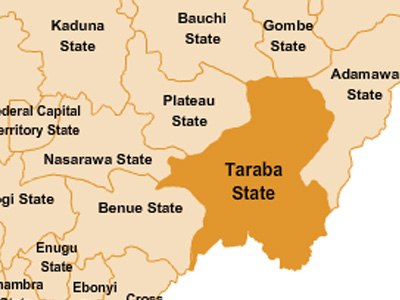
On a day like this, three decades ago, Taraba State was created from the defunct Gongola State. Unarguably, one of the most promising states at the time of creation.  Being the third-largest state in Nigeria in terms of landmass, most of it being overly fertile. There is hardly a crop that grows in Nigeria that does not grow well in Taraba. In fact, many thrive best here.

While I cannot call myself an Agriculturist, I certainly know one or two things about farming being someone who is very proud of this profession and has had experiences that will forever remain green in my mind because of Agriculture. I am extremely passionate about Agriculture. I know the potentials that we have in Taraba. Unfortunately, states with far fewer potentials than Taraba have harnessed theirs and not Taraba for one reason or the other. 

Taraba state has tourist potentials that are unmatched in this country. It is aptly described as “Nature’s gift to the Nation”. As a result, we have some of the most beautiful places anyone can contemplate or dream of visiting in Nigeria. Travelling from: Sardauna to Zing, Ibi to Karim Lamido, Ussa to Yorro, Kurmi to Gassol. In fact, across the length and breadth of Taraba, all one sees is one of the most breathtaking scenery you can find in Nigeria.

The lush green countryside, amazing mountains, wonderful waterfalls, and sonorous birds give sounds that you may not be wrong to call music. Since my elementary music teacher taught me that music is the arrangement of sounds that are pleasant to the ears. On a serious note,  you have to fall in love with nature once in Taraba State; of course, I have done that. One has to. Taraba is that special: you can’t escape it.

Sadly, this has not translated to much development. I weep whenever I visit towns, villages, and hamlets in Taraba. I weep not only for the abundant natural resources being exploited but that should and would have been utilised for the benefit of all and the growing distrust and polarised nature of my dear state. Here are people who have refused to unite to defeat their common enemies: poverty, violence, unemployment, underdevelopment, drug abuse, kidnapping, etc. This shouldn’t be our reality.

Whoever fans the embers of disunity is not a good human being, to begin with, let alone being a good and responsible Taraban whether one is: a traditionalist, a Muslim, or a Christian. For God’s sake, we have all suffered for our failure to rise above prejudice, hate and do the needful for our dear state. We disappointedly all continue to play blame-games, while everything is ruined before our very eyes. Tarabans have to think and rethink whatever approach we have been using over the years have left a lot to be desired.

The truth is that we are all in this together. I know this for a fact because I get to mingle with Tarabans from all walks of life. My friend Jerry in Jalingo is no less a victim than my friend Ado in Yelwa, Sardauna local government. The old man I met in Dakka, Bali, local government struggling even at old age to feed his family is not different from the ones I meet in my hometown or any place I visit in Taraba.

The public primary schools in Jalingo, the state capital, don’t look much different from the ones in Borno Kurukuru, in Bali local government; the ones in Pantisawa In Yorro LGA and the ones in Kufai, Gassol local government, or anywhere in Taraba state. The difference is that some of our teachers do extraordinary things to nurture children that can become responsible citizens against all odds. So today, I pay tribute to our teachers and all those who defy all odds to develop our state. Thank you so much for your sacrifice and service to our dear State. 

The plain truth is that we are all victims in one or the other. Whether we agree or not, whatever faith we profess or the party we support. A selected few benefit in any state that constituted authorities have failed to live up to their responsibilities, and most of the time, even those that benefit the pleasure are ephemeral. 

We still have the opportunity to stem the tide and chart a new course for the only State we have and one that some of us love unconditionally. To change things for the better. But, we cannot do it alone. We must do it together: Christians, Muslims, and traditionalists. Until we unite, leaders or rulers will continue to exploit us and set us against one another. It is high time we commenced the building of a Taraba where merit matters and all Tarabans matter. A Taraba where things work and all that work hard within the ambit of the law can prosper without hindrance. A Taraba where the glass ceiling will be completely shattered. 

Happy 30th anniversary to my dear State, Taraba. You will be great despite all the apparent obstacles to stop that from coming to fruition no matter what happens. We will keep on trying until we get it right.

We today live in a state far more divided than ever. But I find solace that we still have good men and women from all parts of the state and of all religious beliefs who are sincerely ready to see a complete revamping of our dear State. These Tarabans give me hope. For just like me, most of them do not have a bean and have no political goals to pursue rather a whole state, and indeed, nation to build. 

I see hope boldly written on the face of my friend Jerry, a barber whose dream is to one day be a big employer of labour despite his financial constraints today. I  find strength in the words of my friend Abdulhamid who supports his family with the little that he has while working relentlessly with little dependence on the government.  

I know God willing things can and will change when Caleb, an ex-drug addict who has turned over a new leaf, advocates for peace and works towards our unity. Likewise, I believe we can change for the better when Zakiru freely works to better society and seeks success against all odds. Yes, Zakiru with even some hilarious jokes to it. 

I have no reason to believe things will continue the manner they are today, forever because of the realities of the moment. I know we can change. Although, the time is entirely dependent on how ready we are for that to happen as Tarabans. 

Today, I urge us all to mull over our challenges as a state. I plead with you all to reflect sincerely and see how we can all join hands to build the state that should be the envy of every state in the country because of our resources, which I know, once we get it right, Taraba will be the perfect example of how to move Nigeria forward being a state that can correctly be described as a mini Nigeria, with all that is inherent therein Nigeria. We must not fail our dear state as Tarabans; we have to stop failing this beautiful State now. 

Happy 30th anniversary Taraba State. God bless Taraba State, and God bless the Federal Republic of Nigeria.


Abdulrazak Iliyasu Sansani wrote from Turaki B, Jalingo, Taraba State.

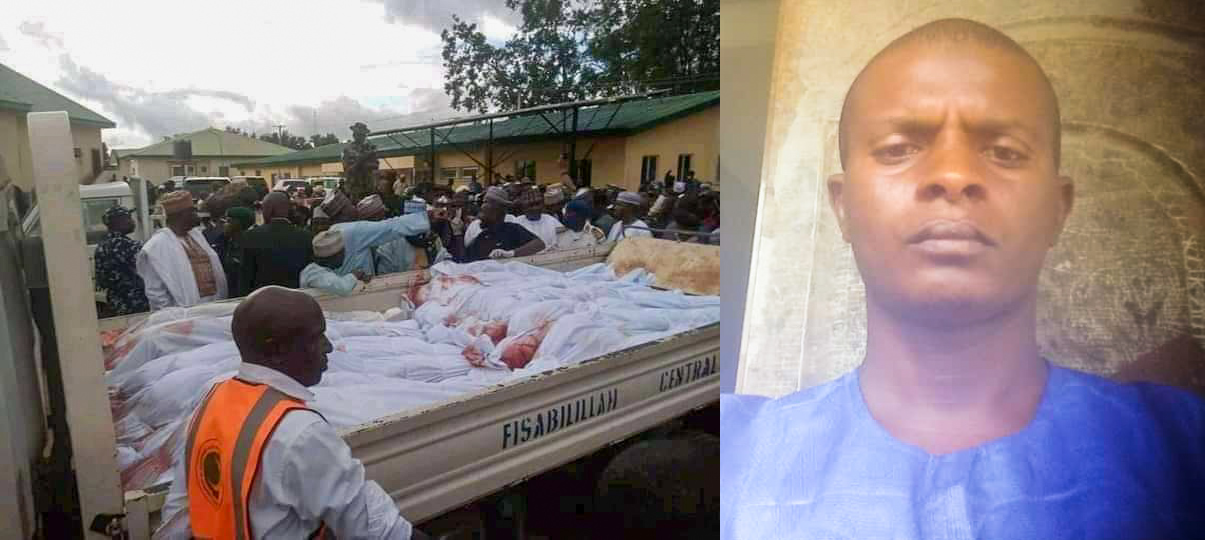
30 people reportedly killed in fresh Plateau violence

By Muhammad Sabiu

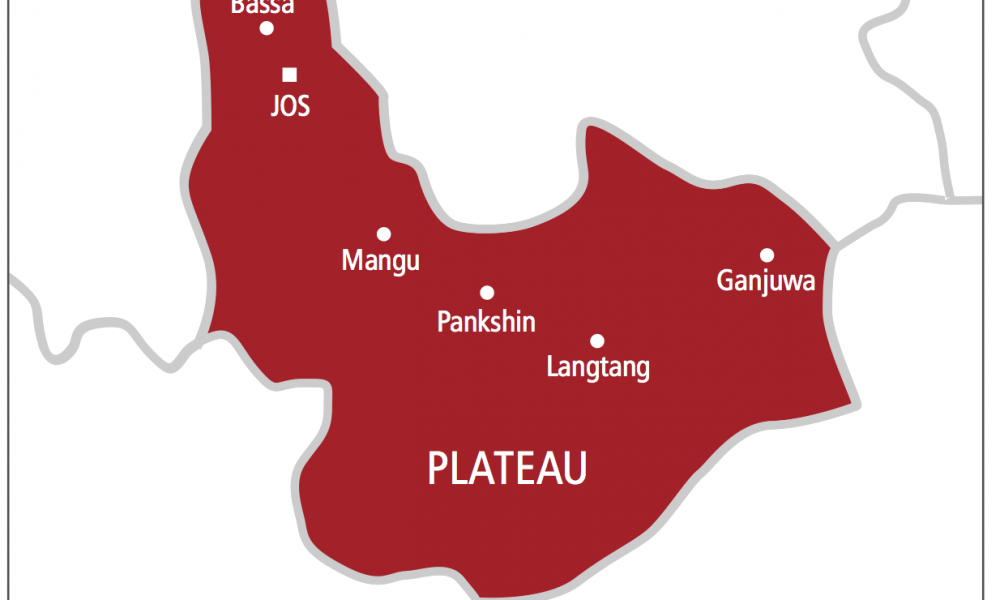
Fresh violence has reportedly erupted in Yelwan Zangam community, Jos North Local Government Area of Plateau State.

A report by the Daily Trust and other sources has indicated that about thirty people have been killed.

Meanwhile, security personnel have been deployed in the affected area.

Recall that a few days ago, suspected Igwere youths butchered about 30 Muslim travellers who were on a religious visit from Bauchi to Ondo State.

As of the time of filing this report, no comment from the Police or any official of the Plateau State government has reached The Daily Reality.

Details shortly…

Justice for murdered innocent travellers in Jos

Nigerians woke up on Saturday last week with the bad news of the gruesome murder of innocent travellers returning from the annual national Zikr in Bauchi. They were intercepted along Rukuba, Gada-Biyu axis of Jos-North local government by suspected Irigwe ethnic militias who killed them and burned their buses. Every peace-loving Nigerian should condemn the atrocity.

The killing of these innocent travellers came at a time when Plateau State, the epicentre of ethno-religious crises, had started enjoying relative peace courtesy of Governor Simon Bako Lalong’s commitment to bring lasting peace. The militias who carefully selected their victims have a hidden or ulterior motive. Some of their reasons are to set the State on fire and fuel retaliation across the country. The victims came from other states of the country and were only on transit. What did they do?

Even before the unfortunate killings, there have been reported cases of innocent travellers being killed on some roads, which are considered no-go-areas for certain faith. If this crude way of life displayed by the mobs can be adopted in other states, one imagines the dire consequences it will bring to the peace, unity and development of the country.

I learnt that the Nigerian army apprehended some suspects. This is a good development. However, the problem is not whether the perpetrators of the heinous crime are arrested or not. The question remains, are the culprits going to face justice according to the laws of the land? So long as the government continues to temper justice with mercy on those who commit grave offences against humanity, we should rule out any possible end to the unnecessary carnage.

Ibrahim Mustapha, Pambegua, Kaduna State. He can be contacted via imustapha650@gmail.com.

Fulani attacks, Hausa-Muslims die

By Ishaq Habeeb 

The issue that allegedly triggered the recent violence in Jos was that a fortnight ago, men believed to be Fulani militia attacked the Irigwe community and killed 40 people, burnt down an unspecified number of houses and as is their style, vanished into thin air shortly after.

A fortnight later, the aggrieved Irigwe youth decided to block a road, stopped cars, cherry-picked Muslim passengers and slain them in cold blood in reprisal to the ‘Fulani attack’ on their community. 

Now one of the secondary dangers of this barbaric culture of reprisal that’s since become a norm, in Jos, southern Kaduna and other places, is that often, innocent Hausa Muslim travellers and remote village dwellers, where few Fulanis also reside (not the actual Fulani militia), end up as victims of such Fulani militia attacks on random villages at various times for whatever bad blood they must have against such places and also of the eventual reprisals by residents of the attacked communities.

The major reason for this silly idiosyncrasy isn’t far-fetched. For the ignorant, vicious, islamophobic residents of those villages, Fulanis and Hausa are mutually inclusive, since to them, the two appear culturally and religiously homogeneous. Hence, they must share the same agenda; the common denominator here is Islam. But, other than that, I don’t see how Hausa could strike any, as Fulani, physiologically and traditionally.

The shocker to this age-long madness of confusion has now added the Yoruba Muslims to the equation, seeing that as news has it, some of the slain motorists in the Irigwe community were Ondo Yoruba Muslims who were only in Jos for a quick visit.

The sick irony in all of this is that some Fulani pastoralists are only Muslim by birth and name. That aside, the only real religion they have is ‘Fulani’ itself and the real god they really worship and can kill and die for, any day, anytime, anywhere and whoever, is their cow (“nagge“). Their cattle is what they live for and the primary essence of their existence; mess with that and win yourself a lifelong enemy.

Now one easy way to put my theory to the test is to wait until any Hausa community dares to kill or rustle Fulani cattle the way some members of those attacked communities do sometimes – whether as revenge for having their farmlands devoured by the herd or simply for evil intent as is mainly cited. Then, you would see how the Fulani militia will unleash their wrath on such Hausa community in like fashion; the Islam identity you think we share becomes immaterial.

Thank God the Hausa people are not as half as vengeful as the Fulani and those other tribes could be. Otherwise, considering the numerical strength of the Hausa people, then Nigeria as we know it would have long been history by now.

May Nigerians have a sense,
May the Nigerian government grow a conscience,
May peace take over Africa and the world.

Ishaq Habeeb can be contacted via simplyishaqhabeeb@gmail.com.

Would Jos ever be peaceful again?

By Misbahu el-Hamza

What is the major setback for peace efforts in Jos? Is it negligence from the governments? Or the ineffective or unsustainable strategies of the security forces on the ground? Could it be that God has forsaken the city for the crime of spilling innocent blood for decades? What have we done wrong, and how can we make amends?

I think the worst thing that ever happened to Jos from September 2001 to date is the systematic and deliberate disappearance of the once cherished plural community settings into a more homogeneous cultural make-up. Even though this is a product of various influences over the historical line, the major one, inarguably, is the episodes of collective violence for two-decade now in the city.

If you’ve ever been there, the communities in the city of “Home of Peace and Tourism” are now separated based on ethno-religious identity. When a particular group began to dominate another in a place, the minority will sell or evacuate and abandon their houses to move further away to avoid being surprised during crises. Everyone now has their schools. There are few to no Muslim students in the famous schools of St. Murumba College Jos and Demonstration School Jos. There are no longer Christian students in GSS Gangare Jos (save those who come to register and sit for WAEC). Some government secondary schools, which used to house students from different cultural and religious backgrounds, are now left to no use or serve their neighbouring communities. The state authorities have (in)directly invigorated this problem: it has for long forsaken the structures;  allegedly, a Christian staff is only sent to a Muslim community as ‘punishment’ and vice versa.

The most frightening thing about this systematic separation of communities is anyone who deliberately, or by mistake, finds themselves in a neighbourhood other than theirs in times of unrest might likely not make it alive. This is happening in almost all the communities in Jos. I, for instance, escaped death in 2010 when I took a passenger from Terminus Market in the heart of Jos to Satellite Market in Rukuba Road. There wasn’t any crisis going on at the time; it was the ‘usual’ ambush on anyone who enters the ‘other’ territory. Okada/Achaba men like me and travellers who do not know the city well are the usual victims of such ambushes.

Ours isn’t like the Kaduna-Abuja highway disappearance where, if you don’t hear from your relative again, you will be praying and expecting a call from his abductees. No, in Jos, as a Muslim or Christian, you spray mats and begin to welcome people as you mourn the lost person in absentia. It’s this terrible.

The actors in all this? Mostly the youth. The youths who we always sing to be the “leaders” of tomorrow. The tomorrow that’s yet to come in Nigeria. Could one be right to ask how Jos could ever find peace if this is the path it has chosen for itself?

Despite all this sad reality, we all meet up in the marketplaces (basically the ones at the borderlines, which are easy to escape should the devil blow the horn) during the day. We enter the same busses to and from Bukuru. We meet and interact in the banks. Surprisingly, our boys and girls meet up during the weekends to party. In some instances, boys take girls home for further profligacy after partying. Somehow, we all agree to live like this. We only disagree with sleeping with our eyes closed as neighbours, devoid of any quarrel.

Posing the question of whether we truly need one another in Jos, earlier this morning, a school principal, Abubakar Nasiru, made the following point on his Facebook page:

“The mai ruwa, mai nama, mai gwanjo, etc., are hawking in areas like Gada Biyu, the Jentas, Rukuba Road, Apata, Busabuji, rendering their services to those communities every day – non-Hausa, non-Muslim communities. [On the other hand] The mai doya, mai atile, mai masara, mai tumatur, etc., carry out their petty businesses in places like Bauchi Road, Dilimi, Gangare. Rikkos, Nassarawa, and Anguwar Rogo – Muslim communities.” These people spend the whole day in those communities and cannot hesitate, if guaranteed safety, to spend their nights there.

In 2006 when I was in SS3, my community leaders recruited able youths, including myself, as Ƴan Sintiri (watchmen), to serve under the Banga (a mispronunciation of “Vanguard”) group, which has its history from the ‘70s and ‘80s. Our task then was to defend our four borders against any intruder during the night and to prevent the harassment of non-community members during the day. So we worked in batches to substitute other groups. This significantly helped, and in no time, other communities adopted the strategy. This gave birth to today’s form VGN in most districts of Jos. (VGN has been a registered semi-official citizen policing organisation with Nigeria’s Corporate Affairs Commission since 1999, though.)

But does the VGN give us the peace and courage to live under the same roof or as neighbours? Certainly no. The separation of communities based on ethno-religious identity will continue to hinder any peacebuilding effort in the tin city.

We cannot have peace until we tolerate each other. We cannot tolerate one another until we accept to live as neighbours. We need to respect our identities and use our diversity as strength just as we used to be 3 – 4 decades ago, to sleep with our eyes closed without an iota of fear that my neighbour will set my house on fire.

For years now, we’ve been deceiving ourselves with so-called programmes for peace, only to gather, quench our thirst for partying and separate back into the borderlines. This, too, must stop.

Plateau state government must be sincere in its dealings. It must engage honest stakeholders from all communities to drive its mission of restoring peace on the Plateau. Schools must be treated equally, so much as every perpetrator must face the consequences of their actions without consideration whatsoever. There must be sincere and rigorous campaigns to rebuild Jos to its past glories; Jos people must co-exist as neighbours irrespective of ethnicity or religion. Otherwise, Plateau is, in general, no doubt a failed state!

Misbahu el-Hamza is a freelance journalist based in Kano and can be reached via misbahulhamza@gmail.com.

Massacre of Muslim Travellers in Jos: the inside story

Barrister Lawal Ishaq is a resident of the area where Irigwe militias massacred scores of Muslim travellers. The Daily Reality (TDR) newspaper had an interview with him, thus:

TDR: Nigerian newspapers, blogs and so on have reported different figures as numbers of Muslim travellers massacre while passing through Jos, Plateau State. Can you tell us how many people were actually killed?

Barrister:  So far, the actual number is 26, and security operatives and good Samaritans rescued about 34 people.

TDR: Jos is known as a volatile state where religious crises have become a norm. Was this a sort of reprisal attack or what?

Barrister: Recently, there had been some misunderstanding and skirmishes between Fulani and Miyango tribe in Bassa Local Government. There have been attacks and counter-attacks between them for ages.  Recently, it was said that four people were killed, and their corpses were deposited at Plateau Special Hospital. They planned their funerals on Saturday. After they picked the bodies from the hospital, instead of conveying their corpses in the vehicle, they opted to come in large numbers and carried them on foot and were heard chanting war songs in their language. They were over two thousand. They trekked from Plateau hospital, passing “Operation Safe Haven” headquarter, but nobody said anything to them. Their large number was a warning signal, but fortunately, nobody cares.

As they were passing through Rukba Road, unfortunately, their victims were coming back from their annual Zikr event in Bauchi under the leadership of Sheikh Dahiru Usman Bauchi. The event takes place on the first Friday of every new year of the Islamic calendar. So, most of the people killed came from Ondo State. Most of them are Fulani, but they speak Yoruba more than even Fulfulde, and they were followers of the Tijjaniyya sect. They spent a night in Bauchi and left Bauchi early morning. The typical road for them to follow through Jos. They were in five buses, each containing eighteen passengers. So imagine the number.

TDR: You mean they attacked all those five buses?

Yes. All buses were attacked, killing 25 people instantly. One died later in the hospital.

TDR: How did they identify them?

Barrister: Unfortunately, their buses were all carrying the pictures of Sheikh Ibrahim Inyas to indicate that they were on a religious trip. And some of them were chanting Zikr. But there was nothing suspicious about them. It was apparent that they were only passing through Jos. And according to what they have told us, ordinarily, they would have passed Inuwa Nsunde (name of the street) peacefully. But because of the traffic gridlock caused by those people, that was how they met their death.

TDR How long did the attack last?

Barrister: It didn’t last long because already there was tension in that area. So the security operatives are always on high alert. And in this social media era, before you know it, some people were able to record and share images and videos on Facebook and WhatsApp groups.

TDR: Was there any gunshot in their bodies?

Barrister: No! No, any gunshot at all. They used machetes, knives and anything that can kill.

TDR: Any action from the state government?

Barrister:  The State Government had reacted promptly. The secretary to the state government came to the place immediately. The police commissioner was there, the director department of security service was there, and the Commandant of the Nigeria Security and Civil Defence Corps was also there. So we were together when they dispatched the security personnel team to the area. They retrieved the dead bodies and the injured, who were soon conveyed to the general hospital.

TDR: Was there any arrest?

Barrister: We stayed at the hospital until we were told to go and bury the bodies at 04:30 pm or thereabout. The burial took us more than an hour because we had to put them into a mass grave. We, later on, received information from the police command that about seven people were arrested. But the most important thing is that the resident of that area did not carry out the killing. Those people from Miyango village did this massacre.

TDR: What is the name of their tribe?

Barrister: Irigwe Tribe. They are predominantly Christians. That gives the whole thing a religious colouration because their victims were all Muslims. It took us a great deal to control the situation because some people were so agitated. That is why instead of burying them at the central burial ground, we took them to Dadin Kowa cemetery. That is about fifty kilometres from Jos.

TDR: Thank you, sir.

Barrister: You are welcome.

Plateau Massacre: Survivor recounts how Irigwe youths slain his 26 Muslim co-travelers

By Misbahu El-Hamza

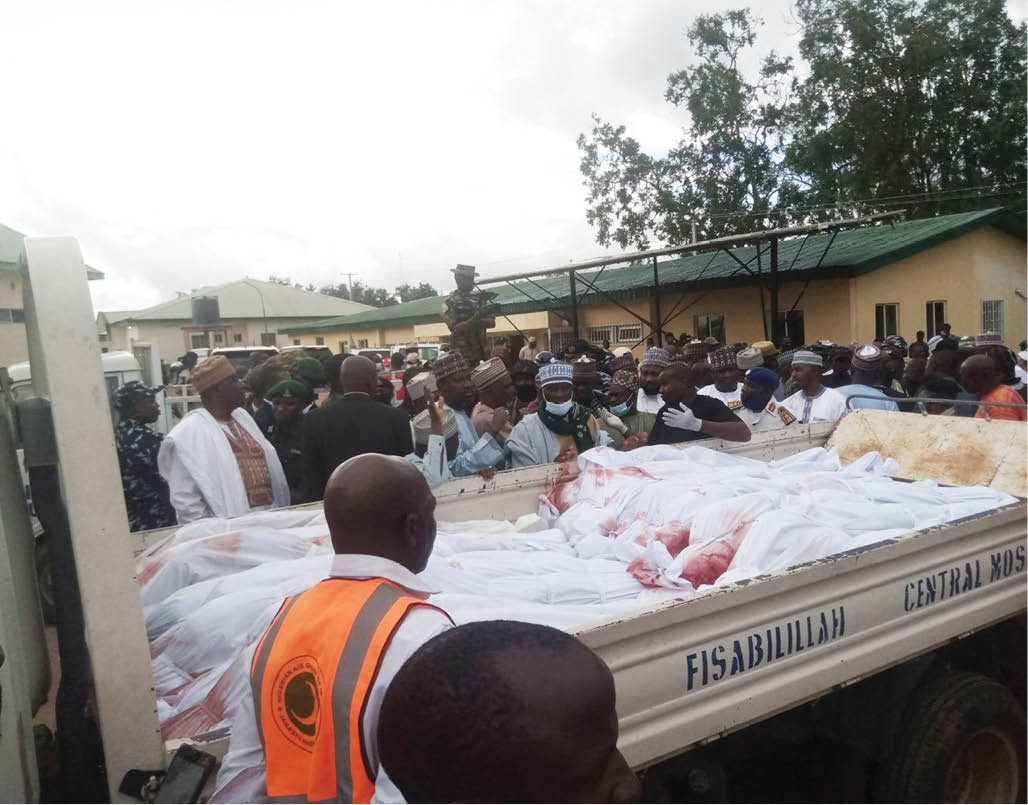
When I was listening to the Annual Muhammadu Sanusi II Colloquium online at around noon on Saturday, a call from a Jos-based friend interrupted my network. His heart was panting as he told me about an attack on travellers in Jos. However, he said he had no additional information; he only added that corpses, drenched in blood, had been brought to the Jos Central Mosque.

I immediately began to make calls, hoping I could speak directly with some survivors if there were any. But, unfortunately, I could not get any until the early hours of Sunday when I received an SMS from my source in Jos with the phone number of one survivor named Haruna Muhammad.

Haruna, 36, was the only man from Ogun state who joined other 53 Ondo and Kogi states based Muslims to travel to Shaikh Dahiru Usman Bauchi, a renowned Islamic scholar of the Tijjaniya Sufi Order in his home in Bauchi state. The 54 Muslim faithful travelled in a convoy of 5 hummer busses from Ondo state through Jos and arrived at Bauchi in the early hours of Friday “for a Friday litany with the Shaikh,” said Haruna.

“We left Bauchi for Ondo at around 7 am through Jos.” The journey was peaceful until around 10 am when “we arrived at a place blocked by some youths searching every car passing by. And when it came to our turn, we were asked to all step down of the cars.”

The youths began asking the drivers questions about where the convoy was coming from and where they were heading. “It was obvious they didn’t trust us,” Haruna said, but above all, the youths were angry. Before Haruna or any of his brothers speaks, the youth began shouting, hitting them with sticks, and suddenly, all the convoy dispersed into the nooks of Rukuba for their lives. “None of us has any idea where he’s running to, but we had to try and save our lives,” Haruna recounted.

While in hiding, Haruna watched in dread how the youth used sticks and stones to massacre some of his co-travellers. A viral video shared online by an unknown perpetrator shows how they used to smash and shatter the victims’ heads on the road. Haruna also heard a gunshot but could not identify who was shot at the moment. Twenty-five people were butchered at the spot before the military came to rescue those in hiding, like Haruna and 25 others. One other sustained severe injuries and died later at Plateau Hospital, according to Haruna.

The State Director, Fityanul Islam of Nigeria, Mallam Adam Hamza, who supervised the preparation and burial of the deceased, confirmed that they buried 26 bodies at Dadin Kowa Cemetery of Jos South. The graveyard is a 19-minute drive from the Jos North Central Mosque. The other injured victims are still at the hospital receiving treatment.

I asked Haruna why they chose to follow Rukuba Road since that wasn’t the road they followed to Bauchi. “One of us proposed that Rukuba Road would be better,” he said, “and then one of the drivers said he too knows the road. So, he led the convoy.” None of the five drivers, however, sustained an injury. All 5 were non-Muslim Yorubas from Ondo state. Before the military arrived at the scene, Haruna confirmed that one of the cars was set on fire, and another driver luckily drove off his car to safety. As of this morning, that driver set off for Ondo. Haruna and other survivors are still in Plateau State, kept at a hotel under the protection of the state government. He assured me they are well taken care of under the supervision of Fityanul Islam of Nigeria.

All this appeared to come to the authorities with shock, according to Mallam Adam. Some government officials who attended the burial include Secretary to the state government, who was said to have represented the state governor, Simon Bako Lalong. Others include the state police commissioner, CP Edward Egbuka, and General Officer Commanding (GOC) of the Jos 3-Division, General Ibrahim Ali. The CP and GOC also visited the scene of the massacre on Saturday.

All efforts to speak with one of the government officials were not successful. However, in a press statement, the Plateau State Government, in response to the massacre and avoidance of counter-reprisal, imposed dusk-to-dawn (6 pm – 6 am) curfew in Bassa, Jos South and Jos North local governments at 3 am on Sunday. But unconfirmed reports coming from Jos North this morning indicate that the atmosphere is intense.

It’s no wonder that through its Director of Press, Dr Makut Simon Machan, the state government released another statement at exactly 11:02 am today that imposing a 24-hour curfew in Jos North “to contain further security threats”.

It could be recalled that on Wednesday, August 4, 2021, an attack on travellers was recorded where a truck full of animals was set ablaze at Gada Biyu, a trekking distance from Rukuba Road. That attack was said to be a reprisal as Fulanis were said to have attacked Irigwe houses and destroyed farms in other state villages.

Yesterday’s attack could also be a continuation of the previous reprisal. Survivors and locals call on the Plateau state government to look into the root cause of these killings as a matter of urgency and ensure justice is served. Any delay could return Jos North to its dark days when people get killed sporadically if they (mistakenly) entered territory belonging to another ethnicity or religion other than theirs.

Haruna Muhammad further urged the Federal and State government to ensure the arrest of all who were responsible for the merciless killings of his innocent brothers on August 14 2021. He said whatever misunderstanding is going on between the tribes in Plateau state, his brothers know nothing about it, and their killings shouldn’t be unchecked. The massacre yesterday left 26 people dead and 33 survivors, including the drivers.

Apex Muslim body, NSCIA, condemns butcher of Muslim travellers in Plateau, appeals for calm

By Muhammad Sabiu

The Nigerian Supreme Council for Islamic Affairs (NSCIA) on Sunday “unequivocally condemns” the attack and killing of over 22 Muslim travellers by a suspected Christian militia in Plateau State.

On Saturday, the Daily Reality newspaper reported the killing of the travellers who were returning from Bauchi to Ondo after attending a religious event.

In a statement, the NSCIA said, “The Nigerian Supreme Council for Islamic Affairs (NSCIA) under the leadership of its President-General Muhammad Sa’ad Abubakar, CFR, mni, unequivocally condemns the massacre of a group of innocent Muslims who were returning from Bauchi to Akure. Ondo State, on Saturday.”

The Muslim body appeals for calm and warns against reprisals, saying, “…the Council appeals to all Muslims to be calm and nobody should take laws into his or her hands. The Council re-emphasises that no human life deserves to be wasted on any ground, be it religious or ethnic.”

The Presidency also condemned the killing in a statement signed by the presidential spokesperson, Malam Garba Shehu.

Again, social media users took to their accounts to protest the killing by sharing photo and video content of the victims’ bodies and their funerals.

President Buhari condemns attack on Muslim travellers in Plateau, vows to fish out perpetrators

By Muhammadu Sabiu

The presidency has “strongly condemned” the attack on about ninety Muslim travellers, among whom over twenty-two were killed on Saturday Gada Biyu and Rukuba Road along the Jos-Zaria road in Jos North Local Government Area of Plateau State.

The condemnation is contained in a statement released Saturday by a presidential spokesperson, Malam Garba Shehu, via his Facebook account.

“The Presidency condemns the attack earlier Saturday on travellers from a religious event in Bauchi, passing through Jos, the Plateau State Capital and regrets the reported deaths of at least twenty-two persons with several others injured in that ambush on their travelling party.

“It is widely known that Plateau State has been one of the states affected by herder-farmer clashes, which have, in a significant way, been curtailed following the intense peace-building efforts of the administration of Governor Simon Lalong,” Garba Shehu said.

President Buhari has ordered security agencies to fish out the perpetrators of the attack.

Giving the order, Buhari was quoted as saying, “Make no mistake about it: in line with my commitment to protect all Nigerians, I have ordered our security agencies to fish out the perpetrators of this gruesome massacre of innocent travellers and bring them to justice.”

Recall that The Daily Reality newspaper has reported that police have confirmed the killing of at least twenty-two Muslim travellers.

However, reports coming from Plateau State afterwards have indicated that the death toll had risen from twenty-two to thirty as more corpses were recovered.

Police confirm killing of 22 Muslim travellers in Plateau

By Muhammad Sabiu

At least twenty two Muslim travellers have been confirmed dead after an attack on a convoy of their buses on Saturday in Rukuba Road along the Jos-Zaria road in Jos North Local Government Area of Plateau State.

Confirming the attack, Plateau State police spokesman, Ubah Ogaba, said, “At about 0928hrs (08:28 GMT) the Plateau State Police Command received a distress call that a group of attackers suspected to be Irigwe youths (predominantly Christian)… attacked a convoy of five buses with Muslim faithful.”

“Twenty-two persons were killed and 14 injured in the attack,” he added

However, according to Channels TV, “a local government representative said the toll was higher.”

“Twenty-five people are now confirmed killed,” said the state government representative Danladi Atu, who visited a hospital where victims have been admitted.

In a statement released by Governor Lalong’s spokesperson, Makut Simon Macham, the governor condemned the attack and said, “security has been beefed up around the area.”

Plateau State is known for ethno-religious violence, which leaves people in large numbers dead and injured.