Christians

Plateau State: Time to send the Zionists packing

By Prof. Abdussamad Umar Jibia

Last night (Friday, 19/04/24), I sat to watch the national news, which I rarely do these days. Of course, I sometimes sit and watch. 

The first item I saw was a report of more killings in Plateau state. Plateau state is one of the two states in Northern Nigeria with a majority Christian population. That didn’t mean anything before. Jos, the state’s capital, had made a name for being a peaceful town you would visit and enjoy. The atmosphere was lovely; the city was peaceful, with lots of tourist attractions in its surroundings.

This made Jos a suitable candidate for situating the premier elitist National Institute of Policy and Strategic Studies, an institute attended only by a select few among the policymakers of Nigeria. That is not all. 

Different generations of politicians have selected the same Jos to host their party conventions, which can only take place in a peaceful atmosphere. As far back as December 1952, the National Council of Nigeria and the Cameroons (NCNC) held its convention in Jos. Forty-one years later, the Social Democratic Party (SDP) also had its historic convention in Jos. This convention resulted in the election of Chief MKO Abiola as its flag-bearer. No wonder the motto of Plateau state has been “Home of Peace and Tourism”.

All that was before the arrival of Zionists in the 1990s. The Zionists, who do not believe in Jesus as a messenger, a son of God or even a man of God, had convinced some ignorant Nigerian Christians that they were their brothers. Nigerian Christians thus mounted very high pressure on General Ibrahim Badamasi Babangida’s administration to bring back the Zionists who were expelled from Nigeria in 1973. Of course, even before 1973, Nigerians never wanted them. Their presence was imposed on us by the British.

Some of the slogans used by the Christian clergy included, “It is antichristian to antagonise Israel”, “Israelis are our brothers”, and “Nigeria stands to benefit from diplomatic relations with Israel”. Babangida yielded and restored diplomatic relations with Israel in September 1992. That single act was the greatest mistake any Nigerian leader would make since gaining the flag independence from the British. 

As soon as they settled down, the Israelis began implementing their scheme. They started issuing visas to Nigerian Christians to go on annual “pilgrimages” like Muslims. However, unlike Muslims who go to Saudi Arabia to worship, the Christian pilgrimage was purely a tourist visit with no defined acts of worship.

If it were just about tourism, the problem would have been less. In fact, there wouldn’t have been any problem at all. However, since the Christian pilgrimage started, peace has eluded Northern Nigeria. The city of Jos, which attracted Nigerians and their guests, has since become a ghost of itself. Nobody wants to visit Jos anymore. Youth corps posted to Jos desperately seek relocation. Travellers from Abuja to Bauchi and back now go through Kano to avoid being intercepted and murdered in Jos. 

The Zionist connection was exposed on the floor of the House of Representatives by the immediate past Deputy Speaker, Alhaji Ahmad Wase. In a widely circulated video, Alhaji Wase told the house how 300 people were sponsored for illegal military training in Israel. In addition, he said four containers of arms were brought into Plateau State from Israel. Alhaji Wase told the house he was ready to prove it with the necessary documents, including a committee report. Typical of Nigeria, no one bothered to follow it up. 

Alhaji Wase was only speaking about Plateau State. Who knows how much military training the Zionists gave militant groups like Boko Haram, bandits, ESN and the like operating in various parts of the country? And who knows how many more containers of firearms were brought in from Israel for their trainees?

As if that is not enough, after committing all these atrocities, the shameless murderers that the Zionists are told the United Nations, “Over the past decade, 50,000 Christians in Nigeria have been butchered and hacked to death”. This statement made by the Zionists ambassador to the United Nations, Gilad Erdan, in January this year was broadcast by major media houses, with some of Nigeria’s ignorant Christians hailing it.

We expect the Federal Government to call the Israeli ambassador to show evidence of 50,000 Nigerian Christians murdered by Muslims. Of course, we expect details since the enemies of Nigeria seem to have more information than our Federal Government. I would like to hope that the Zionists would also be made to account for all the atrocities they have been committing in the form of training of criminals and supply of logistics to same.

If the Federal Government allows the Zionists to continue with their business as usual, the rest of us would have no option but to believe that the war against insurgency is only a deceptive camouflage to divert the attention of Nigerians from their actual problem that the Zionists are. Billions of Naira of taxpayers’ money are being budgeted every year to fight insecurity when the actual enemy is left untouched.

There is no need to continue to maintain a worthless diplomatic relationship that has only helped to sow the seed of discord among Nigerians. This relationship keeps claiming more lives and property of Nigerians. With the genocide in the Middle East, Nigerian Christians have since found another location for their annual pilgrimage. So, no Nigerian needs Israel for anything anymore.

Mr. President, our diplomatic relations with Israel should not only be ended but investigated. 

Israelis must leave Nigeria now!

Professor Abdussamad Umar Jibia wrote from Kano via aujibia@gmail.com.

Bridging our differences as Nigerians: A path to unity

By Usman Muhammad Salihu 

In Nigeria, amalgamating diverse cultures, religions, ethnicities, and political ideologies presents opportunities and challenges. To navigate this intricate tapestry effectively, embracing diversity is paramount. Rather than viewing differences as divisive, Nigerians should celebrate the richness they bring to the nation’s identity.

Ultimately, the path to unity in Nigeria lies in embracing diversity while recognizing the common bonds that unite its people. Nigerians can forge a stronger, more resilient nation by celebrating their shared heritage and respecting their differences. Through dialogue, education, inclusivity, and a rejection of extremism, they can build a future where diversity is celebrated as a source of strength.

Open and respectful dialogue is the cornerstone of understanding and reconciliation. By engaging in conversations that promote empathy and mutual respect, Nigerians can bridge divides across religious, ethnic, regional, and political lines. Platforms for formal and informal dialogue offer opportunities for meaningful exchanges that foster unity amidst diversity.

Education is a powerful tool for dispelling stereotypes and fostering appreciation for diversity. By promoting educational initiatives highlighting Nigeria’s multifaceted heritage, individuals can better understand their fellow citizens’ perspectives and experiences. 

Nigerians should advocate for policies and practices that promote equal opportunities and representation across all sectors. By championing inclusivity, they can dismantle barriers and create pathways for collaboration and unity.

Nigerians must collectively reject extremism in all its forms and embrace moderation, tolerance, and compromise. They can build a more cohesive and harmonious society by fostering a culture of inclusivity and understanding.

 Navigating Nigeria’s diverse landscape requires a commitment to dialogue, understanding, and inclusivity. By embracing diversity, fostering dialogue, promoting education, advocating for inclusivity, rejecting extremism, engaging in active citizenship, and cultivating unity in diversity, Nigerians can overcome their differences and build a more cohesive and resilient society.

Usman Muhammad Salihu writes and can be reached via muhammadu5363@gmail.com.

Ondo Deputy Governor: None like Tinubu in the South West – MURIC

By Muhammad Abdurrahman

The Muslim Rights Concern (MURIC), has concluded that there is none like President Bola Ahmed Tinubu among the governors and political leaders of the South West. This was a sequel to the appointment yesterday of Chief Olayide Adelami as the new deputy governor of Ondo State by Governor Lucky Ayedatiwa. 

The Islamic human rights organisation based its conclusion on the governor’s failure to pick a Muslim as his deputy despite demands to that effect from various Islamic bodies, including MURIC.

This position was made known in a press statement issued by the group’s Executive Director, Professor Ishaq Akintola, on Friday, January 26th, 2024.

The full statement reads:

“Governor Lucky Ayedatiwa yesterday appointed Chief Olayide Adelami, a Christian, as the new deputy governor of Ondo State. 

“This appointment, in our opinion, is a direct rejection of the appeals made by several Islamic organisations, including the Muslim community of Ondo State, which controls about 40% of the total population. It also mirrors the insensitivity of Governor Lucky Ayedatiwa to the yearnings and aspirations of Muslims in Ondo State. 

“The appointment further demonstrates the total lack of hypocrisy in the mantra of ‘religious tolerance’ as publicly brandished by Christian leaders and their politicians in the South West. If there is any scintilla of religious tolerance and inclusiveness, it has been coming from the Muslim politicians and the Muslim population in the region. 

“Whereas President Bola Ahmed Tinubu sought to embrace inclusiveness and religious tolerance by giving top appointments to Christians, none of the Christian governors in the South West reciprocated by giving Muslims a similar treatment. 

“Sanwo-Olu of Lagos gave the Christians 43 commissioners, but he gave Muslims a meagre 14. Dapo Abiodun of Ogun State gave Christians 16, but he gave Muslims only 4. In Oyo State, Seyi Makinde gave Christians 10 commissioners but gave Muslims 6. 

“The worst is Osun State, where the Christian governor, Ademola Adeleke, keeps deceiving the people that he is a Muslim. He also has a Christian deputy. That is the extent of executive fraud. Despite this Christian-Christian ticket in Osun State, the number of Christian commissioners is 17, while that of Muslims is just 7. 

“Ondo has 15 Christian commissioners against only 2 Muslims while Christian commissioners in Ekiti are 24 while the Muslims have 1 (one) only. 

“Who is like Tinubu among the six Christian governors in Yorubaland? There is none. Who can treat Yoruba Muslims with the same magnanimity which Tinubu extended to Christians at the federal level? None that we know of. 

“History will attest to Tinubu as the Muslim president who extended inclusiveness to hitherto hostile Christians. The annals will register Ayetilewa as the Christian governor of Ondo, who could not stomach the thought of having a Muslim deputy. Chroniclers will not spare the intolerant Christian governors of Lagos, Ogun, Oyo, Osun and Ekiti, who used their proverbial teeth to share the common patrimony of the South West but whom only Allah knows what they kept for their Christian brethren.

“Muslims are under heavy siege in the South West. They have become endangered species, oppressed, depressed, repressed, underemployed, overworked, underpaid, mere fish for evangelical fishermen, falcons caged for the falconer.”

Sociology of Christmas celebration in Nigeria

By: Hassan Idris

Christmas is an annual festival that’s primarily celebrated to commemorate the birth of Jesus Christ. It’s duly observed on the 25th of every December as a religious and cultural celebration among millions of people around the world. Notwithstanding, Christmas, of course, is a Christian holiday that’s celebrated by many around the globe as a religious holiday with religious rituals, values and relationships. This schema for understanding what grips society together also applies to Christmas as a secular holiday. Christmas is a beloved holiday and for good reasons. It’s a time for parties, delicious seasonal beverages, feasting, gifts, and for many, a time of homecoming, but underneath the surface of festivity, there’s quite a bit going on, sociologically.

Sociologically, Christmas holds the social value of rituals as Classical Sociologist Emile Durkheim tends to shed more light on this. Durkheim, a functional Sociologist, developed a still widely used theory for explaining what holds society and social groups together through his study of religion.

Durkheim identified core aspects of religious structure and participation that sociologists today apply to society in general, including the role of rituals in bringing people together around shared practices and values; and ways that participation in rituals reaffirms shared values, and thus reaffirms and strengthens the social bonds between people (which he called social solidarity); and the experience of “collective effervescence,” in which people tend to share in feelings of excitement and are unified in the experience of participating in rituals together. As a result of these things, people feel connected to others, a sense of belonging, and the social order as it exists makes sense to them. They feel stable, comfortable, and secure.

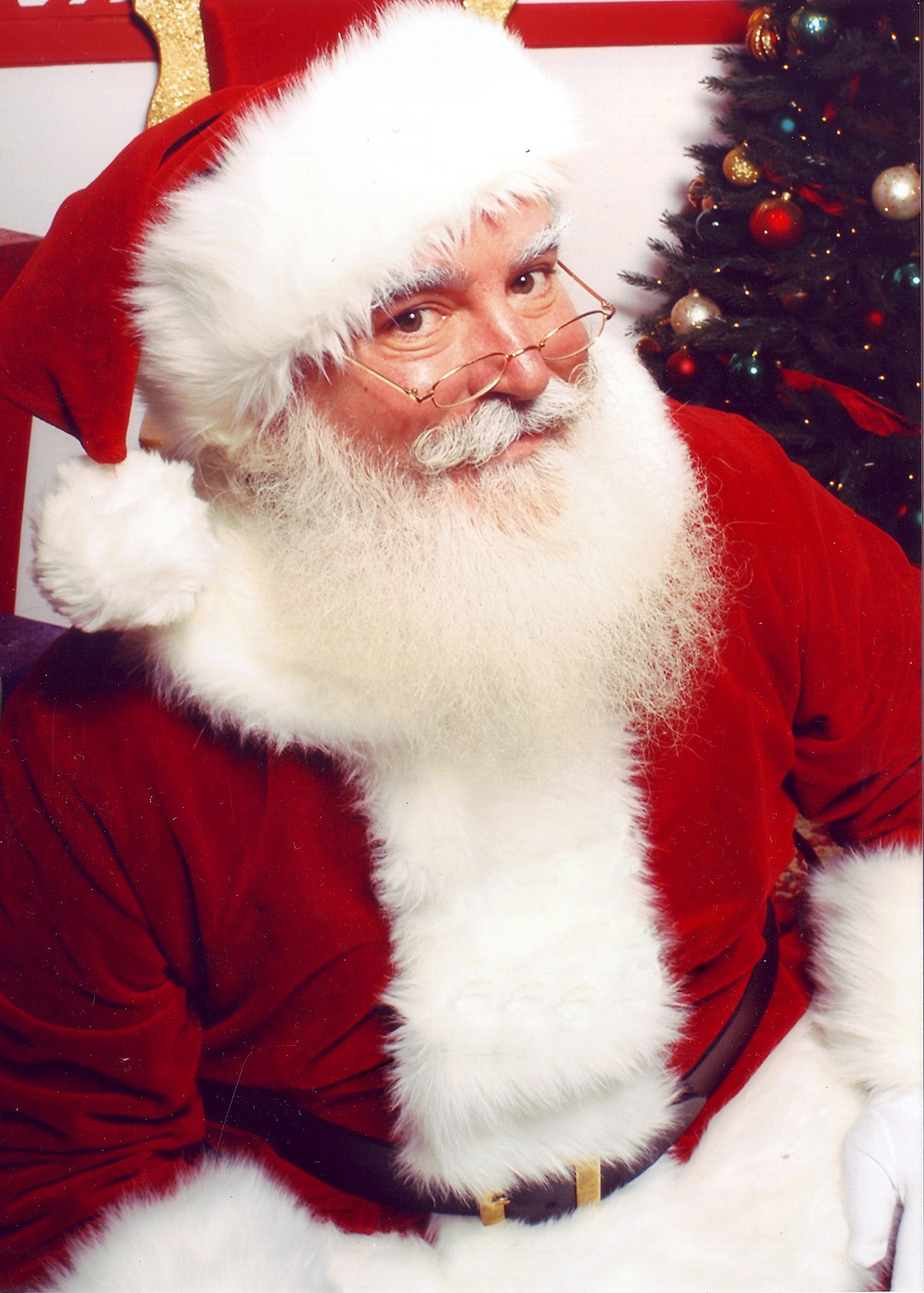
Furthermore, the secular rituals of Christmas are very pertinent in the sociological discussion of social solidarity. Christmas, of course, is a Christian holiday, celebrated by many as a religious holiday with religious rituals, values, and relationships. The rituals involved in Christmas are decorating, often together with loved ones; using seasonal and holiday-themed items; cooking meals and baking sweets; throwing and attending parties; exchanging gifts; wrapping and opening those gifts; bringing children to visit Santa Claus; watching for Santa on Christmas eve; leaving milk and cookies for him; singing Christmas carols; hanging stockings; watching Christmas movies and listening to Christmas music; performing in Christmas pageants; and attending church services.

However, what Christmas does is bring us together with the people we hold dear and give us an opportunity to reaffirm our shared values. When we participate in rituals together, we call to the surface of interactions the values that underlie them. In this case, we can identify the values that underlie these rituals as the importance of family and friendship, togetherness, kindness, and generosity. These are the values that uphold the most beloved Christmas movies and songs, too. By coming together around these values through participation in Christmas rituals, we reaffirm and strengthen our social ties with those involved.

Also, Christmas performs a deeply important social function for us. It makes us feel like we are part of a collective whole, whether that be with kin or chosen family. And, as social beings, this is one of our fundamental human needs. Doing this is what makes it such a special time of year, and why, for some, if we don’t achieve this at Christmastime, it can be a real downer. It’s easy to get wrapped up in the hunt for gifts, the desire for new goods, and the promise of letting loose and partying during this time of the year.

Furthermore, in 1925, Anthropologist Marcel Mauss theorized that gift-giving is actually all about the giver: Mauss identified three obligations associated with gift exchange: giving, which he equates with the first step in building a social relationship; receiving, which signifies acceptance of the social relationship; and reciprocating, which demonstrates the recipient’s integrity. If gifts are refused or unreciprocated, relationships can be threatened. Decoration and gift giving are some of the prerequisites of Christmas and strengthen relationship bounds and solidarity amongst people all over the world.

Coming down to the Christmas celebration in Nigeria, it is pertinent to know that Nigeria is a rich country, given its endowed natural resources. Nigeria is a large nation populated by different multi-ethnic and cultural groups. It has an estimated population of over 200 hundred thousand people. It’s now generally estimated that there are some 400 ethnic groups of varying sizes that are found in Nigeria. However, there are definitely nothing less than 400 languages in this diverse country which makes people wonder how the British were able to determine that a united country was possible in such a diversity. And in this kind of complex diversity Nigerians celebrate Christmas happily and peacefully.

Christmas in Nigeria is a family event, a time when lots of family members come together to celebrate and have fun. Most families, that live in cities, travel to the villages where their grandparents and older relatives live. The end of the year is usually a great time for most Nigerians, and this is not just because it signals a time of relief for most people aching for a vacation or rest from all the hard work and back-breaking activities of the previous months; it is also because December time is Christmas time!

Christmas Day in Nigeria is a public holiday that is marked by the emptying of towns and cities with excitement in the air. People travel to their respective states of origin to celebrate with their loved ones, it is often a time for family reunion, a time to re-strategize and focus, it is a time to seek the face of God and make new year resolutions and also bless those who are less fortunate, and other general acts of random kindness.

As the towns and cities empty, people jam the West African markets to buy and transport live chickens, goats and cows that will be needed for the Christmas meals. On Christmas Eve, many families will throw Christmas parties that will last all night long, traditional meals are prepared and served according to the traditions of each region. Instead of having sweets and cakes, Nigerians as a whole tend to prepare various dishes.

In the South, a dish called Jollof rice or fried rice is served with stews of various meats along with fried plantains; in the North, rice and stew, as well as Tuwon Shinkafa, a rice pudding, served with various meat stews, are preferred. An alternative in both regions (but more favoured in the South) is a pepper soup with fish, goat meat or beef. Served with these foods are an array of mainly alcoholic drinks such as the traditional palm wine or various local and imported beers and wines; children and women may be served locally-made soft-drink equivalents instead.

Many different languages are spoken in Nigeria, and with different ways of wishing one another a happy Christmas. In Hausa Happy/Merry Christmas is ‘barka dà Kirsìmatì’; in Yoruba it’s ‘E ku odun, e ku iye’dun’; in Fulani it’s ‘Jabbama be salla Kirismati’; in Igbo (Ibo) ‘E keresimesi Oma’; in Ibibio ‘Idara ukapade isua’ and in Edo it’s ‘Iselogbe’.

However, on Christmas morning, Christians go to church to give thanks to God. Homes, restaurants, workplaces and streets are often decorated. Most homes will have an artificial Christmas tree. Children love to play with firecrackers at Christmas. The church choir may visit the church congregation in their homes to sing Christmas carols to them. Christmas cards are sent to friends and family members. Presents are exchanged amongst family members, and some families may take their children dressed in new outfits to see Santa Claus, usually referred to as ” FATHER CHRISTMAS in Nigeria.

In the villages, people would be greeted by the numerous masquerade groups formulated by the younger people who gently display their dance moves in exchange for foreign currencies. These dance groups make the Christmas experience soothing and comforting. The young girls also have their dance groups, though without a masquerade but with palm fronds tied to their left feet as a sign of bravery in some cultures. These young girls also make money by displaying their well-thought-out dance steps.

Christmas in Nigeria consumes money and the flow of gifts. It’s a time for celebration and reconnection, the experience is always an unforgettable one. Visitors are welcomed, and there is no house that is left without the aroma of chickened stew, especially in places where the celebration is ongoing. Nigerians are kinder to each other during the holidays.

Families and organizations take time out during the holidays to share good cheers and give out gifts to each other and the less privileged. Some people also organize causes and donation points for others. The most lit parties happen at Christmas time. From carols to street carnivals to concerts, people are bound to have the utmost time of their lives during the holidays.

In conclusion, the sociology of Christmas is wonderful and unique as it is important to remember that Christmas will be most enjoyable when it is designed to foster togetherness and also share and reaffirm the positive values that bind Christians together.

Hassan Idris can be reached via idrishassan035@gmail.com.

Unreported death toll of Muslims in Nigeria 2021-2022

By Abdurrahman Muhammad

The Muslim Rights Concern (MURIC) has accused a section of the media and its allies of continuously neglecting the increasing death toll of Nigerian Muslims but are quick to report the fabricated number of dead Christians at the instance of the Christian Association of Nigeria (CAN).

It has come to our notice that the majority of security-related challenges being faced in Nigeria, most of which result in the death of Muslims, especially when in large quantity are mostly unreported or, at best, under-reported; we at the Muslim Rights Concern (MURIC) have seen this as a ploy to portray Muslims as the perpetrators of these various crimes in Nigeria, ranging from terrorism, kidnapping, cattle rustlings, banditry, etc.

The Muslims have always been complacent, consoling themselves without making noise on various social media platforms whenever the unpleasant news of the death of their brothers and sisters in Islam filters in. This is because Allah has emphasised to us through the Holy Quran that “All Souls Shall Taste Death” (Qur’an 3:185), whereas CAN is always quick at playing the victim card, and its voice can be heard at the seventh heaven.

Social media and traditional news media also become awash with unprintable comments to escalate the incident beyond the real magnitude. The Muslims are, therefore, always at the receiving end. In contrast, Muslims lose the highest number of victims of the security challenges Nigeria is currently facing.

It is a known fact that the majority of the act of terrorism by the dreaded terrorist organisation in Nigeria (Boko Haram) has led to the death of more Muslims than Christians; the terrorist group detonated bombs in metropolitan areas in the northern part of Nigeria where the Muslims have the highest population. It is, therefore, only logical to say that the terrorist group targets Muslims more than Christians; thus, any Christian who becomes a victim is more collateral damage because the real targets are the Muslims.

In an effort to set the records straight, MURIC has carried out a statistical analysis of violent attacks and has gathered data on Muslims who were casualties of various attacks carried out by armed groups such as Boko Haram, the Indigenous People of Biafra (IPOB), armed bandits, herdsmen and the so-called unknown gunmen.

It was discovered that between 2021 and 2022, the total number of Muslims who have become casualties is as high as two thousand two hundred and sixty-four (2,264). This figure is for reported cases. Only Allah knows the exact number of thousands of unreported cases of Muslim deaths.

Of this figure, 1,829 were killed by Boko Haram, 288 Muslims fell victim to banditry, 98 were killed by unknown gunmen, 36 by herdsmen and 13 by IPOB.

We appeal to the Muslim populace not to seek vengeance as Allah is sufficient for us, and only Allah knows the punishment most suitable for perpetrators of the killings. We also remind co-country men to tread softly and not to insult the sensitivity and cool-headedness of Nigerian Muslims; our religion teaches “Peace”, and on that mantra, all our engagements are based.

Lastly, while we acknowledge that efforts made by the security agents are already yielding results, we implore them to increase their vigilance to ensure a prosperous and peaceful nation.

Allow senate presidency to go to Southern Christians – MURIC

  • NewsDesk

As Nigeria approaches May 29, the inauguration date of a new administration, newly elected lawmakers and politicians have intensified the lobby game. The Muslim Rights Concern (MURIC), an Islamic human rights group, has also joined the debate. Though a Muslim group, MURIC wants the Senate presidency to go to a Christian from the South. The group has therefore called on all Muslims vying for the post to withdraw.

This was made known in a statement issued on Thursday, May 18, 2023, by the Executive Director of the group, Professor Ishaq Akintola.

The statement reads:

“As the clock ticks away for the 29th May inauguration date of the Bola Tinubu administration, elected lawmakers and politicians have intensified the lobby game. We have seen how the different geo-political zones, as well as individual politicians and stakeholders, have demanded key positions in the National Assembly.

“Chief among those positions is the Senate presidency as it is the Number 3 position in the country after the president and vice president. As a major stakeholder in the affairs of Nigeria, we have followed with keen interest the imbroglio, which greeted the Muslim-Muslim ticket and how it ended in Nigeria having a Muslim President-Elect and a Muslim Vice President-Elect.

“In view of this outcome and considering the multi-religious character of our dear country, Nigeria, it is our considered opinion that the post of senate president should go to a Southern Christian. Nigeria needs the cooperation of both Muslims and Christians because only such collaboration can engender peace and development.

“Although we are a Muslim group, we believe very strongly that Muslims should not take all the top posts despite being the undisputed majority group in the country. Muslims must be ready to share power with their Christian compatriots. Politics is a game of give and take, and Nigerian Muslims must play it right.

“We must all be ready to demonstrate a willingness to work together as a people in spite of our religious differences. Afterall, there is no Muslim electricity supply, no Christian roads, no Muslim public transport system and no Christian naira. Our problems are identical, and whatever affects our country affects both Muslims and Christians together.

“A good example is COVID-19. Hunger knows no Muslim, and malaria knows no Christian. Poverty is common among the adherents of both faiths. Let us, therefore, share what belongs to all with love and find solutions to our common problems together.

“MURIC, therefore, calls on all Muslim candidates vying for the position of the senate president to withdraw in order to allow Christian candidates from the South to have a free hand in the competition (preferably the South-South because the South East has occupied the post on several occasions).

“In addition, MURIC tips any suitable candidate from the North West for the post of deputy senate president in view of the fact that the zone gave the largest number of votes to the party and the candidate that won the election.” 

40 worshippers reportedly abducted in Kaduna

By Muhammadu Sabiu 
 
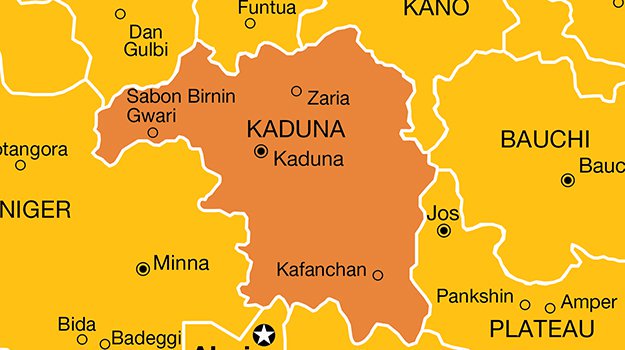
At least 40 worshipers were on Sunday reportedly abducted by bandits while on congression at Bege Baptist Church, Madala, Chikun Local Government Area of Kaduna State.
 
The incident was reported on Monday by Rev. John Hayab, leader of the Christian Association of Nigeria’s Kaduna State branch.
 
According to Hayab, the incident took place at 9:30 a.m., during the worship time.
 
He was quoted as saying, “The worshippers were in the Sunday service in the Church when around 9:30 am they heard gunshots very close to the Church. The gunmen attacked the Church and went away with 40 worshippers.”
 
However, he added that 15 of the kidnapped worshippers managed to escape, leaving 25 others in the kidnappers’ hideout.

Why Nigerians should thank Peter Obi

By Prof. Abdussamad Umar Jibia

The 2023 general elections have come and gone, and like every set of elections, there are winners and losers. Typical of Africans, those who lost alleged rigging and those who won hailed the process.

In addition to winners and losers, there are other people we should cheer for their roles in the elections. First, we should give credit to President Muhammadu Buhari for being true to his promise of organizing free, fair and credible elections. The President himself has observed that Nigerian voters have become more sophisticated. One manifestation of this is that voters no longer vote along party lines. It doesn’t matter if he is a card-carrying member of a political party; once a Nigerian voter sees a better candidate in another party, they go for them. That is the new normal if you like, and it is a good lesson for our politicians.

We must also hail the INEC Chairman. Just like his colleague Prof. Attahiru Jega, Prof. Mahmoud Yakubu has shown an uncommon tolerance in dealing with politicians, even in extreme cases in which an ordinary person would lose control.

My man of the day is His Excellency Peter Obi, a former Governor of Anambra State. I have never met Peter Obi, and he did not attract my attention until he began to claim that he wanted to become Nigeria’s president. From the way he started up to the time he crashed, I knew that Obi didn’t have a good understanding of the country he wanted to govern.

First, Obi wanted it under the PDP. Despite being a failed party, a PDP ticket would have earned Peter Obi a distant second regardless of the part of the country he is coming from. When he could not clinch its ticket, he jumped to the Labour Party. Then he started his campaign, the method of which we all saw.

The part of his political activity that we should thank Peter Obi for is his ability to solve one of the greatest puzzles of the Nigerian census. I mean the question of religion.

Nigeria is a big country with a Muslim majority and a minority that includes a good number of Christians and some pagans. Nigeria’s last census that collected data on religious affiliations was in 1963. According to the 1963 census results, there were 47.2 % Muslims, 34.3% Christians and 18.5% others. In the North, the ratio was 71.7% Muslims, 9.7% Christians and 18.6% others.

Talking about South West, the 1963 census figures identified the present-day Oyo, Lagos, Ogun and Osun as Muslim-majority states, with only Ondo and Ekiti as Christian-majority states.

Subsequent censuses either did not capture religion like the case of the 1991 and 2006 censuses or were cancelled due to controversies surrounding their conduct which was the case with the 1973 census.

Demographic experts make projections based on past trends, fertility and mortality rates and in the case of religious proselytization, migration, etc. The Ibrahim Badamasi Babangida administration decided to remove religion in the 1991 census due to bogus claims of being majority especially made by the church, and since then, the Nigerian Population Commission has avoided conducting standard projections involving religious affiliations.

Without a head count and/or unbiased, professionally made projections, Nigerians are continuously bombarded with unrealistic population figures. At one point in time, Christians claimed that they constituted more than 45% of the Northern Nigerian population, a claim ignored by Muslims for being ridiculous.

While ordinary Nigerians can be misled by propaganda, politicians looking for votes have always been calculative in their determination of who constitutes the majority and should attract their campaign and who is a liar.

And it is not difficult to figure out. Political affiliation in Nigeria is a good pointer to religious affiliation. For example, it is well known that Northern Christians do not vote for Muslims, whereas the former are in the majority. The examples are many and well-known. Thus, the number of Christian elected politicians in a particular state would approximately tell you the percentage of Christians in that state. In addition, the number of predominantly Muslim states with large populations like Kano and Katsina makes the population of the two Christian-majority states of Plateau and Benue a joke.

As a politician who needs votes of the majority to win a national election, Obi should have known all these figures and used them to gauge his level of preparedness. Unfortunately, he lost it and was going from one Church to another, vividly falling into the propaganda trap of the Church. He was carried away by the belief that the Middle Belt is Christian. But where is the Middle Belt? Is it North Central? Who, among the Governors of Niger, Kwara, Nasarawa, and Kogi, is a Christian? Obi was simply too naïve.

However, it is not bad at all. The clergy campaigned for him. Christians were mobilized nationwide. The outcome is what the NPC could not achieve in its censuses. Christians overwhelmingly voted for Obi. The number of Muslims who voted for him was simply insignificant, just like the number of Christians who voted for the Muslim-Muslim ticket of Tinubu-Shettima. The few Christians who did not vote for Obi were seen campaigning for PDP. Overall, more than 14 million voted for either Tinubu or Atiku, both of whom are Muslims. Even if we take 10% of that and add it to Obi, Christians are still a small minority.

As Muslims, we have avoided these arguments as we consider them unhealthy since, after all, our eternal prosperity in Islam is not dependent on whether or not Muslims are in the majority at a particular time or location. But we have been boxed into it, and it is helpful.

Professor Abdussamad Umar Jibia wrote from Kano. He can be reached via aujibia@gmail.com.

The consequences of religious politics in Nigeria

By Usman Muhammad Salihu.

Religion has been a part of Nigeria’s political landscape for decades. The country has a diverse population with multiple religions, such as Christianity, Islam, and traditional faiths.

The influence of religion on Nigerian politics cannot be overemphasised, as it plays a significant role in shaping political decisions and outcomes. However, the involvement of religion in politics in Nigeria has come with both positive and negative consequences.

One of the positive consequences of involving religion in Nigeria’s politics is the promotion of moral values. Religion teaches moral values such as honesty, integrity, and justice, which are crucial for a stable and just society. Religious leaders can use their platforms to advocate for these values and hold politicians accountable for their actions. Additionally, religion can inspire people to participate in politics and contribute to the development of their communities.

On the other hand, the involvement of religion in Nigeria’s politics has also led to negative consequences. One of the most significant adverse consequences is the proliferation of religious extremism and intolerance. The politicisation of religion has fuelled religious conflicts and violence, leading to the loss of lives and property. The Boko Haram insurgency, which began in 2009, is an example of the consequences of religious extremism in Nigeria.

Another negative consequence of involving religion in Nigeria’s politics is the erosion of the country’s secularism. Nigeria is a secular state, but the involvement of religion in politics has led to the blurring of lines between religion and state. This has resulted in the adoption of policies that favour one religion over the other and the exclusion of minorities from political processes.

Furthermore, the involvement of religion in politics has also resulted in the emergence of religious leaders as political power brokers. This has led to the entrenchment of corruption in the political system, as religious leaders often use their positions to secure political appointments and contracts for their followers.

In conclusion, the involvement of religion in Nigeria’s politics has both positive and negative consequences. While religion can promote moral values and inspire people to participate in politics, it can also fuel religious conflicts and lead to the erosion of secularism.

Therefore, it is essential to strike a balance between religion and politics to ensure that the positive consequences of faith are maximised while minimising the negative effects. This can be achieved by promoting interfaith dialogue, adopting policies that promote equality and inclusivity, and establishing effective mechanisms to hold politicians accountable for their actions.

Usman Muhammad Salihu writes from Mass Communication Department, Abubakar Tatari Ali Polytechnic, Bauchi, Bauchi state. He can be reached via muhammadu5363@gmail.com.

Short-term gain, long-term pain

By Dr Raji Bello

Nigerians are not known for their ability to figure out the long-term consequences of their actions. This is a major national handicap since some choices which produce short-term gain could lead to long-term pain. For instance, in 1999, the governor of Zamfara state introduced a new social order in the state in defiance of the authority of the Federal Government of Nigeria. The new order spread across the northern states along with a strong wave of triumphalism. 

In the years that followed, groups of non-state actors across the country learnt something from what happened in Zamfara – that a group of determined people within a defined geographical area could defy the Federal Government and impose their will without any consequences. Inspired by this knowledge, a new Islamic militant group soon appeared somewhere in Yobe state, which later grew into Boko Haram – and the rest is now history.

Militants in the Niger Delta, who were also observing developments in the North, concluded that the Federal Government was indeed weak and its authority could be challenged without consequences. An insurgency soon took firm roots in the area. Many years later, young herdsmen around the country and secessionists in the Southeast also decided that it was time to take on the government and Nigerian society. Over 20 years later, long after the triumph of 1999/2000 has faded, we are still living with the pain of the chain of developments that it had sparked.

Once again, there is palpable triumphalism in the land. Our newly-elected Muslim-Muslim presidency has elicited exuberance in the Muslim community and foreboding on the Christian side. Prominent Muslims are already lining up to claim ownership of the president-elect and his religious identity. The Muslims are glad that the apparent consolidated Christian vote for Mr Obi has failed to achieve its aim. Christians, on the other hand, see their voting preference as justified because of the sheer brazenness of the APC in coming up with a Muslim-Muslim ticket right at the end of the two terms of a Muslim president who was not even known for respecting diversity in his appointments.

The 2023 elections will mark the time when the religious cleavage in Nigeria deepened to dangerous levels. In fact, the frontlines of the religious battle have already shifted to some upcoming gubernatorial contests. In Taraba state, the CAN has allegedly circulated a statement alerting Christians in the state of the impending battle while Muslim clerics all over the North have united in charging Taraba Muslims for the solemn task ahead.

Also, in Nasarawa state, there is a fear that the Labour Party could repeat its earlier presidential election feat and elect a Christian governor for the state. Other states like Plateau, Gombe, Adamawa, Kaduna, Niger etc, may also witness more hardening of intercommunal attitudes going forward. 

There will be even more foreboding on the Christian side when the practical elements of the Muslim-Muslim presidency begin to manifest. For example, media coverage will show both the president and vice-president of Nigeria at Eid prayer grounds while only the SGF or senate president will be left to lead the celebrations of Christmas and Easter.

The other multiplier effects of this new paradigm can’t even be fully imagined now. I expect that in the fullness of time when all the predictable consequences are playing out, the few discerning ones among us will ask, was Bola Tinubu’s Muslim-Muslim ticket really worth it in the long run?

Raji Bello writes from Yola, Adamawa State.