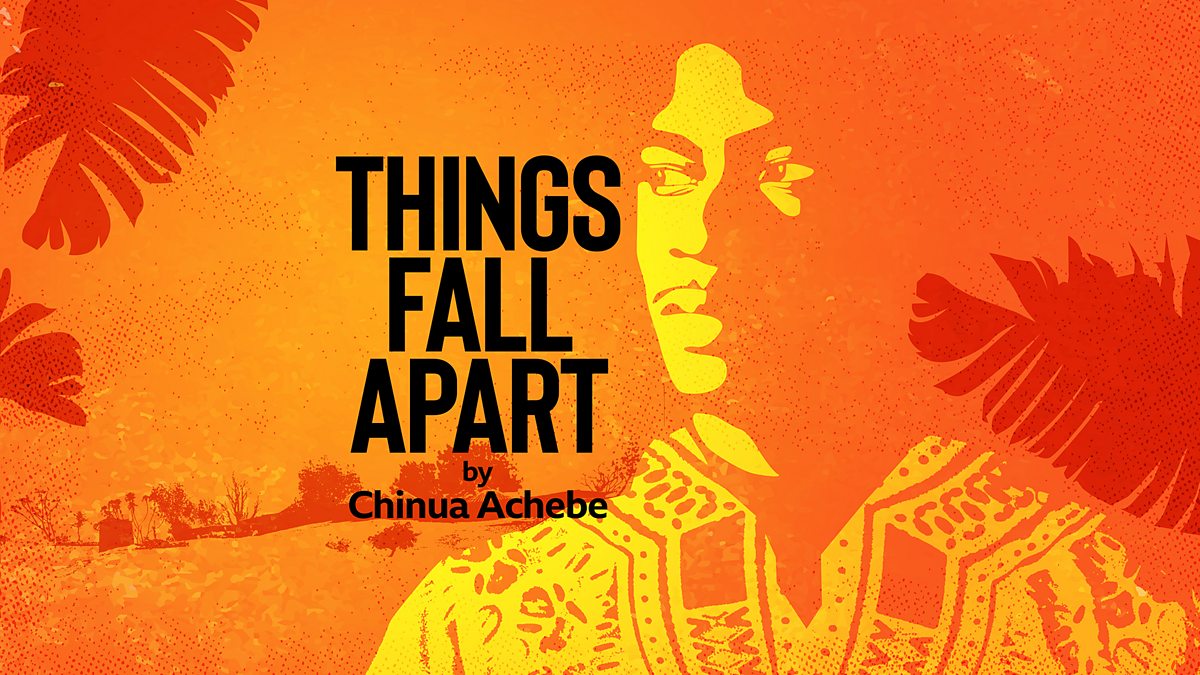
Chinua Achebe

Nigerian leaders and the call to save our country

By Yusuf Yusuf 

Sometimes, even the starry-eyed optimist must give up on Nigeria. The way things go from bad to worse in the country today is appalling. The great novelist Chinua Achebe had diagnosed our problem as a nation where he said, “The trouble with Nigeria is simply and squarely a failure of leadership.” The leadership of this country is not doing enough to save us from what experts call a “failed” to a “collapsed” state. We fervently pray for God’s intervention. 

The recent revelation by an ace investigative journalist and maverick writer, Malam Jaafar Jaafar, is mindboggling! It highlights Nigerian leaders’ new joint venture in unrelenting efforts to run this country aground. It shows their insensitivity to the suffering of other Nigerians. How will a government that berates the payment subsidy of basic stuff for its citizenry and whose minimum wage is among the lowest approve such an unsubstantiated rise in the salary and allowances of only a “select group”?

I cannot unravel our leaders’ craze to undermine this nation’s progress. Sometimes, I feel like believing conspiracy theories about them being stooges of other groups with vested interests in our nation. Our leaders fail to grasp that when you cause your country to fail or collapse, you will spend the rest of your life a stranger, the life of a Black Hermit (apologies to the great Kenyan writer Ngugi wa Thiang’o).   

White-collar crimes are threatening the existence of Nigeria. Once upon a Giant of Africa is now a baby learning to crawl. Ironically, a country blessed with human and natural resources will become a poverty capital. The way these resources are mismanaged points an accusing finger to its leadership.

The level of suffering in Naija these days is monumental. The dream of having a meaningful life is becoming a mirage. The hopes of the young people are being shattered by daily reality in the country. Hunger and poverty have become our co-tenants—businesses, whatever the scale, are crumbling. Young graduates with both certificates and functional skills are roaming about our streets.  Sensible minds are afraid of what may happen next. You know, poverty always breeds crimes.

This trend needs to be reversed. More than anyone else, the Nigerian leader has a lot to do to reverse the rot and change the status quo. We can all borrow a leaf from other people’s books.  Nigerian leaders are very good at making allusions to attitudes which promote development in other climes. 

Charity, they say, begins at home. The best way the Nigerian leader can help his people catch up with progressive worlds is by renewing our hopes of the noble decision to cut the cost of governance, as leaders of these nations have done. 

Cutting undeserved official allowances and estacodes, unnecessary long laundry lists of aides and stopping duplicity, inflating figures and collecting kickbacks when issuing contracts could help save now the slim chance of the survival of the nation. 

The earlier the nation’s leadership makes the above noble decision, the better for our collective future. This has the potential to prevent the furtherance of the untold hardships that the majority of Nigerians are going through. These hardships, I am afraid, could make many citizens easy prey to international criminal syndicates, especially young and inexperienced minds, with mere food and money handouts. Nigerian leaders, individually and collectively, need to act swiftly to avert the arrival of our doomsday. 

May God save Nigeria from Nigerians.

Yusuf Yusuf can be contacted via yusufyusufgamji@gmail.com.
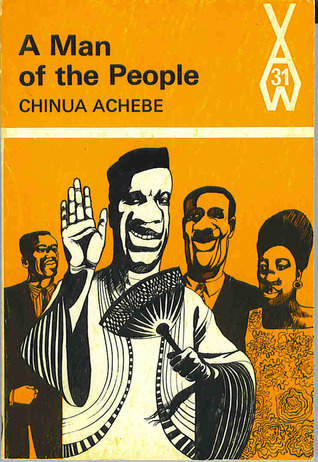
Chinua Achebe’s Man of the People: A story more than a fiction

By Saifullahi Attahir

It’s not surprising that nowadays you see my post regularly. I’m always looking forward to moments like this where  I get released from the yolk of sleep-inducing medical books. Once again, I’m lucky to be surrounded by my favourite literature I  enjoy which serves as a source of enlightenment, happiness, experience, and loyal and non-disturbing companionship.

This week I luckily came across a 362 pages novel written by a great and rare literary icon, Chinua Achebe, who needs no introduction. Dr Achebe was born around the 1930s in pre-independence Nigeria. He witnessed the early struggle of our nation with colonial amalgamation, premature political activities, and half-baked western knowledge. He was also blessed to witness the coup and the counter-coups, the civil war, the many long military juntas, and various democratic regimes. He died around 2013. what a long journey!

My respect for Achebe began when I discovered his early taste in Medicine (MBBS) at the University before switching to the Humanities. This is obvious in his surgical approach to writing and his simple use of words to convey a powerful message resembling a patient-doctor relationship in a way that no other can. Achebe is a political philosopher with all the tools to delve into politics (being famous, a great orator, experienced, a historian, and knowledgeable, of course, without the money) but decided to steer himself away from remaining a true nationalist.

The book, Man of the people, was so captivating that I couldn’t stop reading it until I was done in less than three days. How it related events in the early 1950s political arena to how it is in the present moment shows me that history is often a cyclical process with only names and dates that tend to change a little. This struck me with a reality that humans, despite our self-acclaim superior intelligence, are sometimes unfortunate gullible creatures that hardly learnt lessons from their past mistakes or the mistakes of others. This is more so true as today we rarely like to read history. Below is my take off from the book:

Chief Honourable Nanga is regarded in our settings as a wise and lucky few who was previously a low waged primary school teacher before finding his way into politics in the newly independent country. He was elected as a parliamentarian to represent his local people, who were mostly less literate in books than he was. Before his political adventure, Nanga was simple, intelligent, respectful, and friendly. All the mentioned attributes earned him the automatic approval of his people to represent them.

Of course, they weren’t wrong. Chief Nanga continues to be available to his people because he was a person you could describe as ‘let us eat together’. The main concern of his people was to bring them something to their mouths, not tangible and economically sustained programs. This automatically makes Chief Nanga the person whose main concern was to butcher the ‘national cake’ to satisfy his people and at least secure their approval for the next election round.

Chief Nanga was nominated a National Minister of Culture by the Prime Minister for his unquestionable ‘loyalty’ to the party and its leadership. The loyalty was nothing more than his ability to see wrongdoings and remains silent. Transgressions include high inflation, dashing money to party members, over-estimated contracts, sub-optimal road projects, conspicuous import duties, debt-ridden economic policies, debilitating educational reform, and countless more.

In exchange for his loyalty Chief Nanga was assured 10% of every project he was given, a 7-bedroom self-contained house, ten newly designed buses for his next election campaign, a  newly 2-storey mansion in his village hometown Anata, a new Cadillac car, and four security bodyguards. Remember that this was 1960’s politics!

In the story, there was an incident of some members of Parliaments who were not loyal to this dirty scheme of ‘party politics’ and stood their ground to expose all these scandalous affairs. Their fate was that the newspapers, magazines, and media outlets were being bought up (bribed) to write news regarding a coup plot arranged by those patriotic citizens who were later dismissed and imprisoned. At this juncture, I noticed that it’s true that news from some media outlets sometimes has some aspects of interest, either being compromised financially or for personal benefit. This required a separate article on its own.

It’s a rule of life that such activities can never continue unnoticed. Therefore a group of young, overzealous, and enlightened University graduates, some of whom were already practising in various sectors, including lawyers, doctors, teachers, and engineers led by  Max (a lawyer) and Odili (a teacher)  gathered to form a political party or rather a revolutionary movement to counter the activities of Chief Nanga’s Government. After various arrangements and meetings, they began launching their campaign. They were able to display every tactic to draw the attention of the common men and women in the country.

To cut the story short, these zealous young men were, to some level, unsuccessful in their mission; as the system began to unfold, it seemed a very complex situation where the very people they were shouting to rescue were the very culprit supporting the corruption. Those masses see the politician as saviours whose role is to go and bring them their share of the ‘national cake’ bounty because they do not view it as their right or National asset that deserves preservation up to their unborn generation.

The problem is that the same common masses are responsible for encouraging the leaders to do the vices. The common masses are the vanguards (‘yan jangaliya), the bodyguards, the local party chairman, and the man who complained of Kola-nut for his daughter’s marriage. The same masses would first laugh at him (elected politician)  after one year when he resigned from office without amassing something. Then, they would laugh at him that now he had become a  pauper, so this automatically creates the intrinsic urge to loot.

During the election campaign, Max lost his life after being attacked by those unfortunate vanguards, and  Odili sustained injuries, while his nomination paper didn’t even reach the electoral office as it was confiscated by corrupt Police. Chief Nanga’s party were ‘elected’ unopposed through massive ballot rigging and political hullabaloo. Fortunately, the country was saved by a military coup that overthrew Chief Nanga’s government.

The rest is history.

Saifullahi Attahir wrote from Dutse wrote via saifullahiattahir93@gmail.com.

On Things Fall Apart

By Abba Musa Ibrahim

When Europeans came to Africa and said, You have no culture, no religion, no civilization, no history; Africa was bound sooner or later to reply by displaying her own accomplishments. To do this, her writers and intellectuals- stepped back into what you may call the purity before the coming of Europe. What they uncovered there they put into their books and poems, and this became known as their culture, their answer to Europe’s arrogance.   – Chinua Achebe

Things Fall Apart (1958) is a text on colonialism by Achebe. As Ngugi asserts, “There is no writing in a vacuum”. Equally, Stanley Fish, Raymond William, Edward Said, and Homi K. Bhaba, among others, strongly believe that writing consciously or unconsciously reflects political, historical or social issues at the time of its birth.

In response to Joseph Conrad’s Heart of Darkness and Joyce Carry’s Mister Johnson, Achebe came up with Things Fall Apart to rectify the distorted image of Africa popularised by the Europeans. As he was quoted, “My role as a writer is to help my society regain belief in itself and put away the complexities of years of denigration and self-abasement”.

Things Fall Apart is recognized as one of the 100 novels ever written in history. It has also been translated into more than 50 different languages. Achebe gets the title of the text from W.B Yeats, an Irish poet, in his poem, “The Second Coming.”

“Turning and turning in the widening gyre

The Falcon cannot hear the falconer

Things Fall Apart; the centre cannot hold

Mere anarchy is loosed upon the world.”

The text has 165 pages, twenty-five chapters, and three phases, each discussing a distinct matter. The first part talks about the culture, tradition, norms and values and political system of Igbo society. Meanwhile, the second part talks about the major character, Okonkwo’s exile to his mother’s kinsmen in Mbanta when he kills a boy during a funeral festival. Then, lastly, is the happenings that lead him to hang himself.

The first part of the text opens with Okonkwo, who gets renown by wiping the floor with Amalinze; his celebrity circulates far and wide. He’s also a man of action, industrious and works tirelessly to go contrary to his bone idle and workshy father. Ikemefuna is brought to Okonkwo’s household before his future is decided. Pronto, the boy, owns the love of Okonkwo.

We also glance at Okonkwo, who has four wives and children and run them with heavy hands because he wants them to shun being inactive. His strictness makes him break a week of peace by beating his wife in black and blue. He also cuts Ikemefuna down, which Ezeadu forewarns him, “That boy calls you father, do not bear a hand in his death” (P.45). He does this and takes the life of sixteen years inadvertently, which in their custom is exile for seven years.

Secondly, the second part opens in Mbaino, Okonkwo’s mother’s town, where he serves for seven years. He receives a helping hand from his boon companion, Obiereka, by looking after his remnants of farm and letting him know about the arrival of white men who wiped out Abame altogether, and oracles apprise them that;

“The strange man would break their

Clan spread destruction among them” (p.111)

He also accepts the worsened situation:

“… Now he has won our brothers and our clan

Can no longer act like one; he has put a knife

On the things that held us together and we have fallen apart” (p.141)

Thirdly, the last part of the text is on Okonkwo’s return from Mbaino, where he loses his celebrity and social prestige. He finds out that white missionaries take everything up. They erect churches, courts, government and schools. He stands up against missionaries, fighting back his fame, social prestige and customs. But, drearily, he fails by not getting any co-operation from his clan, and this frustrates him to the core, and he takes his own life.

Abba Musa Ibrahim can be reached via abbamusa6888@gmail.com.