Chimamanda Ngozi Adichie

Peter Obi joins Chimamanda Adichie at Abuja book tour of Dreams Count

By Muhammad Abubakar

Abuja – Former Anambra State Governor and Labour Party presidential candidate, Mr. Peter Obi, on Wednesday joined a distinguished gathering of diplomats, literary enthusiasts, and dignitaries in Abuja for the Nigerian tour of Chimamanda Ngozi Adichie’s latest book, Dreams Count.

The event, which forms part of the global celebration of Adichie’s new release, attracted ambassadors and High Commissioners from various countries. Obi, who had earlier attended the book’s global launch on March 2 at London’s Southbank Centre’s Royal Festival Hall—an event that drew over 3,000 attendees—described Dreams Count as “deeply moving” and lauded Adichie for her continued impact on literature and cultural advocacy.

During the Abuja event, Obi praised the powerful spoken word performances by Nigerian poets, including Dike Chukwumerije, noting the impressive display of literary talent in the country. He commended Adichie for using her platform to uplift fellow Nigerian writers, giving them visibility and a voice on the global stage.

“Chimamanda remains an exemplary model for every Nigerian, old and young,” Obi said, urging continued investment in Nigeria’s creative industries. “The world is watching, and indeed, our dreams count.”
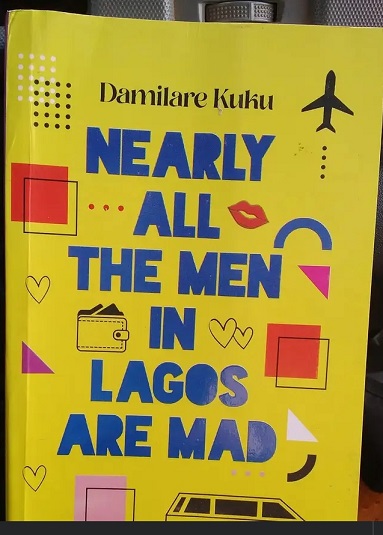
Book Review: Nearly All The Men in Lagos Are Mad

  • Title: Nearly All The Men in Lagos Are Mad
  • Author: Damilare Kuku
  • Genre: Fiction
  • Date of Publication: 2021
  • Page: 198
  • Publisher: Masobe Books
  • Reviewer: Aliyu Idris

It is the author’s debut. It entails twelve short stories narrated in cooperative narration; almost every story revolves around a subject regarding the woman or feminine gender.

From the book title, you may sense that it’s questionable, derogatory and disrespectful to men. However, the book exposes the sufferings of women and how the men of Lagos behave, especially towards women. It involves the story of sacrifice, endurance, rape, patriarchy and phallocentric, deceit and betrayal. Women are presented as saints. But, as it happens in reality, some characters found in some stories are the reason for their suffering.

Another crucial issue highlighted and promoted in the book is the concept of feminism. Just like contemporary feminists, I am not flabbergasted to find out that one of the author’s inspirations to produce the book is a feminist (Ngozi Chimamanda Adichie).

Almost every female writer who writes in any genre of literature promotes feminism right from the 19th and 20th-century feminists such as Virginia Woolf, Simone de Beauvoir, and Kate Millet down to the present-day feminists.

Because contemporary feminist writers do not stick to one feminist ideology but many subcategories. For instance, every story in the book has a different class of feminist ideology. For example, the first story titled “Cuck-Up” uses Amazon feminism to potray how defiant women are despite appearing weak and passive.

The last story in the book, “Independence Day,”  uses cultural feminism, showing women’s kindness and gentility.

Eco-feminism in the story “Anointed Wife” emphasises that patriarchial societies are detrimental to women.

Charles E Brazzler, in his book Literary Criticism An Introduction to Theory and Practice Fifth Edition, asserts that it’s the view of contemporary feminists that subjugation of women still exists worldwide. Issues such as rape, prostitution, social injustice, early marriages, polygamy etc., the feminist writers continue to add their voices to protest through their pens and papers.

It should be noted that feminism has been broadly international in scope, and many local and general factors dictate its disposition. For example, writers from Arab traditions such as Fatima Mernissi and Leila Ahmed have attempted to articulate a feminist vision distinctly marked by their specific cultural concerns. The same is true of African-American feminists such as Alice Walker and feminists of Asian heritage such as Gayatri Spivak (Habib 2005:669).

Multi-talented Nigerian director, Biyi Bandele, is dead

By Muhsin Ibrahim

Biyi Bandale’s death was announced via a Facebook statement signed by his daughter, Temi Bandele.

Born in Kaduna to Yoruba parents, Bandele, 54, was the director of the movie adaptation of Chimamanda Ngozi Adichie’s classic novel, Half of a Yellow Sun; Blood Sisters, among other remarkable works.

Last month, Bandele, who also wrote novels and directed plays in the UK, Nigeria and other places, announced the release of his new film, Elesin Oba: The King’s Horseman, a Netflix-Ebony Lifefilm production.

At the time of this report, the cause of his death is not yet clear.

“As Biyi’s daughter, I am heartbroken to share the sudden and unexpected death on Sunday 7th of August in Lagos of my father Biyi Bandele.

Biyi was a prodigiously talented writer and film-maker, as well as a loyal friend and beloved father. He was a storyteller to his bones, with an unblinking perspective, singular voice and wisdom which spoke boldly through all of his art, in poetry, novels, plays and on screen. He told stories which made a profound impact and inspired many all over the world. His legacy will live on through his work.

He was taken from us much too soon. He had already said so much so beautifully, and had so much more to say.

We ask everyone to please respect the privacy of his family and friends as we grieve his loss.”