CBN

Starting January 2026, PoS operators barred from operating without CAC certification

By Muhammad Abubakar

The Corporate Affairs Commission (CAC) has issued a public notice announcing a nationwide crackdown on unregistered Point of Sale (PoS) operators, with enforcement set to begin on 1 January 2026.

According to the statement, the Commission observed a rapid rise in PoS agents operating without proper registration—an act that violates the Companies and Allied Matters Act (CAMA) 2020 as well as Central Bank of Nigeria (CBN) Agent Banking Regulations. The CAC described the trend as a reckless practice that exposes Nigeria’s financial system and citizens’ investments to significant risks, allegedly aided by some fintech companies.

From the effective date, no PoS operator will be allowed to run without CAC certification. Security agencies have been directed to ensure full compliance, including seizing or shutting down unregistered PoS terminals. Fintech companies found enabling such illegal operations will be placed on a watchlist and reported to the CBN.

The Commission urged all PoS operators to regularize their business registrations immediately, stressing that compliance is mandatory. The notice was signed by CAC Management on 6 December 2025.

CBN, diaspora dollars and Nigeria’s economic lifeline

By Abdulrasheed Musa Kofa,

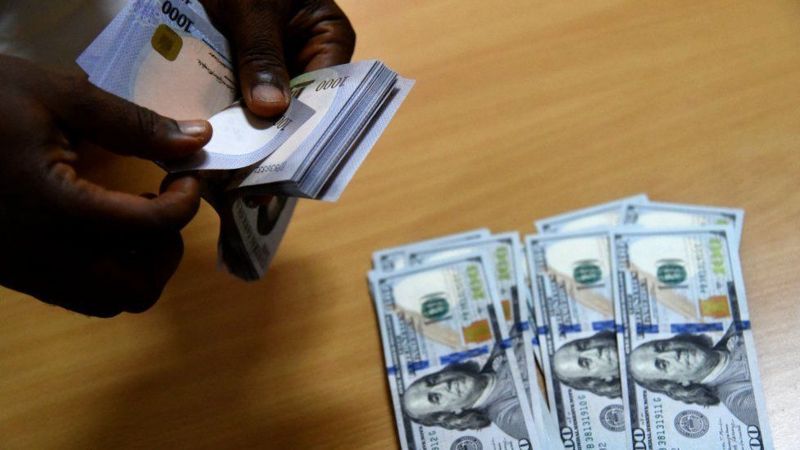
For years, Nigeria has leaned on its diaspora as a hidden anchor of survival. Beyond emotional ties and cultural nostalgia, Nigerians abroad have sent home billions of dollars, cushioning households and helping many weather difficult times. 

Yet the story of remittances has largely been one of consumption, not sustainable growth. Much of the money vanished into daily survival, often through informal routes, while the vast potential of structured diaspora capital for national development remained untapped.

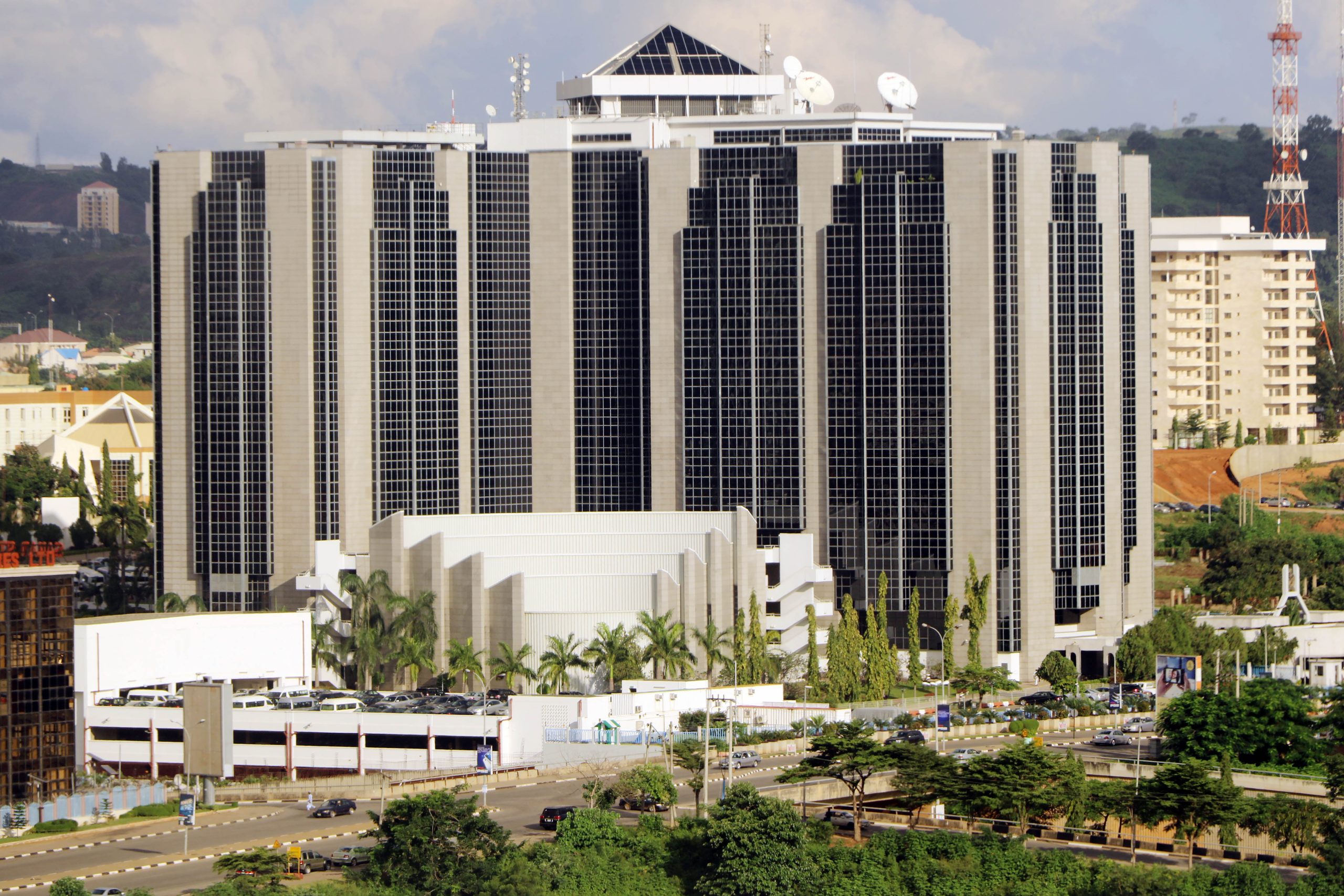
The Central Bank of Nigeria (CBN) now seems determined to rewrite that story. In recent months, it has introduced policies aimed not only at boosting inflows but at transforming remittances into a formal, investment-driven engine of stability. 

With tools such as the Non-Resident Nigerian Ordinary and Investment Accounts (NRNOA/NRNIA), the Non-Resident Bank Verification Number (NRBVN), and tighter International Money Transfer Operator (IMTO) guidelines, the apex bank is signaling a bold shift—from remittances as household lifelines to remittances as capital for growth. 

Its ambition of attracting $1 billion in monthly diaspora remittances is more than a target; it is an audacious declaration that Nigeria seeks to become a global hub for diaspora investment.

At the heart of this strategy are the NRNOA and NRNIA. The former provides a regulated, convenient channel for everyday remittances in naira and foreign currencies, cutting out the costly informal networks that once dominated. 

The latter, the NRNIA, goes even further by creating structured pathways for diaspora investments in mortgages, pensions, insurance, and Nigeria’s financial markets. By guaranteeing full repatriation of proceeds under existing rules, the CBN is deliberately courting trust. 

And in a global financial system where trust is the ultimate currency, such assurances matter greatly. The challenge of access has also been tackled. For years, the requirement of physical presence made securing a BVN impossible for many Nigerians abroad. 

The new digital Non-Resident BVN finally removes that barrier, even though it comes at a cost of about $50. While some may balk at the fee, the opportunity far outweighs the price of exclusion. For a diaspora community long fenced out, this is a long-awaited doorway in.

The IMTO reforms reflect similar pragmatism. By restricting services to inbound transfers and ensuring payouts in naira, the CBN is protecting liquidity while keeping inflows within the formal economy. 

Allowing operators to quote exchange rates on a willing seller–willing buyer basis introduces transparency and competitiveness, drawing more Nigerians away from shadowy parallel markets. The exclusion of fintechs from IMTO licensing has sparked debate, but the regulator may be betting on stability over experimentation in a sector that demands strict oversight.

Early signs suggest the measures are bearing fruit. Official reports showed a $553 million inflow in July 2024—the highest on record—representing a 130 percent year-on-year surge. Confidence is shifting gradually towards formal systems. 

Sustained, such inflows could strengthen Nigeria’s fragile foreign exchange reserves, deepen liquidity in capital markets, and lower the high cost of remittances that continues to exceed the global average. Yet the most profound shift is not numerical but philosophical. 

These reforms are about more than chasing dollars; they are about redefining the relationship between Nigeria and its diaspora. Rather than treating remittances as acts of charity or family duty, the CBN is positioning them as instruments of nation-building. 

Nigerians abroad are being asked to see themselves not merely as senders of money, but as strategic investors in the country’s future. The stakes could not be higher. With more than 15 million citizens abroad, Nigeria sits at the heart of Sub-Saharan Africa’s remittance economy. 

In some years, diaspora inflows have even surpassed oil revenues. If only a fraction of this wealth is converted into productive, long-term capital, Nigeria’s financial landscape could be reshaped. But success will depend on more than policy design. 

It will require political stability, investor protection, and unwavering consistency in government signals. The diaspora will not risk hard-earned savings in a system that shifts with every gust of political wind.

CBN’s reforms are bold and timely. But their success now rests on trust and execution. If they work, the narrative of remittances will shift—from consumption to capital, from emergency relief to structural development. 

The target of $1 billion monthly may well be achieved, but more importantly, it represents a shared vision where remittances become investments in Nigeria’s prosperity. The choice before the diaspora is stark: to keep sending money informally and watch it disappear into short-term survival, or to embrace formal channels and help lay the foundations of a stronger, more resilient Nigeria. 

The government has laid down the rails. It is now for Nigerians abroad to decide whether their remittances will remain fleeting lifelines or become the enduring engine of a nation’s growth.

Abdulrasheed Musa Kofa is a PRNigeria Fellow. He can be reached via: musaabdulrasheed83@gmail.com.

Nigerians abroad to pay $50 for remote BVN registration

By Abdullahi Mukhtar Algasgaini

The Central Bank of Nigeria (CBN) has introduced a remote Bank Verification Number (BVN) registration for Nigerians living abroad, but at a cost of $50 (N80,000).

The new Non-Resident BVN (NRBVN) platform, launched in partnership with the Nigeria Inter-Bank Settlement System (NIBSS), allows diaspora Nigerians to register without visiting Nigeria.

While BVN registration is free for Nigerians at home, those abroad must pay the fee to access the service.

Applicants must provide documents such as a Nigerian passport, proof of foreign residency, and a utility bill. The process includes identity verification and a liveness test.

The move aims to boost financial inclusion and remittances, with the CBN targeting $1 billion in monthly diaspora inflows.

However, reactions are mixed—some see the fee as reasonable compared to travel costs, while others call it an unfair revenue tactic.

The NRBVN platform also offers access to investment accounts and financial services, with repatriation options for diaspora investors.investor.

EFCC hands over seized 750-unit luxury estate to Housing Ministry

By Maryam Ahmad

The Chairman of the Economic and Financial Crimes Commission (EFCC), Ola Olukoyede, has officially handed over a confiscated 750-unit luxury housing estate—previously linked to former Central Bank of Nigeria (CBN) Governor, Godwin Emefiele—to the Minister of Housing and Urban Development, Ahmed Musa Dangiwa.

The handover ceremony took place in Abuja on Monday, marking a significant milestone in the federal government’s efforts to repurpose assets recovered from corruption cases for public benefit.

Speaking at the event, Olukoyede reaffirmed the EFCC’s commitment to transparency and accountability, emphasising that the recovered property will now serve the interests of ordinary Nigerians, particularly in addressing the country’s housing deficit.

In his response, Minister Dangiwa commended the EFCC for its efforts and assured that the housing units would be integrated into the Renewed Hope Cities initiative to provide affordable homes for low and middle-income earners.

The estate was seized as part of ongoing investigations into alleged financial misconduct involving Emefiele, who is currently facing multiple corruption-related charges.

SERAP sues CBN over increased ATM transaction fees

By Uzair Adam

The Socio-Economic Rights and Accountability Project (SERAP) has taken legal action against the Central Bank of Nigeria (CBN) over its recent decision to increase Automated Teller Machine (ATM) transaction fees, calling it “unlawful, unfair, unreasonable, and unjust.”

The CBN recently introduced a new charge of N100 per N20,000 withdrawal from an ATM not located within a bank’s branch premises.

Additionally, withdrawals at shopping centers, airports, and standalone cash points will attract a N100 fee along with a surcharge of up to N500 per N20,000 withdrawal.

In a lawsuit filed at the Federal High Court in Lagos, SERAP is seeking a judicial review of the CBN’s decision, arguing that the policy contradicts the Federal Competition and Consumer Protection Act of 2018.

The organization wants the court to declare the fee hike illegal and issue an injunction preventing its enforcement.

According to SERAP, the increase disproportionately affects low-income Nigerians, creating financial barriers for those who rely on ATMs for daily transactions.

The group further claims that the move violates constitutional provisions, consumer protection laws, and international human rights obligations.

SERAP’s legal team, led by Kolawole Oluwadare and Andrew Nwankwo, asserts that the new charges should be borne by banks and their shareholders rather than being passed onto consumers.

They argue that the CBN is acting in a manner that prioritizes banks’ profits over the welfare of Nigerians, with many banks declaring substantial annual profits.

The lawsuit also challenges the CBN’s authority to unilaterally impose such fees without the consent of the Federal Competition and Consumer Protection Commission (FCCPC). SERAP is urging the court to nullify the CBN’s circular on the fee hike and restrain banks and financial institutions from implementing the charges.

A date for the hearing of the case has not yet been set.

CBN directors decry ₦50m monthly pay for Cardoso’s inner circle

By Abdullahi Mukhtar Algasgaini

Senior officials at the Central Bank of Nigeria (CBN) are up in arms over the appointment of consultants by Governor Olayemi Cardoso.

The officials accused them of wielding undue influence and earning excessively high salaries.

The consultants, Nkiru Balonwu and Daphne Dafinone, reportedly bypass the bank’s hierarchy, issue directives to directors, and earn significantly more than top executives.

Dafinone, who is set to face a fraud trial, allegedly takes home ₦35 million monthly, while Balonwu earns ₦50 million—surpassing even the CBN governor’s salary.

Their appointment, made without a competitive process, has sparked widespread discontent among CBN staff, who view the salaries as obscene and the consultants’ influence as disruptive to the bank’s operations.

Response to Farooq A. Kperogi’s article on Emir Muhammadu Sanusi II

By Usman Abdullahi Koli

I read Professor Farooq A. Kperogi’s article “Emir Sanusi’s Quid Pro Quo for His Friends Turned Fiends” with keen interest. While it was well-written and rich in rhetorical flair, I believe it unfairly misrepresents the character and contributions of His Highness Emir Muhammadu Sanusi II and the broader context of his remarks. My intention here is not to disparage Mr. Kperogi or his intellectual depth but to offer a more nuanced perspective based on facts and a balanced understanding.

Sanusi’s commentary on economic reforms is not new, and it is not driven by self-interest, as the article implies. His economic positions, controversial as they may be, have always been rooted in his commitment to transparency, accountability, and fiscal prudence.

As governor of the Central Bank of Nigeria (CBN), Sanusi spearheaded reforms that stabilised the financial sector and exposed corruption, notably the mismanagement of funds in the petroleum industry. His leadership saved the Nigerian banking system during the 2009 global financial crisis. These efforts reflect a consistent commitment to economic pragmatism, not the “self-loving sadism” Mr. Kperogi ascribed to him.

At the Gani Fawehinmi Memorial Lecture, Emir Sanusi addressed Nigeria’s economic challenges within a historical framework, highlighting how years of poor management led to today’s difficulties. His statement about not defending the current government’s policies was not a quid pro quo demand but an expression of discontent over the failure of political leaders to reciprocate loyalty or act decisively for national progress.

Sanusi’s critique of governance has often transcended personal affiliations. For instance, he openly criticised the Goodluck Jonathan administration despite being part of the government apparatus, risking his career in the process. His comments in the lecture reflect this same principle: his loyalty is to ideas, not individuals.

The article unfairly caricatures Sanusi as an unrepentant neoliberal apologist indifferent to the suffering of the masses. While he has supported subsidy removal and exchange rate harmonisation, his positions are informed by Nigeria’s fiscal realities. Subsidy regimes, historically marred by corruption and inefficiency, drained trillions of naira from public coffers without addressing systemic energy sector challenges.

Critics often overlook the fact that subsidies disproportionately benefit the elite rather than the poor. Studies by organisations like the World Bank and Nigeria’s Budget Office have shown that wealthier Nigerians consume more fuel and thus benefit more from subsidies. Sanusi’s advocacy for subsidy removal aims to redirect these funds toward targeted interventions, such as healthcare, education, and infrastructure, which directly benefit the masses.

Contrary to the claim that Sanusi derives “delight from the misery of the masses,” he has consistently called for equitable resource allocation and the empowerment of marginalised communities. As emir, he launched initiatives to promote girl-child education, gender equity, and poverty alleviation in Kano State. His reforms in the Kano Emirate Council prioritised addressing social injustices that have long plagued Northern Nigeria.

For instance, his campaign against child marriage and his emphasis on the importance of education for girls drew both applause and backlash. These efforts single out his commitment to social progress and human dignity.

Mr Kperogi’s passionate critique of Sanusi’s remarks offers no clear alternative solutions to Nigeria’s economic woes. If we agree that Nigeria’s economy has suffered from decades of mismanagement, what is the path forward? Should we continue subsidising consumption at the expense of critical investments? Sanusi’s prescriptions, while debatable, are at least anchored in economic logic and long-term sustainability.

Nigeria’s challenges require a balanced, solutions-driven discourse. Reducing complex issues to personal attacks or dismissing individuals who have contributed significantly to national development is unproductive. Emir Sanusi’s positions are not beyond critique, but such critiques should engage with the substance of his arguments rather than resorting to ad hominem attacks or speculative interpretations of his motives.

Nigeria stands at a crossroads, and leadership—whether in government, traditional institutions, or civil society—must rise to the occasion. While Emir Muhammadu Sanusi II is not infallible, his track record of service, advocacy, and reform warrants a more balanced appraisal. Let us concentrate on fostering a Nigeria where ideas are debated with civility and respect, rather than transforming crucial national discussions into platforms for derision.

Usman Abdullahi Koli is a public relations expert, writer, and advocate for balanced public discourse. He can be reachedvia mernoukoli@gmail.com.

House Speaker asks CBN to clarify 1,000 staff layoffs, ₦50bn compensation

By Anwar Usman

The Speaker of the House of Representatives, Hon. Tajudeen Abbas, has sought the Central Bank’s clarification on the dismissal of about 1,000 staff members and the subsequent payment of a N50bn compensation package to the disengaged persons.

The speaker made the demands while declaring open an investigative hearing of the Ad-hoc Committee of the House, investigating the CBN’s termination/dismissal of members of staff on Friday in Abuja.

Recall that the CBN explained earlier that its Early Exit Package for staff is voluntary and that participation is not mandatory.

In a statement, the Acting Director of Corporate Communications, Mrs Hakama Sidi-Ali, assured staff and the public that no employee would be forced into early retirement under the scheme.

“The Central Bank of Nigeria has dismissed assertion of forced mass retirements, explaining that its Early Exit Package is entirely voluntary and without any negative repercussions for eligible staff”, the statement partly read.

However, Abbas tasked the panel chaired by the Chief Whip of the House, Hon. Bello Kumo, with probing the rationale behind the decision, particularly in light of the country’s current economic challenges.

Speaker Abbas, represented at the event by Deputy Speaker Benjamin Kalu, reiterated the need for transparency in the matter, explaining that the welfare and rights of the affected employees must be safeguarded.

Abbas also charged the committee to examine the process by which the N50bn severance package was determined.

In a statement issued by the Chief Press Secretary to the Deputy Speaker, Livinus Nwabughiogu on Saturday quoted Abbas as saying, “The committee has been tasked with examining several critical aspects of this issue. First, we aim to understand the rationale behind the decision to lay off over 1,000 staff members, particularly during these challenging economic times. The impact of such a significant workforce reduction on individuals, their families, and the broader economy cannot be overlooked.

“Moreover, the committee will investigate the process through which the N50bn severance package was determined. We must find out whether the principles of due diligence, fairness and due process were strictly adhered to in arriving at this figure. Transparency in such matters is key to maintaining public trust and ensuring the integrity of our institutions.”

Abas called on the apex bank and other affected government agencies to cooperate fully with the investigation so that the panel could discharge its mandate.

CBN imposes N150m fine on banks selling new naira notes

By Anwar Usman

The Central Bank of Nigeria (CBN) has announced that it will slam a fine of N150m per branch on Deposit Money Banks found guilty of facilitating the illegal flow of mint naira notes to currency hawkers and unscrupulous agents.

The apex bank disclosed this in a circular issued on Friday, December 13, 2024, signed by the Acting Director of the Currency Operations Department, Mohammed Olayemi.

The circular revealed the CBN’s concern about the increasing prevalence of mint naira notes being traded by hawkers, a practice the bank described as impeding efficient and effective cash distribution to customers and the general public.

The circular, which referred to an earlier directive dated November 13, 2024, highlighted the apex bank’s determination to address the commodification of the naira.

Under the directive, any financial institution found guilty of this act will face a penalty of N150m for the first violation.

Subsequent infractions, the CBN warned, would attract stricter sanctions under the provisions of the Banks and Other Financial Institutions Act (BOFIA) 2020.

To ensure compliance, the apex bank stated that it would increase periodic spot checks in banking halls and ATMs while deploying mystery shoppers to uncover illicit cash hawking spots across the country.

The CBN further called on the DMBs to strengthen controls, processes, and procedures around their Cash Management Centres, branches, and teller operations to prevent their systems from being exploited for illegal transactions.

Reports has it that the CBN issued a serious warning to Deposit Money Banks over cash hoarding and diversion, stating that such actions will attract stiff penalties.

The CBN also warned against cash hoarding, diversion, and other practices that hinder cash flow, stressing that such actions violate the Clean Note Policy.

CBN asks Nigerians to report banks failing to dispense cash

By Uzair Adam

The Central Bank of Nigeria (CBN) has instructed all Deposit Money Banks (DMBs) across the country to ensure continuous cash disbursement to customers.

The Daily Reality reports that the bank urged members of the public to report banks that fail to comply.

In a circular issued to DMBs and the general public, and shared on the bank’s verified X (formerly Twitter) handle on Tuesday, the apex bank emphasized its commitment to enforcing compliance through intensified oversight and sanctions on erring banks.

The CBN Governor, Yemi Cardoso, assured that sufficient banknotes had been distributed to all banks based on their capacity, eliminating any reason for a cash shortage as the festive season approaches.

Titled ‘Cash Availability Over the Counter in Deposit Money Banks and Automated Teller Machines,’ the circular outlined guidelines for improving currency circulation in the economy.

“As part of ongoing efforts, the CBN directs DMBs to ensure efficient cash disbursement both over the counter and through ATMs. The bank will continue to monitor compliance closely,” the statement read.

The CBN also provided reporting channels for the public to lodge complaints about cash shortages.

Customers are required to submit details, including the name of the bank, location, amount, and date of the incident, through designated phone numbers or email addresses provided for each state.

The circular, jointly signed by Acting Director of Currency Operations Solaja Mohammed Olayemi and Acting Director of Branch Operations Isa-Olatinwo Aisha, took effect on December 1, 2024.