Cashless Policy

Gbajabiamila commends Supreme Court for extending old naira notes exchange deadline

By Muhammadu Sabiu 

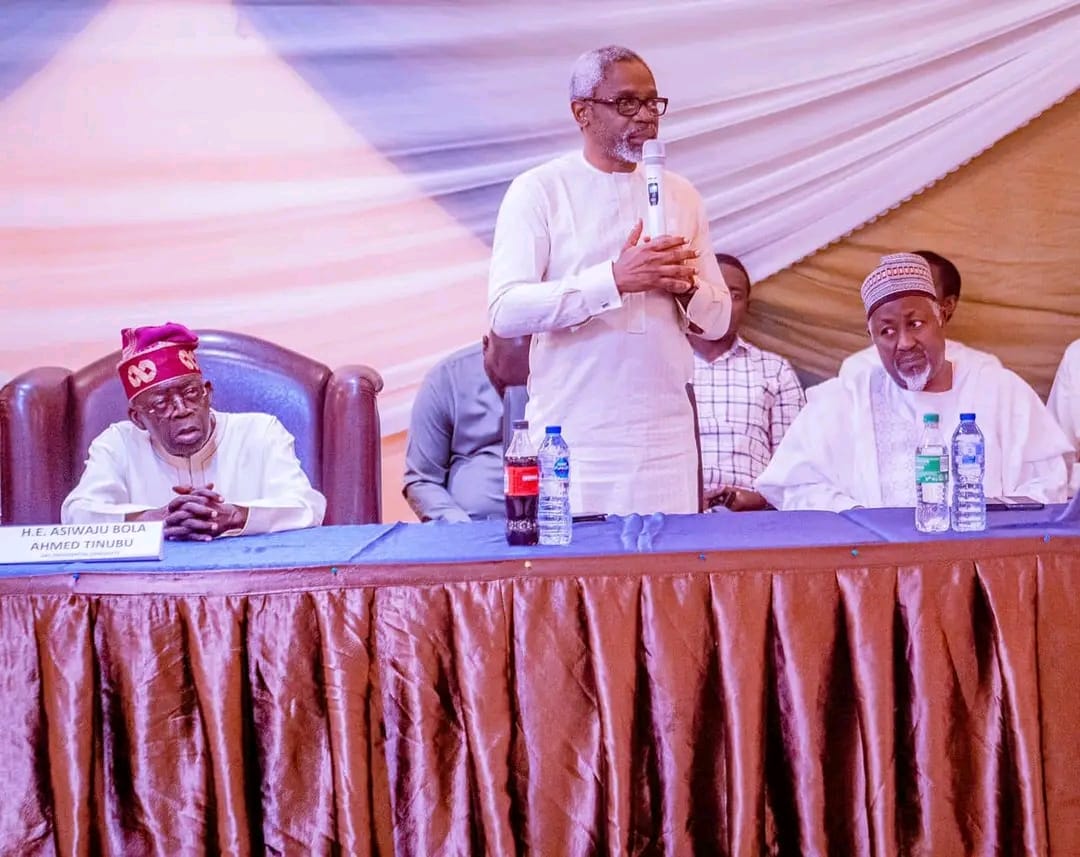
Femi Gbajabiamila, Speaker of the House of Representatives, praised the Supreme Court’s ruling invalidating the Central Bank of Nigeria’s (CBN) currency policy’s deadline and extending it until December 31, 2023.

This was revealed in a statement released on Friday in Abuja by Mr Lanre Lasisi, Special Assistant to the Speaker on Media and Publicity.

According to Gbajabiamila, this had been the stand of the House of Representatives.

According to the speaker, the design and implementation of the currency exchange policy had been terminally defective and at odds with the goals of law and public policy, despite the scheme’s admirable aims.

He said that the House has been criticising the policy implementation because it violated the statute creating the CBN and that the Supreme Court’s ruling supported the House’s position.

“The decision of the Supreme Court suspending the currency swap policy introduced by CBN and extending the implementation deadline to December 31 validates the position of the House in its entirety,” he said.

The Speaker explained that the implementation of the policy is remarkably haphazard, adding that it falls way short of international standards.

How Naira redesign, cashless policy, affect prices of farm produce in Katsina

By Aliyu Ya’u Baraje

I have consistently written against the greediness of Nigerian agricultural produce suppliers since the implementation of the cashless policy. I am now fully convinced that a typical Nigerian is potentially greedy and corrupt, especially when presented with the opportunity.

There is no doubt about the scarcity of Naira, which economics has taught is a characteristic of money. This scarcity has created hardships for Nigerians, particularly for rural dwellers whose voices are hardly heard. This is partly due to a lack of modern education, IT literacy, and little or complete absence of media coverage. When visited, rural areas now seem like mourning grounds, faces barely smile, just silence, and black faces.

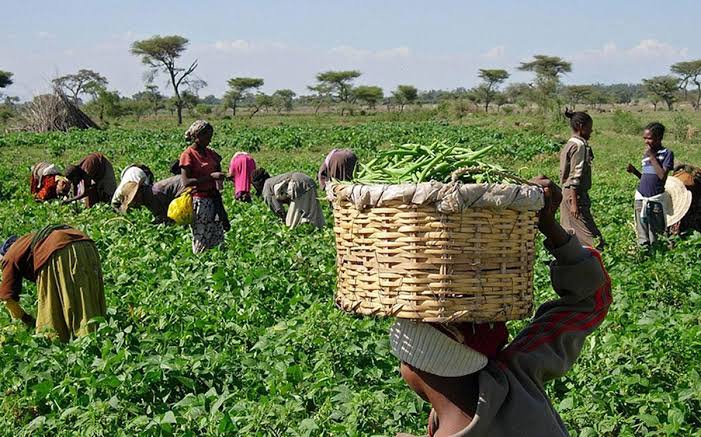
As a farmer and rural dweller, I feel it’s my duty to bring to light the ongoing exploitation of local farmers by produce suppliers. These suppliers are taking advantage of the cashless policy to profit at the expense of farmers whose main source of income is selling produce or livestock.

The prices of produce and livestock have plummeted dramatically. For example, the price of maize per 100kg has fallen from 22,000 to 13,000, rice from 26,000 to 15,000, beans from 42,000 to 25,000, and soybeans from 32,000 to 18,000. This trend is also seen in other produce such as millet, groundnuts, sesame, sugarcane, yams and cassava.

Farmers are offered two prices, one for a cash-and-carry deal and another for bank transfers. Those who need cash are given the lowest price, while those who require a transfer receive an increase of about 3,000 to 4,000.

This exploitation is unacceptable, especially since prices of other commodities have skyrocketed. I stand against this mistreatment of farmers and the erosion of their livelihoods.

I am from the southern part of Katsina State, which includes the local government areas of Sabuwa, Dandume, Funtua, Faskari, Danja, Qafur, and Malumfashi. This region is renowned as an agricultural hub not only in Katsina State but throughout northern Nigeria. This is due to the fertile land and extensive use of industrial

fertilizers and manure. The local government areas are rivaled only by the Saminaka, and neighboring local government areas.

Those who are familiar with this region will attest to the fact that its inhabitants are engaged in farming activities, not just subsistence farming but also what could be described as mechanized farming. In this region, farmers producing hundreds of tons or thousands of bags of the listed produce can easily be found. If one is a resident of this region, he is either a farmer or from a farming family. Even those who have switched to other businesses or occupations, most of their extended families are still farmers.

Given this, it should not be surprising that the exploitation of farmers by suppliers is a source of concern for those in the region.

2) In today’s Nigeria, the prices of processed and refined commodities have risen dramatically, with some even doubling, tripling, or quadrupling. The price increase for some commodities is so significant that it’s difficult to describe. So, why are farmers the only target for this exploitation?

3) In southern Katsina State, farming is done on a large scale, making it more of a business. This leads to the excessive use of agricultural chemicals, the prices of which have skyrocketed multiple times. For example, NPK fertilizer is sold for 32,000 Naira, Urea is sold for 22,000 to 23,000 Naira, Moroccan OCP (mixed fertilizer) is sold for 15,000 to 17,000 Naira, and the locally made Dan-Buhari fertilizer made from Kankara Local Government is sold for 10,000 to 15,000 Naira. Given these high prices, it’s understandable why a farmer would not be happy with selling their produce for less than 15,000 Naira.

Moreover, the use of tractors and other heavy engines for farming activities such as harrowing, tilling, harvesting, and transportation requires diesel, which now costs over 900 Naira per liter. The use of small equipment for dry-season farming, mobilization, pesticides, and herbicide spraying also requires petroleum, which now costs between 350 and 400 Naira. The prices of other chemicals such as pesticides, herbicides, and preservatives have not only doubled but have tripled or even worse.

This means that when a farmer who needs cash takes their produce or livestock to local markets, they feel like they are being shortchanged or receiving only a fraction of what they spent months or years nurturing. As a result, many farmers go home feeling like they have been robbed and have nowhere to turn for help

4) I seek to draw public attention to the exploitation of farmers in Southern Katsina state. The rise in prices of agricultural chemicals and equipment, along with the exploitation of farmers by produce suppliers, have led to a situation where farmers are not able to make a fair profit from their hard work. I categorizes those who are happy with the situation into two groups: those who are exploiting the farmers for their own gain (like suppliers) and those who are not involved in farming and only care about purchasing cheaper produce for domestic consumption (the consumers).

5) It is unfortunate that the farmers who work hard to produce the commodities are being exploited by the suppliers, hoarders, and processing industries. The lack of government price control mechanisms, excessive taxes and restrictions on foreign goods, and competitors. The selling of finished products at high prices, even higher than those imported from other countries has shown that farmers are intentionally targeted. This creates a situation where the farmers receive low prices for their produce while the final products are sold at high prices, leaving the farmers with little profit and often feeling exploited. It is important to address this issue and find ways to support and protect the livelihoods of local farmers

6) The exploitation of farmers in Nigeria has become a major concern as they are being targeted by suppliers, hoarders, and companies. The prices of agricultural chemicals and equipment used in farming have skyrocketed, making it difficult for farmers to make a profit from their produce. The lack of government price control and foreign competition, as well as excessive tax charges, have added to the farmers’ burden. Despite the high prices of commodities, the owners of processing, refining and packaging factories have not reduced their prices (per kg from suppliers), and instead sell the finished products at exorbitant prices. This has made life in rural areas even tougher, as the local farmers are unable to compete with foreign imports and are being forced to sell their produce at low prices. The suppliers have also adopted a cashless policy, which has made it difficult for farmers in rural areas to receive payment for their produce. The lack of recognition of wired transfers and poor network and electricity coverage in rural areas has further complicated the situation.

It’s important for the government to consider all factors and individuals, including rural settlers, when making decisions on the cashless policy. The government should strive to ensure that all citizens have equal access to financial services, regardless of their location.

Aliyu Yau Baraje, Dandume Local government area Katsina. He can be reached via: aliyuyau900@gmail.com fb: Aliyu Baraje
Naira Scarcity: Peter Obi urges Nigerians to be patient with FG

By Ahmad Deedat Zakari

The Presidential Candidate of the Labour Party, Peter Obi, has urged Nigerians to be patient with the Federal Government as regards the hardship caused by the new currency redesign.  

Mr Obi made the appeal in the early hours of Sunday in a tweet via his official Twitter handle.

The redesign of Nigeria’s currency has enthroned scarcity of Naira notes and caused severe hardship to Nigerians who are unable to get cash to carry out their daily transactions. 

Mr Obi, while pleading with Nigerians, said currency redesign is not peculiar to Nigeria, and it comes with long-term economic advantages despite the initial inconveniences. 

He tweeted: “The currency redesign is not peculiar to Nigeria. It is an exercise that comes with some inconvenience and pain, but it has significant long-term economic and social benefits. Even though there are improvements that can be made, I urge Nigerians to bear with the CBN and Federal Government with the hope that the general populace and Nigeria will harvest the gains that will come with the reforms.”

Former CBN Director lambasts Emefele’s policies, asks him to resign

By Uzair Adam Imam

A former Secretary to the Lagos State Government in the Second Republic, Chief Olorunfumi Bashorun, said the Central Bank of Nigeria’s (CBN) cash policy is making a dangerous and destructive history for Nigeria.

He stated that since CBN was established in 1959, and I was a foundation staff, no governor has taken Nigeria for a ride as Emefiele.

Bashorun, who disclosed this in a statement he personally signed on Thursday, asked the CBN governor, Godwin Emefiele, to resign immediately.

He said in the statement, “I have just read online a directive from the CBN governor that banks should pay a maximum of N20,000 out to customers on presentation of the teller.

“It is now clear that the CBN governor, Godwin Emefiele, is making a dangerous and destructive history for Nigeria. Since CBN was established in 1959 (and I was a foundation staff), no governor has taken Nigeria for a ride as Emefiele.

“The multiplier effect of his rather evil directive is to close down all businesses in Nigeria, and further add to the hardship Nigerians are experiencing in recent times.

“I make bold to state that unless this oppressive directive is withdrawn within the next 48 hours, Nigerian masses will have no choice than to rise and compel the government to take positive action to reverse it,” he stated.

Old currency deadline: Queues, frustration at banking halls in Kaduna

By Sumayyah Auwal Ishaq

Almost all banks are now attending to long queues in their banking halls as the deadline for the use old currency by the Central Bank of Nigeria (CBN) draws closer, investigation by The Daily Reality has revealed.

The rush by customers to deposit old currency generated much chaos in and around banks premises across the Kaduna metropolis throughout the week. The queues at banks in Yakubu Gowon Way, Station Road, Kano Road and Sabon Tasha were characterized by commotion caused by slow speed of the deposit process and impatience by customers.

Some of the customers who spoke to TDR said they were scared of losing their monies as the CBN had warned that those who failed to remit their old currencies would lose it after the deadline.

Officials of these banks had a very hectic time controlling the huge crowd in their premises, even as customers complained of slow services by the banks. Some of the customers expressed frustration queueing in the sun and the difficulty in remitting their monies, suggesting that further extension of the deadline would ease their pain.

It would be recalled that the CBN had given all Nigerians up to the end of January, 2023 to remit their old currencies as it ceases to be a legal tender after the stipulated time.

Philips Curve and Nigeria’s economic reality: a macroeconomic analysis.

By Muhammad Sagir Bauchi

Stabilization of prices and achieving full employment are among the core goals of every economy in their macroeconomic policies. In this case, there are two main approaches to curtail inflation, recession, unemployment and other negative macro-economic phenomena. These approaches are monetary and fiscal policies. While monetary policy refers to the central bank activities which are directed towards influencing the quantity of capital (money) and credit in an economy, fiscal policy refers to the government’s decisions on taxation and spending. Both monetary and fiscal policies are used to regulate economic activities over time. They can be used to accelerate growth when an economy starts to slow or to moderate growth and activity when an economy starts to overheat. In addition, fiscal policy can be used to redistribute income and wealth.

The overall goal of these monetary and fiscal policies is channelled to the creation of a healthy economic environment that could sustain economic growth, facilitate positive employment and stable inflation rate.

In a plain language, the main aim of these two policies is to steer an economy in the sense that the economy does not experience economic boom that could be followed by high period of low or negative growth, high level of unemployment and unstable price. In this situation, people can feel safe in their consumption, savings and investment decision and government could concentrate on economic decision making. And this is where the idea of Monetarist, Classical and Keynesian Schools of Economics come to play, where they have different views in respect to the effectiveness of the two policies.

PHILIPS CURVE FROM A SHORT GLANCE:

The issue of inflation and unemployment is not a new concept in the realm of economics and it’s one of the concepts that reflect the science of economics as a true reflection of reality, since that, almost everyone is feeling the impact of either of the two.

The history of Philips Curve can be traced to the research findings of A.W Philip, an economist who analyzed the relationship between unemployment and the rate of change of money wages in the United Kingdom in the years 1861-1957. At the end of his findings, he suggested that there is an inverse or negative relationship between wages and unemployment. In simple term, he meant that whenever there’s growth in unemployment, there would be a low level of inflation. And the rationale behind the justification of his idea is that wherein there’s employment, people have more money, which leads to high demand for goods and services, and eventually pushing prices up. On the other hand, when there’s a rise in unemployment, INFLATION will go down since there will be low demand for goods and services as there’s less money in circulation.

Philips and Other Economic Perspectives: there are different opinions with regards to the application of the curve and the measures to contain the phenomena.

According to Monetarist School, the issue of unemployment is a supply side phenomena, therefore, demand side measures cannot be used in curtailing them, and even if it occurs, it can be for a temporary and will accelerate price instability at the end. While to the Keynesian school, they argue that there can only be “demand deficient unemployment” And in the time of recession, demand side measures can reduce unemployment for long-term with little of inflation.

Nigeria’s Economic Reality:

In Nigeria, since its independence, unemployment and inflation are among the major distractions in the growth and development of the nation’s economy. This is evident as we are all witnessing a scenario where too much money is chasing few goods and another case of high supply of labor with low demand of it. According to data from the National Bureau of Statistics NBS), Nigeria’s inflation rate has been consistently high, averaging around 11% in the past decade. The high inflation rate can be attributed to a number of factors such as the devaluation of the Naira, increase in the cost of imports, and a rise in fuel prices.

In an effort to curb inflation, the Central Bank of Nigeria (CBN) has introduced and implemented a number of monetary policies, such as the recent cashless driven economy module; through daily and weekly money withdrawal limit, increasing interest rates, tightening liquidity, devaluing the Naira, etc. However, all these policies have not been entirely successful in bringing inflation under control. Additionally, the Nigerian government has also implemented fiscal and monetary policies such as capping government MDAs cash withdrawals limit to minimal amount, increasing taxes and cutting government spending to curb inflation, however, the effectiveness of these policies remains uncertain and challenging. Same goes to the apex bank ongoing monetary policy, especially the weekly withdrawals limit policy, which is an unprecedented threat to urban and rural businesses due to poor mobile/internet banking mechanisms in the country. As such, the apex bank must address these concerns through shifting the effective implementation date until all the proper mechanisms required to operate a cashless economy are put in place. This can be done if the CBN reasons and constitutes a committee that includes technocrats, bankers and internet service providers, which will make sure that effective moblie/internet services are made available to cover the whole country before the policy kicks off and kicks up.

In conclusion, the relationship between inflation and unemployment as represented by the Philips curve is a complex one that is influenced by a variety of factors. The Nigerian economy is facing significant challenges in terms of cashless economy application, high inflation and unemployment rates, and finding effective solutions to these issues will require a rigorous political will and careful consideration of both monetary and fiscal policies. It is important for the government and the central bank to continue to monitor and analyze economic data and make adjustments to policies as needed, in order to create a stable economic environment that supports growth and employment.

Muhammad Sagir Bauchi, is a graduate of Economics from Sa’adu Zungur University, Gadau, Bauchi State. He can be reached via ibrahimsagir1227@gmail.com

Cashless policy is too early for corrupt nations

By Lawan Bukar Maigana

I keep telling people that it is too early for us in Nigeria as a whole to adopt a cashless policy. It is just obviously too early. Yesterday, I read a post by Prof. Abdelghaffar Amoka of the Ahmadu Bello University, Zaria, in Kaduna State, about his experience with a Point of Sale, PoS, agent.

He had gone to refill his gas cylinders at the cost of 19k+ and he used a PoS machine to pay for it. Though he was debited, the money wasn’t credited to the PoS agent’s account. Rather than waste his time there, he transferred another money to someone’s account to pay for refilling. He would have become helpless if he was moneyless.

Some weeks back, I experienced a similar thing in Abuja. I went to withdraw 5k using a PoS from a woman at the NYSC parade ground. I was debited but she didn’t receive the money. She then told me that she won’t give me the money until she receives an alert. Luckily, I had a paltry sum left in my account. I then withdrew the money using a different PoS. It took my bank nearly ten days to refund me.

Before then, and about three years ago, I had the same experience with UBA. I used my father’s card to withdraw N100,000. I tried six times, but all of the transactions didn’t dispense cash, and he was debited five times. My dad only knew it after a week. He complained to the bank but they denied it, without carefully checking whether the transactions were successful or not.

They had to call me to come from school. I quickly got to the bank because it involved my father. I had to help them understand that the transactions failed. Only then they rechecked and discovered that I was right. That was indeed an issue bordering on unprofessionalism.

If not because of my father I would have sued the bank, because they threatened me with a police arrest, saying it was a criminal case. My father asked me to accept their apology else I would have sought compensation for making me look like a criminal, while they were at fault.

Before going ahead with its cashless policy, another factual and excusable factor the Apex Bank should consider is the fact that most of our businesses are done in cash, especially those trading in rural communities and towns and other remote areas where there are no banks, no network, no internet, no electricity, no education, and these people form a large portion of the Nigerian populace.

The questions I keep asking myself regarding this policy are: Did the Central Bank of Nigeria build banks in those areas? Would the people be traveling from their various villages to cities to transfer, withdraw or deposit money? What did the government do in place of these challenges? Does CBN have enough manpower to do this job even if they have built banks? Did CBN mistake Abuja, Kano, Lagos, Port Harcourt, and a few cities for Nigeria?

These, among other reasons, are the factors I want the CBN Governor to consider. Before they present this policy, they need to put all these things in place and educate people about it so that people will evaluate its strengths and weaknesses, and decide to either oppose or support it. The CBN didn’t do that. It just woke up from its slumber and served it to the Nigerians a la carte. Time will however tell if Nigerians will embrace it, warts and all.

Lawan Bukar Maigana is a social analyst. He writes from Abuja and can be reached via email: lawanbukarmaigana@gmail.com