Cameroon

Indomitable Lions’ AFCON preparations descend into chaos

By Muhammad Abubakar

Cameroon’s upcoming Africa Cup of Nations (AFCON) campaign is in turmoil due to a major power struggle between FECAFOOT President Samuel Eto’o and head coach Marc Brys, who remains under contract until 2026. Eto’o unilaterally declared Brys’s role was over.

The dispute has resulted in two rival 28-man AFCON squads.

Eto’o’s faction released a list naming David Pagou as coach and controversially omitted stars Andre Onana, Eric Choupo-Moting, and captain Vincent Aboubakar. Reports suggest Aboubakar was dropped to protect Eto’o’s national scoring record.

Coach Brys responded with his own squad announcement, restoring the high-profile players and questioning the team’s ability to compete in Morocco without them. This internal conflict severely undermines the Indomitable Lions’ preparations.

Paul Biya wins Cameroon’s presidential election

By Sabiu Abdullahi

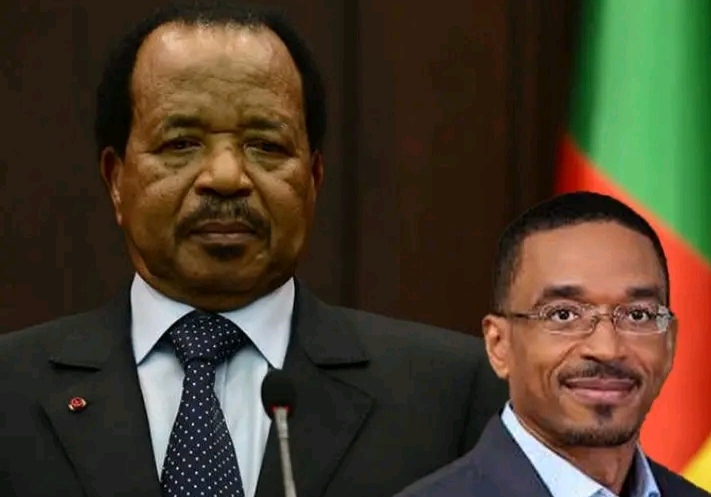
Cameroon’s long-serving leader, President Paul Biya, has been declared the winner of the country’s recent presidential election.

According to official results released by the Constitutional Council on Monday, the 92-year-old president secured more than 53 percent of the votes cast in the October 12 election.

The announcement followed violent clashes between protesters and security forces that resulted in the deaths of at least four people.

Opposition supporters had taken to the streets demanding what they described as credible election results.

President Biya, who has been in power since 1982, will now extend his rule after more than four decades of leadership.

“Cameroon’s President Paul Biya, who has led the country since 1982, has won re-election, according to official results,” the council confirmed.

The final results were announced amid heightened tensions across several regions as citizens awaited confirmation of the outcome.

More details are expected to emerge as the situation develops.

Cameroon awaits landmark election verdict

By Abdullahi Mukhtar Algasgaini

The nation holds its breath as the Constitutional Council prepares to announce the results of the presidential election, a decision that will shape Cameroon’s political future for the next seven years.

All eyes are on the outcome to see if 85-year-old incumbent President Paul Biya, one of the world’s longest-serving rulers, will extend his 43-year tenure.

The election has been a focal point for a populace deeply divided between desires for continuity and demands for change.

The announcement comes amid a tense atmosphere, with many citizens and international observers expressing hope for a peaceful and democratic conclusion to the electoral process.

The results are expected to be made public imminently.

Ex-Cameroon international Landry Nguemo passes away in tragic accident 

By Sabiu Abdullahi

Former Cameroon international Landry Nguemo has died in a tragic traffic accident, the Cameroon Football Federation (Fecafoot) announced on Thursday.

The 38-year-old midfielder, who played for the Indomitable Lions between 2006 and 2014, lost his life in the accident. 

Nguemo had a distinguished club career in France, playing for AS Nancy-Lorraine, Bordeaux, and Saint-Etienne.

He won the French League Cup with Nancy in 2006 and the French Cup with Bordeaux in 2013. 

The football community is mourning the loss of Nguemo, who returned to Nancy as a coach after his playing days.

He worked with the Under 16s team, sharing his expertise and experience with young players. 

He will be remembered as a talented player and dedicated coach who made a lasting impact on the sport.

Man killed by his pet dog in Cameroon

By Ahmed Deedat Zakari

A Cameroonian, Simon Ngonja, has been killed by his pet dog in Yaounde, Cameroon.

According to reports, the German shepherd fiercely attacked and mauled his owner, a senior staff at the Cameroonian Prime Minister’s office.

The incident was reported to have happened on June 11, immediately after the deceased returned from a journey.

A soldier had shot the dog dead in a futile attempt to save the deceased. However, before the intervention of the soldier, the deceased had already sustained aggravated bodily injuries and had lost a lot of blood to bleeding.

Mr Ngonja was rushed to the hospital and was stabilised before his inevitable passing on the Morning of June 15, 2023.

A Facebook user, Bella Powers, gave details as to the cause of his death in a post, he wrote :

“Killed by his dog in Yaoundé… Simon NGONJA died this morning after being fatally attacked by his own ‘German Shepherd’ breed dog.

“Returning from a trip last Sunday night, he was attacked by his dog after opening the gate of his house. He fought fiercely with the animal to the point where it was a soldier who decided to kill the dog with a rifle bullet. Taken to the hospital with a lot of bleeding, the wounds were finally fatal to him.

“He was an executive in the services of the Prime Minister in Yaoundé.
May his soul rest in peace, and our condolence to his family.”

Revisiting Sardauna’s northernization policy

By Abdullahi Yusuf Tela

Between 1949 to 1960, the reign of Sir Ahmadu Bello as the Premier, the Northern Nigeria environment has seen tremendous development. By October 1960, because of his super influence, Ahmadu Bello has become a mighty figure within and outside the borders of northern Nigeria.

As described by Paden in Ahmadu Bello: Sardauna of Sokoto, the main concern of the Sardauna was “northernization”. His practical approach towards developing northern Nigeria was quite exceptional. Paden further states that “the north is his family, and he must get his family on the right track so that it can play its proper role within the federation and the world at large.”

Sardauna’s love for the growth and development of the North made him pursue a series of northernization policies, all in an attempt for a balanced growth amongst the regions despite warnings from other competing regions as to the consequences of his this ideology.

Sardauna had once replied, “No…. Over my grave!” This was in response to Dr Ibiam, who urged Sardauna to abandon the northernization policy.    

During one of his visits to the North, Dr Nnamdi Azikiwe opined that the north under Ahmadu Bello’s reign was working consistently to catch up with the South in the race for progress. He added that its local government set up guarantees a stable government; its people respect and revere their emirs as a symbol of constituted authority while respecting elective representation in their local councils.    

His leadership style and dexterity made the former “Northern Cameroon” become “Sardauna Province”. Although the area called “Northern Cameroon” was part of Cameroon, Sir Ahmadu Bello lured them with a promise that if they joined Nigeria, he would grant them a separate province with lots of benefits as the Northern Nigerians. The Northern Cameroon province eventually voted to be part of the northern region through a referendum.

Ahmadu Bello, through his unreserved love for the youths, had fixed several of them in the civil service. It was found out that in 1961, out of the 41,000 employees in the federal civil service, only 400 were northerners. Due to this low turn-out of the northern people in the civil service, Sardauna developed the habit of making an appointment then sending the person on leave for a crash course at home or abroad. This created a lot of opportunities and positions for young northerners.

Abdullahi Yusuf Tela wrote via abdultela2@gmail.com.

Nigeria’s border closure and its socio-economic hangover

By Salisu Yusuf

Since August 2019, when Nigeria decided to close its border with neighbouring Benin, Cameroon, Chad and Niger, the Nigeria-Niger border has become a boundary for smuggling of especially arms and massive adornment of corruption. Officials of the Federal Government have turned the borderline into a business venture where collecting and giving unearned rewards are the order of the day.

A haulier recently told me that from Maigatari (in Jigawa State), Babban Mutum and Kongolam (in Katsina), there are no fewer than 30 border outposts where officers wave down passing motorists to collect kickbacks. This has resulted in creating more alternate routes where hauliers circumvent border posts.

To fully understand the level of corruption in our border guards, go to the length and width of the borderline between, say, Daura and Babban Mutum. You will easily see bits of laterite earth inlets going north, where these illegal hauliers transport goods in cars and trucks to avoid sandy earth on their way to Magaria in the Niger Republic.

In the midst of this, the new Nigeriene President, Bazoum Mohammed, introduced a free trade route-policy for the teeming youth. Formerly, Niger operated a protectionist economic policy under former President Tandja Muhammadu. Then, importing goods, especially petroleum products, was prohibited, and culprits were duly punished under strict laws. But, don’t forget that Niger, like its counterpart, also exports petroleum products.

Mr Bazoum, I think, implements his free trade policy, where youth are allowed to import goods from Nigeria due mainly to socio-political issues in the neighbouring countries; the raging civil war in Libya and insurgency in Nigeria and Mali. The President wants crime-free youth. Moreover, issues surrounding his election. He was labelled a Western stooge before his election. His policy might have changed that perception.

The free trade policy has given thousands of youth free access to illegally enter Nigeria, buy these products at a subsidized price as we buy, and export them on motorbikes to sell at a higher price. It’s indeed a gain. 

You see them in our filling stations with jerricans queuing for the products daily. The spectre from the filling station to their convoy with a load of jerricans inside huge sacks, their high-velocity speed is so chaotic. They create a scene. Cases of collisions among motorcyclists, knocking down passersby, especially children, result in massive injuries and deaths. Wàllahi, there’s nothing like a border in those areas, only passages!

In addition, daily cases of traversing over the people’s farmlands by these marauding smugglers (because they don’t tread normal paths) pose a threat to possible tillage erosion. Their constant comings and goings leave no hope for agricultural sustainability. 

Recently, smuggling has reached another dimension. Gendarmes in Niger have apprehended smugglers with huge caches of armaments trying to cross the border. Villagers discovered a cache of arms near Daɗin Sarki in Niger. Those who had kept the cache were possibly waiting for the cover of night to take it into Nigeria – a dumping ground for every malfeasance.

The clip of the arms is still viral on the WhatsApp application. Now I retrospectively see sense in former President Trump’s border wall with Mexico in order to evade criminals. Likewise, it’s high time Nigeria erected a border wall with Niger because their leaders, like their French counterparts, stocked in an international conspiracy, are after their country’s survival than the stability of Nigeria.

 Nigeria misses millions of Naira in revenue from closing its borders and the hauliers’ ploys. When you tell the government this sad reality, some government economic mouthpieces put forward classroom economic theories to defend their economic policies. To understand this point, visit an excise office in the outskirts of Magaria in the Niger Republic and see lines of cars and trucks with loads of Nigerian goods. You will swear they all pass through the sky – alas, they pass through alternate routes that are discovered and explored by Nigeriene motorists and their local guides after the border closure.

The recent surge in kidnappings in Gumel and Suletankarkar in Jigawa State is a pointer to a grim future. However, there’s more to this border issue than meets the eye. It’s high time authorities in Nigeria nipped it in the bud before the Nigeria-Niger border becomes a threat not only to Nigeria but Africa. May we see a better Nigeria.

Salisu Yusuf wrote from Katsina via salisuyusuf111@gmail.com.