BUK

NCRRD aims to improve reading culture in Nigeria

By Muhammad Aliyu Gombe

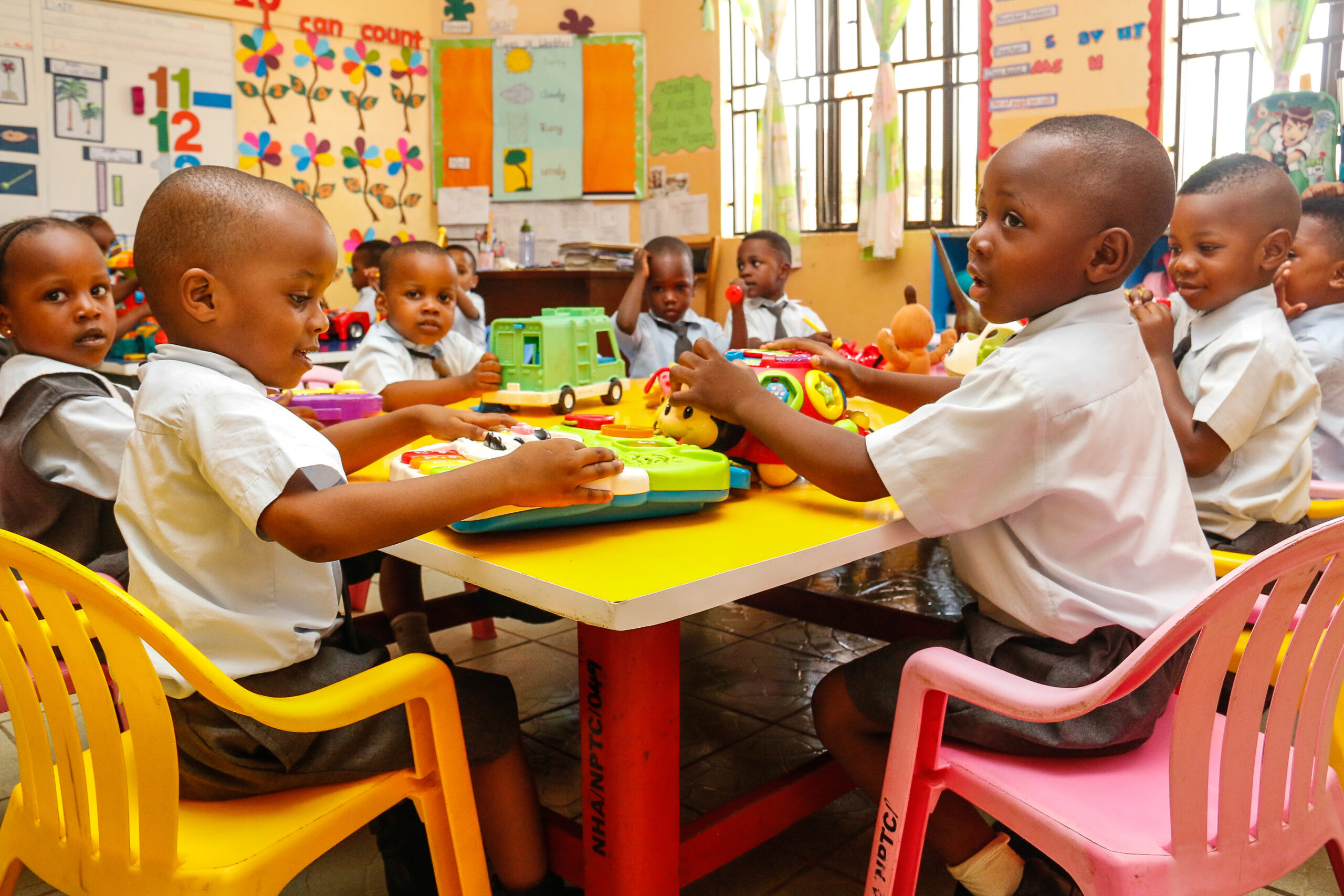
The Centre for Reading, Research and Development (NCRRD) Bayero University Kano, Nigeria, has organized its Fourth National Conference on the promotion of reading culture among students and researchers. The event which took place at Ɗangote Business School, New Site, (BUK) was a 5 day even which included a Pre-Conference Workshop which aims at sensitizing the participants on the new methods of improving teaching especially from the basic level. The theme of the conference reads ‘Children’s Books and The Teaching of Early Grade Reading in Nigeria.’

The Director of the Centre Professor Talatu Musa Garba, during her speech, says that, as part of the mandate, of the Centre, it “had instituted the annual conference in 2019 to provide a platform for teachers, researchers and other educationists to share ideas on the best practices for the promotion of teaching of reading in Nigeria.” The Director, together with the Vice Chancellor of the University, Professor Sagir Adamu Abbas, commissioned the Centre’s resource room which is named Rebecca Rhodes Resource Room. The room has a modest collection of books and e-resources. It is open to researchers, teachers and students as a reference library.

It has been noted by various participants during the occasion that reading culture is past dying not only in Nigeria but across the globe. There is a huge need to revive it through practical methodologies which will guarantee and assist young readers to be taken right from the tender age.

Some of the participants, especially students and other invited guests, showed their appreciation and happiness with these gigantic efforts which the center is putting to revive reading culture in Nigeria.

Kano’s Abdulmalik emerges winner of 2023 Historian Competition

By Uzair Adam Imam

An indegine of Kano, Abdulmalik Abubakar has emerged winner of the 2023 Historian Competition.

Abdulmalik Abubakar parted with a sum of N500,000 prize and a week-long trip to Kenya for tourism.

The competition was sponsored by the Restored Heart Foundation based in Abuja to inspire young undergradute students in Nigeria and Africa about the value of African history.

Isa is law student from Bayero University, Kano (BUK) and his victory surprised many people including the participants who were mostly history students.

Upon his success, Isa engraved his name in the history of Nigeria and Africa and was crowned 2023 “Keeper of the African History.”

I struggle with taugh history questions

Isa recounted how he had struggled with toughest history questions before he could defeat other history students and emerged victorious.

He added that most of the questions he answered at the inter-regional stage were not about Nigeria.

He stated that he was initially afriaid, adding that, “My fears were that I am not a student of History and all the questions were questions that digged deep into history.

“Like at the inter-regional stage moving to the top 6, I was never asked a single question about Nigeria, my first question was “What was the first country to get independence from East Africa ?” Likewise all the other questions were outside Nigeria totally.

How I knock down a history student at the final stage

“My emergence is an amazing one, because my opponent is a final year student of History at UNILORIN, but despite being a Law student I dedicated my time to read wide and trained well to see I emerge winner, which God makes it happened.

“When we reached quoter-final to be the top six moving to Calabar, I was the only Muslim hausa-fulani from North, and they required each to wear his native attire, I felt like I would be redicule there because some of our leaders were not friendly with the southerners.

“And, also I was given a topic completely different from my field of study which was “Nigeria’s oil boom and resources curse”.

“However, God granted me the wisdom and strength to deliver a marvelous presentation which received huge rounds of applause from all over the auditorium.

I grab this opportunity when surfing on social media

Isa stated that he was surfing online media platforms as usual, then he came across the link of the competition.

He added that the competition was both online and physical and he was among the 3,000 applicants who were invited for a screening.

He said, “It started with about 3k applicants where we were screened down to 800 then to further stages that included the top 100, then we got to be the top 30 (5 participants representing the 6 zones of the federation).

“We then got to compete at the intra-regional stage, where only 2 participants qualified from each of the 6 geo-political zone to be among the top 12.

“After I emerged among the top 12. We then had our inter-regional stage, I competed aginst one lady from South-east, I knocked her out to be among the top 6.

“As top 6, we moved to quoter-final stage at the University of Calabar for Presentation stage, were I passed the stage and became among the top 4.

“As top 4, we then moved to semi-final in enugu, but IPOB’s sit at home order made them to reschedule it to Bayero University for the semi-final stage, which was a debate stage, where l defeated my opponent from Southwest at the debate stage in BUK and qualified to be the finalist, who were the top 2 for the final stage.

“We yesterday had the Grand-finale at the Nile University Abuja where I defeated my opponent from North-Central (UNILORIN) to be the Winner as well as the “Crowned Keeper of African History 2023”

Reward for excellence

Hardworking pays as Isa emerged winner with the following prizes:

  1. Cash prize of 500,000.
  2. I week trip to Kenya for tourism
  3. Crown Keeper of the African History 2023.
  4. One year free data subscription package.
  5. Ambassadorship.
  6. Special guest to be invited to the grand final next year.

Words of wisdom, encouragement

“I want to encourage my fellow students to read wide and also outside their field of study, every knowledge is valuable. I never thought history could be my eye opener and way to be outside Nigeria.

“But my passion to read History and commitment to other areas of knowledge has given me all these advantages.

I made it despite tight schedules

“I want to tell my fellow students that as at now, I’m the President of Law Students’ Association of Nigeria (LAWSAN) BUK Chapter and a final year Law student with project and all that, and also the President Kaura Goje Students’ Association (KAGSA) and so many other several students’ engagements, but that does not forestall me from excelling in other fields of endeavors.

“So just be determined and confident, God will assist you to achieve your dreams,” he stated.

Hike in registration fee in Nigerian varsities: A result of FG’s negligence

By Najeebullah Lawan

It becomes a new normal that the Academic Staff Union of Universities (ASUU) embark on a strike to press demand on one issue or another almost every year in Nigeria. This menace has been here since 2009, with each year’s strike becoming worse than the previous one. The feud between ASUU and the Federal Government (FG) has badly, as it is clear, affected the education system in Nigeria.

The battle corners include revitalisation of the universities, providing infrastructure, enhancing research conducts, and reviewing lecturers’ salaries and allowances, among others, as contained in the MoU signed by the Nigerian government and ASUU.

It is essential to note that ASUU is a union of Academic Staff of Universities consisting of [except a few] lecturers from the Nigerian public universities.

These lecturers have wives, children and relatives in the schools they teach nationwide who are under their sponsorship from their hard earnings.

I believe these people will never do anything that could temper with the system because their close relatives and children benefit from it.

Moreover, our lecturers spent decades without substantial review of their salaries despite all the hikes in the price of foodstuffs and other necessities in Nigeria. It is heartbreaking that a university professor earns less than the salary of some government appointees – SAs and PAs.

It is unbecoming to leave these people alone fighting the government that leaves them without the good welfare their counterparts enjoy, even in many African countries. This fight is for all of us.!

In 2020, ASUU stood up to fight for their rights and the students in general, which led to the total closure of all universities in Nigeria. However, the coronavirus pandemic also contributed immensely to the longevity of this strike, making it one of the worst and longest strikes ever in the history of Nigerian universities.

Unfortunately, the Nigerian government did nothing to stop the strike. It betrayed the university lecturers, leaving them and their students stranded amidst a dilemma.

Again, in 2021, there was another strike by the university lecturers who demanded FG to fulfil its promises made in 2012 and 2020. This strike lasted eight months, and the lecturers were not paid a single kobo. As I write this, FG still owes lecturers months’ salaries and areas.

For all the struggle by ASUU, they were doing this for the betterment and standardisation of higher institutions nationwide. However, they got nothing from most of the students and parents in return except insults and mocks.

As of that time, ASUU warned students and parents that if FG defeated them in that fight, there would be a serious problem for students and parents that not everyone could bear.

Defeating ASUU, the Federal Government deliberately refused to fund its universities with enough funds.

As a result, in 2023, there was an increment in registration fees by many universities, such as the University of Maiduguri, University of Benin, University of Lagos, ATBU, ABU and a host of others. However, the one by Bayero University, Kano (BUK), brought a loud noise in the entire north, probably due to its status. Here are some clarifications:

1:- We heard that the university Vice-Chancellor, Prof. Adamu Abbas, made an explanation concerning the situation of the universities in Nigeria, saying that everything related to running the administration of the university is costly.

2:- Recently, ABU extended the resumption date for students due to an outage by the Kaduna Electric Distribution Company (KAEDCO) over alleged millions of Naira debt, which ABU owes KAEDCO.

3:- The monthly budget for running Bayero University is close to N100m. This money is spent on KEDCO for power, diesel, water and security.

4:- The FG is giving only N11m, which represents only 1% out of 10% BUK is spending every month, and the management of the university manages to utilise the system with the little they are getting from the government.

5:- The current economic situation of Nigeria and the Federal Government’s manner towards universities has left the management of Bayero University, Kano, with no option but to increase the central registration fee for students.

Despite these, BUK remains the cheapest Federal University in the entire north except for a few varsities currently in the second semester, and a review of their registration fees could be seen as something inevitable.

Regarding the just concluded points, we can say that ASUU does not hate education, and its fight is for the system’s revival. Also, the increment of university registration comes from negligence by the Federal Government. Meanwhile, without this kind of increment, the system will undoubtedly collapse.

Najibullah writes from Kano, Nassarawa Local Government. He can be reached via najeebullahlawan@gmail.com
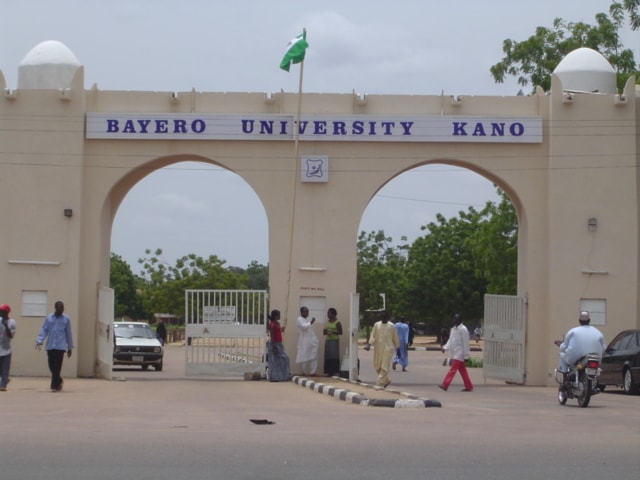

BUK extends students’ registration deadline again

By Muhammadu Sabiu

Bayero University Kano announced on Monday a final extension of the student registration exercise for the 2022–2023 academic session. 

This extension, contained in a statement signed by the university’s deputy registrar, Lamara Garba, comes after careful consideration of appeals from various stakeholders, including the governments of Kano and Jigawa states as well as student union bodies. 

The university’s management expressed its heartfelt appreciation to these stakeholders for their unwavering support, especially in covering the registration fees for indigent students. 

The extension of the registration period was approved during a meeting held on Monday, September 11, 2023. 

Students now have until the stroke of midnight on Saturday, September 30, 2023, to complete their registration. 

The university added that it is important to note that there will be no further extensions beyond this date and that any student who fails to register by the deadline will not be permitted to sit for the first semester examination of the 2022–2023 academic session.

BUK initiates N15,000-per-month job scheme for students

By Muhammadu Sabiu 

Professor Sagir Adamu Abbas, the vice chancellor of Bayero University, Kano (BUK), has revealed that the university has implemented a job programme for students in which the university hired students to do some jobs for it in exchange for N15,000 per month. 

Delivering a speech over the weekend in Kano when he met a group from the university’s main campus and the Education Correspondents Association of Nigeria (ECAN), Adamu-Sagir said: “The university equally introduced a kind of job scheme for students, whereby they were engaged to render some services to the university, and they were paid N15,000 monthly.  

“This does not affect their normal learning because it does not take much of their time as some were to clean some surroundings or render certain minor service within the university and got paid at the end of the month.”

The Vice-Chancellor bemoaned the large expense of maintaining the institution in his remarks over the rise in registration fees, particularly the exorbitant cost of providing fuel. 

He disclosed that the monthly cost of power is approximately N35 million, and the cost of diesel for generator purchases is approximately N40 million. 

He also noted that with a student body of almost 45,000, including postgraduates, and a staff of over 5,000, both teaching and non-teaching, it was practically impossible to provide social services. As a result, the management was compelled to hike registration fees.

Emeritus Professor I.H Umar passes on

By Kabiru Isma’il

The renowned Nigerian Professor of Physics, Ibrahim Khalil Umar, aka I.H. Umar, died a few hours ago today.

I.H Umar was a Nigerian scientist of repute, and he had once been a University administrator. Wikipedia sources described that he was a Vice Chancellor of Bayero University, Kano, Nigeria, from 1979 to 1986. He held a B.Sc. in Physics and Mathematics from Ahmadu Bello University, Zaria, Nigeria, an M.Sc. in Physics from Northern Illinois University, USA and a PhD in Physics at the University of East Anglia, United Kingdom. In 1976 he became the first Nigerian academic in Physics to teach at Bayero University, Kano. In 1978 he served on the national constitutional assembly that drafted the Constitution of the 2nd Republic.

Between 1994 and 1997, the late I.H. Umar served as a Sole Administrator of the Federal University of Technology, Minna.

He also represented Nigeria at the Executive Assembly of the World Energy Council in 1990. He was a member of the Nigerian delegation to the International Atomic Energy Agency (IAEA) General Conference from 1989 and was appointed Director-General of the Energy Commission of Nigeria in 1989. He served as Chairman of the Board of Governors of the IAEA from 2000-2001. In 2004 he was the Director of the Centre for Energy Research and Training, where the first Nigerian research nuclear reactor is located.

In 2007, he was on the international advisory committee for the international workshop on Renewable Energy for Sustainable Development in Africa, held at the University of Nigeria, Nsukka in Nigeria.

I.H Umar was among the first five Professors in Nigeria to attain the Chair of an Emeritus Professorship from Bayero University, Kano, Nigeria.

May the Almighty Allah have mercy on him, amin.

BUK student elected LAWSAN National President

By Ahmad Deedat Zakari

Comrade Yasir Abubakar, a 400 level law student of Bayero University Kano, has been elected the National President of the Law Student Association of Nigeria, LAWSAN.

The LAWSAN Electoral Committee, LECOM , declared Abubakar winner after he polled 30 votes in the election of the national executives of the association held at Swiss Spirit Hotel, Porthacourt on Friday night

Abubakar polled 30 votes to defeat his closest rival, Ann Lyam Iverem of Bingham University, Nasarawa, who polled 26 votes.

All efforts to reach the president-elect of the association as at the time of writing this report were futile.
However, Abdullahi Farouk , BUK LAWSAN President happily confirmed the development to the Daily Reality on Saturday morning.

According to Farouk, the victory is well deserved and they are grateful to God and Law students all over the country for the confidence in Abubakar.

He said: “We are extremely elated, It is a well deserved victory, because Yasir Abubakar has done his best, over the years he has served the association in different capacities, he has travelled across the regions and he has acquired all the skills necessary to steer the association to a greater height. We are grateful to God and the entire LAWSAN for reposing confidence in Yasir Abubakar. We assure you that you won’t regret choosing us.I pray that Allah make it easy for him to discharge his shouldered responsibilities effectively and efficiently”

BUK revises calendar, gives students 3 weeks for revision

By Uzair Adam Imam

Following its resumption on Monday, the Management of Bayero University, Kano (BUK), revised its academic calendar, giving the students three weeks to revisit their previous lectures before exams.

The decision by the management was a result of a Senate Meeting held today, Monday, October 26, 2022, at the university’s Convocation Arena.

The university was about to start its first-semester examination on February 16 when the Academic Staff Union of Universities (ASUU) embarked on a strike.

The industrial action by the union, which lasted for eight consecutive months, started on February 14, 2022.

The university lecturers embarked on the total shutdown of the universities to press their demands home, which they said the Federal Government failed to fulfil.

However, after several disputes between the Federal Government and the ASUU, the union ended its strike just recently. Still, many students, parents and even most lecturers are not enthusiastic about the resumption. This is simply because the lecturers are still left stranded by the FG without payment of their salaries. If the salaries are paid, it will surely and greatly serve as a motivating factor for a vibrant return of the lecturers to their classes.

Political interference undermines judges’ efforts – Prof Lawan

By Uzair Adam Imam

A Senior Advocate of Nigeria, Prof. Mamman Lawan, has described government’s interference in court’s decisions as one of the major challenges facing judges in Nigeria.

Prof. Mamman Lawan  stated this Tuesday, 4th October, 2022 during a one-day seminar organized by Faculty of Law, Bayero University, Kano, in collaboration with  Bn Baaz, Kariya and Naseeha Foundations.

The seminar held at Islamic Forum of Nigeria Hall, Farm Center, Kano, was themed: “Justice as a Panacea to Insecurity in Northern Nigeria.”

He decried how big office holders and politicians stick their noses into the courts’ decisions, thereby making it difficult for judges to do justice in their decisions.

Lawan stated: “Politicians used to interfere with the courts decisions and spend millions of naira in the cases they have interest in.

“Therefore, judges and lawyers need to know that it is ethically wrong to collect bribe and do injustice. Without justice, there would be no society and there would be chaos and insecurity.”

Govt needs to increase allowance for judges, lawyers to tackle corruption

Corruption roams our courts today and affect their decisions. The reason was believed to be unconnected with poor salary and allowances by the government.

One of the Judges confidentially told the TDR reporter after the event that the monthly salary of judges is between N100,000 and 180,000 and N125,000 as furniture allowance after every four years.

Lawan said that there is a need for government to increase allowance for the Nigerian judges and lawyers to tackle corruption in the courts.

He added, “Government does not provide our judges and lawyers with enough allowances to halt corruption in our courts.

“This will help stop the judges from taking bribe from any politician,” he suggested.

Lawyers contribute to injustice in Nigeria

Also speaking, the Kano State High Court Judge, Justice Saminu Nasiru, blamed Nigerian lawyers for contributing to injustice in court decisions.

He said, “For this reason, it has become necessary for lawyers and judges to fear God and to remember meeting with their lord in the day of judgment.”

How ASUU strike cripples businesses in BUK and Yusuf Maitama Sule varsities (I)

By Aminu Adamu Naganye

Campus-based businesses in and around Bayero University and Yusuf Maitama Sule University Kano have mostly closed following strike action by the Academic Staff Union of Universities (ASUU), leading to the loss of multiple jobs amid the harsh economic situation in the country.

The strike, apart from terminating academic activities across the campuses of the Universities, has left the institutions desolated as the absence of students grounded business activities to a halt.

A cross-section of petty traders, okada riders, restaurateurs, typesetters and other campus-based artisans have complained about how the strike is taking a toll on their businesses, scuttling their means of livelihood amid soaring inflation in Nigeria.

Nigerian public universities have been on industrial action since 14th February 2022 to pressure the government to fund the universities and settle some outstanding issues as contained in the 2009 Memorandum of Understanding (MoU) and 2020 Memorandum of Action (MoA) as negotiated by the Union of the University teachers and the Federal Government.

Why is ASUU on strike?

The university teachers signed an agreement with the Federal Government of Nigeria in 2009 for the revitalisation of public universities, which will enable the ivory towers to access 200bn annually for six consecutive years. The FG reneged as it only released once in 2013.

Government’s inability to implement other issues of 2009 MoU and 2020 MoA, such as salary upward review after three years relative to the strength of naira-dollar, payment of Earned Academic Allowance (EAA), etc.

The continued use of the controversial Integrated Payroll and Personnel Information System (IPPIS) did not capture university peculiarities and refusal to accept ASUU’s alternate payment system called University Transparency and Accountability Solution (UTAS).

Another point of concern by ASUU is the proliferation of universities by the federal government without adequate funding for the existing ones, which the union argues will further jeopardise the entire Nigerian public university system.

From warning strike to “extended” warning strike

The university dons have completed a 4-week long warning strike in an effort to press home their demands for the Government to honour the agreements. However, after a series of talks between government delegations and the leadership of ASUU, the union extended the warning strike by another eight weeks “to give the government enough time to implement the agreement”, according to ASUU President Prof. Osodeke.

Equally, meetings between the minister of education and the leadership of the National Association of Nigerian Students (NANS) did not yield the resolution of the bone of contentions.

Businesses disrupted, livelihood lost

As the industrial action continues, its effect is taking a toll on businesses and vocations on and around the campuses, with many business owners facing bankruptcy.  Although most businesses, such as petty traders, cafés, restaurants, typesetting and photocopying centres, barbing shops etc., have closed down, the remaining few yet to close narrate their harrowing experiences at Bayero University Kano and Yusuf Maitama Sule University.

Ummi Abdulaziz, whose shop in BUK could not sell goods of N1000 a day due to the absence of students, described the ongoing ASUU strike as unfortunate, adding that “The strike affects us really seriously.  There are no customers now. There are no people around. We open our shop, but there are no buyers. We are adversely affected. Sales have drastically reduced or even stopped. I can’t even make 1k a day now…”

Ummi, who called on the Federal Government to meet up with ASUU’s demands, said the plight of students and campus-based business people should not be allowed to suffer for long. She urged the two parties to have “A discussion and resolve this problem once and for all.”

Another business owner who identified himself as Sarkin Noma Maitireda BUK said the strike had brought misery and deprivation to their lives as his sole means of survival was being threatened. He was thinking of moving out of campus to find ways to feed his family.

Maitireda further lamented, “Honestly, we are not happy with the strike. We are pained because of our business. Everything on the campus isn’t functioning now. We only sit down by our stalls and shops sometimes to even nap. It badly affects our lives negatively.”

He recalled nostalgically how he survived past strikes partly by leaning onto his savings and ultimately on support from family and friends, saying, “We used to survive on our savings, then we borrowed from friends and family. When the strike ended, and businesses normalised once again we repay our debts”.

He decried that the current situation in the country makes it extremely difficult for him to obtain any support from friends and family, saying “everyone is battling with his challenge.”

“We call on the Federal Government to consider their demands so that they resume their activities and our university to reopen.” He appealed as he narrated how he naps by his stall due to no patronage.

Adamu Aliyu, who used to rake N30, 000 daily on average through his stationery stall but now less than N1000, argued that business people suffer the multiplier effects of the strike more than other members of the university community, including students.

Adamu called on the Federal Government to fulfil its promises to the academics and observed that “the situation in the country today is very terrible. So, I call on the FG to consider the situation of the country generally and consider the students and campus-based businesses specifically.”

Mohammed Kabir of Chiroma Business Centre in BUK, whose typesetting and stationery business vicinity remain desolate, said the strike alongside soaring inflation in the country makes his survival as a father and a husband very difficult.

Narrating his challenging sailing through the harsh reality of the economy compounded by the ongoing strike noted that “it has been difficult for me to survive because before now we were feeding from hand to mouth because of the economic situation. Most of the materials we were using have skyrocketed because of inflation…and now strike….”

Kabir lamented further that, unlike previous university strikes where few works were available, currently, “Probably due to the economic situation of the country, everything stopped. Nothing comes.”

Kabir pleaded that in the interests of students and the nation, even if business owners would not be considered, the two parties should resolve their differences to allow academic and business activities to return to universities as soon as possible.

”As a matter of urgency, the Federal Government and ASUU should come together and have a dialogue to resolve the issue. For the interests of the students’ even if they won’t recognise us, business owners… FG should fast track implementation of the issues so that at least the strike can be called off”, he further stressed.

It is no different at Yusuf Maitama Sule University (YMSU), as academic and business activities are grounded following the declaration of the strike. Unfortunately, like students, most businesses on the campus have closed due to poor patronage created by the vacuum left by students.

Abdussalam Adam was among a few business owners that come around to open their business for a few hours daily but now is considering total closure.

His business centre that provides Café services, typing, printing and photocopying to students has been badly hit by the ongoing strike. As a result, his average earning of N5000 has been depleted to around N500.

A stranded business centre

“Seriously isn’t easy for us that have business here on campus. The strike isn’t affecting students alone. It affects us. When the students were around, there was much work to do. I used to make 5k, 6k a day but now ….since morning I am just having 500 naira with me”, he complained.

He stated that “If I have the opportunity to talk to the federal government, I would advise them to consider ASUU’s demands and resolve the issue. They spend more than what ASUU is demanding on their personal issues. Why not on universities?”

“New World Cyber Café has already temporarily disengaged its staff because of the strike, but they will resume work when the university’s academic activities resume’’ said Bitrus Monday, who operates the biggest cyber café at BUK.

Bitrus Monday, who decried that strike is becoming habitual in Nigerian public universities, stated that there is an urgent need for the parties to have dialogue that will lead to settlement of the burning issues soonest.

“We are negatively affected. They should help us settle themselves. They should have a round table discussion and sort things out. It is obviously becoming a yearly habit in our universities.” He said.

Food and vegetable sellers worse hit

Food-related businesses that serve the universities and their communities are currently facing unique challenges that differ from their past experiences during varsity strikes in the past.  

A lonely vegetable seller

Shamsu Haruna, whose famous Gurasa Joint at BUK serves hundreds of students, staff and other university community members daily with this Kano delicacy, appeared visibly hapless due to the destructive effects of the strike on his business.

Shamsu soberly recalled how busy and deeply engaged his staff were when students were on campus. He noted that more than ten people were fully engaged in full-time jobs in his Gurasa Business but now are rendered jobless because of the strike.

He reminded the relevant authorities of the ephemerality of power and authority should they fail to discharge it for the public good, adding that “Other powerful, influential people have gone so also the current leaders will go. But what they do now is what they will be remembered for. They should try and leave a good legacy. They should consider the situation of the country and resolve the problem.”        

He further noted that although members of non-teaching university staff are not on strike, his business has lost over 85% of its customers, expressing that “As we are in a very difficult situation because if you consider the market, we’ve already lost over 85% of our customers. This is not a small loss in business. We pray that God intervene in this situation… But Federal Government and ASUU should remember that life is transient.”

Restaurateur Fatima Ibrahim owns Al-Khairat Restaurant and has been in the campus-based food business for years, but the current strike is giving her a hard knock.

The strike is painfully touching for Fatima as her once-booming food business is struggling to recover after a near-death experience occasioned by the corona pandemic lockdown. “I used to go to the market to supply foodstuff on a daily basis, every blessed day, but now we go to market once a week. Unfortunately, after you prepared the food, there were no customers. Sometimes you sell, some other times you dispose of it.” she noted, adding that “FG and ASUU should please sympathise with the students and us to solve this conundrum so that they shouldn’t jeopardise the future of the students.”

Similarly, at Medinat Restaurant, the disturbance of the peace caused by the lingering university academics’ strike is making resilient Medinat Mohammed have sleepless nights. Her narration reverberated unpalatable experiences by other business community members of the university since the commencement of industrial action in public universities.

A deserted restaurant

”I used to cook 4-5 mudus of rice and prepare other varieties of meals, but now half mudu doesn’t finish a day. No students. No teachers”, she bemoaned

Determinedly tenacious, Medinat said of her over 20 years of experience in the business, this is the most devastating strike she experienced, alluding to the spillover effects of coronavirus pandemic lockdown “Sometimes we take a loan and after the cooking children will eat, and we (staff) too eat from it and pay transport…for over 20 years selling food, this strike is the worse because we did not recover fully from corona lockdown. It is only through the grace of God that we survive.”

She appealed to the Federal Government to settle critical issues it had earlier agreed on with ASUU so that normalcy return to the university campus.

Unlike other businesses, vegetables and fruit sellers are the most hit, languishing in their anguish due to the perishable nature of their supplies. Their harrowing experience cannot be understood entirely from the outside as they had already lost some quantity of their goods the very first week students deserted the university as explained by Alh Isah Gurgu Maikayan Miya, “With this strike, our business was completely put to a halt, completely grounded. Things have turned off. Our reliable customers, students, are no longer on campus. Academic staff no longer come. Some vegetables decomposed the week the student left because we brought them much and no buyers. So to get our daily meal now proves to be extremely difficult.”

He sadly revealed how he is now making an average of N1000 a day which is far below his average daily sale of N10000 before the strike, which according to him, “cannot cater for my family needs.”

He urged the Federal Government and ASUU to “please sympathise with students and we business owners”.