Borno State

VP Shettima, Kadafur, Shehu lead Muslim faithful in eid prayer

By Abdullahi Khairallah

Vice President of Nigeria, Sen. Kashim Shettima; Borno State Acting Governor, Hon. Umar Usman Kadafur; and the Shehu of Borno, HRH Dr. Abubakar Ibn Umar Garbai Elkanemi, led thousands of Muslim faithful to observe Eid prayers in Maiduguri.

The two raka’at prayers were led by the Chief Imam of Borno, Imam Shettima Saleh, at Ramat Square, Borno’s central Eid ground.

Other dignitaries include Senator representing Borno North, Sen. MT Monguno; Speaker of the Borno State House of Assembly, Rt. Hon. Abdulkareem Lawan; Minister of Agriculture and Food Security, Sen. Abubakar Kyari; former Deputy Governor, Hon. Usman Mamman Durkwa; Members of the State House of Assembly; Hon. Commissioners and Members of the State Executive Council; Special Advisers; Senior Special Assistants; and Special Assistants.

Delivering his Eid sermon, Imam Shettima reiterated the importance of peaceful coexistence and prayed for a bountiful harvest as the cropping season begins.

Shortly after the prayer, the Acting Governor thanked Almighty Allah for making it possible to witness yet another Eidul Adha while congratulating the Muslim Ummah for the successful Eid prayer.

“Secondly, we want to wish all those who traveled to Saudi Arabia a successful and rewarding Hajj exercise. May Allah accept all their prayers,” Kadafur said.

He further urged Muslims to be law-abiding, peace-loving, and enjoined them to use this occasion for sober reflection and prayer for lasting peace in the state.

Prayers were offered for the restoration of total peace in Borno, the northeast, and the entire country.

MURIC condoles Zulum on death of Isa Gusau

By Muhammad Abdurrahman

Mallam Isa Gusau, the spokesperson of the governor of Borno State, died two days ago in faraway New Delhi, India, after a protracted illness. Meanwhile, the Muslim Rights Concern (MURIC) has commiserated with Governor Babagana Umara Zulum. 

In a statement issued on Saturday, 13th January 2024, by the group’s Executive Director, Professor Ishaq Akintola, MURIC urged the governor to take Gusau’s death in the spirit of the philosophy of death in Islam: ubiquitous, unavoidable and necessary end.

The human rights organisation also condoled the Shehu of Borno, Alhaji Abubakar Ibn Umar El-Kanemi, and the entire Borno Muslim Community. 

Akintola described Gusau’s death as painful and a heavy loss. He also described the deceased as a devoted Muslim, a professional to the core, a humanist, an idealist and a principled family man. 

He prayed for Allah’s forgiveness and al-Jannah Firdaus for Mallam Isa Gusau. He also prayed that members of the deceased’s family, friends and acquaintances would have the fortitude to bear the irreparable loss. 

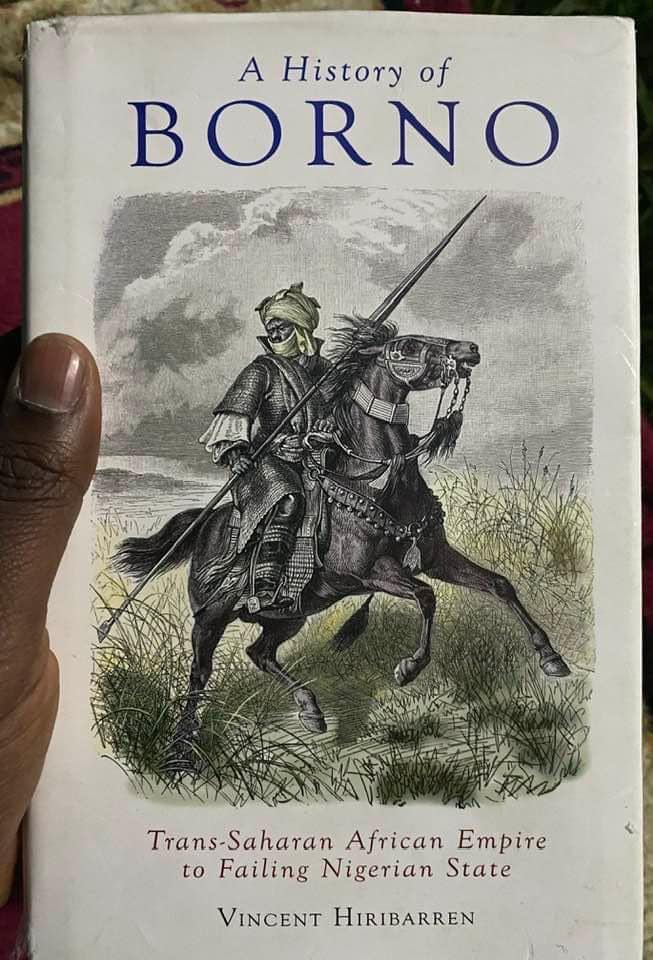
BOOK REVIEW: A History of BORNO: Trans-Saharan African Empire to Failing Nigerian State

Author: Vincent Hiribarren

Date of Publication: 2017

Number of pages: 310

Publisher: Hurst & Company, London

If you knew very little about the territorial framework of the Borno empire before now, then reading this book might likely shatter some previously held notions about the region. Borno has, in recent years, notoriously gained renewed academic attention as a result of the Boko Haram insurgency. Spoiler alert: this book isn’t about the origin of Kanuri or other inhabitants.

Although the Borno empire found its roots in the 8th century, this book covered only the past 200 years of the kingdom’s existence. Therefore, the 8 chapters of the book started at the beginning of the 19th century down to around 2014 when the research for its publication was concluded. The author seemed very mindful of the political significance of the Borno empire following the Fulani jihad, even if the invasion had a different outcome, but that’s another topic entirely.

The earlier section of the book highlighted the spatial continuity of the territorial framework of Borno, which argued that fairly stable structural borders existed well before colonial times. This was a pivotal juncture, as discussed later in the book, for the ‘scramble for Borno’, where the 19th-century spatial frameworks were used to legitimise conquest by foreign invaders. It proved important even in the European colonial competition against each other.

Later on, the book explored how, essentially, the British and the Germans recycled the Borno region within their colonial spatial framework with an additional detailed perspective of the Indirect rule. It didn’t stop there, it goes on to analyse how, in reality, the colonial administration of Borno during the early colonial period played a decisive role in the preservation of its territorial continuity.

Navigating this book, you need to have an incredible tolerance for some nitty gritty details. The writing style is aggressively academic, and it is filled with flayed raw materials to inspire further reading. It is definitely not a very easy-to-read book but rather a slice of rock-hard brain playground! It’s very clear that the author is a cartography freak.

The book itself must have been inspired by the thesis undertaken by the author while pursuing a PhD at the University of Leeds in the UK with the title “From a Kingdom to a Nigerian State: the Territory and Boundaries of Borno 1810-2010”. The author teaches African History at King’s College London.

Dr Shamsuddeen Sani wrote from Kano, Nigeria.

Zulum reopens Monday Market

By Rukayya Abubakar Othman

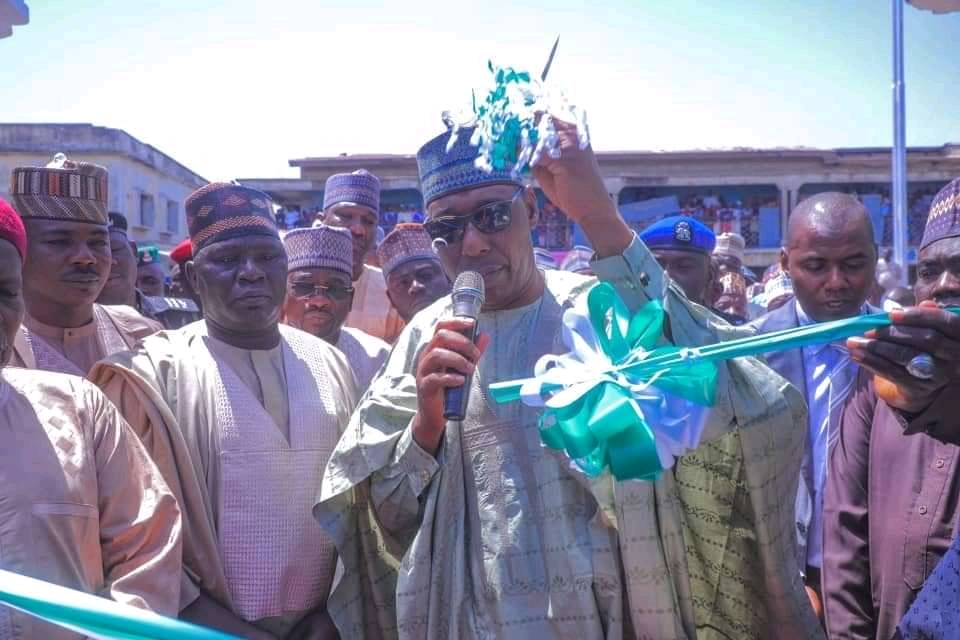
Governor Babagana Umara Zulum yesterday commissioned the famous Maiduguri Monday market and relieved two years’ rent for about 8,000 traders:

Borno state governor commissioned Maiduguri Monday Market on Monday, which was rebuilt after a fire inferno that gutted the market in February this year. 

Governor Babagana Umara Zulum announced that over 8000 traders who hitherto rented shops and paid rent would no longer pay for the next two years because of the losses incurred by them as a result of the mishap.

This, of course, is the untiring commitment of the state governor to the cause of serving humanity.

Upon the February incident, the governor hurriedly set up a committee to reconstruct the market, which has been completely rehabilitated and remodelled, with over 8,000 traders to benefit from the reconstruction. 

The market is well structured, which involves a comprehensive design and more vacancies for other traders to thrive in their business activities.

 The governor in February donated about N2b to the committee constituted to immediately swing into action and release N1b to the disaster victims. 

During the commission, Governor Babagana Umara Zulum announced about 2,825 traders who could not allocate their previous shop after the fire disaster. 

“As a result of remodelling, over 2,000 traders who either operated at a temporary site or built shops illegally on waterways could not own shops in the market. Moreover, the government will support over 185 of them with N1m “. Zulum said. 

He also promised that the people doing business there would get shops at a newly constructed Monday Market in Maiduguri. 

Borno: Police investigate commissioner’s mysterious death 

By Abdullahi Khairalla

The Borno State police command has commenced an urgent investigation into the death of the state’s commissioner for Reconstruction, Rehabilitation and Resettlement (RRR), Engr Ibrahim Idriss Garba, Governor Babagana Umara Zulum’s spokesman, Malam Isa Gusau, has confirmed.  

The state commissioner of police was at the house where Engr Ibrahim died in Maiduguri on Saturday.

Governor Babagana Umara Zulum received the news with intense shock and profound grief. The Governor mourns alongside the late commissioner’s family, other loved ones, friends, associates, and state executive council members. 

Late Engr Ibrahim Idriss Garba was the Governor’s Special Adviser on Special Projects before he was elevated and appointed commissioner of RRR at the commencement of Zulum’s ongoing second term. 

It is rumoured in some quarters that the deceased was poisoned, which led to his untimely death.

Security management: The Adamawa model

By Zayyad I. Muhammad

At its 8th meeting held in Maiduguri, the Borno state capital, on September 9, 2023, the Northeast Governor’s Forum expressed its concern about the new dimension of growing banditry in Bauchi, Gombe, and Taraba states as a result of the concerted efforts of the military bandits from other parts of the country. The governors called on the federal government to intervene. With this new development, it’s evident that Adamawa State is doing well among the six states in the northeast sub-region in internal security. How did the Governor Fintiri-led government achieve that? Through planning and strategies or just sheer luck?

The Adamawa state government has employed three approaches. First, the Fintiri-led government looked at the areas affected by Boko Haram’s senseless insurgency. Then, the government developed excellent and feasible post-war programmes and projects with a comprehensive implementation strategy that fast-tracked the healing of the war’s scars. The government restored basic infrastructure and local economies, returning the affected communities to their peaceful and productive pre-war status.

A simple example is the burbling economic activity in townships like Mubi, Michika, and Madagali. Secondly, after the restoration of basic infrastructure and integration of the lives and livelihoods of thousands of people, the government employed a quick rehabilitation of agricultural land, places of worship, health centres, bridges, and schools, including the creation of productive employment for the teeming unemployed citizens, especially young people and women.

Over the years, most developmental efforts in many states emphasised urban development at the expense of rural development, which has led to a substantial rise in inequality among Nigerians—inequalities beget insecurity. What the Fintiri-led government did was balance urbanisation and rural areas’ needs. While Adamawa state’s capital, Yola, is gradually being transformed into a working city that accommodates all segments of society and provides basic and modern infrastructure, other local governments are getting what they should have in agriculture, basic electricity, healthcare, and human development. What the government did was equate each community’s basic infrastructure needs with youth employment needs to curtail crime.

For example, when the notorious Shila Boys re-emerged, the Fintiri government used a soft and hard approach: the government provided young people with cash grants, loans, and training on new skills through the Poverty Alleviation and Wealth Creation Agency (PAWECA) and the Adamawa State Social Support Programme (ADSSSP). While those who refused to change their ways were dealt with the hard way by law enforcement agents. Another approach that helped Governor Fintiri sustain the success recorded in its internal security management- the government reinforced its more knowledge-based approach, thus the coming onboard of Deputy Governor Professor Kaletapwa Farauta, Secretary to the State Government Awwal Turkur, and Chief of Staff Dr. Edgar Amos, etc. These people are well-read and have been through the mills in their respective fields.

According to the United Nations Development Programme (UNDP), community security seeks to operationalise human security, human development, and state-building paradigms at the local level. This is the concept the Fintiri government used to douse tension due to farmer-herder conflict in some communities. However, there is a theory that says no one can experience perfect security because individuals or states are not perfectly secure or completely insecure, but the Fintiri model of community engagement, local people’s parley, and provision of basic needs has helped Adamawa State curtail farmer-herder conflicts, peaceful co-existence, youth restlessness, assurance of safety, absence of fear, etc. within the state. The Fintiri model of internal security management is working; other states in the northeast sub-region can copy it.

Zayyad I. Muhammad writes from Abuja.

Orientation course to resume in Borno after long hiatus due to insurgency—NYSC

By Muhammadu Sabiu

The National Youth Service Corps (NYSC) says it plans to resume its orientation programme for new corps members in Borno, 13 years after it was put on hold owing to the Boko Haram insurgency.

According to the News Agency of Nigeria (NAN), the insurgency has, for numerous years, forced corps members who had been posted to the state to do their orientation course in Katsina State.

The next orientation would take place in the state, according to Mr Lawal Yusufu, the state’s commissioner of police, who was speaking to reporters at the ad hoc orientation camp on Monday at the Arabic Teachers College in Maiduguri.

Yusufu, who spoke after examining the camp’s facilities, stated that security agencies will collaborate to provide security for the incoming NYSC members at the camp’s entrance, exit, and other strategic locations.

Government representatives, including the Secretary to the State Government, Alhaji Bukar Tijjani, the State NYSC Coordinator, Mr. Mohammed Adamu, and the State Chairman of the NYSC Governing Board, Alhaji Mohammed Badiya, accompanied the commissioner on the tour.

The new NYSC members’ orientation programme is scheduled to start on August 18.

Boko Haram: Inspiring stories of two resilient girls who became registered midwives

By Lawan Bukar Maigana

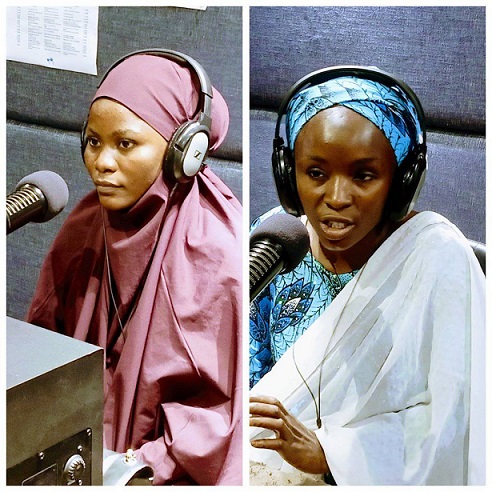
In the war-torn region of Gwoza, two remarkable girls, Mabruka Manu, and Maryam Abubakar Musa, emerged as beacons of hope and resilience. Despite the devastating impact of the Boko Haram insurgency on their lives and education, they defied the odds and became registered midwives. 

Their inspiring journeys from displacement and despair to fulfilling careers are a testament to their unwavering determination and the power of education.

Mabruka Manu was born and raised in Maiduguri, while Maryam was born in Katsina State but raised in Gwoza, Borno State. As with many thousands, both young ladies had their dreams of education shattered by the insurgency. However, an NGO called Girl Child Concerns, GCC, provided them with a lifeline, offering opportunities to realise their full potential. 

In 2018, GCC undertook a remarkable initiative in Borno State with support from MDS’s Merck for Mother selecting and training over 300 adolescent girls from various communities (primarily affected by the Boko Haram insurgency) to become Village Health Workers (VHW). The goal was to address the pressing maternal, newborn, and child health (MNCH) needs in these areas, where many health workers had left due to the Boko Haram insurgency, leaving women and children with limited access to healthcare. 

Among the trained VHWs were Maryam and Mubruka, whose dedication and resilience stood out. With support from Borno State Government, GCC further trained over 500 VHW and equipped them with essential skills, including training as Per Mother’s Support Groups for Infant and Young Children’s Feeding, serving as supportive supervisors, and encouraging them to pursue further studies, leading to their qualification for the Foundation Year Program (FYP) initiated by Women for Health. 

With the support of their loved ones and overcoming financial obstacles, Maryam and Mubruka’s journey eventually led them to gain admission to the prestigious College of Nursing and Midwifery in Maiduguri, where they began their inspiring path toward becoming Registered and Licensed Midwives.

In 2020, GCC continued its mission to empower women in rural communities by organising a training program for health workers, including Maryam and Mubruka, and nearly 100 others, to address the challenges rural women face in providing basic health screening, counselling, and managing common ailments.  

This training taught participants good infant and child feeding, promoted immunisation, and provided referral services. Maryam and Mubruka’s active involvement in this initiative showcased their commitment to their communities’ well-being as they diligently acquired the necessary skills to support and educate mothers on proper infant and child nutrition.

The stories of Maryam and Mubruka exemplify the transformative impact of GCC’s initiatives on the lives of young women and their communities in Borno State. Through their training as Village Health Workers and their subsequent journey to become Registered and Licensed Midwives, they have become invaluable assets to their communities, offering crucial healthcare services and expertise where it was previously lacking. 

Additionally, their involvement in the “Mother Support Group for Infant and Child Nutrition has furthered the cause of empowering rural women and enhancing the health and well-being of their children. 

GCC’s dedication to uplifting and supporting women in the healthcare sector continues to bring positive change to Borno State, fostering a brighter future for its women, children, and communities.

Maryam Abubakar Musa, who faced numerous challenges in her journey, including the horrors of the Boko Haram insurgency, displayed incredible determination and commitment to education. 

Despite setbacks and low exam scores, Maryam pursued her passion for healthcare, eventually graduating with a diploma in Chemistry Education. Her perseverance paid off, and she successfully graduated, landing a job in her chosen field.

These fantastic stories of Mabruka and Maryam are shining examples of resilience, determination, and the pursuit of education against all odds. Their unwavering spirit and commitment to their community exemplify the best of humanity. 

They highlight the importance of providing educational opportunities and support systems to individuals from marginalised areas affected by conflict, proving that resilience and dedication can overcome any obstacle to a brighter future.

The journey of Mabruka and Maryam is a source of inspiration for their community and countless others facing similar challenges. Their triumphs showcase the transformative power of education and the impact of collective efforts from NGOs like GCC and Women For Health. 

These stories remind us that even in the darkest times, hope can prevail, and with the proper support, individuals can overcome adversity and achieve their dreams. Recognition for their remarkable achievements arrived when Mabruka and Maryam were offered jobs at the Ultra Modern Police Hospital in Yobe State. 

Their inspiring narratives, shared through a Girls for Girls phone-in radio program initiated by Girl Child Concern in Collaboration with Education Cannot Wait and UNICEF, caught the attention of a good Samaritan. Their employment solidifies their career paths and serves as a testament to the power of their resilience and the impact of their stories on others.

Mabruka Manu and Maryam Abubakar Musa’s journeys from displacement and adversity to becoming registered midwives are tales of unwavering determination, resilience, and the transformative power of education. Their stories underscore the importance of providing support and opportunities to individuals in conflict-affected regions.

Mabruka and Maryam’s achievements inspire hope, demonstrating that with perseverance and the right support, anyone can overcome obstacles and forge a path toward a brighter future.

Lawan Bukar Maigana is the Communication Officer for Girl Child Concerns, GCC, Borno State, and can be reached via email: lawanbukarmaigana@gmail.com.

A young journalist transforming radio broadcast journalism in North-Eastern Nigeria

By Yahuza Abdulkadir

It has become a daily routine on weekdays for Muhammad Usman to roam around the conducive atmosphere of Al-Ansar Radio station in Maiduguri, checking the work progress of his team. As the youngest Head Manager of the station with vast experience in media and communication for development, he has helped position the radio station as a platform that promotes accountability and public journalism in terror-torn Borno State.

Al-Ansar Radio, established in 2020, is owned and operated by Al-Ansar Foundation, a local nonprofit organisation helping underprivileged people in Borno access Western and Islamic education and healthcare, teaching religious tolerance.

The radio station has a vision of setting up a leading diversified broadcast media organisation in Nigeria, leveraging state-of-the-art facilities to bring value to its audiences and advertisers.

Amid the post-insurgency in Borno state, through the efforts of Usman, who is skilled in program management, Al-Ansar Radio station has been playing a pivotal role in organising programs that help mitigate conflicts, counter violent extremism, and promote peace messages across social media platforms and in local communities.

Heading the Al-Ansar Radio station wasn’t an easy task for Usman. However, he maintains the momentum and seeks strategic partnerships with non-profit organisations and various stakeholders across Borno State.

The radio station, which broadcasts in three languages comprising English, Hausa, and Kanuri, has been producing awe-inspiring programs and hosting compelling radio dramas that appeal to the interest of its audience and resonate with the diverse and rich cultures of Borno State.

The station’s partnership with GoalPrime Organization Nigeria has yielded positive results in hosting the “Da Rarrafe”, a program aiming towards building the capacity of children to leverage effective communication channels to discuss solutions to social problems. Another one is the “Lafiyarmu Jarinmu” program which brings in health professionals to highlight health problems in local communities and suggests possible solutions to them.

Some of the programs garnered more engagement from the communities in Borno state, thereby making a lasting impact on the audience.

These programs are the likes of “Zauren Mata”, a women-focused program addressing issues on gender stereotypes and girl child rights and showcasing the role women can play in peace-building.

Arewa Ina Mafita” also captures Northern Nigeria’s challenges and provides practical solutions. The “Baban Bola” program also features discussions on the environment and climate change.

These impactful programs have earned the station recognition and awards. Notable among them is the DH Communication Media for Humanitarian Services Award.

“These achievements and awards serve as a testament to the exceptional work and unwavering commitment of our Head Manager, Usman, and the entire team at Al-Ansar Radio,” said Umar Bakari, a staff at Al-Ansar Radio.

With such remarkable efforts from Usman’s leadership, Al-Ansar Radio has become one of the most trusted media platforms in the northeast region—a reliable source of information and edutainment.

Usman is a bona fide Borno State citizen and a Business Management graduate from the University of Maiduguri.

Looking further, Usman is resilient and defies every norm to build cohesive communities through radio journalism in this place that was once known for chaos. His tremendous efforts are birthing results even beyond the Sahara desert.

This is evident that early-career journalists, professionals, and growing media organisations in Northeast Nigeria can tap inspiration from Usman’s commitments and follow the same path to make their indelible mark within the radio journalism industry.

Yahuza Abdulkadir wrote from the city of Maiduguri, Borno State Capital.

Man arrested for locking up, starving own wife for 2 years

By Uzair Adam Imam

A man identified as Abdullahi Isa has been arrested by the police for locking up and starving his wife for nearly two years in Maiduguri, Borno State.

His arrest Friday followed a distress call by the neighbours, who said they used to sneak and feed the woman when the husband was not around.

It was gathered that the woman has been taken to the hospital for treatment and the medics are currently working on her.

Comrade Lucy D. Yunana, the Women and Childrens’ rights activist, told the Daily Trust that the incident occurred in the Gwange Three Area of Maiduguri, the state capital on Friday.

According to her, Bulama of Gwange (3) took her staff to the suspect’s resident where the woman had been locked up for nearly two years.

“The suspect by the name Isa Abdullahi of Gwange (3) in Maiduguri Metropolitan Council is the husband of the survivor (name withheld).

“Thankfully, our staff were conducting some awareness on SGBV in Gwange when Bulama of the area took our staff to the house where she was locked in and what they saw was indeed terrible and prompted us to inform the relevant authority to save the woman’s life.

“We went there along with the Zonal Coordinator of the Human Rights Commission, Barr. Jumai Mshelia and saw her in the room, what we saw in the room was in a bad and dehumanized condition. The man was arrested by men of the Gwange Division of Police and he is currently in the police station,” she added.

However, the suspect argued that his wife has been tormented by an evil spirit which was the reason he lock her up.