Borno State

On the catastrophic flooding in Maiduguri

By Abdurrahman uba wada

Maiduguri, the capital of Nigeria’s Borno State, experienced severe flooding following the collapse of the Alau Dam. The disaster submerged homes, displaced families, and crippled vital infrastructure, creating a crisis of historic proportions.

Aisha Mohammed, a resident of the hard-hit Gwange area, described the rapid onset of the floodwaters, which left little time for her family to escape. Neighbourhoods like Fori, Galtimari, and Bulabulin were severely affected.

State Commissioner for Information and Internal Security, Usman Tar, issued an urgent evacuation order, stressing the importance of moving to higher ground immediately. This event echoed the 1994 Alau Dam failure that submerged half the city. Prof. Ibra Baba Goni, a hydrologist at the University of Maiduguri, emphasised the dam’s critical role in flood control, water supply, and irrigation.

Local authorities and the National Emergency Management Agency (NEMA) worked tirelessly to respond, but the scale of the disaster was overwhelming. Flooding disrupted water supply, paralysed transportation, and forced school and business closures. Climate change played a significant role.

Prof. Peter Akpodiogaga-a Ovuyovwiroye Odjugo from the Nigerian Meteorological Agency (NiMet) noted a 20% increase in extreme rainfall events over the past decade. Maiduguri’s situation was particularly dire due to strained infrastructure from years of conflict.

Relief efforts continued, with experts considering long-term solutions like upgrading the dam, improving drainage, and relocating vulnerable communities. Community spirit remained strong, with local youth groups assisting evacuations and neighbouring states pledging support. The Borno State Emergency Management Agency established relief centres, accepting food, water, and medical supply donations.

The Alau Dam collapse highlighted Maiduguri’s vulnerability to natural disasters. As waters receded, the city faced rebuilding and reimagining a resilient future.

Paradox of Maiduguri flood and threat of the Thwaites to Nigeria’s drylands

By Nura Jibo

In March 2020, Thwaites, the world’s biggest and riskiest glacier (moving ice) in Antarctica—bigger than Borno, Jigawa, Bauchi, and Gombe combined—broke away due to climate change warming the water beneath it.

The impact of the meltdown of this moving ice, which raised the sea level by 0.05% in March 2020, caused a catastrophic flood disaster globally that brutally affected towns and villages such as Magarya, Hadejia, Ringim, Dabi, Auyo, Kafin Hausa, Miga, etc.

The Thwaites (moving ice) is already on the verge of total collapse because its outflow speed has doubled in the past 30 years. Every year, it loses 50 billion tons of its body mass into the oceans and eventually inside the rivers and dams (NERC, 2021).

Within ten years (2009 to 2019), the Thwaites’ melting accelerated, making it change direction at a speed greater than 10 kilometres per annum. Its tongue, or rather ice tip, had already lost its integrity via melting, which made it weaker due to the effect of climate change.

In 5-10 years, the rapid melting of the Thwaites would swamp vast areas of troughs and low-lying coastal and drylands around the world, including Borno, Jigawa, Gombe, Yobe, Adamawa, Bauchi, and Benue, within a few decades (Jibo et al., 2020; Fred, 2024).

On December 13, 2021, and February 15, 2023, a group of American Geophysical Union and British scientists met at a global conference to discuss this catastrophic climate change disaster in Antarctica that affected the world’s oceans, rivers, and seas very terribly. They concluded that the Thwaites would most likely collapse within the next five years. Their reason is that this glacier “sheds billions of tons of ice into the ocean, contributing about 4% to the annual sea level rise.”.

Indeed, the total collapse of the Thwaites in the next five to ten years is a recipe for a global, unprecedented disaster that could wipe away several cities, towns, and villages, including the Vanuatu Islands and Pacific and African dryland states such as Borno, Jigawa, Yobe, Bauchi, Gombe, Adamawa, and Benue, to mention a few.

If the Thwaites collapse and melt completely, the sea level will rise by two feet. This would wipe out several regions and damage several countries worldwide.

Certain islands across the globe, such as the Marshall Islands, Kiribati, and the Maldives, would be completely wiped off of the map (Henry, 2023). 

Nonetheless, this isn’t the only thing that would happen if Thwaites collapsed. Changes in ice-shelf flooding would increase an unprecedented flow rate of 120 kilometres of underwater mountains.

As of today, climatologists and meteorologists have envisaged that the melting of this glacier would also likely destabilise the structure of the entire earth’s crust, not only its surrounding glaciers and ice shelves but also causing the global sea level to rise by an additional ten feet. 

Indeed, scientists at the AGU, Yale School of the Environment, and NERC that are conducting a study on Thwaites said that the glacier “is hanging on by its fingernails” and humanity needs to prepare themselves for the coming years (Henry et al., 2023). 

Therefore, as humanity commiserates with the entire people of Maiduguri over the early warning signs of the Thwaites along Nigeria’s drylands, it is very likely that it has already passed a point of no return unless there is drastic intervention. As Fred (2024) asserted elsewhere, “It is too late to prevent its collapse, but others say we could have 200 years. But it certainly could be beyond its tipping point, and we have to be prepared.”

The Thwaites climate change paradox:

It is a scientific fact that a polluted cloud doesn’t rain itself. It tends to grow bigger, and in the end, it bounces sunlight out to space. The effects of fossil fuels and terrible human activities in industries have caused global air pollution and depleted the ozone layer very badly. This singular man-made negative contribution to the planet has caused mankind to make a huge mistake in driving home environmental pax Africana and global environmental regeneration (Jibo, 2024).

Indeed, Borno, Jigawa, Yobe, Gombe, Bauchi, Adamawa, and Benue will struggle to cope with the torrential rainfall runoff that will engulf the entire River Gongola through the River Benue via Opalo and Imburu, passing through Kiri, Mada, and up to Jigawa along the Bare and Sabara tributaries.

A map obtained from the Google Earth platform has shown some “promise” over this interesting water body mass run-off.

The other three paradoxical impressions given by the Thwaites are as follows:

The shattering of the ice.

Ocean melting.

Losing grip on seamount.

According to Pettit et al. (2021), there are already signs of fractures propagating along weak zones of the Thwaites. This is aggravated by the melting down of the seabed due to warming, and the entire ice could be gone by 2030 or even before that time.

Nura Jibo MRICS has been a United Nations Framework Convention on Climate Change (UNFCCC) Designated Contact Point (UN-DCP) on Climate Change for 14 years.

President Tinubu celebrates governor Zulum at 55

By Abdullahi Mukhtar Algasgaini

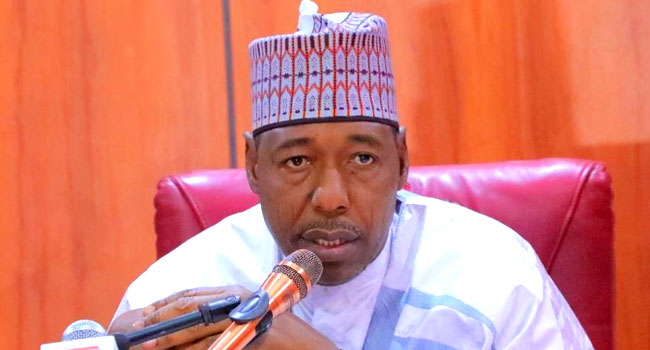
President Bola Tinubu warmly congratulates the Governor of Borno State, Professor Babagana Umara Zulum, CON, MNI, as he marks his 55th birthday.

Governor Zulum is an academic, visionary, reformist, and statesman.

President Tinubu joins the family, friends, and people of Borno State in celebrating the young and dynamic leader who embodies the pragmatism and energy of youth, as well as the sobriety, prudence, and wisdom of the elderly.

The President commends Governor Zulum’s hands-on approach to leadership, demonstrated by his unchoreographed, pre-dawn inspections of rural clinics and critical agencies to ensure their smooth operations and that staff are on hand to provide essential services at world-class standards.

President Tinubu also applauds the governor’s courage, exemplified by his personal interventions in security situations in Borno State and in the recent resettlement of displaced citizens.

The President appreciates Professor Zulum’s facility for providing unifying leadership, epitomized by his efforts towards ensuring the welfare of citizens from other parts of the country and in the promotion of Nigerians of diverse ethnic backgrounds and faiths through the ranks of the Borno Civil Service on the exclusive basis of merit.

“Babagana is one of those luminescent northstars of meritocratic rise in the Nigerian political firmament. From humble beginnings, his tenacious pursuit of personal growth and later on, expeditious state and national development, is a guide to Nigeria’s future generations.

“Borno State and Nigeria at large are fortunate to benefit from his benevolent brand of modest, rigorous, and visionary political and administrative leadership,” the President states.

As the governor marks this milestone, the President wishes him many more years in good health and renewed strength in his service to the nation.

Nigerian Army strikes against terrorists in Borno, seizes weapons, recovers rustled cattle

By Uzair Adam

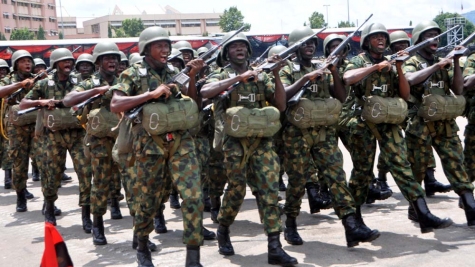
In a recent operation, Nigerian Army troops successfully eliminated five terrorists affiliated with the Islamic West Africa Province (ISWAP) in Bama Local Government Area, Borno State.

The clash with the terrorists resulted in the recovery of significant arms and ammunition, including two Rocket Propelled Grenade (RPG) bombs, two Dane guns, an RPG bomb charger, an AK-47 rifle magazine, 23 rounds of 7.62 mm ammunition, and six motorcycles.

Additionally, the troops recovered assorted medications and rustled cattle.During ongoing operations in the North East, the Army reported that 44 Boko Haram terrorists and their families have surrendered in Bama, Dikwa, and Gwoza Local Government Areas.

In Plateau State, the Army apprehended a notorious cattle rustler, Mallam Maawuya Shuaibu, in Mararaban Kantom, Barkin Ladi Local Government Area.

Shuaibu, previously on security agencies’ watch lists, was arrested with 32 stolen cows.

In Bayelsa State, a raid in Korokorosie Community led to the arrest of Mr. Donald Emason, who was found with a revolver pistol and two locally made guns.

In Oyo State, Mohammed Bello, 33, was detained in Akinyele Local Government Area for allegedly supplying arms to a kidnap syndicate.

These operations highlight the Nigerian Army’s ongoing commitment to addressing terrorism and criminal activities nationwide.

Borno enforces 24-hour curfew

By Abdullahi Mukhtar Algasgaini

The Borno State Government has announced an immediate 24-hour curfew across the state.

This is in response to the tragic detonation of an improvised explosive device in Kawori Market, Konduga area of Borno State on Wednesday night.

The explosion suspected to be carried out by a Boko Haram suicide bomber resulted in the deaths of 16 individuals and critical injuries to several others.

Police Public Relations Officer, ASP Nahum Kenneth Daso, disclosed this in a Thursday press release obtained by The Daily Reality titled, “Imposition of Curfew,”, the statement noted that the bomb explosion prompted Governor Babagana Zulum, to consult with top security officials before implementing this measure.

According to the statement, the curfew aims to restore law and order and ensure public safety.

It read, “In view of the constitutional mandate of the Nigeria Police Force and other relevant security and law enforcement agencies toward the preservation of law and order in the state. You are all aware of the incident that took place at Kawori which was the detonation of an improvised explosive devices ordinance device which led to the death of (16) persons while several others were critically injured and on admission across various Government hospitals in the state.“

In line with our constitutional mandate towards the restoration of law and order his Excellency the Executive Governor of Borno State, Prof. Babagana Umar Zulum in consultation with heads of security in the state, finds it’s expedient to declare 24hrs curfew in the state with immediate effect.

The PPRO urged residents to stay calm and adhere to the curfew. Further updates will be provided as the situation develops.

“I, therefore, wish to call upon the good people of Borno State to remain calm and law-abiding. Further developments will be communicated to you accordingly, please,” it concluded.

Nigerian youths and looming hunger: Reflect before you protest

By Lawan Bukar Maigana

When asked about the Boko Haram bloodbath in Maiduguri between 2012 and 2014, my mind reflects on the gory scenes of manslaughter, unrest, indescribable fear, hopelessness, mourning, massive burials, decaying bodies on the streets, roadblocks, military presence, economic downturns, and many other paroxysms of agony that still traumatize me from time to time, especially when I remember the productive people and opportunities I have lost.

This is to remind our fellow youths what life would be like if the enemies within and outside succeeded in mobilizing innocent young people to collapse Nigeria under the guise of protesting against government policies they perceive as unfriendly to their well-being. If people eat once daily now and move freely in some areas within the country, chances are that some would spend days and nights hungry and unable to move freely even within their vicinities if the protest held as planned. I would never wish this for my enemies, let alone my loved ones.

In a viral video, the acclaimed leader and organizer of the planned nationwide August protest, Comr. Murtala Garba said that he had withdrawn from the planned protest after realizing that some unpatriotic power mongers and anti-peace agents were financing it at the expense of peace and unity of the nation.

He said, “Everybody knows that we are pro-North and are always ready to stand for the region’s interest. We started planning for the protest during the Ramadan period when we went to the market to shop and realized that the price of a bag of sugar had unbelievably increased. That was when we realized that the removal of subsidy by this government would predictably lead to a high cost of living, so we started criticizing it on various social media platforms across Africa. We started getting support from Nigerian diasporans, largely from America, China, and other Arab countries.”

The activist confessed that a high-profile individual from the southern part of Nigeria had invited him and fifty-two individuals to Port Harcourt for a meeting on the planned nationwide August protest.

“We spent a day in Port Harcourt and then moved to Delta State, where we spent six days. We planned for the peaceful protest to take place across the 36 states of the federation, but they started telling us that they only wanted us to do it in selected states of the North comprising Kaduna, Abuja, and Jos because they trusted us. They went on to tell us that they wanted us to block roads, adding that they would link us up. That got me thinking about those youths who are better than us in the country, yet we don’t know them.

“Honestly, they gave us money, and we collected it, returned to our region, and some of our elders started talking to us about it and succeeded in convincing us to suspend the protest, not because we are happy with the government’s policies but because of its foreseen consequences considering the forces behind it.”

Mr. Garba did not list the names of the people who invited him to Port Harcourt, perhaps out of fear of the unknown. However, he concluded by asking the government to heed the calls to reconsider the fuel subsidy removal, mentioning that some powerful Nigerians are planning to topple the government.

“They revealed the total number of police and other security forces in the Villa and promised to provide adequate manpower to support them and overwhelm the security forces. The protest is shaky and cruel to the nation. Therefore, I distance myself from it.”

Those of us from Maiduguri will never want to experience the taste of war. Some people wish for Nigeria to go to war, forgetting that no West African country can accept us as refugees if we break due to our overwhelming population that surpasses half of the entire population of West Africa.

Politics aside, I am disappointed that a former Minister called Barr. Solomon Dalung is shamelessly offering to lead the protest despite coming from a fragile state where ethno-religious crises claim lives from time to time, depriving the state of peace and unity. I am sure his declaration is insincere, exploiting the present economic hardship for political relevance in the sight of the masses.

Coming to the North, those Kano TikTok influencers are ignorant of the protest they were calling for because they seem to be unaware that Kano remains the only state in the North where people enjoy relative peace despite the power tussle going on between Emir Sanusi (enthroned) and Emir Bayero (dethroned). Businesses are going about smoothly, and farmers access their farmlands fearlessly, unlike Kaduna, Sokoto, Zamfara, Katsina, and Borno, where farmers write their wills every day before going to their farms.

Recently, a few energetic guys came to me saying people like me should lead the protest, given our influence on young people in our various states. I allowed them to land, and I asked if they knew who planned the protest, why the protest, and what it aimed to achieve. They couldn’t answer me, looking sorry and confused. Unfortunately, a lot of young people are like that. They don’t even know what they are protesting against and are used and dumped by enemies within.

Some readers may ask about the solution to the economic hardship facing Nigerians since we unapologetically condemn the planned protest and urge like-minded individuals to shun it.

In my opinion, the solution is near, as our Port Harcourt and Kaduna refineries will soon start operations. This will reduce the cost of production and transportation, thereby lowering commodity prices by default. The inflation is caused mainly by transportation, which costs marketers twice the purchasing amount.

Therefore, I kindly call on the government to expedite the realization of the refinery projects and commence operations as soon as possible. This is the only realistic and achievable approach to ameliorating living standards in the country.

Lawan Bukar Maigana wrote via lawanbukarmaigana@gmail.com.

GCC, government fight maternal mortality in Borno 

By Lawan Bukar Maigana 

According to a report by the World Health Organization, Nigeria, after India, has the highest number of maternal mortality in the world. The report shows 788 women and children deaths per hundred thousand’ in India, and 540 women and children ‘per thousand’ died in Nigeria.

Other countries with high maternal, neonatal, and stillbirth rates are Pakistan, the Democratic Republic of the Congo, Ethiopia, Bangladesh, China, Indonesia, Afghanistan, and the United Republic of Tanzania.

‘About 57,000 mothers died from pregnancy and complications during childbirth in 2023 alone,’ said Nigeria’s Minister of Health and Social Welfare, Muhammad Pate, at a public health function.

Unfortunately, the frequent loss of lives among pregnant women in Nigeria, particularly Northern Nigeria, remains an issue of concern. This gives Nigeria a poor global ranking.

Pate explained that the Federal Government was committed to drastically reducing maternal mortality through the new Safe Motherhood Strategy. He noted that the central government will take actionable steps and cascade the strategies to state and local governments, targeting at least seven million pregnant women.

“The aim is to ease six million new births by activating the Decentralised Facility Financing package, establishing robust collaboration with health NGOs, community leaders, and media to boost awareness campaigns.” 

Sequel to the Health Minister’s lamentation, the Girl Child Concerns (GCC), in collaboration with the Borno State Government through the Multi-Sectoral Crisis Recovery Project (MCRP), has trained 300 Community Health Extension Workers (CHEWs) on Basic Emergency Obstetric Care and Early Neonatal Care in Borno State.

The Chief Adviser and Coordinator for Sustainable Development, Partnerships, and Humanitarian Support to the Governor of Borno State, Dr. Mairo Mandara, stated that the training aimed to improve maternal and child health services across the state. The training was conducted in three zones of the state. Each zone underwent one week of theoretical training followed by one week of clinical training. 

The training for Borno Central was held on May 27, 2024, for Borno North on June 3rd, and for Borno South on July 1st, with each zone being exposed to theoretical and clinical aspects of the training.

Dr. Mandara emphasized the governor’s commitment to ensuring quality health services for the resilient people of Borno State, especially the locals, given the magnitude of the challenges they face due to the terrorist activities of Boko Haram insurgents in their communities.

Dr. Mina Endeley from the Namu Project in the UK and Oluwaseyi Akinlaja from Princes Alexandra Hospital Trust in the UK have also joined the training, leading a practical session on successful delivery and universal approaches to handling emergency cases.

Endeley at MCH Biu Local Government Area practically taught non-medical attendants the concepts of basic life support, including managing catastrophic bleeding in the community.

The participants practised approaching the scene safely, calling for help, managing catastrophic bleeding, and reviewing the patient’s airway, breathing, and circulation using a mnemonic we created.

Oluwaseyi Akinlaja from Princess Alexandra Hospital Trust, UK, explained the labour mechanism: how a baby is delivered as it passes through the pelvis into the birth canal and is born by expulsion. This was done to enable CHEWs to visualize the birth process so that they could make early referrals when necessary.

She exposed the participants to the seven steps/processes that a baby passes through before delivery, namely engagement, descent, flexion, internal rotation, extension, external rotation, and extension.

On his part, the Emir of Biu, Maidala Mustapha Umar Aliyu II, described the combined efforts of the organization—GCC—and Borno State Government as a “timely homily” and expressed readiness to support the effort in every way possible.

The lead facilitator of the training, Hadiza Yahaya, has expressed satisfaction with the performance of the participants during the training and expressed hope that the CHEWs will help greatly in the fight against maternal mortality. 

The training offered to Community Health Extension Workers (CHEWs) in Borno State is expected to result in each participant putting the knowledge into practice and witnessing a drastic reduction in maternal mortality in the state.

Lawan Bukar Maigana is the Communication Officer for Girl Child Concerns, GCC, and can be reached via email at lawanbukarmaigana@gmail.com.

Gwoza Blast: Jaiz Bank PLC donates ₦10 million to victims

By Abdullahi Khairallah

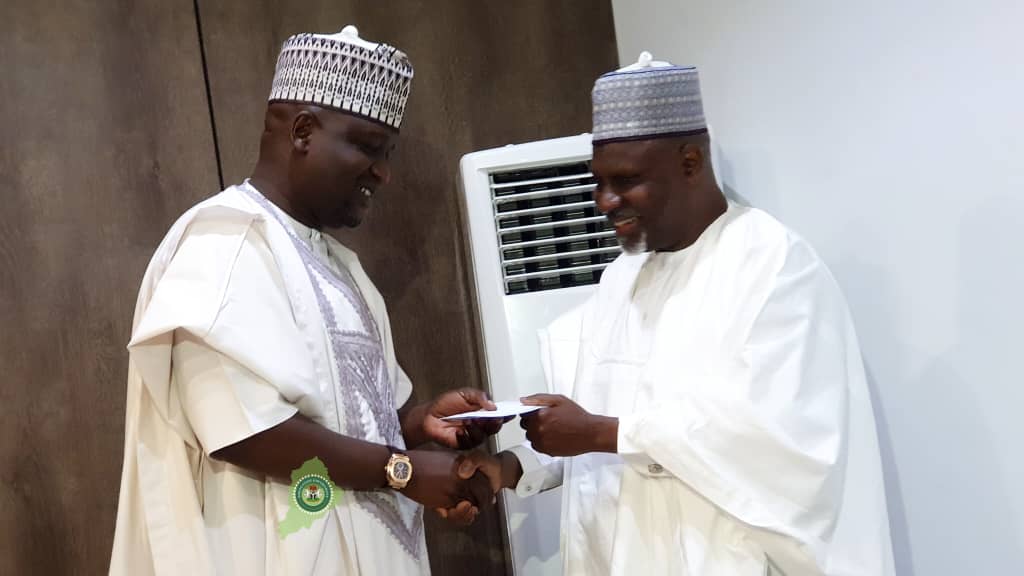
Jaiz Bank of Nigeria has donated 10 million Naira to provide medical support to the victims of the recent Gwoza bomb blast in Borno State. The bank presented the cheque as part of its corporate social responsibility to the community.

Receiving the delegation at the Council Chamber Government House Maiduguri, Dr. Umar Usman Kadafur, received the cheque for onward disbursement to the victims of the bomb blast. He assured that the medical support would be channelled appropriately to the victims while thanking the bank’s board and management for their gesture and support to the people and government of Borno State.

Earlier, while presenting the donation to the Acting Governor, Dr Kadafur, the chairman of the bank’s Board of Directors, Alhaji Muhammed Mustapha Bintube, said the bank’s board and management considered it necessary to contribute their quota and complement the efforts of the state government in supporting the victims in this trying time.

“This unfortunate and needless loss of lives is indeed a colossal loss not only to the Gwoza community but also to Borno state and the county at large.

“We sincerely empathise with the affected families and extend our hands of affinity to the Gwoza Community and the entire people of the state,” Bintube said.

He commended the state governor and his deputy for their good work for the people and assured them of the bank’s continuous support for the government and the people of Borno State.

Malam Mustapha Bintube prayed to Allah to forestall future mishaps and ensure a quick return to peace in the state.

Present at the gathering include Secretary to the State Government Alhaji Bukar Tijjani, Acting Head of Service Dr. Abubakar Sadiq, Commissioner for Transport and Energy Hon. Aliyu Lawan Buba, Commissioner for Local Government And Emirate Affairs, Alhaji Sugun Mai Mele, Permanent Secretary Administration and General Services Governor’s Office Dr. Muhammed Ghuluze, APC Party chairman Gwoza local government, Abdullahi Danjatau, Council Secretary Hajiya Fatima Musa, Special Advisers, among others.

Two female suspects arrested over Borno suicide attacks

By Uzair Adam Imam

According to authorities, two female suspects have been arrested in connection with the detonation of improvised explosive devices (IEDs) in Gwoza local government area of Borno State on Saturday.

A local government official confirmed that 30 female suicide bombers were sent to Gwoza to detonate IEDs at different locations within the area. However, only four suicide bombers had carried out the attack so far.

One of the female bombers, who came from the Pulka axis, detonated the IED at a checkpoint, killing herself, a soldier, and a civilian JTF member. The women were said to have entered Gwoza from different locations, including Pulka and the Mandara mountains.

Security operatives are currently on the lookout for the remaining would-be suicide bombers to prevent further disasters. The source explained that one of the female bombers that came from Pulka axis was responding to military interrogation at the checkpoint when she panicked and detonated the IED.

The Borno State government has condemned the attacks and vowed to continue the fight against insurgency. The governor of Borno State visited the victims of the bomb blast and reiterated the government’s commitment to ending the insurgency.

The investigation is ongoing, and security operatives are working to prevent further attacks in the region.

Six killed, many others injured in Borno bomb blast

By Abdullahi Khairalla

Borno State Police Command has confirmed that eight people were killed and fifteen others sustained various degrees of injuries following a bomb explosion in Gwoza Local Government Area of Borno State, which is about 100 kilometres away from Maiduguri.

Police Public Relations Officer ASP Nahum Kenneth Daso reported that the tragic incident occurred on June 29, 2024, at approximately 15:40 hours. 

The command further notes that ” a woman carrying a baby detonated an Improvised Explosive Device (IED) at a busy motor park in Mararaba T. Junction in Gwoza town. 

The explosion claimed the lives of the woman, her baby, and six others, with fifteen individuals who sustained injuries currently receiving treatment at General Hospital Gwoza”.

This is happening in the wake of the cropping season, which many observe is part of the sinister efforts of the insurgents to cause havoc and instil fear in the people, thereby preventing them from accessing their farmlands.