Borno

[OPINION]: Of the mosque bomb blast in Maiduguri: Headlines matter

By Ibrahim Badamasi Abdulrahman

Amid the widespread circulation of fictitious conspiracy theories alleging a so-called Christian genocide in Nigeria by Muslims, narratives often promoted by a few self-interested actors for personal gain and the advancement of narrow agendas, to the detriment of national cohesion and Nigeria’s sovereignty, one would expect a media house of Channels Television’s standing to exercise heightened objectivity and sensitivity.

Such care is essential, particularly given how these narratives were weaponised to invite foreign hostility under the guise of protecting Christians.

In reporting the same incident, Al Jazeera English headlined: “Explosion rocks crowded mosque in Nigeria, killing at least five.”

The BBC World Service reported: “Bomb blast in packed Nigerian mosque kills five.”

Sadly, Channels Television chose the headline: “BREAKING: Many Feared Dead As Bomb Blast Rocks Maiduguri On Christmas Eve.”

This choice is troubling, particularly given the well-known reality that casual or “lazy” readers far outnumber those who read beyond headlines. To such readers, and to warmongers or actors with selfish interests, the dominant keywords become “dead,” “bomb blast,” and “Christmas.”

These are easily stripped of context and repackaged to advance dangerous and divisive narratives.

Even international outlets such as The Times of Israel reported the incident as a mosque bombing, yet a Nigerian media organisation that prides itself on being Nigeria’s most awarded television station for over fifteen years failed to appreciate that, in this environment, headlines often matter more than the content beneath them.

This may not have been deliberate. However, it was reckless, and it was insensitive, especially in a country already grappling with deep religious fault lines and the harmful consequences of misinformation.

A media house of Channels Television’s stature ought to lead in restraint, precision, and contextual responsibility, particularly at moments when careless framing can inflame tensions and deepen existing harm.

It is within this context that the media is regarded as the Fourth Estate. This designation is not in a vacuum. Rather, it reflects the media’s role in filling the gap of accountability, transparency, and public awareness left by the three arms of government in a democracy.

As a watchdog, the media observes, questions, exposes, and informs the public. While it does not exercise the powers of governance, legislation, or adjudication, it carries the grave responsibility of ensuring that the successes and failures of the three arms of government are accurately, responsibly, and sensitively presented to the people, especially in a society where careless framing can inflame tensions and deepen existing harm.

Ibrahim Badamasi Abdulrahman wrote in from Borno State, Nigeria.

Backlash trails Channels TV over “Christmas Eve” headline on Maiduguri mosque bombing

By Sabiu Abdullahi

Channels Television has come under intense criticism following its headline on the Christmas Eve bomb blast in Maiduguri, Borno State, which many Nigerians have described as biased and insensitive.

The television station had reported the incident with the headline: “Many Feared Dead As Bomb Blast Rocks Maiduguri On Christmas Eve.”

The blast, however, occurred inside a mosque, with Muslim worshippers as the primary victims.

Critics argue that the omission of both the mosque and the victims’ religious identity from the headline distorted the gravity and context of the tragedy.

A journalism expert and Facebook user, Aisar Fagge, accused the station of deliberately reframing the narrative in a manner that downplayed the victims and their place of worship.

“The bomb blast occurred in a mosque but Channels TV chose to remove the mosque from the headline of the story and replaced it with ‘Christmas,’ showing a lack of sympathy for the people (Muslims) who were killed,” Fagge wrote.

He further alleged that such editorial decisions reflect deeper problems within sections of the Nigerian media.

“In Nigeria, we do not only fight Boko Haram; we also fight what I call ‘Truth Haram’ media outlets — the likes of Channels,” he added.

Another Facebook user, Abubakar Suleiman, also criticised the station, stating that the headline exemplified what he described as “the politics of headline framing.”

According to Suleiman, the editorial choice influenced how the public processed the information by shifting attention from the actual victims and location of the attack.

“The bomb blast happened in a mosque, and the victims were Muslims. However, Channels TV chose to headline the story by removing the place and the victims of the heinous attack, replacing them with ‘Christmas Eve,’” he stated.

He added that although the incident occurred on Christmas Eve, the wording of the headline effectively erased the victims’ identity and dignity.

“Yes, it is true that the bomb blast happened on Christmas Eve, but the presentation of the headline controlled the perception of the targeted audience and eroded the victims of any mention, identity, or dignity,” Suleiman wrote.

Suleiman further alleged that the omission of the mosque was linked to a broader narrative that does not align with the interests of certain ideological groups.

“The exact place where the bomb blast happened — a mosque — also does not matter, because it does not fit into the narrative of Reverend Dachomo, which advances the ‘Christian genocide’ propaganda,” he stated.

Drawing parallels with global media practices, Suleiman said skewed narratives in international media had forced other regions to establish their own independent broadcast platforms.

“When the Arab world grew tired of skewed and silenced narratives, massive propaganda, double standards, and hypocrisy from the likes of Fox News, the BBC, and CNN, they did not stop at complaining; they established competent and reliable broadcast media and employed credible journalists to present their stories,” he wrote.

Quoting Chinua Achebe, he added: “Until the goats learn to write their own history, the history of the hunt will always glorify the hunter.”

Suleiman also warned that sensational reporting encourages division in a multi-religious society such as Nigeria.

“Even if Nigerians choose to live in peace with one another regardless of religion, region, or ethnicity, the Nigerian media will always find a way to sow the seeds of hatred and discord. You know why? Because fear sells much faster and more easily than hope, or than the effort required to deliver a nuanced message,” he stated.

He concluded with a call for responsible journalism and urged Channels Television to exercise greater sensitivity in future reporting.

“Anyway, I hope Channels TV will do better next time because all we wanted is, to quote Ben Affleck: ‘We just want to eat our sandwiches, go about our lives, mind our own business, without being targeted, demonized, or expected to condemn things that have nothing to do with us,’” he said.

Troops kill two BH members in Gwoza ambush, recover logistics supplies

By Sabiu Abdullahi

Troops of the Joint Task Force (North East), Operation Hadin Kai, have eliminated two Boko Haram/ISWAP fighters during an ambush around Hudugum village in the Hambagda area along the Gwoza–Limankara road in Borno State.

The operation, which occurred on Wednesday evening, was conducted under Operation Desert Sanity IV/Diligent Search by soldiers of the 192 Battalion (Main) in collaboration with the Civilian Joint Task Force (CJTF).

Security analyst Zagazola Makama disclosed the development in a post shared on X (formerly Twitter) on Thursday. He explained that the troops encountered the terrorists’ logistics team at about 6:30 p.m. and engaged them with superior firepower.

According to Makama, “two insurgents were neutralised while several others escaped with gunshot wounds towards the foothills of the Mandara Mountains.”

He quoted sources as saying, “There was no casualty on the side of the troops, and no equipment was lost during the encounter.”

After the gun battle, the soldiers recovered several items believed to belong to the fleeing terrorists.

These included three bicycles, clothing materials, mats, food seasoning, salt, and other personal belongings.

The troops reportedly returned to base safely around 7:50 p.m. after what was described as a “hitch-free” mission.

The report added that the army plans to conduct further search operations along the escape routes of the terrorists.

It also noted that while the general security situation in the area remains calm, it is still considered unpredictable.

Military airstrikes hit ISWAP, Boko Haram hideouts in Sambisa, Mandara mountains

By Sabiu Abdullahi

The Nigerian military has recorded significant victories against Islamic State of West Africa Province (ISWAP) and Boko Haram fighters in recent coordinated operations in Borno State.

The raids, carried out through combined air and ground assaults in Sambisa Forest and the Mandara Mountains, forced the insurgents into confusion and led to the emergency burial of dozens of their fighters.

The offensive followed last Friday’s attack by ISWAP gunmen on Darajamal village in Bama Local Government Area, where about 60 civilians were killed.Residents reported to Zagazola Makama that the terrorists stormed the community, shooting indiscriminately before retreating toward the forest.

Their movements, however, were detected by military Intelligence, Surveillance and Reconnaissance (ISR) aircraft, which guided airstrikes against them.

“The ISR platforms picked up multiple terrorist movements. The Air Component swiftly engaged them with devastating precision, instantly neutralising more than 30 fighters,” a senior security source told Zagazola.

Following the air bombardments, ground troops from nearby Forward Operating Bases entered Darajamal to restore calm and provide support to survivors.In another phase of the operation, armed drones targeted terrorist hideouts and movement routes within the Mandara Mountains.

At least four locations were struck, leading to the deaths of several commanders and fighters. Survivors fled in disorder, leaving behind both weapons and corpses of their colleagues.

Intelligence further revealed that the Ali Ngulde faction of Boko Haram, which has been weakened by sustained military pressure in the Sambisa axis, buried not less than 47 bodies of slain members in hurried ceremonies at scattered sites.

Nigerian troops kill 24 BH fighters in week-long Northeast offensive

By Abdullahi Mukhtar Algasgaini

Nigerian military forces operating in the restive northeast have killed at least 24 Boko Haram and Islamic State West Africa Province (ISWAP) insurgents during a series of intense offensives conducted between July 4th and 9th, the Army announced Wednesday.

Troops from Operation HADIN KAI (OPHK), supported by air power and local forces including the Civilian Joint Task Force (CJTF) and hunters, executed multiple successful ambushes, patrols, and clearance operations across Borno and Adamawa states.

According to a statement by Captain Reuben Kovangiya, Acting Deputy Director Army Public Relations for the Theatre Command, the operations targeted terrorist movements, logistics networks, and hideouts.

Key engagements included:

1.Ambush at Platari (July 4): Troops killed 3 insurgents on bicycles moving from Sambisa Forest towards the Timbuktu Triangle.

2.Ambush near Komala (July 4):One terrorist was neutralized; troops recovered motorcycles, sprayers, pesticides, and food.

3.Night Ambush near Kawuri (July 4): 2 terrorists transporting logistics were killed; salt, seasoning, and detergents seized.

4.IDP Camp Interception, Madarari (July 5): Troops prevented terrorists from accessing a camp, killing one and recovering ammunition.

5.Fighting Patrol at Leno Kura (July 5): 3 insurgents killed during an assault on their enclave.

6.Night Ambush near Ngoshe/Gava (July 6): One terrorist neutralized at a suspected crossing point.

7.Ambush near Sabsawa (July 7): 2 logistics suppliers killed; bicycles, slippers, torchlights, and other items recovered.

8.Clearance Operation at Bula Marwa (July 8): One insurgent killed, gun and uniforms recovered, camp destroyed (air support involved).

9.Joint Patrol at Pambula, Adamawa (July 8): One terrorist killed; four motorcycles and a weapon captured.

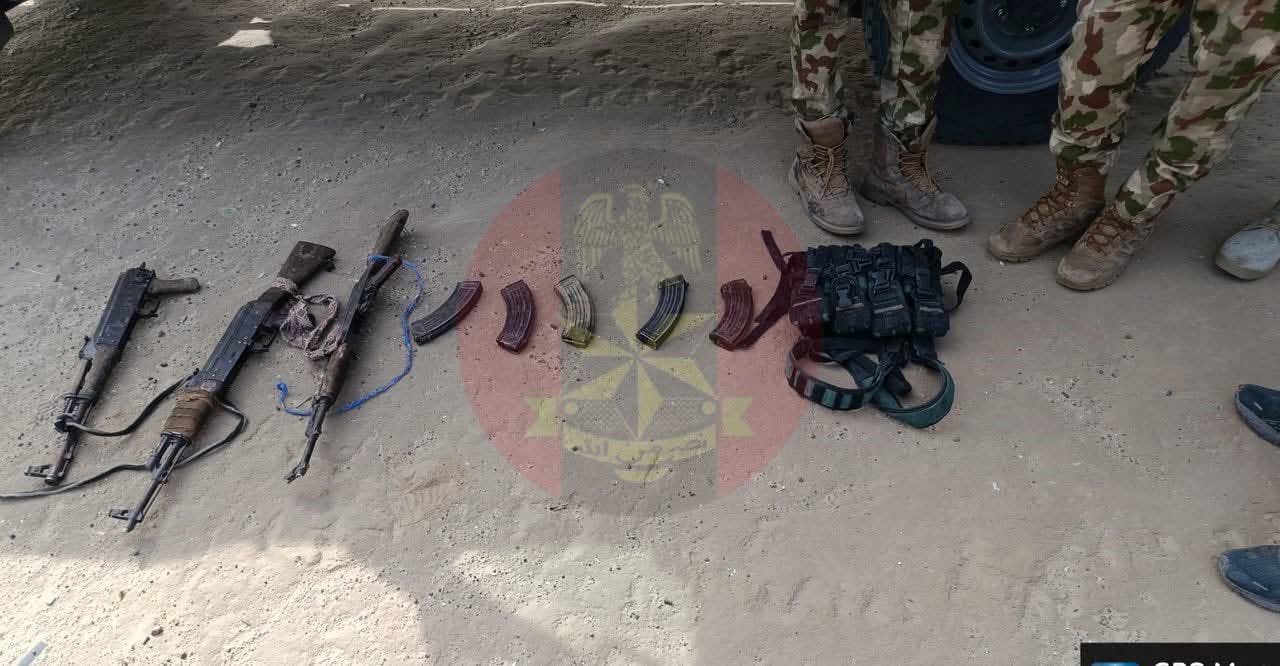
10.Tangalanga & Bula Marwa Clearance (July 9): 3 insurgents killed; camp destroyed; six AK-47 rifles, 47 magazines, and 90 rounds of ammunition recovered (air support involved).

11.Ambush at Ngailda, Manjim, Wulle (July 9): 6 terrorists killed; motorcycles and bicycles seized.

Captain Kovangiya emphasized the significance of air support and collaboration with local forces like the CJTF and hunters in the success of the operations.

He stated the offensive demonstrates the troops’ determination to cripple the insurgents and restore security for socio-economic activities in the region.

Exploitation of the areas after clashes led to the recovery of significant weapons, ammunition, logistics supplies, and the destruction of terrorist camps and life-supporting structures.

Nigerian special forces kill notorious BH leader Abu Fatima in Borno operation

By Abdullahi Mukhtar Algasgaini

In a decisive blow against terrorism, Nigerian Special Forces under Operation HADIN KAI have eliminated a high-profile Boko Haram/ISWAP commander, Amir Abu Fatima, along with several of his lieutenants in Kukawa, Northern Borno State.

The successful operation, carried out on May 30, 2025, followed credible intelligence reports on the terrorists’ hideout.

Abu Fatima, who had a ₦100 million bounty on his head, was fatally wounded in a fierce gun battle with troops. His deputy, explosives experts, and multiple fighters were also neutralized in the encounter.

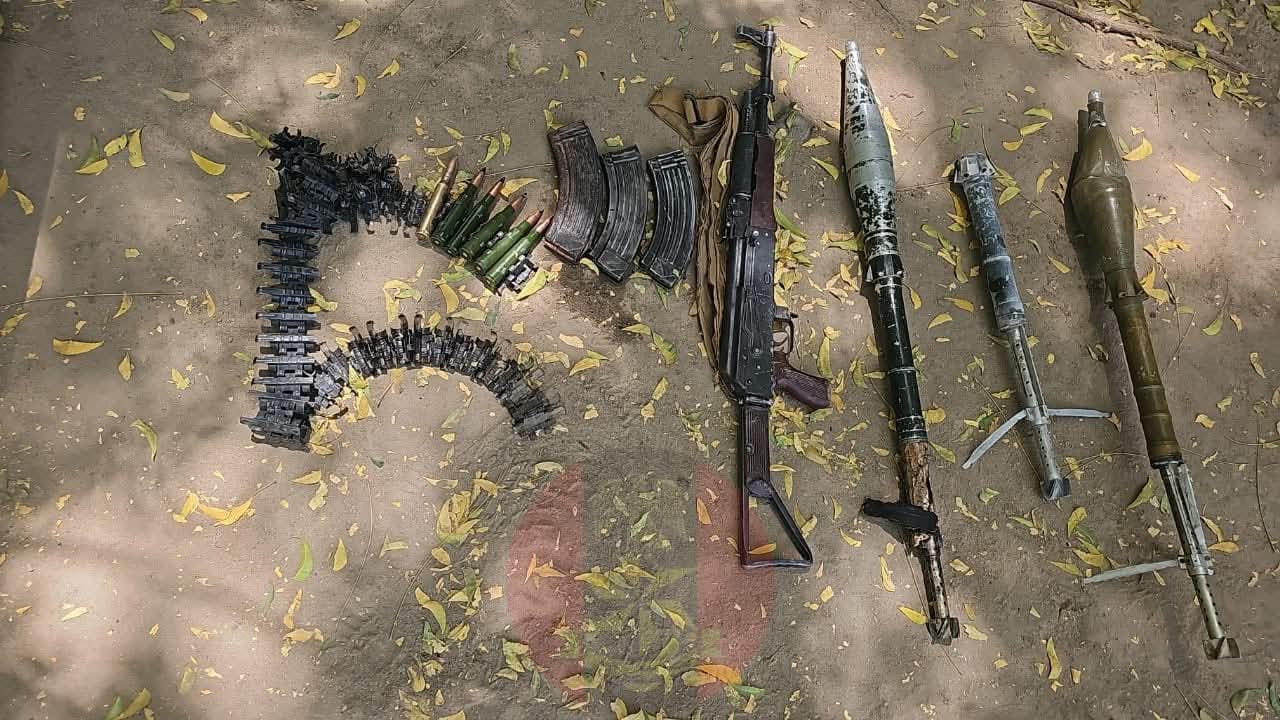
Military sources confirmed the recovery of AK-47 rifles, ammunition, explosives, and IED-making materials from the scene.

No casualties were recorded among Nigerian forces.

This strike marks a major setback for terrorist operations in the region and underscores the Armed Forces’ ongoing efforts to restore stability in the Northeast.

ISWAP attacks Gajibo military base in Borno, kills 6 CJTF members

By Abdullahi Mukhtar Algasgaini

The Islamic State West Africa Province (ISWAP) has released a chilling video confirming its deadly attack on a military base in Gajibo, Borno State, on Thursday.

The footage, published by the Islamic State’s Amaq News Agency, shows two military vehicles engulfed in flames and six motorcycles seized by the terrorists.

Local sources report that six members of the Civilian Joint Task Force (CJTF) were killed in the assault.

The attack appears to be part of a coordinated operation, as another ISWAP unit was simultaneously headed toward Damboa.

Security experts warn that ISWAP is growing increasingly bold, capitalizing on security vulnerabilities in northeastern Nigeria.

The latest assault highlights the persistent threat posed by the terrorist group in the region.

Authorities have yet to issue an official statement on the incident as tensions remain high in the area.

Zulum orders petrol ban in Bama to curb insurgency

By Uzair Adam

Governor Babagana Zulum of Borno State has imposed an immediate ban on the sale of petrol across Bama Local Government Area, including Bama town and Banki, as part of renewed efforts to address persistent security challenges in the region.

The move followed consultations with security agencies and is aimed at restricting the supply of fuel, which authorities believe may be aiding insurgent activities.

This was disclosed in a statement issued on Saturday in Maiduguri by the governor’s Special Adviser on Media and Strategy, Malam Dauda Iliya.

“I have directed the immediate ban on the sale of petrol in Bama town, Banki, and other parts of Bama Local Government Area,” Governor Zulum was quoted as saying.

He emphasized that the directive would be strictly enforced, warning that violators would face legal consequences.

“There will be no sacred cows in the enforcement of this ban. Security agencies have been instructed to clamp down on any filling station or individual found violating the order,” the governor added.

Zulum reaffirmed his administration’s commitment to restoring peace in the state and urged residents to cooperate with security efforts aimed at ending insurgency.

He has consistently rolled out policies targeting the disruption of supply lines and mobility of insurgent groups in Borno’s conflict-affected zones.

Borno governor bans sales of alcohol, accuses security personnel of fueling crime

By Abdullahi Mukhtar Algasgaini

Borno State Governor, Professor Babagana Zulum, has imposed a ban on the sale of alcoholic beverages and blamed security personnel, including military and police officers, for enabling criminal activities in the state.

Speaking on Tuesday during the inauguration of a reconstituted committee to tackle illegal hotels, brothels, and criminal hideouts, Zulum accused dismissed and serving security officers of promoting crimes such as radicalism, prostitution, and drug abuse.

“Most of these criminal acts are committed by dismissed and even active security personnel, alongside civilians. There should be no sacred cows if we want to end terrorism and other vices,” Zulum stated.

The governor’s ban follows rising cases of cult clashes, theft, and violent crimes linked to alcohol consumption.

The new committee includes military, police, and civilian task force members to enforce the crackdown.

The move raises questions about its impact on state revenue, particularly amid ongoing debates over tax reforms championed by Zulum and other northern leader.

Military uncovers network smuggling fuel to Boko Haram in Borno

By Abdullahi Mukhtar Algasgaini

Troops of Operation Hadin Kai have uncovered a fuel-smuggling operation allegedly supplying Boko Haram insurgents in Borno State and neighboring Cameroon.

During a raid on Hadiza and Sadiq Filling Station in Maiduguri, soldiers caught workers loading 500 jerrycans of fuel, suspected to be destined for terrorist hideouts.

Intelligence reports indicate that smugglers often use modified vehicles to transport petrol to insurgent camps near Pulka and Cameroon’s border areas.

Several suspects were arrested and reportedly confessed to delivering fuel to terrorism-linked locations, though they denied knowing the recipients.

Military sources condemned the act, labeling the perpetrators “economic saboteurs” aiding terrorism.

Authorities have vowed to intensify surveillance and prosecute all collaborators, warning that such sabotage of national security will not be tolerated.