Boko Haram

Is the Buhari-led government on holiday?

By Shafi’i Sheikh Jr.

I tried to resist the temptation to speak on matters that fringe around governance and government policies. This is because there are things that an observer can only see if he resists the temptation to jump into the fray and become an actor himself. But recent happenings have reawakened my enthusiasm to march to the stake like the man my mom had always desired me to be and take the bullet in the chest should the need arise. 

In 2015, we supported APC with our sweat and money chanting “change” wherever we found ourselves so much that it caught every household’s mood. Why? Because we thought a Buhari-led government would have no trouble handling the heaps of problems bedevilling our mettlesome Nigeria. 

Now, let’s get down to the nitty-gritty of why we-the masses brought Buhari to power in the first place. 

First of all, Nigeria, Africa’s biggest oil-producing country, was rapidly growing its economy, but the wealth had not been shared appropriately. Half of Nigeria’s population was living below the poverty line. The corruption that was partly to blame was eating into every fabric of Nigeria’s being. 

Secondly, the menace of Boko Haram was spreading wider than it started and had already claimed over 20,000 people and forced out some 3 million others from their homes. We accused the previous Goodluck E. Jonathan-led administration of not taking the menace seriously and posited that Buhari, who’s from the region, would do better if given the opportunity. 

We, therefore, came out en masse to vote Buhari into power. The 2015 election was and still is of massive significance in Nigeria’s turbulent history because, for the first time in Nigeria’s history, an opposition candidate won a presidential election free and fair. 

The president-elect (as he then was) told his supporters that “We have proven to the world that we are people who have embraced democracy. We have put the one-party state behind us.”

“You, Nigerians, have won. The people have shown their love for this nation and their belief in democracy,” He mentioned. 

It was the beginning of a new era. Nigeria and Nigerians refurbished a new hope. But these hopes were soon quashed by his incompetence to constitute a cabinet after 100 days in office. It was opined that a leader who couldn’t form a cabinet for that long is ill-prepared for the most important job in the country. 

Albeit hinging his voter appeal on waging war against corruption, fighting terrorism, and revamping the economy, the Buhari-led government had nothing to show except a plethora of controversies that embroiled his first 100 days in office. 

Today, the government only succeeded in pulling us from the shackles of Boko Haram into a dungeon full of kidnappers, IPOB and the so-called Unknown Gunmen. 

Ours is a country where lives are no longer sacred. Education has been exiled, social amenities are declared “extinct”, and food! Well, you’ll have to take a bank loan if you want to eat healthily. These terrorists attack and operate in broad daylight. 

Even after the president’s declaration in 2019 that Nigeria has “technically won the war” against Boko Haram, the country is still ravaged by insurgencies ranging from kidnappings to coordinated attacks on security forces and population centres. 

The recent attack on the Abuja-Kaduna train is a clear example that Nigerians will not forget for a very long time.

If holiday refers to that time of the year when one usually takes time away from home, work, or business to travel and relax, then this so-called government has betrayed Nigerians and gone on a holiday! 

Shafi’i Sheikh Jr. is a student of the Nigerian Law School, Kano Campus. He writes from Jos and can be reached via talk2sheikh.esq@gmail.com.

Boko-Haram expansionism and the future’s gruesome picture

By Abdulhaleem Ishaq Ringim

The Abuja-Kaduna train attack has finally halted the speculations regarding Boko-Haram’s expansionism into North-West territories of Nigeria. Although warnings sounded as far back as 2-3 years ago were suggestive of the existence and operationalization of such an active expansionist agenda, it wasn’t until January 2022 that I saw what I consider the first official acknowledgement of the expansionist efforts of BH. This acknowledgement was contained in Kaduna State Ministry of Internal Security and Home Affairs’ annual security report wherein lies observations of escalating relationships between Boko-Haram groups and bandits.

It should be recalled that Boko-Haram ceased to exist as a single entity since 2014/2015 when factionalism befell the central entity. This factionalism yielded 3 different groups distinguishable by certain ideological and tactical contrarieties. They are; The Shekau Led Jama’atu Ahlis-Sunna Lidda’Awati Wal-Jihad (JASLWJ), The Al-Qaeda in the Islamic Maghreb (AQIM) supported Jama’atu Ansaril Muslimina fi Biladis Sudan (Ansaru) and The Islamic State (IS) supported Islamic State in West Africa Province (ISWAP). And they have been fighting one another for influence and jurisdiction ever since. 

Interestingly, establishing an influential presence in North-central and North-west Nigeria has always constituted a major aspect of these groups’ grand agenda. But for years, it had proven hard for this objective to be achieved by any of the groups even after staging several operations in the 2 subregions as none of them was able to establish that desirable level of hegemonic presence and influence. 

However, among the three groups, Ansaru remains the most influential in the North-west even though it is thought to have hibernated after the face-off that ensued from the factionalism. Terror watch reports suggest that while in hibernation, Ansaru embarked on a strategic recruitment exercise targeting NW’s most dominant non-ideological criminal groups – the bandits – through infiltration, training, tactical assimilation and arms supply. Apart from Ansaru, Shekau-led JAS through some commanders(like Adamu Bitri before he defected to ISWAP and eventually died) also established and maintained contact and relationship with leaders of some bandit groups. 

Last year, Nigeria’s terror network experienced heightened volatility due to the escalation of the conflagration between the two major terrorist organizations —the Shekau-led Jama’tu Ahlis Sunna Lidda’awati wal-Jihad (JAS) and Al-Barnawi-led Islamic State in West Africa Province (ISWAP) — operating in the North-east and Lake-chad basin. This resulted in the death of Abubakar Shekau by suicide which sparked serious disarray within the network and rendered the JAS somewhat defenceless. 

Consequently, ISWAP issued an ultimatum to all JAS commanders and fighters to either defect to ISWAP and pledge allegiance to Al-Barnawi or vacate all former JAS territories which now fell under their control. Some commanders and fighters complied and defected while many others surrendered to the Nigerian Army with the aim of becoming beneficiaries of the Nigerian government’s amnesty program(Operation Safe Corridor). The third group of JAS commanders and fighters who neither defected nor surrendered to the Nigerian army were thought to have migrated to NW to forge alliances with bandit groups. 

By implication, the above-stated events suggest that while Ansaru continues to remain the closest to NW bandits, ISWAP and former JAS fighters might have also re-ignited links with bandit groups in the NW. While ISWAP might have taken over control of the vast network of bandit groups that were formerly affiliated to Shekau-led JAS due to the carpet-crossing of JAS commanders (some of whom are the keepers of the link between JAS and the bandit gangs in the North-West just as Adamu Bitri) to the ISWAP side, JAS fighters that refused to surrender to both ISWAP and the Nigerian Army might, however, have also migrated to NW to forge alliances with bandits and escape ISWAP’s wrath. 

Now, the changing dynamics, improved weaponry and renewed offensive tactics seen in recent attacks thought to be staged by bandits are testimonials to an improved alliance between Bandits and members of BH groups. These attacks carry BH signatures all over from attacks on public infrastructure (as in the case of the two train attacks) to attacks on military formations (e.g NDA and the Birnin Gwari Army Forward Operational Base) and the efficient use of IEDs for offensive have increased in frequency in NW states. The recent videotape that was released in the aftermath of the release of the Bank of Agriculture’s MD also signals this unholy alliance. 

At this pace, North-west Nigeria is on the verge of becoming a deadlier terror zone than the North-East ever was. This is because we are dealing with two groups with complementary terror/criminal expertise synergy which holds the potential for the establishment of the most sophisticated terror network Nigeria has ever seen. The bandits indubitably boast of an unmatched knowledge of the local terrain and geography of North-west’s forests and other ungoverned spaces while BH groups, be it Ansaru or ISWAP, boast of a very deadly extremist-ideological core with a sophisticated array of terror-based expertise and affiliation to global terror networks through Islamic State(IS) African subsidiaries(for ISWAP) and Al-Qaeda in the Islamic Maghreb (AQIM) (for Ansaru) that allows them access to global terror resources and funding.

The bandits also have numbers sourced from a rich population of child soldiers. Their numerical preponderance, nonideological-cum-uneducated nature and relatively young base makes them extremely vulnerable to indoctrination and a suitable source for terror manpower. Sadly, the use of child soldiers for terror activities is attributed to both ISWAP and Ansaru, but ISWAP has gone further to institutionalize child recruitment and indoctrination using international terror recruitment standards. Hence, ISWAP might leverage this rich child-soldier manpower source opportunity more effectively. 

As I write this piece, I must confess to experiencing the oscillation of an overwhelming shockwave of fear that has been travelling through the deepest core of my body since I discovered ISWAP’s new recruitment and indoctrination strategy through open-source terror watch networks. And here is why:

The largest bandit-manpower source is predominantly the forsaken, uncivilized and uneducated population of forest-based Fulani. Several testimonies from victims of kidnapping further affirm that the bandits are mostly young boys aged 14-18. They have been adjudged to be tremendous in terms of population and now BH groups (ISWAP, ANSARU, fmr JAS) have infiltrated the vast bandit network due to the government’s avoidable mismanagement of the entire situation which metamorphosed from the farmer-herder crisis. Unfortunately, the continued mismanagement of this crisis now holds the potential of further transfiguring into an implosive generation-long extremist insurgency.

ISWAP has instituted a new recruitment and indoctrination initiative. This initiative aimed at recruiting an army they term “The Empowerment Generation” focuses on training and indoctrinating children aged 8-16 as seen in a propaganda video released by the group. The implementation of this training and indoctrination exercise is done through the instrumentality of a well structured educational institution named “Khilafah Cadet School”. Cadets, otherwise called “Cubs of the Caliphate” are drilled in extremist Islamic education; tactical military, arms and infantry training; and Jihad and enemy execution techniques. 

This school boasts of having a well-structured curriculum consistent with global terror standards and a strict entry requirement as students have to pass entrance exams before getting admitted. The school is well-funded and resourced. The scariest aspect of the video is the scene that shows the cadets practising special force warfare tactics. In the scene, the cadets are shown entering a building in special forces style to extract enemies. The enemies used for this drill were Nigerian soldiers captured by ISWAP. After the extraction, the 3 soldiers were made to kneel and they were all shot in the head by three different child soldiers barely aged 15. The precision, the tact and the efficiency in execution are consistent with that which is usually seen in war movies. 

The “Cubs of the Caliphate” are a product of a long-term strategy envisioned by ISWAP to continue the ideologically-driven war for another generation, serving as a formidable and inexhaustible manpower source for the terrorist army. As I watched that video, I reflected with fear on the young bandit population in the NW and the possibility that most of them might end up getting admitted into such kinds of indoctrination programs as a result of the strategic alliance between bandits and these terror groups. I could not help but weep at this gruesome picture of the future, asking what if Boko-Haram groups succeed in assimilating a major section of the young bandit population operating in this part of the country? 
The catastrophe that would result from this scenario is indescribable. Nigeria has managed to mismanage every security situation that it had ever faced. But we cannot afford to continue mismanaging this crisis for the future looks gruesome unless a de-escalation happens. But how do we tame this menace? 

The only security situations in Nigeria that the government had been able to manage to an extent are those that benefitted from robust dialogue and amnesty programs. And the closest we got to destroying insurgency through the use of brute force was when mercenaries were hired to fight Boko-Haram in 2015. But just like dialogue, the implementation of completely annihilating military offensives is as well another efficient option in countering terrorism and insurgency. But in Nigeria’s context, this method carries the smell of impossibility all over it. In fact, brute force clearly constitutes precedential failures in the fight against terror and insurgency in Nigeria.

The highest level of brute force(since the completely annihilating one has so far been simply unachievable) we have been able to exert could not tame Niger-Delta Militancy, it hasn’t been able to crush Boko-Haram for almost two decades now. And it is yet again proving inefficient in the fight against bandit-terrorists even before the infiltration of the very tactical and well-resourced Boko-Haram groups. 

We are left with two options; the Gumi option of dialogue and strategic engagement with stakeholders in the affairs of these bandits with the aim of securing a ceasefire and ultimately, surrendering of arms in exchange for amnesty and redress(before they completely get assimilated into the ideological war BH groups are fighting) or the Elrufai solution of engaging the services of mercenaries to perform a sweeping operation targeting all forests and hamlets harbouring these bandit-terrorists and their BH affiliates since the implementation of such method by our military seems impossible. 

Principally, the fundamental responsibility of every government is to safeguard the lives and properties of its citizens. Nigeria’s government under President Buhari has failed in that responsibility but we can no longer tolerate this failure for it holds the potential of consuming us and the country at large. Nigerians must rise up and demand an end to this barbarism NOW! 

Abdulhaleem Ishaq Ringim is a political/public affairs analyst. He writes from Zaria and can be reached through haleemabdul1999@gmail.com.

Dear diasporans, stay where you are: Nigeria is at its worst

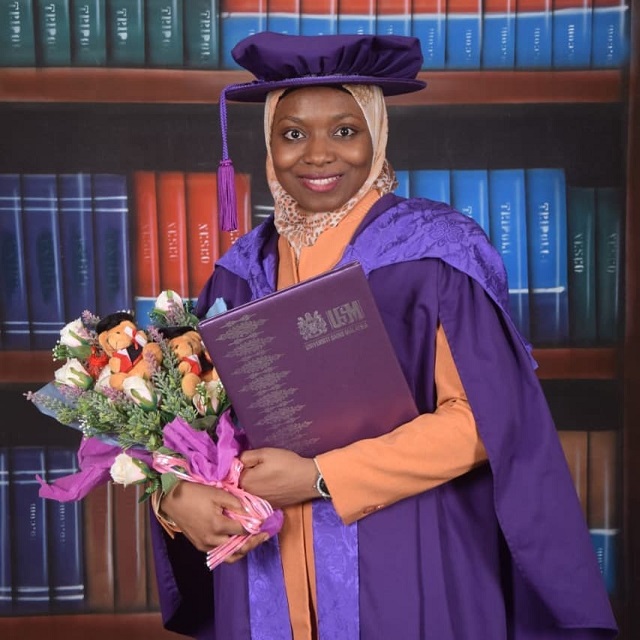
By Sadiya Abubakar Isa, PhD

It is precisely one year since we returned to Nigeria from Malaysia. My experience has been a roller-coaster ride since my return. I’ve seen the good, the bad and the ugly. 

Alhamdulillah for the gift of life and a loving family. The primary reason why we chose to return was that I missed my family so much. My son would always request to see his cousins – “I want to go to ‘Naijilia’, I want to see grandma”, he cried – until my neighbours once pled with us to take him to Nigeria. He has never been there. He just wants to meet his grandparents and cousins as he has only met them via video calls. I responded.

I thought about the consequences of extending my stay abroad; what if my parents also die (like my husband’s)? Does that mean my kids would never see any of their grannies? I pondered and discussed it with my husband. Maybe we should just return home after my viva. We thought it through thoroughly, and home it is. We finalised our decision.

Of course, there were other reasons. Our scholarship tenures ended towards the end of 2020, so if we had chosen to stay back, we would have to work extra hard to manage our finances. Additionally, the world was fighting a pandemic, a not-so-good time to job-hunt. So rather than being stranded abroad, we got additional reasons to fly back home. 

Many people, mainly family and close friends, tried hard to dissuade us from returning, but what do you do with homesickness? Or the fear of losing loved ones (again) without meeting them after seven years of being away? We overlooked all the negative news. We thought we could make a difference. We felt that we could directly contribute our quota to bettering our dear country by returning to Nigeria. We discussed, planned and strategised lots of projects to do when we return, but Nigerians aren’t ready – we realised. 

On that fateful day, we arrived in Nigeria on the 19th of March 2021. From the airport in Abuja down to Kano airport, the manners of the airport officials and the treatment of our luggage, we knew we were ‘home’. 

Sometimes I’m glad I’m home, but I often regret this decision. I have tried to settle down since, but I’m still in the process. Truth be told, if one is entrepreneurial, there are many business opportunities in Nigeria, but its challenges wouldn’t let you achieve the desired results in time. Even if you have a good-paying job, your salary is hardly enough this time, thanks to the inflation everywhere and the devaluation of the Naira. Moreover, with the overwhelming decline in Nigeria’s energy sector, things can only worsen over time. 

The vulnerability of an ordinary citizen in Nigeria is very discouraging, thanks to the exacerbating insecurity in our region. You can’t travel around peacefully. You can’t trust your neighbours, not to mention strangers. You can’t even take off your attention from the kids. So we are always living in fear – fear of the unknown. 

Basic amenities are still not basic in Nigeria. The first time my son experienced a light-out, he asked, “Mama, what happened? Please, put on the light, Mama I can’t see”. It was funny, and we all laughed, but it hit me very hard. 

Adopting has been quite tricky for my kids. We are all Nigerians, but my husband and I are more Nigerian than the kids are. Till today when writing this, they quickly have diarrhoea resulting from food poisoning and difficulties in eating local foods. The worst is when you don’t have good enough hospitals around, and It’s tiring. I can’t count how many times we have been down due to malaria or thyroid fever; watching your child suffer from illnesses that would have otherwise been avoided is appalling. It’s exhausting and sometimes frustrating.

We were mugged at Kofar Danagundi in Kano; we have escaped a series of phone snatching scenes. I have been duped and cheated by people I tried to help out of poverty. I still cannot explain the concept of almajiri to my son. He asked, “where is the ‘almadiri’s [almajiri] mother? Why does he have to beg for food?” I still haven’t answered his questions satisfactorily.

While travelling to Borno in mid-January, I experienced what it really means to be in a war zone after slightly escaping a Boko Haram attack. By the grace of God, we are surviving in this country. When we look back at life, we see how far Nigeria is from the developed and developing world. Even India, which is still struggling with all forms of corruption, offers a better life experience than Nigeria. 

I will not advise anyone to return to Nigeria if you ask me. Nigeria is currently at its worst. So don’t relocate to Nigeria if not for very tangible reasons. If you have a good job in your country of residence, please don’t come back. If you have a scholarship, do your best to prove your worth to be retained there. If you have a valid visa, look for a job; keep searching, make yourself useful in any way possible. If you can afford to stay there, don’t even think of returning. Yes, living abroad is expensive but also efficient.

It could also be exhaustive, but the basic necessities are available and accessible. You may pay too much tax but drive on good roads with cameras. You get to eat good food and sleep without battling mosquitoes. 

So if you choose to return, think about the future of your kids here, think about their safety and think about the opportunities they may be missing because of your decision. But then, Alhamdulillah for everything! 

Dr Sadiya Abubakar Isa can be reached via haleesad@gmail.com.

Nigeria drops to sixth position in Global Terrorism Index

By Muhammad Sabiu

Nigeria is now ranked sixth in the Global Terrorism Index, as the country’s struggle against Boko Haram insurgents gains more victories.

According to the report, Nigeria fell two spots from fourth place, which it had held since 2017.

Nigeria, Syria, and Somalia are the only countries among the ten countries most hit by terrorism to increase their scores from 2020 to 2021, according to the Global Terrorism Index (GTI) issued by the Institute for Economics and Peace (IEP), an independent and non-profit think tank.

The report reads, “Total deaths from terrorism in Nigeria fell to 448 in 2021, the lowest level since 2011. Terror-related casualties dropped by almost half compared with the previous year.

“However, the number of terrorist attacks increased by 49 per cent between 2020 and 2021. 36 per cent of attacks were claimed by ISWAP, Boko Haram being responsible for eight percent and 44 percent not attributed to any group.”

Governor Zulum: Restoring hope amid adversity

By Abdullahi Adamu

His name rings a bell across the landscape of Borno State and Nigeria. Yet, many Nigerians have never met him face to face. Still, his strings of achievements anchored on people-oriented projects have made Governor Babagana Umara Zulum of Borno State a household name in the country, drawing ceaseless applause for him.

But he remains a very simple and unassuming man despite the strategic work he has been doing to change the face of Borno State and restore hope to a people traumatized by ceaseless attacks unleashed by the Boko Haram fighters. Zulum came to the scene when the morale of the people and their psyche had been battered by the evil elements who have continued to distract the polity. These terrorists still steal and destroy whatever is of good report and value to the citizenry.

If the governor had not been on the side of the people, he could have chosen to resign to fate and sit back to moan the atrocities being waged against the state and its people by Boko Haram. But he has refused to act and behave like a typical Nigerian politician who seeks self-gratification over the nation and people. Instead, Zulum has chosen to make a difference in the lives of his subjects and add value to them. The governor has chosen service over propaganda and quality and verifiable projects to add value to his people instead of propaganda which many of his contemporaries deploy as a survival strategy in governance.

The 50-year-old Agricultural engineer, who himself has tasted poverty and hardship, chose to embark on projects that directly impact the people’s lives. And the projects are many and widespread across the length and breadth of the state. They are verifiable and physical for even the blind to see, touch and feel their presence. The projects touch all aspects of development, with education topping the list apparently because the governor comes from the ivory tower, where he has made a mark as a professor of agricultural engineering.

The statistics speak for themselves: “On education, Professor Babagana Umara Zulum undertook 76 capital projects in one year. He created and built 21 primary, secondary and sub-tertiary schools in 13 local government areas. These include a new 60-classroom mega primary school at Njimtilo; 30-classroom mega school at Ajilari Cross, another at Abuja-Sheraton community; yet another in Askira.

“All of these were started and delivered within one year. Six additional new schools were delivered, while 11 are at various levels. Fifty-five existing schools were completed, reconstructed or rehabilitated and equipped across the state. Beyond infrastructure, Zulum regularly appears in schools unannounced. He takes teachers roll call to instil discipline and restore the glory of the public-school system in Borno State,” a report written about him captures boldly.

In health care delivery, the governor has also left an indelible mark within the short time he has spent in the state. “In his first year, Professor Babagana Zulum accorded greater priority to primary healthcare at the grassroots level. In that sector, Zulum undertook 46 projects, from which 37 new primary healthcare centres, PHCs, were established in 17 local government areas. Twelve of these new PHCs have been completed, while 25 are at various stages.

Zulum reconstructed two primary healthcare centres in Tungushe and Walama; and rehabilitated the state’s Psychiatric and Skin Disease hospitals. Zulum rehabilitated two hospitals in Rann and Lassa; and upgraded Biu General Hospital to a specialist level. The Umaru Shehu Specialist Hospital was also remodelled. Zulum also established and funded a Contributory Healthcare Scheme to increase access to quality and affordable healthcare services by the people of Borno State.”

The governor has also extended the area of security, agriculture, and infrastructure to alleviate the suffering of the people who have come under constant attacks by terrorists in the state. Governor Zulum has, through hard work, commitment and dedication to his people, emerged as a true servant/leader.

Abdullahi Adamu sent this article via nasabooyoyo@gmail.com.

Boko Haram will be defeated before 2023 – Zulum

By Ahmad Deedat Zakari

Borno State Governor, Babagana Zulum, had expressed confidence that Boko Haram would end before the end of Buhari’s administration.

He said this on Thursday, February 10, while responding to questions from reporters in Abuja after meeting with President Muhammadu Buhari at the Presidential Villa.

When asked whether it would happen in his administration, he said: “Inshaa Allah. Even now in Borno State, we are doing very well, extremely well.”

He was pressed further if he meant Boko Haram activities would end before 2023. He said: “Inshaa Allah. You know what I mean by Insha Allah, God willing.”

Governor Zulum added that about 30,000 repentant terrorists from Boko Haram and Islamic State’s West African Province (ISWAP) have also surrendered without any incentive from the government.

Kashim Shettima: Principles, courage, conviction cannot kill a man

By Lawan Bukar Maigana

“Cowards die many times before their deaths; the valiant never taste death but once.”

When arguably the all-time world’s greatest playwright, Williams Shakespeare, penned the above immortal lines in Act 2 Scene 2 of Julius Caesar, he must have had a long peep into the future of one of his country’s colonies. Moreover, he must have envisioned a special kind of man who exudes rare courage and sound, consistent principles in all he does and at all times.

He is a man who abandons the bandwagon and chooses to remain on the side of truth, fairness and justice even if that stance is unpopular and can cost him his safety and freedom.

Why do some people have sleeplessness over the courage and audacity of Senator Kashim Shettima, a former Governor of Borno State, over his recent opinions on democracy, politics and good governance in Nigeria? Surprisingly, subtle threats are being expressed to warn him to thread softly in some quarters and platforms.

Kashim Shettima is not your kind of everyday politician. His inspirational life story has been that of courage, conviction and consistency and remaining on the right path, on the side of the oppressed and the vulnerable, through thick and thin.

Charismatic, sound, brilliant and masses-oriented, the qualified agricultural economist has dedicated the better part of his adult life to the service of his beloved people of Borno state.

The above outstanding qualities earned him the highest office in the state in 2011 after he served with distinction in at least four different ministries as Commissioner.

After a brilliant career as a first-rate banker, he was Commissioner for Local Government and Chieftaincy Affairs (2008), Education (2009), Agriculture and Natural Resources, and finally, Health. He then contested the Governorship election in 2011 and defeated Muhammad Goni of the PDP.

His first term in office endeared him to the hearts of the people. He further proved himself to be a compassionate, responsible and responsive leader who was always there to meet Borno people at the point of their need. His emphasis was on youth and women empowerment and infrastructural upliftment of the state.

In one of his most quoted quotes, American civil rights icon, Martin Luther King Jr said: “The ultimate measure of a man is not where he stands in moments of comfort and convenience, but where he stands at times of challenge and controversy.”

The Boko Haram menace brought the rare leadership skills out of Shettima. He stood his ground to protect his people; he never ran away from the battle. Instead, he put his life on the line and confronted the monsters. He mobilized the police, rallied soldiers and established the Civilian JTF, which helped to stem the tide of the insurgency.

In September 2014, Maiduguri, the seat of government, became very vulnerable to being attacked and overran by insurgents. The fear was so intense that notable residents relocated their families to Abuja. However, Governor Shettima, who was out of the country for an official assignment, abandoned everything and returned to Maiduguri in a show of courage and patriotism. On his return, he mobilized residents towards rising in defence of their ancestry, and they succeeded in pushing the enemies back.

Based on the sleepless nights he endured in the latter part of his first tenure – moving from one shooting or bombing scene  to the other with countless bodies and a river flowing with blood and all the back and forth he did with Presidential Villa actors over whose responsibility it was to protect Borno people – most observers thought he would chicken out and not bother to seek the second term in office

He sought and won reelection in 2015 under the All Progressives Congress, APC, and was unanimously chosen as Chairman of the Northern States Governors’ Forum, an umbrella body of Governors in the 19 States in northern Nigeria.

Alongside sincere peacebuilding, Governor Shettima championed the Reconstruction, Rehabilitation and Resettlement of victims of insurgency. He focused so much attention on the expansion and remodelling of existing schools and building new boarding primary and junior secondary schools to cater for over 50000 unaccompanied orphans whose parents were killed by insurgents across the 27 local government areas of the state.

Shettima also identified and supported a fine, fantastic gentleman as successor so that the journey of good governance he started would not perish on the way. Since coming to power, Professor Babagana Zulum has elevated good governance to world-class. Zulum’s excellence is a massive credit to Shettima. Unlike others, the two great men complement each other a lot and have not been involved in any fight.

In February 2019, Shettima’s glittering political career entered a new chapter when he won the election to represent the people of Borno Central at the Senate. Since then, his voice has been one of the most audible and laudable in the fight for justice and rights for all Nigerians in the Senate.

Speaking truth to power is part of Shettima’s DNA, and no level of elite conspiracy or underhand, high-wire, discreet manipulations, schemings or threats would take that away.

A popular adage in street parlance says: “Something must kill a man.” It is often said to justify some risk-taking that could end a man’s life. But the good people of Borno and other Nigerians of good conscience will not sit by and watch any harm come to Shettima on account of his principled stand on justice, equity and fairness as we move towards 2023.

His political choices and comments are his entitlements. However, if some powerful, vested interests are so uncomfortable with the truth that they want to unleash ‘undesirable elements’ on him, the people are watching with keen eyes and vigilance.

The people of Borno and their allies outside the state will employ all legally permissible and legitimate means to protect Shettima from any form of harassment and intimidation. They will continue to support and protect him till he accomplishes his mission of doing what is just and fair to all and sundry in the polity, not only in Borno, North-East but Nigeria at large.

Lawan Bukar Maigana wrote from Wuye District Abuja and sent the article via Lawanbukarmaigana@gmail.com.
I don’t have ties to Boko Haram — ex-Borno governor Modu Sherrif

By Muhammad Sabiu

Ali-Modu Sheriff, the former governor of Borno State, has refuted charges that he has ties to Boko Haram terrorists, claiming that security services have been probing him since leaving office in 2011.

In an interview with the News Agency of Nigeria (NAN) on Sunday in Abuja, Victor Lar, the Ali-Modu Sheriff Campaign Organisation director, refuted the charges.

Mr Sheriff, a frontline All Progressives Congress (APC) national chairmanship aspirant, a two-term former governor of Borno, and a former senator had no ties to Boko Haram, according to him.

“Sheriff’s name is not on the list of sponsors of Boko Haram released by the United Arab Emirates (UAE). Security agencies have been investigating him since he left office in 2011 and had not found him guilty of the allegations.

“If he was involved, he would have been arrested, or his involvement made public. In any case, I challenge anyone with information proving his involvement to come forth with such,” he added.

Who will save our children?

By Lawi Auwal Yusuf

Any sympathetic person will surely ask himself these questions over the unfortunate fate of Almajiris: what wrong have they done to deserve such ruthless treatment? Are they not humans? Are they divinely condemned? Is it because we have heartless hearts? Or is it just because we have brainless brains? 

However, the Social Contract Theory extrapolates the relationship between the State, Citizens and Laws. Both the state and citizens have an overwhelming obligation to obey the law. These laws made it possible for leaders to assume the office and couples to marry and have legitimate children. Through these laws, leaders must cater to the needs of people and parents to take care of their children. Ultimately, justice is the philosophical underpinning and moral wisdom behind this idea. 

I wonder why leaders and parents breach the trust bestowed on them. Indeed, we need a professor in the law of trust to prove this before a jury so that the culprits will be locked up in prisons. 

Politicians have made these innocent children scapegoats of their misrule. They are severely castigated for offences committed by the government. Also, the lackadaisical and pitiless attitudes of parents worsen their plight. Even animals don’t dump offspring. On the contrary, they vigilantly look after them and guard them fiercely against any harm until they can take care of themselves.

Everyone abandons these children. They are left on their own to fend for themselves. Therefore, they scavenge through garbage, looking for food, wearing shabby clothes. They wander freely without a specific purpose or destination, with no shoes in the scorching heat. They equally have no one to attend to them when they fall sick. It seems like the ancient Indian caste system is gradually manifesting in 21st century Nigeria, and Almajiris form part of the Dalit (Untouchables) social group. 

When you ask them to define democracy, they will tell you that “it’s a government of the elites, for the elites and by the elites.” This is because it is purposely designed to cater to the needs of nobles only in their perception. It’s nothing to commoners but an inevitable woe. So they see it as subjugation, tyranny and distress. 

Almajiris have carried the cross for too long. They’re tired of this impudent desertion and have endured this problematic situation, and cannot withstand it any longer. Finally, they’ve been pinned down by the neck and are crying out for help with a thunderous scream, “we can’t breathe!” But, of course, this is cruelty in its cruellest form. 

These children are the future custodians of our society. Their desolation denotes that we undermine its continuity, progress and prosperity. We will bequeath to them a country that negligently failed to help them, forsake their welfare and future. They will take over a nation unable to develop humans, plagued by injustice and misery. Hence, it is unlikely that they will be patriotic to Nigeria. Is this what we are preparing for the next generation?

Indeed, they will remember us as imprudent forefathers that ruined their lives, put them in dismay and plotted the doom. The ones that disappointed them, those that couldn’t save them from grief. Those ancestors whose labour had been in vain. Indeed, they will utterly forget us, let alone pray for our eternal rest. 

We expect Tsangaya schools to consistently roll out erudite personalities, honourable scholars like late Dr Ahmad Bamba, Sheikh Ja’afar Mahmud Adam, Prof. Isa Ali Pantami or prof. Muhammad Sani R/Lemo. Unfortunately, we saw something entirely different. 

Nowadays, Almajiris are not purposely taken to Tsangaya for learning. Due to a lack of awareness concerning contraceptives, parents incessantly born children they can’t support. At long last, they discard them. How will a minor learn without provision for his necessities, vehement supervision of parents and also fend for himself far away from home? It can NEVER be possible.  

Let’s assume there are only one million Almajiris in the North, and only 5% ended up in criminality. Hence, there will be an additional 50,000 criminals to terrify the region, which is about 15% of the police workforce. So, how many more millions are there? 

Consequently, we are paying the price for our actions and inactions. We are suffering due to failure to resolve this criminogenic problem. We’ve undergone the agonies of Maitatsine dogmatism, and now we are in the bondage of Boko Haram, banditry, kidnappings, to mention a few. Have we learned lessons, or we will remain indifferent? Or are we now determined to dispel the injustice and save these downtrodden children? 

Lawi Auwal Yusuf wrote from Kano, Nigeria. He can be reached via laymaikanawa@gmail.com. 

Of criminality, economic stability, birth control and northern Nigeria

By Zakari Abubakar

It is evident that whenever there is an upsurge in criminal activities in parts of northern Nigeria, a perennial debate usually rears its head among those interested in the root causes of the problem. This is understandable. Without identifying the cause of a problem, its solution may not be in the offing. Like virtually every year, this debate is also gaining traction in this early part of 2022.

Admittedly, this view adds to the existing number of discussions on this topic. Those who are following the debates are not unaware that there are a group of people who link the rise in criminal activities in the north and the rate of excruciating poverty among its people, mainly to the large number of children born in virtually every family in the region. This group of people base their argument SOLELY on the superficial and generalised assumption that people with a large number of children, more often, engage in irresponsible parenting.

Another reason why this group of people see an individual with a large number of children as a potential source of criminality and economic stagnation is that Nigerian authorities have for long been finding it difficult to provide social services such as education, electricity and other life essentials to these growing number of citizens which leads to more people becoming poor. This is where I find their argument too simplistic. Because the same authorities are providing these services to themselves, their families or their cronies.

Going back to their first argument, it is glaringly verifiable that for every individual with many children who fail to cater for them, hundreds, if not thousands, bore many children and saw to their responsible upbringing. This example is on the level of individuals. There are many more such examples on the societal level. For instance, several countries and regions of the world have nearly the same population as northern Nigeria or are more populous but are not facing the same challenges.

Those societies have considered such a phenomenon as a gift and therefore utilise it positively. To buttress this point, the five most populous countries in 2021, according to sources, are China, India, the United States, Indonesia, and Pakistan. Although these countries may be facing their security and economic challenges, the standard of living in those societies is by far more robust than what is obtainable in northern Nigeria.

To cite a specific example: about 90% of China’s population is Han Chinese. They are over a billion people, yet, there is no accusation from the rest of the population in that country or the Hans themselves that the Hans are a potential source of poverty or criminality. Similarly, the most populous state in India is Uttar Pradesh, with over 200 million inhabitants. But go to India. How does Uttar Pradesh fare compared to the rest of Indian territories in terms of economic prosperity?

No one is disputing that northern Nigeria is recently replete with a high rate of criminality occasioned by poverty among its growing population. But to solely link this problem with the region’s birth rate is to accord the topic attention that is less than it badly desires. For example, what about the other seemingly systemic problems that have to do with governance and political leadership?

One may say, why do people resort to adding problems for themselves by producing more children since the government failed to sustain their needs? Then I would say, instead of blaming those who fail to provide those essentials (though they are providing them for themselves and their families), we resort to blaming the poor, despite his effort to always get himself out of the effects of poor/bad political leadership?

Elsewhere, other regions of the world are complaining of a decline in their population. Thus, they outsource other remedies for their problems, like encouraging men and women to engage in economic activities. Therefore, no matter how small, we should demand accountability from our political leaders and seek other possible options that are more viable than resorting to birth control, which has its implication on man’s overall health.

Zakari Abubakar is with the Department of Physical and Health Education, Aminu Saleh College of Education, Azare. He can be contacted via zakariabubakarnng@gmail.com.