Boko Haram

Army captain, soldier slain in fresh BH attack in Borno

By Uzair Adam

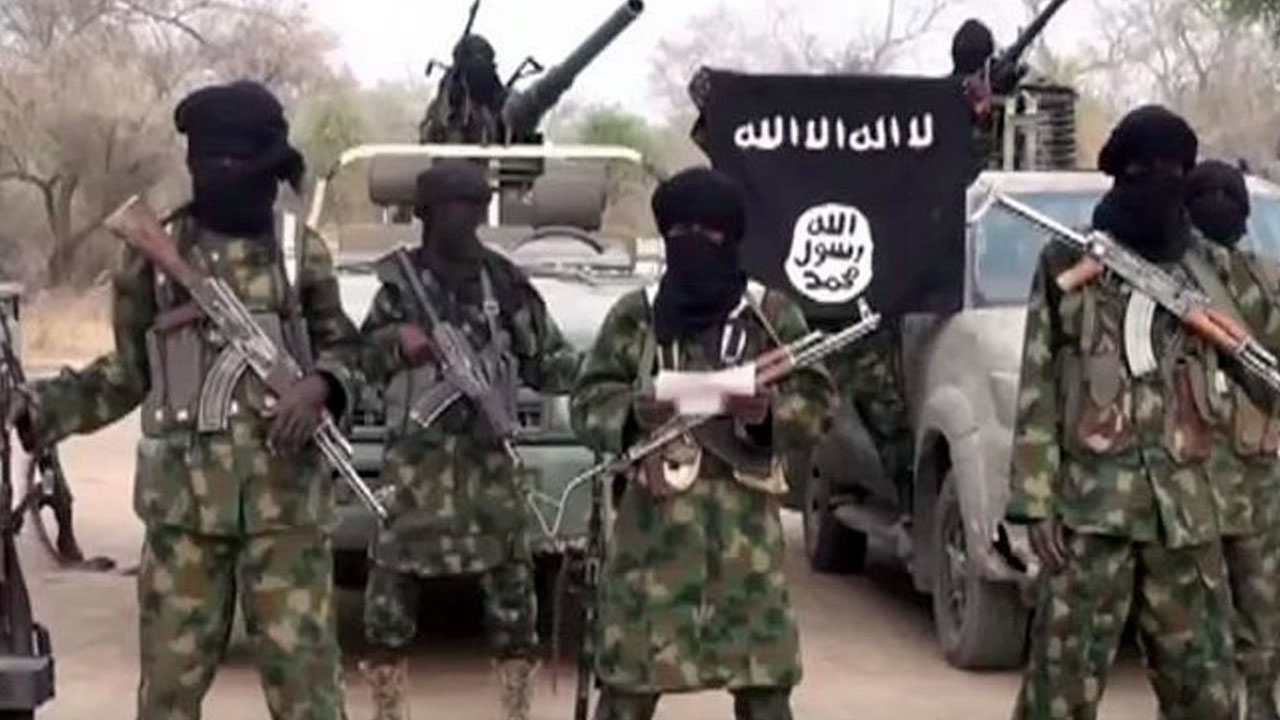
An army captain and a soldier have been killed following a fresh attack by Boko Haram insurgents in Izge community, Gwoza Local Government Area of Borno State.

The terrorists reportedly stormed the community around 1 a.m. on Wednesday and engaged troops in a gun battle.

Confirming the incident, the Emir of Gwoza, HRH Alhaji Mohammed Shehu Timta, said the attackers met strong resistance from the military and local security groups.

“It’s true that my people in Izge community came under Boko Haram attack around 1 a.m. Unfortunately, a captain and a soldier paid the supreme price,” he said.

He, however, noted that the joint efforts of the military, Civilian JTF, local hunters, vigilantes, and community members led to the killing of three insurgents.

He added that the attackers abandoned more than 10 motorcycles and weapons before fleeing into the bush, where security operatives are currently pursuing them.

While praying for the souls of the fallen soldiers, the monarch applauded their bravery and sacrifice in defending the area.

“May Allah (SWT) grant the departed souls Jannatul Firdaus. Our gallant men are still in the bush, sacrificing their lives to maintain peace,” he said.

He also appreciated the Borno State governor, Prof Babagana Umara Zulum, for the consistent logistics support and urged the federal government to equip security operatives with advanced technological tools to fight terrorism.

The North East region has witnessed a spike in insurgent attacks. On Saturday, at least four soldiers were killed in an attack on the 27 Task Force Brigade in Buni Yadi, Gujba LGA of Yobe State, where equipment was also destroyed.

That attack occurred less than a day after the North East Governors Forum met in Damaturu, adopting a multidimensional approach to address insecurity in the region.

Buni Yadi is about 65 kilometers from Damaturu and is the hometown of the state governor, Mai Mala Buni.

The latest assault comes two weeks after President Bola Tinubu charged service chiefs to end the persistent killings.

Jihadist resurgence in Northeastern Nigeria raises alarms

By Muhammad Abubakar

A recent surge in jihadist attacks in northeastern Nigeria has sparked concerns over a potential comeback of extremist groups in the region. Over the weekend, at least 48 individuals lost their lives in coordinated assaults across Adamawa and Borno states, marking one of the deadliest periods in recent months.

Security analysts attribute this uptick in violence to a reduction in infighting between Boko Haram and its splinter group, the Islamic State West Africa Province (ISWAP). The groups have reportedly adopted advanced tactics, including the use of armed drones and roadside explosives, indicating increased tactical support and funding from the Islamic State.

In Borno State, Governor Babagana Zulum has warned of militant regrouping in the Lake Chad and Sambisa Forest regions, noting a lack of strong military response. The Nigerian military has yet to comment on the situation.

The resurgence of these extremist groups poses a significant threat to the stability of northeastern Nigeria, a region that has endured over 15 years of insurgency.

Analysts caution that without a robust and coordinated response, the region may witness a return to the heightened levels of violence experienced in previous years.

Assessing Ribadu’s claim: Has insecurity reduced by 90% in Nigeria?

By Zayyad I. Muhammad

Nigeria’s National Security Adviser (NSA), Mallam Nuhu Ribadu, recently claimed that the country has recorded over 90% improvement in security under President Bola Ahmed Tinubu’s administration. He made this assertion in Jos, Plateau State, during a press briefing following a strategic meeting with the Commander of Operation Safe Haven, Major General Folusho Oyinlola. The meeting was convened after a deadly gunmen attack on the Bokkos community, which tragically claimed the lives of hundreds of residents.

Given the context of recent violence, Ribadu’s statement sparked mixed reactions from across the political spectrum. Critics argue that the NSA’s comments are aimed at shaping public perception as politicking for the 2027 general elections approaches. They view the remarks as part of a broader political narrative to build confidence in the administration. On the other hand, supporters commend Ribadu for leading an effective national security strategy, asserting that the improvements are tangible and worth acknowledging.

However, beyond partisan sentiments and political interests, it is essential to examine Ribadu’s claim from an objective standpoint grounded in verifiable data and realistic context. Security issues are too critical to be reduced to rhetoric, hey must be measured by real outcomes that affect the lives of everyday Nigerians.

Regardless of our political leanings, there have been undeniable improvements in some of Nigeria’s most dangerous zones. For example, the Birnin Gwari–Lagos highway in Kaduna State, which was shut for nearly a decade due to the menace of armed bandits, has now reopened to motorists, especially heavy-duty vehicles that previously avoided the route. The once-abandoned Birnin Gwari cattle market, inactive for over ten years, is now gradually returning to life with commercial activity.

Similarly, the Abuja–Kaduna highway, previously infamous for rampant kidnappings and ambushes, is now operational 24 hrs under constant military and police surveillance. Other major highways, such as the Kaduna–Kano expressway and the Jos–Akwanga–Lafia–Abuja corridor, now also witness 24-hour vehicular movement, marking a sharp contrast to the fear and hesitation that characterized travel in these areas just a few years ago.

Still, it’s important to remember that security is both delicate and dynamic. A full year of relative peace can be overshadowed by a single horrific incident. Groups like Boko Haram, ISWAP, and various bandit factions, such as the Lakurawa and Ansaru cells, still carry out attacks on soft targets in rural and semi-urban areas. While the overall frequency and scale of these attacks may be decreasing, their sporadic nature continues to pose serious challenges.

Between 2022 and 2024, several Nigerian security and intelligence agencies have reported significant gains. The Defence Intelligence Agency (DIA) indicated a 65% reduction in overall crime and criminality nationwide since May 2023. This figure is based on cumulative data from military operations, police reports, and inter-agency assessments.

The Department of State Services (DSS), particularly in the Federal Capital Territory (FCT), recorded a significant decline in high-profile crimes, including kidnappings, armed robberies, and terrorist threats, through 2023 and into early 2024.

The Nigeria Police Force also published extensive data on its security efforts: between 2023 and early 2024, police operations led to the arrest of 30,313 suspects linked to serious crimes such as kidnapping, armed robbery, cultism, and banditry. In the same period, 1,984 illegal firearms were recovered, along with 23,250 rounds of ammunition. Additionally, 1,581 kidnapped victims were successfully rescued across various states.

The proliferation of small arms and light weapons has long fueled Nigeria’s insecurity. However, between 2022 and 2024, the National Centre for the Control of Small Arms and Light Weapons (NCCSALW) recorded historic achievements. In February 2023, the Centre announced that it had recovered more than 10,000 small arms and light weapons from non-state actors during nationwide disarmament operations. By February 2024, the total number of retrieved weapons had increased to 20,000 firearms and over 60,000 units of ammunition.

Furthermore, in September 2024, the NCCSALW undertook the destruction of 30,132 recovered weapons, ranging from decommissioned and unserviceable arms to illicitly owned firearms.

The Nigerian Armed Forces, particularly the Army, have achieved notable success over the past three years. Between 2022 and 2025, military operations resulted in the neutralization of more than 8,034 terrorists across various theatres of operation, including the North-East, North-West, and North-Central regions. In February 2024 alone, 105 terrorists were eliminated during targeted counterterrorism operations. and 140 capture

A total of 6,376 kidnapped victims were rescued from insurgent enclaves and bandit hideouts in 2024 alone, thanks to joint operations involving the Army, Air Force, and local vigilante groups. These successes have contributed significantly to restoring public confidence in the state’s ability to respond to threats.

Additionally, by December 2024, the Nigerian military had dismantled numerous terrorist camps and degraded the operational capabilities of insurgent groups in several flashpoints. More than 20 high-profile bandit leaders and commanders were eliminated in precision operations, including:

 1. Ali Kachalla (Ƙawaje)

 2. Kachallah Dogo Kwaddi

 3. Lawali Dodo

 4. Ɓoderi

 5. Sani Wala-birki

 6. Kachallah Hana-Zuwa

 7. Damina

 8. Kachalla Sani Dangote

 9. Kachalla Adamu

 10. Halilu Sububu

 11. Baleri

 12. Modi Modi

 13. Kachalla Mai Shayi

 14. Kachalla Tsoho Lulu

 15. Ibrahim Nagure

 16. Kachalla Makore

 17. Bulak

 18. Tukur Sharme

 19. Hassan Ɗantawaye

 20.Ɗan-Isuhu

These names had long terrorised communities, operated illegal taxation systems, and masterminded large-scale abductions. Their deaths signal a turning point in Nigeria’s war against insecurity—at least in the short to medium term.

Critics, supporters, and objective observers alike hold valid perspectives on Ribadu’s claim. Security cannot be judged solely by statistics or isolated incidents—it must be assessed holistically, with a view to sustainability. While it would be inaccurate to declare total victory over insecurity, the data and field reports suggest that Nigeria is making measurable, strategic progress.

As Nigeria continues to grapple with complex internal threats, public expectations remain high. Citizens want not just temporary relief but long-term stability. Ribadu’s statement may be politically timed, but the figures back up his assertion, at least in terms of trend and direction. Whether or not one agrees with the 90% figure, one thing is clear: the tide appears to be gradually turning in favour of the state.

The challenge now is to sustain these gains, institutionalise reforms, and ensure that security is perceived and lived by every Nigerian in every part of the country.

Zayyad I. Muhammad writes from Abuja via zaymohd@yahoo.com.

United States reviews past aid to Nigeria, condemns Boko Haram atrocities 

By Muhammad Sulaiman

The U.S. government has announced plans to investigate past foreign aid allocated to Nigeria and other countries, following President Donald Trump’s 90-day suspension of foreign assistance. 

The decision comes amid concerns about global destabilization and whether aid aligns with American interests.

The U.S. Mission to Nigeria confirmed ongoing efforts to track past assistance provided by the U.S. government. 

The Mission also condemned the violence and loss of life caused by Boko Haram, the extremist group designated as a Foreign Terrorist Organization by the U.S. Secretary of State in November 2013.

The review aims to ensure transparency and accountability in aid distribution while addressing security challenges in affected regions.

Congress admits U.S. government’s financing Boko Haram, ISIS, other terror groups

By Maryam Ahmad

A groundbreaking congressional investigation has forced lawmakers to acknowledge a long history of U.S. government involvement in financing extremist organisations, including Al-Qaeda, Boko Haram, the Taliban, and ISIS.

The findings, revealed in a classified report leaked to the press, outline decades of covert operations, indirect funding, and intelligence blunders that have inadvertently empowered terrorist groups worldwide.

The report details how U.S. aid, weapons, and financial resources intended for allied forces or opposition groups often ended up in the hands of militants.

It cites instances where American-made arms supplied to anti-Soviet fighters in the 1980s ultimately bolstered the Taliban and where funding to Syrian opposition forces found its way to ISIS affiliates.

Lawmakers from both parties have responded with shock and calls for greater oversight. “This is a sobering moment,” said Senator James Holloway (R-TX). “We must rethink our foreign policy strategy to ensure that American resources are never again used to fuel extremism.”

The White House has yet to issue a formal response, but officials insist that past mistakes should not overshadow ongoing counterterrorism efforts. Meanwhile, critics argue that these revelations confirm long-held suspicions about U.S. interventionist policies and their unintended consequences.

The investigation’s full findings are expected to be declassified in the coming months, raising further questions about accountability and the future of American foreign aid.

World Economic Forum: Pan-Africanism in VP Shettima

By Lawan Bukar Maigana

I have always maintained the opinion that aid is a mechanism used by the so-called powerful nations to underdevelop weaker countries—though not deliberately, especially in African countries where insecurity is caused by terrorism or ethnic cleansing, which is a crime against humanity or genocide.

In Africa, particularly Nigeria, our major problem is poverty—a singular issue that has metamorphosed into intractable insecurities, including but not limited to the Boko Haram insurgency, banditry, and kidnapping, among others. Many people might argue that Boko Haram and the Biafra movements are ideological in nature, but the truth is that those ideological elements have long since faded, leaving the agitations as an economic venture for certain nefarious countries and individuals to exploit.

They recruit jobless, uneducated, desperate, and misguided young people into their criminal community to kill not just their enemies but anyone who upholds peace and stability. I was born and raised in Maiduguri, and I’ve never left the ‘Home of Peace’ even for a day because of the insurgency—not even when it was at its peak. Therefore, I am qualified to say a few things regarding the phenomenon. We’ve witnessed how young people were recruited into the deadly and infamous sect known as Boko Haram.

Some were paid 50k weekly, some received 150k to 300k monthly, depending on the nature of the work assigned to them, and some of the payments were in hard currencies. The same thing happens in the North Western region of Nigeria, where banditry and kidnapping thrive in the open — dozens of lives are lost, and women and children are left in depression, poverty, and psychological trauma. 

This has attracted many INGOs and subsequently led to the formation of local NGOs in the country, whose assistance is largely unsustainable and dependent. They provide cash and food items, with only a few engaging in ‘goat and sheep empowerment’, similar to the initiative recently unveiled by the Kano State Government. That initiative, too, is ineffective, as more than two-thirds of the beneficiaries, if not all, sell these items at the distribution venue. This arises because it is aid, not a partnership for economic growth.

Vice President Kashim Shettima, who is attending the World Economic Forum in Switzerland, shares my opinion. His remarks reflect a deep understanding of global economic dynamics and the need for sustainable development in Africa. Leaders like him talk about Nigeria’s untapped potential as a partner for global powers and investors. 

Instead of perpetuating the cycle of aid dependency, he spoke about the urgent need for the world to recognize Nigeria’s potential as a hub for industrialization, which would provide opportunities for millions of youth and contribute to global economic growth.

Africa, and particularly Nigeria, has long received foreign aid, often with good intentions but yielding unsustainable results. Aid might address immediate crises, but it does not tackle the root causes of poverty or unemployment. Instead, it fosters dependency, undermines local capacity, and creates temporary solutions. As Sen. Shettima’s example illustrates, Nigeria does not need fish handed to it; it needs to be taught how to fish through strategic partnerships that prioritize industrialization, skill development, and innovation.

By working together to build industries, Nigeria can unleash the potential of its vast, youthful population and ensure long-term, self-sustaining growth.

World powers and private investors must recognise Nigeria for what it truly is: a land of opportunity. With a population of over 250 million, Nigeria represents one of the largest consumer markets globally, along with an abundance of natural resources and human capital. Establishing industries in sectors such as manufacturing, technology, agriculture, and renewable energy would not only tackle the country’s unemployment crisis but also offer global investors access to untapped, profitable markets.

Partnerships that create factories, manufacturing plants, and tech hubs will empower Nigeria’s youth, reduce migration pressures, and ultimately benefit the global economy. The need for industrialisation cannot be overstated. Nigeria’s youths, brimming with talent and ambition, are eager to contribute meaningfully to the nation’s development. 

However, without opportunities, many remained unemployed, looking forward to migration in search of greener pastures. The international community can help transform Nigeria into a global production hub by establishing industries and leveraging its demographic dividend to drive innovation and development. This is the position of Sen. Shettima, who advocates for economic empowerment rather than reliance on foreign assistance.

Furthermore, industrialisation offers a win-win scenario for both Nigeria and the world. While Nigeria gains employment opportunities, technological transfer, and a diversified economy, global powers and businesses secure access to a vibrant and emerging market. Beyond economic benefits, these partnerships strengthen political stability, reduce security threats, and position Nigeria as a strong ally on the global stage. 

Sen. Shettima’s representation at the World Economic Forum emphasised this potential as he spoke about Nigeria’s challenges and its vast opportunities for collaboration and growth.

The message is that Africa, particularly Nigeria, does not require handouts. It needs partnerships that promote self-reliance, innovation, and sustainability. The world must transition from giving aid to creating opportunities. Let industries rise, let innovation flourish, and let Nigeria demonstrate to the world that, with the right tools and partnerships, it can be a formidable force. 

Lawan Bukar Maigana, Daily Trust’s 2024 Unsung Hero, writes from Maiduguri, Borno State, and can be reached via email: LawanBukarMaigana@gmail.com.

Shocked by ISWAP attack, Tinubu calls for enhanced military measures

By Abdullahi Mukhtar Algasgaini

President Bola Tinubu expressed his condolences to the soldiers who lost their lives in an attack on a military base in Sabon Gida, Damboa, Borno State.

Members of the ISWAP (Islamic State West Africa Province) group launched the attack at dawn on Saturday, using heavy military vehicles and motorcycles. The attack targeted the military base in Sabon Gari, located in Damboa Local Government Area, Borno State. They set the base on fire, including military vehicles, as confirmed by several military sources who requested anonymity due to restrictions on speaking about the matter.

Fighter jets dispatched from Maiduguri, located 100 kilometres (62 miles) away, retaliated against the attackers as they tried to flee.

In a statement released by the President’s spokesperson, Bayo Onanuga, Tinubu expressed deep sorrow for the loss of six brave soldiers who died in the terrorist attack on January 4th. The President has ordered a full investigation to determine the cause of the incident and ensure that it serves as a lesson to prevent future occurrences.

“The actions taken by the military demonstrate our strength and readiness to confront threats and eliminate them for the safety of our country. This operation highlights our commitment to fighting terrorism and banditry and working towards a peaceful and secure future for all Nigerians,” the President stated.

Tinubu further expressed his gratitude and sympathy to the soldiers and other security personnel on behalf of the grateful nation. “Your dedication and sacrifice will not be in vain. We stand with you 100% in this fight against these threats,” he affirmed.

The Chief of Army Staff also commended the military’s swift and decisive response, particularly the air support, which successfully struck many of the terrorists and destroyed their equipment as they attempted to escape.

According to Tinubu, the airstrike resulted in the killing of several terrorists and the destruction of their resources. The President urged the military to take further steps to launch direct assaults on bandits and terrorist camps.

He emphasized that special attention should be given to the North-Western region, where these criminal groups continue to pose a threat to the lives and property of innocent rural communities.

Tinubu also called on Nigerians and the media to support the military’s efforts to restore peace and security in the country.

Borno police recover 8 unexploded devices, reassure public of safety

By Uzair Adam 

The Borno State Police Command has successfully recovered eight unexploded devices from the Dala and Gwange areas of Maiduguri, the state capital. 

This discovery was made on Friday following distress calls about unidentified objects suspected to be explosive ordnance.

According to ASP Grace Michael, the command’s Deputy Public Relations Officer, the police received a distress call about unidentified objects clustered near an uncompleted building in the Dala-Abuja Talakawa Area, Maiduguri. 

The police swiftly moved to the scene and recovered six projectiles and one unexploded mortar bomb.

Later that day, the police received another distress call from the Gwange Area about an unidentified object washed ashore on the Gwange river bank. 

The police quickly recovered one unexploded Hand Grenade (UXO).

Preliminary investigations revealed that the ordnance was washed ashore due to the recent devastating flood incident in the state. 

The Borno State Commissioner of Police, CP Yusufu Lawal, reassured residents of the command’s commitment to ensuring public safety and security.

UNICEF nurse escapes ISWAP captivity after six years

By Uzair Adam 

A nurse abducted by ISWAP terrorists in 2018 has regained her freedom after enduring six years in captivity.  

The nurse, Alice Loksha, was taken alongside two other female health workers on March 1, 2018, while working at a United Nations Children’s Fund (UNICEF) facility in Rann, Kala Balge Local Government Area of Borno State.  

Speaking to journalists at Maimalari Cantonment in Maiduguri on Friday, Kenneth Chigbu, Deputy Theatre Commander of the Joint Task Force (JTF) Operation Hadin Kai, disclosed that Loksha escaped from captivity and was found in Geidam, Yobe State, on October 24, 2024.  

Chigbu revealed that the 42-year-old endured forced marriages with two ISWAP commanders and faced severe conditions during her captivity.  

“She was initially held in Tumbuma for two days before being relocated to Kwalleram, where she spent seven months and was forced into marriage with a terrorist leader named Abu Umar. 

“This marriage resulted in the birth of her son, Muhammad. Abu Umar was later killed during a gunfight with troops in 2022,” Chigbu said.  

After Abu Umar’s death, Loksha was forced into another marriage with an ISWAP commander named Abu Simak in 2022. However, he was later banished by his fellow terrorists to the Dogon Chukwu camp. 

Loksha managed to escape from this camp through the Diffa axis and reach Geidam, where she reported to JTF troops on October 29.  

“She has since undergone medical evaluation and received humanitarian support,” Chigbu added. 

Chigbu also confirmed the escape of Fayina Ali, the younger sister of the late Samuel Andrew, a soldier who served under the 212 Battalion. 

Fayina was abducted by ISWAP on October 19, 2022, while travelling to Maiduguri to process her late brother’s death benefits.  

“Fayina was held captive in Kangarwa for nine months before being transferred to Tumbuma for four years. She was later returned to Kangarwa, where she remained for another year before escaping,” he said.  

Both women were received by Zuwaira Gambo, Borno State’s Commissioner for Women Affairs and Social Development. 

Gambo assured that they would undergo psychosocial support and rehabilitation before being reintegrated with their families.  

“This marks a significant step in their recovery and reintegration process,” Gambo said.

President Tinubu condoles with Yobe over killings, promises to bring perpetrators to justice

By Abdullahi Mukhtar Algasgaini

President Bola Ahmed Tinubu commiserates with the government and the people of Yobe over the tragic loss of lives at Mafa in Tarmuwa Local Government Area of the state.

President Tinubu also extends his condolences to bereaved families, and condemns the killings as an atrocious and cowardly act of terror by a degraded group of criminals.

He prays for the repose of the souls of the deceased, speedy recovery for the wounded, and assures the people of Yobe State that the perpetrators of this sinister act will have an inevitable encounter with justice.