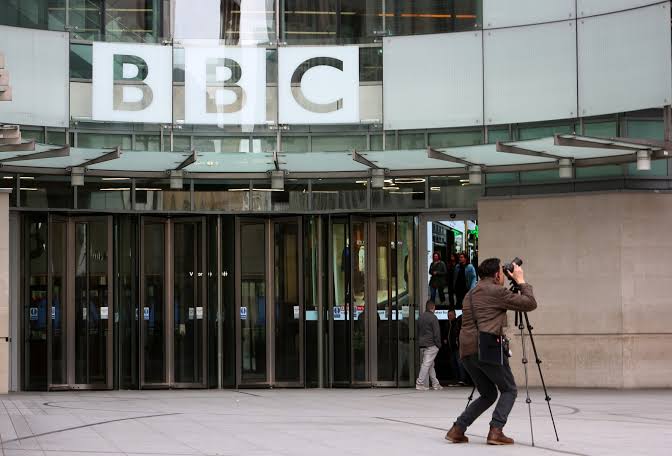
BBC

BBC bans use of “kidnapped” in Maduro arrest coverage, contradicts Trump

By Abdullahi Mukhtar Algasgaini

A directive from BBC News editors instructing journalists not to describe the arrest of Venezuelan President Nicolas Maduro as a “kidnapping” has sparked controversy, placing the broadcaster at odds with U.S. President Donald Trump’s own terminology.

Socialist commentator Owen Jones revealed an internal BBC memo on X, which stated that while journalists could use “captured” (if attributed to U.S. sources) or “seized,” they must “Avoid using ‘Kidnapped.’

“This editorial guidance clashes with comments from President Trump. When asked about Venezuelan Interim President Delcy Rodríguez’s use of the term “kidnapping” for Maduro’s detention, Trump told reporters aboard Air Force One, “It’s alright. It’s not a bad term.”

Maduro and his wife, Cilia Flores, pleaded not guilty in a New York court to narco-terrorism and cocaine importation conspiracy charges.

During the hearing, Maduro declared he was “kidnapped” and “a prisoner of war,” while Flores asserted her status as Venezuela’s first lady.

Following the operation, Delcy Rodríguez, Maduro’s former vice president, was sworn in as Venezuela’s new leader in Caracas. Trump asserted the U.S. was now “in charge” of Venezuela, warning its interim government to cooperate or pay a “very big price.”

BBC suspends Hausa Service editor Aliyu Tanko, rejects his resignation amid probe

By Muhammad Abubakar

The BBC has suspended Aliyu Tanko, the editor of its Hausa Service, due to bullying allegations, and has refused his resignation attempt.

Tanko, who took charge of the service in 2020, was handed a three-month suspension after former staffer Halima Umar Saleh accused him of mistreatment. The BBC has now launched a full investigation, with a team flown in from London to Abuja.

Sources say Tanko tried to resign a day after his suspension, but the corporation refused, insisting he must follow due process — either serve a two-month notice period or pay in lieu.

In an interview with Daily Nigerian, Tanko confirmed that he had resigned but declined to comment on the allegations. Attempts to reach him directly were unsuccessful.

Halima Umar, now a Senior Digital Editor at TRT Africa, had earlier spoken out in an interview with Arewa24, alleging Tanko maltreated her during her BBC days. The clip was later pulled down, sparking debate on social media.

BBC Hausa, with more than 40 staff across Nigeria and beyond, is the corporation’s biggest African language service. It reaches over 23 million weekly radio listeners and drives 10 million website visits. 

Under Tanko’s leadership, the service rolled out hit shows like Daga Bakin Mai ItaKu San Malamanku, and Mahangar Zamani.

Louis Theroux explores life inside Israel’s West Bank settlements in new BBC documentary

By Muhammad Abubakar

Acclaimed British documentary filmmaker Louis Theroux returns to the screen with his latest project, The Settlers, an in-depth look at the controversial and deeply divisive issue of Israeli settlements in the occupied West Bank.

Premiering this week on BBC Two, The Settlers offers viewers unprecedented access to life inside some of the most ideologically driven and politically sensitive Israeli settlements.

Known for his immersive style, Theroux embeds himself in communities where religious conviction and nationalist sentiment run high, engaging with settlers, Palestinians, and human rights activists alike.

The documentary explores the motivations behind the settlers’ presence in the region, the tensions it creates with Palestinian residents, and the broader implications for peace in the Middle East.

Theroux approaches the subject with his signature calm and probing demeanour, seeking to understand rather than judge, even as he confronts conflicting worldviews and stark realities on the ground.

Critics have praised the documentary for its nuanced storytelling and bold exploration of one of the most intractable issues in modern geopolitics.

As Theroux notes in the film, “What’s striking is not just the conflict, but the normalization of it — the way people live their daily lives in a place most of the world sees as a flashpoint.

The Settlers is currently available on BBC iPlayer and will be broadcast internationally in the coming months.

Minister of Information urges international media to provide balanced and unbiased reporting

By Anas Abbas

The Minister of Information and National Orientation, Mohammed Idris, has called on international media outlets to provide fair, accurate, and objective coverage of Nigeria.

Receiving a BBC delegation in his office on Thursday, August 15, Idris emphasized the importance of balanced reporting, highlighting both challenges and positive developments in the country.

Idris emphasized the importance of balanced and unbiased reporting and highlighted that Nigeria, like other countries, faces challenges. He also urged the international media to provide a complete and nuanced portrayal rather than focusing solely on negative aspects.

While acknowledging press freedom, Idris encouraged international media to showcase Nigeria’s progress and achievements. He commended the BBC’s expansion in Nigeria, including its Hausa Service studio relocation to Abuja, engaging 200 Nigerians.

Idris also appreciated the BBC’s capacity-building initiatives for public media journalists and requested similar support for private outlets.

BBC’s Director of Global News, Jonathan Munro, praised Nigeria’s strong reputation for the BBC, citing 30 million weekly visitors to their news services, making Nigeria their third-largest international audience.

BBC staff member fired over anti-Semitic comments

By Sabiu Abdullahi

Dawn Queva, a BBC senior staff member, was fired on Friday for posting disturbing anti-Semitic content on Facebook.

The 55-year-old playout planner faced swift termination after referring to the Holocaust as a ‘holohoax’ and using derogatory terms against Jewish people.

The BBC’s decisive action has triggered a debate on hate speech within the organisation, with calls for firm leadership responses from figures like broadcaster Andrew Neil.

The Campaign Against Antisemitism condemned the posts as “utterly horrific” and called on the BBC to confront anti-Semitism.

Queva’s termination has raised concerns about intolerance within media organisations.

Importance of health insurance to Nigerians

By Muhsin Ibrahim

I wrote about using out-of-pocket money to pay for healthcare in Nigeria a few days ago, which pushes people into poverty. Coincidentally, BBC Hausa had a report on it this morning. The Daily Reality also published an opinion article about it (I shared it earlier).

Most countries of the world have health insurance. It’s, in fact, a necessary requirement to stay in those countries. Why are we doing things differently and wrongly in Nigeria? Less than 10 per cent of Nigerians have health insurance today.

It is undeniable that sickness can strike us at any moment, irrespective of our financial standing. In such a situation, insurance comes to your rescue. Many insurances don’t cover all expenses, but often, they reduce them. So, if some good companies offer such a service, join them.

In all this, governments at all levels have to come in. They should make health insurance mandatory for everyone. Often, the monthly contributions are affordable. Even if you don’t get sick often, it’s important to remember that you are not immune to illness.

I also believe it’s halal to subscribe to the health insurance scheme. Yes, I am not a religious scholar. However, based on some rulings that I am familiar with, it’s not haram to do so.

May Allah guide and provide us with more, amin.

Muhsin Ibrahim is a Nigerian who teaches Hausa at the University of Cologne, Germany.