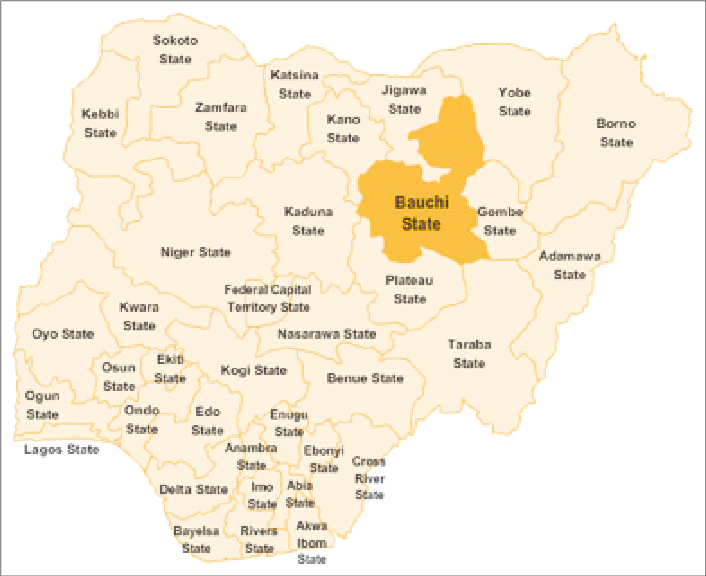
Bauchi State

Bauchi governor launches ₦7.8 billion upgrade of state assembly complex

By Sabiu Abdullahi

Bauchi State Governor, Bala Mohammed, has inaugurated the renovation and modernization of the State House of Assembly complex, a project estimated at ₦7.8 billion.

The governor performed the flag-off ceremony on Tuesday, describing the development as part of his administration’s pledge to foster a functional atmosphere for the three arms of government.

“The renovation, remodeling and upgrading of the complex we are witnessing today is a case of equal and just treatment for all the three arms of government which constitute a tripod upon which the government rests,” he said.

Mohammed highlighted the importance of improving the complex to meet the standards expected of such a key institution in governance.

“This project has been awarded at the cost of N7.8 billion for which 50 per cent of the money has already been approved and paid to the contractor and it has a 12 months completion period.

“Indeed, the mutual understanding and respect between the executive and the legislative arms of government has become responsible for the seamless delivery of the dividend of democracy during our time,” he added.

Speaking at the event, Speaker of the Bauchi State House of Assembly, Abubakar Suleiman, recalled that the assembly complex was constructed during the First Republic, in the tenure of the late Governor Abubakar Tatari-Ali.

Since then, he said, only a single minor renovation took place in 2011.

He said the structure had been the core of legislative work in the state for decades and was long due for comprehensive restoration.

“On behalf of all members of the Bauchi state house of assembly, management staff, and all other workers, I express our sincere gratitude to the governor for his visionary leadership and commitment to the development of not only the legislative infrastructure but the entire infrastructure in the state.

“This renovation signifies not only a physical upgrade but also a renewed dedication to transparency, efficiency and service delivery to our constituents.

“The project will modernise our facilities, enhance our working environment and enable us to better fulfill our constitutional responsibilities and service delivery to our constituents,” he said.

The Speaker also encouraged lawmakers, staff, and residents of Bauchi to see the initiative as a collective investment in governance, democracy, and the state’s future.

Also speaking, Commissioner for Housing and Environment, Danlami Kaule, said his ministry, which is in charge of supervising the work, would ensure the contractor maintains the expected quality and delivers the project on schedule.

Wunti Al-Khair Foundation: A quiet revolution of kindness

By Usman Abdullahi Koli, ANIPR

It often begins in silence, the kind of silence that follows suffering, that surrounds forgotten people and places. Then, one day, someone listens. Someone hears the unheard cries and decides to act. Not for praise. Not for politics. Just for people. That is how the Wunti Al-Khair Foundation was born out of quiet empathy and bold conviction.

Founded by the respected and remarkably selfless Dr. Bala Maijama’a Wunti, this foundation has grown into a strong pillar of light for those trapped in the shadows of neglect. It doesn’t announce itself with noise, but rather with impact. It doesn’t parade power, but wields compassion with quiet strength. In every village it touches, in every child it lifts, the foundation tells a story of care that is both personal and profound.

At the heart of Wunti Al-Khair is a simple but powerful philosophy: people matter. Whether it’s a sick mother, a child without a school, a youth without skills, or a traditional gasping for breath—everyone counts. The foundation has built its work on four timeless pillars: health, education, skills, culture, and community services. These aren’t just categories; they are the lifeblood of any thriving society. And Wunti Al-Khair doesn’t just serve these areas; instead, it brings them to life.

In healthcare, the foundation reaches places others overlook. It breathes life into under-equipped rural clinics, supports emergency services, organises medical outreaches, and ensures that the poorest families are not left behind. Where once fear and despair prevailed, now there is relief—and a renewed will to live. For many, a hospital bill is the difference between hope and helplessness. But through Wunti Al-Khair, that burden is lifted with dignity.

In education, the foundation does more than hand out books, renovate classrooms, or award scholarships. It opens the doors of destiny. Imagine a young girl from a forgotten hamlet stepping into school for the first time, her eyes wide with dreams, her hands clutching a schoolbag gifted by strangers who saw her worth. That’s the kind of miracle Wunti Al-Khair delivers—not one-time donations, but long-term transformation.

Skills development follows naturally. Because education alone can inspire, but skills empower. The foundation trains women, nurtures local entrepreneurs, supports artisans, and helps young people turn their talents into trades. It doesn’t just teach people to fish; it gives them a pond, a rod, and the confidence to cast their lines.

Then there is the culture: the soul of a people. Now, as globalisation tries to wash away local identity, Wunti Al-Khair holds firm. It celebrates heritage, promotes traditional art, supports festivals, and reminds communities that their past is not a relic but a treasure. By honouring culture, it strengthens pride, and through pride, it nurtures progress.

Governments often fall short in fulfilling their responsibility to provide basic amenities for the populace. The Wunti Al-Khair Foundation has stepped in to fill the gap with endless commitment. The foundation restores hope in underserved communities by implementing impactful, grassroots initiatives. Among its most notable contributions are the drilling of solar-powered boreholes in rural areas, ensuring access to clean and sustainable water sources. It also extends compassion to the less privileged and vulnerable by providing permanent and temporary shelter solutions.

But a foundation, no matter how noble, is only as strong as the man behind it. And in Dr. Bala Wunti, we see not a benefactor from above, but a father beside us. His generosity is quiet, his heart open, and his actions resolute. Those who know him describe a man who listens before speaking, gives without being asked, and navigates life with humility and purpose. His leadership is not defined by status, but by service.

Dr. Bala’s life is a lesson. From humble beginnings to impactful influence, he has never lost sight of the human face of hardship. He gives not because he has to, but because he cannot not give. For him, lifting one person is worth more than a thousand compliments. He believes that the true measure of wealth is not in what you own, but in the number of lives you’ve made better.

Wunti Al-Khair Foundation is not just an organisation; it’s a movement of mercy. It is a reminder that in a world often clouded by selfishness, there are still hearts that beat solely for others. You won’t always see its name in headlines, but you’ll find it in the eyes of a healthy mother, in the smile of a child clutching a scholarship letter, in the hands of a youth finding his worth and becoming independent, and in the praises of others whose lives have been touched.

This is a revolution led by kindness. One community at a time. One human being at a time.

Usman Abdullahi Koli wrote via mernoukoli@gmail.com.

NFSS commends Bauchi operatives, urges integration for improved security

By Uzair Adam 

The Nigerian Forest Security Service (NFSS) has called on state governments to integrate its command structures into existing security frameworks to strengthen the fight against crime across the country.

The call was made as the Deputy Commander-General (Intelligence), Dr. John Metchie, praised NFSS operatives in Bauchi for their bravery and dedication in curbing criminal activities in the state. 

He also appealed to Nigerians to refrain from stereotyping the Fulani community as inherently violent, pointing out that many of the security challenges are caused by foreign herders entering through Nigeria’s porous borders.

Also speaking, the Assistant Commander-General (Operations), Umar Aliu, revealed that the government has remained supportive of the service by consistently paying salaries to over 800 personnel. 

He added that there is an insurance policy in place, providing N5 million to the families of operatives who lose their lives in the line of duty.

Aliu further disclosed that the state governor has approved the recruitment of 2,000 new operatives and provided vehicles, motorcycles, and allowances to bolster their operations.

The government needs to repair the damaged Kano-Maiduguri Road

By Tajuddeen Ahmad Tijjani

Last year, the Kano-Maiduguri Road suffered severe damage from flooding. The disaster caused immense hardship for ordinary citizens, displaced several communities along the route, and inflicted economic losses in hundreds of millions of naira. It also disrupted access to Maiduguri from key states such as Abuja, Kano, Jigawa, and Yobe, effectively cutting off the northeast from the rest of the country.

It will be recalled that on 15th August 2024, a Federal Government delegation led by the Honourable Minister of Works, Engr. David Umahi and the Governor of Bauchi State visited the affected site. They assessed the extent of the damage and promised urgent intervention, recognising the road’s economic significance not just for the northeast, but for the country as a whole. Unfortunately, to the dismay of the affected communities, no tangible action has been taken since that visit, only temporary fixes that have had little to no impact.

Residents are now growing concerned that if urgent intervention is not undertaken before the rains intensify, the road could suffer even more extensive damage than last year. This poses a serious threat to lives and property, as was previously experienced.

The rehabilitation of the Kano-Maiduguri Road is not merely about filling potholes or patching the surface – it is a vital aspect of regional and national development. The benefits of well-maintained roads are immense: improved safety and reduced accidents, enhanced economic activities, better quality of life, strengthened social integration, and even environmental advantages.

Beyond the infrastructural failure, there are concerns about the federal government’s perceived neglect of certain regions. This is especially disheartening considering that this region gave the current administration some of its highest votes. 

As an optimist and a believer in equitable governance, I hold firmly that all six geopolitical zones of Nigeria deserve equal attention and investment. Every part of this country matters. Mr. President must lead with sincerity of purpose and see all Nigerians as his constituency.

It is worth noting that during his visit, the Minister of Works acknowledged this imbalance, stating: “Let me make it clear that the shortfall in road distribution was not the doing of President Tinubu, nor mine. However, the President is addressing it. That is why the fourth legacy project has been initiated, stretching from Akwanga to Jos to Bauchi State. We are pleased that work is progressing significantly on major portions of the road in Bauchi State.”

The Minister further pledged that the President is determined to provide adequate funding for legacy projects through various intervention mechanisms. We hope that the government will act swiftly and treat this as a matter of national urgency by repairing the damaged sections of the Kano-Maiduguri Road, particularly within the Jama’are and Azare-Potiskum axes.

As an engineer, the Minister of Works should set a precedent prioritising action over rhetoric. When entrusted with responsibility, those in positions of power must demonstrate competence and a genuine commitment to service.

This is a humble but firm appeal to the federal government to urgently address the long-standing issue of the Kano-Maiduguri Road, which has been in disrepair since last year’s devastating floods.

Tajuddeen Ahmad Tijjani writes from Azare, Bauchi State.

EFCC confiscates luxury items, arrests 21 for cyber crimes in Bauchi

By Anwar Usman

The Economic and Financial Crimes Commission (EFCC) has arrested 21 suspected internet fraudsters in Bauchi State.

The operation was conducted by the commission’s Gombe Zonal Directorate on Saturday, March 15, 2025, following acredible report on the suspects’ alleged involvement in cybercrime.

According to a statement from the EFCC on its X handle, the suspects were arrested on Monday in the Kaure New Government Reservation Area and Awala, Maiduguri Road, in Bauchi.

During the operation, several luxury vehicles were recovered, including a BMW car and a Toyota Camry, among others.

The EFCC reiterated that the suspects would be prosecuted when investigations are completed. 

“Items recovered from them at the point of arrest include one BMW and Toyota Camry cars, three PlayStation 5, 30 expensive phones, one flat-screen television set, six Point of Sale, POS, machines, four iPads, and five laptops,” the statement further revealed.

Seven confirmed dead in Bauchi almsgiving stampede

By Uzair Adam

The death toll from Sunday’s stampede during an almsgiving exercise at Shafa Holdings Company Plc in Bauchi has risen to seven, the police confirmed on Monday.

The police spokesperson in the state, SP Ahmed Wakil, said three additional women lost their lives following the incident that occurred at about 10:20 a.m. on Jos Road, where the company was conducting its annual Zakat exercise to support the less privileged.

A medical doctor at the Abubakar Tafawa Balewa University Teaching Hospital (ATBUTH) confirmed that two of the women died while receiving treatment, while another passed away at home after being taken away by her family.

Wakil assured that further details would be made available as the investigation continues.

A witness, Laraba Saleh, said several other individuals, including women and children, sustained injuries during the stampede.

Emir of Dass launches All-Babies Livelihood Grant to boost immunisation in Bauchi State

By Hadiza Abdulkadir

His Royal Highness, the Emir of Dass, Alhaji Usman Bilyaminu Othman, alongside New Incentives All Babies Are Equal (NI-ABAE), has launched the All-Babies Livelihood Grant program to enhance routine immunisation rates. The initiative provides ₦5,000 to caregivers who complete their child’s vaccination schedule.

The launch, held at the town’s Primary Health Care Center (PHCC) in Dass, was organised by the Bauchi State Primary Health Care Development Board (BSPHCDB). Esteemed guests included local government officials, WHO representatives, and community leaders.

Umar Faruq Abubakar, Head of Administration of Dass LGA, hailed the program as a crucial advancement in healthcare. Dan Asabe Abdullahi, State Director of Public Health, emphasized its importance amid economic challenges. He noted, “If sustained, this program will help reduce childhood deaths from preventable diseases.”

Under the initiative, caregivers will receive ₦1,000 for each of the six immunisation visits, totaling ₦6,000, plus an additional ₦5,000 upon schedule completion, amounting to ₦11,000, the NI-ABAE Stakeholder Relations Director, Nura Muhammad, highlighted the program’s potential benefits.

The Emir called the grant a timely intervention, addressing transportation barriers that hinder healthcare access. He urged caregivers to prioritise completing immunisation schedules and assured traditional leaders’ support in promoting community health.

In his closing remarks, the Emir expressed gratitude to NI-ABAE and partners for their commitment to improving immunisation efforts in Bauchi State.

The Bauchi of my dreams

By Ashir Abdullahi Yahaya

Recalling the writing competition in 2023 with the title Kano of My Dream and how participants showcased their skills in competing, along with presenting valuable ideas, ignited my passion for writing this article on how I would like Bauchi and its people to be in the future.

Bauchi faces severe challenges, such as attacks, corruption, social insecurity, illiteracy, debt, and a poor economy. These issues threaten the region and may worsen due to external factors. Residents are torn between praying, taking action, or focusing on family. The situation strains endurance, confusing even the most devoted supporters of Bauchi.

The state is entirely dependent on salaries. If salaries are delayed, people will walk around as if half-dead. There are no satisfactory business opportunities to support the over 8,308,800 residents (based on the estimated 2023 population following Kaduna, Katsina, Lagos, and Kano, respectively). The state’s needs are not being adequately met, and companies in the state are not functioning at all.

Bauchi, the fifth most populous, is also blessed with a large area, making it the fifth-largest among the 36 states in Nigeria. The pearl of tourism, where everyone is eager to visit its stunning natural spring water called Yankari: a large wildlife park in the southern part that contains large populations of waterbuck, African buffalo, patas monkeys, and western hartebeest, along with some of Nigeria’s last remaining West African lions, African leopards, and African bush elephant populations, but it lacks adequate care.

The educational sector faces numerous challenges, including dilapidated buildings, overcrowded classrooms, a shortage of qualified teachers, and inadequate teaching and learning facilities. These challenges bedevil the sector yet hinder its development. Moreover, rural settlers primarily grow goods for sale to outsiders and companies, often disregarding the impact on the state’s well-being. Moreover, farming is often dismissed as a viable option for most urban residents.

This, among other things, has become a trait of Bauchi’s transformation. Of course, there is always a solution—a positive solution that has refined the dream I hold dear…

In the Bauchi of my dreams, our challenges have vanished, and the state has reached exhilarating heights by allocating a significant portion of the budget to the sector that deserves it most—the education ministry. The schools have been improved, and the number of out-of-school children has been drastically reduced, bringing the total down to just 2,000 from the previous figure of 521,000.

Thanks to effective governance, agencies have been restructured, removing selfishness, self-importance, and the culture of favouritism. The emphasis is now on merit, prioritising knowledge and skills. Everything is carried out with transparency.

Social security issues have been addressed by actively engaging the youth in employment opportunities with companies and schools. Additionally, some youths are pursuing education abroad through government scholarships. As a result, nearly everyone is now employed in the public or private sector.

Furthermore, Bauchi has transformed into one of the world’s most remarkable and eye-opening cities, comparable to Istanbul in Turkey, Kyoto in Japan, and Paris in France. The key defining characteristic of the state’s landscape, Yankari National Park, has been developed, contributing significantly to GDP and surpassing the world-class Blue Hole of Jamaica. 

Attracting millions of tourists annually, it has claimed the prestigious world-class crystal-clear water award. The lush greenery and vibrant exotic flowers enchant visitors, their voices quivering with the interjections of amazement at the unparalleled natural wonder.

Eventually, the Bauchi of my Dreams distinguished itself as a place where religious tolerance, peace, unity, and emotional intelligence flourished among its residents. It separated the do’s and don’ts of peaceful coexistence, guided by the wisdom of religion (Malams). The Bauchi of my Dreams is a beacon, an antidote to the obstacles that shadow the days.

Ashir Abdullahi Yahaya teaches at Minaret International School and Giwo Science Academy, Bauchi. He can be reached via ashirayahaya6530@gmail.com.

Championing Change: Khalid Barau’s lasting impact

By Usman Abdullahi Koli, ANIPR 

In a world where leadership is often equated with political roles and public offices, Khalid Barau Ningi stands out as a shining example of selflessness and community dedication. Known widely as “Dujiman Ari,” he showcases the qualities of a true servant-leader, inspiring hope and positively impacting through his personal initiatives that go far beyond his official role as Senior Special Assistant (SSA) on Empowerment to the Bauchi State Government.

Dujiman Ari is a public official from the Ningi Local Government Area (LGA). He is not just a public official; he is a man deeply connected to his roots. His warmth, humility, and respect for individuals—both young and old—have earned him admiration and loyalty. His ability to engage with his contemporaries, especially the youth, proves his understanding of the challenges they face and his determination to be a part of the solution.

His concern for his people goes beyond political affiliations and titles. Through his foundation, the Khalid Community Initiative, he has consistently demonstrated that true leadership is about service, empathy, and action. Among Khalid’s notable contributions is his focus on healthcare. Understanding the importance of maternal health, his foundation recently provided healthcare services and delivery kits to pregnant women across Ningi LGA. These kits, delivered to over 100 beneficiaries and containing essential supplies for safe childbirth, have eased the burdens of many families, ensuring that women have access to better care during one of life’s most critical moments.

Furthermore, during a recent cholera outbreak, the Khalid Community Initiative extended its support by donating over 100 cartons of intravenous fluids to needy patients. In another remarkable healthcare intervention, the initiative funded cataract surgeries for 450 individuals, provided medications worth hundreds of thousands of naira and distributed free eyeglasses to over 100 patients. These efforts reveal Khalid’s commitment to addressing urgent health challenges and improving the quality of life for the underprivileged.

Water is life, and Dujiman knows this all too well. In communities where access to clean water is a daily struggle, the Khalid Community Initiative has taken up the mantle of change. By repairing up to 30 dilapidated boreholes in 10 communities, Khalid has restored the dignity and health of countless families. Women and children no longer have to travel long distances in search of water, a basic necessity many take for granted.

His passion for education is evident in his foundation’s activities. Donations to schools, ranging from learning materials to offering scholarships, have created better learning environments for children. He also recognises the potential of the youth, supporting youth groups with resources and opportunities to thrive. This includes securing JAMB admissions for over 20 students and covering registration fees for more than 30 others across various communities. Such efforts reflect his belief that an educated and empowered youth population is the backbone of any thriving society.

What sets Khalid’s initiatives apart is their all-encompassing approach. Through his foundation, he has supported over 100 small-scale beverage vendors with conditional cash grants of ₦10,000 each to grow their businesses. Similarly, he provided ₦5,000 to 100 women to support domestic needs and small household enterprises. Khalid has also prioritised skill development, offering self-reliance training and tools to empower youths across the Ningi Local Government Area. His work continues to expand, with increased funding and strategic planning to reach even more beneficiaries and address diverse community needs.

Dujiman Ari’s exceptional initiatives are driven more by personal passion than official responsibilities. As the SSA on Empowerment, one might expect his work to focus solely on government-aligned projects. However, Khalid’s gestures go far beyond what is required. His generosity and vision for a better society are rooted in his values, not political obligations. 

Although in his capacity as SSA, he facilitated the distribution of over 1,200 motorcycles to youth in the state under the Kaura Economic and Empowerment Program (KEEP), along with over 70 Sharon buses distributed across 20 LGAs, he has shown an unmatched commitment. His efforts also included providing ₦50,000 to beneficiaries to enhance SMEs, start-up kits for 1,000 beneficiaries, and ₦20,000 cash support for beverage vendors, showcasing his dedication to empowering individuals and small businesses.

Khalid’s work through the Khalid Community Initiative is not just about providing immediate relief; it is about creating sustainable change. His efforts have touched lives in ways that words cannot fully capture. He has become a source of inspiration and a role model for aspiring leaders, proving that true power lies in the ability to uplift others.

As a recipient of the Presidential National Award of Merit on Productivity in 2022 and a chartered management consultant, Khalid Barau Ningi’s story is evidence of the transformative power of one individual’s dedication to their community. It is a reminder that leadership is not defined by titles but by the impact one makes. For those who wish to make a difference, Dujiman’s life and work offer a simple yet profound lesson: serve with your heart, and the world will remember your name.

Usman Abdullahi Koli wrote via mernoukoli@gmail.com.

Who will be Bauchi’s next governor?

By Mukhtar Jarmajo

In a democratic setting, politics is perennial. Even as governance occurs, political actors make permutations, align and counter-align ahead of future elections. The actions of politicians in power largely determine what becomes of the political terrain. Essentially, the performance of an administration eventually tells of the kind of political game that will be played in the next elections.

In Bauchi State, a historically hot political plate, politics is daily, and the electorate plays particular roles in the democratic process. With the Bala Mohammed-led administration almost halfway through, discussions have begun on different fora about who will become the state’s next governor.

This time, the discussions border on issues, given that many people yearn for and aspire to better education, healthcare, agriculture, housing, pipe-borne water supply, security and safety, and employment and pay. There is also a growing concern for a more effective House of Assembly in the state.

Given that no democracy can endure a weak legislature, certain quarters feel that Bauchi State would have been a better place to live and work if it had a more active legislative arm. So, to be placed on a higher development threshold in the future, the state will need a more people-oriented executive arm of government and a legislature that can check its excesses and genuinely represent the people.

Thus, even as the search for a competent politician for the exalted and vital position of the governor of Bauchi State ahead of the 2027 elections widens, it is also right to search for quite experienced and qualified politicians to fill in the thirty-one legislative seats at the Bauchi State House of Assembly.

While several politicians have indicated interest through actions for the governorship, some are believed to be testing the waters from the background. Yusuf Maitama Tuggar is Nigeria’s Foreign Affairs Minister. At different times, he was a member of the House of Representatives and Nigeria’s Ambassador to the Netherlands. Tuggar is on the watch list, given that it is not yet clear whether or not the erstwhile diplomat will throw in the towel when the political bell for 2027 rings. The former legislator is, however, known to have pursued a governorship ambition in the past on the platform of the defunct Congress for Progressives Change (CPC).

Professor Muhammad Ali Pate is Nigeria’s Coordinating Minister of Health and Social Development. The trained medical doctor has been several times the Director-General of the National Primary Healthcare Development Agency (NPHCDA) and Minister of State Health. Pate has contested the governorship of Bauchi State in the past under the Peoples Redemption Party (PRP). In the APC governorship primary election ahead of the 2023 general elections, the Chigarin Misau contested and scored nil.

Air Marshal Sadique Baba Abubakar (rtd) was Nigeria’s Chief of Air Staff and Ambassador to Tchad at different times. He had a distinguished career in the Air Force, serving as a Cadet Military Training Course (CMTC 5) member in November 1979 and rising through the ranks to become the 20th Chief of Air Staff. During his tenure as Chief of Air Staff, he recorded remarkable achievements, including acquiring new aircraft, establishing new commands and formations, and enhancing the NAF’s capacity for airpower projection. 

In the governorship primary election ahead of the 2023 general elections, Sadique won with 370 votes to beat the runner-up, who got 278 votes. And during the general election, the erstwhile diplomat scored 432,272 votes as runner-up. Sadique, who has shown interest in contesting the Bauchi State governorship position again, is likely a strong contender in 2027, given his votes in the last governorship election.

Jarmajo wrote from Misau.