Bauchi State

Early marriage: Groom, 18, weds bride, 16

By Tijjani Muhammad Musa

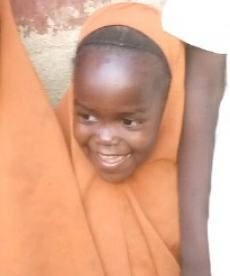
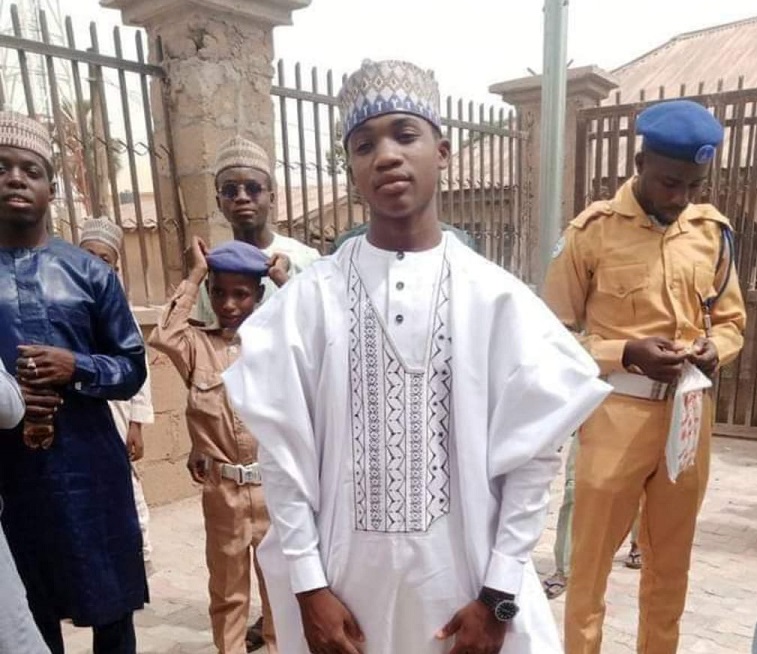
On a Friday, Tilden Fulani in Toro Local Government of Bauchi State witnessed something unique and rare in the marriage nikah of 18 years old Muhammad Ahmad Salihu and his bride Sumayyah Adam Ibrahim who is just 16!

According to our sources, the event which took place at the Ahlussunnah Wal Jama’a Izala Central Mosque of Tilden Fulani town was conducted in peaceful, exciting celebrations and fanfare.

With the Muslim Fulani lot of Northern Nigeria, it is a common thing to marry young. Marriage is often the preferred option once love and mutual understanding are arrived at rather than engage in illicit sex outside matrimony.

“And marry the unmarried among you and the righteous among your male slaves and female slaves. If they should be poor, Allah will enrich them from His bounty, and Allah is all-Encompassing and Knowing.” [Qur’an, 24:32]

The Messenger of Allah (SAW) said: ‘O young men, whoever among you can afford it, let him get married, for it is more effective in lowering the gaze and guarding chastity, and whoever cannot then he should fast, for it will be a restraint (wija’) for him.’ [Sunan an-Nasa’i, 3209]

So a sincere and hearty congratulations to the Ango (groom) and his Amarsu (bride). May Allaah SWT bless this early nuptial union. May He grant them peace and bless them with blissful offsprings and means of daily sustenance, amin.

Bauchi’s unforgettable Mu’azu

By Tahir Ibrahim Tahir Talban Bauchi. 

I am an active member of The Habu Mamman Foundation group. So when I came across a message shared by Uncle Habu Mamman himself, it got my rapt attention. Uncle Habu is an Engineer turned politician, along with another Uncle, Nuhu Gidado, former Deputy Governor of Bauchi state and commissioner of education. When I got the audio file, I could feel Uncle Habu’s roaring and infectious laughter, but realising that it was a 45-minute long recording, I knew he meant business. I steadied and listened to it.

It was Dr Tilde’s voice, the Commissioner for Education in Bauchi state. I could feel his pain in his voice, and as he spoke, his breath delivered his anger, yet, in a soft-spoken manner. Dr Tilde was the pioneer Chairman of the Bauchi Special School’s Management Board during the Ahmed Adamu Mu’azu administration of 1999-2007. He was sought after by the administration of M. A. Abubakar Esq. (2015-2019), to which he was unavoidably absent. Present-day Bala Mohammed’s government got his services as the Education Commissioner. 

Dr Tilde’s sterling achievements during the Ahmed Mu’azu Administration have brought us to the current efforts to revamp and revitalise the state of education in Bauchi. He spoke at length of the rot in the system, the poor quality of teachers in the sector, and the corruption that is eating away the resources that would have otherwise helped in uplifting the standard of education in Bauchi. He is battling an entrenched system of corruption that doesn’t care about the children’s future—a system where people get paid for doing no work at all.

It’s a system where school children could not write a sentence, neither could they read one, and if they write a word or sentence, you could not read what they’ve written. During his 45 minute delivery, he reflected on the work done during Ahmed Adamu Mua’zu’s administration. He was always pontificating at what they achieved during that time, how they did it, and the quality of the products they hatched at the time. Finally, he declared that today, if you go to the Abubakar Tafawa Balewa Teaching Hospital in Bauchi, you will meet doctors, lab scientists, pharmacists and many other professionals who are products of the special schools of the Ahmed Mu’azu era. 

During Ahmed Mu’azu’s tenure as governor, primary school students’ enrollment rose from 438,350 to 1.3 million within six years. Before he became governor in 1999, only 279 students passed their WAEC exams with five credits or more. That figure rose to 9000 students under his watch in 2005. His achievements in the education sector in the history of Bauchi state are second to none. The quality of education was simply outstanding. 

The Abubakar Tafawa Balewa Teaching Hospital, Bauchi itself, houses a lot of the infrastructural projects of the Ahmed Mua’zu administration when it was the Bauchi Specialist Hospital. The quality of the wards, laboratories and equipment installed are second to none and are still being utilised today. The Amenity ward stands as a perfect example of the standard of works executed at that time. There is no difference between the National Hospital Abuja and the Amenity division of the Specialist Hospital Bauchi.

Ahmed Mu’azu built over 1000km of intra-state roads and over 230km of urban township roads. His rural development strides saw the electrification of 800 towns and villages, where they were connected to the national grid. The Federal Ministry of Information ranked him as the best governor in rural development, and the second overall best in all areas, in the country. 

Ahmed Mu’azu’s first degree is in Quantity Surveying, and his master’s is in Construction Management. I believe this accounts for his quest for excellence when he delivers his projects. He was recently honoured by the Federal University Wukari with an honorary Doctorate, as Doctor of Science, in recognition of his selfless service and visionary leadership. Additionally, he has five other honorary doctorates from notable institutions: the Federal University of Technology Akure, University of Uyo, Abubakar Tafawa Balewa University Bauchi, Igbinedion University Benin, and University of Maiduguri.

Ahmed Mu’azu is widely travelled and well-known across the country, with friends and associates in every nook and cranny. So many groups and movements have sprung up, urging him to run for the Presidency. Even though he hasn’t made any declaration yet. He is undoubtedly an administrator with a most enviable track record of excellence in service delivery, filled with legacies from his tenure as Bauchi governor. Dr Tilde got me nostalgic over our unforgettable Mu’azu of Bauchi state.

Tahir is Talban Bauchi and sent this article via talbanbauchi@yahoo.com.

Murli Mahmood: The painful death of a true friend

By Mukhtar Jarmajo

Aside from the fact that boarding secondary school provides the ground for moral and academic excellence, it is also a platform for socialization. People of different backgrounds in terms of social class, religion, culture and even thoughts converge in one place, of course from different corners of the country, to mingle as they work and walk towards civilization. It was undoubtedly for the above and many other reasons that on October 2, 1999, we all converged in Hassan Ibrahim Gwarzo Secondary Schools, Kano. We were there to pursue knowledge in a journey of self-search with the hope that in the end, we will make a responsible community from which society will benefit.

And so it happened, through time, we endured all the rigours and the backbreaking toil that come with the boarding school environment and with the challenges of learning, especially in a setting that the late Prof. Ibrahim Alƙali Ayagi managed. In aiming for excellence, Ayagi always raised the bar for promotion to the next class. From the policy that a student must pass all core science subjects to mathematically create the formula which postulated that the average of a student’s cumulative scores must be higher than that of the class before promotion, Ayagi kept us on our toes throughout the time. 

And for senior secondary classes, it was the famous Operation Credit Only (OCO). One morning in 2003, the boys and the girls in senior secondary classes gathered for a combined assembly. Prof. Ayagi used the opportunity to announce the new policy that the least acceptable score for us was a credit. He also announced that from that day, the SS2 and SS3 syllabuses would be covered in SS2. So that in SS3, it will be “revision, revision and revision only.” And to achieve this, we had classes during evening preps and during holidays in what was referred to as “extension classes.” 

And true to it, the efforts of the school management, as well as our commitment and doggedness, paid off. As a result, the school began to have better JAMB/WAEC/NECO results. Thus by the time we obtained our O’ Level results in 2005, it was the best at that time. Both the JAMB and SSCE results were commendable. Hence, that year, O’ Level holders from Hassan Ibrahim Gwarzo Secondary Schools got unprecedented placements in universities worldwide. 

Many of us got admission to Abubakar Tafawa Balewa University (ATBU), Bauchi. Murli Mahmood, Shaheeda Abdullahi Umar, Ismail Umar (Ashaka), Amina Ahmad Usman, Abdulhafiz Nuhu Ahmad, Rahanatu Ahmad Aliyu, Umar Saidu Abashe, Abdulqadir Hussaini Mukhtar, Salamatu Bashir Dogara, Usman Nagado Usman, Abdullahi Farouk Bello and I got admissions into various departments. But as providence would have it, few left the university for other schools for one reason or the other. 

Murli Attaib Mahmood left for Ahmadu Bello University, Zaria, to continue studying Geology, which he started at ATBU. He later obtained a Bachelor’s degree there, and after the compulsory national youth service (NYSC), Murli Mahmood joined the services of the Bauchi State Judiciary some years ago. He got married last year (2021) and died on January 8. Innalillahi wa inna alaihir ra ji un! 

In the early hours of that fateful day and on the Maiduguri bypass in Bauchi, Murli Mahmood got involved in a fatal auto crash. It happened at the Ramadan Press junction that links the bypass with the ever-busy Murtala Muhammed way. Murli Mahmood came from Awala Roundabout, which is on the bypass. And while trying to crossover to move into Murtala Muhammed way, a commercial bus came from the popular Gidan-Mai Roundabout, heading towards Awala Roundabout, only to hit Murli’s car on the passenger side. 

And because of the high speed with which the commercial bus came, Murli, who was on the driving wheel, could not withstand the intensity of the pressure exerted on him. As a result, he sustained internal injuries and almost immediately succumbed to death. On arrival at the Abubakar Tafawa-Balewa University Teaching Hospital (ATBUTH), medical personnel confirmed his death. That was how he left without saying goodbye to us. 

The last time we spoke was on January 3. He called me on the phone around 8 pm for consultation on his intention to participate in the elections of the Bauchi State chapter of the Judicial Staff Union of Nigeria (JUSUN). Murli told me that he wanted to contest either the seat of the Treasurer or that of the Chairman. After a lengthy discussion, I advised him to go for the Chairmanship position. However, we concluded that the final decision would be made when he sat with his father. I then requested that I be made a member of the Campaign Council even though I don’t belong to the JUSUN. 

From then, the next thing that came to me was the news of Murli’s shocking death. After the early morning prayers on January 8, I tuned in BBC Hausa 06:30 am program. While listening, I slept off only to wake up a few minutes later to realize I missed 11 calls, mainly from Ismail Umar (Ashaka). When I called back, he broke the sad news to me. I immediately broke the news in the WhatsApp group of the Class of 2005, jumped out of bed and rushed to the Gida-Dubu estate where Murli Mahmood resided. 

Before I got there, his lifeless body was already home, and it was being bathed in accordance with Islamic rites. I profusely cried when I saw Muhammad Ma’amun (Baban-Bauchi), one of his closest elder cousins, preparing Murli’s body for funeral prayers. It certainly took a lot of courage for him to be there, especially because they have, over time, metamorphosed into friends. It was through Murli we knew Baban-Bauchi. His elder brother, Aslam and younger brother, Asdaq, were also around. But I did not see both of them close to Murli’s body. One can imagine the grief that weathered the time. It was unquestionably a moment of heartache, so the atmosphere was tense. 

At 1 pm, the Janaaza prayer took place, and Murli Attaib Mahmood was buried. He was a man of the people who related very well with us. He was a friend maker who maintained cordial relationships with almost everyone in his network. We have indeed lost a true friend who never failed to be present in our times of need. I have lost a friend of about 20 years who grew up to become a family. I have also lost my “political opponent.” We hardly stood on the same political side. Therefore, in most cases, we debated our points to buttress our stands. Meanwhile, I must acknowledge that Murli`s political and socio-economic views were based on his genuine concerns for a better society. I have indeed lost a friend and brother!

May the soul of Murli Mahmood rest in eternal peace. Ameen!

Jarmajo can be reached via dattuwamanga@gmail.com.
Sen. Lawal Yahaya Gumau: An epitome of fulfilling promises.

By Muwaffiq Fa’izu Saleh

Since the demise of Sen. Ali Wakili (RIP), many of us have taken an interest in who will succeed him, probably due to our admiration for the unique style in which he carried out the affairs of his constituency (as the then Chairman of the Senate Committee on Poverty Alleviation and member of various committees) to the numerous constituency and developmental projects. There came his replacement in the person of Sen. Lawal Yahaya Gumau, a.k.a. “Maliya”.

Many progressives doubted the ability and capability of Sen. Maliya to sustain the level of Wakili’s performance, not even surpass it. Therefore, all eyes were on him, whether he would deliver or not. Lo and behold, there came a silent achiever in him.

I, however, said “silent achiever” because of how it is being said. The achievements of Senator Gumau are too enormous to be silent, for they are conspicuous. From reviving long-abandoned boreholes to renovating and or constructing and reconstructing classrooms and providing essential reading and writing materials for primary and secondary schools, among other projects. These works cut across his constituencies.

The dividend of Democracy, they say, is the beneficial results of superficial investments made by the people to bring about a government to power. In Sen. Maliya, we have seen quite many of them. They can only be highlighted in the various empowerment programs in his constituents. These include distributing sewing machines, motorcycles, grinding machines, car washing machines, utility vehicles, and SUVs for his political associates, giving various gifts in cash and kind.

In today’s society, the importance of these laudable gestures cannot be overemphasised. As I heard him in one or two speeches where he made some promises, most or all that he focuses on are projects and developments that will directly touch people’s lives, and he made it clear that it always touches his heart to see people suffering. He rarely speaks, but he is a man that works the walk.

Furthermore, you have most likely heard once, twice, or even many times that Sen. Maliya has given an award, a scholarship, or an employment opportunity to a close associate or even a family member. I may not work with figures on these gestures, but some never come to the limelight until one circumstance or another brings them, and I believe some may never do so. I can tell you that of all the qualities of a distinguished senator, this particular one is the most fascinating to many of us. 

The religious institutions are not left out in the pools of the Senator’s good deeds as he extends his hands to them. Suppose you did not hear about him renovating and/or building this and that mosque. In that case, you must have heard about him giving one Imam/Sheikh/religious figure a big and luxurious car (s) or bus (es) for the smooth running of religious activities.

I cannot remember a week in the last couple of months that I didn’t see or hear about the Distinguished Senator fulfilling one promise or another and building on so many good works that he never even promised. It has now reached the extent that Gumau has a new slogan, “Maliya Mai Sati-Sati”. A few days ago, he did some of these stunts that became the talk of the town in a state whose government gives out “Akuya” as empowerment.

Bauchi may be a state where circumstances brought the PDP to govern. Still, with Senator Lawal Yahaya Gumau and many others in the APC making substantial positive impacts on their people, the PDP is already a standing-dead party only waiting to be buried come 2023.

Muwaffiq Fa’izu Saleh wrote from Bauchi State via muwaffiq005@gmail.com.

Tribute to the man I was born to be

By Umar Sani Yakubu

My parents or father, to be specific, see someone in me. Who is that person? I was not privileged to meet someone because he was called to glory years before I was born. This is a story I traced for myself, and I will share it with you. But wait, you must not tell anyone because it is my little secret. A secret nobody tells me, and until I discovered it for myself, I doubted if someone was even ready to tell me.

Well, my father might have kept it so dear to himself. Unknown to my father, if there is anyone’s gesture I understand so quickly, it is his. Thus, I know this among other gestures of his, and I will tell you how.

When I was first registered for my elementary school in 2001/2002, my father smartly registered me as ‘Umar Yakubu’, omitting his name ‘Sani’ as my surname. A development I fought even with my then little age. It happened that anytime my class teacher called me Umar Yakubu in the attendance register, I would keep mute. To the best of my belief, I had reasons to do that because I have repeatedly warned that that wasn’t my name. And correct it as Umar Sani.

Consequently, my struggle for self-defence grew to the level that the class teacher and the headteacher couldn’t tolerate any longer. Finally, the school invited my father, and they settled the case. I was eventually renamed “Umar Sani”.

However, growing up around stage 4 (primary 5), I began to think and reason with my dad’s earlier decision. It was clear that his love for the name Yakubu knew no bounds. And unfortunately, till then, I was his only son among my sisters. For that, I decided to put a smile on his face by adding Yakubu to my name, which I did, thereby making it Umar Sani Yakubu. I wrote that on all my notebooks. Although not the way he wanted it, I knew he was happy this time.

Now the secret: that man wanted to name me Yakubu. He has never told anyone, not even my mother, his wife. I think this is a secret only he and I share because I snatched it from his looks and maybe action just like the story above. But why did he name me Umar? I will tell you that too.

The combination above of ‘Umar Yakubu’ is two in one. Combination of a father’s name and his son’s. Umar is the last child of Yakubu. A younger brother who was so dear to my dad. After his death on April 22, 1995, followed by my birth on July 17, 1996, my father felt the joy of his life. It was the day he held on his hands his first child, who seemed to come with the confusion of his life.

This is because he wholeheartedly wanted to bring his father and his brother back to life. But, unfortunately, I am a twin to none. I am just me and one. So he had to choose between the two who to immortalise first. A confusing choice to make, he decided on Umar to console his mother for the immediate loss. Do you now see the reason for his combination of Umar and Yakubu? He wanted me to be two in one.

Enough for that story.

Now the question is: Am I even brave enough to bear the name Yakubu?

According to stories I gathered, Yakubu Danladi, as the name implies, was indeed the return of many bearers of the name before him, the likes of Prophet Yakub (may God be pleased with him) and in our recent past Yakubun Bauchi, Late Emir of Bauchi. He was brave, hardworking and kind-hearted.

However, from a decent background, Yakubu was born a farmer who turned out to be the best in the history of our locality through conversing his local experience with the civilised way he later acquired. Until his death, his love for agriculture and farming spoke for itself on the size of his farmland.

Taking about his service as a civil servant, he had gone around the country even before Bauchi was made a state. He wandered from Kano to Maiguduri to Mubi (where he gave birth to his first child Sani (my father)). He later went for an agricultural-related course in India and then back to Nigeria to Azare in Bauchi State.

He was once transferred to his local government (Dass) as Sole Administrator in 1987, a development that later led to his political participation. He contested and was voted for the office of local government chairman in December 1987 and till August 1989.

Obviously, Mr Chairman is my grandfather I never met. Still, as G.K. Chesterton once mentioned, “People who make history know nothing about history. You can see that in the sort of history they make.” I doubt my father knows many people that have offered me seats and told me about Mr Chairman. They tell me how it was sitting around him, being in his caravan of leadership, and even pointing to me things that make them remember him, which are their children they named after him.

According to them, he was a reformer who came and provided their basic needs at the right time. Mr Chairman constructed the first town bypass road, built feeder roads for villages, built all the village head houses, built numerous village dispensaries,  awarded to the youth the first football trophy, “Barde Laya Memorial Cup”. To date, he remains the only local government chairman to have a sitting president, Ibrahim Badamasi Babangida, to commission his project in Dass.

Sadly, as I write this, it is thirty years since he left the family, the community and the world, which occurred on January 30, 1992, and headed to heaven, in sha Allah.

Tellingly, I never had the privilege to meet him, but I used to have that mist-eye that he would have been a caring grandfather. May his soul continue to rest in peace, Amin Ya Rabbil’alamin.

Finally, father, I am not named after you. In fact, I now have a nephew who is so lucky to be. But, I believe, like you, I am strong. I am my kind of Umar. And be as it is, we feel your company in us. Your spirit is strong, and it follows everywhere we go. Also, I want to tell you that your family, even with eventual here and there, is still strong, and together we will go beyond a reasonable doubt to make sure that your generation lives till the end of time. Thus, the family miss you. So, continue to sleep well, father.

Sani writes from Dass, Bauchi and can be reached via saniumaryakubu@gmail.com.

Police helicopter crashes in Bauchi

By Ahmad Deedat Zakari

A Helicopter belonging to the Nigerian Police Force has crashed in Bauchi Airport. The Accident Investigation Bureau (AIB) made this known on Thursday, January 27.

According to AIB, no loss of life was recorded due to the crash, but there were injuries sustained.

Part of the statement reads, “On 26th January 2022, Accident Investigation Bureau, Nigeria was notified by Nigerian Airspace Management Agency (NAMA) about an accident involving a Bell 429 helicopter with Registration Marks 5N-MDA owned and operated by the Nigerian Police Force (NPF)”
The AIB further disclosed that the NPF helicopter departed Abuja at 16.54 UTC for Bauchi with six persons onboard maintaining 5,500ft.

AIB also urge individuals for assistance, “The Investigating agency, AIB-N needs and hereby solicits for your assistance. We want the public to know that we would be amenable to receiving any video clips, evidence, or information any member of the public may have of the accident that can assist us with this investigation.”

Bauchi 2023: Does a lamp have no relevance unless it’s at night?

By Mallam Musbahu Magayaki

As the 2023 general elections knock on the fence, the Bauchi State political atmosphere is in high conditions where many political aspirants have begun revealing their interests in contesting for different elective posts.

For the governorship, several aspirants have emerged, some of whom have been in the political hubbub of Bauchi State for some time. In contrast, others have not attempted to aspire for any post before. However, most contestants have been in the state’s political arena and have brought developmental projects before demonstrating their interest in the seat.

Contrarily, one aspirant is a novice in politics, a newcomer who does not have any history of touching the lives of the masses throughout his career in civil service, despite reaching an elevated position that offers many opportunities! However, now that he is in desperate need of power, he comes with various empowerment programs fashioned to win the hearts of the gullible electorate.

Given the preceding testimony, one might ask, “Do the electorates have no relevance except on the eve of the election?” This, without a doubt, describes the selfishness of politicians who cannot mingle and improve the living standards of the masses until they have something personal to acquire.

Furthermore, the party to which this politician aspires may not win the election. The masses have already discovered the cunning movements of such politicians and are also plotting to deal with them at the polls. Therefore, the APC should be mindful of where to throw the dice come 2023.

Mallam Musbahu Magayaki writes from Sabon Fegi, Azare, Bauchi State. He can be reached via musbahumuhammad258@gmail.com.

Dear Governor Bala Mohammed, listen to Jama’are people

By Y. Z. Yaú

In 2018, the Jamaare Local Government Area of Bauchi State suffered a devastating flood that destroyed farms and houses and the central market. There was a Government in Bauchi State, but it did not respond to the crisis. Those who died due to the flood ended up as mere flood statistics. The descendants of Dilara took it calmly and in their strides.  They consulted among themselves and prayed to God to answer their prayers. In his infinite mercies, God answered and wiped their tears: the federal government through the Ecological Fund responded with an intervention to mitigate the effect of the flood.

In a three-part initiative, the Ecological Fund financed a new drainage network in the town and promised to rebuild the market destroyed by the flood. The third aspect was the dredging of the river so that the flood could be reduced if not altogether eliminated. The state government was to contribute as counter funding. But, unfortunately, it did not, and the flood came back with more vengeance during the last raining season, and for the first time in over 50 years, the flood got into town, occupied and destroyed many houses. Several people, mainly farmers and their children, died while crops were damaged in the waves. The loss to the community was shuttering. Again, not a whimper of sympathy from the state government. 

Over five years ago, as part of the ecological intervention, the Federal Government decided to upgrade the power sub-station, which serves more than four local governments, to improve the electricity supply in the area. A significant new sub-station was to be built on the understanding that the State Government would do the civil works while the Federal Government does the engineering component. The Federal Government delivered its part, and to date, the State Government has not delivered its component, so the project remains uncompleted. 

What does the frequent flood tell? While flood in itself is destructive, it reveals that if the water can be controlled, agricultural production can be improved to raise the national food production capacity. After all, already along with the Hadejia wing of the Hadejia-Jamaare Rivers basin, this area is perhaps the largest rice production belt of the country. Stabilization of the flood plain of the Jama’are river is, therefore, a project not meant for the benefit of the Jamaare people only. It is to improve national food security and farming resilience in the country. It is thus in the national interest. 

The flood plain of the Jama’are river is a fertile agricultural area and a ready-made natural laboratory for agricultural research that will improve farming systems and practices across the country. This consideration led the Faculty of Agriculture of the Bauchi State University in Jama’are to leverage this natural laboratory for research, experimentation and teaching. In addition, Jama’are people will benefit from agricultural extension services, agricultural advice from experts, improved skills and knowledge for the farmers, and uptake of research outcomes to address agricultural, livestock, and horticultural issues.

It will also benefit from the usual town-gown interaction that a university made possible. But above all, however, the state and the country stand to gain in enhanced agricultural production, livestock production and development of horticulture. The foresight of the Committee that searched and selected the site of the Faculty of Agriculture must be commended for their deep sense of patriotism and adherence to professional ethics. 

The Faculty is already on the ground with hundreds of students and over 100 academic and non-academic staff engaged in academic activities in the college. Academic activities have stabilized, and a sense of synergy between the campus and the host community has taken shape. 

Suddenly, there are rumours making rounds that the state government is planning to relocate the Faculty to another place for the Federal College of Education takeoff that the federal government recently decided to establish in the town. This move to relocate the Faculty that was sited based on clear reasons of functionality and leverage not only smacks of the politics of blockage but also totally lacking in appreciation of the considerations for the setting up of both the Faculty of Agriculture and the Federal College of Education in Jamaare. It certainly does not show concern for the deep patriotic thinking of sitting the Faculty. But this apart, the argument of justice and fairness has led to the establishment of the Federal College of Education. 

Jama’are is one of the oldest local governments in the state, established in the country’s first wave of local government creation. Jamaáre Emirate is a foundational emirate, resulting from the Dan Fodio Jihad and not a recent political design of some politicians. Of the four emirates in the state, until 2014, it was the only one lacking in any institution of higher learning. Even when the Faculty of Agriculture was established, the Emirate was nowhere near the others in terms of the number of higher institutions. It was to promote equitable educational development and the spreading of educational opportunities across the state that reinforced the rationale for selecting the site of the Faculty of Agriculture and the establishment of the Federal College of Education in Jamaare. 

It is difficult for the people of Jamaáre not to read the purported attempt to remove the Faculty as one more instance of deliberate discrimination against people known for their peaceful disposition. For all the deprivations, they have never taken to a protest. Not that they value their rights nor that they cannot fight for their right. They believe that what you do not get in peace will not necessarily come in violence. They live in the humble Fulbe spirit of not giving to showing pains or pleasure. Therefore, when last Monday they met from all corners of the Emirate at the Jamaare central mosque and led by the leadership of the scions of the Dilara dynasty, the community has taken this attempt to disinherit them calmly and resorted to prayers, in the hope that as usual, Allah will ensure that justice is done. As a peace-loving community, we take solace in our patience and trust our density. 

It is still not late for the Bauchi State Governor, Bala Mohammed (Kauran Bauchi), to dispel these rumours and assure the people of Jamaáre, and indeed the whole country (which stands to lose from this move) that what is theirs shall remain theirs. They will embrace him with brotherly love and in that spirit. We hope that Kaura hears our humble request for his heart to take flight into the hearts of Jamaáre people who would warmly embrace him in eternal gratitude for acting as a true leader who treats all parts of his constituency equally. We are waiting and watching.

Ya’u is the executive director of the Center for Information Technology and Development.

Five persons confirmed dead in Bauchi auto crash

By Muhammad Sabiu

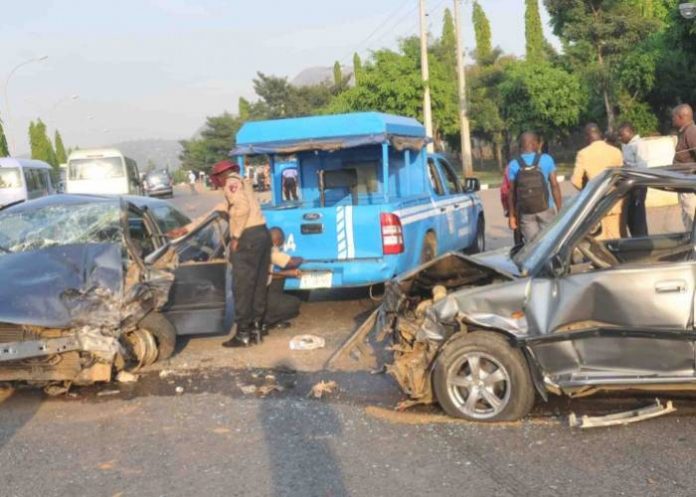
The Federal Road Safety Corps (FRSC) in Bauchi has disclosed that five persons have been confirmed dead in a deadly auto crash on Wednesday along Bauchi-Jos road.

Commander of the road safety corps in Bauchi, Mr Yusuf Abdullahi, told journalists Thursday that nine other people sustained severe injuries when the vehicles involved collided.

The vehicles were identified to belong to Adamawa Sunshine and Gombe Line transport companies.

He was quoted as saying, “Fifteen people, 13 males and two females, were involved in the crash.

“Five died on the spot, and they were all males. Nine others sustained injuries, among them were eight males and one female; the only person that escaped unhurt is a female.”

He added that the remains of the deceased had been deposited at the Toro Local Government General Hospital mortuary.

He also warned motorists against reckless driving and that they should always ensure their vehicles are in good condition before embarking on a journey.

Celebrating Governor Bala Mohammed at 63

By Sulaiman Maijama’a

What aspect of life deserves celebration, and what parameters do people use in deciding whose life is worthy of celebration? Becoming a celebrity? No! Obtaining a university degree? No! Getting married? No! Accumulating wealth? No! To give you a clue, who cares to celebrate a person whose life has no impact on their fellow beings? Only people of thought who see beyond the surface; whose life is inspiring and motivating; whose track record speaks volumes, deserve this celebration!

It is not how much but how good. Not the quantity but the quality. It was, however, narrated in an authentic tradition, our beloved Prophet (peace be upon him) said that “the best of human beings is the one whose life is elongated and his deeds are good, and the worst, on the other hand, is the one who is privileged to live long, but his works are bad.”

Governor Bala Mohammed of Bauchi State has had a good fortune to join the cadre of the chosen few, spared to witness sixty-three (63) years of existence on earth and, most importantly, serving humanity throughout the journey. This is, coincidently, coming few days after the Federation of Nigeria celebrated her 61st  independence anniversary.

Born on October 5th, 1958 in Duguri to the royal family of the District Head of Duguri in Alkaleri Local Government Area of Bauchi State, little Bala Mohammed, as it is with tradition in Northern Nigeria, was enrolled in Qur’anic school where he was well trained, given strictly regimented orientation germane to Islam, in order to toughen him up to face the realities of life early. He, after that, had his primary education in Alkaleri from 1965 to 1971 and started his secondary school from 1972 to 1976.

Coming from a Royal Family, Bala Mohammed began to exhibit leadership traits in his teenage age by being so dutiful to his elderly, generous to people, and affectionate to younger ones. His selflessness in serving humanity, devotion to duty and sense of humour made him beloved to his family, friends and all people, thereby making him attractive like a magnet, and his name echoing in their village.

In 1979, Bala Mohammed went to the famous University of Maiduguri and obtained his First Degree, graduating with BA in English in 1982. Upon graduation, in 1983, he worked as a journalist with The Democrat as a reporter and later News Agency of Nigeria (NAN). After that, he rose to the pinnacle of journalism as the editor of The Mirage Newspaper.

Mohammed later quit journalism and joined the civil service as an administrative officer from 1984 to 2000. He bowed out of public service as Director of Administration in the Nigerian Meteorological Agency. He then took a Political Appointment as a Senior Special Assistant to Governor Isa Yuguda from 2000 to 2005. He was also Director of Administration at the Nigerian Railway Corporation from 2005 to 2007.

Bala Mohammed ventured into partisan politics in 2007 when he was elected to the Senate representing Bauchi South Senatorial District under the All Nigeria People’s Party (ANPP). As a lawmaker, he was among the pre-eminently vibrant members who stood firm to ensuring that positive policies and programmes were made in the interest of their constituents.

In 2010, Senator Bala Mohammed put party politics aside for the country’s interest and moved the “Doctrine of Necessity” motion on the floor of the Senate, which gave way for the then Vice-President Goodluck Ebele Jonathan to emerge as Acting President. Bala then was a senator under a defunct All Nigerian People’s Party (ANPP), but he stood for Jonathan, who was in the People’s Democratic Party (PDP). Consequently, President Goodluck Jonathan appointed him minister of the Federal Capital Territory (FCT), despite being a member of the ANPP.

As FCT Minister, Bala Mohammed brought extensive reforms to the FCT. He sanitized the land administration of the FCT and expanded the airport roads of Abuja. He built many roads, including the Kubwa expressway expansion. He also built the rail track from Abuja to Kaduna and Idu rail station from the $500m loan that the Nigerian government secured from China. In addition, he introduced the land swap policy that used the land as a resource to fast track infrastructural development in the FCT.

In 2018  Senator Bala Mohammed emerged as the Peoples Democratic Party governorship candidate for Bauchi State and was elected as the governor in 2019.

Ever since he came on board as the Executive Governor of Bauchi State, the state has been undergoing an extraordinary and unprecedented metamorphosis in infrastructural development, health, education, agriculture, among other sectors.

In the area of infrastructure, Bauchi State has witnessed what could have taken others long to complete within the two years of Bala Mohammed’s led administration. The governor has completed over twenty (20) road projects with an aggregate of 286.7 kilometres long. This excludes the recently awarded massive projects across the state. Today, Bauchi State is a gleaming new city with roads and 12-hour uninterrupted streetlights.

Beyond constructing roads, the governor has procured 251 vehicles and 1000 Keke Napep through Kaura Economic Empowerment Project. This has greatly impacted positively on the transportation industry in the state.

As the saying goes, “health is wealth” Senator Bala has renovated 126 primary health care centres in less than two years, constructed 12 new world-class hospitals and a primary health care centre in Dorawar Dillalai, Bauchi. Additionally, many general hospitals across six local government areas are currently under renovation. The governor also actualized a Molecular Laboratory in the State for testing of COVID-19, Lassa fever, Yellow fever and other hemorrhagic diseases.

In Education, Governor Bala Mohammed, in less than two years, has constructed over 270 new classrooms and renovated over 405 across the state. In addition, these projects were expanded into hard-to-reach areas of the state to ensure that quality education isn’t the prerogative of only urban dwellers.

On the other hand, in July 2020, under the leadership of Governor Bala Mohammed, Bauchi State became the first and only state in the North-Eastern region of Nigeria to domesticate the VAPP Act since it was enacted. The VAPP Act is the single law that transcends the criminal and penal code in guaranteeing justice and protecting the rights and properties of victims of sexual and gender-based violence across the country.

Please show me your Governor; here is mine!  Dear my Governor, do not relent, do not give up and do not listen to predators and political gladiators who do not mean well for our state, whose aim is to distract you from taking the state forward. The sky is not your limit; even the orbit is limitless.

Fatan alkhairi, Allah Ya qara tsawon kwana da rayuwa mai albarka, ameen.