Banditry

Drivers: Insecurity is killing our business

By Uzair Adam Imam 

Drivers in Nigeria decried the current security challenges bedevilling particularly the northwestern part of the country, saying the situation is gradually killing their business.

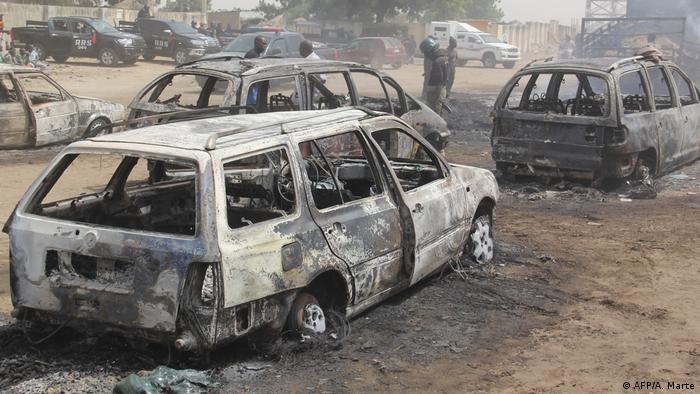
The Daily Reality report that bandits activity has claimed thousands of lives, destroyed property worth millions of naira and sacked many villages.

Some analysts believe that the incessant security challenges are politically motivated.

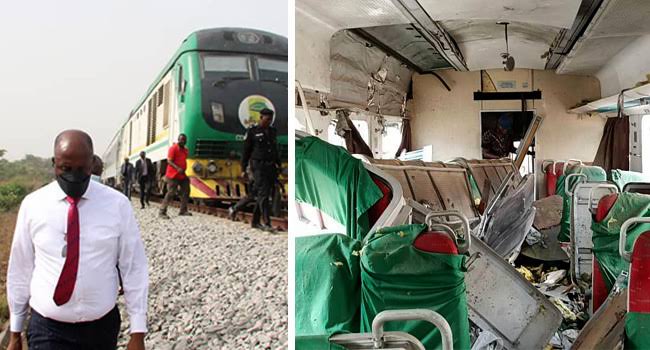
The recent Abuja-Kaduna train attack is one of many bloody attacks by bandits that forced the citizens to remain deeply pessimistic, not to mention commercial drivers plying roads in the restive region.

Our correspondent gathered that those abducted during the infamous train attack were taken to nearby bushes by the notorious, heartless bandits. 

Twenty-four hours later, bandits blocked the Kaduna-Abuja highway and abducted dozens of travellers.

Drivers who spoke to The Daily Realty said the situation had done significant damage to their business, saying they are still in the business because they do not have an option.

A driver, Haruna Lawan Ahmad, recounted his bitter experience in dismay, saying sometimes they had to descend and run for their dear life on sighting the bandits. 

Ahmad said, “We used to see terrible things on our way. Sometimes we have to alight and run away to save our lives after sighting bandits and come back later to take our vehicles after they finished their operations and abducted the ill-fated individuals.”

“There are roads that we can no longer follow, such as Birni Gwari of Kaduna State. Before, the drivers used to team up with the security personnel escorting them.”

“But sadly enough, even the security personnel stranded and accelerated their vehicle at high speed and run away from bandits.”

“Many of my colleagues and I remain in the business not because we are still passionate about it, but because we don’t have anything to do other than this driving,” he recounted. 

Another driver, Idris Bamba, urged the government to come to their aid as the situation was getting out of hand.

He said, “Insecurity in the country is worsening day by day. We usually drive with uneasiness of mind. Before, I used to leave Abuja for Kano by 5 am and arrived around 11 am. But due to security issues, I no longer do that. Some of my friends have even moved to other businesses.”

‘Insecurity sponsored’

A lecturer at the Department of Business Administration and Entrepreneurship, Bayero University, Kano, Dr Mu’az Hassan Mu’az, said the incessant security challenge in Nigeria is quite unfortunate and sponsored by some scrupulous elements. 

He said, “It’s quite unfortunate that these things are happening to the most peaceful and hospitable people in this country. Words cannot express how saddened our people are by the recent experience of attacks on innocent Nigerians.”

“The continued insecurity situation in this part of the country, mastered by people who are illiterates (Islamic and Western) and is sponsored by some scrupulous elements in our society who are selfish and never cared about their people, who worship money and have given up on the hereafter.”

“It’s quite unfortunate that the situation is getting worse day by day in spite of the huge investment in security by the federal government.” 

“Many people see the train as the last resort and safe haven for the common people. He thought the warning attack on the train was treated with glove hands, and security was beefed up on the train operations to prevent subsequent attacks.”

“But it happened again, in a very terrible manner. Painfully, the minister of transport was quoted to have said he envisaged the attack but Federal Government did nothing to prevent it from happening. Our leaders should come back to their right senses.”

Dr Mu’azu added that the leadership of Nigeria is responsible for every Nigerian’s life. They must come back to their senses to face the problem squarely to the end. 

He urged the authority concerned to provide aerial surveillance of the train routes from Kaduna to Abuja, engage every security stakeholder in the discourse of solutions to the menace of banditry n kidnapping, negotiate with the culprits and later deal with them silently, declare war against their residency in Nigeria and kill them all.

He said, “Let the authority concerned track and block their supplies of weapons, send a few security personnel on a secret mission, i.e. to be amongst them for some time, recruit locals to join in the fight against the bandits and block all their food supplies and medications.”

Train blast is not a problem of Kaduna alone

By Aliyu Nuhu

When we criticize this government, some people deride us as Buhari bashers. They complain that we lack patriotism because we run down our country. But look at Nigeria today and say if it is the kind of country you want to live in or it is the kind of country you want your children and grandchildren to inhabit.

What is the fault of the government in matters that concern our security? It is because of the way it neglected police affairs. Banditry and terrorism are, among others, products of poor community policing. Humans are products of communities, good or bad. The police decide the kind of communities we have as far as crimes are concerned. Before they kidnap anyone, criminals emerge from the community and when they kidnap they return to the communities. Good police will ensure that they don’t emerge and if they do, they can’t return to the community. But today’s Nigerian police are going on strike because of poor salaries and delays in payment of even the poor salaries. Police lack all working tools from the basics such as lie detectors, electricity, and computers; to the complex ones such as data banks for fingerprints and DNA.

Whenever there is a bomb blast you see the president holding emergency meetings with service chiefs. That is missing the point. What have navy, airforce and army got to do with attacks on the train? The president should hold his emergency meeting with police high commands, NSCDC and DSS. That is where the missing links lie.

The military ordinarily has no business safeguarding railways, doing the work of police, DSS and NSCDC. They have no budget to safeguard the railway. The military can be called to give additional firepower to the police when there is a need but they have no solution to the problem and cannot prevent future attacks.

The railway is a product of technology and there is technology to protect it. Only Nigeria will invest so much in railway and refuse to deploy the technology to protect it. There are real-time intelligent railway protection systems of various types to deploy. The minister for transportation had made such a request after the first attack which was denied (though the request was later accused of being through a seemingly corrupt process). The second attack has made the president see the reasons and approved of the technology. I hope that with the new measures, future attacks on railways will be prevented.

Who were the attackers?

According to the Daily Trust, a Kaduna security source, who did not want his name in print, said the attack was carried out by Boko Haram elements in collaboration with bandits.

“Two sources; a local with knowledge of bandits’ activities and a senior intelligence officer in Abuja confirmed that a Kaduna-based bandits leader, Boderi, was involved in hatching the attack.

Boderi is notorious for masterminding a number of atrocious attacks in Giwa, Chikun, Igabi and Zaria Local Governments in Kaduna State, including the abduction of students of the Federal College of Forestry Mechanisation, Afaka, in March last year and kidnapping of the Emir of Bungudu, Alhaji Hassan Attahiru in October of the same year.”

Also, victims said they were not the regular Fulani kidnappers that carry out their raids on the highways. They said they were very young boys between the ages of 18 to 25 years and spoke good English. Some of them were pronouncing “Allahu Akbar”. It pointed to either Boko Haram or ISWAP. Deployment of IED technology is Boko and ISWAP franchise. The attackers used buses, unlike the Fulani kidnappers that use motorcycles, an indication that they came from a long distance. How about 200 terrorists came in buses and carried people and disappeared into thin air beat all minds. There was no single casualty on the side of the attackers and no one was captured. We have a long way to go in security matters.

Airspace and aviation security in Nigeria: Matters arising

By Mukhtar Ya’u Madobi

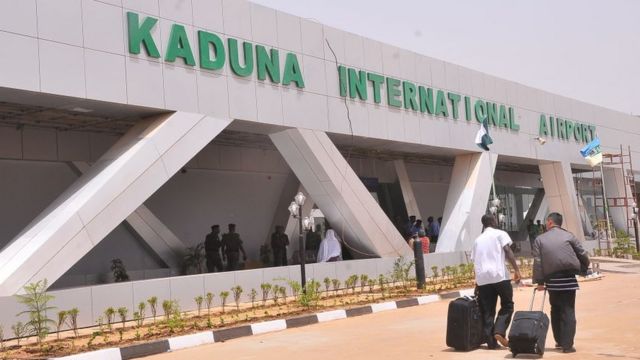
Another national embarrassment almost happened over the weekend. But alas, it wasn’t fated. Reports indicated that a group of bandit-terrorists, about 200 swarmed the Kaduna International Airport located in Igabi Local Government Area of the State.

The incident temporarily led to the disruption of activities, including the grounding of an Azman Air Lagos-bound aircraft. In addition, a security officer attached to the Nigerian Airspace Management Agency (NAMA) also lost his life.

It was learnt that the terrorists were on a revenge mission after some Nigerian military troops neutralized scores of them and equally retrieved some rustled cattle in their possession.

However, this unfortunate development is coming after another security breach had occurred last year, when the same category of criminal elements–bandits–invaded the country’s highest defence and security training hub, the Nigerian Defence Academy, NDA, in Kaduna.

Aside from killing some soldiers, reports claimed that the bandits abducted a senior military officer.

Nevertheless, the level at which these non-state actors are resurging and unleashing violence at will is something that needs to be treated with the adequate attention it deserves. Government and security agencies should live up to their expectations to surmount these lingering security challenges that disturb our nation’s peace.

It has been noted that an efficient transport system is part and parcel of national security as it entails the movement of people and goods from one place to another across the length and breadth of a particular geographical location. But in today’s Nigeria, it is disheartening to learn that people no longer travel comfortably with peace of mind due to uncertainties associated with our entire transport system.

For example, looking at the land transport system, the roads are in bad shape caused by numerous potholes that can easily plunge a motorist into an accident. Apart from that, the roads are also not safe as bandits, kidnappers and armed robbers are always having a field day launching attacks on commuters, robbing them of their hard-earned properties, abducting or even killing them.

Even the trains are no longer safe as terrorists have since devised a means of exploding rail tracks, thereby forcefully bringing them to a halt to pave the way for them to carry out their nefarious activities on passengers.

The recent bombing of the Kaduna-Abuja rail track by bandits is one of the worst attacks on the Nigerian transport system. Several passengers were killed, others got injured, while scores were equally abducted and yet to be accounted for.

Similarly, Nigeria’s waterways are also dangerous because they are swarmed by pirates who rob ships and sometimes abduct the entire crew only to release them upon payment of ransom. With the recent attack on the airport, it is right to deduct that the entire Nigerian transport system is compromised and has lost its calibre to serve the functions it is known to deliver.

The time is long overdue for Nigeria to rise to the challenge of safeguarding airspace and other transport sectors from the menace of criminal elements.

The importance of airspace and aviation security has been captured effectively in Nigeria’s National Security Strategy (NNSS 2019), a document published by the Office of the National Security Adviser (ONSA), Babagana Monguno, a retired Major General.

According to the document, “Efforts to secure the Nigerian airspace will be led by the Nigerian Air Force (NAF) in collaboration with other relevant agencies. Considering the vulnerability of the airspace, the NAF will employ preventive and protective measures to guard against airspace violations through [the] enforcement of international and national air laws.

“In addition, the NAF will deploy its resources to ensure the integrity of Nigerian airspace is maintained at all times. This will include [the] conduct of aerial surveys and delineation of security zones and liaison with appropriate agencies towards the completion of the Total Radar Coverage of Nigeria (TRACON) project to ensure effective monitoring and airspace security.

The primary stakeholders principally concerned with safety and security in the aviation sector include the Nigerian Civil Aviation Authority (NCAA), Nigerian Airspace Management Agency (NAMA), the Federal Airports Authority of Nigeria (FAAN) and the Nigerian Air Force (NAF), among others.

The role of these agencies is expected to be coordinated and enhanced in line with extant legislation and policy on Nigerian Aviation Security.

Nevertheless, another evolving phenomenon in airspace security is the preponderance of drones which constitutes safety challenges such as air misses and mid-air collisions with manned aircraft and security challenges such as air space violation, penetration of prohibited airspaces, a threat to VIP security, terrorism and espionage. Others are law enforcement challenges such as drug trafficking and proliferation, all inimical to national security.

To properly secure airspace and the aviation industry, the government must ensure the continuous provision of modern and up-to-date equipment and the promotion of adequate training and professionalism of various agencies handling different aspects of aviation security.

Additionally, Standard Operation Procedures must be developed to streamline the roles and responsibilities of the various agencies to optimize their performance and enhance the cohesion of their personnel.

Furthermore, it is imperative to ensure the development of standard safety protocols and resilience to protect critical aviation information infrastructure against cyber-attacks to enhance aviation security.

Mukhtar wrote from Kano via ymukhtar944@gmail.com.

The burning train of a burning country

By Khadijah Tijjani

It has been a while since I wrote about issues of national interest. I have decided to steer clear of such conversations because I doubt if it is really worth it. I used to pride myself in being a patriotic Nigerian until about a decade ago when the post-graduation shock shook me to the marrow.

Fresh out of medical school, I was determined to serve my country “with love and strength and faith”, using my knowledge and skills. But I was greeted with a cold welcome into a moribund system – a system that had almost nothing to offer but was ready to suck your sweat and blood and abandon your remains when you’re done with your heroism.

This is not about me and how I lost hope in the fatherland. If I’m still alive, I’ll tell you the whole story some other time. My grouse for today is stimulated by the recent terrorist attacks on the Kaduna-Abuja train. I’m sorry to bore you with this rant; I hope it makes me feel better. I’m just here to let it out and stop pretending to be oblivious.

I despise horror and tragic movies because of some traumatic scenes I watched as a kid. One of such movies is THE BURNING TRAIN, a Bollywood blockbuster that made waves in the early 80s. Vinod, a railway engineer, launched the Super Express, a dream project that was India’s fastest passenger train. Unfortunately, the train went out of control on its maiden journey due to a bomb planted by a rival. Directed by Ravi Chopra, the movie was known to have moved millions of people to tears.

Every time I replay that movie in the part of my brain that stores it for over two decades, I struggle to hold back the tears.

I never imagined something strikingly similar happening in real life, claiming several lives so close to home. The terrorists, having succeeded in stopping the Kaduna-bound train, reportedly shot sporadically and held the stranded passengers hostage for over an hour.

One of the victims was a promising young colleague – Dr Chinelo. This was a brilliant doctor who could have discovered the next best treatment for cancer, HIV or another disease yet unknown. But instead, she was wasted a few days after obtaining her GMC licence to practise in the UK.

Could she have survived if we had quick and effective disaster response teams? Only God knows.

She was lucid enough to tweet a distress call and probably breathed for a couple of hours before kicking the bucket. But what sort of treatment did she get? Welcome to Nigerian hospitals!

The train attack happened less than 24 hours after a similar incident along the same route. This mishap rekindled my memory of that catastrophic movie, The Burning Train. I’ve been trying not to talk or write about it, but my heart can no longer contain the pain.

I am a woman of faith and believe in the power of prayers. However, we’re on a burning train in this country, and faith is not enough to quench the fire.

This train is burning, and the political leaders are going about their rallies, spending millions of naira on branded clothes and live bands.

This inferno is consuming the best amongst us, but the worst amongst us are winning and dining.

This country is burning like wildfire, but there’s no fire truck anywhere.

They say there is light at the end of the tunnel. But the end of this burning tunnel is obscured by thick smoke that can kill faster than the fire itself.

We seek your aid, yaa Allaah!

Khadijah Tijani is a medical doctor. She writes from Ibadan and can be reached through askodoctorkt@gmail.com or @AskDoctorKT.

On the Abuja-Kaduna train attack

By Tajuddeen Ahmad Tijjani

It would be an understatement to imply that the Nigerian government has failed in its primary responsibility of protecting the lives of its citizens. Under any form, this catastrophe is cruel, inhumane, insensitive, and repugnant.

The only solution is to take decisive action by tracking these terrorists attacking and kidnapping travellers to their hideouts. It’s inexcusable to wait for them to attack before confronting them. They only deserve death by any means necessary.

The terrorists have declared total war on the country and undoubtedly put our territorial integrity and sovereignty to the test. Thus, allowing them to experience the freedom of fresh air is unacceptable.

Sadly, you only see government action promptly when their party is in crisis, or some forces are threatening their power. Surveillance can only work when these unrepentant bandits are followed to their hideout and eliminated.

Our gallant security operatives should sustain an offensive and kill the terrorists without wasting time on our weak judicial system. Perhaps, special courts to try terrorists and send them to God for them to answer for the crimes against humanity is simply the way to go. Then, the national assembly can come in to achieve a better bargain to make our country save.

My thoughts and prayers are with the victims who are being attacked innocuously daily, while the government’s apparent incompetence keeps reassuring citizens just on paper, with no hope in sight. But, of course, it is neither them nor their children who are the victims. That’s what makes them not act promptly. 

I, therefore, call on the government to rise to its responsibility. 

Tajuddeen Ahmad Tijjani wrote from Galadima Mahmoud Street, Kasuwar Kaji Azare, Bauchi State.

Terrorist bandits bomb Abuja–Kaduna train conveying over 900 people

By Muhammad Sabiu

Reports coming from the northwestern part of Nigeria have indicated that suspected terrorist bandits detonated bombs on the rail track of an Abuja-Kaduna train, thus immobilizing it.

The attack was said to have taken place between Katari and Rijana.

According to sources who spoke to journalists, the attackers were said to have surrounded the train, shooting intermittently.

As of the time of filing this report, there are still no details of the number of casualties in the attack.

Arewa’s potential and the Maitatsine syndrome

By A.F. Sesay

It’s difficult to fathom how a region of such numbers, resources, and beautiful cultural heritage/pedigree came to become such a scourge on national conscience in a space of forty years. What happened to the passion of the Sardauna, the native pride and dignity of your people, the welfarism that always motivated your brothers from the south or neighbouring countries to stay beyond those initial dates of return or even decide to be permanent residents?

If you were to canvas for answers,  different answers would come from different sources based on intellectual and cultural biases or leanings. That’s also the case with all matters of human endeavour. So, no shaking! And the more complex the issue the more divergent opinions and perspectives.

But in the case of recent events in northern Nigeria, with an emphasis on the Muslim hemisphere, there is something striking in the people’s unwanton love for the material side of life, contrary to the previous cultural ethos. Equally matched by this is the fear for death which naturally comes with more cravings for the transient pleasures of life. What happened to the studious efforts of the serious and sincere ulama (religious scholars)?

Let me hazard a few guesses. While some unscrupulous elements in both local and international media make it look like Arewa is Africa’s human abattoir where people are killed for the fun of it, non-northerners who have lived there before this litany of crises have fond memories of a people who are peaceful to a fault. This peace, which was largely a product of a contented heart, died with the pressure to keep up with the Joneses. And in that pressure was buried the deep fear of death. Before this, you knew people who were courageous, who stood for what they believed in no matter whose axe was gored and no matter the deadly consequence.

Crimes like kidnapping and banditry couldn’t reign supreme because criminals weren’t feared. We all remembered the courageous youths of Azare who risked their lives to confront armed bandits in 2012. Instances abound when community leaders (mai unguwas) coordinated young people to serve and defend the community within the ambit of the law. So, what happened?

How did we come to this period of life when people in a region of over 100 million people stood by and watched unknown faces and small groups of scums hack away their future and that of their children, one local government at a time?

Maybe we should look at the trends and evolution of materialism. Look at a few nations whose socio-economic progress have been meteoric in the last 50 years and look at northern Nigeria, you will see a striking lack of priority as well as a  lack of agency and urgency. And what underlies all this is the base love for material things among the elite which oozed out into the wider society rubbed off on the talakawa (proletariat) Suddenly, suddenly every Bala wants this: a luxurious house with a tall gate, a fleet of cars, tall, fair and wide-eyed women and other fine, yet fleeting things of life. Yet, neither the education nor the economy was tailored to sustain this onward rush to glitters: new trends come up annually in the design of houses, new brands of cars, new phones and so on.

Whoever is going to keep up with that has to have unrestricted access to money either through commerce or a job that pays an incredibly high salary. In the absence of this is another companion to money: stealing and everything extortion. Under this falls the myriads of problems we see today: unbridled corruption in governance, banditry, kidnapping and the rest in this nefarious family of ills.

Let’s say we flipped the conversation and say the fault is not in the people, but their enemies. It is logical to think that a region this steeped in tradition, with such great potential in numbers and unexplored resources is bound to be a target of both visible and invisible enemies, what is not logical though is when this becomes an excuse for inertia, baseless polemics, cancel culture and hurling of insults left right and centre. About enemies, who hasn’t had one? About insults, we haven’t seen one- I mean- we haven’t had an economy built solely on the foundation of the people’s ability to hurl insults at each other.

While there are certainly smithereens of enmity and animosity smothered on all of the region’s myriads of problems (a common case is a bias in data and reportage on and about the north, but let’s not digress), there is certainly a need for deep introspection. What happened? Are these manifestations of problems long foretold? Could something be wrong with the very approach to problem-solving? Or is this a huge cultural gap nobody is willing to talk about? Does it have something to do with population or outright carelessness on the part of the ruling class?

The north, in its long political sojourn as part of a nation in which it was severely disadvantaged in education, yet extremely well-positioned in Politics and Administration, has had its fair share of wins and losses. What remains to be seen is the ingenious manipulation of pluses and minuses. The world is watching and history’s pen is looming over you!

All told, the current state of affairs should remind you of the popular hadith of Prophet Muhammad (peace and blessings of Allah be upon him). And if this is a behavioural problem like it was rightly observed, then it’s going to require a behavioural solution: moderate the wanton love for material things and be courageous enough to confront death when your dignity and that of the generations unborn are at stake. 

A.F. Sesay sent this via amarasesay.amir@gmail.com.

Insurgency: Bandits use better equipment than our forces – El-rufai

By Uzair Adam Imam

Kaduna State governor, Nasir El-Rufai, has decried over the menace of insurgency rocking the North-Western part of the country while lamenting that the bandits use better weapons than the Nigerian security forces.

The governor who described bandits as “massive monsters” stated this while reacting to some questions on banditry and kidnapping in the North- West. El-Rufai spoke on Thursday in Abuja during the weekly briefing organised by the Presidential Communication Media.

He reiterated that insurgency in the North-West is far more severe than the Boko Haram crisis, going by the growing number of people killed and kidnapped every day.

“I am persuaded that the insurgency in the North West is far more serious than Boko Haram, both in terms of the numbers of the people affected. I have shown you the numbers in Kaduna. I can assure you that the numbers on Zamfara and Katsina are up to three times. The numbers in Sokoto, Niger, and Kebbi are also very alarming.

“We are talking of tens of thousands of people getting killed, getting kidnapped. It is far more serious than Boko Haram. The only thing is that these guys don’t occupy territory. They are in the forest and ungoverned spaces.

“So, they do not attract the kind of single-minded attention that Boko Haram does. And because Boko Haram’s ideology is religious, intentionally religious, it elicits more passion, but really, this is a far more serious problem.

“Because, this is a situation largely in which people of about the same ethnicity, same religion are killing each other, stealing each other’s property, creating an industry out of criminality. It’s very serious, and it requires single-minded attention,” said El-Rufai.

Who will save our children?

By Lawi Auwal Yusuf

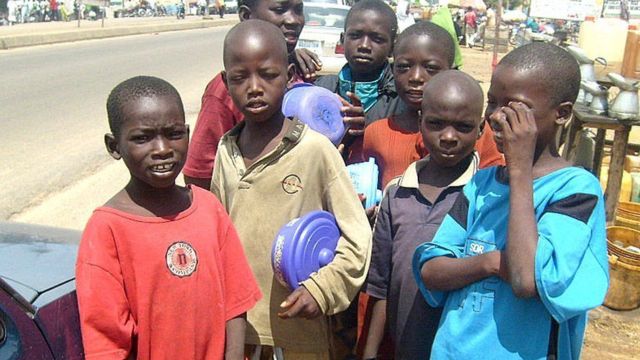
Any sympathetic person will surely ask himself these questions over the unfortunate fate of Almajiris: what wrong have they done to deserve such ruthless treatment? Are they not humans? Are they divinely condemned? Is it because we have heartless hearts? Or is it just because we have brainless brains? 

However, the Social Contract Theory extrapolates the relationship between the State, Citizens and Laws. Both the state and citizens have an overwhelming obligation to obey the law. These laws made it possible for leaders to assume the office and couples to marry and have legitimate children. Through these laws, leaders must cater to the needs of people and parents to take care of their children. Ultimately, justice is the philosophical underpinning and moral wisdom behind this idea. 

I wonder why leaders and parents breach the trust bestowed on them. Indeed, we need a professor in the law of trust to prove this before a jury so that the culprits will be locked up in prisons. 

Politicians have made these innocent children scapegoats of their misrule. They are severely castigated for offences committed by the government. Also, the lackadaisical and pitiless attitudes of parents worsen their plight. Even animals don’t dump offspring. On the contrary, they vigilantly look after them and guard them fiercely against any harm until they can take care of themselves.

Everyone abandons these children. They are left on their own to fend for themselves. Therefore, they scavenge through garbage, looking for food, wearing shabby clothes. They wander freely without a specific purpose or destination, with no shoes in the scorching heat. They equally have no one to attend to them when they fall sick. It seems like the ancient Indian caste system is gradually manifesting in 21st century Nigeria, and Almajiris form part of the Dalit (Untouchables) social group. 

When you ask them to define democracy, they will tell you that “it’s a government of the elites, for the elites and by the elites.” This is because it is purposely designed to cater to the needs of nobles only in their perception. It’s nothing to commoners but an inevitable woe. So they see it as subjugation, tyranny and distress. 

Almajiris have carried the cross for too long. They’re tired of this impudent desertion and have endured this problematic situation, and cannot withstand it any longer. Finally, they’ve been pinned down by the neck and are crying out for help with a thunderous scream, “we can’t breathe!” But, of course, this is cruelty in its cruellest form. 

These children are the future custodians of our society. Their desolation denotes that we undermine its continuity, progress and prosperity. We will bequeath to them a country that negligently failed to help them, forsake their welfare and future. They will take over a nation unable to develop humans, plagued by injustice and misery. Hence, it is unlikely that they will be patriotic to Nigeria. Is this what we are preparing for the next generation?

Indeed, they will remember us as imprudent forefathers that ruined their lives, put them in dismay and plotted the doom. The ones that disappointed them, those that couldn’t save them from grief. Those ancestors whose labour had been in vain. Indeed, they will utterly forget us, let alone pray for our eternal rest. 

We expect Tsangaya schools to consistently roll out erudite personalities, honourable scholars like late Dr Ahmad Bamba, Sheikh Ja’afar Mahmud Adam, Prof. Isa Ali Pantami or prof. Muhammad Sani R/Lemo. Unfortunately, we saw something entirely different. 

Nowadays, Almajiris are not purposely taken to Tsangaya for learning. Due to a lack of awareness concerning contraceptives, parents incessantly born children they can’t support. At long last, they discard them. How will a minor learn without provision for his necessities, vehement supervision of parents and also fend for himself far away from home? It can NEVER be possible.  

Let’s assume there are only one million Almajiris in the North, and only 5% ended up in criminality. Hence, there will be an additional 50,000 criminals to terrify the region, which is about 15% of the police workforce. So, how many more millions are there? 

Consequently, we are paying the price for our actions and inactions. We are suffering due to failure to resolve this criminogenic problem. We’ve undergone the agonies of Maitatsine dogmatism, and now we are in the bondage of Boko Haram, banditry, kidnappings, to mention a few. Have we learned lessons, or we will remain indifferent? Or are we now determined to dispel the injustice and save these downtrodden children? 

Lawi Auwal Yusuf wrote from Kano, Nigeria. He can be reached via laymaikanawa@gmail.com. 

Of criminality, economic stability, birth control and northern Nigeria

By Zakari Abubakar

It is evident that whenever there is an upsurge in criminal activities in parts of northern Nigeria, a perennial debate usually rears its head among those interested in the root causes of the problem. This is understandable. Without identifying the cause of a problem, its solution may not be in the offing. Like virtually every year, this debate is also gaining traction in this early part of 2022.

Admittedly, this view adds to the existing number of discussions on this topic. Those who are following the debates are not unaware that there are a group of people who link the rise in criminal activities in the north and the rate of excruciating poverty among its people, mainly to the large number of children born in virtually every family in the region. This group of people base their argument SOLELY on the superficial and generalised assumption that people with a large number of children, more often, engage in irresponsible parenting.

Another reason why this group of people see an individual with a large number of children as a potential source of criminality and economic stagnation is that Nigerian authorities have for long been finding it difficult to provide social services such as education, electricity and other life essentials to these growing number of citizens which leads to more people becoming poor. This is where I find their argument too simplistic. Because the same authorities are providing these services to themselves, their families or their cronies.

Going back to their first argument, it is glaringly verifiable that for every individual with many children who fail to cater for them, hundreds, if not thousands, bore many children and saw to their responsible upbringing. This example is on the level of individuals. There are many more such examples on the societal level. For instance, several countries and regions of the world have nearly the same population as northern Nigeria or are more populous but are not facing the same challenges.

Those societies have considered such a phenomenon as a gift and therefore utilise it positively. To buttress this point, the five most populous countries in 2021, according to sources, are China, India, the United States, Indonesia, and Pakistan. Although these countries may be facing their security and economic challenges, the standard of living in those societies is by far more robust than what is obtainable in northern Nigeria.

To cite a specific example: about 90% of China’s population is Han Chinese. They are over a billion people, yet, there is no accusation from the rest of the population in that country or the Hans themselves that the Hans are a potential source of poverty or criminality. Similarly, the most populous state in India is Uttar Pradesh, with over 200 million inhabitants. But go to India. How does Uttar Pradesh fare compared to the rest of Indian territories in terms of economic prosperity?

No one is disputing that northern Nigeria is recently replete with a high rate of criminality occasioned by poverty among its growing population. But to solely link this problem with the region’s birth rate is to accord the topic attention that is less than it badly desires. For example, what about the other seemingly systemic problems that have to do with governance and political leadership?

One may say, why do people resort to adding problems for themselves by producing more children since the government failed to sustain their needs? Then I would say, instead of blaming those who fail to provide those essentials (though they are providing them for themselves and their families), we resort to blaming the poor, despite his effort to always get himself out of the effects of poor/bad political leadership?

Elsewhere, other regions of the world are complaining of a decline in their population. Thus, they outsource other remedies for their problems, like encouraging men and women to engage in economic activities. Therefore, no matter how small, we should demand accountability from our political leaders and seek other possible options that are more viable than resorting to birth control, which has its implication on man’s overall health.

Zakari Abubakar is with the Department of Physical and Health Education, Aminu Saleh College of Education, Azare. He can be contacted via zakariabubakarnng@gmail.com.