ATBU

Converting ATBU to a conventional university: A backward step in a forward world

By Aminu Babayo Shehu

The recent move by Senator Shehu Buba Umar, representing Bauchi South, to convert Abubakar Tafawa Balewa University (ATBU), Bauchi, from a University of Technology to a conventional university has stirred deep concern among stakeholders, alumni, and advocates of science and technology education. The bill, which has already passed second reading in the Senate, risks undoing decades of progress that ATBU has made in advancing technology-driven learning and innovation in Nigeria.

In an era when nations are competing through science, technology, and innovation, Nigeria cannot afford to take a step backwards. Around the world, technology is driving development, job creation, and national competitiveness. From Artificial Intelligence to Robotics, Biotechnology, and Cybersecurity, the future of work and industry is being reshaped by technology. It is therefore troubling that, instead of strengthening one of Nigeria’s most respected technology-based universities, the discussion is now about diluting its identity.

ATBU has earned its reputation as one of the country’s leading technological institutions. For decades, it has produced graduates who are not only competent but highly sought after in both the public and private sectors. Alumni of the university are excelling in software engineering, telecommunications, construction, fintech, and data science. Many are leading teams, building products, and contributing to the growth of major organisations across Nigeria and abroad.

In recent years, the university has made even more progressive strides. The Faculty of Computing, for instance, has expanded its curriculum beyond traditional Computer Science to include new, globally relevant courses such as Artificial Intelligence, Data Science, Software Engineering, and Cyber Security. These additions are clear evidence that ATBU is aligning itself with international trends and preparing students for the realities of the modern digital economy.

Instead of seeking to convert ATBU into a conventional university, the Federal Government and relevant stakeholders should focus on strengthening its technological capacity and research base. There are better, more visionary ways to make the institution self-sustaining and impactful. Establishing Artificial Intelligence research laboratories, cybersecurity and digital forensics hubs, robotics and automation labs, and technology incubation centres would attract both local and international partnerships. Such facilities could become national assets for innovation, startups, and industrial research.

Globally, top universities have achieved great success by maintaining and deepening their technological focus. The Massachusetts Institute of Technology (MIT) in the United States, Tsinghua University in China, and the Korea Advanced Institute of Science and Technology (KAIST) are shining examples of institutions that have transformed their nations through technology-driven education and research. Nigeria should be learning from these models, not abandoning its own.

Turning ATBU into a conventional university would water down its focus and weaken the very foundation on which it was established. What Nigeria needs today are more institutions that specialise in applied sciences, engineering, and emerging technologies; not fewer.

This proposal, though perhaps well-intentioned, is ill-timed and misdirected. The challenges of the 21st century demand more innovation, not less. The future will belong to nations that invest in science, technology, and knowledge creation.

ATBU should remain what it was meant to be: a University of Technology dedicated to building Nigeria’s next generation of innovators, engineers, and researchers. To do otherwise would not just be a loss for Bauchi or Northern Nigeria, but for the entire country.

Aminu Babayo Shehu is a Software Engineer and alumnus of Abubakar Tafawa Balewa University, Bauchi. He writes from Kano via absheikhone@gmail.com.

Inside NYSC Permanent Orientation Camp

By Usman Mujtaba Shehu

The National Youth Service Corps scheme idea was to expedite contacts across cultural zones and bridge the cultural gaps, and surmount cultural stereotypes.

Being in an NYSC dress is a dream come true for me. Having visualized how it would feel or how I would look in it about two decades ago, I’m thrilled to experience it finally. When I was younger, I used to wear my father’s NYSC ceremonial shirt. Although it was oversized, the tip reaching my knee sparked my interest in the NYSC program.

The question isn’t just about the dress but about the experience and feeling of being a Corp member. That’s what many people long for. During the registration process, I didn’t encounter many hitches. The main challenge was the duration of my university program, which was prolonged due to the long ASUU strike and the emergence of the COVID-19 pandemic.

Apart from these two reasons, all the delays were natural, stemming from the nature of my school’s (ATBU) calendar. The NYSC registration, receiving my call-up number, and anticipating my state of deployment were challenging. I spent 13 hours in the CAFE in the queue waiting to be registered. Additionally, I waited several more hours to receive my call-up number and was eventually deployed to Dakin Gari Orientation Camp in Kebbi State.

When I saw the call-up letter, I was sad, and my mind wandered to the 1-day, almost 12-hour journey ahead. After arriving at Birnin Kebbi, I had to find a taxi to the camp, which was a struggle. It took me 4 hours to get a cab and another 2 hours to reach my destination. I arrived at the camp in the evening, around 5:30 pm. Luckily, the registration queue had been reduced, so I didn’t have to wait.

After checking my bag, I proceeded to the admin block for registration. I discovered my platoon from my state code, which was like a registration number. And from the last digit, I knew I was in platoon 4. I collected my meal ticket, which served as a food ID, and was given a mattress and bed space in the Boys’ Hostel (3).

After settling in, I attended another registration session conducted by the platoon officer. Once completed, I received a set of light-green khaki, the NYSC ceremonial shirt, an orange boot, a white cover shoe, a customized cap, and two pairs of short white trousers and shirts. I felt mixed emotions, reflecting on the future and how it would unfold.

Is it true that the orientation is difficult? In the NYSC Orientation Camp, you feel a sense of belonging regardless of your background or who you are. This is rooted in the NYSC act and the orientation design, which aligns with their motto of “humility and service.” The process is humbling, bringing together people from diverse tribes, such as Yoruba, Hausa, Igbo, Ebra, Tiv, and Fulani.

Religious activities are also accommodated, with three Christian prayer points and one mosque. This allows Corp members to practice their faith without discrimination.

The sense of togetherness is reinforced by the uniform dress code, which includes white shirts and trousers, customized shirts with NYSC alphabets emblazoned on the front, and khaki trousers with boots and customized caps for ceremonies. Trust among Corp members develops quickly as they view themselves as similar or familiar, united by their platoons.

Platoons unite Corp members, and my platoon (platoon 4) leader, a Yoruba from Lagos, exemplified this unity. With 10 platoons, each comprising over 100 Corp members from different states, backgrounds, languages, and cultures, we were united under a shared platoon identity designed by NYSC to foster unity and patriotism.

People tend to trust those within their in-group, and belonging is a primal instinct. When Corp members display attitudes, beliefs, or platoon membership, others tend to like and trust them more. My response to lowering the Nigerian flag every 6:00 pm still amazes me. Every activity would come to a halt when the trumpet was blown.

My new identity became my platoon. I made new friends across all platoons, but Platoon 4 became like family. Competitions were organized to strengthen bonds within platoons. I participated in the football competition and cheered for my platoon in the parade competition, cooking, cultural dance (Edo Dance), and other events.

I attended over 30 lectures and sensitization sessions with my platoon, covering education, health, relocation, finances, and more topics. I only separated from my platoon during the Skill Acquisition and Entrepreneurship Development (SAED) launch. Corp members were allowed to choose their training. I attended and listened to about 30 lectures and sensitization sessions with my platoon. The lectures cover almost all areas, including education, health, relocation, finances, etc.

That was how we were shared with eight different skills Acquisition classes. I chose ICT and learned basic Data analysis and graphic design using pixels.

The orientation is rigorous and tedious. But when I reflect on the whole objective of the NYSC initiative itself, it’s worth it. It’s not a pointless activity but a scheme meant to instil discipline, love of country, and love of one another. As mentioned in the national anthem: ‘Though tribes and tongue may differ, in brotherhood we stand’.

Usman Mujtaba Shehu wrote via usmanmujtabashehu@gmail.com.

Governor Inuwa hails appointment of Prof. Ibrahim Garba as ATBU vice-chancellor

By Abdullahi Mukhtar Algasgaini

Gombe State Governor, Muhammadu Inuwa Yahaya, CON, has congratulated Professor Ibrahim Hassan Garba on his appointment as the new Vice-Chancellor of Abubakar Tafawa Balewa University (ATBU), Bauchi.

Prof. Garba hails from Yamaltu-Deba Local Government Area of Gombe State. His appointment, which takes effect from today, October 10, 2024, was approved by the ATBU Council at its 30th Special Meeting on October 9, 2024.

Reacting to the development, Governor Inuwa Yahaya praised Prof. Garba’s exceptional career and his commitment to academic excellence.

“We are proud of this illustrious son of Gombe whose elevation to this prestigious office brings honour not only to him but to our entire state. His wealth of experience and academic leadership will undoubtedly steer ATBU towards greater achievements, particularly in promoting innovative research, academic excellence, and international collaborations. We are confident that under his stewardship, ATBU will continue to be a citadel of knowledge and innovation in Nigeria and beyond”.

The Governor also assured the new Vice Chancellor of the solidarity and goodwill of the people of Gombe State, expressing confidence that Prof. Garba’s tenure will bring positive changes to the university and strengthen its reputation as a leading institution of learning in Nigeria.

Prof. Garba, a 1992 graduate of the University of Maiduguri and a renowned professor of biochemistry, has held various key positions at ATBU, including serving as the Dean of the Faculty of Science, Deputy Vice-Chancellor (Administration) on two occasions, Chairman of the Academic Staff Union, and most recently as the Center Leader of the ATBU-World Bank collaborative program, SPESSE.

Prof. Yusuf Bara Jibrin: A medical trailblazer

By Usman Abdullahi Koli, ANIPR

In the words of the great German and one of the most impactful scientists, Albert Einstein, “Intellectuals solve problems, geniuses prevent them.”

In medicine, intellectualism and professionalism are the hallmarks of integrity. Back in Nigeria, like every sector, health faces its challenges. And in the words of the great scientist, dodging problems may not be far from shifting disaster; he believed that as an intellectual, the problem should be solved head-on. Professor Yusuf Bara Jibrin, the Chief Medical Director of Abubakar Tafawa Balewa University Teaching Hospital, Bauchi, epitomises these traits.

As a Professor of Internal Medicine specialising in infectious diseases, Yusuf Bara Jibrin has made significant strides in clinical development, research, training, staff welfare, and community engagements.

Prof. Jibrin is a beacon of intellectual curiosity and an embodiment of generosity in serving humanity. Through groundbreaking research, he has revolutionised our understanding of disease diagnosis and treatment, yielding numerous advancements in the medical field. His pedagogical prowess has inspired generations of medical professionals, nurturing their talents and fostering a passion for healing. Beyond his discipline, his expertise embraces various subjects, with an unending commitment to mentoring and guiding his staff and students.

Under his leadership, ATBUTH Bauchi has emerged as a premier healthcare institution in Bauchi and beyond. The sophisticated new facilities, including the General Outpatient Department (GOPD) complex, ENT department, Infertility Centre, and the upcoming Dental Clinic and Diagnostic Centre, are a testament to his commitment to excellence. His efforts have also led to the establishment of robust community engagement and management development programs, enhancing the hospital’s visibility and operational efficiency.

ATBUTH Bauchi has achieved numerous clinical milestones under this exemplary leadership. The hospital conducted its first endoscopic laser therapy for kidney stones, a significant advancement in minimally invasive surgery. The Pharmacy Department has begun using a drug formulary, aiming for essential service delivery. The successful execution of the first spinal surgery operation and the introduction of laser urethral stone procedures further underscore the hospital’s clinical capabilities.

The NCDC recognises the Molecular Genetics and Infectious Diseases Laboratory at ATBUTH as a national surveillance system, thanks to its advanced sequencing equipment. The Lassa Fever Isolation Centre has recently invested in new dialysis machines, effectively reducing Lassa fever fatalities and positioning the centre as a leader in managing Lassa fever cases in Bauchi. The Pharmaceutical Production Unit has commenced making sanitisers and hydrogen, contributing to the hospital’s competence in pharmaceutical manufacturing.

ATBUTH Bauchi has launched an Emergency Medical Service and Ambulance System equipped with a highly responsive team to provide effective emergency medical assistance. The Geriatric Management Centre is set to commence home services, focusing on the well-being of elderly individuals. The implementation of the Electronic Medical Record System has significantly reduced patient waiting times, improving overall service delivery. The established Oxygen Plant has become an independent supplier, reliably providing oxygen to Bauchi and its neighbouring states.

The management team at ATBUTH, under Prof. Jibrin’s visionary leadership, has transformed the hospital into a beacon of excellence in healthcare delivery, research, and training. Their collective efforts have propelled ATBUTH to new heights, ensuring it remains at the forefront of medical innovation and patient care.

As we acknowledge these achievements, we pray for continued success and growth for ATBUTH Bauchi. May their efforts be rewarded with further advancements and improved healthcare outcomes for the benefit of all.

Usman Abdullahi Koli wrote via mernoukoli@gmail.com.

The University System and the academic ranking that I know

By Abdelghaffar Amoka Abdelmalik 

We (Nigerians) are a very interesting set of people. God truly took his time to specially create us. In most cases, we look at issues with emotions and live by the moment. For every discussion, especially if it’s on a controversial issue, we choose the side to support based on the personality involved and our loyalty at that moment. We pose to know everything and as online expert commentators on all issues.

A widely publicized questionable promotion by a Nigerian university was observed a few days back that created heated discussions where individuals that have got no idea on how universities work and can’t differentiate between Assistant Professor and Associate Professor were trying hard to defend the questionable act by the university. Some attempted to give a religious colouration because an Islamic Scholar is involved. A popular online public commentator was so sure that the promotion to the rank of what he called a “full professor” has no specific criteria. That, universities can confer professorship to anyone they so wish. Really? By the way, there is no rank called “full-professor” in any Nigerian university.

Let me share my opinion having spent the last 16 years in academia on tenure appointment at Ahmadu Bello University (ABU), Zaria. 5 of these years were spent in Europe; 2 years as a Postdoc at NTNU Trondheim, and 3 years for PhD/Part-time teaching assistant at Leicester. While I was at Leicester for graduation in July 2012, my second PhD supervisor hosted me in his house at Market Harborough. During our conversation, I asked him about the criteria to get the position of a Lecturer at Leicester and other universities in the UK and he said PhD with 5 journal articles in reputable journals. I asked about Professors and he smiled and responded that it is about how much money your innovative ideas can bring to the university. Professors are the lifeline of the universities in the UK as they are relied upon to attract grants/funds to the university. He added that you can be just Lecturer or Senior Lecturer till retirement if you can’t attract enough grants to earn a promotion.

Dear Nigerians, Professorial rank is not an honorary rank. Not in the British university system and not in any university in Nigeria. There are criteria to get to the rank. Search online, and you will find the promotion criteria/guidelines for several universities around the world. There is a strict guideline for promotion to the rank of Professor or any other rank in all the universities around the world. For Nigeria, I find the university of Ilorin promotion guidelines very interesting. It is a progressive and result-oriented promotion guideline. The guideline if implemented judiciously will place the university in a scholarly database visible to the world of research. I am hoping that other universities in Nigeria will adopt something similar.

For some universities in Nigeria, to be qualified to be promoted to the rank of Professor, you must have published a minimum of 15 journal articles in “non-predatory” journals, have 7 conference proceeding/conference papers, be involved in community service, have supervised at least 2 PhD students, involved in teaching and research for at least 3 years after the last promotion to the rank of Reader (Associate Professor), etc.

Meanwhile, before you get to that highest university rank, a fresh PhD with 3 journal publications and 2 conference papers may be employed as Lecturer II or Lecturer I. You are expected to teach for the next 3 years, research within that year and publish a total of 6 journal papers and 4 conference proceedings/papers to be promoted to the rank Senior Lecturer.

As Senior Lecturer, you are expected to be involved in postgraduate and undergraduate teaching and supervision for 3 years, supervise at least 1 PhD student, published a total of 10 journal papers and 5 conference proceedings/papers, engage in community service to be qualified for a promotion to the rank of a Reader (Associate Professor). And from there to the rank of Professor after satisfying the minimum condition stated above.

Every Nigerian public university is established with an Act of the National Assembly. They are independent of each other. They have their respective Governing Councils that steer their activities. Some academics rise faster by moving from one university to another. But for you to move from one university to another, you must secure a fresh appointment at the university you want to move to. You can then transfer your service from the old to the new public university in Nigeria. That is how it works.

The point to note is that a university cannot offer a promotion to an academic in another university. A non-faculty member and without employment history cannot be offered a promotion in any university except NUC has approved a rank called “Honorary Professor” for politicians.

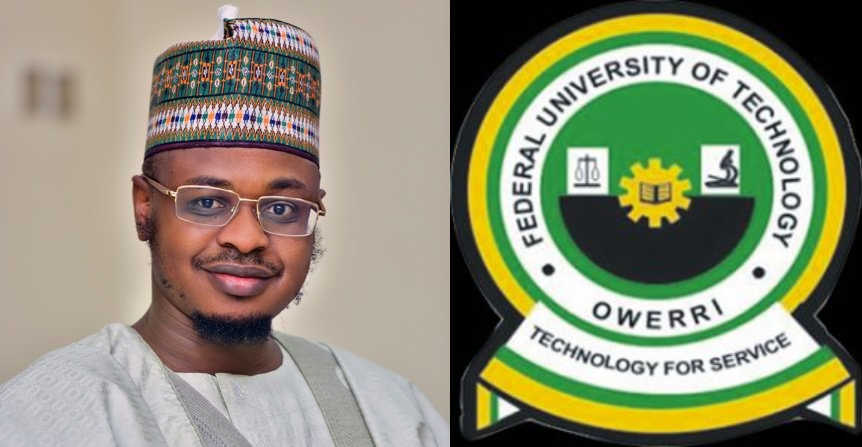
Dr Isa Ali Ibrahim (aka Sheikh Pantami) was a lecturer at ATBU Bauchi from 2004 to January 2014 according to his ResearchGate profile. He proceeded on study leave in 2010 to Robert Gordon University, Scotland for his PhD. Immediately after his PhD in January 2014, he got an appointment as an Assistant Professor at the Islamic University of Medina. Some said his rank at the Saudi University was Associate Professor. But I doubt if any serious university will employ a fresh PhD as Associate Professor. He spent 2 years 7 months at the Saudi university before he terminated his contract to pick up the political appointment at NITDA in 2016. 

Meanwhile, it is not certain if he absconded from ATBU to pick up the Saudi job or ATBU has no bond for their PhD scholars that went on study fellowship. He left Saudi Arabia to pick up the appointment with the government in 2016. He has worked as DG and is now a minister for the past 5 years. He seems to have no link with any university over the last 5 years and specifically no employment history with FUTO. But only to see the advertorial from Zamfara state governor on a national daily congratulating the Sheikh for his promotion to the rank of “Full Professor” in 2021 by the Council or Senate of the University. He was said to have published 160 papers. Papers that could not be found on the database of scholarly articles.

The advertorial raised questions and discussions started. From his history in academia, he seems not to possess the requirement for the said new rank. He is not involved in teaching and research for the last 5 years. Meanwhile, as a Minister of the Federal Republic, he can’t even take up another Federal government job except he resigns. If FUTO actually needed him for whatever reason, they could have hired him as a Visiting Professor, which is a part-time job and it is allowed. They can then offer him the position of Professor when he is done with his political appointment as long as he is willing to live, teach, do research, and supervise postgraduate students at FUTO. 

During the discussion, some irrelevant points were raised. It is to note that during the time of Aristotle, Albert Einstein, Marie Curie, and up till Wole Soyinka’s period, you can be a Professor without a PhD. But that is not the case now. For now, you can’t be a Professor (aside Medical Consultants) without a PhD. There is an ongoing discussion on the need for Medical Consultants to have a PhD to become Professors. People are quick to mention Dr Bala Usman even though he was not relevant in the discussion. The highly respected critic was qualified to be a Professor but chose not to be a Professor for personal reasons. 

Yes, we have issues of irregularities in the appointment and promotion in some of our universities and we hope that the Governing Councils of the respective universities can put an end to that someday as we work towards regaining the lost glory. But this questionable promotion at FUTO of a PhD with 2 years 7 months post-PhD teaching and research experience and 3 visible materials on Scopus and without employment history in the university, seems to be part of such irregularities.

Dear University managers, we have a responsibility to protect the university system and the ranks which are reserved for only those in the university that have worked for it and merited it in accordance with the university guidelines. We should not let it go the way of honorary degrees that are allegedly being purchased by politicians that are hungry for titles. 
ASUU has over the years worked very hard for the Autonomy of the universities, especially the federal universities, to shield them from political interference that is crippling the university system in Nigeria. We are still struggling with the principle of university autonomy even with the existence of the Autonomy Act. Let’s not give room for the interference to take new dimensions. We all need to rise against the irregular appointment and promotions like this so that it will not become a norm like honorary doctorate that is allegedly sold to politicians.

Dear Sheikh Pantami, you are a highly respected Islamic Scholar that I want to believe is not looking for titles. Titles can’t add value to your personality and what you stand for. It has no value for the hereafter. You have recorded notable achievements as a Cleric and as DG of NITDA and the Minister of Communications. It is obvious you have a love for academics. Just be patient and finish your assignment as the Minister. You can then join us in Bauchi or Owerri to mentor the next generation of cyber security experts, and you will rise to become a highly decorated Professor.

Dear Executive Secretary of NUC, I hope you will read this piece and take appropriate action to protect the little integrity left in our universities.

Abdelghaffar Amoka Abdelmalik writes from Zaria and can be reached through aaabdelmalik@gmail.com.