ASUU strike

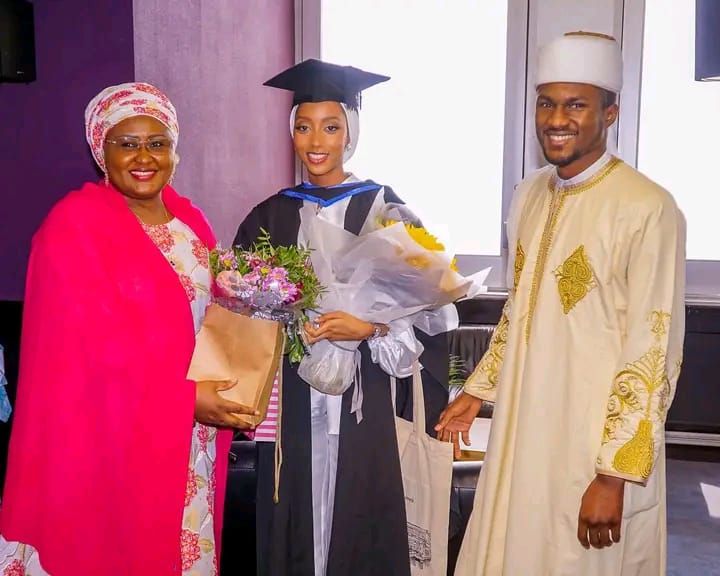
Buhari’s daughter-in-law graduates from foreign university

By Ahmad Deedat Zakari

Zahrah Buhari, one of the daughters-in-law of Nigerian President, Muhammadu Buhari, has graduated from a foreign university.

Nigeria’s First Lady, Aisha Buhari, broke the news of the family’s milestone on Facebook on Tuesday.

The First Lady, who posted pictures from the graduation ceremony, congratulated her daughters-in-law on graduating with a first-class degree in architecture.

“Congratulations to Mrs. Zahra B Buhari on your graduation with First Class Honors in Architectural Science. Wishing you all the best!” She wrote.

This is coming amidst the Academic Staff Union of Universities, ASUU, months-old strike. Consequently, many Nigerians condemn the first family for being insensitive to the plight of Nigerian students.

Reps to meet ASUU leaders in a bid to resolve seven months strike

By Ahmad Deedat Zakari

The House of Representatives have scheduled a meeting with the leadership of the Academic Staff of Universities, ASUU, in a bid to resolve the lingering impasse between the union and the government.

The Clerk of the Green Chamber, Yahaya Danzaria made the revelation in a statement he made available to newsmen on Monday in Abuja .

According to Danzaria, the meeting will take place at the Representative Wing of the National Assembly on Tuesday.

“The House of Representatives is deeply concerned about the renewed strike which seems to have defied all efforts made to find a solution or reach an agreement between the Federal Government and the striking University lecturers.

The House is more worried about the negative consequences of the strike on the future and quality of education of our teeming youths who have been kept at home for the past six months despite the intervention of the House and several well-meaning Nigerians overtime to see that the matter was resolved.” Part of the statement reads

ASUU embarked on strike on February 14, consequent of which most Nigerians public universities have been shutdown.

ASUU Strike: Lecturer puts library for sale in Maiduguri

By Uzair Adam Imam

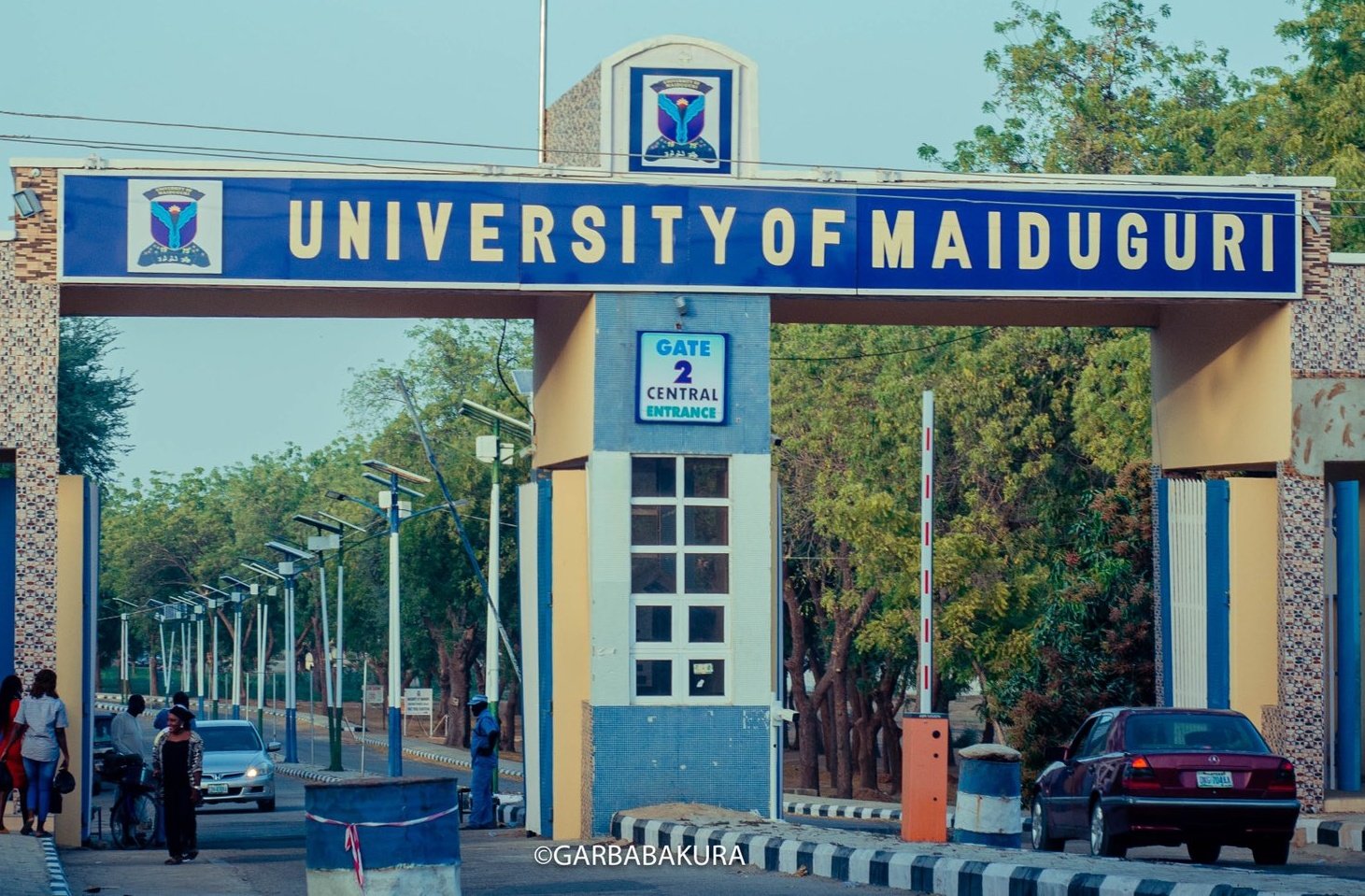
An aggrieved lecturer at the University of Maiduguri has put his personal library for sale as the dispute between the Federal Government and the Academic Staff Union of Universities (ASUU) lingers.

The lecturer, Othman Abubakar, disclosed this in a short note, which The Daily Reality verified, titled, “Goodbye To Education In Nigeria, No Hope”.

The Daily Reality recalls that ASUU has been on strike since February 14, 2022, resulting in the shutdown of public universities nationwide for over seven months.

The union is protesting against alleged infrastructure decay at various institutions and neglect of its members’ welfare.

Abubakar said, “With the destruction of university education in Nigeria today, and the starving of university lecturers by the insensitive APC government, I no longer need these books. 

“Those that still believe that education in Nigeria is important, please come to my office at the address below and buy these books at your own price l am available in the office from 9 am to 5 pm daily, including weekends.

“Access Address: Department of English and literary studies, University of Maiduguri. Sign. Dr Abubakar Othman,” he stated.

Currently, the case between ASUU and FG is in court as the FG dragged the union before the court to put an end to its lingering strike that led to the shutdown of all public universities nationwide.

Stop intimidating our members: SLUK-ASUU tells Jigawa State government

By Ibrahim Mukhtar

There is a continued misunderstanding between the Academic Staff Union of Universities, state chapters and some state governments who feel that the strike action embarked by the national body of the association should not be bound on the state chapters. This is why some state governors, instead of mediating and putting efforts into reconciliation between the ASUU and FG, are now trying to divide and break the hierarchy of the association. This made some of the governors start confronting and intimidating ASUU members in their states. This is contained in a press release sent to The Daily Reality by the Zonal Coordinator (Kano Zone) of ASUU, Professor Abdulkadir Muhammad.

According to the released statement, the “Academic Staff Union of Universities, Kano Zone comprising of Ahmadu Bello University, Zaria (ABU), Bayero University Kano (BUK), Kaduna State University (KASU), Kano University of Science and Technology, Wudil (KUST), Yusuf Maitama Sule University, Kano (YUMSUK), Federal University Dutse (FUD), and Sule Lamido University, Kafin Hausa (SLUK) met on 12th September, 2022 at SLUK. The Zone deliberated on the ongoing strike action which has entered its seventh month due to the failure of government to honour the Agreements it willingly reached with our Union. The issues discussed include among others, the intimidation of members at Sule Lamido University, Kafin Hausa (SLUK) by the government of Jigawa State through the University Administartion.

This intimidation takes the form of withholding of salaries and sack threat among others. It was hinged on the premise that ASUU SLUK members are on ‘Solidarity Strike’. For the avoidance of any doubt, ASUU-Kano Zone wishes to state that ASUU-SLUK is a Chartered branch of our Union and is bound by all the decisions taken by the Union. Recently, the University Management resorts to emotional blackmail against our members using close relatives to persuade them into signing return-to-work register in desperate attempt to undermine the Union struggle to salvage the Nigerian University System.

It is pertinent to note that SLUK has benefitted immensely from the proceeds of ASUU Strike in terms of Tetfund projects, revitalization funds and staff development. To say the least, Jigawa State Government has so far invested very little to the infrastructural development of the University as majority of infrastructure in the University was funded by Tetfund, which is a brain child of ASUU struggles. Recall that the Union had previously intervened to ensure the restoration of the 2% Local Government contribution to funding of SLUK. This intervention by the Union was to ensure that students of SLUK continued to enjoy subsidized education.

Furthermore, the University heavily relies on academic manpower from other Universities in the zone, making it difficult for SLUK to operate even if the government succeeds in its agenda of forceful reopening of the University. It is on record that similar antics have failed in Kaduna State University where shamble examinations were conducted, to the extent that students were made to invigilate examinations. These were also the case in Gombe State University, Yobe State University, Ekiti State University, Ambrose Ali University Ekpoma, to mention but a few.

At this juncture, the Union urges the good people of Jigawa State to prevail on the State Government to desist from its desperate attempt at undermining the Union’s patriotic efforts towards improving the condition of teaching and learning in Nigerian public universities as it is a futile effort that would only compound the current challenges in SLUK.

Parents and students should note that proper academic activities cannot run in the University under the forceful reopening, especially due to the heavy reliance of teaching manpower from other universities. Hence, the zone call on students not to waste their limited resources to return to the University when no meaningful academic activities can take place until the strike action is properly called off by the Union.

Our union strongly believes that government must fulfill its constitutional responsibility of providing quality and affordable education to ALL Nigerians as enshrined in Section 18(1) of the 1999 Constitution. We call on well-meaning Nigerians to join hands with the Union in its efforts at salvaging the Nigerian Education System.
In conclusion, ASUU wishes to commiserate with the people of Jigawa State over the resent flooding that has resulted in the loss of lives and property and calls on the authority concern to render all the necessary support to victims of this disaster.”

FG meets striking ASUU in Industrial Court today

By Uzair Adam Imam

The Federal Government meets the striking Academic Union of Universities (ASUU) at the Industrial Court of Nigeria (NICN) for adjudication over incessant strike on Monday.

The Daily Really recalls that ASUU has been on strike since February 14, 2022, resulting to a total closure of all Nigerian public universities for over seven months now.

The union is protesting against alleged infrastructure decay at various institutions, as well as neglect of its members’ welfare.

The Minister of Labour and Employment, Chris Ngige, made this disclosure Sunday in Abuja in a letter addressed to the Registrar of NICN, dated Sept 8, 2022.

Ngige stated that the referral instrument had become necessary following the failure of dialogue between the union and the Federal Ministry of Education.

”The Federal Government has asked the NICN to inquire into the legality or otherwise of the ongoing prolonged strike by ASUU leadership and members that had continued even after apprehension.

“It asked the court to interpret in its entirety the provisions of Section 18 LFN 2004, especially as it applies to the cessation of strike once a trade dispute is apprehended by the Minister of Labour and Employment and conciliation is ongoing,” he said.

The ongoing dispute between the FG and ASUU, which started taking a new dimension, has made some people believe that things have all being politicised.

The inconclusive graduate

By Fatihu Ibrahim Salis

It is with a great sense of depression I am writing this on behalf of thousands of “inconclusive graduates” yes, I am referring to the class of 2020 of Kano University of Science and Technology (KUST), Wudil. We are inconclusive because we are yet to collect our statement of result. We sat for our final exam in October 2021. To date, we have not collected our certificates, thanks to the industrial action of the Academic Staff Union of the Universities (ASUU). However, we have seen our final year examination results.

The strike started in February 2022, four months after our final paper, which is more than enough time to compute our result and mobilise us for the mandatory one-year service to our motherland, which is the dream of any patriotic and faithful son of the soil.

Today marks almost a year of completing our studies without knowing our fate. We have tried our best to fight together and show solidarity to ASUU, but it seems it is not worth it since they cannot feel the trauma we are facing.

As a state-owned university, KUST is not related to IPPIS or UTAS battles because the staff’s salary comes directly from the state government treasury (I stand to be corrected). Hundreds of opportunities have slipped from our hands because of this action. Many of us have been confronted with life-changing shots, but unfortunately, we have no certificates to offer, although we have the required knowledge.

We have faced many tribulations during the long journey from our first year to our final year the annual strikes, the unrest saga, the one-year Covid-19-imposed lockdown, and the current strike, among others. What an irony; a five-year course has turned seven years with no hope in sight.

If I may understand them right, ASUU’s fight is for the protection of the educational sector from collapsing and emancipation of the University students from studying in challenging environments, and at the same time fighting for the well-being of their members. But now, with the continuation of the strikes, they are doing the government’s dirty work for them.  ASUU, your fights to liberate our lives as university students (pardon me if I sound rude) have changed direction to deter us from attending classes. It seems you are helping the government pro bono by continuing the industrial action.

Education is not a privilege but a fundamental right. Yet, as Nigerians, that basic right has been snatched from us. As a result, our futures are deterred, and our progress is choked. We are not holding only the federal government responsible but ASUU as well. 

With all due respect, ASUU’s timing for the strike is wrong. On the brink of the 2023 general election, the government’s focus is on the election, not education. ASUU should realise the bitter truth and suspend the strike. Withdrawing from a battle is another battle strategy to fight for another day. The association and the federal government should compromise for the sake of the Nigerian students who are hurt the most as the saying goes, “when two elephants are fighting, it’s the grass that suffers the most”.

The guiding philosophy of KUST is the provision of community-based education that will facilitate the production of graduates who shall fulfil the stipulated requirements in learning and character to graduate in their various fields of specialisation. The graduates shall also be groomed in such a manner that they will be able to function effectively in the community.  The students have been groomed so well that we spend seven years in a five-year course, but we have been denied our certificates. We have been told that we only receive them after the ASUU strike, which has no hope of resumption. 

As a state university student, I am very much aware of the contribution of the TETFund to our schools, which is ASUU’s brainchild. But this blind loyalty and solidarity to an association that not only consider you as second-class citizens but “quacks” should be halted. We are talking of our future, so remember the psychological and emotional effect the strike has on our lives.

Most of the graduates for the next batch of NYSC will be private university graduates. So indirectly, the masses have been kicked out of the struggle while the elites enjoyed a great monopoly, typical aristocracy restored. ASUU’s battle has denied many of us the opportunity to serve our nations. Most of us have reached the exemption age of 30, and a considerable amount is on the rim of the exemption age.

Finally, I want to call on the attention of all stakeholders to intercede on our behalf and call upon the school management to show us empathy. We are their children. They are our parents. We appreciate their fatherly support in our careers. Please, consider our future.

God Bless Nigeria 

Fatihu Ibrahim Salis wrote via fisabbankudi123@gmail.com.

The FG kettle and the ASUU pot

By Mubarak Shu’aib

It has been far from a smooth ride for Nigerian university students and their academic staff for months now due to the marathon strike by the Academic Staff Union of Universities (ASUU). The strike has been a ridiculous one ever happening to our universities (6 months old). And this week has put forward the semblance of this current administration to the famous Don Jazzy’s song, SHAKITI BOBO, as it failed to come to terms with the union.

Whisper it quietly, but the union was right all along. At least when it came to one of their striking reason; revitalization of the universities. An inorganic chemistry professor dragged a colleague of mine for more than 10 minutes during our SIWES presentation. Reason? He said that a spectrophotometer detects the colour of the water. “There is no such spectrophotometer”, argued the professor. This is because he has probably never seen one in the university lab. The argument was later settled. By who? Lab technician (!) who came across one in a particular company during an IT supervision. Talking about the NMR machine, we have only one in the country (in ABU Zaria). This, and a wealth of other reasons, has exposed the uselessness of our universities and the need to recalibrate them.

Meanwhile, the tongue-lashing of some state universities and the jarring reply to FG on the backlogs by the chairman of ASUU have outlined the fault lines in the union’s struggle and the glaring need for pertinent media and resourceful PR.

The union is showing no signs of cracking under the FG tactic of ‘no work, no pay’, and that’s commendable. But that’s enough to signal that this current crop of leaders and retrogression are five and six. They exploit every avenue to render our institutions valueless.

The stalemates in the meetings have exposed mainly the lack of political from the education and labour ministers, who were somewhat culpable in the concession of the marathon strike.

If ASUU were to call off the strike today without coming to terms with the FG, it would be like holding up their hands to the FG and the emotion-driven students saying, ‘you were right’.

At some point, the blame game between the two parties stops being admirable and starts to look reckless. May God comes our way.

Mubarak Shu’aib writes from Hardawa Misau LGA, Bauchi State. He can be reached via naisabur83@gmail.com.

ASUU Strike: FG declares war on ASUU, and the questions we are scared of asking

By Prof. Abdelghaffar Abdelmalik Amoka

The parents are angry over the strike. I can understand their frustration. Nobody can be happy seeing their kids at home while they are supposed to be in school studying. Some of the affected students are supposed to have graduated but can’t because of the strike. So, who should the parents vent their anger on? The government or the union of lecturers?

It is called a public university, funded with public funds, and we are all stakeholders. We are all meant to be concerned about the state of our universities. But they have been closed for the last six and a half months. Meanwhile, there are questions we are not asking as we take the side of the government or the lecturers.

Why is ASUU on strike? Where is a fund for other things but education? Why will the government set up committees, invest resources in them for weeks to work, and reject the report after the conclusion of their work? Why is FG not bothered about students spending months at home instead of being in school? ASUU is on strike. Why will it take FG 6 months to make an offer? What is the content of the Nimi-Briggs committee report that they are hiding? Why are they not ready to make our universities attractive to international students and scholars like they used to be in the 80s? The VP recently told people below him that “we” need to do something about the ASUU strike and the only person (the president) that he should be talking to was not there. So, who is the “we”? Are we in a hopeless situation?

Why are we not asking these questions? Let me review the situation.

There was a  strike in 2020 just before the COVID-19 lockdown. The government refused to and did not solve the issues that led to the strike till after the lockdown. After a  series of negotiations, ASUU and FG had a signed agreement they both called the Memorandum of Action (MoA). One of the items on the signed MoA was the renegotiation of the 2009 ASUU-FGN Agreement. Then, the Emeritus Prof Munzali’s renegotiation committee was inaugurated in December 2020. The committee concluded the renegotiation and submitted the report around June 2021.

There was no action after the committee submitted the draft agreement. ASUU lobbied for the implementation of the 2020 MoA and to take action on the submitted report by the FG renegotiation committee without result. ASUU reached out to NASS leadership. They promised to intervene without any result. ASUU members in December 2021 wanted the strike to be declared, but the executives pacified the members to exercise patients as religious leaders (NIREC) were intervening and a meeting scheduled. The intervention did not yield any results in January 2022.

Since all the lobbying failed, ASUU re-activated its last option. “Strike”! Then, ASUU declared the four weeks warning strike on the 14th of February. The government did not take it seriously. On its expiration, it was extended by 8 weeks. That was when they picked up the Munzali’s committee report to have a look at it and later said it is not implementable. They inaugurated the Nimi-Briggs’s renegotiation committee for another round of negotiation.

ASUU agreed. By then, the guys in the government were more concerned about the APC internal crisis and the primary elections. The 8 weeks elapsed without anything serious, and it was rolled over for 12 weeks. By the end of the 12 weeks, the Nimi-Briggs report was ready with the Minister of Education.

Shortly after then, Ngige and Keyamo were everywhere, blackmailing ASUU of some N1.3trn that nobody knows the source of the information. They were even blackmailing the committee that the FG set up. It was so embarrassing that the renegotiation team had to respond. I am sure you read the paid advertorials on national dailies.

Then, the Nimi-Briggs committee report was also set aside. And the minister came up with an “awarded” of N30k to N60k salary increase on gross for the lowest to the highest level, respectively, on a take-it-or-leave-it basis. It was an arrogant presentation, like he was talking to small boys. The ASUU team politely said they would present the offer to members for deliberation and revert even though it was obvious that it would be rejected outright by all the branches. The withheld salary was not discussed as it was not seen as an issue. You can only discuss that after the members accept the offer.

Adamu Adamu was a fan of ASUU and had written several articles justifying the previous strike actions by the union. He is very familiar with how ASUU operates. ASUU usually doesn’t disclose any discussion with the government to the Press till the offer is presented to members at the branches for deliberation. The minister took advantage of that principle and attempted to blackmail ASUU to the public. You are aware of his misinformation during the press briefing. He surprised everyone.

Meanwhile, for these last 6 months, the public was supposedly with ASUU on the struggle, support they said ASUU is losing. So, the public supported ASUU but watched FG drag the strike for 6 months before making an offer. There was no outcry from the public. So, what is the impact of public support then? If that public support is withdrawn, what will be the effect? It is not very likely to have an impact. ASUU seems to be in the fight alone.

In March 2022, after the strike was declared, a member of the House of Reps raised a motion to make it compulsory for public servants to patronize public schools for their kids. His reason was that if that happens, attention will be given to public schools. The motion was rejected by the House instantly. There was no outrage from the public. Unlike the rejected bill on women that attracted protest from women for weeks in the NASS complex, there was no protest from the public or the students to sustain that motion on education. It appears we are enjoying the slave-master relationship that is between the public and the supposed public servants.

But then, has the public ever been on the side of ASUU during any strike? What steps did they take for a quick resolution? The public never really supported ASUU’s struggles for the universities, and I feel their pain. They want their kids to go and get a degree. They are unconsciously not bothered about the quality of teaching in the university. The state of their lecture rooms, lecture facilities, available learning resources, and hostels; are not all important. They are expected to MILT. After all, as long as they know somebody or have the cash to buy a job, the kids don’t need to know anything to get a job. They just want a graduate to be celebrated. You can’t be happy seeing that your child at home due to the ASUU strike. Since you can’t afford a private university and those emperors in the government are too big for all of us to fight against, it’s natural to transfer the anger to the oppressed side, the lecturers!

Dear parents, ASUU did not keep your kids at home but FG. If FG is sincere and does the needful instead of threats, ASUU members are willing to return to classes tomorrow. The whole crisis is shrouded with insincerity. If the government is sincere, the strike would not have lasted a month. They know the minimum to offer that will be acceptable if they want the strike to end. As Dele Ashiru, the Chairman of ASUU Unilag, rightly stated, the Federal Government declared war on ASUU, and lecturers in the public varsities are only responding to the unacceptable treatment with the indefinite strike.

To my colleagues, there is an invitation for a meeting in Abuja on Tuesday. Expect anything. But whatever happens in Abuja, you have 2 choices: to give up, get nothing after the 7 months of hardship, lost your withheld salaries, or endure and get what you are on strike for and get your withheld salary released.

Dear Malam Adamu Adamu, please remind Mr. President that Nigeria is still a developing nation and education is key to our development pace and must be placed on the priority list. No serious government will keep their universities inactive for 6 months and still counting. That displayed ego that shocked everyone must be set aside for a serious discussion to end this crisis. The declared war against ASUU won’t end it but dialogue.

Education must be properly funded, sir!
And again, ASUU extends its strike…

By Hassan Ahmad Usman

Recently, I read a post on Facebook cautioning ASUU not to ignite the government into following the path of the former UK prime minister, Margaret Thatcher, in her famous face-off with unionists. Before then, I only knew of her being called the  “The Iron Lady”, and that’s all. It prompted me to find out more about her struggle with them. I got a book, Margaret Thatcher: A portrait of the Iron Lady by John Blundell. 

After winning the war of about eleven weeks against Argentina over the Falkland island, she made a famous statement in 1983: “We had to fight the enemy without in the Falklands, and now we have to fight the enemy within, which is much more difficult but just as dangerous. These few men are the wreckers in our midst.”

The miners, led by Arthur Scargill under the NUM, started a strike action after learning of the National Coal Board’s chairman’s plan to close uneconomical pits. The NUM held a special place in the political landscape.

They were somewhat invincible. In fact, the unionists brought down a government a decade earlier before Thatcher’s. But as the book’s author opined: “I think it possible that her defeat of General Galtieri (in the war)  emboldened her to take on the mineworkers with robustness she may otherwise not have shown”.

She welcomed the fight against the miners, defeated them and reformed the unions. 

Now, let us relate the defeat of the NUM and ASUU’s likely end if they thread the same path. One of the early actions that Thatcher’s government took when the strike heightened was to promise a big Christmas bonus to whoever resumed work. It yielded positive results, and a war started between the striking and non-striking workers. Imagine the federal government promising to pay the unpaid salaries for six months to only lecturers that resumed. What do you think? There is already a push for a rival union.

Nigerian government can actualize the new union, which would automatically birth the beginning and end of ASUU. ASUU chairman’s recent labelling of universities not on strike as quacks is a big blunder. Other state universities felt insulted too. If the union keep on this trend, its end looms. A divided house is a recipe for a fallen one. 

Another area is politicizing ASUU strikes. One mistake the union should not make is making the politicians understand that they can win elections with or without an ASUU strike. It’ll ultimately show that the public is not sympathetic to the union. Parents are already tired of seeing the unhappy faces of their wards. Like the NUM, their resolve would eventually wane after the election litmus test.

The NUM leader Scargill was embarrassed when the press revealed that President Gaddafi and Soviet President Gorbachev were sending large sums of money to the NUM. Indeed treason was in the air. In the case of Nigeria, it is nothing close to treason, but acting as an opposition party by the ASUU chairman while calling on Nigerians not to vote for the government that made their universities to be closed is an apparent derailment from the status quo. It gives the government reason to cling. 

I’ve long wondered if ASUU listens to its ordinary members’ cries. Do they even have a voice? Yes, solidarity and loyalty are good, but how long can they be sustained with a hungry stomach? They are passing through a lot, and words of the mouth alone cannot keep them going. Just like NUM members that couldn’t hold on for long without cheques, ASUU members, too, are humans and any given opportunity thrown at them to abandon their war gear, they’ll heed without hesitation.

Prime minister Thatcher weakened the old arrangements that made membership in the union mandatory by giving more power and rights to individual workers. She went to the British public and the ordinary members of the unions. She explained that strikes affected union members just as much as the rest of the public. And she used simple examples to show how the kind of economic thinking represented by the TUC would keep Britain on the road to ruin.

Thatcher’s strategy was to break down the closed shop and bring real democracy to these institutions so ordinary members could regain control. As a result, union membership dropped from 51% when she assumed power in 1979 to just 18% in 1997, seven years after leaving. 

Lastly, it is my utmost prayer to see ASUU get what they want from the government for the betterment of our education, for I believe they are doing it with good intentions and for the interest of all.   

Hassan Ahmad Usman writes from Lafia and can be reached via basree177@gmail.com.

Maqari Controversy: If ASUU says it, it must be right

By Yusufu Musa

Watching Prof. Ibrahim Maqari’s outburst the other day made it difficult to respond to several inquiries. One of these is whether solving all the problems ASUU is bringing home will fundamentally alter the perception of the higher education system and transform our universities into those we hear about in Europe and North America.

On February 14, the Academic Staff Union of Universities (ASUU) announced the start of a four-week roll-over strike that has since been extended three times. However, the issues brought up by Prof. Maqari are not ones that ASUU is examining. Instead, the union is concerned about the subpar working circumstances of its members, the proliferation of institutions, and the appalling physical and technological facilities of public universities.

Maqari alienated his old coworkers by criticizing them. He accused them of working only three to four hours a week, failing to undertake significant research, and engaging in academic fraud to further their careers. Unfortunately, I lack the means to substantiate his broad assertion because intellectual property theft is a severe legal matter. Thankfully, the targets have responded to him with detailed arguments.

I’m arguing in support of his assertion that lecturers should do the duties for which they are compensated, such as quality research and teaching if they want to be paid like Harvard professors who put in long hours. Because when a lecturer declines to instruct, the pupils suffer as a result.

I believe the next battle is one that students should win on their own. There is an internal conflict at the university. University students, who are primarily young people, can ensure that lecturers are held accountable. Still, they don’t always seem to reject the behaviour of some instructors, about whom ASUU appears unconcerned despite the proverb that “charity begins at home.”

ASUU is fighting its own battle but never agrees there are bad elements in the university system that should be fished out. 

The allegorical story Animal Farm by George Orwell struck a chord with me because of how the author captured the naivety of the oppressed in the figure of Boxer. Napoleon never fails, according to Boxer. This is a ball of fire that allows himself to be fooled. In actuality, he is the manor farm’s strongest animal.

Since then, critics have said Boxer represents the Soviet Union’s working class under Stalin’s rule. Members of this group contributed to Stalin’s rise to power. What took place in the end? Boxer became so weak that he was used and dumped. He believed the “thing with two legs” to be his enemy and agreed to help destroy the farm’s owner, only for his persuaders to grow more oppressive.

Consider Nigerian students to be Boxers because they believe ASUU is always right.

While it is true that Nigeria is not working, we are all equally to blame. We understand the system rather well because we are students at the institution.

Prof. Maqari revealed the other side of the story, but ASUU was not pleased. ASUU is bringing the gospel to the government house even though they also require it.

According to Qur’an 2:44: “Despite reading the Book, do you preach holiness but fail to uphold it yourself? Why don’t you understand?”

Through a lecturer, I learned that someone had proposed in one of his university’s senate sessions that professors be required to periodically take an exam so that administration may determine if they are still “professing.” The contributor worried that his colleagues would stop performing research once they received the title. For fear of the professors leaving for other universities, his recommendation was flatly denied.

When they notice that a promotion exercise is getting closer, some professors realize they need to compose a paper. When they do, no one will read the pieces they publish in a departmental journal. The articles are created for promotion rather than to contribute to the scientific community.

I recently visited a department head in one college of education. I noticed some journals on her bookcase. I told her I wanted to submit an article for their upcoming issue. Try to guess what the HoD said. She said that the journal was only released during every promotion season.

Government investment in universities may not change much because some teachers’ unethical behaviour is not being monitored. Even worse, individuals who should be watching for such unethical behaviour believe they are always right. According to them, only the government and students engage in destructive behaviour. Who will then stand up for students?

Students should reject any proposal to restructure the university system without establishing a framework to monitor the behaviour of the teachers. The battle for a functional university system goes beyond having lovely lecture halls, modern labs, and libraries.

Junior academics, resentful of their seniors, do most of the work. Because they are overseeing their PG dissertations, they treat them like slaves.

Even in the classes these powerful lecturers teach, the juniors are tasked with grading the written assignments. A junior lecturer would be seen grading papers for eight courses.

Most of our professors would visit the classroom once or twice during our time at the institution to launch a course and hand it off to a junior scholar. Some of them never even tried to educate us. Due to their inflated sense of importance, they are too big to instruct undergraduates. They were seldom ever seen in the departments. Because their mentors don’t have time, graduate students spend years researching at the institution.

Students must understand that nobody would stand up for them. The government may revitalize institutions and increase funds for higher education, but who has the right to oversee professors’ negligence?

Nigerian young, unlike Boxer, are aware of their power, which they used during the EndSARS rally. The youth must speak up and demand changes in education and other areas of national policy that will affect their future. Some of these teachers have our support despite doing nothing. The strike will finish. We’ll return to the classroom, but will the ASUU police its members there as well?

Yusufu Musa writes from Kaduna and can be reached via ymusa4055@gmail.com.