ASUU President

The new ASUU president and the body language of the political class

By Prof. Abdelghaffar Amoka

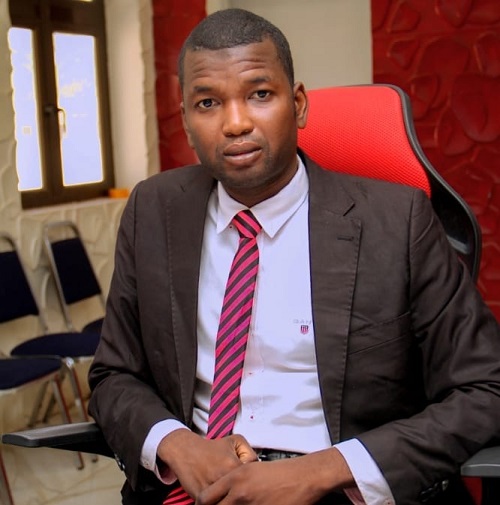
Breaking news yesterday was that Consultant Psychiatrist Comrade Chris Piwuna has been elected as the new president of the Academic Staff Union of Universities (ASUU) for a two-year term. The fact that he is a psychiatrist is unsettling to the political class, who, rather than injecting the necessary funds to improve our education sector, choose to embezzle money they do not need.

The post on the Facebook page of Mahmud Jega, a media aide to President Bola Ahmed Tinubu during the campaign for the 2023 election, is an indication that the news of the newly elected president is unsettling. He said Chris should examine the heads of ASUU members for choosing a strike as an option to make the government perform its responsibility to the university they willingly established and are still establishing. Earlier today, someone was thanking his Senator on Facebook for his bill to establish the Federal University of Agriculture, Kura in Kano State. 

Whose head needs to be checked by a psychiatrist? The one fighting for the survival of public universities or the one who makes all the promises, then gets to the office, but chooses to steal public funds, an amount they can’t spend for the rest of their life. In the 21st century, we have one of the worst education and health sectors. Our people now travel to Ghana, as well as to Niger and Sudan, to study. Hunger is now a pride. One of them recently acknowledged that they are aware we are hungry and referred to it as “Hunger for Change.”

Who should we take to Prof. Piwuna’s psychiatric clinic for a mental health evaluation? As people wonder about the cause of the massive and mindless corruption in the country, as we watch public institutions collapse, they feel that corruption within the political class may be a mental issue. According to Punch of 16th December 2016, the first person who made this recommendation over 30 years ago was Prof. Adeoye Lambo, a famous psychiatrist and a former Vice-Chairman of the World Health Organisation. He was astounded by the level of corruption at the time. 

Well, the corruption was child’s play then compared with what we have now. Mrs. Farida Waziri, the former EFCC boss, was reported to have also recommended psychiatric examination for politicians, citing the reason that the grand corruption we see in our public life is a hackneyed recommendation. So, the psychiatric test recommendation for politicians is not a new call. 

Despite the justification for the strike over the last two years and the members’ vote in a referendum, the ASUU leadership has attempted to apply diplomacy to avoid the strike. That has produced a strike-free 2 years. They have been lobbying and begging for the last 2 years. But what have academics got? Many people can’t afford to fuel their cars to go to work. So, what’s the alternative to the strike? Maybe instead of striking to force the government to fund tertiary institutions they willingly established, we should just manage what we have like that till they are no longer manageable, like our public primary schools? Please educate us on a practical alternative to strike. 

The Nigerian university system was once a beacon in West Africa. If corruption is the reason why there are not enough funds to make our universities what they used to be, who needs to queue in their Agbada to see a psychiatrist? The people (political class) who have kept the universities in their present state, or the people (ASUU) whose fight over the years gave our universities a semblance of a university? 

Irrespective of our political affiliation, I think we need to set our sentiment and hatred for ASUU aside and sit back to reflect on the state of education. As a former academic, journalist, and associate of the political class, Mahmud Jega should join hands with ASUU to urge the government to take the necessary steps for the education sector. The North is the worst hit, and coincidentally, Mahmoud Jega is from the North. We need public education institutions at all levels that are of high quality for their students. As the immediate past president of ASUU stated during the ASUU NDC in Benin a few days ago, we cannot build a knowledge-based economy without a sound education system.

We can’t continue this way. The status quo is unsustainable. The most powerful weapon against poverty, extremism, and ignorance is not the bullet, but the book. The time to act is now. Nigeria must return to the classroom—rebuild it, empower it, and invest in it—for therein lies the salvation of the nation.

I don’t like strikes, Mahmud Jega doesn’t like strikes, but I was left with no other options aside from a strike. And a strike is the only thing that has kept our universities functional to date. So, can Mahmud propose an alternative that will work even better than a strike? 

The test I think we need to do for ASUU members is to find out why they are fighting very hard to ensure that public universities do not collapse. They could have chosen to be like our refinery workers who watch the collapse of the refineries and earn a fat salary without refining a drop of crude oil. 

In conclusion, no matter the hatred, Mahmud Jega cannot pretend that he does not understand the situation of our educational institutions. I would like to encourage him to utilise his influence and pen to help facilitate an education summit by this government. As Prof Attahiru Jega proposed at ASUU NDC at the University of Benin a few days ago, the stakeholders of the Nigerian project need to meet and discuss the sort of tertiary education system they want and then agree on the funding model. 

Prof. Amoka wrote from Ahmadu Bello University (ABU), Zaria.

The FG kettle and the ASUU pot

By Mubarak Shu’aib

It has been far from a smooth ride for Nigerian university students and their academic staff for months now due to the marathon strike by the Academic Staff Union of Universities (ASUU). The strike has been a ridiculous one ever happening to our universities (6 months old). And this week has put forward the semblance of this current administration to the famous Don Jazzy’s song, SHAKITI BOBO, as it failed to come to terms with the union.

Whisper it quietly, but the union was right all along. At least when it came to one of their striking reason; revitalization of the universities. An inorganic chemistry professor dragged a colleague of mine for more than 10 minutes during our SIWES presentation. Reason? He said that a spectrophotometer detects the colour of the water. “There is no such spectrophotometer”, argued the professor. This is because he has probably never seen one in the university lab. The argument was later settled. By who? Lab technician (!) who came across one in a particular company during an IT supervision. Talking about the NMR machine, we have only one in the country (in ABU Zaria). This, and a wealth of other reasons, has exposed the uselessness of our universities and the need to recalibrate them.

Meanwhile, the tongue-lashing of some state universities and the jarring reply to FG on the backlogs by the chairman of ASUU have outlined the fault lines in the union’s struggle and the glaring need for pertinent media and resourceful PR.

The union is showing no signs of cracking under the FG tactic of ‘no work, no pay’, and that’s commendable. But that’s enough to signal that this current crop of leaders and retrogression are five and six. They exploit every avenue to render our institutions valueless.

The stalemates in the meetings have exposed mainly the lack of political from the education and labour ministers, who were somewhat culpable in the concession of the marathon strike.

If ASUU were to call off the strike today without coming to terms with the FG, it would be like holding up their hands to the FG and the emotion-driven students saying, ‘you were right’.

At some point, the blame game between the two parties stops being admirable and starts to look reckless. May God comes our way.

Mubarak Shu’aib writes from Hardawa Misau LGA, Bauchi State. He can be reached via naisabur83@gmail.com.

And again, ASUU extends its strike…

By Hassan Ahmad Usman

Recently, I read a post on Facebook cautioning ASUU not to ignite the government into following the path of the former UK prime minister, Margaret Thatcher, in her famous face-off with unionists. Before then, I only knew of her being called the  “The Iron Lady”, and that’s all. It prompted me to find out more about her struggle with them. I got a book, Margaret Thatcher: A portrait of the Iron Lady by John Blundell. 

After winning the war of about eleven weeks against Argentina over the Falkland island, she made a famous statement in 1983: “We had to fight the enemy without in the Falklands, and now we have to fight the enemy within, which is much more difficult but just as dangerous. These few men are the wreckers in our midst.”

The miners, led by Arthur Scargill under the NUM, started a strike action after learning of the National Coal Board’s chairman’s plan to close uneconomical pits. The NUM held a special place in the political landscape.

They were somewhat invincible. In fact, the unionists brought down a government a decade earlier before Thatcher’s. But as the book’s author opined: “I think it possible that her defeat of General Galtieri (in the war)  emboldened her to take on the mineworkers with robustness she may otherwise not have shown”.

She welcomed the fight against the miners, defeated them and reformed the unions. 

Now, let us relate the defeat of the NUM and ASUU’s likely end if they thread the same path. One of the early actions that Thatcher’s government took when the strike heightened was to promise a big Christmas bonus to whoever resumed work. It yielded positive results, and a war started between the striking and non-striking workers. Imagine the federal government promising to pay the unpaid salaries for six months to only lecturers that resumed. What do you think? There is already a push for a rival union.

Nigerian government can actualize the new union, which would automatically birth the beginning and end of ASUU. ASUU chairman’s recent labelling of universities not on strike as quacks is a big blunder. Other state universities felt insulted too. If the union keep on this trend, its end looms. A divided house is a recipe for a fallen one. 

Another area is politicizing ASUU strikes. One mistake the union should not make is making the politicians understand that they can win elections with or without an ASUU strike. It’ll ultimately show that the public is not sympathetic to the union. Parents are already tired of seeing the unhappy faces of their wards. Like the NUM, their resolve would eventually wane after the election litmus test.

The NUM leader Scargill was embarrassed when the press revealed that President Gaddafi and Soviet President Gorbachev were sending large sums of money to the NUM. Indeed treason was in the air. In the case of Nigeria, it is nothing close to treason, but acting as an opposition party by the ASUU chairman while calling on Nigerians not to vote for the government that made their universities to be closed is an apparent derailment from the status quo. It gives the government reason to cling. 

I’ve long wondered if ASUU listens to its ordinary members’ cries. Do they even have a voice? Yes, solidarity and loyalty are good, but how long can they be sustained with a hungry stomach? They are passing through a lot, and words of the mouth alone cannot keep them going. Just like NUM members that couldn’t hold on for long without cheques, ASUU members, too, are humans and any given opportunity thrown at them to abandon their war gear, they’ll heed without hesitation.

Prime minister Thatcher weakened the old arrangements that made membership in the union mandatory by giving more power and rights to individual workers. She went to the British public and the ordinary members of the unions. She explained that strikes affected union members just as much as the rest of the public. And she used simple examples to show how the kind of economic thinking represented by the TUC would keep Britain on the road to ruin.

Thatcher’s strategy was to break down the closed shop and bring real democracy to these institutions so ordinary members could regain control. As a result, union membership dropped from 51% when she assumed power in 1979 to just 18% in 1997, seven years after leaving. 

Lastly, it is my utmost prayer to see ASUU get what they want from the government for the betterment of our education, for I believe they are doing it with good intentions and for the interest of all.   

Hassan Ahmad Usman writes from Lafia and can be reached via basree177@gmail.com.

ASUU strike: Socio-economic theories and everything in-between

By Sagiru Mati, PhD 

I’m an academic and, therefore, a member of the adamant trade union known as the Academic Staff Union of Universities (ASUU), which has been on strike since 14th February. However, I’m not writing to judge who is right or wrong, as both the Federal Government (FG) and ASUU have their share of the blame. Caveat: this write-up does not represent the position of ASUU; all opinions are mine.

To understand the genesis and dynamics of the contention, it is crucial to see the issues through the lens of the theories proposed by Emile Durkheim’s consensus theory, Karl Marx’s socialism and Adam Smith’s concepts of rivalry and excludability, which form the basis of modern capitalism. I will briefly explain these concepts in light of the ASUU-FG imbroglio.

Durkheim asserts that humans, as political animals, are innately egoistic, and only the “collective consciousness” – in the form of social facts such as values, norms and beliefs – controls the egoism and ensures the stability of the society. He developed the consensus theory, which studies society holistically rather than individualistically. Durkheim believed that social reality should be found in the collective consciousness, not individual consciousness. The whole is greater than the sum of its parts.

The societal equilibrium is attained through consensus by the parts based on social facts: language, norms, customs, values and so on. The society itself metamorphoses from a simple society that correlates with mechanical solidarity, where individuals are brothers’ keepers, to a complex society that corresponds with organic solidarity, where individualism prevails.

Nigeria is currently in a transition from a simple to a complex society. Hence, unlike a few years ago, it is now easy to distinguish the children of the poor from those of the rich, even if they come from the same family or neighbourhood. Gone are those days when one man in a family provided for his family’s needs and that of his close relatives. The main argument of the consensus theory is that societies don’t always have to resort to raising their contradictions to crisis and then resolving them through conflict.

Socialism advocates the total ownership and control of economic entities by the authority rather than private individuals, with the main motive of maximising citizens’ welfare. Karl Marx, as its proponent, grouped the individuals into Proletariat and Bourgeoisie. The former is the working class, while the latter controls the means of production. The ASUU’s members and students are the epitome of the Proletariat and subscribe to socialism as they fight to improve their service conditions and university funding and reject the idea of transferring the burden of tuition fees on students.

Capitalism is the direct opposite of socialism and promotes private ownership of the means of production, with the sole aim of maximising profits. Adam Smith, as a proponent, explained what goods and services private individuals and authorities should own based on two concepts: rivalry in consumption and excludability.

Rivalry in consumption implies prevention or reduction in the ability of simultaneous consumption of goods and services. Excludability refers to the extent to which non-payers can be restricted from consuming goods or services. If goods or services are rivalrous and excludable, like university education, they should be owned by private individuals. On the other hand, the state should own the national defence, which is, to a great extent, non-rivalrous and non-excludable. The FG, which subscribes to capitalism, has been privatising and commercialising public economic entities since the introduction of the Structural Adjustment Program (SAP) in 1986.

The capitalistic FG utilises three tools to manipulate the Proletariat: starve them, don’t educate them and divide them. The FG has been starving ASUU’s members as it has been withholding their salaries since March in the name of the no-work-no-pay policy. Barriers to education have been created by not funding universities adequately. Hence admission seekers may meet all requirements but may not get admitted due to the admission limit imposed by the FG. The FG is trying to divide ASUU by considering registering a splinter union known as the Congress of University Academics.

The FG has recorded little success regarding the first and second tools. However, ASUU has fallen into the FG’S trap, as evident by the recent ASUU Chairman’s no-pay-no-work utterances, which hint at venting their frustrations on students and calling some universities quacks, thereby emboldening the line between the State and Federal universities. Obviously, the FG has divided the Proletariat into State Universities and Federal Universities, and into ASUU and students, even though most students have supported ASUU.

Given the foregoing, we can discern that the ASUU-FG face-off is nothing but the clash between socialism and capitalism in a society transitioning from Durkheimic mechanical solidarity to an organic one. Therefore, ASUU needs to change its modus operandi so that its efforts to liberate the Proletariat shouldn’t be hurtful to themselves. The ASUU Chairman needs to be cautious of his utterances. He should understand that both states-owned universities and students share the same economic class with ASUU: Proletariat.

A recent proposal by the National Parent-Teacher Association of Nigeria (NAPTAN) to offer ten thousand Naira (10,000.00), and subsequent rejection of the offer by ASUU, indicates that the two bodies are not working together. ASUU alone cannot win this “battle”; it will be a good idea if it involves the NAPTAN. The duo may develop better wisdom and influence to make things happen, as two good heads are better than one.

The FG should fund universities adequately as Nigeria is too unripe for privatisation or commercialisation of university education, which deserves public finance as it is a merit good. The FG should pay the ASUU’s withheld salaries on the condition that the universities run three semesters a year until they compensate students for the striking period.

Sagiru Mati, BSc (BUK, Nigeria), MSc, PhD (NEU, North Cyprus), wrote from the Department of Economics, Yusuf Maitama Sule University Kano, Nigeria. He can be reached via sagirumati@yahoo.com.

KASU berates ASUU President over utterances

By Sumayyah Auwal Ishaq

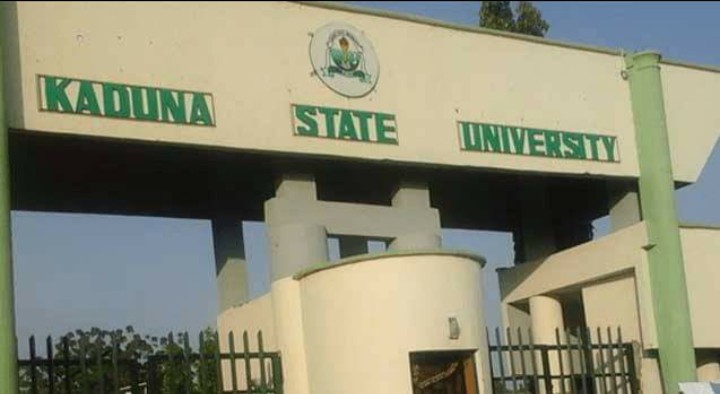
The management of the Kaduna State University ( KASU) on Friday condemned a statement attributed to the National President of the Academic Staff Union of Universities (ASUU), Professor Emmanuel Osodeke, who has described state-owned universities as quacks.

The university’s Public Relations Officer, Mr Adamu Nuhu Bargo, in a statement on Friday, said, “ASUU, represented by the unguarded vituperations of its chosen President, is not actually struggling for a better educational system in Nigeria but for personal and irresponsible aggrandisement”. 

Mr Bargo further said that “for the benefit of hindsight, KASU is a new generation University and the second most-sought State-Owned University as well as the fastest growing in Nigeria”.

“The general public may wish to note as follows:

1. KASU is recognised by NUC as a standard University.

2. KASU has some of the best brains that are competing favourably with their counterparts around the globe. The world’s No 4 best polymer chemist is in KASU.

3. Lecturers in KASU have attracted grants both locally and internationally and are highly rated.

4. KASU graduates are rated among the best in the world and enjoy scholarships from different parts of the country and the globe.

5. KASU has members in ASUU, and it is unfortunate if the ASUU President is saying that they are quacks while enjoying monthly check-off fees from their salaries. Does this not give a good reason for every reasonable academic staff in the University to pull off from the Union for this labelling and stereotyping?”

Students bemoan lingering FG/ASUU disagreements

By Uzair Adam Imam

The unending disagreement between the members of the Academic Staff Union of Universities (ASUU), and the Federal Government is increasingly generating reactions from students and eminent stakeholders across the country on the fate of Nigeria’s university education. In this special report, The Daily Reality gathered different and shocking responses of the students, concerning the lingering issue.

The incessant strike by the Academic Staff Union of Universities (ASUU) has been denounced as a farce that has negatively weakened the students’ morale to further their education in Nigeria.

The menace was also described as one of the most lingering issues that has been paralysing Nigerian universities, leading to the delay in students’ graduation and the deterioration of the education system in the country.

Some students that took to their social media to decry about the menace and how it slowly spirited their confidence away argued that the strike has destroyed the future of many promising youths in the country.

The Daily Reality recalls that ASUU has been on strike since February 14th, 2022, over the demands that include funding and the revitalization of public universities, Earned Academic Allowances, University Transparency Accountability Solution (UTAS) and promotion arrears.

In 2020, the union reportedly suspended its nine-month-long strike after reaching an agreement with the Federal Government.

However, the union bitterly complained that still after a year the federal government is yet to fulfil its promises.

Students are disappointed!

The ASUU strike has disappointed many students and led to the delay in their graduation, the development the students complained had spirited away the remaining confidence they had for studies.

A final year student, Abdurrashid Adamu, decried that, “I have less than six months to graduate from the university. Had I knew of this hitch to my studies, I would have embraced my diploma certificate and that would have been enough for me.”

Another student, Usman Idris Zakariyya, disclosed how ASUU strike has affected him and his friends saying, “many of my friends confided in me that they would not resume if not because they were in 400 level.”

Zulyadaini Auwal, a student who said he had already lost hope, stated that his business will experience a hitch if ASUU calls off their strike.

Khadijatu Abdullahi stated that she has no interest in studies anymore, adding that “had it been I was in 100 or 200 level I would have switched to college of education.”

People are mocking us – students

Some students also lamented the way some people derived very much pleasure in mocking them as the strike seems to have no end in a near future.

A student, Taufiq Musa, bemoaned at the way some people mock them because the ASUU’s strike lingers to about five months.

He stated, “nowadays, people used to mock anyone who determines and concentrates more on studies rather than something else.”

Yusuf Hassan, who seemed to be frustrated, said, “had it been I knew of this hitch in my studies, I would have not enrolled to school, let alone acquiring a diploma certificate.”

Saleh Ibrahim opined that he would have not resume to school if he was in 100 or 200 level, adding that, “and I’m sure many students will not resume.”

Parents raise alarm!

As the strike looks perpetual, some parents lamented that the advancing crisis between the government and ASUU jeopardizes their children’s future.

A parent, Malam Adamu Kolo, who looked disturbed by the unending strike, said that his son would have graduated if not for ASUU incessant strike.

Malam Adamu Kolo said, “My son would have graduated this year if not because of ASUU incessant strike. You can see that I am poor. I am hopeless. Our hope is on this boy.”

Another parent, Malam Musa Mukhtar, said, “our children live with almost no or gloom future. They neither go to school nor do they have anything to do for a living.”

ASUU members amidst hunger, heavy debt

As the strike persists to about four months, ASUU members decried leaving amidst hunger and heavy debt.

The lingering strike led to the imposition of No-Work-No-Pay by the Federal Government. The Minister of Labour and Employment, Dr Chris Ngige, stated that the directive was in compliance with Section 43 of the Labour Law.

A Senior Lecturer with the Department of Nigerian Languages, Dr. Muhammad Sulaiman Abdullahi, lamented how some of the members live without water and light due to heavy bills accrued.

He stated, “I remember how during the whole month of Ramadan, with the scorching sun and harsh temperature, lecturers languished with dry pockets and no salaries. Many lecturers didn’t have a chance to sew new Sallah (Eid) dresses for their kids, not even for themselves. Yet, another Sallah is approaching without any remorse or sense from this lousy government and its handlers.”

“The Maikantis (petty traders) selling raw rice, beans and other groceries no longer want to see us by their doors. Some of us have already forgotten toothpaste and have opted for chewing sticks now to remain clean.

“Our children have been sent out of schools due to non-payment of school fees. Landlords have knocked and banged on the doors of many; we pacified them, and some of them reason with us,” Sulaiman adeed in a piece he wrote.

No date for resumption

In a recent interview with journalists, the ASUU President, Prof. Emmanuel Osodeke, said there was no date for resumption, adding that hunger will not force the union to suspend their strike.

He added that the ASUU members are not beggars and the stoppage of their salaries by the government will not force them to call off their strike.

He further commended the members for keeping faith with the union expressing optimism that the union was on the threshold of victory.

However, some news of positive progress concerning ASUU and FG have started to fill social media and there is hope now that the strike may end soon. An ASUU member confirmed to TDR that talks between the FG and ASUU seem positive and now ASUU has already concluded its own part of the agreement, they are now patiently waiting for FG’s response.