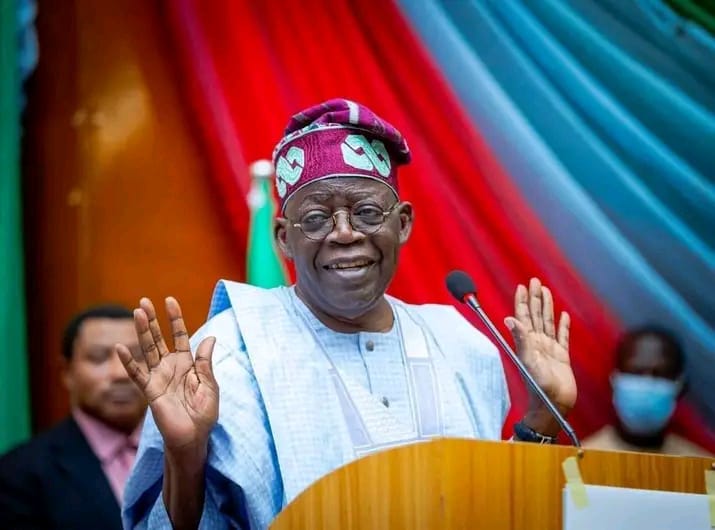
Asiwaju Bola Ahmed Tinubu

Mr President, adjust your economic policies

By Tajuddeen Ahmad Tijjani

On Tuesday, August 13, 2024, President Bola Ahmad Tinubu presided over a significant Council of State meeting. Former Presidents, Vice Presidents, a former Chief Justice of the Federation, and several key ministers were in attendance. The highlight of the meeting was the President’s stance that Nigeria’s democracy must not be undermined. “Any change of government must be through the ballot box, not through violence, insurrection, or any other unconstitutional means,” he asserted. This is a position I, along with all patriots, fully support.

However, while the President’s commitment to democracy is commendable, his economic policies must reflect the urgency and needs of the people. The excuse of “fixing the economy” cannot be used to justify slow progress. Nigerians expect the leadership to hit the ground running from day one. The Council of State must convey the truth to the President: the nation is in a precarious state, and decisive, people-centred action is required.

Today, wealth in Nigeria is increasingly concentrated in the hands of a select few. At the same time, the majority struggle without access to necessities like quality education, healthcare, housing, and employment. It’s not that Nigerians envy the success of the rich; instead, they want access to the essentials for a decent life.

Unfortunately, greedy leaders deliberately subject many ordinary citizens to hardship. Endemic corruption has become the norm, and the promise of equal opportunities seems like a distant dream despite the blessings of natural resources across the six geopolitical zones.

Poverty remains a pervasive issue. Nigeria is rich with potential—oil and gas in the South, commerce in the Southeast, and fertile land in the North. There is no excuse for hunger or deprivation. The government should prioritize modern farming systems, where a single machine can achieve in an hour what once took a thousand hands.

State governors must fully support federal initiatives, but these efforts must go beyond the token gestures like distributing rice, which too often ends up siphoned off by officials or recycled into the market. Nigerians are not beggars; we have the talent and drive to achieve greatness, but we need an enabling environment, affordable fertilizers, and access to reliable electricity.

The time for excuses is over. The government must adjust to the realities on the ground. Removing fuel subsidies and floating the naira has brought unbearable hardship to ordinary people. These policies need to be revisited. We elected this government to make Nigeria work for everyone, not just the privileged few. A stitch in time saves nine: adjust the policies before it’s too late.

Tajuddeen Ahmad Tijjani wrote from Galadima Mahmoud Street, Kasuwar Kaji Azare, Bauchi State.

President Tinubu assures of a robust economy

By Abdullahi Mukhtar Algasgaini

President Bola Tinubu has welcomed the National Bureau of Statistics (NBS) ‘s new report on the country’s trade balance.

According to the report, Nigeria recorded another trade surplus in the second quarter of 2024, hitting N6.95 trillion.

The current surplus is 6.60% higher than the N6.52 trillion surplus recorded in the first quarter.

Just days after the country recorded almost 100 percent oversubscription of its first $500 million domestic bond and half-year revenue of N9.1 trillion, the latest report underscores the increasing positive shifts in the economy over the last year.

President Tinubu expresses confidence in the reforms his administration is pursuing and believes they will create a more robust economy that will usher in a new era of prosperity for Nigerians.

The NBS report reflects the country’s strong export performance in the second quarter.

Although total merchandise trade in Q2 2024 stood at N31.89 trillion, a 3.76% decline compared to the preceding quarter (Q1 2024), it marked a 150.39% rise from the corresponding period in 2023.

The NBS reported that the Q2 surplus was essentially driven by exports to Europe, the United States and Asia.

Total exports stood at N19.42 trillion, accounting for 60.89% of the country’s total trade. This represents a 1.31% increase from N19.17 trillion in the first quarter and a 201.76% surge from N6.44 trillion recorded in Q2 2023.

The dominance of crude oil exports remains a key factor in this performance, contributing N14.56 trillion, or 74.98% of total exports.

Non-crude oil exports, valued at N4.86 trillion, comprised 25.02% of the total export value, with non-oil products contributing N1.94 trillion.

The strong export performance, particularly in crude oil, ensured Nigeria maintained a favourable trade balance.

In Q2 2024, European and American countries dominated Nigeria’s top export destinations. Spain emerged as the largest export partner, receiving goods valued at N2.01 trillion, accounting for 10.34% of Nigeria’s total exports.

The United States followed closely with N1.86 trillion (9.56%), while France imported N1.82 trillion of Nigerian goods, representing 9.37% of total exports.Nigeria’s other major export partners include India (N1.65 trillion or 8.50%) and the Netherlands (N1.38 trillion).

Generally, the economic indicators, which were very low when President Tinubu assumed office last year, are turning positive.

The government will continue to consolidate on the gains of the reforms as more fiscal and tax policy reforms already embarked upon by the administration come to fruition.

President Tinubu is determined to confront the inhibitions that have stunted the growth and development necessary to unlock the country’s full potential.

Fuel price hike pushes Nigerians to breaking point – NLC, Atiku sound alarm

By Uzair Adam

The Nigeria Labour Congress (NLC) and former Vice President Atiku Abubakar have issued warnings that the recent increase in petrol prices by the Federal Government is pushing many Nigerians to a breaking point.

This comes as prominent human rights lawyer Femi Falana, SAN, calls on the government to complete the rehabilitation of the nation’s refineries by September 2024 or take legal action against contractors for failing to meet project deadlines.

The Socio-Economic Rights and Accountability Project (SERAP) also urged President Bola Tinubu to order the Nigerian National Petroleum Company Limited (NNPCL) to reverse the price hike, labeling it as “illegal and unconstitutional.”

While the NLC advocated for public resistance to the fuel price increase, Atiku highlighted that the government’s plans to raise Value Added Tax (VAT) would further worsen the economic strain on citizens.

NLC President Joel Ajaero, represented by Prince Adewale Adeyanju at a Labour Writers Association of Nigeria workshop, decried the combination of fuel price hikes, naira devaluation, and rising electricity tariffs as policies that have deepened the struggles of ordinary Nigerians.

Atiku also voiced concerns that the VAT increase, following the petrol price surge, would severely impact the country’s already fragile economy and the livelihoods of Nigerians, compounding the existing cost-of-living crisis.

Fuel Subsidy: Another alternative

By Zayyad I. Muhammad 

There is a massive call for President Bola Ahmed Tinubu to restore the petroleum subsidy. The ongoing 10-day “End Bad Governance” protest and the high prices of commodities and services are the result of the removal of fuel subsidies.

If President Ahmed Bola Tinubu does not plan to restore petroleum subsidies, the government must find another way to reduce the price of petroleum products, especially premium motor spirit (PMS), popularly called petrol. Petrol is the lifeblood of any nation. The social problems arising from the aftermath of petroleum subsidy removal are purely local issues that require theoretical and practical solutions. 

Sometimes, the government relies solely on experts who understand the problem from a theoretical perspective, forgetting the real players in the petroleum industry who understand the problem from all its angles: importation, depot loading, haulage, retailing, and manpower management.

Apart from the subsidy, there are other ways to drastically reduce the price of petrol. Tinubu should critically consider restoring the Petroleum Equalisation Fund (PEF). Since it is a contributory fund, its source is principally the net surplus revenue recovered from oil marketing companies. The bridging claims paid to petroleum marketers automatically equalise petroleum prices throughout Nigeria while maintaining affordability.

Aquila’s innovative electronic business solution has eliminated any irregular distribution and claims of bridged regulated petroleum products. The Aquila project is an excellent electronic business solution designed to track the movement of petroleum products throughout Nigeria.

Though the Petroleum Industry Act (PIA), budgetary provisions, and some economic reasons were the guiding principles that led Tinubu to remove subsidies and float the naira, sometimes national interests—security, economic, and social order—must be paramount. It’s purely a local problem that requires purely home-grown solutions.

Some countries painstakingly control the prices of petrol for national security. These countries often have uniform prices for petrol across the entire country. For example, Saudi Arabia, the United Arab Emirates, India, Malaysia, Iran, and Venezuela. In most countries, national security overrides other considerations; the government has significant control over fuel pricing and distribution, often through subsidies or state-owned oil companies.

Take India, for instance. India controls petrol prices through market dynamics and government policies, such as daily price adjustments based on the international price of crude oil. The Indian government sometimes provides subsidies to control the prices of petroleum products. This helps keep the prices within a certain range and makes them more affordable for the general public.

The Indian government achieves this through the national oil companies Bharat Petroleum Corporation Limited (BPCL) and Hindustan Petroleum Corporation Limited (HPCL). Another mechanism India uses in the price control measures to address inflation concerns, freight, and logistics is that the government can intervene directly by adjusting excise duties or providing relief to the oil marketers.

The Tinubu government should critically consider reintroducing the Petroleum Equalisation Fund. It would sharply reduce petrol prices, bring uniformity in prices throughout Nigeria, bring the 21 NNPC depots to life, restore many lost jobs, and double-check product quality.

Zayyad I. Muhammad writes from Abuja via zaymohd@yahoo.com.

President Tinubu sympathizes with flood victims across Nigeria

By Abdullahi Mukhtar Algasgaini

President Bola Tinubu received the news of the devastation wreaked by floods on communities and farmlands nationwide with profound grief.

Recent data by the National Emergency Management Agency (NEMA) indicate that lives have been lost — with thousands of hectares of farmlands damaged and thousands of people displaced by floods across the country.

The President sympathizes with all victims of these ravages of nature, especially bereaved families, farmers, displaced communities, and those who have lost property.

President Tinubu re-emphasizes the need for a concerted effort to address existential environmental concerns and build a more climate-resilient and adaptive society.

The President prays for the repose of the deceased’s souls while assuring Nigerians that his administration, through the relevant agencies, will continue to provide the needed support for victims and timely warnings to mitigate the impact of environmental mishaps.

President Tinubu celebrates governor Zulum at 55

By Abdullahi Mukhtar Algasgaini

President Bola Tinubu warmly congratulates the Governor of Borno State, Professor Babagana Umara Zulum, CON, MNI, as he marks his 55th birthday.

Governor Zulum is an academic, visionary, reformist, and statesman.

President Tinubu joins the family, friends, and people of Borno State in celebrating the young and dynamic leader who embodies the pragmatism and energy of youth, as well as the sobriety, prudence, and wisdom of the elderly.

The President commends Governor Zulum’s hands-on approach to leadership, demonstrated by his unchoreographed, pre-dawn inspections of rural clinics and critical agencies to ensure their smooth operations and that staff are on hand to provide essential services at world-class standards.

President Tinubu also applauds the governor’s courage, exemplified by his personal interventions in security situations in Borno State and in the recent resettlement of displaced citizens.

The President appreciates Professor Zulum’s facility for providing unifying leadership, epitomized by his efforts towards ensuring the welfare of citizens from other parts of the country and in the promotion of Nigerians of diverse ethnic backgrounds and faiths through the ranks of the Borno Civil Service on the exclusive basis of merit.

“Babagana is one of those luminescent northstars of meritocratic rise in the Nigerian political firmament. From humble beginnings, his tenacious pursuit of personal growth and later on, expeditious state and national development, is a guide to Nigeria’s future generations.

“Borno State and Nigeria at large are fortunate to benefit from his benevolent brand of modest, rigorous, and visionary political and administrative leadership,” the President states.

As the governor marks this milestone, the President wishes him many more years in good health and renewed strength in his service to the nation.

President Tinubu: ‘Water don pass garri’

By Muhammad Danjuma Abubakar

In a democracy, citizens’ expression of choice for candidates is guided by factors such as hopes for peace, security, and welfare; better economic opportunities; effective and efficient management of resources; diversity and inclusion; practical respect for civil liberty and freedom; and regards for the constitution and constitutionalism, among others. This democratic choice is reflective of their collective aspirations for better well-being. 

From this expression of choice comes citizens justified high expectations from those they give mandates; this is why it is an indictment on the collective conscience of those elected to call for patience, prayers, and understanding from those who entrust them, as it undermines the initial trust and confidence placed on the elected by the electorates. 

Prayers, patience, and understanding are not required to run for office in Nigeria. Therefore, it is unreasonable for elected officials to demand these from the public to justify their failures.

Voters assess candidates based on their competence, experience, and fairness. Even during elections, voters are often impatient and look for leaders who will perform extraordinary feats and effectively meet their needs.

In this context, the expectations of Nigerians from President Tinubu, like those of Buhari, were high, spurred by his campaign promises and the political image and antecedents he portrayed to Nigerians.

This said, without fear of contradiction, President Tinubu was presented to innocent Nigerians with amplified messages like he is an architect of economic transformation, a builder of modern Lagos, a mentor of human resources, a top recruiter of quality talent, a bridge builder, a Nigerian with a broad national stature, and a kingmaker with little desire for power. Even the aftermath of his elections has shown a different picture. 

Even in the run-up to the election period, Tinubu stumbled and fumbled many times in words and deeds, either knowingly or unknowingly. 

First, he awed Nigerians by asserting that it was his turn to rule the country (Emi lokan) as if the elective office was an arranged turn-by-turn affair. Such a public statement, which appears to subordinate citizens’ interests, could be intolerable in more exposed democratic climes.

In addition to that controversy, he also went to the extreme by emotionally blackmailing his predecessor, Buhari, claiming he single-handedly made him president, as though he only constituted millions of voters.

As a politician, Tinubu’s political gamesmanship is second to none. This is why, knowing that large chunks of votes would come from the North, a Muslim-dominated region of the country, he decided to choose Shettima—a northern Muslim—as his running mate, despite criticisms from adherents of other faiths.

This move proved successful, as he was declared duly elected by the nation’s electoral umpire, INEC. But it is frustrating and worrisome that we are not better off as citizens and as a nation.

For the records, this is not suggesting that Tinubu’s predecessor left the power better than he met it, considering many shortcomings of his administration, including alleged high-scale corruption under his ‘nose’. Yet, the severity of this administration’s hardships and bad economic conditions surpasses’ Buhari’s.

Under Tinubu’s administration, life for the average Nigerian has taken a drastic turn. Poverty has deepened, and insecurity in the North has deteriorated much faster and worse than during Buhari’s tenure.

 This worsening condition is reflected in various negative indicators, including the soaring inflation rates in basic life necessities, such as food. 

An average Nigerian has not forgotten, not even at all, that during Buhari’s presidency, four good slices of meat were sold at N300 in the North. And a mudu of garri (cassava flour) was being sold for the same N300. The price of a mudu is now the price of a cup. 

Our situation today is akin to what a Nigerian street man would say: ‘Water don pass garri,’ which translates to ‘water has surpassed soaked cassava flour.’ This invariably means a terrible situation that has gone out of control, just as it appears to have gone out of the control of Tinubu’s presidency. 

The only way left for the suffering masses to voice their pains to a government that chooses to be tight-lipped is through peaceful protests legitimized under our constitution, which Tinubu himself led several times but is now not comfortable with and so perceived to be ruthlessly suppressing with state forces, harassments and intimidating the starving angry poor.

The DSS and police, expected to uphold professionalism, etiquette, justice, and respect for the rule of law, are focused on arresting and intimidating perceived ‘persons of interest.’ How on earth do the masses deserve such cruelty? The masses with whom lie the true powers in a democracy! 

As a matter of fact, why shouldn’t the common masses be outraged? Insecurity is at its worst. Inflation has soared to an unprecedented 33%. Amid pervasive hunger and widespread poverty, the government splurges on private jets and extravagant renovations for the VP’s residence. 

Meanwhile, educational institutions’ workers, including the NLC, are often treated dismissively, with no government-backed economic opportunities for the poor, the vulnerable, and even the educated youths. 

Having achieved his long-time ambition of becoming President, Tinubu only seems preoccupied with the temporary power of his office. His long arms of presidential powers reinforce the perception of vindictiveness against those perceived as either not in his good books or his predecessor’s appointees. 

Through the excesses of federal powers, it suffices to believe that federal powers subtly dabbled in issues outside its mandate, including the Kano Emirate saga, the Fubara vs. Wike conflict, and Ndume’s removal as Senate Chief Whip.

As for Sen. Ndume, are we to link his current travails to his choice in the run-up to the APC 2023 Presidential primaries?

 In the build-up to the APC Presidential primaries, Senator Ndume didn’t hide his mobilization and support for Tinubu’s co-contestant, Rotimi Amaechi. 

Talking about appointments, the current administration has also been accused of stripping northerners of their key positions and replacing them with Lagos men who had failed to deliver the same Lagos, which he was credited with its heights and development. 

One may rightly argue that the Buhari presidency, in a similar fashion, rewarded the region that gave him the highest votes through appointive positions. But it is worthy of note that Tinubu’s highest election votes also came from the northern region.

 Yet, this predominantly Muslim-dominated region is neglected. For instance, the Baro Port in Niger State, a significant project for the benefit of the entire North, is yet to receive any sincere attention, even with over 30 trillion Naira budget now in effect.

 For Tinubu’s presidency, water don pass garri since this is not what Nigerians voted for and hoped for. The administration is out of touch with people’s needs, and its actions are in sharp contrast with expectations.

Muhammad Danjuma Abubakar is a public affairs commentator and lives in Minna, Niger State. He wrote via muhammadcares4u@gmail.com.

President Tinibu greets General Babangida at 83

By Abdullahi Mukhtar Algasgaini

President Bola Ahmed Tinubu congratulates Nigeria’s former Head of State, General Ibrahim Badamasi Babangida, GCFR, on his 83rd birthday today, August 17. 

General Babangida, popularly called IBB, was Nigeria’s military President from 1985 to 1993.

President Tinubu salutes IBB on this special occasion, noting his endeavours towards the nation’s development, especially in infrastructure and other areas, notably the completion of the Third Mainland Bridge, which at the time was the longest bridge in Africa.

The President acknowledges General Babangida’s role in shaping modern Nigeria and commends him for his services to the nation.

President Tinubu wishes the former head of state many more years in good health.

Tinubu’s ruthless policies exacerbate hunger in Nigeria – Dan Bello

By Uzair Adam 

Bello Galadanchi, widely known as Dan Bello, has publicly criticized President Bola Tinubu’s economic policies, claiming they are causing widespread hunger and suffering among Nigerians. 

In a recent interview on Trust TV’s Daily Politics, the famous skit maker voiced his concerns about the government’s approach, stating that people are enduring severe hardship, including consuming grass and contaminated water, due to avoidable policy decisions.

Dan Bello, who claimed to have no political affiliations, challenged the government to take legal action if it disagreed with his statements. 

He emphasized the plight of Nigerians who, in desperation, are seeking food door-to-door and argued that this crisis is not due to natural disasters but deliberate political choices.

He questioned the priorities of the ruling party, suggesting that their policies favour massive personal gains over addressing the basic needs of the population. 

“If their policies are genuinely beneficial, the criticism from content creators like myself won’t resonate with the people,” he argued. 

Dan Bello expressed his willingness to face legal consequences if it means drawing attention to the dire situation, urging the government to consider the human cost of its actions.

President Tinubu leaves for Equatorial Guinea on official visit

By Abdullahi Mukhtar Algasgaini

President Bola Tinubu will on Wednesday, August 14, depart Abuja for Malabo, Equatorial Guinea, on a three-day official visit to honour the invitation of President Teodoro Obiang Nguema Mbasogo.

President Tinubu will meet with the Equatorial Guinean President at the Presidential Villa on arrival, where meetings will be held between the two leaders and agreements, particularly on oil and gas and security, signed.

The President will be accompanied on the trip by the Minister of Foreign Affairs, Ambassador Yusuf Tuggar, and other members of his cabinet who will be involved in the signing of agreements and review of opportunities to improve bilateral relations.