Asiwaju Bola Ahmed Tinubu

NRS unveils new logo, marks transition from FIRS

By Muhammad Abubakar

The Nigeria Revenue Service (NRS) has officially unveiled its new institutional logo, formally marking its transition from the Federal Inland Revenue Service (FIRS) to a newly established revenue authority.

The unveiling ceremony took place in Abuja on Wednesday and was announced in a statement by Dare Adekanmbi, special adviser to the chairman of the NRS.

Speaking at the event, Zacch Adedeji, executive chairman of the NRS, described the new brand identity as a major milestone in the ongoing reform of Nigeria’s revenue administration framework, reflecting a renewed mandate and institutional vision.

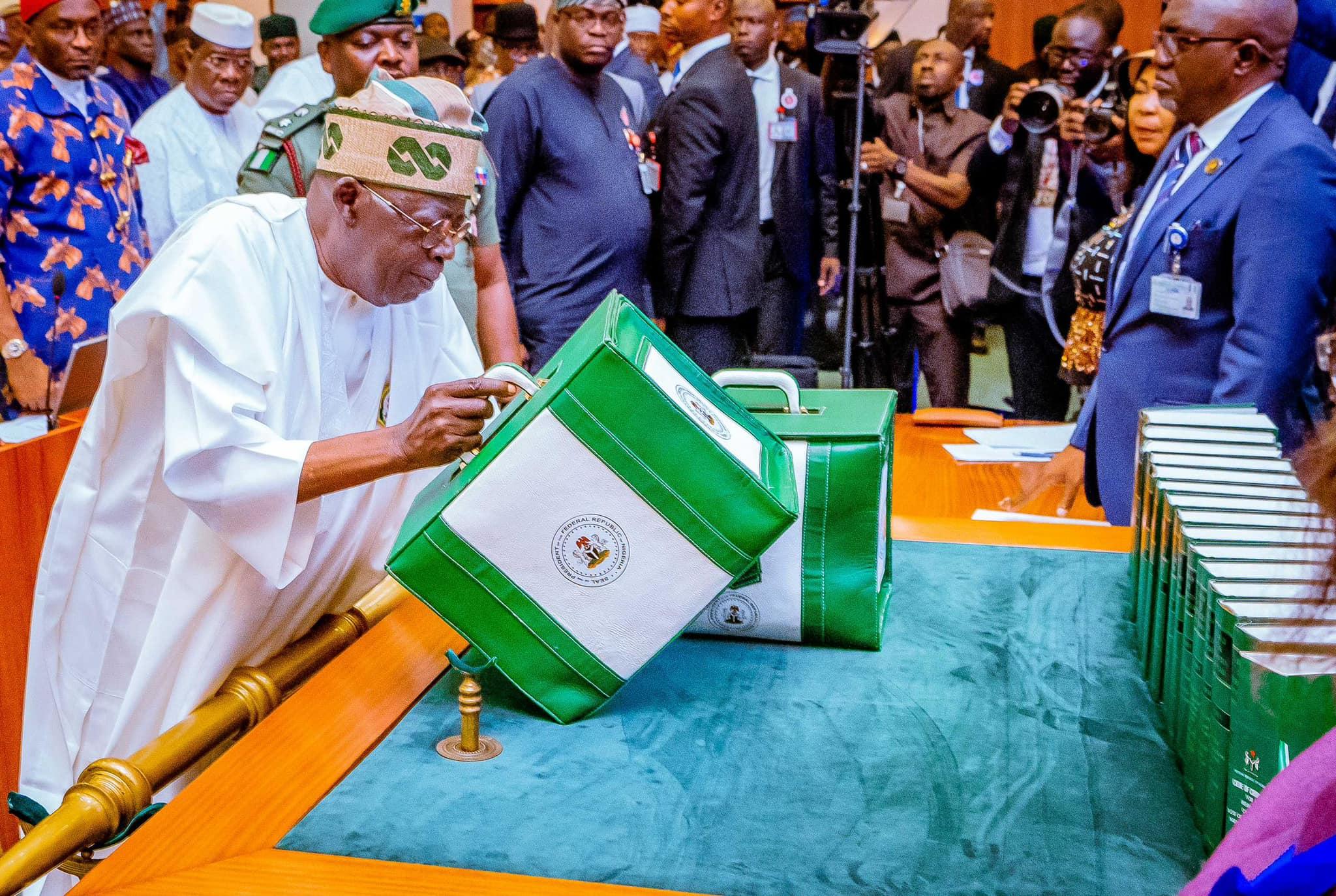
Adekanmbi noted that the service became operational after President Bola Tinubu signed the Nigeria Revenue Service Establishment Act 2025 in June, paving the way for the transition from FIRS to NRS.

The new logo, officials said, symbolises efficiency, accountability, and a modernised approach to revenue generation in Nigeria.

On the gazetted tax laws: What if Dasuki was indifferent?

By Isah Kamisu Madachi

For over a week now, flipping through the pages of Nigerian newspapers, social media, and other media platforms, the dominant issue trending nationwide has been the discovery of significant discrepancies between the gazetted version of the Tax Laws made available to the public and what was actually passed by the Nigerian legislature. Since this shocking discovery by a member of the House of Representatives, opinions from tax experts, public affairs analysts, activists, civil society organisations, opposition politicians, and professional bodies have been pouring in.

Many interesting events that could disrupt the pace of the debate have recently surfaced in the media. Yet the Tax Law discussion persists because public interest is deeply entrenched in the contested laws. However, while many view the issue from angles such as a breach of public trust, a violation of legislative privilege by the executive council, the passage of an ill-prepared law and so on, I see it from a different, narrower, and governance-centred perspective.

What brought this issue to public attention was an alarm raised by Hon. Abdulsammad Dasuki, a Member of the House of Representatives from Sokoto State, during a House plenary on 17 December 2025. He called the attention of the House to what he identified as discrepancies between the gazetted version of the Tax Laws he obtained from the Federal Ministry of Information and what was actually debated, agreed upon, and passed on the floor of both the House and the Senate. He requested that the Speaker ensure all relevant documents, including the harmonised versions, the Votes and Proceedings of both chambers, and the gazetted copies, are brought before the Committee of the Whole for scrutiny. The lawmaker expressed concern over what he described as a serious breach of his legislative privilege.

Beyond that, however, my concern is about how safe and protected Nigerians’ interests are in the hands of our lawmakers at the National Assembly. This ongoing discussion raises a critical question about representation in Nigeria. Does this mean that if Dasuki had also been indifferent and had not bothered to utilise the Freedom of Information Act 2011 to obtain the gazetted version of the laws from the Federal Ministry of Information, take time to study it, and make comparisons, there would have been no cause for alarm from any of Nigeria’s 360 House of Representatives members and 109 senators? Do lawmakers discard the confidence we reposed in them immediately after the election results are declared?

This debate serves a latent function of waking us up to the reality of the glaring disconnect between public interest and the interests of our representatives. The legislature in a democratic setting is a critical institution that goes beyond routine plenaries that are often uninteresting and sparsely attended by the lawmakers. It is meant to be a space for scrutiny, deliberation, and the protection of public interest, especially when complex laws with wide social consequences are involved. 

We saw Sen. Ali Ndume in a short video clip that recently swept the media, furiously saying during a verbal altercation with Sen. Adams Oshiomhole over ambassadorial screening that “the Senate is not a joke.” The Senate is, of course, not a joke, and neither should the entire National Assembly be. Ideally, it should not be a joke to the legislators themselves or to us. Therefore, we should not shy away from discussing how disinterested those entrusted with the task of representing us, and primarily protecting our interests, appear to be in our collective affairs.

It is not a coincidence that, even before the current debate over the tax reform law, it has continued to generate controversy since its inception. It also does not take quantum mechanics to understand that something is fundamentally wrong when almost nobody truly understands the law. Thanks to social media, I have come across numerous skits, write-ups, and commentaries attempting to explain it, but often followed by opposing responses saying that the authors either did not understand the law themselves or did not take sufficient time to study it.

The controversy around the gazetted Tax Reform Laws should not end with public outrage or media debates alone. It should prompt deeper reflection on how laws are made, scrutinised, and defended in Nigeria’s democracy. A system that relies on the alertness of a single lawmaker to prevent serious legislative discrepancies is neither resilient nor reliable. Representation cannot be occasional, and vigilance cannot be optional. 

Nigerians deserve a legislature that safeguards their interests, not one that notices breaches only when a few individuals choose to be different and look closely. If this ongoing debate does not lead to formidable internal checks and a renewed sense of responsibility among lawmakers, then the problem is far bigger than a flawed gazette. When legislative processes fail, it is ordinary Nigerians who bear the cost through policies they did not scrutinise and consequences they did not consent to.

Isah Kamisu Madachi is a public policy enthusiast and development practitioner. He writes from Abuja and can be reached via: isahkamisumadachi@gmail.com.

NIN to serve as tax ID for Nigerians from January 2026

By Muhammad Abubakar

The National Identification Number (NIN) issued by the National Identity Management Commission (NIMC) will automatically function as a Tax Identification Number (Tax ID) for Nigerians starting from January 2026, the Federal Inland Revenue Service (FIRS) has announced.

According to the FIRS, the policy is part of broader efforts to harmonise government databases, improve tax administration, and expand the country’s tax net. By linking tax records directly to the NIN, authorities aim to reduce duplication, enhance compliance, and make it easier for individuals and businesses to fulfil their tax obligations.

Officials said the integration would streamline identification across government services while strengthening transparency and efficiency in revenue collection.

Nigerians are therefore encouraged to ensure their NIN details are accurate and up to date ahead of the January 2026 implementation.

The move aligns with ongoing digital reforms by the Federal Government to modernise public administration and improve service delivery nationwide.

Nigeria’s Economic Resilience: Good policies or good luck?

By Ahmed Usman

As the year 2025 draws to a close, moments of reflection naturally set in, especially for an economy that has endured sharp shocks, painful adjustments, and cautious reforms. In an era of global economic turbulence marked by uneven commodity prices, persistently tight financial conditions, rising geopolitical tensions, regional insecurity, and an international retreat from development aid, many emerging economies have suffered currency instability, capital flight, and fiscal distress. 

For Nigeria, however, the year presents an unusual picture. Amid global uncertainty and domestic strain, key economic indicators are beginning to stabilise, prompting a deeper question about whether the country is merely ending the year on a fortunate note or finally turning a policy-driven corner.

The International Monetary Fund (IMF) projects that Nigeria’s economy will grow by about 3.9 per cent in 2025, with growth expected to strengthen modestly to around 4.1 per cent in 2026, driven by macroeconomic stabilisation and reform efforts across key sectors. While these numbers may not yet place Nigeria among the world’s fastest-growing economies, they mark a notable improvement from the passive growth of recent years and signal a gradual return of confidence.

One of the most significant recent developments is Nigeria’s GDP rebasing, which revealed that the economy is about 30 per cent larger than previously estimated. This adjustment is not merely a statistical exercise. It reflects the growing importance of services, digital trade, creative industries, and telecommunications, sectors that employ millions of Nigerians, particularly young people.

For households, a larger and more diversified economy is essential because it reduces overdependence on oil and expands opportunities for income outside traditional sectors. For policymakers, it improves Nigeria’s standing in global markets and provides a clearer picture of where growth is coming from, enabling more targeted policies.

The rebasing has also reshaped Nigeria’s debt profile. The debt-to-GDP ratio now stands at about 40 per cent, well below the levels seen in many peer emerging economies. More importantly, debt service as a share of government revenue has fallen to below 50 per cent, from much higher levels in previous years. This easing of fiscal pressure means the government now has slightly more flexibility to allocate resources to infrastructure, education, healthcare, and social protection. However, the challenge remains that Nigeria’s revenue base remains among the weakest globally, making sustained revenue mobilisation critical.

Perhaps the most tangible improvement for households and businesses has come from the foreign exchange market. After years of volatility and sharp depreciation, recent months have seen a reduction in exchange rate volatility, a narrowing of the gap between official and parallel market rates, and a gradual buildup of external reserves, now estimated at over $36 billion. This stabilisation has practical consequences. It helps slow imported inflation, reducing pressure on food, fuel, and medicine prices. Foreign portfolio inflows have also picked up, reflecting renewed investor confidence.

Nigeria’s capital markets are also telling a positive story. The stock market is enjoying its strongest rally in nearly two decades, with the All-Share Index posting record gains. This surge reflects expectations of improved corporate earnings and better macroeconomic coordination. Similarly, Nigeria’s bond market has entered a bullish phase, with falling yields and strong demand from both domestic and foreign investors. Lower bond yields reduce government borrowing costs and can eventually translate into lower interest rates for businesses and households seeking credit.

After reaching painful highs, inflation (food inflation) has begun to ease, FX conditions have improved, and supply pressures have eased. Although prices remain elevated, the slowdown in food prices offers some relief to households whose purchasing power has been severely eroded over the past two years.

Perhaps the most encouraging fiscal development is the sharp rise in government revenue. This improvement reflects tax administration reforms, subsidy removal, and better compliance. Higher revenue is central to Nigeria’s long-term stability. It reduces reliance on borrowing, strengthens public services, and allows targeted social spending to cushion vulnerable households from reform-related shocks.

Despite these gains, Nigeria’s resilience should not be mistaken for strength. The economy remains vulnerable to oil price swings, climate shocks, global financial tightening, and domestic security challenges. Monetary pressures, fiscal constraints, and external risks continue to interact in ways that could quickly reverse progress.

However, resilience built on sound fiscal management, credible monetary policy, and structural reform is fundamentally different from resilience driven by temporary luck. Strengthening domestic revenue, managing debt prudently, investing in human capital, and deepening diversification are not optional; they are essential.

Is the question whether Nigeria’s current resilience is the product of good policies or good luck? The evidence increasingly points toward policy-driven stabilisation, though aided by favourable timing and improved coordination.

The fundamentals are improving, confidence is returning, and the economy is stronger than it has been in years. The challenge now is to convert this fragile resilience into inclusive and durable growth, growth that raises living standards, creates jobs, and restores hope for millions of households.

Ahmed Usman wrote via ahmedusmanbox@gmail.com.

Dangote’s next battle!

By Zayyad I. Muhammad

The Petroleum Industry Act (PIA) 2021 does not prohibit the importation of petroleum products into Nigeria. There is no outright ban; instead, the Act supports a deregulated market with regulatory oversight governing imports.

Dangote’s grievance with the Nigerian Midstream and Downstream Petroleum Regulatory Authority (NMDPRA) under Engr. Farouk Ahmed centres on the continued issuance of import licences to petroleum marketers. And the failure to impose heavy levies and taxes on imported petroleum products 

According to the NMDPRA, Nigeria’s petrol imports averaged 52.1 million litres per day in November 2025.

The Nigerian Midstream and Downstream Petroleum Regulatory Authority further disclosed that the NNPC imported the bulk of Nigeria’s petrol requirements in November 2025, with total imports by all marketers amounting to 1.563 billion litres during the month.

In the first round of this battle, Dangote appears to have “won,” as President Bola Ahmed Tinubu has replaced Engr. Farouk Ahmed of the NMDPRA and Gbenga Komolafe of the Nigerian Upstream Petroleum Regulatory Commission (NUPRC). Oritsemeyiwa Amanorisewo Eyesan has succeeded them as Chief Executive Officer of the NUPRC and Engr. Saidu Aliyu Mohammed as Chief Executive Officer of the NMDPRA, subject to the Senate’s approval.

The bottom line is that this battle will continue. The new chief executives cannot outrightly ban the importation of petroleum products by the NNPC or other marketers, as there is no law to support such a ban. However, they are likely to engage Dangote cautiously to avoid the fate that befell Farouk Ahmed and Gbenga Komolafe. Which is not a good thing for any regulator in any industry 

If Dangote truly seeks full market patronage, pricing is key. His products must match or beat the cost of imported petroleum products. Marketers operate on a simple philosophy: buy good, sell good. 

If Dangote Refinery’s prices and processes are competitive or superior to imported products, no marketer would endure the challenges of sourcing foreign exchange, freight costs, and time delays when a cheaper and readily available alternative exists at their doorstep.

 Zayyad I. Muhammad writes from Abuja via zaymohd@yahoo.com.

Nigeria, Iran reaffirm commitment to deepen bilateral relations

By Maryam Ahmad

Nigeria and the Islamic Republic of Iran have reaffirmed their commitment to strengthening bilateral relations, with renewed focus on trade, investment, energy cooperation, and multilateral engagement.

The commitment was restated during a high-level meeting held on 17 December 2025 in Abuja, where the Permanent Secretary of the Ministry of Foreign Affairs, Ambassador Dunoma Umar Ahmed, PhD, received the Ambassador of the Islamic Republic of Iran to Nigeria, His Excellency Gholamreza Raja.

The meeting marked one of Ambassador Raja’s first formal engagements following the presentation of his Letters of Credence to President Bola Ahmed Tinubu. Both sides emphasised the importance of sustained diplomatic dialogue and collaboration in areas of mutual interest.

They also expressed readiness to explore new opportunities that would further strengthen ties between the two countries and contribute to regional and global cooperation.

No work, no pay: A threat that solves nothing

By Muhammad Umar Shehu

Once again, the federal government is threatening the Academic Staff Union of Universities (ASUU) with its usual tactic, no work, no pay. It’s the same tired strategy used by previous administrations whenever the union pushes for the full implementation of agreements that were voluntarily signed. But history has shown that this policy does not resolve issues; it only increases mistrust, diminishes morale, and further weakens our universities.

During President Muhammadu Buhari’s administration, the no-work-no-pay policy was enforced after the 2022 ASUU strike, which lasted eight months. Lecturers were unpaid despite the government’s failure to fulfil promises that caused the strike. Buhari’s approach focused on punishment rather than dialogue, leading to resentment and strained relations with academics. The key issues- poor funding, unpaid allowances, and decayed infrastructure- remain unresolved.

Education is not like any other sector. ASUU is not just another pressure group that you can intimidate or silence with threats. This is a body of intellectuals, people whose weapon is knowledge and whose struggle is for national development. You can’t use the same tactics that might work on transport unions or political protesters on an organisation built on principles, history, and intellectual resistance.

Globally, similar unions in countries such as South Africa, the United Kingdom, and even the United States have stood their ground when governments have failed to meet academic demands. In 2016, for instance, the South African “Fees Must Fall” movement forced the government to rethink its policies and increase education funding. In the UK, university staff have repeatedly gone on strike over pay and working conditions, yet the government has had to return to the negotiating table rather than threaten them. These examples show that dialogue and respect for agreements are the only sustainable paths, not coercion.

In Nigeria’s own history, ASUU has endured decades of intimidation and threats. From the military era to the present democratic dispensation, their fight has remained consistent to protect public universities from total collapse. They have been banned, unbanned, and blacklisted, yet they stay because they represent something more profound than just salary negotiations. They represent the conscience of our educational system.

The government’s repeated use of the “no work, no pay” policy is not just short-sighted; it is a confession of leadership failure. Instead of fixing the root causes of the strikes, those in power prefer to silence those who expose their neglect. The result is what we see today: poor learning conditions, brain drain, and a generation of students whose academic lives are constantly interrupted.

It’s time the government understood that ASUU’s strength lies in its moral ground. Their struggle is not for personal gain but for the survival of education in Nigeria. Threats won’t work; intimidation won’t help. Only commitment, dialogue, and respect for signed agreements will bring peace to our universities.

If we truly want to equip our education system for the poor and the future, we must stop treating teachers as enemies and start treating them as partners. A nation that punishes those who fight for education has already given up on its future.

Muhammad Umar Shehu wrote from Gombe and can be reached viaumarmuhammadshehu2@gmail.com.

Tax reform, content creators and the rest of us

By Isyaka Laminu Badamasi

It is becoming glaring that the Federal Government is taking Nigerians for granted. A few months back, we were all here condemning the new tax reform introduced by the APC administration led by President Bola Ahmed Tinubu, a reform whose implications will be deeply felt by Nigerians, especially the downtrodden.

Though some analysts and experts argue that the new tax reform is the right step, particularly for an economy whose revenue depends almost 70% on crude oil, my little contribution to the debate is not to analyse the reform or weigh its positive and negative impacts on our well-being. Rather, it is to raise a few critical questions arising from my thoughts on the matter at hand.

My concern is specifically about content creators who were engaged to sensitise Nigerians on the new bill—a development that sparked another debate, one that again exposed our disunity as a people and our lack of seriousness about matters of national importance and those inimical to our well-being. Nigerians, especially Northerners, instead of examining the bill and preparing for constructive criticism, began complaining that none of the selected content creators was from the core North. As if having a core Northern content creator in the sensitisation team would somehow change or reduce the taxes that will eventually be imposed on core Northerners.

With or without any sensitisation or awareness campaign, the new tax reform has come to stay. Regardless of how people accept or reject it, it will be implemented as planned. The content creators engaged by the government may not even understand the policy themselves, let alone be able to sensitise the public properly.

For me, therefore, this entire conversation about the “selection of content creators” is unnecessary. To my understanding, it was technically designed to divert Nigerians’ attention. Instead of focusing on constructive criticism of this inhumane policy, we have been pushed into arguing over who should be involved, when, and how—a distraction that does not help an already fragmented country.

Let us not forget that we are in 2025, in the 21st century—111 years as an amalgamated entity and 65 years as an independent nation, with more than two and a half decades of an uninterrupted democratic dispensation. It is high time we appreciate our togetherness despite the odds and chart a path toward unity. This is especially crucial at this moment, when we are facing serious and multidimensional security challenges, particularly here in the North, ravaged by bandits, insurgents, and kidnappers, with pockets of ethnic and religious conflicts here and there. Do we so easily forget that Nigeria was once declared a “country of particular concern” by the US President, Donald Trump?

It is important for policymakers and implementers to avoid introducing issues that, instead of fostering peaceful coexistence, end up dividing us. Meanwhile, those in positions of authority continue siphoning our meagre resources—resources that have failed to address our critical challenges in health, education, security, and other essential sectors.

On the issue of not engaging or selecting content creators from the core North for this “all-important” sensitisation campaign, the situation is both baffling and questionable. It is strange that the PR unit of the FIRS/FGN did not consider the three major languages—Hausa, Igbo, and Yoruba—alongside English, our official language, as part of their information-dissemination strategy. However, it is still not too late to make corrections.

Whatever the reasons may be, Nigerians—regardless of region or religion—should prepare themselves, as the policy will take effect come January 2026.

Isyaka Laminu Badamasi wrote via makwalla82@gmail.com.

President Tinubu mourns renowned Islamic scholar, Sheikh Bauchi

By Abdullahi Mukhtar Algasgaini

President Bola Tinubu has expressed profound sadness over the death of the revered Islamic leader, Sheikh Dahiru Usman Bauchi, who passed away on Thursday at the age of 101.

In a statement released on Thursday, the President described the late leader of the Tijjaniyya Muslim Brotherhood as a “moral compass” who dedicated his life to teaching and preaching.

President Tinubu stated that Sheikh Bauchi’s loss is monumental not only to his family and followers but also to the entire nation. He recalled the blessings and moral support he received from the cleric during the 2023 presidential election campaign.

“Sheikh Dahiru Bauchi was a teacher, a father and a voice of moderation and reason. As both a preacher and a notable exegete of the Holy Quran, he was an advocate of peace and piety. His death has created a huge void,” the President was quoted as saying.

The President extended his condolences to the Sheikh’s multitude of followers across Nigeria and beyond, urging them to immortalise the late cleric by holding on to his teachings of peaceful coexistence, strengthening their relationship with God, and being kind to humanity.

Still on America’s grievances with Nigeria

By Lawal Dahiru Mamman

History has shown, time and again, that empires rise and fall. The Roman Empire, one of the most powerful the world has ever known, once ran its affairs through the “cursus publicus”, a state-run courier service that carried official messages, documents, and goods across vast territories. At its peak, that system was the lifeblood of Rome’s political and economic power.

It was through the “cursus publicus” that Rome sustained control over trade, tax collection, commercial regulation, and responses to economic challenges. It kept the wheels of commerce turning, ensured that official supplies — from grains and olive oil to textiles and metals — moved swiftly, and maintained the empire’s hold over its provinces.

But as Rome began to lose its grip on that system, communication faltered. Trade weakened. Taxes dwindled. Economic integration collapsed. What followed was a slow, sprawling decline that signalled the empire’s loss of power and the gradual rise of others.

Today, empires no longer look like Rome. They are defined by global influence, control of international systems, and the ability to shape the world order. The West — especially the United States — has long enjoyed that advantage. But emerging power blocs are redrawing the world map, and anyone can see the global balance is shifting.

It is against this backdrop that the recent noise around an alleged “Christian Genocide” in Nigeria must be understood. Following that allegation, US President Donald Trump redesignated Nigeria as a Country of Particular Concern (CPC). The designation carries several potential consequences: aid cuts, export license restrictions, asset freezes, limited security cooperation, and even American opposition to international loans and investments.

Not stopping there, Trump went a step further, issuing a dramatic threat of military action that would be “fast, vicious, and sweet” if the Nigerian government failed to protect its citizens. His declaration sparked reactions far beyond Nigeria’s borders, raising an important question: What truly motivates America’s sudden aggression?

To understand this, one must consider the broader geopolitical shifts unfolding beneath the surface. In January 2025, Nigeria joined BRICS — a powerful intercontinental bloc formed by Brazil, Russia, India, and China, with South Africa later joining. The BRICS exists largely to counter the dominance of Western institutions like the IMF and the World Bank and to promote a multipolar global economy in which the US dollar no longer reigns supreme. 

With a combined GDP of roughly $30 trillion, the bloc wields real economic weight. Nigeria’s entry strengthens its ties with major economies such as China and India, promising new investments in energy, agriculture, infrastructure, and industrial development. It also opens the door to greater export opportunities, especially in oil and natural gas. 

For a country long boxed into Western-controlled financial systems, BRICS offers breathing space — and alternatives. There is also the Dangote Refinery, with its single-train capacity of 650,000 barrels per day. For decades, Nigeria relied on imported fuel despite its abundant crude oil. That era is ending. Import figures are falling sharply — 24.15 million litres per day in January 2025, 19.26 million in September, and just 15.11 million in the first ten days of October. 

With Dangote planning to expand to 1.4 million barrels per day, Nigeria is on the path to fuel independence, rivalling India’s Jamnagar Refinery, the world’s largest. This development, naturally, unsettles countries that benefit from Nigeria’s dependence — America included.

Then there is Nigeria’s deepening relationship with China. In the past year alone, Nigeria has signed major deals on industrial parks, rail and port infrastructure, mineral exploration, and energy development. China’s economic footprint in Nigeria is expanding rapidly. Meanwhile, Russia’s growing presence across sub-Saharan Africa and Nigeria’s renewed ties with France add to America’s discomfort.

The mineral dimension is equally sensitive. Beyond oil, Nigeria holds rare minerals — including lithium — that power the world’s battery industry. In a world moving toward electric mobility and renewable energy, lithium is the new oil. And China, not the United States, is securing access.

US Senator Ted Cruz once captured America’s anxiety bluntly during a congressional session when he warned: “China is a global threat that must be confronted territory by territory, nation by nation… China is pouring billions into its Belt and Road Initiative… gaining control over cobalt, lithium and other rare earth minerals… refining more than 70% of the world’s cobalt and controlling vast shares of global supply chains.”

His comments speak volumes when placed beside today’s geopolitical tensions. None of this denies the fact that Nigeria still faces grave security challenges. Our leaders must rise to their responsibilities and make the country safe for all. But it is naïve to imagine that America’s sabre-rattling is purely humanitarian. 

The United States may not be threatening a “sweet” military strike out of concern for Nigerian lives. Rather, like Rome losing its “cursus publicus”, America may be reacting to a shifting world order in which its grip is slipping — and Nigeria now sits at the centre of that shift.

Lawal Dahiru Mamman writes from Abuja. He can be contacted at: dahirulawal90@gmail.com.