Arewa

2023: North-West youths urge Governor Yahaya Bello to run for president

By Sumayyah Auwal Ishaq

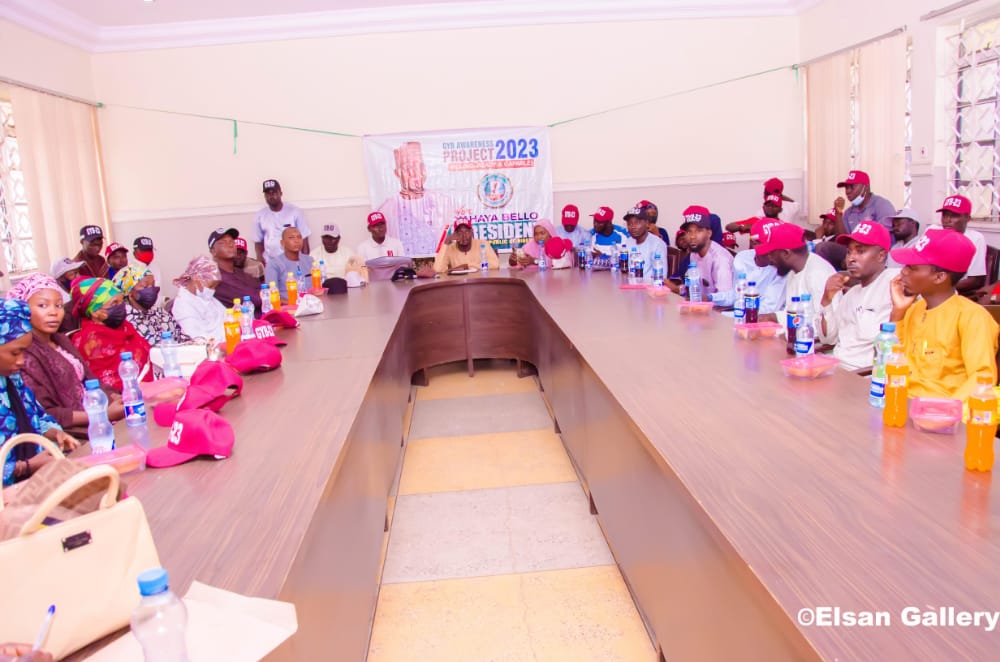
Nigerian youths under the auspices of GYB Awareness Project 2023 across the North-West geopolitical zone have urged Governor Yahaya Bello of Kogi to run for the office of president in 2023.

The youths on Saturday declared their support for Governor Bello during a press conference in Kaduna. Mr Saifullahi Bawa Kajuru, leader of the group said “the objective of the meeting is to conscientise Nigerians, especially the youths in the north-west on the need to support youth presidency come 2023”. He said a young person of Mr Bello’s calibre in 21st century Nigeria could change the narratives of the country through effective leadership and governance.

Mr Bawa added that “after wide consultation with stakeholders, youth groups, student unions, market unions, religious and traditional bodies from the North-West geopolitical zone, we the Northwest Youth under the umbrella of GYB Awareness Project 2023, hereby call on Governor Yahaya Bello to contest for the office of the President, the Federal Republic of Nigeria come 2023. Nigeria must continue to move on the right path in 2023”

“GYB Awareness Project 2023 will continue support, propagate, promote and project the ideals of Governor Yahaya Bello. It also wishes to confidently state that the entire youths of the north-west region comprising of Kaduna, Kano, Katsina, Kebbi, Sokoto, Jigawa and Zamfara States are solidly behind Governor Yahaya Bello candidacy comes 2023” the statement added.

Some of the state coordinators of GYB Awareness Project 2023 from Kano, Katsina, Kebbi, Sokoto, Jigawa, Zamfara and others urged Nigerians and the leadership of the ruling party to present Governor Bello as the candidate of the party in the next general elections.

The Southeast is no less a burden

Ahmadu Shehu, PhD.

As we continue the inconvenient conversation on Biafra and what it portends for the Southeast and our country, I find the need to clarify some insinuations raised in the troupes of comments and rejoinders that trailed my previous articles. But, before proceeding, I must commend many southeasterners for their dispassionate contributions and insightful perspectives.

However, although critical, some of the comments have missed salient truths that need further explanation. This will help our generation avoid past mistakes committed mostly by overzealous politicians, leading to avoidable wars and near-disintegration of our dear country.

There is this illusion that conflates southern Nigeria, particularly the Niger Delta, with the Southeast or “Biafra”. The truth is that the people of the Niger Delta region (let alone the southwest) do not align with the Southeast in politics and administration. For the information of our youth, the first secessionist war in Nigeria was fought between Niger Delta activists under the leadership of Isaac Adaka Boro and the Nigerian forces led by Chumeka Ojukwu, who later became a secessionist himself.

The three phases of Ojukwu’s career: from a defender of Nigeria’s unity at the battlefield to a rebel against his own country and later a senator and presidential candidate for the very country he fought to disintegrate should tell discerning minds that there are many faces to the idea of Biafra, none of which is the common interest of the Igbo people.

Please permit me to be blunter here. As far as our contemporary political and economic realities are concerned, the Southeast is only hiding behind the shadows of other regions in the south to claim prosperity. In other words, when our Igbo brothers call the northerners parasites, lazy or Abuja-dependent, they are actually borrowing the glory of the Niger Delta, and probably Lagos State, to abuse others. Because in reality, the contributions of the Southeast in the so-called feeding the nation is not as significant as they may like us to believe.

If you doubt this, let’s ask a few questions on the most critical sectors of the Nigerian economy. Since 90% of Nigeria’s foreign income depends on crude oil, what is the contribution of the Southeast in the two million barrels Nigeria makes per day? Very little is the answer. For, out of the nine oil-bearing states in Nigeria, Imo and Abia are the only southeastern states, accounting for an abysmal 1.6% and 0.68% of the total crude oil produced in the country. This is very negligible, as far as the numbers in this sector are concerned.

The Nigerian GDP, which is the bedrock of the economy and the source of non-oil revenue, primarily comes from agriculture. What is the contribution of the Southeast to agricultural production? The numbers are even more insignificant here. It is unfortunate that except for the oil-spilt Ogoni land, the Southeast is Nigeria’s least agriculturally viable region. Most states and local councils in the Southeast are not food sufficient.

By the nature of its geography, the Southeast sits on one of the country’s most infertile, erosion-prone lands. It is also the smallest and most overpopulated region leading to congestion and resource scarcity. It is no coincidence, therefore, that no one buys farm produce from there. Conversely, we see tons of raw food and livestock being transported daily to feed the region.

Some people may argue that the economic strength of the Southeast lies in its profoundly robust revenue base generated from industries and MSEs. They further postulate that the region contributes the most to the Nigerian revenue basket, albeit without evidence. Well, all the regions of the federation contribute their fair share to the federation tax revenue. However, the evidence available proves that the Southeast is neither the highest contributor nor is it self-reliant.

According to the National Bureau of Statistics, Southwest and South-South have the highest IGR per capita, and the Southeast is at par with North-Central, followed by Northwest and Northeast. None of the five southeastern states appears close to the top ten high revenue-generating states. Like any other northern state, none of the southeastern states – despite the 12% derivation funds – is wealthy enough to pay salaries without the federation account. Thus, one may ask: what kind of entrepreneurship and economic prosperity we are talking about here?

The fallacy behind the overestimated economic contribution of the Southeast is just one of the many problems. For instance, more than once, our country’s unity and cohesion are put on dangerous edges, thanks to the secessionist tendencies of the Southeast. Instead of forging ahead and pursuing alliances and friendships countrywide, the region and some of its people have continued on the path of division and segregation. The hatred propagated against anything and anyone perceived to be anti-Biafra has been phenomenal.

Furthermore, the Southeast is the main culprit in destroying Nigeria’s image and dignity in the international community. The Nigerian passport, which commanded respect a few decades ago, has become a suspect document worldwide. This unfortunate degradation of national identity and pride is the handwork of Nigerian drug pushers, physical and internet scammers, illegal migrants and human traffickers, most of whom are known to be southeasterners.

The same people are dealers and distributors of fake, contraband medications and drugs in all the nooks and crannies of this country, particularly in the North. This has always been an open secret and has been made even more vividly evident by the recent successes of the Nigerian Drug Law Enforcement Agency (NDLEA). The dangers these portend to our national development and global recognition is unquantifiable.

Therefore, if the above is true, claiming that the North is a mere burden on the Nigerian federation is absurd. For some, this might be based on ignorance, while for others, it is a deliberate attempt to malign and stereotype the region for reasons best known to the perpetrators of these dangerous narratives. But, whatever the motive is, we must recognize that all the federating units cause shared burdens to our national growth and development.

Since the North’s limitations and other regions have been overstretched in our national discourse, I believe it is equally important to remind our brothers in the Southeast that they are no less a burden than the other regions. As Nigerians, we should prepare to share both the positive and negative consequences of the actions and inactions of our fellow citizens. But, this is only possible when all parties acknowledge their limitations and are ready to embrace one another. Nigerians are siblings of a single family that are more alike than different. The earlier we accept this truth, the better.

Dr Ahmadu Shehu is a nomad cum herdsman, an Assistant Professor at the American University of Nigeria, Yola, and is passionate about the Nigerian project.

Late Sheikh Ja’afar’s daughter named Izala women leader

By Muhammad Sabiu

The daughter of the late Sheikh Ja’afar Mahmud Adam, Zainab, has been appointed as the new leader of a JIBWIS women body, also known as Nisa’us Sunna.

Delivering her acceptance speech after she was named the leader of Nisau Sunna, Malama Zainab expressed her gratitude to the Almighty Allah for making the event a reality.

She said, “I am grateful for being given this opportunity not because we are better than anybody, but for the simple reason that trust has been vested in us, with the thought that we will try our level best. And we hope the Almighty will spare us from disappointing (you), and may He grant us the opportunity to discharge the good expected of us.

“We, therefore, seek their [our leaders’] guidance in different aspects—in the aspect of praying for us as our parents, and on the part of commanding us.”

She also stressed the importance of the inclusion of women in areas that have to do with community development, adding that women are of great importance in any effort of bringing development.

The naming of Malama Zainab as a women’s leader went viral, thanks to the prominence and influence of her late father, Sheikh Ja’afar.

Recall that the late cleric was murdered in 2007. However, no culprit had been brought to justice even though a former leader of Boko Haram, Abubakar Shekau, claimed responsibility for his killing on several occasions.

The danger of ‘otherization’

By Mukhtar Garba Maigamo


The trending video that surfaced after President Buhari attended the UNGA in New York, showing an unprovoked assault on some people that are considered “Hausa-Fulani” or “Northern Muslims” by their provocateurs on account of their facial countenance and, or the apparels in them, is a perfect example of the deep-rooted hatred, obsessions and insecurities bedevilling many people in some parts of this country which translated into this dismissive ‘othering’.


It is even very possible that these two or three people in the video who are being verbally assaulted with a barrage of racist abuses and the most opprobrious language, share no cultural or ethnolinguistic affinities with Fulani, but because of the fact the racialization of the Buhari/APC government has taken a firm root, the entire people of the North are lumped together as either Fulani or Hausa-Fulani (whatever that means) and demonized by many people in the South, including even the most educated ones. What a profoundly ignorant mischaracterization!


This sort of ignorance has historically also manifested in the ‘Aboki’ and ‘Gambari’ ethnic slurs these people used with profound contempt.


But the striking irony is that there are many people here in the North or even residents of Daura (hometown of Mr President) who might have felt disillusioned with the Buhari’s administration, who could also share cultural, ethnic and religious affiliations with him. Still, they are worst-off today, and there are those also who do not share these features with the president. Still, by their circumstances or by way of geography, they are lumped together and mischaracterized as Fulani or Hausa Fulani.


But the danger of this otherization and the racialization of APC is that it could provoke ethnic and religious sentiments during elections and make people rally around a maligned candidate- whether he is the right choice or not, in terms of capacity and ability to deliver.


When, because of your pathological hatred of a single person, his party or associations, you pigeonhole an entire stock of his ethnic nationality and derogate as dregs of the country, you are invoking his people’s consciousness to rise against you whether or not they love him.


This same thing happened during GEJ when some clannish zealots otherized the entire country, but south-south. Under GEJ watchful eyes, Edwin Clerk and his passengers went about with rhetorics and threatened fire and brimstone against anyone who raised eyebrows against their posturing.


His wife also went about demonizing the North as the habitat of almajiri (the almajiri that are menacing the North too, and whom many people in the North were campaigning against).


Her infamous diatribe, “our people no dey born shildren wey dem no dey count. Our men no dey born shildren throway for street. We no dey like the people from that side” was the final straw that galvanized the anger of people to rise and rally around ethnic solidarities to defeat GEJ.


The victory of APC in 2015 and 2019 was, therefore, a combination of many factors, including the idealization and evocation of sentiments for candidates put forward by the party.


And this will continue to play out if the antipathy like the one we’ve seen in this video continues.


Mukhtar Maigamo writes from Kaduna. He can be reached via mgmaigamo@gmail.com.

It’s time to rekindle the old North

By Mohammed Zayyad

Recently, an event happened that will serve as a vital lesson to the people of northern Nigeria and the old generation of the region’s leaders in particular.

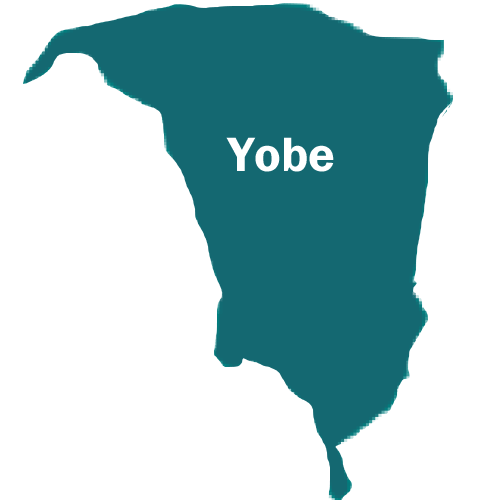
On September 10, 2021, a former Commissioner of Works in the Governor Abdullahi Ganduje administration, Engr. Muaz Magaji posted on his verified Facebook account that a renowned Islamic cleric and the National Secretary-General of the Jama’atu Izalatil Bid’ah wa Iqamatus Sunnah, Sheikh Muhammad Kabiru Haruna had in a phone call conversation told Governor Mai Mala Buni of Yobe State that he would decamp from the ruling All Progressive Congress (APC) if the former Kano State Governor, Rabiu Musa Kwankwaso is allowed to join the ruling party.

Some hours later, Sheik Gombe also posted on his verified Facebook account a 12-hour ultimatum to Engr. Muaz to withdraw the statement, or the Sheik will file a legal suit against the former Commissioner of Works over alleged defamation of character. Sheik Gombe said he had never meet Gov. Buni. And, he is neither a politician nor partisan. His only job is preaching.

On Saturday, September 13, 2021, a truce was reached. After that, Muaz visited Sheik Gombe at his residence in Abuja. In attendance were the National Chairman of Jama’atu Izalatil Bid’ah wa Iqamatus Sunnah, Sheik Abdullahi Bala Lau, National Leader of The Tijjaniya Youth Africa, Ahmadu Tijjani Umar Maigeru. The outcome of the meeting: Muaz had withdrawn his statement, apologised, and a friendship was born at that moment.

A deep look at this event and the people involved will serve as a big lesson to northern Nigeria, which faces social disorder and insecurity due to the eroded beautiful culture and norms.

First, the whole idea of the meeting between Sheik Kabiru Gombe and Engr. Muaz Magaji was initiated and implemented by the National Leader of the Tijjaniya Youth Africa, Ahmadu Tijjani Umar Maigeru, a frontline gubernatorial candidate in Kaduna State. Ahmadu Tijjani is of the Tijjaniya sect while Kabiru Gombe is of the Izala. This has shown the rekindling of the old habit in the north – humanity first – where sect, race, tribe, and geography don’t matter. Ahmadu Tijjani must be commended for such foresight in initiating the meeting to reach a truce, Sheik Gombe for being magnanimous while Muaz for being levelheaded.

Second, for accepting to withdraw his statement, apologising, and making friends, Muaz has helped society in some ways. Fake news can quickly be decimated if a high profile person that shared it will come out to denounce it and apologise as well. And, differences between individuals or groups can be resolved with dialogues and understanding.

The coming together of these men to resolve a matter that was supposed to be settled in a Court of Law is a clear case of the need to rekindle the old north where every issue is resolved within the community, people were their brothers’ keepers, who, every day bring out from their homes their breakfast, lunch and dinner for neighbours, including even strangers to eat.

In the old north, your father’s friend is automatically your father and can decide on you without first consulting your parent. In the old north, people allocate some portion of their houses to strangers to settle. In the old north, no child will be seen wandering around without the community showing any concern. That’s was the monolithic North! It has to be rekindled as a one-step in solving some of the region’s current social problems, especially insecurity. 

Zayyad I. Muhammad writes from Abuja, zaymohd@yahoo.com.

For the good of the North

By Abubakar Isah Baba

The misrepresentation of northern Nigeria ranges from distorting and falsifying reality, profiling, underreporting, and not reporting about the region by media outlets owned and controlled by others. Apparent and alarming as this is, it has been going on for a long time. This requires no evidence or justification; it is a growing trend, especially when the country propagates alienation over harmony. But who cares? Even those who have the responsibility to do so are busily aggrandising their powers.

But how long it will take the sick region to learn from this great proverb: Until the lion has a historian, the story of the hunt will always favour the hunter. The North was painted black with negative phrases, tales of violence, poverty, unemployment, irresponsible marriages, out-of-school children and whatnot as if there were no other positive realities.

John Campbell attests to the above mischaracterisation in his book, Nigeria: Dancing on the Brink, that “The Nigerian media, mostly headquartered in the Southern part of the country, is routinely insensitive and simplistic in its reportage about Northern Nigeria. And it is the Nigerian media that colors the too-often superficial Western view of the North.” This has a significant effect on the economic decline in the North as no investor will invest in the region that is dangerous, volatile and unpromising.

Apart from the traditional cores of mass communication, which include informing, educating, and entertaining, it is also used for propaganda to gain support or sympathy from the public or authority. EndSARS saga is an indicator of the power of propaganda, for it taught the north a lesson that “Dokin mai baki ya fi gudu” – the South has a much louder voice. Please don’t confuse my lamenting with Afghanistanism (a term used in journalism to describe journalists who shun the problem of their community but go extra-mile in condemning others), far from it. I suggest North should define itself and tell its version of the story; represent itself properly as bias in the news is often backgrounded. Others could not define us nor report us properly. 

Traditional rulers, political leaders, scholars, and concerned people in Northern Nigeria should speedily and strategically address this problem of bad press and misrepresentation of the North through investing in the media and utilising it for the good of their people. With Daily Nigerian, Sahelian Times, Nigerian Tracker and recently The Daily Reality (TDR), we need to see more outlets so we can ship our information without thinking about sinking. Recently, TDR’s publications have changed the North’s fate. Remember CBN and the reopening of the NIRSAL site, Netflix and the Kannywood, etc.

Abubakar Isah Baba writes from Kano. He can be reached via abubakarisahbaba01@gmail.com.

Dear Nigeria: Don’t fall prey to the false promises of war

Like the mid-1960s, the early 2020s has been heated and filled with war rhetoric. This rhetoric has been well oiled by claims of nepotism, corruption and everything that has been proverbial fertilisers for conflict in post-independence Africa. From Freetown to Kinshasa, the story has always been the same. And intriguingly, the results have also been similar. Deaths and more deaths, reconciliation, then business as usual. Hardly any lessons learnt!

Let’s retake this: the science of war in Africa is essentially a story of frustration, then misinformation, then delusion, then deception, then destruction, then reconciliation and finally rehabilitation. But, except maybe for places like Rwanda, the root causes never get addressed, the warlords never die, the corrupt politicians/soldiers mostly come back wealthier and more confident to assume the mantle of leadership. And the masses who fought and killed one another are further plunged into disillusion and poverty.  

Why then does this story keep repeating itself if data tells us that the investment always ends in red and that the returns are always intertwined with regrets? Here are a few observations, supported by both learning and experience:

Violence is a Political Statement

The old saying that where gentility fails, brutality prevails holds true today as it did in Nigeria’s 1960s, Liberia and Sierra Leone’s 1980s, and Rwanda’s 1990s. Politicians have basically two tools: debate and violence. In climes where one ceases to be effective, the other is automatically activated. And because both do not really take much from politicians by way of casualties, both have been greatly valued assets in their political estates. To change this, the citizens must be enlightened enough to see beyond the rhetoric. And usually, this mass education has to be ultimately championed by concerned and more enlightened citizens outside the political class.

The War Mongers Mostly Have a Contingency Plan

Suppose the chances of death for both leaders and masses in a civil conflict are equal. In that case, the apparent possibility is that wars will hardly be fought, and misinformation will get as little funding as possible. Unfortunately, the truth is that leaders usually have collaborators outside the borders of their countries and these collaborators typically stop at nothing to rescue their friends when things get worse. So, with this in mind, leaders at both ends of the divide beguile their cannon fodders to get the job done while they await the desired if ominous outcomes.

War Promises Freedom and other “Sweet” Things

History is replete with people taking the path of violence and war to regain their freedom. And beyond freedom, war promises access to places, bodies, resources and positions that were otherwise inaccessible. In a strange turn of things, Foday Sankoh of Sierra Leone rose to a position almost as powerful as the President after his rebellion that led to the loss of reportedly 50,000 lives, including hundreds of Nigerian and other ECOMOG/UN Peacekeeping forces.  He committed the crimes, then, for the sake of peace, got rewarded with laurels! Who is going to bring back all those lives, especially those of his loyal foot soldiers? Most of these people willingly took arms because they dreamt of enjoying what only Sankoh could enjoy, while their ultimate lot was destruction. War promises a lot of prosperity, ironically, but delivers a lot of destruction in reality.

The Crux of the Matter: it’s Difficult to Find a Suitable Alternative to War

Not that people want to lose routine or the calm of home. Not that they like to see the hacked body parts of loved ones or wade through the blood of a beheaded or gunned down neighbour in search of safety, not that they like to be refugees and be treated as slaves in strange lands, just that in the heat of the burning issues, with the accusations and counter-accusations and the mutual acrimony that ensues, it’s “difficult” to find a suitable alternative. Or better put, the other options have been abused and exhausted. Elections and coup d’état are the usual alternatives to war in our postcolonial political dispensation, but the two have hardly ever provided the desired outcomes. Therefore, it is safe to say the fault is not in our enemies; the fault, rather, lies in us. People are willing to change evil until they become beneficiaries of such evils. And how quickly do their fans often forget this fact!

In the final analysis, people plan for wars, heat the polity, sponsor misinformation, make promises of victory, but then war is so creative that it hardly subjects itself to anybody’s plans. And when the gruesome scenes of death and destruction start being plastered all over the media, and mercenaries and warlords start gaining unfettered access to national resources and the treasury, when hunger subdues the strongest amongst us and ruins the future that is so dear to us, when ammunitions are in short supply, and the enemy forces are about to be in total control, that’s usually when it becomes clear that it is not really the war we wanted, but the promises it offered from a distance. Too late!

AF Sesay is a writer based in Lagos. He can be reached via amarasesay.amir@gmail.com.

Arewa Today: Shari’ah for the masses, democracy for the elite

By Ibrahiym A. El-Caleel

Northern Nigeria, Arewa launched her Shari’a project on the eve of the third millennium, precisely in 1999. The project was cheered by Muslims, who are the larger share of the Arewa population. But, on the other hand, the project became a thorn in the flesh of liberal Muslims as well as Islamophobes. Therefore, this generated heated discussions within the Arewa intelligentsia, from the mosques’ pulpits to traditional media pages.

Immediately Shari’a was launched, additives were added to strengthen its influence over the years. The Shari’a courts appeared visibly effective and powerful in their jurisdictions. On the other hand, they were feared due to their initial charisma. Shari’a hudud (penalties) were unapologetically executed in states that subscribed to the project. In 2003, Kano State impressively established the Kano State Hisbah Corps to deepen Shari’a application further. All these were efforts that every conscious Muslim found impressive. Nigerian Muslims were able to leverage democracy to re-establish their lost treasure of Islamic Law. It was a sort of blessing in the eyes of conscious Muslims. Today, however, things are beginning to fall apart.

In recent years, we see rather poor management of the Shari’a project. Convicts in Shari’a courts now find a way to evade justice, leveraging the weak points in the project. More problematic is the visible selective application of Shari’a among Arewa Muslims. Concerning the Shari’a application, Arewa currently operates a caste system. Masses are prosecuted under Shari’a for the slightest offences, but the elites commit big offences and get away with impunity. The Shari’a practised by the earliest Muslim generations was egalitarianism, where everyone was equal before the Islamic Law. But in Arewa today, Shari’a is an elitism that only applies to the nobodies in the society, while the elites break the code and fingers are not raised at them.  

Kano Hisbah is famous for coming into the spotlight with all sorts of amazing arrests and “Shari’a law enforcements”. There are pictures of them randomly stopping youths and cutting their hair because they have kept bushy and unkempt hair. To me, this should be a minor thing that should bother Kano Hisbah, when every week, men and scantily dressed women converge at costly-rented event centres, dancing and freely mixing in the name of celebrating weddings. Kano Hisbah never shows up in such Shari’a noncompliant events because they might be meeting the last son of a commissioner, the wife of a minister or even the nation’s First Lady herself. Apologists of this caste system might say perhaps Kano Hisbah never comes across these numerous events that happen frequently and simultaneously. But the answer is, after concluding the events, these “untouchables” audaciously flaunt the immoral pictures and videos on social media to the public glare. And nothing still happens.

Shari’a in Arewa will continue to be feeble because Arewa leaders are not genuinely committed to executing it. Only Allah knows the hearts of men, but the body language we are seeing is that these leaders use Shari’a in the spirit of populism; to woo political fandom. If we have Shari’a, then everyone must come equal before it. In a sane society, everyone comes equal before the law. This is called “the rule of law”.

It was narrated that during the reign of Caliph Umar bnul Khattab, Amr bnul Aas was the governor of Egypt. This governor had a son who entered a horserace with an Egyptian man, and the Egyptian man won the race. This defeat angered the governor’s son, so he decided to flog the Egyptian man. The man left Egypt and travelled to Madinah to complain to Caliph Umar. Umar summoned Governor Amr bnul Aas and the son to appear before him. When they showed up, Umar asked the Egyptian man to flog the Governor’s son as he had flogged him. Then he said to the governor, “when did you start to enslave people when they were born free?”. This incident indicates that Caliph Umar, as one of the most influential leaders in history, never allowed impunity and elitism to prosper in the land.

Secondly, when a lady from Bani Makhzum committed theft, the people of Quraysh requested Usama bn Zayd to intercede for her with Prophet Muhammad (Peace be Upon Him). When Usama spoke about it to the Prophet (Peace be Upon Him), the Prophet said, “Do you try to intercede for somebody in a case connected with Allah’s Prescribed Punishments?” Then he got up and delivered a sermon saying, “What destroyed the nations preceding you, was that if a noble amongst them stole, they would forgive him, and if a poor person amongst them stole, they would inflict Allah’s Legal punishment on him. By Allah, if Fatimah, the daughter of Muhammad stole, I would cut off her hand.”

Prophet Muhammad (Peace be Upon Him) is the grand patron of all leaders executing the Shari’a. This is him (Peace be Upon Him) saying if his own most beloved daughter were found guilty, he would apply the laws on her with no regard to her exalted status. May Allah’s salutations be upon him. He indeed is our ultimate role model worthy of emulation.

Until Arewa leaders take the Prophet (Peace be Upon Him) as a role model in the Shari’a project, we will continue to be a laughingstock. It is quite shameful that daughters of Arewa governors and emirs dress immodestly at their weddings. We have seen the daughter of former Kano Emir Mallam Muhammadu Sanusi II taking a handshake from the Vice President, an ajnabi (strange man), in front of her father. The daughter of Kano State Governor Khadimul Islam, Dr Abdullahi Ganduje, dressed immodestly on her wedding day. She wore a sleeveless wide-necked gown that almost revealed her chest. As if that was not enough of breaking the Shari’a code, she danced in this outfit to the visuality of strange men. The daughter of former EFCC Czar Mallam Nuhu Ribadu also made a similar appearance some months back.

This week, the trending topic on Arewa Facebook centres around another Kano princess, Zahra Nasir Ado Bayero, who is getting married to the President’s son, Yusuf Muhammadu Buhari. In her bridal shower event in Abuja, the princess appeared in a tight wedding gown, exposing the upper part of her torso. Of course, her hair was styled and opened to the public like her fellow sisters in the Shari’a code-breaking. People are wondering how Kano Hisbah is not seeing all this and issuing a press release.

The amoralism is getting institutionalised by the children of Arewa leaders. It speaks volumes to why Shari’a is still a baby in Arewa despite spending more than 20 years in the system. People who could give us a formidable Sharia are issuing licenses to their children to abuse the code and go scot-free. This is why even convicted blasphemers these days do not end up suffering the penalties. Anyone with some copper coins in their pockets and a little political network can find a way out. Only the poor and the unconnected can be convicted and be eventually punished. This is the caste system we have awaken to in Arewa today. Unfortunately, leaders are not ready to walk the talk. We need a leveller to be able to have an effective Shari’a system. What is good for the goose has to be good for the gander. Else, we are all joking around.

Ibrahiym A. El-Caleel is a Civil Engineer by training with an interest in public and social commentary. He writes from Zaria and can be reached via caleel2009@gmail.com.

Abba Kyari: The Super Cop on the Fall – Muhd El-Bonga Ibraheem

By Muhammad El-Bonga Ibraheem 


The damning and weighty allegations against DCP Abba Kyari, who many consider a cult hero within the Nigerian security system, is confoundingly infelicitous. The FBI indicted the fine police officer for being in cahoot with the internationally recognised fraudster known as Hushpuppi, who has been in US custody since July 2020 for multiple crimes perpetrated in and outside America. 


DCP Abba Kyari is an officer I so much respect. In fact, in him, I see a bright future for the police force given his expertise and tenacity in arraigning criminals and finding a way out where there is seemingly none. This development, however, evidently leaves me very sad that the person we hold in high regard isn’t what we really think he is, at least from what he portrays to the public and from what the FBI concludes from their thorough investigations. 

Over the years, the Deputy Commissioner of Police has attracted quite a myriad of attention that transcends across the nooks and crannies of the country. There is this general belief that whenever the police want to fish out criminals or swiftly achieve some desired results, Abba Kyari, nicknamed “Jack Bauer”, is the man for the job. He led many successful operations that culminated in the arrest of some criminals at the top of the Nigerian kidnapping echelon, notably Evans, the billionaire kidnapper. That singular arrest catapulted his reputation and made him a cult hero amongst the ranks and files of the police force and within the psyche of the Nigerian masses, who are usually downtrodden. Not very long ago, his men hunted the killers of the late APC chieftain Ahmed Gulak who was iniquitously murdered by IPOB terrorists masquerading as “unknown gunmen” in Imo State. 


Despite his unrivalled excellence as a super cop, nonetheless, that doesn’t mean Abba Kyari isn’t infallible. The FBI said Abba Kyari received orders from Hushpuppi to arrest and detain a criminal “colleague” after their falling out having scammed a Qatari national of more than $1m. The report added that Abba Kyari allegedly supplied an account of which a “thank you” message, which the FBI alludes could be from the proceeds of the crime, was sent to him by Hushpuppi.


At this juncture, no matter how much you want to twist the issue, Kyari shot himself on foot by cavorting with people of dodgy characters. The fact that an internationally known criminal in the mould of Hushpuppi— with criminal networks spanning from Nigeria to America, Britain, Korea etc.— can make one call to a police officer to have someone arrested for scuppering a “job” is indeed shocking and also speaks volumes about the influence he exerts in the force. The duo chatted many times where Kyari was egregiously revealed to have received direct orders from Hushpuppi regarding how the police should treat the arrested person. DCP Abba Kyari’s relationship with Hushpuppi also involved buying clothes for the fraudster to the extent that the latter would come and get them from the former’s office. While a police officer remains everyone’s friend, Kyari’s frolicking with Hushpuppi is too difficult to be whitewashed unless the investigations are finalised to determine his innocence if indeed he is. 

Although Abba Kyari had already responded to the weighty allegation, his explanations don’t hold any water, for he needs to prove to everyone keenly fixated on the issue, beyond any reasonable doubt, that he’s indeed not guilty. Much to his chagrin, Kyari edited the Facebook post conveying his initial response many times and subsequently deleted it. The various chats where Hushpuppi ordered Kyari and his men to arrest his so-called colleague and be dealt with like an armed robber without any form of investigation is an indication that they could have been frolicking for a long time. The “arrest” of Hushpuppi’s colleague for weeks is a preemptive move to prevent him from scuppering an ongoing “job” of scamming a Qatari national where the fraud money was later laundered in the US. This is where the FBI fingered Kyari as a possible co-conspirator in the whole issue. 


 The FBI is reputedly known for being painstakingly meticulous regarding their investigations. If they’re really on your case, nothing is usually left untouched, for they do back up their reports with undeniable, substantiated facts and documents. I have read an analysis from a lawyer friend who argued that the US has no jurisdiction to request Kyari’s extradition to be questioned in the US since he committed the alleged crime in Nigeria. The US— and by extension, the developed nations— always fear that justice may not be served, knowing full well how our system here in Nigeria operates. Is it not in this same Nigeria that James Ibori got cleared of any wrongdoing by Nigerian courts, having committed one of the greatest corruption in our history? But later on, James Ibori finally met his waterloo when he was arrested in the UK and forced to serve many years in a UK prison. 


Some of our northern people have started defending Kyari, painting the whole thing an ethnic colouration. I read a post where someone said the Igbos support Kanu and his proscribed IPOB group at all costs; the Yorubas support Igboho against all odds; therefore, he asks: why shouldn’t we, as northerners support our own? You see, this habit of shielding glaring depravities is one of the reasons why Nigeria continues to lag in all facets of development; it is also the reason why we continue to grope for exemplary leadership to lead us to the promised land within our fold. What is wrong should be dismissed by all and sundry regardless of religious and ethnic ties. Besides, the duo of Igboho and Kanu have openly declared their rebellion against the Nigerian nation. As for Abba Kyari, he is a civil servant in our most crucial agency whose responsibility is to serve and protect the interest of all Nigerians regardless of their ethnic disposition or religious affiliation, which explains why his issue is huge. Unfortunately, he got himself soiled in a huge mess that has the propensity to obliterate all his outstanding brilliance records.

The police suspension of the super cop to pave a berth for an investigation into the matter is a commendable move. Whatever sprouts out of from the investigation, Kyari should blame himself for it’s the offshoot of his actions, having chosen to dine and wine with criminals. When you rise to fame through something magnificent, you shouldn’t do anything to bring it down, for posterity will always forget your good days but will loudly judge and label you with your few bad instances. Sadly, such is the case of Kyari today. 

Muhammad El-Bonga Ibrahim writes from Abuja. He can be reached via bonga2004@icloud.com.

Why are northern players always absent or underdogs in the Nigerian national team?

By Salisu Uba Kofar-Wambai

It is very mind-blowing to view a national football team that ideally suppose to possess the quality of national outlook looking so sectional and tribal. Unfortunately, for quite a long time, the Nigerian football national team has been dominated by only what we called “southern players” at almost every level.

One will wonder why the utmost and utterly lopsidedness? After all, with its advantages, thanks to its vast population over the South, northern Nigeria has the upper hand to have more visibility in such national assignments. However, the reverse is always the case. Is that signifying that the northern folks lack interest in sports, especially football? Or does it mean that the North is consciously hiding its light under a bushel? NO! 

If one wakes up at dawn in northern cities and towns, the young, agile athletes are often the first people to meet exercising to their respective football pitches.

Moreover, the geographical advantage in terms of the landmass, with all the potentialities of its flatness, accurate for football arena and pitches against terrain nature and scarcity of southern land is another pointer that ought to have shot north ahead.

It is an indisputable fact that if you take around northern states, you will invariably discover that numerous football clubs are established in several places in the region. You will find players who can match the skills and talents of Messi, Ronaldo, Zidane, Figos, but all – or most – go nowhere. They mostly played in their small villages and ended up uncelebrated.

In Kano alone, the heart of the North, there are more than thousands of clubs playing in different levels and capacities. The Sports Ministry is, year-in-year-out, organising leagues for these clubs from league A to Z. These clubs produce young talents that can play at every level of football worldwide.

With globalisation and communication technologies taking centre stage of our lives, if one goes to viewing centres, where foreign leagues matches are shown, the story and impression one will get is that football has become part and parcel of our youths’ routine. It’s now popular culture. Football is always the topic of discussion on the lips of northern youth. Therefore, the football obsession comes in both ways – theoretical and practical, respectively. But why northern players are almost absent or underdogs in the national team?

And again, with football now going lucrative venture that quickly shoots up people to billionaire charts, with the abject poverty bedevilling the north and youth joblessness, sports can do a lot towards alleviating these monsters if taken significantly.

The central question is why many a time Kano clubs are the favourites and always win all Nigerian secondary schools? I think the appropriate answers to these questions are:

The North should embrace sports as a way of livelihood like its southern counterparts and encourage its youth to put in their best. The North should also give them support in terms of mentorship, send people of interest, read coaching courses, and, of course, financial assistance. Our well-to-do and government should facilitate our talents to get contracts in Europe through agents that secure clubs for players.

Our soccer administrators should make it compulsory for every coach vested with the responsibility of forming teams, especially in the under-17 and under-20, to always go round Nigeria for the players’ selection process. In most cases, those coaches sit back in their regions, select players from the South because they have already stereotyped northerners as worthless in that respective. And it is mostly the players of these levels that graduate into senior national teams levels and secure lucrative contracts to play in the prestigious leagues of Europe.

Northern youth should also try to go off weeds smoking; it is unfortunate to see a talented footballer and later find out that he’s a weed smoker. Most of them end up without achieving anything for obvious reasons. They should equally try to finish their secondary schools and be ready to go anywhere to play and show their resilience.

And above all, parents should pray for the guidance of their kids.

By doing this, I think the North will avoid the situation we are currently experiencing where northerners are a dot in the circle in the team of players representing Nigeria in the ongoing Olympics games in Japan.

Salisu Uba Kofar-Wambai is a PhD student at the Department of Mass Communication, Bayero University, Kano. He can be reached via salisunews@gmail.com.